
Reviewed · BROOKLYN TOURS
Brooklyn: 2-Hour Prospect Park Guided Walking Tour
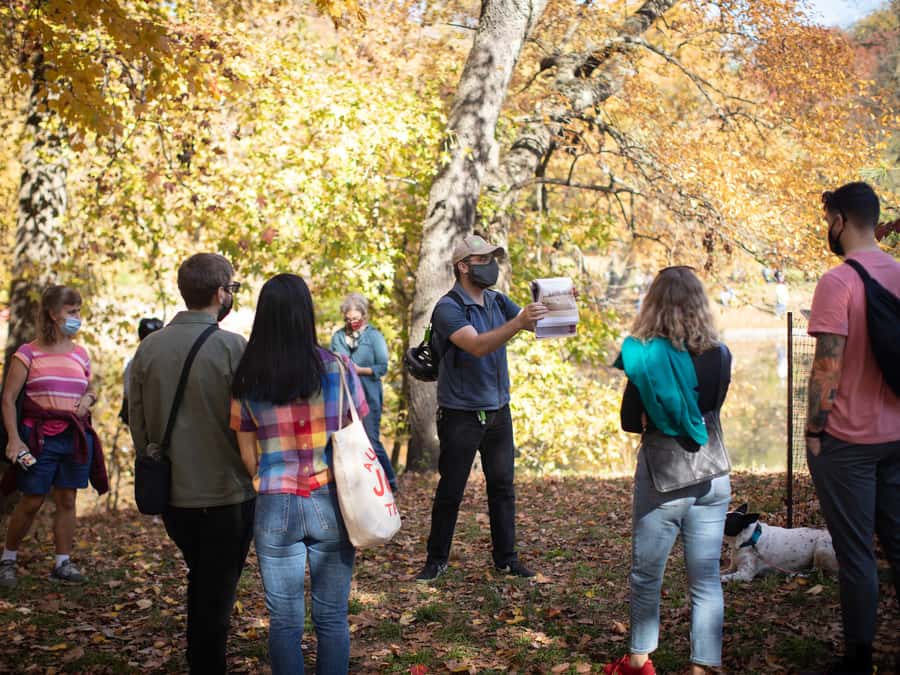
Prospect Park is more than a big patch of green in Brooklyn. Its manmade waterfalls, streams, lakes, and Ravine create a carefully arranged world that feels surprisingly wild. This two-hour walk helps you read the park as both a work of design and a place that keeps changing with Brooklyn’s needs.
I like the small group, limited to nine people, because you can hear the guide without fighting a crowd. I also like the mix of nature and civic history, from turtles sunning themselves to the citizens who helped create and reshape the park. The main drawback is simple: you will walk about two miles, rain or shine, so poor weather or uncomfortable shoes can quickly take the fun out of it.
In This Review
- Key points
- Starting at the Brooklyn Public Library
- Long Meadow and the park’s first impression
- The Ravine and a manmade sense of nature
- Lakes, streams, and waterfalls
- Turtles, dogs, and the living park
- Reading the park’s built features
- Two hours on foot, rain or shine
- What $25 buys you
- Who will enjoy this Prospect Park walk?
- Smart ways to prepare
- Should you book this Prospect Park tour?
- FAQ
- How long is the Prospect Park walking tour?
- How far do you walk?
- Where does the tour begin?
- Which subway stations are near the meeting point?
- What language is the tour offered in?
- Is the tour wheelchair accessible?
- How many people are in the group?
- Does the tour operate in bad weather?
- What should I bring?
Key points
- See the park’s waterfalls and watercourse: Learn how Prospect Park’s lakes, streams, and falls were planned and built.
- Walk through Long Meadow and the Ravine: The route covers some of the park’s most recognizable natural and designed areas.
- Connect animals with local history: Turtles, dogs, and other park life become part of the story rather than background scenery.
- Hear about Olmsted and Vaux: The guide explains the original ideas behind the park’s design and how those ideas work today.
- Walk with a small group: A maximum of nine participants makes it easier to ask questions and stay engaged.
- Start beside Grand Army Plaza: The Brooklyn Public Library’s Central Library is easy to reach by subway and gives you a clear meeting point.
Starting at the Brooklyn Public Library
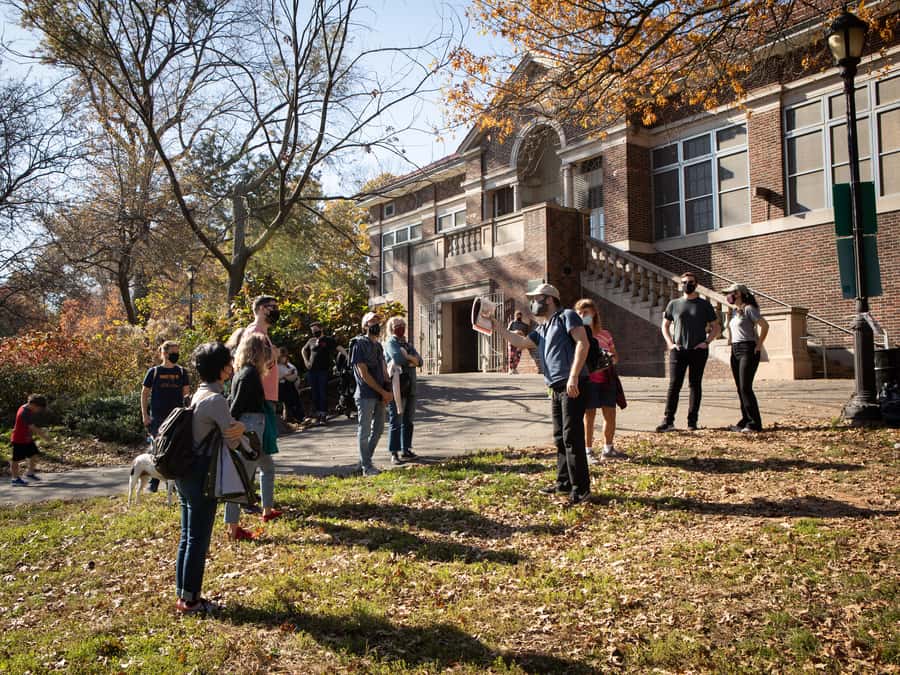
The tour begins on the front steps of the Brooklyn Public Library Central Library at 10 Grand Army Plaza. This is a practical meeting place, with subway access from Grand Army Plaza on the 2 and 3 lines, or 7th Avenue on the B and Q lines.
I like starting here because the location puts you right at the edge of Prospect Park without wasting time on a long transfer inside the park. Give yourself enough time to find the library steps, especially if you are arriving from another part of New York. The meeting point is specific, but large city transit stations can still take a few minutes to navigate.
The tour is conducted in English by a local guide. No individual guide names are provided, so you should book this for the subject and format rather than expecting a particular person. The group limit of nine is a real advantage. You get a guided experience without the feel of a large procession.
More Brooklyn days out:
- NYC Bus Tour of Brooklyn, Bronx, Queens: Art, Food & Sports
★ 5.0 · 3,805 reviews - NYC Highlights Tour: Bronx, Brooklyn, Harlem, Queens & Coney
★ 4.5 · 2,846 reviews - NYC: Contrasts Tour of Harlem, The Bronx, Queens & Brooklyn
★ 4.5 · 2,167 reviews
Long Meadow and the park’s first impression
Prospect Park’s Long Meadow gives you a broad opening view of the park. It is one of the natural and historic areas included on the route, and it helps explain how the designers wanted the park to be used.
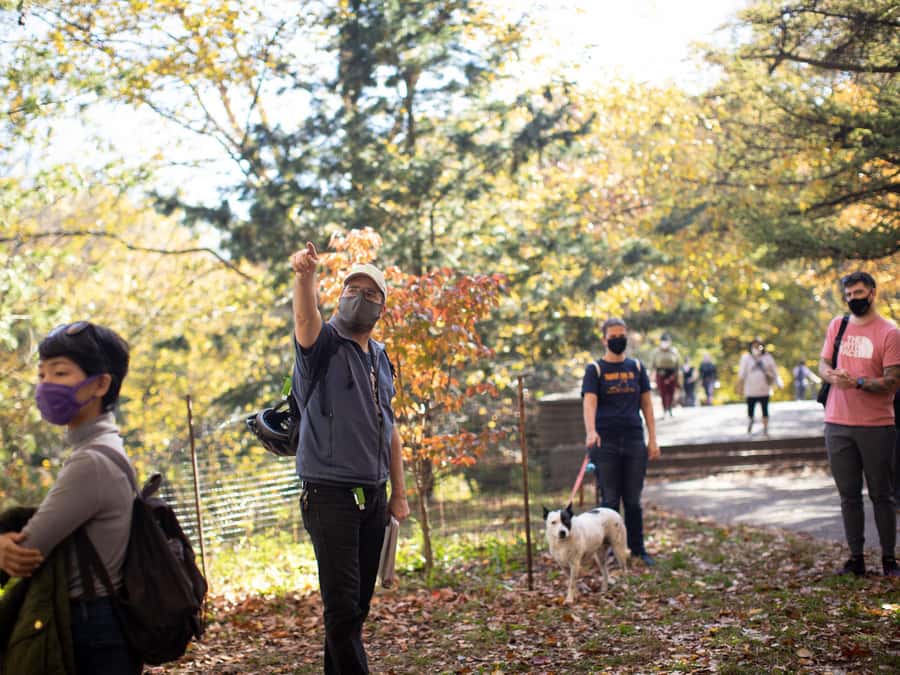
Your guide introduces the work of Frederick Law Olmsted and Calvert Vaux, the designers behind Prospect Park’s original vision. The useful point here is that the park was not simply left to grow on its own. Its open spaces, wooded areas, water features, paths, and built elements were planned to offer different experiences within one large public park.
I find this kind of explanation more useful than a list of dates. You begin to notice why one area feels open and restful while another feels enclosed and wooded. The park becomes easier to understand when you see it as a sequence of carefully arranged spaces.
Long Meadow is also a good place to think about the park’s public role. The story is not only about designers and architecture. It is about the citizens and communities who helped create the park, use it, and push it to meet new needs over time.
The Ravine and a manmade sense of nature
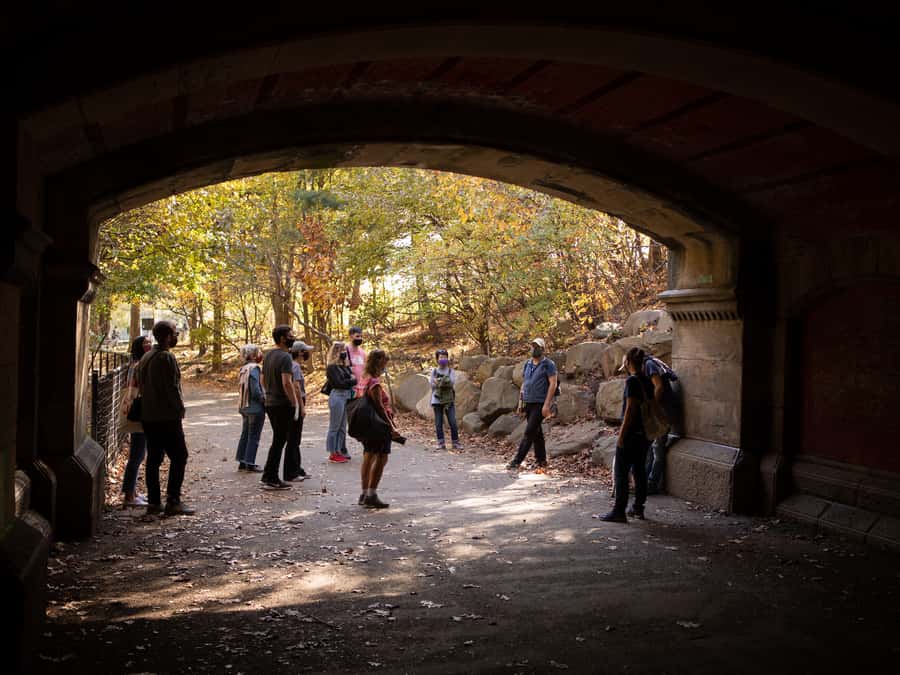
The Ravine is likely to be one of the most interesting parts of the walk. Here, the park’s natural-looking features show the skill behind the design. The route includes the park’s waterfalls and explains the watercourse that connects its lakes and streams.
The falls are not just pretty spots for photographs. They are evidence of how people shaped water to make the park feel more varied and dramatic. You can see how a manmade feature was planned to look at home among trees, paths, and rocky areas.
That contrast is central to the tour. Prospect Park was designed to give city residents access to open country-like scenery without leaving Brooklyn. The guide helps you separate what is naturally occurring from what was planned, altered, or maintained by people.
The Ravine section may also be the most physically uneven or challenging-feeling part of the outing, though the available information does not specify exact surfaces or grades. If you need frequent breaks, keep the stated two-mile distance in mind. There are a few stops with places to sit, which makes the walk more manageable, but this is still an active walking tour rather than a sightseeing ride.
Lakes, streams, and waterfalls
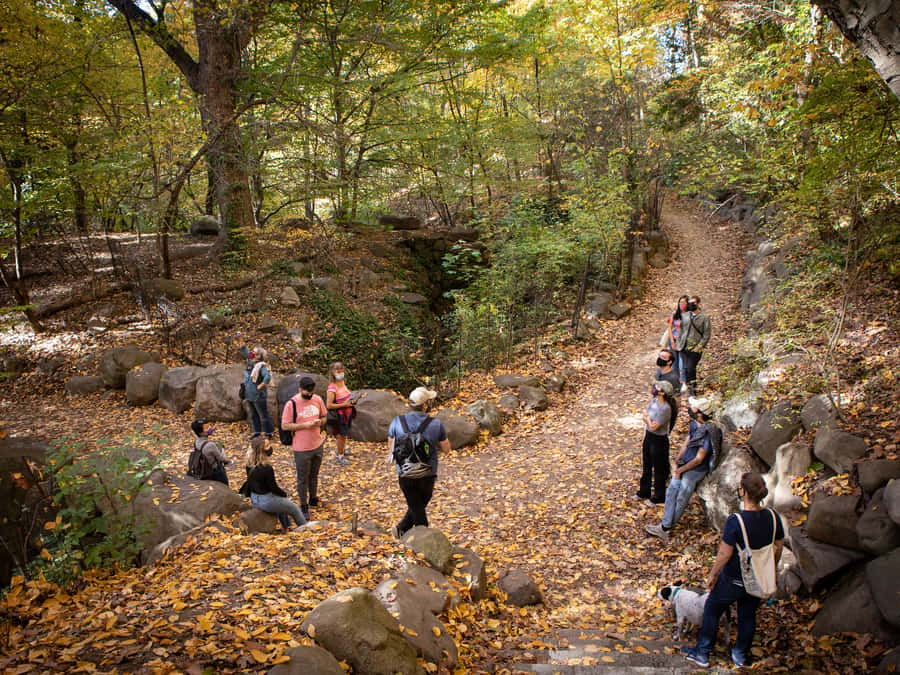
Prospect Park’s water system gives the walk a clear thread. Instead of treating the lakes, streams, and falls as separate sights, the guide explains how they work as part of one designed system.
I appreciate that focus because water helps tie together the park’s natural and human stories. You learn about an artificial watercourse while also looking at the plants and animals that now live around it. The result is a useful lesson in how a city park can develop a life of its own after people build it.
The tour also addresses conservation work underway today. That matters because a park like this does not remain in its original condition without regular care. Historic preservation, environmental protection, and public access can pull in different directions. A place needs to protect its older features while still serving the people who use it now.
You should not expect a technical engineering tour. The emphasis is broader, covering design, ecology, history, and current projects in a way that suits a general audience. If you enjoy seeing how an urban park functions, this part should be especially rewarding.
More Brooklyn walking tours:
- Brooklyn Food Walking Tour: Local Eats & Family‑Run Shops
★ 5.0 · 592 reviews - NYC: Brooklyn Graffiti & Street Art Walking Tour in Bushwick
★ 4.8 · 492 reviews - Brooklyn: Bushwick Street Art Walking Tour
★ 4.7 · 462 reviews - Graffiti & Street Art Walking Tour in Brooklyn
★ 5.0 · 255 reviews
Turtles, dogs, and the living park
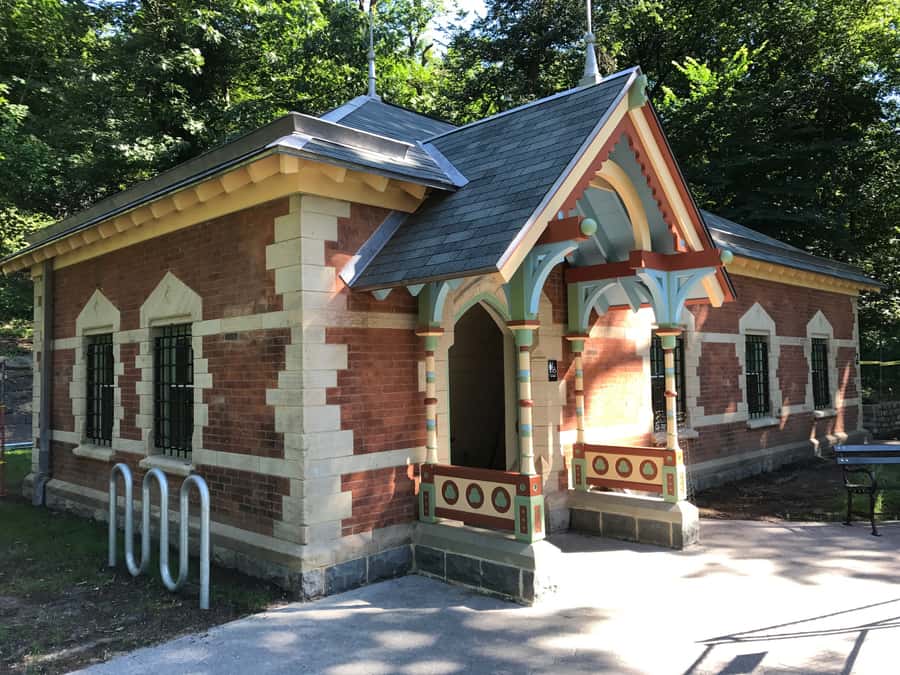
The tour brings animals into the story, which keeps the history grounded in what you can actually see. Turtles sunning themselves and dogs chasing frisbees show the park as a working public space, not a preserved display behind a rope.
The animal theme also reaches into the park’s past. You learn about the flora and fauna that grow here and about the animals that have played a role in Prospect Park’s history. That gives the commentary a lighter, more immediate side after discussions of design and conservation.
I like this balance. A tour that focuses only on Olmsted, Vaux, and architectural eras could feel academic. A walk that only points out wildlife would miss the park’s larger purpose. Here, the two subjects support each other.
Keep your eyes open, but do not expect a guaranteed wildlife show. Turtles are mentioned as part of the park experience, not as a scheduled sighting. The same applies to dogs, birds, and other animals. Your guide can explain what belongs to the park’s ecology, but nature keeps its own timetable.
Reading the park’s built features
Prospect Park’s buildings and structures reflect more than one architectural period. The guide points out the eras visible in the built environment and explains how the park’s use has changed over time.
This is helpful if you usually walk through a park without looking closely at its constructed details. Paths, bridges, water features, and other structures can seem like simple scenery until someone explains what they were meant to do and how they fit the original plan.
The tour also connects earlier design choices with present-day recreational and cultural access. That is an important part of the experience. A public park is not finished when its paths and trees are planted. It has to respond to changing patterns of use and to the needs of the people who live nearby.
The strongest historical idea here is continuity. The park’s original design still shapes your walk, but today’s conservation and preservation projects help determine what survives and how people experience it. You get a sense of the park as an ongoing civic project rather than a completed monument.
Two hours on foot, rain or shine
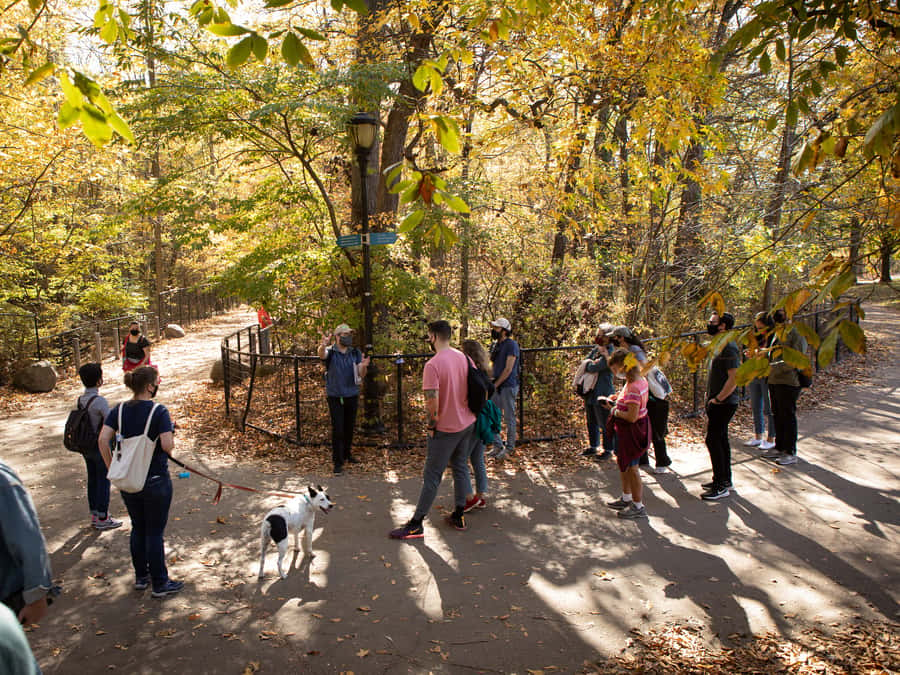
The tour lasts two hours and covers about two miles, or 3.2 kilometers. The pace includes several stops where you can sit, but you should still wear comfortable shoes and bring water.
The weather rule matters. This tour operates rain or shine, so check the forecast before you leave and dress for the conditions. Bring an umbrella and weather-appropriate clothing. A bright day will make the water and open meadow more pleasant, while rain may make the route feel less comfortable even if the guide continues as planned.
I would choose this outing early in a Brooklyn visit if you want a better sense of the area before exploring on your own. The route gives you a framework for returning later to the parts you like best. You can also use it as a break from museums and indoor attractions, provided the forecast and your walking ability cooperate.
Wheelchair access is listed for the tour. Since the walk covers two miles and includes several natural areas, anyone with specific mobility concerns should still consider the distance and ask the provider for current route details before booking. The available information confirms accessibility but does not describe every surface or section.
What $25 buys you
At $25 per person, this is a reasonably priced guided introduction to one of Brooklyn’s major public spaces. You are paying for two hours of live interpretation rather than transportation, food, or entry to a private attraction.
The value depends on how much context you want. If you are happy to stroll through Prospect Park with a map, you can see the park without booking anything. But a self-guided walk may not explain why the water system looks natural, how Olmsted and Vaux shaped the experience, or how conservation and public use affect the park today.
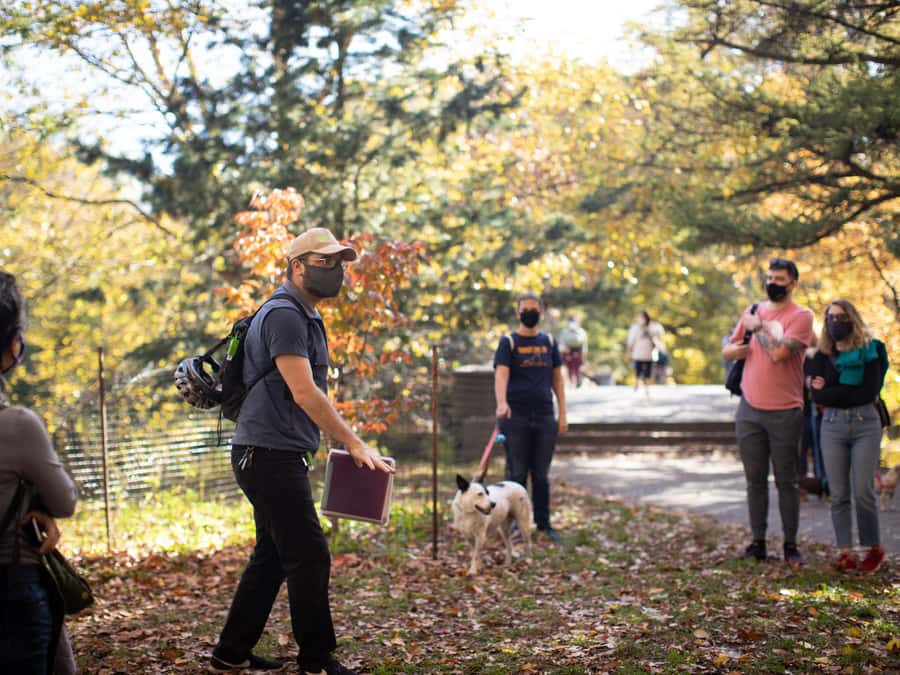
The small group improves the value. With no more than nine participants, the guide can keep the group together and take questions without a microphone or a long wait. That makes the experience feel more personal than a large city tour.
The price also works well for families, couples, solo visitors, and anyone who wants a short activity that does not consume half a day. The main cost is your time and energy. You need to reach Grand Army Plaza, walk two miles, and accept the possibility of rain.
You can reserve now and pay later, which helps if your New York schedule is still changing. Free cancellation is available up to 24 hours before the tour for a full refund. Those terms make it easier to plan around the weather and other city plans.
Who will enjoy this Prospect Park walk?
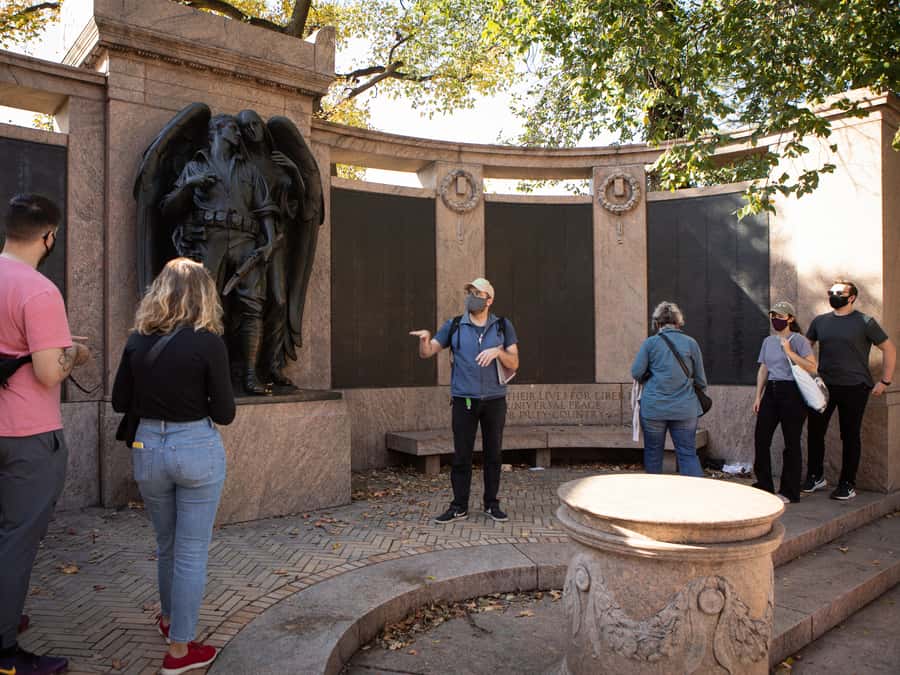
I would recommend it to you if you like public parks, urban design, local history, or nature but do not want a highly specialized lecture. The guide covers several subjects without requiring prior knowledge.
It is also a good choice if you have already seen the main Manhattan sights and want a more local view of New York. Prospect Park lets you see how Brooklyn residents use a major open space for recreation, relaxation, and community life.
Families may enjoy the animals and waterfalls, especially if children need something concrete to look at while the guide explains the history. The two-hour length is long enough to feel worthwhile but short enough to fit around other plans.
I would hesitate to recommend it if you dislike walking, want a strictly weather-proof activity, or prefer a fast list of photo stops. The commentary is a central part of the experience. You should be willing to pause, listen, and notice how the park was shaped.
Smart ways to prepare
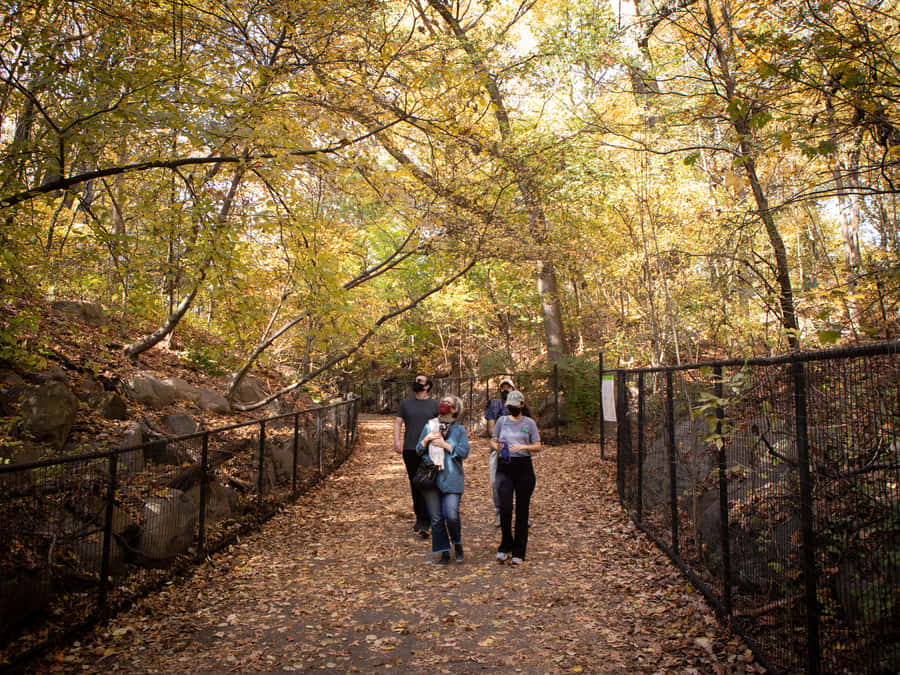
Wear shoes you can comfortably use for two miles. This is the single most important preparation tip, since the tour is on foot and operates in all weather.
Bring water, an umbrella, and clothing suited to the forecast. Do not count on a perfect day simply because the activity takes place outdoors. Rain does not cancel the tour automatically.
Arrive at the Brooklyn Public Library Central Library with enough time to locate the front steps. The nearest subway options are Grand Army Plaza on the 2 and 3 lines and 7th Avenue on the B and Q lines.
Keep your group size in mind when booking. The nine-person limit is ideal for conversation, but it also means spaces may be limited on popular dates. If the tour fits your schedule, the reserve-now, pay-later option gives you flexibility.
Should you book this Prospect Park tour?
I would book this tour if you want Prospect Park to make sense, not merely look pleasant. The waterfalls, Long Meadow, Ravine, lakes, wildlife, and built features become more meaningful when a guide connects them to the park’s design and changing public role.
At $25, the tour offers good value for a compact, small-group introduction. Book it if you can manage two miles on foot and are prepared for rain or shine conditions. Skip it if you want a completely self-directed stroll or an indoor activity.
For most curious visitors, this is a smart way to spend two hours in Brooklyn. You get fresh air, a strong sense of place, and a clearer understanding of why Prospect Park remains an important part of daily life in the borough.
FAQ
How long is the Prospect Park walking tour?
The tour lasts two hours.
How far do you walk?
The tour involves about two miles of walking, or 3.2 kilometers.
Where does the tour begin?
It begins on the front steps of the Brooklyn Public Library Central Library at 10 Grand Army Plaza, Brooklyn, NY 11238.
Which subway stations are near the meeting point?
The nearest stations are Grand Army Plaza on the 2 and 3 lines and 7th Avenue on the B and Q lines.
What language is the tour offered in?
The tour is available in English only.
Is the tour wheelchair accessible?
Yes, the tour is listed as wheelchair accessible.
How many people are in the group?
The group is limited to nine participants.
Does the tour operate in bad weather?
Yes. The tour operates rain or shine, so you should bring an umbrella and wear weather-appropriate clothing.
What should I bring?
Bring comfortable shoes, an umbrella, water, and clothing suited to the weather.
More 2-Hour Experiences in Brooklyn
- From Manhattan: 2-Hour Brooklyn Bridge Bike Tour
★ 4.4 · 230 reviews - Brooklyn Bridge and Waterfront 2-hour Guided Bike Tour
★ 4.5 · 184 reviews - From Manhattan: 2-Hour Brooklyn Bridge Sightseeing Bike Tour
★ 4.4 · 125 reviews - Brooklyn: 2-Hour Best of Brooklyn Walking Tour -Williamsburg
★ 4.3 · 120 reviews
Just listed around Brooklyn
- Brooklyn Walking Tours by Locals: Private & 100% Personalized★ 4.0 · 6 reviews
- 3 Hour Session at Williamsburg’s Adventure Park Area 53★ 3.5 · 6 reviews
- French Christmas Tour in Brooklyn★ 5.0 · 6 reviews
- Explore The Real Brooklyn★ 5.0 · 6 reviews
- Magnificent Christmas Lights Tour of Dyker Heights Brooklyn★ 3.5 · 6 reviews
- Brooklyn Heights and Dumbo: Guided New York Food Tour★ 4.7 · 6 reviews
- Easy Access Statue of Liberty and Brooklyn Bridge Discovery Tour★ 4.5 · 7 reviews
- Easy Access Statue of Liberty & Brooklyn Bridge Discovery★ 5.0 · 7 reviews
Brooklyn Tours, compared.

NYC Bus Tour of Brooklyn, Bronx, Queens: Art, Food & Sports
Read our review →
NYC Highlights Tour: Bronx, Brooklyn, Harlem, Queens & Coney
Read our review →
Contrasts Tour of Harlem, The Bronx, Queens & Brooklyn
Read our review →
Brooklyn Nets NBA Game Ticket at Barclays Center
Read our review →

Contrasts of Bronx, Queens, Brooklyn, & Manhattan Tour
Read our review →
Brooklyn Bridge & DUMBO Neighborhood Tour – from Manhattan to Brooklyn
Read our review →Browse the lists this tour appears in