
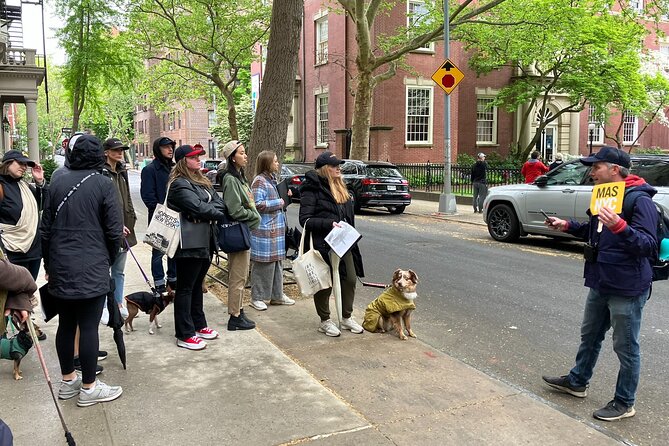
Reviewed · BROOKLYN TOURS
Brooklyn Heights: New York City’s First Suburb
Brooklyn Heights gives you a rare two-for-one history lesson: the neighborhood tells the story of the American Revolution, then shifts into the wealth and ambition of 19th-century Brooklyn. You’ll walk past more than 600 buildings from before the Civil War while hearing how this was shaped into New York City’s first historic district.
I like the small group limit of 10, which should make it easier to ask questions and keep pace with the guide. I also like the mix of stories: Andy, one of the named guides, has been praised for creating a friendly afternoon for families, while the route links grand houses to the Underground Railroad, baseball, and sweeping views of lower Manhattan.
The main consideration is time. At three to four hours, this is a serious neighborhood walk, not a quick look around. You’ll also need good weather, since the experience can be canceled in poor conditions.
In This Review
- Key points about the Brooklyn Heights walk
- Why Brooklyn Heights makes a strong walking tour setting
- Starting at Brooklyn’s first City Hall
- Revolution and the making of Brooklyn Heights
- More than 600 buildings from before the Civil War
- The north and south divide, with a baseball twist
- The view over lower Manhattan
- A church connected to the Underground Railroad
- Andy’s guide style and the importance of the group
- Is $75 a fair price?
- Practical details before you book
- Who should book this Brooklyn Heights tour?
- Should you book it?
- FAQ
- How long does the Brooklyn Heights tour last?
- Where does the tour start?
- What time does the tour begin?
- Where does the tour end?
- How many people can join the tour?
- Can I cancel for a full refund?
Key points about the Brooklyn Heights walk
- Brooklyn’s first City Hall: Begin with a major civic building constructed between 1834 and 1848.
- Revolutionary Brooklyn: Hear how the neighborhood and surrounding area figured in the American Revolution.
- More than 600 pre-Civil War buildings: See why Brooklyn Heights became New York City’s first historic district.
- A baseball connection: Visit the area once linked to the Brooklyn Dodgers’ ticket office and a change in the way baseball was handled.
- Underground Railroad history: Learn about a church described as a central point in the escape of enslaved people to freedom.
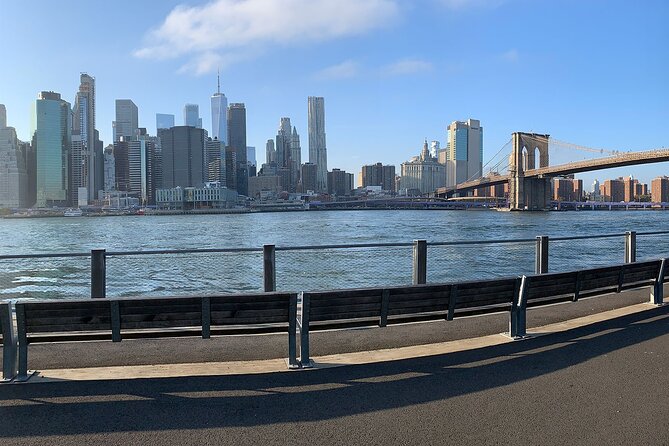
- Lower Manhattan views: Pause above the water for one of the city’s best scenic outlooks.
Why Brooklyn Heights makes a strong walking tour setting
Brooklyn Heights is compact enough to explore on foot, yet layered enough to keep changing character from one block to the next. The neighborhood gives you architecture, civic history, religion, business, sports, and river views without requiring a long trip across Brooklyn.
The most useful feature of this tour is its time span. You are not being shown only handsome streets and old houses. The walk reaches back to the Revolutionary era, moves through Brooklyn’s 19th-century growth, and then brings those stories into the modern city.
That makes the route more rewarding than a simple architecture stroll. You can look at a building and ask what it meant at the time: Was it tied to local government, private wealth, social reform, or a new form of entertainment?
The tour is also limited to 10 people. That matters on city walks, where a large group can block sidewalks and make questions awkward. A small party should allow for a more relaxed exchange with the guide, although the actual group size depends on the bookings for your date.
More Brooklyn days out:
- NYC Bus Tour of Brooklyn, Bronx, Queens: Art, Food & Sports
★ 5.0 · 3,805 reviews - NYC Highlights Tour: Bronx, Brooklyn, Harlem, Queens & Coney
★ 4.5 · 2,846 reviews - NYC: Contrasts Tour of Harlem, The Bronx, Queens & Brooklyn
★ 4.5 · 2,167 reviews
Starting at Brooklyn’s first City Hall
The meeting point is Borough Hall Station on Court Street in Brooklyn, with a 1:00 pm start. From there, the walk begins near Brooklyn’s first City Hall, built between 1834 and 1848.
This is a useful opening stop because it places Brooklyn’s growth in a civic setting. City Hall was not just another old building. It reflects the period when Brooklyn was developing its own institutions and identity, before the modern city merged its many boroughs into one New York.
You’ll want to pay attention to the guide’s explanation here rather than treating the building as a quick photo stop. The dates alone tell you that the structure belongs to a period of major change, when Brooklyn was expanding in population, commerce, and political importance.
Starting at a subway station is practical. You can reach Borough Hall Station using public transportation, and the location gives you a clear place to meet before the group heads toward Brooklyn Heights. Since the tour begins at 1:00 pm, plan to arrive early enough to find the station exit and gather without rushing.
Revolution and the making of Brooklyn Heights
The Revolutionary portion of the walk adds a sharper edge to the elegant streets. Brooklyn was not simply a quiet residential quarter during the American Revolution. The area was tied to the conflict that shaped the new United States, and the tour uses local sites to explain that connection.
You’ll hear about revolutionaries and patriots, along with the courage and conflict that marked the era. This is where a guide can make the neighborhood feel less polished and more exposed to the risks of its time.
The value here is context. Without it, Brooklyn Heights can look like a collection of expensive homes and calm streets. With it, the same setting becomes part of a larger story about loyalty, resistance, war, and the uncertain future of the colonies.
The supplied details do not identify every Revolutionary site by name, so you should expect the guide to connect several points rather than focus on a single major monument. If you want a tour built around battlefield ruins or preserved military structures, this may not be the right choice. If you want local stories tied to a famous national conflict, it offers a more neighborhood-based approach.
More than 600 buildings from before the Civil War
The architectural heart of the experience is Brooklyn Heights itself. The neighborhood contains more than 600 buildings dating from before the Civil War, a concentration that helps explain why it became New York City’s first historic district.
That number gives you a sense of scale. You are not looking at one preserved street and then returning to modern blocks. Much of the walk is shaped by a broad collection of older buildings, which makes the setting itself part of the lesson.
The tour focuses on architectural wonders and the homes of the Gilded Age. You’ll learn about the industrialists and innovators who helped drive Brooklyn’s rapid growth, and you’ll see how wealth appeared in the built environment.
The Gilded Age can be an easy subject to reduce to grand houses and rich families. A good guide gives it more meaning by showing how industry and innovation changed the city, who gained from that growth, and how private fortunes left their mark on a residential neighborhood.
I like this part for travelers who enjoy architecture but do not want a lecture detached from daily life. The buildings are not presented as isolated design objects. They are linked to the people and economic forces that made Brooklyn a major urban center.
Still, keep your expectations sensible. The information provided does not promise entry into private homes or interiors of landmark buildings. Much of the experience is an outdoor walk, so the pleasure comes from seeing the streets, façades, and setting while listening to the guide.
A few more Brooklyn picks to weigh up
- New York City: Tour of Manhattan, Bronx, Queens & Brooklyn
★ 4.6 · 832 reviews - The Escape Game Brooklyn: Epic 60-Minute Adventures in City Point
★ 5.0 · 332 reviews - City of Contrasts Tour-Manhattan, Bronx, Queens and Brooklyn
★ 4.5 · 126 reviews - New York City: Brooklyn, Queens and Bronx Tour in Spanish
★ 4.3 · 87 reviews
The north and south divide, with a baseball twist
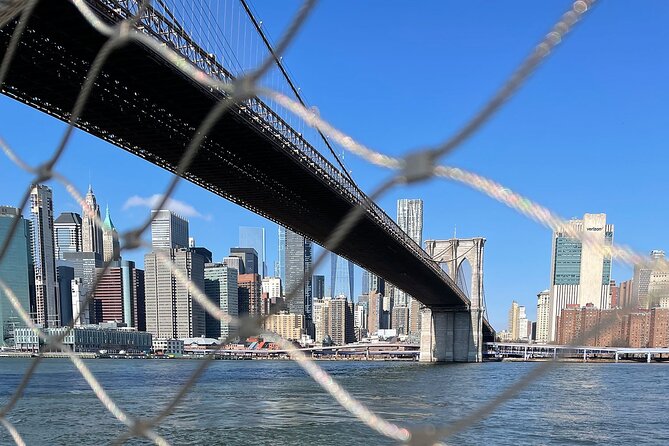
One stop divides Brooklyn Heights into its northern and southern sections. The location once had a Brooklyn Dodgers ticket office and is connected with a change that helped baseball develop.
That makes this a welcome break from the usual parade of architecture and politics. Baseball history gives the neighborhood a popular-culture link, and it shows how Brooklyn’s identity was shaped not only by government and wealthy residents but also by the sports world.
The supplied details do not specify the exact baseball change or explain how the ticket office functioned. You’ll want to ask the guide for the full story when you reach the stop. That uncertainty is not a reason to skip it, but it does mean the quality of the explanation will matter.
This is another reason a small-group format helps. If the Dodgers connection catches your interest, you can ask a follow-up instead of letting the story pass in a crowded group. Families and baseball fans may find this one of the most memorable parts of the walk.
The view over lower Manhattan

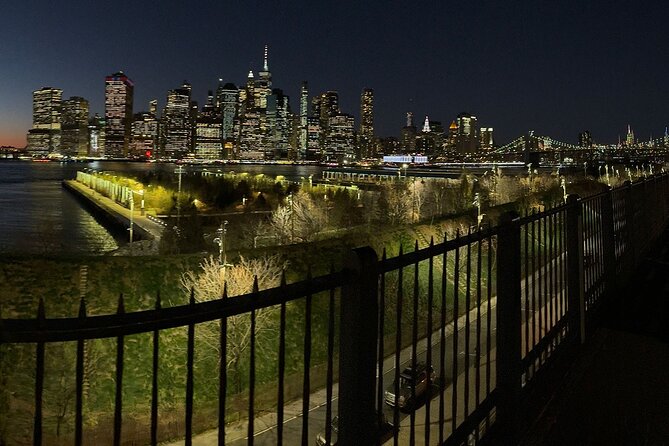
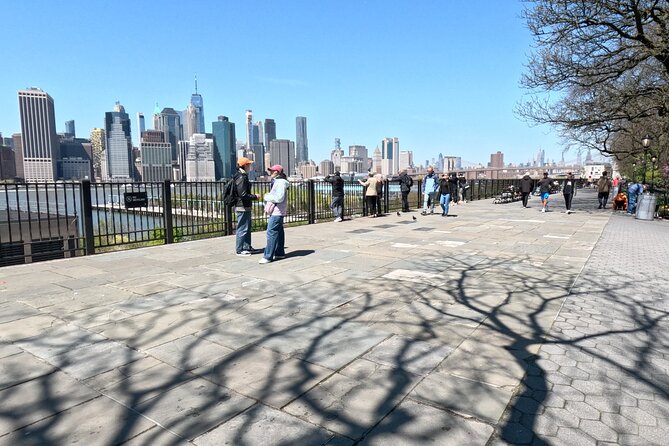
The route includes a viewpoint overlooking lower Manhattan, described as a view from New York’s first scenic district. This is the natural pause in the tour, when the history gives way to the city itself.
You’ll see the scale of lower Manhattan from across the water, with Brooklyn Heights providing a different angle on the skyline. The point is not only to take a photograph. The view helps explain why this neighborhood became desirable and why its location mattered as Brooklyn grew.
I would treat this as a highlight, especially if you have already spent time on the Manhattan side. Looking back from Brooklyn changes your sense of the city. You see the relationship between the two boroughs rather than experiencing Manhattan as a self-contained destination.
Weather matters here in a practical way. The tour requires good conditions, and poor weather can lead to a new date or a full refund. Even if the walk goes ahead, rain or poor visibility could reduce the pleasure of the viewpoint, so check the forecast before you commit to the day.
A church connected to the Underground Railroad
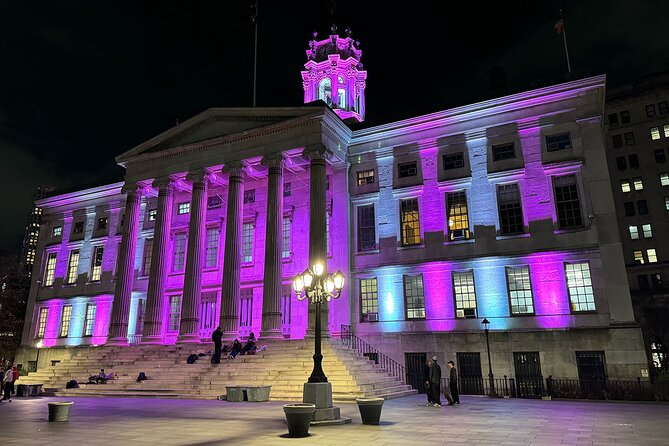
The church stop offers the tour’s most powerful social-history lesson. It is described as a major center of the Underground Railroad, helping enslaved people escape to freedom.
This part gives the walk moral weight. The Gilded Age homes show wealth and ambition, while the church story points to resistance, faith, risk, and the fight against slavery. Together, the stops create a fuller picture of Brooklyn than an architecture-only tour could provide.
The phrase Grand Central of the Underground Railroad is used to describe the church’s importance. You should listen closely to the guide’s wording and dates, since the Underground Railroad was a network of people and places rather than a literal railroad.
The tour information does not state the church’s name or promise interior access. Plan on learning about its role from the guide and viewing the site as part of the walking route. If you are especially interested in abolition or Black history, this stop may be a major reason to choose the tour, but you may want a separate specialized visit for more detailed coverage.
Andy’s guide style and the importance of the group
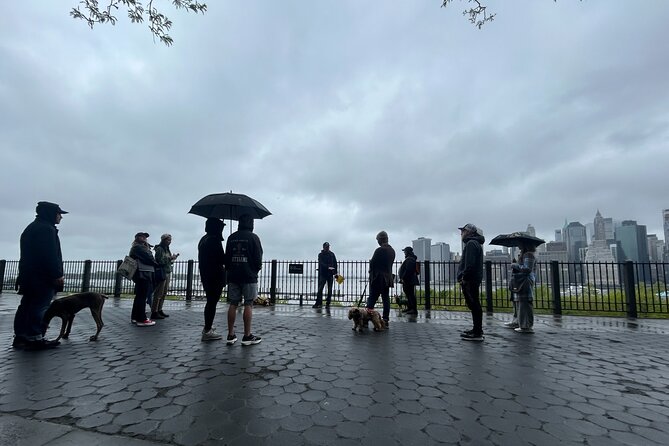
Andy is the only guide named in the supplied information, and his approach was praised for being terrific and friendly during an afternoon walk with a family. That suggests a warm style rather than a stiff, academic presentation.
The experience promises an engaging guide and specifically contrasts that with a fast-talking guide who speaks at you instead of with you. That is a useful promise to look for on a long walking tour. At three to four hours, clear pacing and room for questions matter as much as the facts.
You should not assume Andy will lead every departure. Guide assignments can vary, and the available information does not guarantee a particular person for your date. Still, the emphasis on conversation and a friendly atmosphere is encouraging.
A group of up to 10 is a good middle ground. It is more personal than a large city tour, but not as private as a one-on-one walk. If you want a fully customized route or have very specific research interests, a private guide would give you more control. If you prefer company and a fixed route at a lower price than a private tour, this format makes sense.
Is $75 a fair price?
The cost is $75 per person. For a three-to-four-hour guided walk in New York, that price can be fair if you value the guide’s storytelling and the range of subjects covered.
You are paying for more than a view and a stroll. The route combines Revolutionary Brooklyn, Gilded Age development, historic architecture, baseball, the Underground Railroad, and lower Manhattan scenery. The small maximum group also adds value because a guide can speak to the group rather than simply deliver a speech.
The price will feel less convincing if you mainly want to wander the streets and take photographs. Brooklyn Heights is enjoyable without a guide, and the tour does not include a meal, attraction admission, transportation during the walk, or a stated private group arrangement.
I would choose it when you want a clear narrative and help spotting meaning in the buildings. It is especially useful early in a Brooklyn visit, since the guide can give you a foundation for exploring the neighborhood on your own afterward.
Practical details before you book
The walk starts at Borough Hall Station, Court Street, Brooklyn, at 1:00 pm and ends at 2 Pierrepont Place. The finish point is not the same as the starting point, so plan your onward route from Brooklyn Heights rather than returning to the station.
A mobile ticket is provided, and confirmation is expected within 48 hours, subject to availability. The tour is near public transportation, service animals are allowed, and most people can take part.
The experience is weather dependent. You can cancel for a full refund up to 24 hours before the start time, but cancellations or changes made inside that window are not refunded or accepted. If poor weather forces cancellation, you will be offered another date or a full refund.
Wear shoes suited to several hours on city sidewalks. That is simple advice, but it matters more here than on a short landmark visit. You may also want to bring water, since the route is long and the information supplied does not include scheduled refreshments.
Who should book this Brooklyn Heights tour?
I would recommend this walk to you if you enjoy old neighborhoods, local history, architecture, and stories that connect a street corner to a larger national event. Families may appreciate the variety, since the route moves from revolution to baseball to grand homes and dramatic views.
It also suits first-time Brooklyn visitors who want an organized introduction without joining a very large group. The 10-person limit and friendly guide style should make it easier to ask questions and keep the pace manageable.
You may want to skip it if you dislike long outdoor walks, need guaranteed indoor access, or want a tightly focused subject. It is broad rather than specialized, and the three-to-four-hour length demands a real block of your afternoon.
Should you book it?
Book this tour if you want Brooklyn Heights explained as a living neighborhood rather than used only as a backdrop for skyline photos. The strongest reasons are the small group, the wide range of history, the large collection of pre-Civil War buildings, and the chance to connect a church, a baseball office, a civic building, and a Manhattan viewpoint in one walk.
The best fit is a curious first-time visitor who wants stories and setting in equal measure. At $75, it offers solid value when you will use the guide’s context to notice more on your own. Just allow the full afternoon, prepare for outdoor conditions, and do not expect a quick highlights tour.
FAQ
How long does the Brooklyn Heights tour last?
The experience lasts approximately three to four hours.
Where does the tour start?
It starts at Borough Hall Station on Court Street in Brooklyn, New York 11201.
What time does the tour begin?
The scheduled start time is 1:00 pm.
Where does the tour end?
The tour ends at 2 Pierrepont Place, Brooklyn, New York 11201.
How many people can join the tour?
The maximum group size is 10 travelers.
Can I cancel for a full refund?
Yes. You can cancel at least 24 hours before the local start time for a full refund. Cancellations or changes made less than 24 hours before the experience are not accepted, and payment is not refunded.
Just listed around Brooklyn
- Victorian Flatbush , Brooklyn Private Tour★ 5.0 · 5 reviews
- Brooklyn, NY Street Art Puzzle Quest: Self-Guided Tour★ 4.0 · 5 reviews
- Outdoor Escape Room in Brooklyn – Prospect Heights★ 5.0 · 5 reviews
- Guided tour in French of Brooklyn Bushwick and Williamsburg★ 5.0 · 5 reviews
- Private Brooklyn Heights, Brooklyn Bridge and DUMBO Food Tour★ 5.0 · 5 reviews
- Professional Photoshoot at Brooklyn Bridge in New York★ 5.0 · 5 reviews
- Private Driving Tour of Brooklyn (Half Day)★ 5.0 · 5 reviews
- New York City: Brooklyn Bridge and Dumbo Walking Tour★ 4.8 · 5 reviews
Brooklyn Tours, compared.

NYC Bus Tour of Brooklyn, Bronx, Queens: Art, Food & Sports
Read our review →
NYC Highlights Tour: Bronx, Brooklyn, Harlem, Queens & Coney
Read our review →
Contrasts Tour of Harlem, The Bronx, Queens & Brooklyn
Read our review →
Brooklyn Nets NBA Game Ticket at Barclays Center
Read our review →

Contrasts of Bronx, Queens, Brooklyn, & Manhattan Tour
Read our review →
Brooklyn Bridge & DUMBO Neighborhood Tour – from Manhattan to Brooklyn
Read our review →Browse the lists this tour appears in