
Reviewed · TIMES SQUARE & MIDTOWN TOURS
3 Hour Midtown Manhattan Architectural Tour
Midtown Manhattan is a living lesson in how New York grew upward. In three hours, you’ll move from French chateau splendor at The Plaza to Art Deco towers, corporate modernism, grand hotels, Rockefeller Center, and Grand Central Terminal. Guide Annabel adds the people, rivalries, money, and odd details that make the buildings memorable.
I like the small maximum of eight people, which makes it easier to ask questions and adjust the pace. I also like the chance to see selected lobbies and interiors, including the Sherry-Netherland’s Vatican Library-inspired design, rather than simply photographing facades from the sidewalk. The main consideration is that this is a walking and storytelling tour, not a technical architecture class, and admission to the Empire State Building is not included.
In This Review
- Key points at a glance
- Why this Midtown architecture walk works
- Starting at The Plaza and Fifth Avenue hotels
- Seagram Building and the move toward modern office towers
- The General Electric Building and Rockefeller Center
- The Empire State Building and the skyscraper race
- The New York Public Library and the Chrysler Building
- Finishing at Grand Central Terminal
- Annabel’s guiding style and group size
- Is $85 a fair price?
- Who should book this architecture tour?
- Should you book the Midtown Manhattan Architectural Tour?
- FAQ
- Where does the Midtown Manhattan Architectural Tour start?
- Where does the tour end?
- What time does the tour begin?
- How long does the tour last?
- Is admission to the Empire State Building included?
- How many people can join the tour?
- What is the cancellation policy?
Key points at a glance
- Annabel’s personal approach: She adjusts the discussion to the group’s interests and connects buildings with New York personalities and events.
- A broad Midtown sweep: The route covers The Plaza, Fifth Avenue hotels, Rockefeller Center, the Empire State Building, the Chrysler Building, and Grand Central.
- Interior access when possible: Selected lobbies and public spaces can add detail that you would miss from the street.
- A history-led architecture lesson: You’ll learn how styles changed from grand residential avenues to skyscrapers and corporate towers.
- A compact group: The tour allows no more than eight people, though a smaller booking may feel almost private.
- A useful morning route: It begins at The Plaza at 9:00 a.m. and ends at Grand Central Terminal, a practical point for continuing your day.
Why this Midtown architecture walk works
The best thing about this tour is its range. Many New York walks focus on one style or one neighborhood. This route gives you a quick visual record of Midtown’s development, from early luxury hotels and private mansions to the office towers that changed Fifth Avenue and the skyline.
You are not just looking at attractive buildings. You are learning why they appeared where they did and who paid for them. Fifth Avenue shifted from Millionaires’ Row to a commercial avenue. Office towers became symbols of corporate power. Hotels competed through height, ornament, service, and famous residents.
That human angle is where Annabel’s role matters. Her approach is conversational rather than a nonstop recital of dates. She can connect architecture with figures such as John Jacob Astor IV, Walter Chrysler, the Rockefellers, and later New York personalities. You may leave remembering a story about an owner or lobby long after the technical terms have faded.
The route also works well for repeat visitors. You may have walked past these buildings many times, but a guide can point out details, explain the purpose of artwork, and show you public interiors that are easy to overlook.
More Times Square and Midtown walks:
- NYC: Circle Line “The Beast” Midtown/Downtown Speedboat Ride
★ 4.6 · 4,259 reviews - NYC in a Day Tour: Lady Liberty, Times Square, Freedom Tower
★ 5.0 · 1,735 reviews - Broadway and Times Square Insider Tour with Theater Professional
★ 5.0 · 651 reviews
Starting at The Plaza and Fifth Avenue hotels
The tour starts outside The Plaza at 768 Fifth Avenue at 9:00 a.m. This is a smart meeting point because the building immediately sets the tone. Designed with the grandeur of a French chateau, The Plaza is all ceremony, symmetry, and luxury. Its film appearances have made it familiar even to people who have never visited New York.
From here, the walk moves to The Sherry-Netherland. Its lobby was modeled after the Vatican Library, an unusually grand choice for a residential hotel. When it opened, it was described as the tallest residential hotel in New York City. That detail helps explain the competition among luxury buildings at the time: height was not only an engineering achievement, but also a marketing tool.
You may have a chance to see interiors during the walk. Access can depend on the building and the day, so think of this as a valuable possibility rather than a guaranteed private visit. If you are interested in decorative details, ask Annabel to point out what to look for before entering a lobby.
The St. Regis New York adds another layer to the Fifth Avenue story. John Jacob Astor IV, one of the wealthiest men in the country, built the hotel. Its arrival marked the changing character of Fifth Avenue, as the street shifted from a residential address for the city’s richest families into a fashionable commercial thoroughfare.
These first stops are useful because they show luxury architecture as a social statement. The buildings were designed to impress residents, hotel patrons, and anyone passing along Fifth Avenue. I would pay attention to the contrast between their historic opulence and the commercial city around them.
Seagram Building and the move toward modern office towers
The Seagram Building presents a sharp change in mood. Its design became a model for office towers around the world and is one of the standard examples of corporate modernism.
Even if you do not normally study architecture, the contrast is easy to grasp. The earlier hotels emphasize ornament, ceremony, and historical references. The Seagram Building represents restraint, order, and a corporate identity expressed through materials and proportion.
This is one of the places where the tour is especially helpful for beginners. You do not need to arrive knowing architectural vocabulary. Annabel can explain how the building’s design fits into the larger progression of New York architecture and why it mattered beyond Midtown.
A useful expectation to set is that the tour may emphasize historical context more than detailed analysis of every structural feature. One family booking specifically valued the way Annabel explained distinctive features, historical changes, and the people connected to the buildings, while noting that the experience leaned more toward history than pure architectural theory.
For most sightseers, that is a strength. You get an understandable account of how buildings reflect business, fashion, wealth, and technology. If you want a specialist lecture on construction systems or preservation methods, this may feel less technical.
The General Electric Building and Rockefeller Center
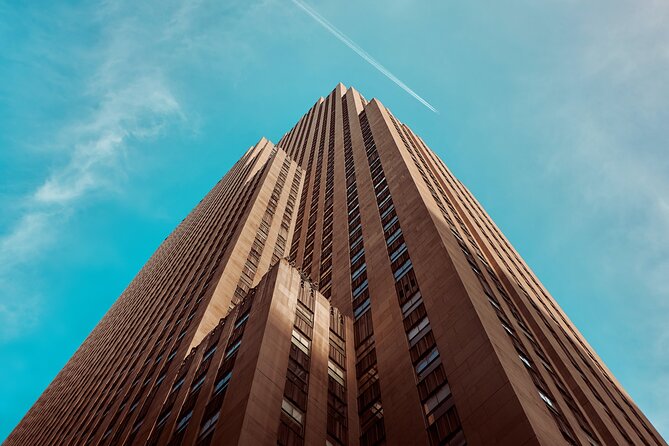
The General Electric Building, originally the RCA Building, brings you back to theatrical Art Deco. Its chrome and marble lobby and radio-wave crown make it feel like a work of art as much as an office tower.
The original RCA connection is worth noting because the building’s design is tied to the age of radio and mass communication. The crown turns corporate identity into a visual symbol. Look up as you approach, since the upper decoration is easy to miss when Midtown traffic pulls your attention to street level.
Next comes the Waldorf Astoria New York, a legendary hotel associated with presidents, world leaders, celebrities, and foreign dignitaries. The hotel belongs to the same luxury-building tradition as The Sherry-Netherland, the Pierre, and the Hotel Lexington, all connected to the prominent firm behind those projects.
This stop is less about a single design trick and more about the role of grand hotels in New York life. Hotels were places to sleep, but also stages for politics, society, business, and ceremony. Annabel’s storytelling can help you see why a hotel lobby mattered as much as a private residence or office entrance.
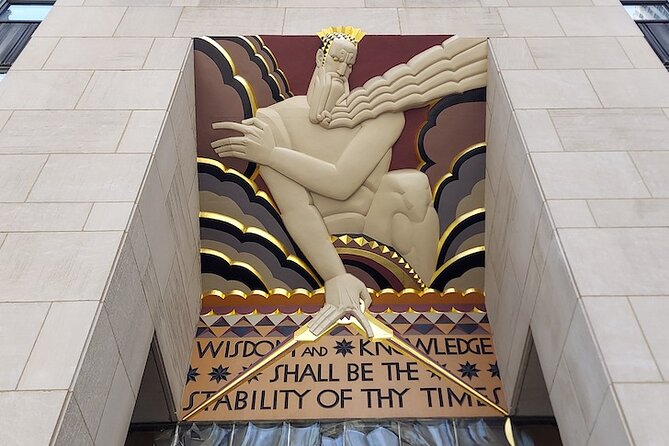
Rockefeller Center is the tour’s largest architectural subject. The complex covers 22 acres and includes 19 commercial buildings and more than 100 artworks. During the Great Depression, it was the largest and most expensive development project of its time, providing 60,000 jobs at its height.
That scale explains why Rockefeller Center feels like more than a collection of buildings. It was planned as a unified project, with architecture, public space, artwork, commerce, and employment tied together. You can look at the complex as a major business venture, a public-relations statement, and a response to an economic crisis.
I particularly like having a guide here because the artwork and layout can seem decorative without explanation. Annabel can give you the meaning and purpose behind elements you might otherwise pass without noticing. Plan to pause and look around rather than treating Rockefeller Center as a quick photo stop.
A few more New York City picks to weigh up
- NYC at Night: 3-Hour Luxury Bus Tour of Top Highlights
★ 4.5 · 448 reviews - 3 Hour Luxury Bus Tour of NYC Night Highlights
★ 4.5 · 204 reviews - Brooklyn: 3-Hour Williamsburg Bites Food Tour
★ 4.5 · 58 reviews - 3-Hour Private New York Classic Films Guided Tour
★ 4.5 · 57 reviews
The Empire State Building and the skyscraper race
The Empire State Building is seen from the outside, with admission not included in the $85 tour price. That is important if you are hoping to go to the observation decks. This experience is about understanding the building and its place in Midtown, not visiting its interior or viewing the city from above.
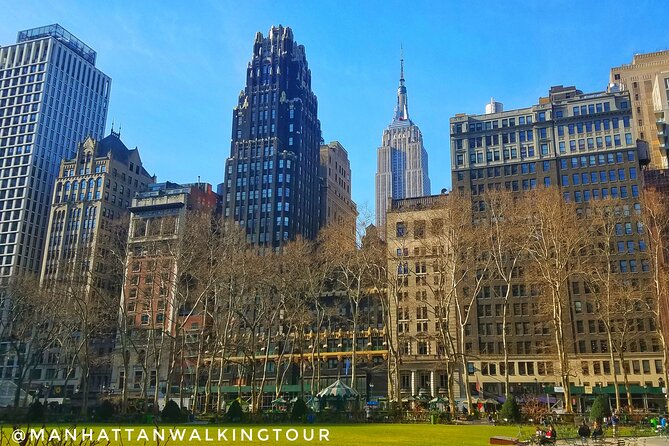
The building held the title of tallest in the world for 40 years. It was completed in 410 days and came in under budget, an impressive record that gives the structure a practical side beneath its famous image. Its name comes from Empire State, New York’s nickname.
This stop helps connect the earlier buildings to the skyscraper race. You can consider how speed, height, engineering, and business ambition shaped New York. The Empire State Building is not only a postcard icon. It is evidence of a particular moment when New York competed to build higher and faster.
If an observation deck visit is on your wish list, plan that separately and budget for its admission. The tour gives you context, but it does not replace a ticketed visit.
The New York Public Library and the Chrysler Building
The New York Public Library’s Stephen A. Schwarzman Building offers a different idea of civic grandeur. The library formed through the consolidation of the Tilden Trust, Astor, and Lenox libraries in 1895. When the building opened in 1911, its collection totaled 350,000 volumes. Today, the library system holds more than 55 million books and other items across seven floors.
This stop broadens the tour beyond hotels and private business. The building shows how New York invested in learning and public access while its commercial towers rose nearby. Its scale and purpose make it a useful counterpoint to the luxury hotels and corporate buildings.
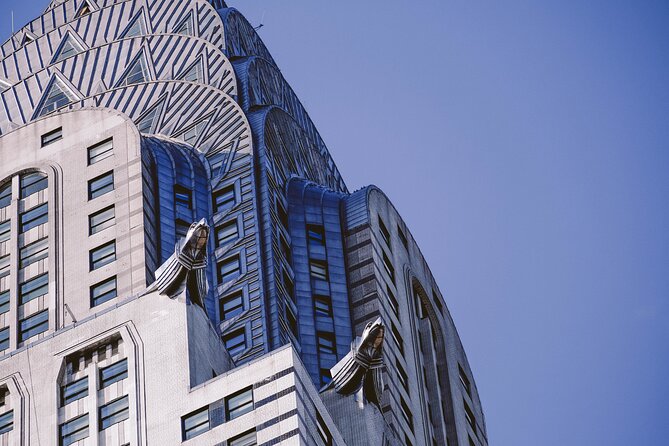
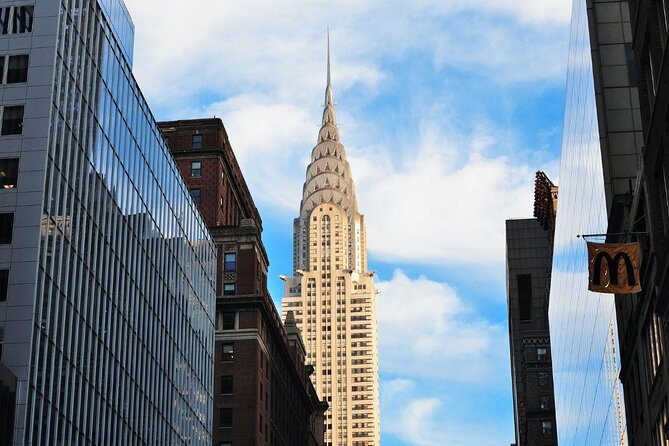
The Chrysler Building is the route’s classic Art Deco finale before Grand Central. It was a personal symbol for automobile executive Walter Chrysler and a statement about the strength of his company. Its crown and ornament make it one of the clearest examples of Art Deco architecture in New York.
The building’s nickname, jotazz in stone and steel, captures its connection with the machine age. You can read its design as advertising, but also as a celebration of speed, metal, industry, and modern life.
I would allow yourself time to look up here. Midtown streets can make tall buildings feel compressed, and the Chrysler Building rewards a slower glance. Annabel’s stories about the people behind the money and construction add useful context to the visual drama.
Finishing at Grand Central Terminal
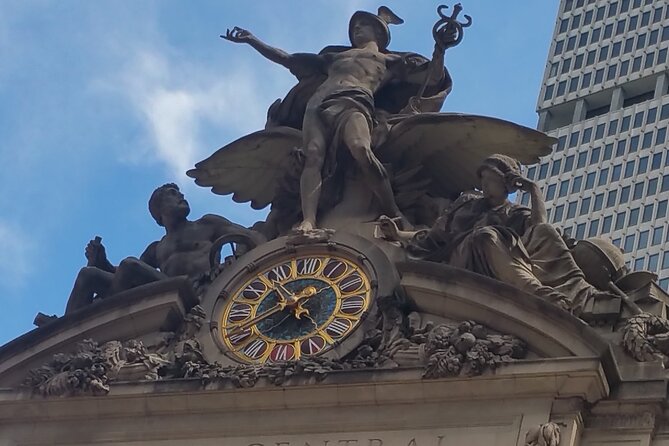
The walk ends at Grand Central Terminal at 89 East 42nd Street. This is an excellent final stop because the terminal brings many themes together: engineering, public movement, civic design, and the growth of New York.
Grand Central has 44 platforms and 67 tracks. Those figures help explain why it is more than a handsome railway hall. Its design and transportation systems influenced American planning, architecture, engineering, and culture for decades.
Ending here also gives you a clear next step. You can continue through Midtown, use public transportation, or arrange another activity from a major transit hub. The endpoint is not simply a convenient address. It is the final example of architecture designed for thousands of people moving through the city.
The route lasts about three hours, and the listed stops are each planned for roughly 15 minutes. That does not mean you spend exactly 15 minutes at every building. Walking time, questions, traffic, and interior access can change the rhythm. One private booking lasted about three and a half hours, so keep a little flexibility in your morning.
Annabel’s guiding style and group size
Annabel is the main reason this tour feels personal rather than mechanical. She is a longtime New Yorker with a strong interest in architecture, but her style also includes history, personalities, and present-day life in the city.
She adjusts the route and conversation to the group. A family with a grandmother and a 13-year-old interested in architecture found that she could keep both engaged. Couples who booked alone received something close to a private walk and were able to ask questions throughout.
The small-group limit is eight people. If the booking is not full, the experience can become even more conversational. That does not guarantee a private tour, but it does give you better odds of being heard and getting answers than you would on a large city walk.
There is one practical sound issue to keep in mind. Midtown traffic can make it hard to hear, especially at the start. One useful suggestion is to begin with a short introduction in a quieter place before moving into the street. Stay close to Annabel, and ask her to repeat a point if buses or traffic drown it out.
Is $85 a fair price?
At $85 per person, this is not the cheapest way to see Midtown. You can walk past most of these buildings on your own for free. The value comes from the interpretation, the route planning, the historical connections, and possible access to selected lobbies.
I think the price makes sense if you want more than a list of famous addresses. You are paying for three hours of focused attention, a carefully linked route, and a guide who can adapt the discussion. The value is stronger for first-time visitors who want an introduction to Midtown and for repeat visitors who feel they have already seen the obvious sights.
The price is less compelling if you mainly want photographs or plan to visit the Empire State Building interior. Admission there is separate, and the tour does not include a paid attraction entrance.
The tour is usually booked about 23 days in advance, so I would reserve early if your dates are fixed. Confirmation arrives at booking, the ticket is mobile, and the tour is offered in English.
Who should book this architecture tour?
I would choose this walk if you enjoy architecture, city history, old hotels, skyscraper design, or the stories behind famous New York names. It also suits families, solo visitors, and couples, especially if you prefer conversation to a large group lecture.
You should be comfortable walking for about three hours. A moderate level of physical fitness is recommended, and the tour runs near public transportation. Service animals are allowed.
This is also a good morning choice for people who want to build the rest of their day around Midtown. Starting at The Plaza and ending at Grand Central gives you a logical northward route through some of the city’s most important buildings.
Should you book the Midtown Manhattan Architectural Tour?
I would book it if you want Midtown to make more sense. The route covers famous landmarks, but Annabel’s explanations connect them into a story about wealth, commerce, technology, public life, and changing architectural taste.
Book it especially if you value a flexible guide and a small group. The chance to enter selected lobbies can add real depth, though access is not presented as guaranteed. Skip it if you want a purely technical architecture lecture, a dedicated Empire State Building visit, or a short photo walk with little commentary.
For most visitors, the strongest combination is the broad route and Annabel’s personal style. You see the icons, but you also learn to notice the less obvious details above the storefronts, inside the lobbies, and in the spaces between the towers.
FAQ
Where does the Midtown Manhattan Architectural Tour start?
The tour starts at The Plaza, 768 Fifth Avenue, New York, NY 10019.
Where does the tour end?
It ends at Grand Central Terminal, 89 East 42nd Street, New York, NY 10017.
What time does the tour begin?
The start time is 9:00 a.m.
How long does the tour last?
The tour lasts approximately three hours. Some bookings may run longer, depending on the group and conversation.
Is admission to the Empire State Building included?
No. The tour passes the Empire State Building, but admission is not included.
How many people can join the tour?
The maximum group size is eight people.
What is the cancellation policy?
You can cancel at least 24 hours before the start time for a full refund. Cancellations or changes made less than 24 hours before the experience are not accepted for a refund.
Just listed around New York City
- NYC: Little Shop of Horrors Off-Broadway Ticket5 reviews
- Private NYC Airport Transfer: LGA to Manhattan – Up to 5★ 3.6 · 5 reviews
- New York City Tour in German★ 4.5 · 5 reviews
- New York: Hamilton and Washington Revolutionary Walking Tour★ 5.0 · 5 reviews
- NYC Freedom Tower Private Photo or Video Experience★ 4.0 · 6 reviews
- New York Afternoon Fall Foliage Cruise with Lunch★ 5.0 · 6 reviews
- Brooklyn Walking Tours by Locals: Private & 100% Personalized★ 4.0 · 6 reviews
- Southold Bay Oyster Farm Tour★ 5.0 · 6 reviews
Times Square & Midtown Tours, compared.

Circle Line “The Beast” Midtown/Downtown Speedboat Ride
Read our review →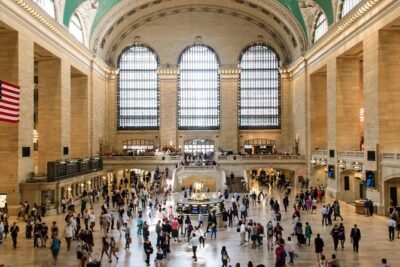
NYC in a Day Tour: Lady Liberty, Times Square, Freedom Tower
Read our review →
Broadway and Times Square Insider Tour with Theater Professional
Read our review →
See Yourself on a Times Square Billboard for 24 Hours
Read our review →
NYC in a Day Tour: Statue of Liberty, Times Square and More
Read our review →
The Escape Game NYC: 60-Minute Adventures in Midtown Manhattan
Read our review →Browse the lists this tour appears in