
Reviewed · NYC ARCHITECTURE TOURS
New York Upper East Side Art and Architecture Tour
The Upper East Side is more than a row of famous museums. It is a lesson in old New York money, private homes, grand institutions, and changing design. This two-hour walking tour links those pieces together, moving from The Plaza along Fifth Avenue to the Guggenheim Museum.
I like the use of personal headsets, since traffic and city noise can easily swallow a guide’s voice. I also like the small group limit of 15 people, which should make it easier to hear, ask questions, and keep pace. The main drawback is that this is an outdoor architecture tour, not a museum visit, and the two-hour route requires steady walking in whatever weather arrives.
In This Review
- Key points to know
- Why this stretch of Fifth Avenue works so well
- The Plaza meeting point and the Fifth Avenue setting
- The Guggenheim: a dramatic finish in only 10 minutes
- The Metropolitan Museum of Art from Fifth Avenue
- The Frick Collection and the mansion behind it
- Gilded Age homes and the buildings between the landmarks
- What the small group and headsets change
- Is $49 a fair price?
- Who will get the most from this walk?
- Booking timing and cancellation
- Should you book the Upper East Side tour?
- FAQ
- How long does the Upper East Side Art and Architecture Tour last?
- Where does the tour start?
- Where does the tour end?
- What time does the tour begin?
- Which buildings are included?
- Is museum admission included?
- How large is the group?
- What happens if the weather is poor?
Key points to know
- The route runs from The Plaza to the Guggenheim Museum, with Fifth Avenue as the main thread.
- The Frick Collection, Metropolitan Museum of Art, and Guggenheim provide the best-known architectural stops.
- Ivan, the company founder and a guide on some tours, brings attention to lesser-known residences as well as famous buildings.
- Personal headsets help you follow the commentary beside busy Fifth Avenue.
- The group is capped at 15 people, giving the walk a more personal feel than a large sightseeing outing.
- The $49 price covers the guide, headsets, fees, and taxes, but not tips or entry into the museums.
Why this stretch of Fifth Avenue works so well
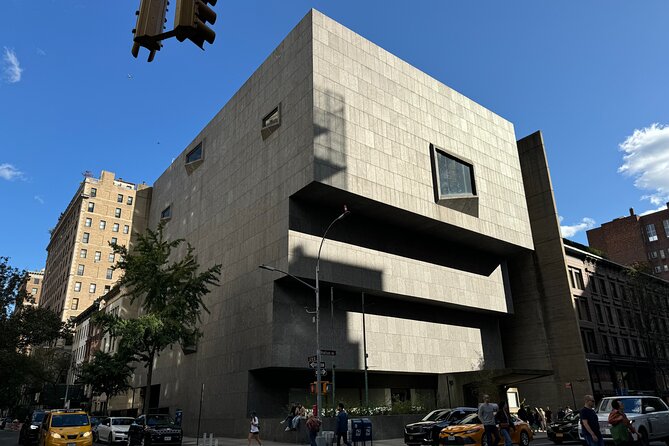
Few New York walks pack so many different kinds of architecture into two hours. On one side, you have the grand institutions that define Museum Mile. On the other, you have former mansions and residential buildings that reveal how wealthy New Yorkers once lived.
The route begins at The Plaza, at 768 Fifth Avenue, and ends at the Solomon R. Guggenheim Museum at 1071 Fifth Avenue. That direction matters. You finish beside one of the world’s most recognizable modern buildings, after walking through an area shaped first by private wealth and later by public culture.
I value tours like this because buildings make more sense when someone explains the people and pressures behind them. A facade can look impressive, but the story becomes stronger when you understand why it was built, who lived there, and how the Upper East Side changed over time.
The walk also gives you a useful introduction to several architectural eras. The area connects Gilded Age residences with major cultural buildings and newer layers of commercial and residential life. Guide Ivan has been praised for covering both the famous landmarks and lesser-known buildings, including what he presents as New York’s first luxury home.
That wider view is the point. You are not simply stopping for photographs of the Met and Guggenheim. You are learning how the neighborhood developed and why its buildings look so different from one another.
More architecture walks:
- Manhattan Architecture Yacht Cruise
★ 5.0 · 1,395 reviews - NYC: Around Manhattan Official NYC Architecture Cruise
★ 4.8 · 402 reviews - Art Deco and Architecture Midtown Landmarks Tour
★ 5.0 · 142 reviews
The Plaza meeting point and the Fifth Avenue setting
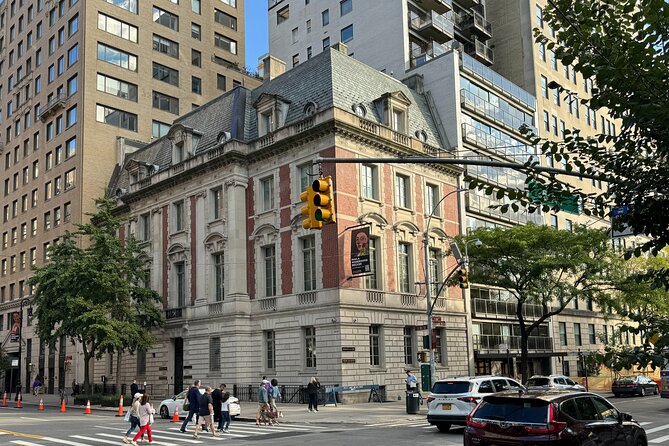
The meeting point is The Plaza, a well-known landmark at the southern end of this walk. It is a practical place to begin because the address is easy to identify and the tour then heads into one of Manhattan’s most architecturally important corridors.
Your start time is 3:00 p.m. That timing places much of the tour in the afternoon, when you may be combining it with a museum visit, shopping, or an earlier stop elsewhere in Manhattan. Since the walk lasts about two hours and includes travel time, leave room afterward rather than booking a tight dinner reservation across town.
The supplied details do not promise interior access to The Plaza or any other building. Think of the opening stop as a meeting point and orientation to the neighborhood. The value begins as the guide points out the buildings and explains how the avenue developed.
Fifth Avenue can be noisy, crowded, and distracting. The individual headsets are not a decorative extra. They are one of the most useful parts of the setup. You can keep your eyes on the architecture instead of leaning toward the guide or trying to read lips over traffic.
The Guggenheim: a dramatic finish in only 10 minutes
The Solomon R. Guggenheim Museum is listed as a 10-minute stop, with admission shown as free for the tour. That means you should expect an exterior discussion, not time inside the galleries. The building itself is the attraction here.
The Guggenheim’s rounded form is unlike the older, more formal buildings along Fifth Avenue. Its design makes a strong closing subject because it changes the visual language of the walk. After seeing traditional residences and monumental museum fronts, you encounter a building built around curves and modern movement.
Ten minutes is enough for a focused explanation and photographs, but not enough for a long architectural study or museum visit. If the Guggenheim is a major priority for you, plan a separate admission visit before or after the walk. The tour can help you notice the exterior, but it does not replace an hour or two inside.
Ending here is also convenient if you want to continue along Museum Mile or use public transportation nearby. The tour details confirm that the route is near public transportation, though they do not specify a particular subway entrance or line.
The Metropolitan Museum of Art from Fifth Avenue
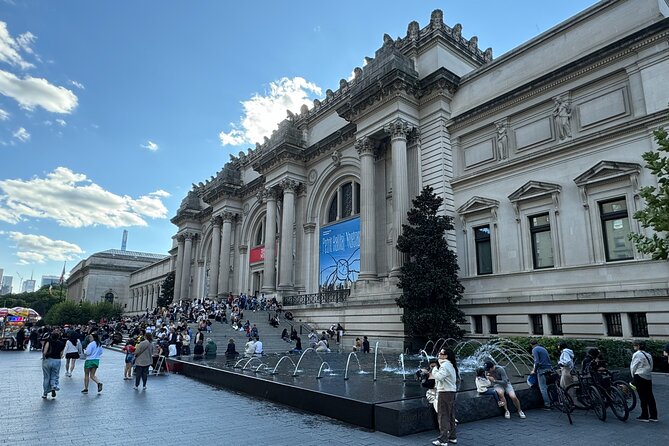
The Metropolitan Museum of Art receives about 15 minutes on the route. The focus is its architecture as seen from Fifth Avenue, not a guided tour of the collections.
That distinction is important. The Met is enormous, and a short exterior stop cannot cover its galleries, exhibitions, or interior spaces. What this tour can do is give you a frame for understanding the building before you visit on your own.
The Met’s Fifth Avenue frontage presents the museum as a civic institution, not just a place filled with art. A guide can help connect the facade, entrance, and scale of the building to the Upper East Side’s role as a center for culture and old wealth.
I would especially recommend this stop if you are interested in design but do not want to spend the whole day indoors. You get a concise architectural explanation, then remain free to return later with your own museum plan.
The 15-minute timing keeps the walk moving. It also means you should not expect a long question period at every stop. The headsets help the guide keep talking while the group shifts position, which is useful on a busy avenue.
Another side of New York City for the same day:
- NYC: SUMMIT One Vanderbilt Tickets
★ 4.7 · 51,195 reviews - NYC: 9/11 Memorial & Museum Timed-Entry Ticket
★ 4.8 · 31,428 reviews - NYC: Empire State Building Tickets – Observatory & Museum
★ 4.7 · 25,757 reviews - New York City: Statue of Liberty & Ellis Island with Ferry
★ 4.6 · 18,683 reviews
The Frick Collection and the mansion behind it
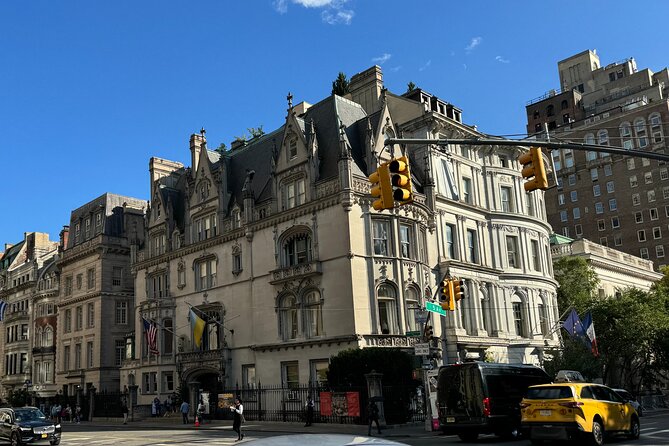
The Frick Collection is given about 10 minutes. The building is a former mansion, and its exterior helps explain the kind of private residences that once lined this part of Manhattan.
This stop brings the walk closer to the personal side of the neighborhood. The Met and Guggenheim represent public culture. The Frick building points to the private wealth that helped shape the avenue in the first place.
The exact route description gives The Plaza as the starting point and the Guggenheim as the end, while the three principal stops include the Frick. In practical terms, expect the guide to place it along the walk rather than treat the tour as a series of long museum visits.
Ten minutes is brief, but it fits the tour’s purpose. You are getting context, exterior details, and a sense of how the mansion relates to the surrounding buildings. If you want to see the collection itself, you will need separate museum time. The tour does not include entry.
One of the most appealing elements of this stop is the connection to the first luxury home in New York, which Ivan has highlighted on the route. The details provided do not identify that residence by name, so you should ask the guide about it when the subject comes up. This is exactly the sort of detail that can make the walk feel less predictable than a standard landmark circuit.
Gilded Age homes and the buildings between the landmarks
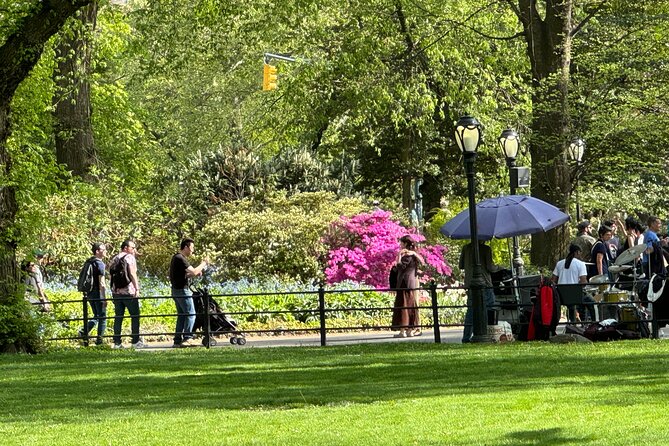
The three named museums are only part of the experience. The most praised feature of Ivan’s guiding is the attention paid to buildings that are easy to pass without noticing.
That approach gives the walk a better sense of proportion. The Guggenheim, Met, and Frick are famous because they are important, but they do not tell the whole story. The smaller residences and commercial buildings show how the Upper East Side functioned as a lived-in neighborhood, not just a museum strip.
The tour places special attention on Industrial Age and Gilded Age development. Those terms matter because they point to different forces shaping New York. Wealth produced grand homes, while industry and commerce changed how the city worked around them. The architecture records those shifts.
I like this kind of explanation because it turns a walk into a set of questions you can keep asking elsewhere in Manhattan. Why is one building restrained while the next is ornate? Why was a private home placed here? What happened when the avenue became associated with museums and public institutions?
The guide’s task is not simply to identify facades. It is to connect design with use, money, and changing social life. Based on the information available, Ivan has been singled out for giving the tour breadth as well as detail. That combination should suit anyone who wants to get beyond a quick photograph and a short caption.
What the small group and headsets change
The group limit is 15 people. That is not a private tour, but it is much more manageable than a large outing. You should have a better chance of staying close to the guide and asking a question without stopping the entire group.
The headsets are supplied individually and are included in the price. This matters more here than it might on a quiet historic lane. Fifth Avenue brings traffic, horns, pedestrians, and general city sound. A guide speaking through a headset can keep the explanation going while you look up at a cornice or move past a busy corner.
The equipment also lets you stand at a sensible viewing distance. You do not need to crowd around the guide to hear every sentence. That is a small comfort, but it improves the basic rhythm of a walking tour.
The listed guide languages are English, Spanish, and Italian. The supplied information does not assign a particular language to each departure, so confirm your preferred language when booking. Ivan is identified as the founder and has led some tours himself, but another guide may lead your departure.
Is $49 a fair price?
At $49 per person, this is not the cheapest way to walk Fifth Avenue. You can pass the museums on your own for free. The question is what you want from the two hours.
The fee includes all taxes and fees, an in-person guide, and an individual headset. You are paying for interpretation, structure, and the chance to notice buildings you might otherwise ignore. You are not paying for museum admission, food, transportation, or a private experience.
For someone already interested in architecture, design, or New York social history, the price is reasonable if the guide adds the promised context. The small group cap helps support that value. You get a focused route rather than a general city highlights walk.
For someone who wants to go inside the Met, Frick, or Guggenheim, $49 is only part of the day’s cost. Treat this as an outdoor introduction, then budget separately for any museum visits. The short format makes that easy to combine with your own plans.
Tips are not included. Since the tour depends on the guide’s explanation, bring a little extra if you feel the service earned it, but remember that tipping is optional.
Who will get the most from this walk?
I would choose this tour if you want a clear introduction to Upper East Side architecture without spending half a day in a museum. It is also a good fit if you have already seen the major landmarks but want to understand the neighborhood around them.
It suits:
- People interested in architecture and design
- First-time New York visitors who want more context than a photo stop
- Repeat visitors looking for lesser-known buildings
- Couples or small groups who prefer a guided walk
- Anyone with only two hours available in the afternoon
- Museum fans who want an exterior orientation before visiting independently
The tour may be less suitable if you dislike walking, want a fully indoor activity, or expect extended time at each museum. The itinerary allows about 10 minutes at the Guggenheim, 15 minutes at the Met, and 10 minutes at the Frick, so the focus is on comparison and explanation rather than prolonged visits.
Most people can participate, and service animals are allowed. The experience requires good weather. Wear shoes suited to a two-hour city walk and check the forecast before setting out, since the tour can be moved or refunded if poor weather cancels it.
Booking timing and cancellation
This experience is often booked well ahead, with an average booking lead time of 223 days. That does not guarantee that every date fills quickly, but it is a useful warning if your New York schedule is fixed. Reserve early if the 3:00 p.m. departure is important to your plans.
You can cancel for a full refund up to 24 hours before the local start time. Changes made inside that 24-hour window are not accepted, and late cancellations are not refunded. If bad weather forces cancellation, you are offered another date or a full refund.
Confirmation is provided when you book. The tour uses a mobile ticket, so keep the confirmation available on your phone.
Should you book the Upper East Side tour?
Book it if you want the Upper East Side explained rather than simply photographed. The strongest reason to go is the mix of famous buildings and less obvious residences, especially the attention Ivan gives to the first luxury home and the neighborhood’s Industrial and Gilded Age layers.
The $49 cost makes sense when you value a guide, headsets, and a small group. It makes less sense if your main goal is museum entry, because the stops are exterior discussions and the admission fees are not part of the experience.
I would place this tour early in a New York visit if architecture is high on your list. You will leave with a better way to read Fifth Avenue, and you can then return to the Met, Frick, or Guggenheim with more context. Just allow for the weather, the steady walking, and the short stop times.
FAQ
How long does the Upper East Side Art and Architecture Tour last?
The tour lasts approximately two hours, and travel time is included in that duration.
Where does the tour start?
The tour starts at The Plaza, located at 768 Fifth Avenue, New York, NY 10019.
Where does the tour end?
The tour ends at the Solomon R. Guggenheim Museum, located at 1071 Fifth Avenue, New York, NY 10128.
What time does the tour begin?
The listed start time is 3:00 p.m.
Which buildings are included?
The route discusses the Solomon R. Guggenheim Museum, the Metropolitan Museum of Art, and the Frick Collection, along with other Upper East Side buildings.
Is museum admission included?
The tour information lists the stops with admission ticket free, but the experience is described as an architecture walking tour. Plan on exterior discussion rather than included museum entry.
How large is the group?
The tour has a maximum of 15 people.
What happens if the weather is poor?
The experience requires good weather. If it is canceled because of poor weather, you can choose another date or receive a full refund. You can also cancel up to 24 hours before the start time for a full refund.
Just listed around New York City
- NYC: Private Ghostbusters Sites Tour★ 5.0 · 3 reviews
- Tour by Night in Italian★ 5.0 · 3 reviews
- NYC: Private Central Park Pedicab Tours / PICKUP FROM MUSEUM★ 5.0 · 3 reviews
- Tour of Brooklyn Bridge at Sunset★ 3.5 · 3 reviews
- New York City: Manhattan ‘Complete Playground’ Entry Ticket★ 5.0 · 3 reviews
- PRIVATE Rockefeller Center Artified Walking Tour★ 5.0 · 3 reviews
- Macy’s Thanksgiving Day Parade Premium Viewing Brunch 2025★ 4.5 · 3 reviews
- Custom Private New York Architecture, Art and City Tour★ 5.0 · 3 reviews
NYC Architecture Tours, compared.


Around Manhattan Official NYC Architecture Cruise
Read our review →
Art Deco and Architecture Midtown Landmarks Tour
Read our review →


Midtown Manhattan Art and Architecture Walking Tour
Read our review →Browse the lists this tour appears in