
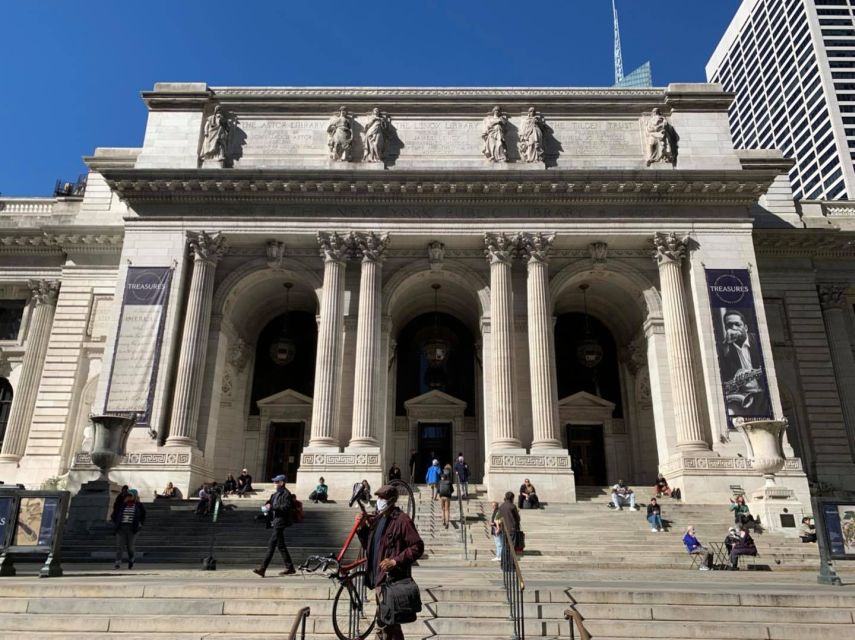
Reviewed · NYC ARCHITECTURE TOURS
New York City: Art Deco and Architecture Landmarks Tour
Midtown Manhattan can look like a wall of tall buildings until someone teaches you where to look. This 150-minute walk turns that wall into a collection of design details, from the Chrysler Building’s famous ornament to small flourishes high above street level. Art Deco icons share the route with lesser-known buildings and elegant Beaux-Arts work.
I like two things in particular: the tour gets you into several preserved lobbies, and the guide uses historic photos to show how these places changed. Guides Jeremy and Robin are praised for making the subject lively and answering questions. The main drawback is simple: this is a walking tour with a lot of ground to cover, and one past participant found the pace too quick.
In This Review
- Key points to know before you book
- Why this Midtown architecture walk works
- Starting at Bryant Park and looking up
- 42nd Street and the story of preservation
- The Empire State Building from a different angle
- The Chrysler Building’s decorative details
- Grand Central Terminal beyond the clock
- Fifth Avenue and a lesser-known Art Deco favorite
- Finishing at Rockefeller Center
- What the guide adds to the experience
- Who will get the most from this tour
- Booking value, timing, and small practical details
- Should you book the Art Deco and Architecture Landmarks Tour?
- FAQ
- How long does the Art Deco and Architecture Landmarks Tour last?
- Where do I meet the guide?
- Which landmarks are included?
- Does the tour include entry to Top of the Rock?
- Is the tour offered in English?
- Is the tour wheelchair accessible?
Key points to know before you book
- Bryant Park is the smart starting point: You begin near one of Midtown’s prettiest public spaces before moving into the architectural story of the district.
- The Chrysler Building gets real attention: Look for details such as the car-inspired designs and the building’s celebrated crown.
- Historic interiors are part of the appeal: The route includes several carefully preserved lobbies, not just sidewalk viewing.
- Grand Central is more than a photo stop: You visit one of New York’s great interior spaces and learn how it fits into the city’s development.
- The final stop is Rockefeller Center: This gives you a strong finish among one of Midtown’s best-known groups of buildings.
- Small groups help: With a live English-speaking guide and fewer people than a large coach tour, you have a better chance to ask questions and take photographs.
Why this Midtown architecture walk works
This is not simply a parade of famous addresses. The guide explains how New York’s landmark-preservation laws developed, why certain buildings survived, and how to read the decoration above eye level. That last point matters. Many of the best details sit several floors up, where a quick walk through Midtown would leave them unnoticed.
The subject is mainly Art Deco, but the tour also brings in Beaux-Arts and other styles. That mix gives you a better sense of New York architecture than a narrow tour focused only on zigzags, sunbursts, and chrome. You see how different periods and design ideas sit side by side along a few busy avenues.
At $40 per person, the value is strong if you care about buildings, city design, or New York history. You are paying for two and a half hours of guiding, interpretation, historic images, and access to interiors you might otherwise pass without noticing. It is less useful if you want an attraction ticket, a meal, or a ride between sights. This is a focused walking lesson, not a general sightseeing bus tour.
More architecture walks:
- Manhattan Architecture Yacht Cruise
★ 5.0 · 1,395 reviews - NYC: Around Manhattan Official NYC Architecture Cruise
★ 4.8 · 402 reviews - Art Deco and Architecture Midtown Landmarks Tour
★ 5.0 · 142 reviews
Starting at Bryant Park and looking up
The meeting point is in front of the Whole Foods store on 6th Avenue. The activity information also identifies Renaissance Reinsurance as the starting location, so check the exact meeting instructions when you book and arrive ready to walk.
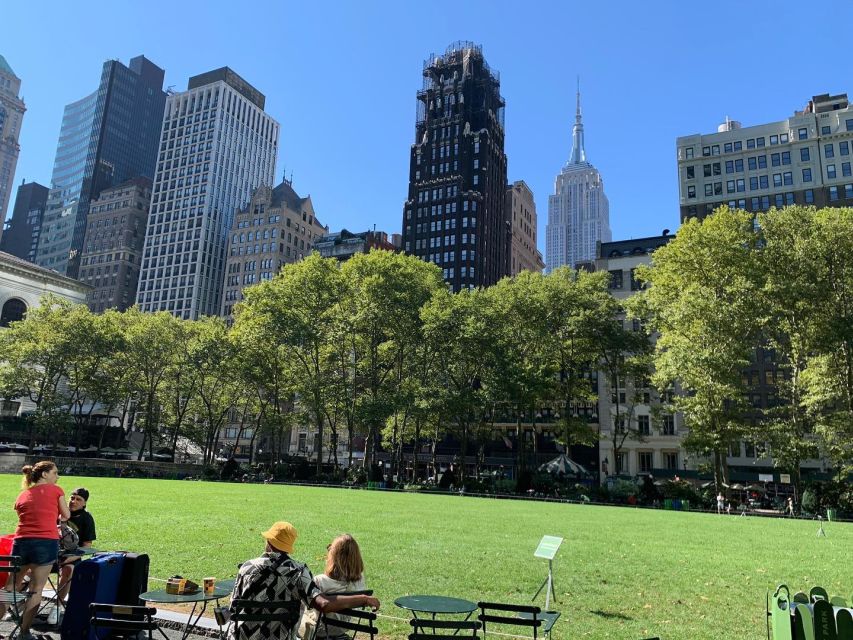
The tour then moves into Midtown Manhattan, with Bryant Park as an early stop. Bryant Park gives the guide a useful place to explain the growth of the area and set up the architectural themes ahead. It is also a pleasant place to begin, with enough open space to get your bearings before the streets become more crowded with buildings and pedestrians.
This is where the tour’s method becomes clear. You are not only shown a building and given its name. You are encouraged to notice materials, decoration, shape, scale, and the way a building meets the street. Historic photos add another layer, helping you compare the present-day view with earlier versions of Midtown.
Bring comfortable shoes. The route covers several blocks and includes periods of standing while the guide points out details. The tour runs rain or shine, except in severe weather, so a wet-weather plan is sensible.
42nd Street and the story of preservation
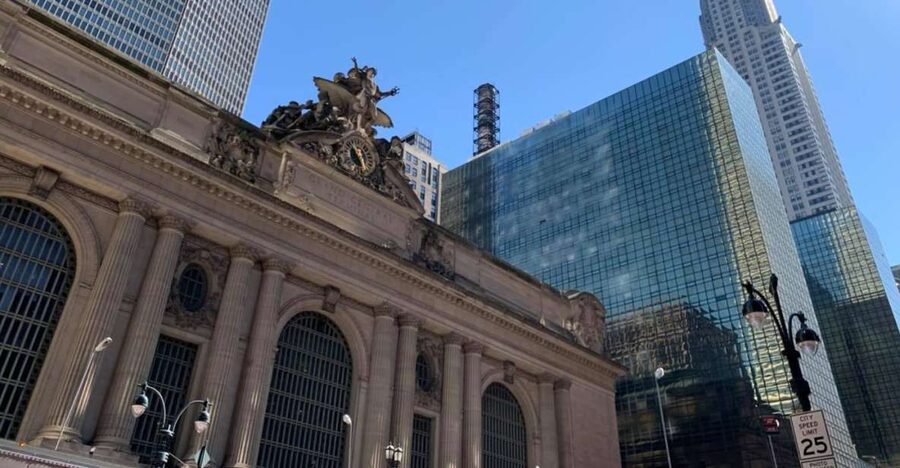
The walk along 42nd Street is one of the busiest parts of the route, but it is also one of the most rewarding. You see several historic buildings in a short stretch and hear about the forces that shaped this part of Manhattan.
The guide discusses the origins of New York’s landmarking laws and the preservation movement. This adds useful context to the buildings around you. Preservation can sound like a dry legal subject, yet here it connects directly to what you are looking at: buildings that might have been altered, lost, or replaced without public action.
The historic photographs are especially helpful here. A modern street view can hide how much a neighborhood has changed. Old images give you a clearer sense of the buildings’ original setting and show why certain structures became important enough to protect.
I would pay close attention to the guide’s directions about where to look. The best ornament is not always at eye level. Facades may reveal patterns, figures, geometric panels, or other small touches only when you tilt your head back and study the upper floors.
The Empire State Building from a different angle
The Empire State Building is one of New York’s most familiar sights, but this tour offers a different way to understand it. Instead of treating it only as a viewing platform or skyline marker, the guide places it within Midtown’s architectural story.
That change in viewpoint is valuable. You begin to see the building as part of a period of intense competition, ambition, and experimentation. The tour does not replace a visit to the Empire State Building, and it does not include an observatory ticket. Its purpose is to explain the building’s design and place in the city from street level.
This stop also works well for photographs. You can study the building’s proportions and details while the guide explains what you might miss during a quick sightseeing stop. If you have already visited the Empire State Building, the architectural context can make that earlier visit more meaningful.
A few more New York City picks to weigh up
- New York City: Statue of Liberty & Ellis Island with Ferry
★ 4.6 · 18,683 reviews - New York City: American Museum of Natural History Ticket
★ 4.5 · 15,447 reviews - New York City: Manhattan Helicopter Tour
★ 4.7 · 7,076 reviews - New York City: The FRIENDS™ Experience Entry Ticket
★ 4.7 · 6,234 reviews
The Chrysler Building’s decorative details
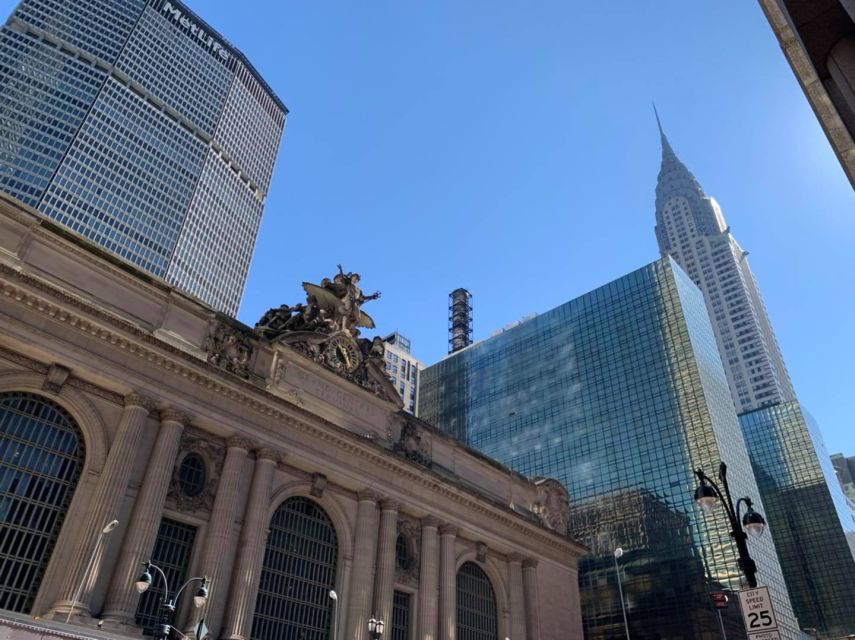
The Chrysler Building is one of the tour’s major highlights, and it earns the attention. Its decoration is unusually easy to connect with the history of design and transportation, including the car-related motifs that caught the attention of past participants.
One detail mentioned during the tour concerns the Chrysler building’s car designs, including the Chrysler Bulldog. Look closely rather than settling for the standard skyline photograph. The building’s ornament rewards patience, especially when the guide draws your eye to features you would probably miss on your own.
You get a guided visit and a chance to photograph the building, but the experience is primarily about the exterior and its decorative language. The tour does not promise entry into the Chrysler Building itself, so do not book it expecting an observatory visit or a full interior tour there.
The Chrysler stop also shows why an architecture guide can add real value in New York. You can admire the building without knowing its style, but an explanation of the symbols and forms gives your photographs a story. The building becomes more than a famous point on the skyline.
Grand Central Terminal beyond the clock
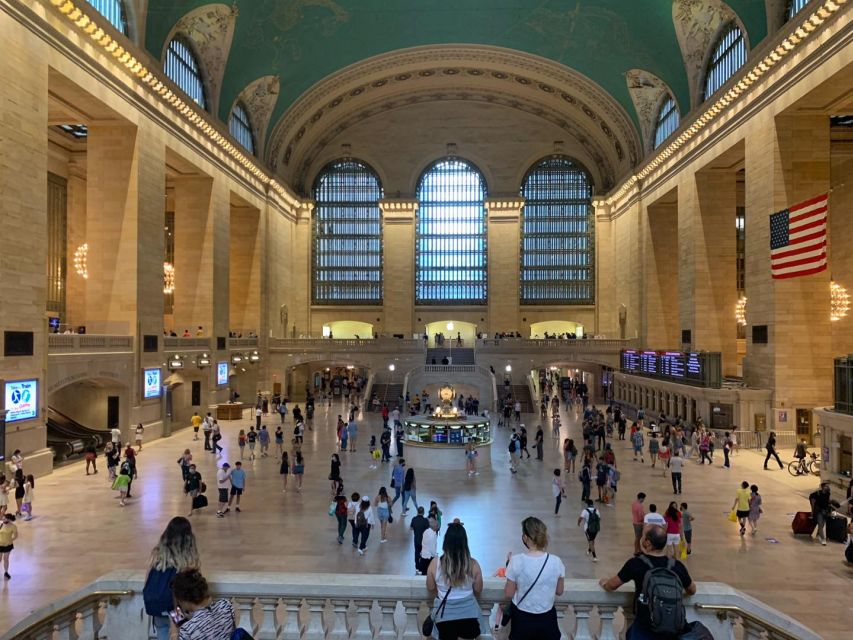
Grand Central Terminal is another major stop, with a visit to one of New York’s most beautiful interior spaces. The terminal is famous enough that many people rush through it, check the clock, take a photograph, and leave. A guided visit encourages you to slow down and study the room.
The tour places Grand Central within the wider development of Midtown. Its Beaux-Arts character gives you a useful contrast with the later Art Deco buildings on the route. That comparison is one of the strongest parts of the experience because it shows that Midtown is not built in one single style.
Pay attention to the preserved interiors. The lobbies and public spaces are not filler between exterior stops. They let you see how architects used ceilings, floors, lamps, wall surfaces, and signs to create a complete experience for people entering a building.
The visit to Grand Central lasts about 15 minutes according to the schedule. That is enough for a focused look and an explanation, but not enough for every corner of the terminal. If you want a long independent visit, return later on your own.
Fifth Avenue and a lesser-known Art Deco favorite
After Grand Central, the route continues up Fifth Avenue. Here the guide points out a favorite Art Deco treasure that is less likely to appear on a standard New York sightseeing list.
This is where the tour earns its place for repeat visitors and architecture fans. You still see major names, but the less obvious buildings may become the ones you remember. Their details are easier to miss because they lack the fame of the Chrysler Building or Rockefeller Center, not because they are less carefully designed.
The exact building is not identified in the supplied tour details, so you should treat this part as a guided discovery rather than a promised standalone attraction. The important point is that the guide directs your attention to a building you might otherwise walk past.
That approach suits Midtown. The area rewards a slow gaze, but most people have somewhere to be. A guide removes the guesswork and helps you notice the decorative work above shops, offices, and entrances.
Finishing at Rockefeller Center
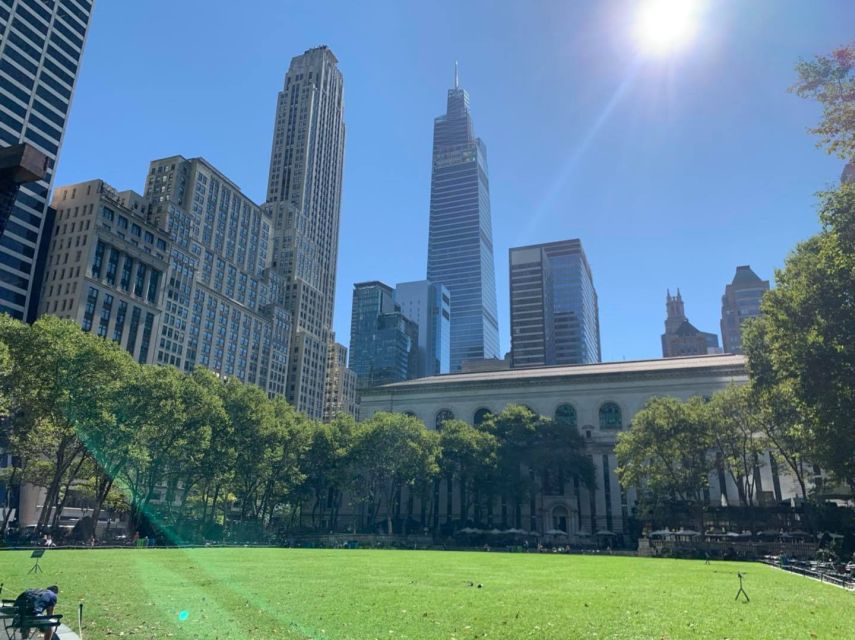
The walk ends at Rockefeller Plaza, giving the tour a fitting final chapter. Rockefeller Center brings together grand planning, public art, Art Deco influence, and a strong sense of place. It is one of the easiest stops in New York to appreciate even if you are new to architecture.
The finish is also practical. Rockefeller Center is close to many Midtown attractions, restaurants, and transport links, so you can continue sightseeing without having to backtrack. One useful idea is to visit Top of the Rock after the walking tour. From above, you can look back across the buildings you have just studied and connect the street-level details with the wider city view.
The tour itself does not include admission to Top of the Rock. Treat that as a possible add-on, not part of the $40 price.
What the guide adds to the experience
The guide makes or breaks a walking tour, and this one depends heavily on the person leading your group. Jeremy is repeatedly praised for his command of Midtown’s buildings, clear explanations, humor, and willingness to follow the group’s questions. Robin has also led the tour and is described as engaging and well prepared.
Those details matter because architecture tours can become a stream of dates and building names. The best moments come when the guide connects a design feature with a human story, a change in the city, or a preservation fight. Historic visuals help keep the explanations concrete.
The small-group format should make conversation easier than on a large group outing. You can ask about a building that catches your eye, stop for photographs, and tell the guide what interests you. The experience is offered in English with a live guide.
There is one practical warning. The route covers a lot in 150 minutes. Most people appreciate the efficient layout, but if you walk slowly or want long photography stops, you may feel hurried. Tell the guide early if you need a gentler pace. Comfortable footwear is essential.
Who will get the most from this tour
I would choose this tour if you have any of the following interests:
- Art Deco design and decoration
- New York architecture and preservation
- Historic photographs and urban change
- Beautiful interiors, especially lobbies and public spaces
- A compact way to see many Midtown landmarks
- A guided introduction before exploring on your own
It suits first-time visitors who want more substance than a standard landmark checklist. It also suits returning visitors who have seen the major buildings but never learned how to read their details.
Families with an interest in design may enjoy it, but the two-and-a-half-hour walking time and frequent stops require patience. The tour is wheelchair accessible, which makes it a practical option for many visitors, though the route’s pace and outdoor conditions are still worth considering.
I would skip it if your priority is shopping, food, celebrity sights, or a relaxed ride. You will spend much of the time looking upward, listening, and walking between stops. That is the whole point, but it will not suit every New York day.
Booking value, timing, and small practical details
The $40 price is fair for a small-group tour of this length, especially because the guide provides interpretation rather than simply leading you from one photo stop to another. The preserved lobbies and Grand Central visit add value that you would not get from viewing every building only from the sidewalk.
The tour does not include hotel pickup, drop-off, food, or drink. Plan to meet at the stated 6th Avenue location and arrange your own way there. Since the tour finishes at Rockefeller Plaza, you can combine it with nearby attractions before or afterward.
You can cancel up to 24 hours before the start for a full refund, and the reserve-now, pay-later option keeps your plans flexible. Starting times vary, so check availability for the date you want.
The activity runs in severe weather only if conditions allow. Since it takes place outdoors for much of the time, dress for the forecast and wear shoes you can comfortably use for a long city walk.
Should you book the Art Deco and Architecture Landmarks Tour?
Book it if you want to understand Midtown rather than simply photograph it. The strongest parts are the guide’s explanations, the historic images, the preserved interiors, and the attention given to buildings that most visitors overlook.
It is especially good before a self-guided architecture walk or a visit to Top of the Rock. After hearing the guide explain how to look, you will notice far more from above and at street level.
Skip it only if you dislike walking tours or need a slow, unstructured schedule. For architecture fans, curious first-time visitors, and anyone who has wondered why Midtown’s buildings look the way they do, $40 buys a useful and unusually focused two and a half hours.
FAQ
How long does the Art Deco and Architecture Landmarks Tour last?
The tour lasts 150 minutes, or two and a half hours.
Where do I meet the guide?
The meeting point is in front of the Whole Foods store on 6th Avenue. The activity information also lists Renaissance Reinsurance as the starting location, so check the exact meeting instructions when booking.
Which landmarks are included?
The route includes Bryant Park, 42nd Street, the Empire State Building area, the Chrysler Building, Grand Central Terminal, Fifth Avenue, and Rockefeller Center.
Does the tour include entry to Top of the Rock?
No. The tour finishes at Rockefeller Plaza, but admission to Top of the Rock is not included.
Is the tour offered in English?
Yes. It includes a live English-speaking guide.
Is the tour wheelchair accessible?
Yes, the activity is listed as wheelchair accessible. It takes place rain or shine but may be cancelled in severe weather.
Just listed around New York City
- NYC: Little Shop of Horrors Off-Broadway Ticket5 reviews
- Private NYC Airport Transfer: LGA to Manhattan – Up to 5★ 3.6 · 5 reviews
- New York City Tour in German★ 4.5 · 5 reviews
- New York: Hamilton and Washington Revolutionary Walking Tour★ 5.0 · 5 reviews
- NYC Freedom Tower Private Photo or Video Experience★ 4.0 · 6 reviews
- New York Afternoon Fall Foliage Cruise with Lunch★ 5.0 · 6 reviews
- Brooklyn Walking Tours by Locals: Private & 100% Personalized★ 4.0 · 6 reviews
- Southold Bay Oyster Farm Tour★ 5.0 · 6 reviews
NYC Architecture Tours, compared.


Around Manhattan Official NYC Architecture Cruise
Read our review →
Art Deco and Architecture Midtown Landmarks Tour
Read our review →



Midtown Manhattan Art and Architecture Walking Tour
Read our review →
Browse the lists this tour appears in