
Reviewed · NYC ARCHITECTURE TOURS
Holdouts: A NYC Architecture Walking Tour
New York’s skyscrapers did not simply replace everything in their path. A few stubborn owners held onto their land, forcing towers to bend, build around, or even incorporate older buildings. Holdouts: A NYC Architecture Walking Tour turns those odd gaps and mismatched facades into a lively lesson in how Midtown grew.
I like the way guide Rob connects small architectural details to big issues such as air rights, privately owned public spaces, housing, and land value. I also like the very small groups, capped at five people, which make it easier to ask questions and adjust the pace. The main drawback is that the walk can feel rushed if you want lots of photographs, and its opening discussion may take time before you begin moving through Midtown.
In This Review
- Key reasons to consider this Midtown walk
- Why a holdout can change an entire skyscraper block
- From an ego building to an old buggy whip factory
- Amster Yard and the city behind the towers
- One surviving property on 42nd Street
- Grand Central’s neighbors and the shape of modern Midtown
- Diamonds, air rights, and the price of a Midtown block
- Rockefeller Center and a building inside a building
- How the small group changes the experience
- Who should book this architecture tour?
- Final verdict: a smart choice for curious city walkers
- FAQ
- How long does Holdouts: A NYC Architecture Walking Tour last?
- How much does the tour cost?
- Where does the tour begin?
- Where does the tour end?
- How many people can join the tour?
- Is Grand Central Terminal part of the tour?
- Is the tour offered in English?
- What happens if the weather is poor?
Key reasons to consider this Midtown walk
- See buildings that refused to disappear: Holdouts reveal how individual owners shaped the blocks around them.
- Learn from guide Rob: He brings years of study in New York architecture, planning, and urban history to the walk.
- Enter Midtown’s lesser-seen corners: Amster Yard, old commercial buildings, and unusual lobby spaces add texture beyond the usual sightseeing route.
- Connect architecture with money and power: Air rights, leased land, private plazas, and future development all help explain the city’s strange shapes.
- Walk between major landmarks: The route includes Grand Central Terminal and Rockefeller Center, but uses them as part of a wider story.
- Expect a serious walking lesson: Comfortable shoes matter, and you should be ready to move through Midtown for two to three hours.
Why a holdout can change an entire skyscraper block

A holdout is usually a property owner who refuses to sell while a larger building project gathers up the surrounding land. In Midtown, where a small parcel can affect the shape of a tower, one holdout may force a developer to leave an old building in place, build above it, or create an unusual wall around it.
That simple idea gives this tour its focus. You are not just looking at famous towers. You are learning to ask why a building sits at an odd angle, why a narrow older structure survives beside a much larger one, or why a modern tower seems to swallow an older building whole.
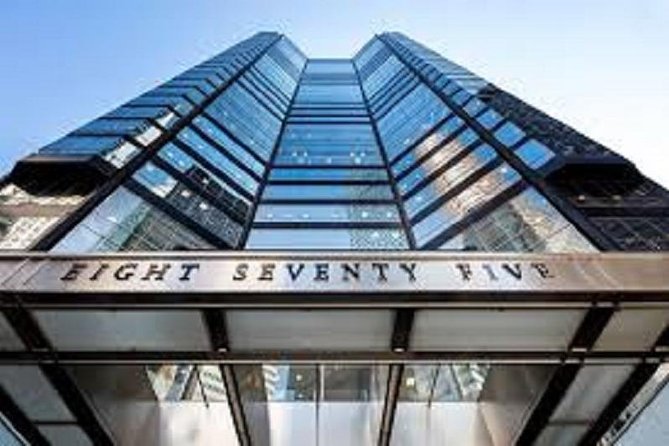
The tour begins at 875 Third Avenue, in the lower lobby of TPR Holdings. This first building is itself tied to the holdout story, so the starting point is more than a meeting place. Rob uses it to explain the route, the development of Midtown, and the forces that shaped the streets you are about to walk.
The opening may include a look at printed building material while Rob sets the scene. That context is useful, especially if you enjoy urban planning, but it is also the part most likely to test your patience if you want to start photographing right away. If you prefer a slower pace for pictures and questions, say so early. Rob has shown that he can adjust the walk, but he needs to know what kind of experience you want.
More architecture walks:
- Manhattan Architecture Yacht Cruise
★ 5.0 · 1,395 reviews - NYC: Around Manhattan Official NYC Architecture Cruise
★ 4.8 · 402 reviews - Art Deco and Architecture Midtown Landmarks Tour
★ 5.0 · 142 reviews
From an ego building to an old buggy whip factory
Early in the walk, you encounter a building described as a fascinating ego building. The name points to the human side of development. New York architecture is often presented as a contest of engineering and finance, but personal ambition matters too. Owners, architects, and developers wanted their names and ideas written into the city.
Another stop presents a building with an unusual structural arrangement. Its main pillar supports are in the middle of the sides rather than at the corners. That detail may be easy to miss from street level, yet it shows how architecture responds to practical problems, available land, and a desire to make a building look different.
At Wollensky’s Grill, an old buggy whip factory provides one of the clearest links to an earlier New York. It is also a holdout. The point is not simply that an older building survived. Its survival helps explain how Midtown moved from a city of small businesses and workshops toward a district of offices, hotels, restaurants, and tall towers.
You will want to look closely at the contrast between the scale of the old factory and the surrounding development. This is the kind of stop that rewards attention more than a quick photograph. Rob’s explanations give the building a place in the city’s story rather than treating it as a random old facade.
Amster Yard and the city behind the towers
Amster Yard is one of the route’s most appealing pauses, if it is open during your tour. This small oasis feels removed from the broad avenues and tall buildings nearby. Its older, almost suburban character shows how earlier city spaces could survive inside a district shaped by intense commercial growth.
The access condition matters. You should not count on entering every time, since the stop depends on whether the space is open. Even if you only see it briefly, Amster Yard adds a change of mood to the walk and helps you notice that Midtown is not made entirely of glass, steel, and traffic.
At Sparks Steak House, the setting carries a darker association. It is known as the site of a notorious mob hit, and the building next door provides another holdout story. This pairing is typical of the tour: a place may first catch your attention for a crime, restaurant, or famous name, then open into a wider lesson about property and the city’s physical form.
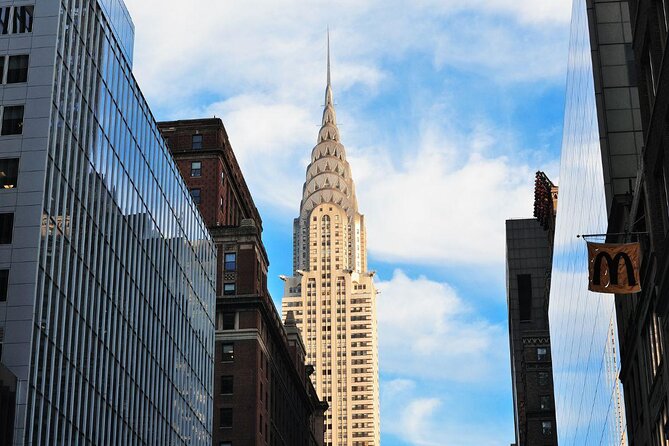
As you continue, the route offers strong views of a major landmark. You also look down the block toward the Secretariat Building while Rob explains more examples of holdouts and the way they have influenced today’s streetscape. The pleasure here comes from seeing Midtown as a collection of decisions made over many decades, not as a single planned design.
One surviving property on 42nd Street
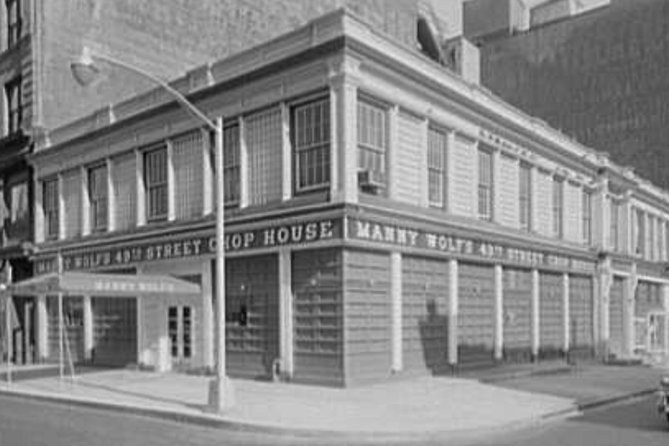
The downtown portion of the walk ends around 42nd Street, where a single holdout survived the changes around it. This is a useful place to pause and consider the power of one property. A holdout does not need to be large or grand to affect a major avenue. Its presence can preserve a fragment of an earlier block long after the surrounding buildings have changed.
The tour then moves west and north through Grand Central Terminal. Grand Central is not itself connected with a holdout on this route, but Rob may provide a short look at the terminal as you pass through. That possible mini-tour adds value because the building is one of New York’s essential interior spaces, and it provides a natural bridge between Midtown’s transportation history and its later commercial growth.
The stop is listed as brief, so do not expect a full Grand Central visit. If you have never seen the terminal, you may want to return later with more time. Here, the building serves as a piece of the larger story.
More New York City walking tours:
- SoHo, Little Italy, and Chinatown Walking Tour in New York
★ 5.0 · 3,153 reviews - Secrets of Grand Central Station Walking Tour New York City
★ 5.0 · 1,796 reviews - Greenwich Village Walking and Food Tasting Tour
★ 5.0 · 1,572 reviews - Artistic, Alternative Greenwich Village Walking Tour
★ 5.0 · 971 reviews
Grand Central’s neighbors and the shape of modern Midtown
Near Brooks Brothers, you see how a historic New York institution once had a holdout as a neighbor. The lesson is not limited to the building itself. It is about how established businesses and older properties can complicate a developer’s plan, especially when a new tower needs a whole block or a clean construction site.
The route then passes a building that looks like a crystal shard and an iceberg combined. From the side, its form becomes especially striking. This is a good example of why the tour asks you to keep looking up and around. Midtown’s most interesting details are not always visible from the usual front-facing view.
You also pass the sole survivor of Terminal City. Before air travel reshaped long-distance journeys, Grand Central connected with three hotels that received cross-country passengers. That surviving building gives you a glimpse of an earlier travel system, when the terminal was not only a station but the organizing force for a major district.
This section may be the most rewarding part of the walk for anyone who likes architecture but does not want a tour limited to famous façades. Rob moves between building design, transportation, commerce, and the practical question of what happens when new construction meets old ownership.
Diamonds, air rights, and the price of a Midtown block
The route crosses Fifth Avenue and passes the block where $440 million in diamonds are traded daily. The entrance is one block north, flanked by 12-foot diamond sculptures. This detail brings the discussion back to the financial pressure behind Midtown’s buildings. Land here is not just valuable in an abstract sense. It supports businesses and transactions on a remarkable scale.
Rob also explains air rights, the development rights that can be transferred or used above a property. These rights help explain why a building may be preserved while a much taller structure rises nearby, or why a developer might negotiate intensely over a small parcel.
You also hear about privately owned public spaces. These are areas maintained by private owners but made available for public use under development agreements. They can offer seating or open space, yet they also raise questions about who controls shared parts of the city and how public access is defined.
Another useful idea is the building being warehoused. In this context, a property may be held until a tenant’s lease expires, allowing a future project to proceed later. That concept makes the city’s slow changes easier to understand. A block can look unchanged while its long-term future has already been planned.
These subjects give the tour more weight than a simple walk past old buildings. You begin to see how architecture reflects negotiations among owners, tenants, developers, city rules, and public needs.
Rockefeller Center and a building inside a building
Rockefeller Center provides the route’s largest concentration of architectural and planning stories. Its development involved several interesting holdouts, and Rob uses the complex to raise questions about who gets to shape a city and what happens when a grand project meets existing property owners.
Rockefeller Center is also a good place to see how a planned district can still contain irregularities. The complex may look unified, but its history includes competing interests and adjustments. That makes it a fitting setting for the tour’s central idea: even the most controlled urban project is shaped by the people and properties it cannot easily remove.
The walk ends near Papillon Bistro & Bar at 22 East 54th Street. This is one of the most memorable examples because it is more accurately a hold-in than a holdout. A restaurant proprietor negotiated extra square footage so the business could expand into the future skyscraper.
Today, you can enter the skyscraper and stand within the walls of a 19th-century brownstone. That is an excellent final image for the tour. Instead of merely leaving an old property beside a new tower, the development incorporated the older building into the newer one.
The restaurant also gives the route a practical ending, though the tour itself includes only a short stop. You finish near Fifth Avenue, with easy access to more Midtown sightseeing, shopping, and restaurants.
How the small group changes the experience
The maximum group size is five people, and that is one of the tour’s strongest features. A group this small makes it easier to ask about a building that catches your eye or follow a side question about planning, housing, or architecture.
Rob’s approach is conversational and adaptable. He has a large store of stories, but the best use of the small format is to speak up about what interests you. If you want time for photos, tell him. One person may want to move quickly and hear more facts, while another may want to stop and study a facade. A clear request at the beginning can help set the right pace.
The small group also helps explain the $59 price. You are paying for more than a standard walk past landmarks. You receive a focused subject, a professional guide, and a chance to discuss details in a group far smaller than most city tours. If you mainly want a fast introduction to Midtown, you may find the cost harder to justify. If you enjoy buildings, city planning, and stories that reveal how New York works, the price is fair.
The tour is offered in English and lasts about two to three hours. The exact length can vary, especially with a very small group. One solo booking reportedly received an extra hour, but you should treat that as a possible bonus, not a promise.
Who should book this architecture tour?
I would choose this walk if you have already seen the Empire State Building, Times Square, or the Statue of Liberty and want a different way to understand Manhattan. It is especially well suited to people interested in architecture, urban history, city planning, real estate, or the way old neighborhoods survive amid new construction.
It also works well for repeat visitors. The route may send you past places you have already seen, but Rob’s explanations can change what you notice. You may leave with a better habit of scanning upper floors, side walls, setbacks, lobby arrangements, and oddly narrow properties.
This is not the best pick if you want a relaxed stroll with long photo breaks. The route covers a lot of Midtown, and one person found the pace a little fast. Wear comfortable shoes, expect regular walking, and keep your camera ready without letting it slow you too much.
The tour requires good weather. Service animals are allowed, and the route is near public transportation. A moderate level of physical fitness is recommended.
Final verdict: a smart choice for curious city walkers
I recommend Holdouts: A NYC Architecture Walking Tour for anyone who wants to understand why Midtown looks the way it does. The holdout theme is unusual, but it opens the door to much larger questions about land, money, design, public space, and New York’s constant rebuilding.
Guide Rob is the main reason to book rather than simply follow a self-guided architecture route. His strength is the ability to connect a small building detail with the broader story of the city, and the small group lets you take part in that conversation.
Book it if you enjoy learning while you walk and can accept a brisk pace. If photography is your priority, ask for more pauses at the start. Free cancellation is available until 24 hours before the start time, and a full refund or alternate date is offered if bad weather or an insufficient number of bookings cancels the tour.
FAQ
How long does Holdouts: A NYC Architecture Walking Tour last?
The tour lasts approximately two to three hours. The exact length may vary, especially with a very small group.
How much does the tour cost?
The price is $59 per person.
Where does the tour begin?
The tour begins in the lower lobby of TPR Holdings at 875 Third Avenue, New York, NY 10022.
Where does the tour end?
The tour ends at 22 East 54th Street, near Papillon Restaurant, New York, NY 10022.
How many people can join the tour?
The tour has a maximum of five travelers.
Is Grand Central Terminal part of the tour?
The route passes through Grand Central Terminal, and a short mini-tour of the landmark may be possible. Grand Central is not presented as a holdout site on this route.
Is the tour offered in English?
Yes. The tour is offered in English.
What happens if the weather is poor?
The experience requires good weather. If it is canceled because of poor weather, you will be offered a different date or a full refund.
Just listed around New York City
- NYC: Little Shop of Horrors Off-Broadway Ticket5 reviews
- Private NYC Airport Transfer: LGA to Manhattan – Up to 5★ 3.6 · 5 reviews
- New York City Tour in German★ 4.5 · 5 reviews
- New York: Hamilton and Washington Revolutionary Walking Tour★ 5.0 · 5 reviews
- NYC Freedom Tower Private Photo or Video Experience★ 4.0 · 6 reviews
- New York Afternoon Fall Foliage Cruise with Lunch★ 5.0 · 6 reviews
- Southold Bay Oyster Farm Tour★ 5.0 · 6 reviews
- Brooklyn Walking Tours by Locals: Private & 100% Personalized★ 4.0 · 6 reviews
NYC Architecture Tours, compared.


Around Manhattan Official NYC Architecture Cruise
Read our review →
Art Deco and Architecture Midtown Landmarks Tour
Read our review →

Midtown Manhattan Art and Architecture Walking Tour
Read our review →Browse the lists this tour appears in