
Reviewed · MUSEUMS
New York City: American Museum of Natural History Ticket
The American Museum of Natural History is big enough to swallow a rainy New York day. Behind its grand doors, you can move from dinosaur bones and ocean dioramas to galaxies, human cultures, butterflies, and the science of life. The museum has more than 30 million objects, with over 40 permanent halls open on general admission.
I especially like the dinosaur collection, including the famous Tyrannosaurus rex skeleton, and the new Richard Gilder Center, where modern exhibition design gives science a fresh feel. I also like the freedom to set your own pace with the Explorer App and self-guided routes. The main drawback is simple: you will not see everything in one visit, and general admission does not cover every special exhibition.
In This Review
- Key points to know before you go
- Why this museum deserves a full day
- Getting your bearings among 40-plus halls
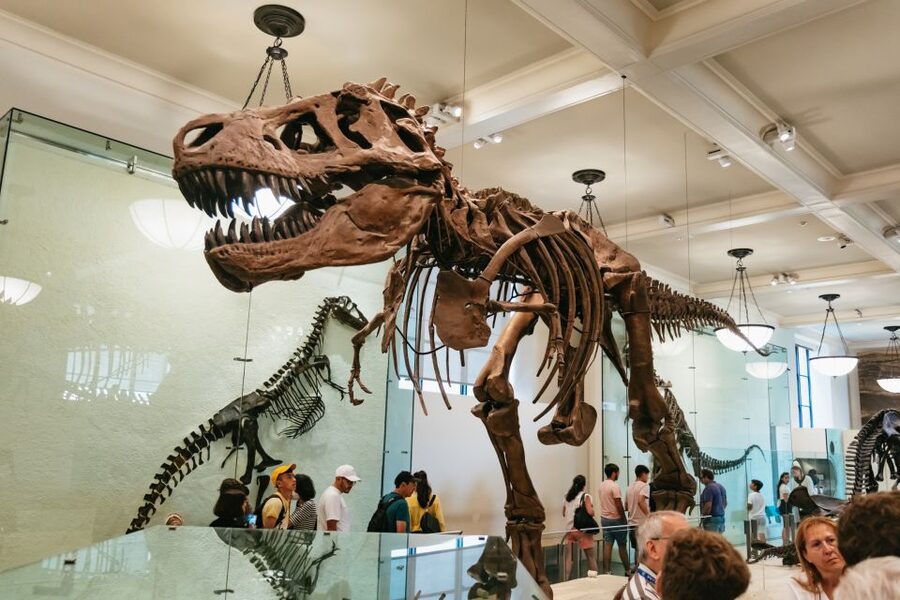
- Dinosaurs, fossils, and the museum’s biggest draw
- The Rose Center and a trip through space
- The new Gilder Center brings science into the present
- Ocean life, biodiversity, and global cultures
- Ticketed exhibits and how to choose them
- Is the $37 ticket good value?
- Crowds, lockers, and practical comfort
- Who will enjoy this most?
- Should you book the American Museum of Natural History?
- FAQ
- What does the American Museum of Natural History ticket include?
- How long is the ticket valid?
- Does general admission include the dinosaur halls?
- Does the ticket include special exhibitions?
- What ticketed experiences are available?
- Is the museum wheelchair accessible?
- Is there a museum app?
- Can I bring large luggage?
- Can New York residents pay what they choose?
Key points to know before you go
- The museum can fill four to five hours easily: Start on the fourth floor and work downward if you have limited time.
- The Gilder Center is included: Its science, education, and innovation exhibits add a modern counterpoint to the older halls.
- General admission has limits: Special exhibitions, the butterfly vivarium, giant-screen film, Invisible Worlds, and space shows require the right ticket option.
- The museum works well for families: Dinosaurs, giant animals, space displays, and interactive features give children plenty to chase.
- The Explorer App helps with the scale: It offers maps, turn-by-turn directions, quizzes, and exhibit stories in English, Spanish, French, and Portuguese.
- Plan for crowds and bags: The museum can be very busy during holiday periods, and lockers cost extra.
Why this museum deserves a full day
The American Museum of Natural History sits directly across from Central Park, making it easy to pair with a walk through the park. But do not treat the museum as a quick indoor stop. Its galleries spread across several floors, and even a focused visit can take several hours.
Your one-day ticket gives you all-day access to the permanent exhibits, the Rose Center for Earth and Space, and the Richard Gilder Center. You can leave the building and return during the day only if the admission rules at the time allow it, so ask before exiting if you plan to combine the museum with lunch nearby.
I would allow at least four hours for a brisk visit. Five hours or more makes sense if you want to read labels, use the app, and add a ticketed show or exhibit. Several visitors have found that even a few hours left plenty unseen. That is not a flaw in the museum, but it does affect how you should plan your New York schedule.
More New York City museums to visit:
- NYC: 9/11 Memorial & Museum Timed-Entry Ticket
★ 4.8 · 31,428 reviews - NYC: Empire State Building Tickets – Observatory & Museum
★ 4.7 · 25,757 reviews - NYC: Museum of Modern Art (MoMA) Entry Ticket
★ 4.6 · 12,540 reviews
Getting your bearings among 40-plus halls
The museum is large, and the layout can feel confusing at first. A paper map is available, but the Explorer App is the better tool if you want turn-by-turn directions. Connect to the museum Wi-Fi, download the app, and use its self-guided tours to avoid wandering past the halls you most want to see.
If your schedule is tight, a practical route is to begin on the fourth floor and work downward. This puts some of the major fossil displays near the front of your visit, when everyone still has energy. You can then choose lower floors based on interest rather than trying to cover every room.
Do not aim to see every case. Pick two or three themes for a first visit, then allow time for the halls that catch your eye. The museum rewards an unhurried look, but it can become tiring if you treat the floor plan like a checklist.
Dinosaurs, fossils, and the museum’s biggest draw
For many families, the dinosaur halls are the main event. The museum holds one of the world’s largest dinosaur fossil collections, and the scale of the bones gives children an immediate sense of how large prehistoric animals were.
The Tyrannosaurus rex skeleton is an essential stop. It is also connected to the museum’s film fame, since the building and its exhibits helped inspire the movie Night at the Museum. You may recognize the Easter Island head as well. The movie connection adds a bit of fun, especially for children, but the fossils are strong enough to carry the visit without it.
The dinosaur displays also work well for adults because they connect individual fossils to larger questions about extinction, adaptation, and the changing history of life. If you select the Impact: The End of the Age of Dinosaurs exhibition, you get a closer look at the asteroid collision 66 million years ago and what followed it.
Impact is not just a room of dinosaur bones. It focuses on the before-and-after story of the catastrophe, including the explosion of life that came afterward. It is a good choice if your family wants a focused science exhibit rather than another broad gallery.
The Rose Center and a trip through space
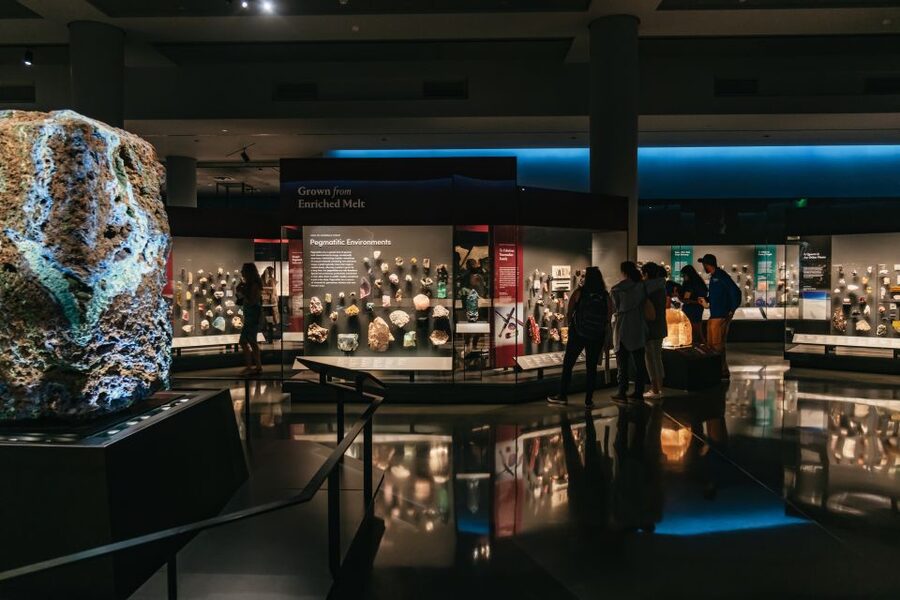
The Rose Center for Earth and Space shifts the museum’s focus from fossils beneath your feet to the universe above your head. The exhibits cover the mysteries of space and Earth, giving you a useful change of pace after the dinosaur halls.
The optional Encounters in the Milky Way space show is narrated by Pedro Pascal. It follows the cosmic movements and chance encounters that shaped our part of the galaxy. If you enjoy planetarium-style presentations, this can add a strong visual centerpiece to the day.
The key point when booking is that a general admission ticket does not include the Hayden Planetarium Space Show. You need to select the appropriate ticket option. Read the inclusions carefully, since the price difference is tied to access to these timed experiences.
Because ticketed shows run at set times, plan them before you start roaming. Otherwise, you may end up hurrying through a hall or crossing the building at the worst possible moment.
More New York City history walks:
- NYC: Starship Landmark 90 Minute Sightseeing Cruise
★ 4.6 · 3,666 reviews - Starship Landmark 90 Minute Sightseeing Cruise
★ 4.5 · 2,073 reviews - American Museum of Natural History Admission Ticket
★ 4.0 · 1,931 reviews - Top Rated Brooklyn Half-Day Food, History & Culture Tour via bus
★ 5.0 · 758 reviews
The new Gilder Center brings science into the present

The Richard Gilder Center for Science, Education, and Innovation is one of the most important additions to the museum. Its state-of-the-art exhibits and immersive experiences give you a more modern way to explore science than the traditional display cases found elsewhere in the building.
The Gilder Center is included with general admission, which makes it a valuable part of the basic ticket. I would visit it early enough that you still have the attention to enjoy its design and activities, but not so early that you skip the museum’s classic halls.
Its focus on science and education also makes it useful for mixed-age groups. Younger children can respond to the visual displays and hands-on elements, while older children and adults can spend more time on the explanations. It helps prevent the museum from feeling like a long parade of old specimens.
Ocean life, biodiversity, and global cultures

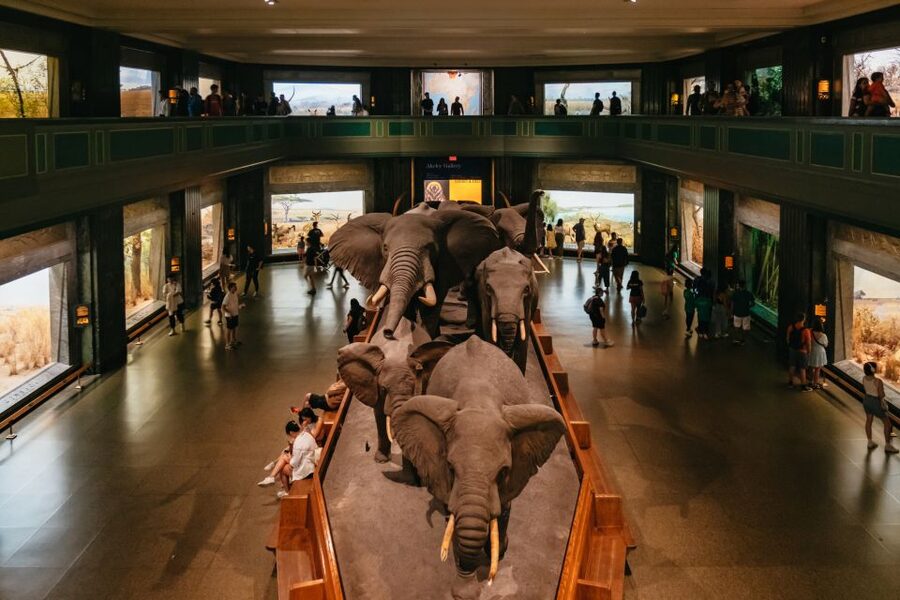
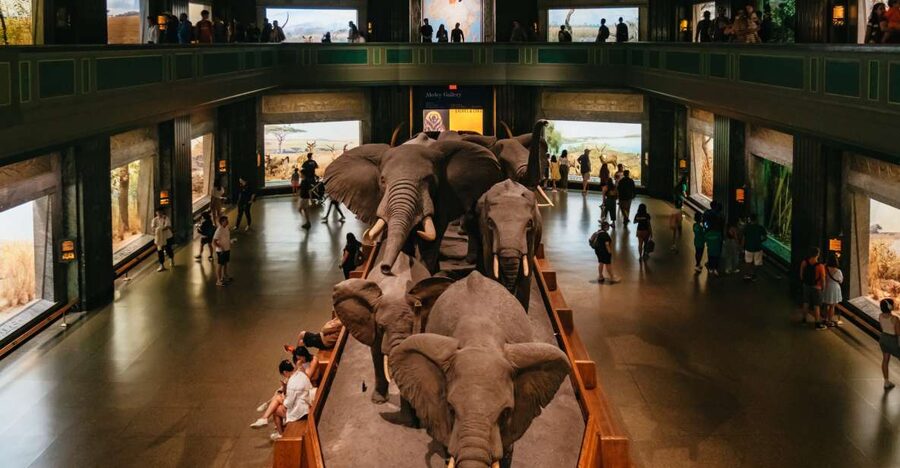
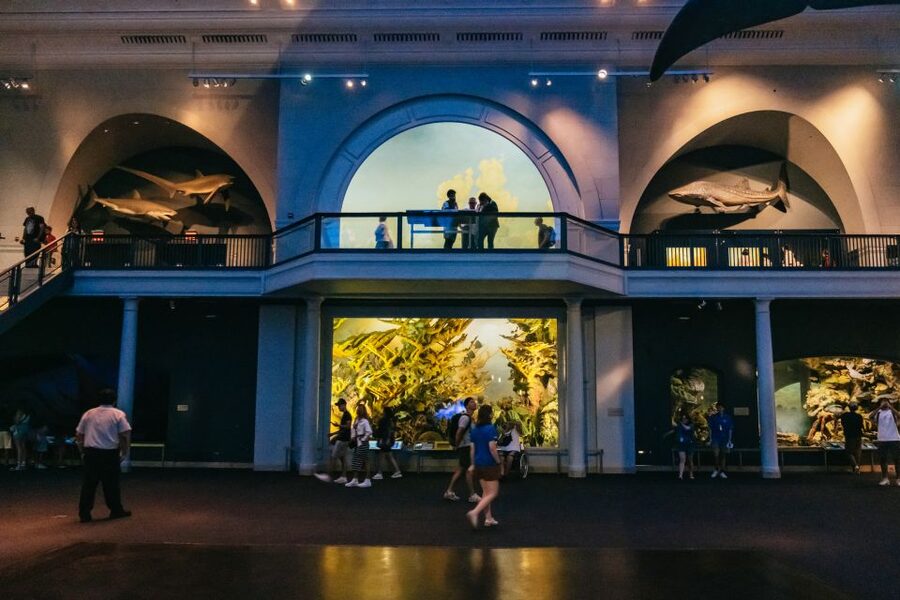
The Milstein Hall of Ocean Life is one of the museum’s most memorable spaces. It brings you face-to-face with some of the largest creatures on Earth and uses dioramas to show animals in their natural settings. The scale of the displays makes this a good stop when attention starts to fade.
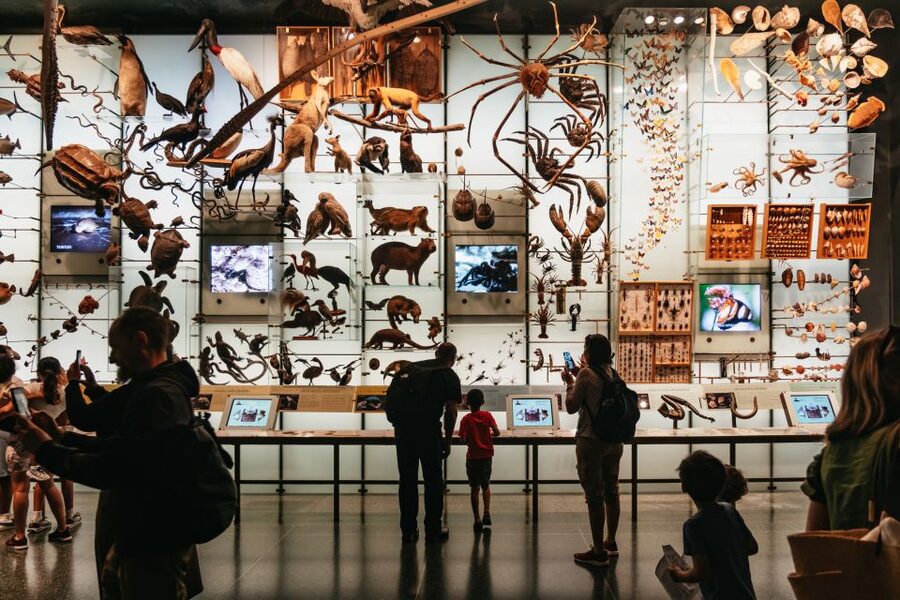
The Hall of Biodiversity looks at the variety of life on Earth. Its subject reaches from individual organisms to larger systems, so it works best when you pause at a few displays instead of trying to absorb every label.
The museum also presents cultures from around the world through exhibits and interactive displays. These halls add human stories to the animal, fossil, and space collections. They are especially useful if your group includes children studying geography, cultures, or world history, though younger visitors may prefer to alternate them with the larger animal displays.
Dioramas are a particular strength. They can feel old-fashioned beside the Gilder Center, but they remain effective because they place animals and environments together in a way that a single skeleton cannot. Give yourself time to look closely rather than rushing from one large object to the next.
Ticketed exhibits and how to choose them
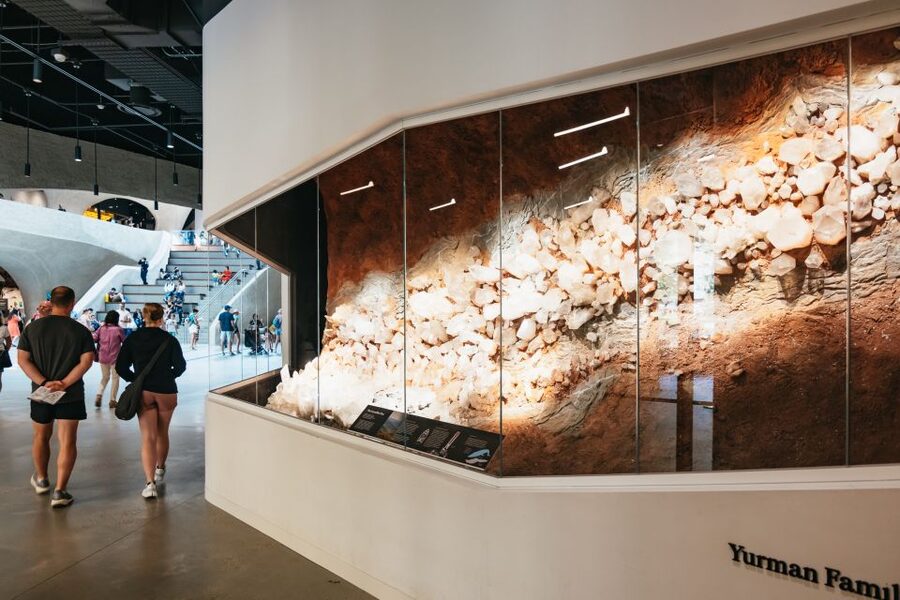
The admission choices matter. General admission covers the permanent halls, Rose Center, and Gilder Center, but it does not include the special experiences listed below.
General Admission + One includes timed entry to one selected special exhibition or experience. General Admission + All includes access to all available ticketed options, subject to timed entry and availability. If you know you want several shows, the all-access choice may offer better value and save you from choosing at the door.
The available options include:
- Impact: The End of the Age of Dinosaurs
- Invisible Worlds
- Encounters in the Milky Way
- Life at the Limits: Nature’s Superheroes
- The giant-screen film
- The Davis Family Butterfly Vivarium
Invisible Worlds takes you from hidden ocean realms to the DNA found in living organisms. It plays in a permanent 360-degree theater, so it offers a more visual, presentation-based experience than the standard halls.
Life at the Limits looks at organisms that survive under extreme conditions. The focus on nature’s survival skills gives the exhibit a clear theme and makes it a good choice for anyone interested in adaptation.
The LeFrak Theater has a 40-foot-high by 66-foot-wide screen and digital sound. Nature films are shown there, and wheelchair access, captioning devices, and audio description devices are available.
The Davis Family Butterfly Vivarium is open year-round and may contain up to 1,000 free-flying butterflies. You may even have one land on you. It is a pleasant contrast to the stone, glass, and bones found throughout much of the museum, but remember that it is a ticketed experience rather than part of general admission.
Is the $37 ticket good value?
At $37 per person, the ticket is not a casual budget stop, especially for a family. Its value depends on how much time you can give it and which exhibits you want to see.
For a full day, the price is reasonable because general admission covers more than 40 permanent halls, the Rose Center, and the Gilder Center. You are paying for a large choice of subjects rather than a short, fixed tour. If you spend only an hour or two, the value becomes weaker.
The ticketed options can change the calculation. If you want the butterfly vivarium, a space show, the giant-screen film, and one or two special exhibitions, compare the General Admission + One and General Admission + All prices before booking. A basic ticket is enough if you mainly want dinosaurs, animals, cultures, the Gilder Center, and the Rose Center.
New York residents have a different arrangement. They may pay what they choose for general admission, which includes the permanent halls, Rose Center, and Gilder Center. It does not include the ticketed exhibits, Invisible Worlds, the butterfly vivarium, the giant-screen film, or the Hayden Planetarium Space Show.
Crowds, lockers, and practical comfort

The museum is family-friendly, but it can become crowded during holiday periods. Busy rooms make it harder to stop at the most popular displays, and the building can feel especially full when school groups and families arrive together.
I would book ahead and keep your barcode ready at entry. This can make the arrival process faster. For a quieter visit, choose a less popular time if the available starting times give you that choice.
Oversize luggage and large bags are not allowed. Lockers are available on-site for an additional charge, so avoid arriving with more than you need. Cafeterias and other amenities make a long visit easier, but you should still wear comfortable shoes and build in a pause.
The museum is wheelchair accessible. The LeFrak Theater is wheelchair accessible as well, with captioning and audio description devices available. The Explorer App is offered in English, Spanish, French, and Portuguese, which helps families and groups who prefer one of those languages.
There is no guide included. That is a positive for some visitors, since you can choose your own route and stop when something catches your interest. If you prefer a structured explanation, use the app’s stories and self-guided tours rather than expecting a live tour leader.
Who will enjoy this most?
I would recommend this museum to families, dinosaur fans, space enthusiasts, and anyone needing a strong indoor activity in cold or wet weather. It also suits adults who enjoy natural science and detailed dioramas, though you should not expect every hall to feel newly designed.
The museum works best for people who like choice. One person can focus on fossils while another spends time with cultures, ocean life, or space. The downside is that this freedom requires a little planning. Without a route, you may spend too much time finding the next hall and too little time enjoying it.
Children who need constant hands-on activity may not love every traditional gallery. Mix large animals, dinosaurs, the Gilder Center, and any selected special exhibit to keep the pace varied. The museum does not have a separate children’s area listed in the activity details, so plan around the exhibits themselves.
Should you book the American Museum of Natural History?
Book it if you want a substantial New York museum day rather than a quick attraction. The $37 general ticket offers strong value when you stay four or five hours and make use of the permanent halls, Rose Center, and Gilder Center.
Choose General Admission + One if one special exhibit or show is your priority. Choose General Admission + All if you want to see several ticketed experiences and can manage their timed entries. Skip the add-ons if your main goals are dinosaurs, ocean life, world cultures, the Rose Center, and the Gilder Center.
My practical advice is to book ahead, arrive with your barcode ready, start high in the building, and use the Explorer App. Accept that you will not see everything. That is not a reason to rush. It is the reason to return.
FAQ
What does the American Museum of Natural History ticket include?
General admission includes access to more than 40 permanent exhibition halls, the Rose Center for Earth and Space, the Richard Gilder Center, and on-site Wi-Fi. Special exhibitions and certain shows require a different ticket option.
How long is the ticket valid?
The ticket is valid for one day and provides all-day entry. Starting times depend on availability when you book.
Does general admission include the dinosaur halls?
Yes. The dinosaur halls are part of the permanent exhibitions included with general admission.
Does the ticket include special exhibitions?
General entry alone does not include special exhibitions. You need the General Admission + One or General Admission + All option for the ticketed experiences.
What ticketed experiences are available?
Options include Impact: The End of the Age of Dinosaurs, Invisible Worlds, Encounters in the Milky Way, Life at the Limits, the giant-screen film, and the Davis Family Butterfly Vivarium.
Is the museum wheelchair accessible?
Yes. The activity is wheelchair accessible, and the LeFrak Theater is wheelchair accessible. Captioning and audio description devices are available there.
Is there a museum app?
Yes. The free Explorer App provides turn-by-turn navigation, exhibit stories, quizzes, and self-guided tours. It is available in English, Spanish, French, and Portuguese.
Can I bring large luggage?
Oversize luggage and large bags are not allowed. Lockers are available on-site for an additional charge.
Can New York residents pay what they choose?
New York residents can pay what they choose for general admission. That access covers the permanent halls, Rose Center, and Gilder Center, but not the ticketed exhibitions, butterfly vivarium, giant-screen film, Invisible Worlds, or Hayden Planetarium Space Show.
Just listed around New York City
- NYC: Little Shop of Horrors Off-Broadway Ticket5 reviews
- Private NYC Airport Transfer: LGA to Manhattan – Up to 5★ 3.6 · 5 reviews
- New York City Tour in German★ 4.5 · 5 reviews
- New York: Hamilton and Washington Revolutionary Walking Tour★ 5.0 · 5 reviews
- NYC Freedom Tower Private Photo or Video Experience★ 4.0 · 6 reviews
- New York Afternoon Fall Foliage Cruise with Lunch★ 5.0 · 6 reviews
- Brooklyn Walking Tours by Locals: Private & 100% Personalized★ 4.0 · 6 reviews
- Southold Bay Oyster Farm Tour★ 5.0 · 6 reviews
Museums, compared.


Empire State Building Tickets – Observatory & Museum
Read our review →

9/11 Memorial, Ground Zero Tour with Optional 9/11 Museum Ticket
Read our review →

All-Access 9/11: Ground Zero Tour, Memorial and Museum, One World Observatory
Read our review →

Browse the lists this tour appears in