
Reviewed · MUSEUMS
American Museum of Natural History Admission Ticket
The American Museum of Natural History packs 13 billion years of science into one enormous Upper West Side complex. You can move from dinosaur skeletons to Asian elephants, ancient cultures, the birth of the universe, and a 94-foot blue whale without leaving the building.
I like the freedom to set your own pace, and I like the mix of big crowd-pleasers and serious science. It works especially well for families, since children and teenagers can enjoy the animals and dinosaurs while adults find plenty of detail. The catch is ticket handling: some voucher holders have had to wait in line to exchange a QR code for the actual museum ticket.
In This Review
- Key points to know before you go
- Why this museum deserves half a day
- Entering the Upper West Side museum
- The dinosaur halls: a strong first stop
- Mammals and the famous blue whale
- The Rose Center and Richard Gilder Center
- How much can you see in three or four hours?
- Food, breaks, and the Central Park connection
- What the $37 ticket really buys you
- Is this best for children, adults, or both?
- Cancellation and practical details
- Should you book it?
- FAQ
- Where is the American Museum of Natural History?
- How much does general admission cost?
- How long should I plan to spend at the museum?
- What does general admission include?
- Does admission include the Hayden Planetarium Space Show?
- Are special exhibitions included?
- What famous exhibits can I see?
- Do I need to exchange a voucher for a ticket?
- Are children under three admitted free?
- Is the museum accessible by public transportation and suitable for people with disabilities?
- Can New York residents choose what to pay?
- Can I cancel for a refund?
Key points to know before you go

- More than 40 permanent galleries: You can visit dinosaur halls, mammal displays, ocean-life exhibits, cultural collections, the Rose Center, and the Richard Gilder Center.
- Three to four hours is only a starting point: The museum is spread across four levels, and a focused visit can easily become a half-day or full-day outing.
- Three famous sights anchor the visit: Look for the Tyrannosaurus rex skeleton, the Asian elephants, and the 94-foot-long blue whale model.
- General admission has limits: Ticketed exhibitions, Invisible Worlds, the butterfly vivarium, giant-screen films, and the Hayden Planetarium Space Show are not included.
- Plan your route: Pick up a paper map at an entrance, information desk, or membership desk because the building can be confusing.
- The $37 price is fair if you stay awhile: The value is strongest when you give the museum at least three hours, rather than making a quick stop.
Why this museum deserves half a day
New York has no shortage of famous sights, but this one gives you a break from the city streets while still feeling unmistakably New York. The American Museum of Natural History is not a small, tidy museum that you can polish off in an hour. It is a large, four-level institution with more than 40 permanent exhibition halls.
That size is both the appeal and the challenge. I love the sense that you can keep changing subjects whenever your attention wanders. One room presents dinosaur bones; the next brings you to ocean life, minerals, astronomy, or human cultures. You are not locked into a guide’s schedule, so you can linger where your family is having fun and move quickly through rooms that do not hold your interest.
At the same time, do not treat the listed three to four hours as a strict finish line. That is enough for a strong first visit, but not enough to read every label or see every gallery carefully. One practical plan is to choose two or three priority areas before entering, then use anything else as a bonus.
The museum works in poor weather, too. You can spend the morning indoors, then continue to Central Park nearby. That combination makes the Upper West Side location useful for a full day rather than a single isolated attraction.
More New York City museums to visit:
- NYC: 9/11 Memorial & Museum Timed-Entry Ticket
★ 4.8 · 31,428 reviews - NYC: Empire State Building Tickets – Observatory & Museum
★ 4.7 · 25,757 reviews - New York City: American Museum of Natural History Ticket
★ 4.5 · 15,447 reviews
Entering the Upper West Side museum
You make your own way to the museum at a time that suits your schedule. The attraction is near public transportation, so you do not need to build an elaborate transfer plan around it.
The important detail is the voucher. A voucher is not always the same thing as an entrance ticket. At the museum, you may need to exchange it for the admission ticket, and that can mean waiting at the ticketing area. Several people have reported delays ranging from about 30 minutes to more than an hour, with one especially difficult case involving a wait of over two hours.
That problem is not guaranteed, but it is serious enough to affect the value of this booking method. If you are visiting with a one-year-old, a three-year-old, or anyone who does poorly in lines, check the current redemption instructions before paying. Buying directly through the museum may offer faster entry, according to the practical experience described in the supplied information.
If you do use this ticket, arrive with your voucher ready and allow extra time at the start. Do not schedule a tight lunch reservation, timed show, or afternoon train immediately after arrival.
Once inside, pick up the paper map. Maps are available at museum entrances, information desks, and membership desks. The building is large enough that a map saves repeated backtracking. It is also not always easy to follow the museum’s internal signs, so mark the rooms you most want to find.
The dinosaur halls: a strong first stop
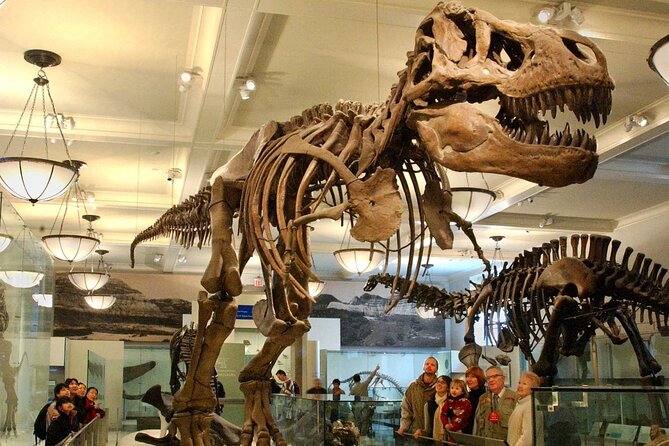
The Hall of Saurischian Dinosaurs contains one of the museum’s headline objects, a Tyrannosaurus rex skeleton. This is the kind of exhibit that gives the museum its family appeal. Children can begin with the familiar dinosaur names, while adults can take in the size and structure of the fossils.
The dinosaur displays are not a quick photo stop. The museum gives them enough space to make the fossil collections feel substantial, and there are many displays beyond the single T. rex. If dinosaurs are your main reason for coming, put these halls near the top of your route.
This area also helps you judge your family’s pace. Younger children may want to stop at nearly every skeleton, while older children and teenagers often move between the largest specimens and the information panels. Give yourself more time here than you might expect if everyone in your group has a different level of interest.
Mammals and the famous blue whale
The Akeley Hall of African Mammals is another major attraction. Its Asian elephants are among the museum’s most recognizable displays, and the animal halls are a good choice for children who connect more easily with wildlife than with fossil evidence.
The displays use preserved animals, so this is not a live-animal attraction. That matters when setting expectations. You come to see carefully arranged specimens and learn about the natural world, not to watch feeding or animal behavior.
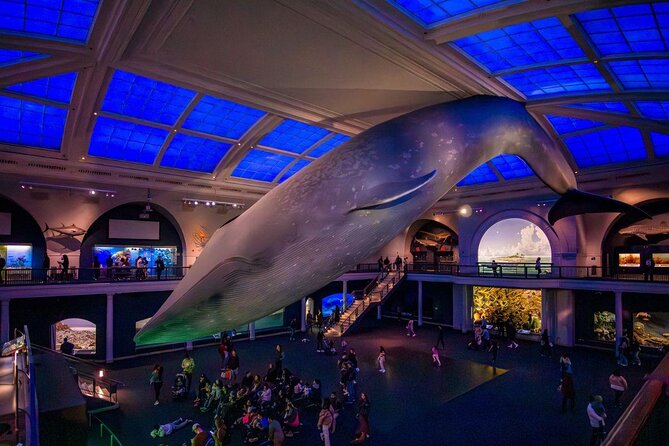
The Milstein Hall of Ocean Life shifts the mood completely. Its 94-foot-long blue whale model is one of the museum’s most memorable sights. The scale is hard to grasp from a photograph, and the suspended whale gives the room a strong visual focus.
I would not rush through the mammal and ocean-life halls. They are among the easiest areas for a mixed-age group to enjoy together. Younger children get the size and drama, teenagers get striking photographs, and adults can spend more time with the science.
More New York City history walks:
- NYC: Starship Landmark 90 Minute Sightseeing Cruise
★ 4.6 · 3,666 reviews - Starship Landmark 90 Minute Sightseeing Cruise
★ 4.5 · 2,073 reviews - Top Rated Brooklyn Half-Day Food, History & Culture Tour via bus
★ 5.0 · 758 reviews - NYC: Speakeasy Drinks and Prohibition History Tour
★ 4.7 · 474 reviews
The Rose Center and Richard Gilder Center

General admission also includes the Rose Center for Earth and Space and the Richard Gilder Center for Science, Education, and Innovation. These areas extend the visit beyond animals and fossils, giving you a chance to think about space, Earth, and scientific discovery in a more modern setting.
The Rose Center is the place to include if your group is interested in astronomy and the history of the universe. It connects with the museum’s enormous time scale, from the origins of the universe to the natural world represented in the other halls.
The Gilder Center adds another major stop to an already full visit. Since both are included in general admission, you should check the paper map early and decide where they fit. It is easy to spend all your time in the dinosaur and animal rooms, then discover that you have not left enough energy for the science spaces.
The included areas are substantial, but general admission does not cover every attraction inside the museum. Invisible Worlds, the butterfly vivarium, the giant-screen film, and the Hayden Planetarium Space Show require separate ticketed admission. Ask about these before you arrive if one is important to your plans.
A family that wants the planetarium or a film should budget for more than the $37 general admission price. One parent specifically wished they had added the planetarium, and that is a useful reminder: do not assume every special experience is bundled into the basic ticket.
How much can you see in three or four hours?
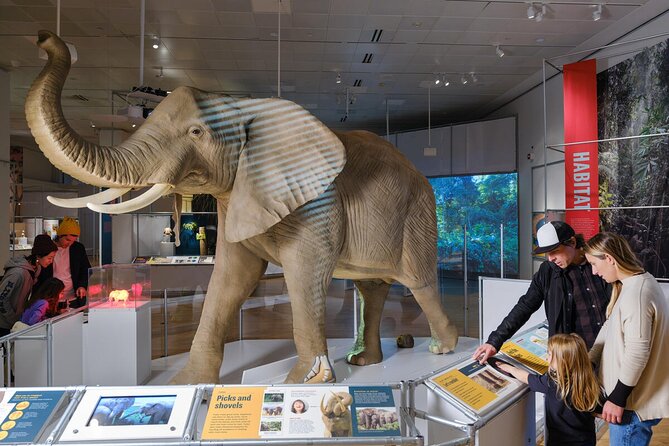
A three-hour visit can work if you choose highlights. Start with the dinosaur halls, move to African mammals and ocean life, then finish with either the Rose Center or Gilder Center. You will see the museum’s major themes without trying to cover every room.
Four hours gives you more breathing room. You can stop for food, revisit a favorite hall, and spend more time with the displays that interest your group. A full-day visit is reasonable if you want to explore most of the four levels or add ticketed attractions.
The museum requires plenty of walking on hard floors. That is manageable for most people, but it can become tiring, especially with small children or anyone who has limited stamina. Strollers and ADA access are available, and most people can take part, but comfort still depends on how long you stay.
Crowds can change the experience. Even early in the day, the museum may fill quickly. Busy halls can become hot and humid, and narrow viewing areas feel slower when many school groups and families arrive. An early start helps, but it does not guarantee a quiet visit.
The best strategy is not to chase every gallery. Choose your must-sees, get a map, and accept that the museum is too large for perfect coverage in one visit.
Food, breaks, and the Central Park connection
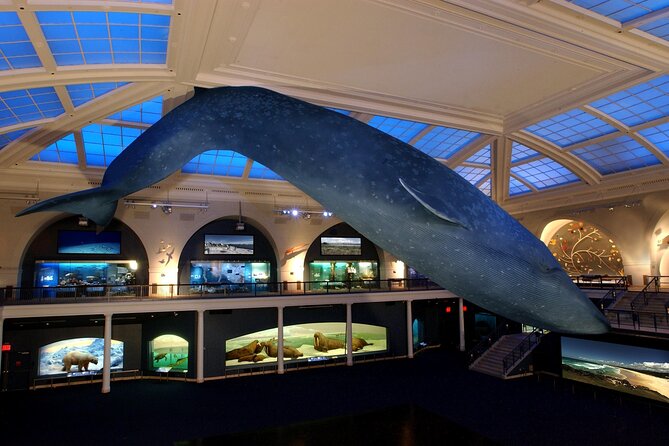
A museum this large needs a break. The food court has included gluten-free choices such as pizza and brownies, which is useful for families managing dietary needs. The available information does not give a full menu, so treat those as confirmed examples rather than a guarantee of every current option.
The Upper West Side setting also makes the museum easy to pair with Central Park activities. You can use the museum as the indoor part of a day, then walk outside for a change of pace. That plan is especially helpful for children who need space after several hours of exhibits.
Keep your schedule flexible. A museum visit can run longer than planned when a child finds a favorite animal hall, or shorter than planned when the building feels crowded. The admission lets you stay as long as you wish, so you are not forced to rush toward a fixed tour departure.
What the $37 ticket really buys you
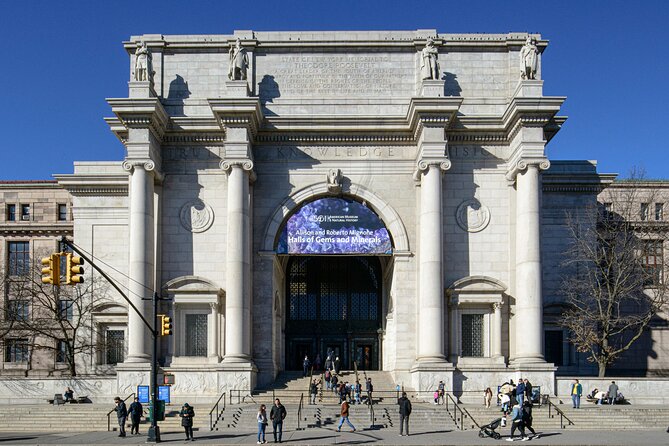
At $37 per person, this is not a cheap casual stop. For a family of four, the general admission cost is $148 before any extra ticketed exhibits, food, or transport. The price makes the most sense when you stay several hours and use the included galleries, Rose Center, and Gilder Center.
The ticket is less compelling for a quick one-hour visit. You will see something impressive, but you will pay a fairly high amount for a small slice of what the museum offers.
For New York residents, the museum states that the amount paid for general admission is up to the visitor. That makes this particular $37 price less relevant for qualifying local residents, who should check the museum’s current terms before booking.
The no-cost admission policy for children under three improves the family value. Service animals are allowed, and the attraction is near public transportation. The main financial question is not simply the admission price. It is whether you have enough time and energy to make use of the building.
Is this best for children, adults, or both?
This is one of the better New York attractions for a group with mixed interests. Kids can focus on dinosaurs, elephants, and the whale. Teenagers have plenty of large-scale displays to photograph and explore, while adults can spend more time with astronomy, science, minerals, and cultural exhibits.
It is also a good choice for a couple or solo visitor who enjoys museums. You can set your own pace, stop often, and skip anything that does not interest you. A guided tour may be available through the museum, but this admission ticket itself is not described as including a named guide or a guided tour.
Families with very young children should plan carefully. The building is stroller-friendly and ADA accessible, but long lines to exchange a voucher can be especially frustrating with a baby or toddler. If quick entry matters more than the convenience of advance purchase, compare the direct museum option before booking.
The museum is also useful for repeat visits. You will not see everything in one day, and a second visit can focus on a different subject instead of repeating the same route.
Cancellation and practical details
Free cancellation is available if you cancel at least 24 hours before the experience start time. Cancellations made within 24 hours are not refunded, and changes inside that same period are not accepted. The cut-off follows local New York time.
The ticket is offered in English. Confirmation is provided at booking, and children under three qualify for waived admission fees. Most people can participate, and service animals are allowed.
Because this is a self-guided admission ticket, you should think of the museum as the experience rather than expecting a personal guide, fixed group, or narrated route. The freedom is useful, but the responsibility for planning the visit belongs to you.
Should you book it?
Book this experience if you want a flexible museum day and can give it at least three hours. The dinosaur skeletons, Asian elephants, blue whale, Rose Center, and Gilder Center provide enough variety for children, adults, couples, and solo visitors.
I would be cautious about booking the voucher without checking the entry process first. The museum itself is the clear reason to go, but the ticket exchange has caused real delays. If you are traveling on a tight schedule or with very young children, compare direct admission through the museum.
For most people, the attraction is worth the price when treated as a half-day or full-day outing. Bring a map, choose your priorities, allow time for lines, and remember that the planetarium, butterfly vivarium, films, Invisible Worlds, and other special attractions cost extra.
FAQ
Where is the American Museum of Natural History?
The museum is on the Upper West Side of Manhattan in New York City.
How much does general admission cost?
The listed price is $37 per person.
How long should I plan to spend at the museum?
The approximate visit lasts three to four hours, but the museum can take a full day if you want to explore more of the four levels and galleries.
What does general admission include?
General admission includes more than 40 permanent exhibition halls, the Rose Center for Earth and Space, and the Richard Gilder Center for Science, Education, and Innovation.
Does admission include the Hayden Planetarium Space Show?
No. The Hayden Planetarium Space Show is not included in general admission and requires a separate ticket.
Are special exhibitions included?
No. Ticketed exhibitions, Invisible Worlds, the butterfly vivarium, and the giant-screen film are not included.
What famous exhibits can I see?
You can see the Tyrannosaurus rex skeleton in the Hall of Saurischian Dinosaurs, Asian elephants in the Akeley Hall of African Mammals, and a 94-foot-long blue whale model in the Milstein Hall of Ocean Life.
Do I need to exchange a voucher for a ticket?
Yes. The voucher must be converted to an admission ticket at the museum. Allow extra time because the exchange may involve a line.
Are children under three admitted free?
Yes. Children under three qualify for waived admission fees.
Is the museum accessible by public transportation and suitable for people with disabilities?
The museum is near public transportation, and the available information indicates that strollers and ADA access are supported. Service animals are allowed.
Can New York residents choose what to pay?
Yes. New York residents can pay an amount of their choice for general admission, subject to the museum’s current terms.
Can I cancel for a refund?
Yes, if you cancel at least 24 hours before the experience start time. Cancellations or changes made within 24 hours are not accepted for a refund.
Just listed around New York City
- NYC: Little Shop of Horrors Off-Broadway Ticket5 reviews
- Private NYC Airport Transfer: LGA to Manhattan – Up to 5★ 3.6 · 5 reviews
- New York City Tour in German★ 4.5 · 5 reviews
- New York: Hamilton and Washington Revolutionary Walking Tour★ 5.0 · 5 reviews
- NYC Freedom Tower Private Photo or Video Experience★ 4.0 · 6 reviews
- New York Afternoon Fall Foliage Cruise with Lunch★ 5.0 · 6 reviews
- Brooklyn Walking Tours by Locals: Private & 100% Personalized★ 4.0 · 6 reviews
- Southold Bay Oyster Farm Tour★ 5.0 · 6 reviews
Museums, compared.
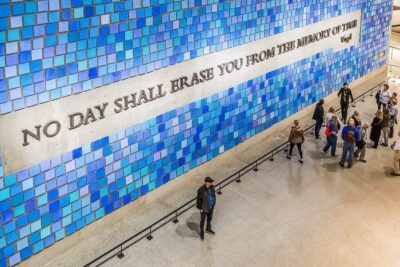

Empire State Building Tickets – Observatory & Museum
Read our review →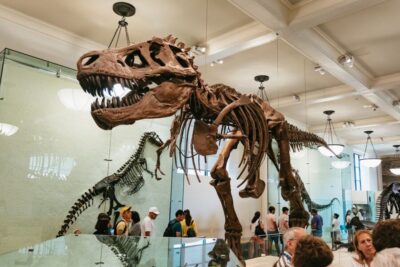


9/11 Memorial, Ground Zero Tour with Optional 9/11 Museum Ticket
Read our review →

All-Access 9/11: Ground Zero Tour, Memorial and Museum, One World Observatory
Read our review →
Browse the lists this tour appears in