
Reviewed · MUSEUMS
NYC: Intrepid Museum Entry Ticket
The most striking part of this visit is the chance to walk through a real World War II aircraft carrier, then look up at Enterprise, NASA’s first space shuttle. You move from tight crew quarters and combat rooms to a broad flight deck lined with aircraft, so the scale keeps changing in useful, surprising ways.
I like the mix of machinery and personal stories, especially the restored mess decks, veteran encounters, and the Kamikaze: Day of Darkness, Day of Light exhibit. I also like that the $38 ticket covers the carrier, shuttle pavilion, and submarine, though Concorde requires an extra charge, and a short late-afternoon visit can leave you rushing.
In This Review
- Key points
- Why the USS Intrepid feels different from an ordinary museum
- Start on the hangar deck for the clearest introduction
- Walk the flight deck among 28 restored aircraft
- See how the crew lived on the gallery and third decks
- Meet the space shuttle Enterprise and follow the Apollo story
- Make time for the USS Growler submarine
- Do not confuse the included displays with Concorde
- How long you need and how to plan the day
- Is $38 good value for New York?
- Who should book the Intrepid Museum?
- Should you book this one-day ticket?
- FAQ
- Where is the Intrepid Museum located?
- What does the $38 admission include?
- Is Concorde included in the ticket?
- How long should I allow for the museum?
- Can I visit the submarine with this ticket?
- Is the museum wheelchair accessible?
- Can children visit without an adult?
Key points
- Four decks of the USS Intrepid: See the hangar, flight, gallery, and third decks, each revealing a different side of shipboard life.
- Enterprise up close: View the prototype NASA orbiter and Apollo displays, including a recreation of the Apollo 11 command module.
- 28 restored aircraft: Walk among military aircraft on the flight deck, including some of the fastest jets ever built.
- USS Growler submarine: The submarine visit is included and often becomes a favorite, but its queue can grow long.
- Personal stories matter: Veterans and staff add useful human detail to the machinery and displays.
- Plan for at least two to three hours: An early arrival gives you a better chance of seeing the full museum without hurrying.
Why the USS Intrepid feels different from an ordinary museum

The Intrepid Museum is not a collection of aircraft arranged in a gallery. It is a museum built into a 1943 aircraft carrier, berthed on the Hudson River at 1 Intrepid Square, near 12th Avenue and 48th Street.
That setting does much of the teaching for you. When you walk through the hangar deck, you see how equipment, aircraft, crew, and supplies had to work together inside a functioning warship. When you climb toward the flight deck, you begin to understand the sheer size of the carrier and the demanding work carried out above and below it.
The USS Intrepid served in World War II, survived five kamikaze attacks and a torpedo strike, then went on to serve during the Cold War and Vietnam War. The museum does not present only a polished display of military hardware. Its exhibits also address danger, routine, teamwork, and the daily lives of the people who served aboard.
That balance is one reason I find the visit more useful than a quick walk around an aircraft collection. You see the planes, but you also see where people ate, slept, prepared for missions, and tracked combat information.
More New York City museums to visit:
- NYC: 9/11 Memorial & Museum Timed-Entry Ticket
★ 4.8 · 31,428 reviews - NYC: Empire State Building Tickets – Observatory & Museum
★ 4.7 · 25,757 reviews - New York City: American Museum of Natural History Ticket
★ 4.5 · 15,447 reviews
Start on the hangar deck for the clearest introduction

The hangar deck is a good place to get your bearings. It is the main indoor exhibit area and explains both the machinery and the people behind the ship’s operations.
Allow time for the displays here rather than treating the hangar as a passageway to the planes. Exhibits such as The Story of Intrepid provide the basic timeline, while Kamikaze: Day of Darkness, Day of Light adds a more focused account of one of the most difficult parts of the ship’s wartime service.
That kamikaze exhibit is particularly worthwhile because it gives emotional and historical context to the carrier. You are not simply looking at an old ship that survived combat. You are learning how a crew faced attacks that were designed to cause maximum damage and fear.
The hangar deck is also helpful on a hot or cold day. Much of the flight deck is exposed, and the indoor sections give you a chance to slow down, read, and watch audio-visual material without standing in the sun.
Walk the flight deck among 28 restored aircraft
The flight deck is the visual centerpiece. More than two dozen restored aircraft are arranged across the top of the carrier, giving you close views that are hard to get at a conventional aviation museum.
You can examine the aircraft from several angles and see how different designs served different jobs. The collection includes military aircraft from different periods, along with some of the world’s fastest military jets. For anyone interested in aviation, this is the part of the museum that can easily take longer than expected.
The broad deck also gives you a sense of the risks involved in carrier operations. Aircraft had to launch and land in a confined space, with crew working around powerful engines and moving equipment. Even without a guide, the setting makes those operations easier to picture.
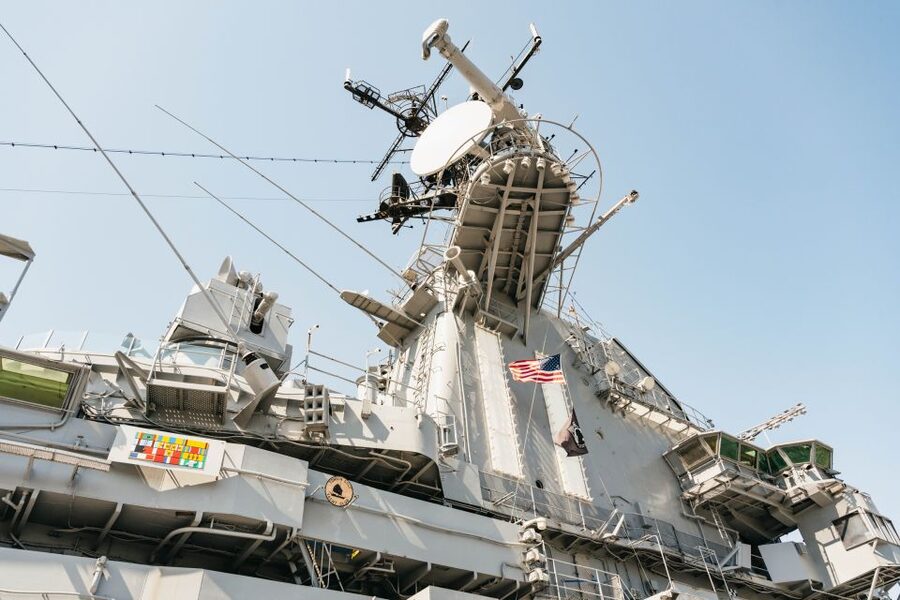
Look for the Restoration Tent as you walk around. It offers a useful reminder that these aircraft are preserved through ongoing work, not simply placed on display and forgotten. The island and bridges are also accessible, giving you a different view of the carrier’s command areas and the Hudson River.
There is a practical catch. The flight deck has limited shade, and on a hot sunny day you may want water and a slower pace. One visitor found that more water fountains and shaded areas would improve the visit. Wear comfortable shoes, since this is a large site with plenty of walking and standing.
See how the crew lived on the gallery and third decks

The gallery deck sits between the flight deck and hangar deck. It contains the combat information center, squadron ready room, and marine berthing.
This section shows the carrier as a working military environment rather than a giant ship with aircraft parked on top. The combat information center explains how information was gathered and handled during operations. The ready room helps you picture aircrews preparing for missions, while the berthing areas show how little private space many crew members had.
On the third deck, you can visit the restored galley, enlisted mess, and crew berthing. These rooms are valuable because they make the numbers personal. A carrier could carry a large crew, but the basic needs of those people still had to be met every day: meals, rest, maintenance, orders, and preparation for the next operation.
Some areas are not open, including sections that would require more stairs or ladders. If you expect to see the engine room and every lower deck, you may find the visit less complete than anticipated. The museum is extensive, but access is selective.
A few more New York City picks to weigh up
- NYC: SUMMIT One Vanderbilt Tickets
★ 4.7 · 51,195 reviews - NYC: Museum of Modern Art (MoMA) Entry Ticket
★ 4.6 · 12,540 reviews - NYC: One World Observatory Skip-the-Line Ticket
★ 4.7 · 12,329 reviews - NYC Empire State Building Observation Deck Ticket
★ 4.5 · 6,916 reviews
Meet the space shuttle Enterprise and follow the Apollo story

The Space Shuttle Pavilion houses Enterprise, the first space shuttle prototype. It was not used for a space mission, but it played an important role in developing the shuttle program.
Seeing Enterprise in person gives you a better sense of its size and shape than photographs do. The shuttle is an aircraft, spacecraft, and test vehicle at once, and the pavilion explains how NASA used it to develop the technology and procedures needed for later orbiters.
The exhibit includes original artifacts, photographs, audio, and films. These displays help explain the science behind the shuttle era without reducing the story to a simple parade of famous launches.
The Apollo: When We Went to the Moon exhibit carries the story further back. You can see a recreation of the Apollo 11 command module, the spacecraft that carried Neil Armstrong, Buzz Aldrin, and Michael Collins to the moon and back. Displays include Apollo artifacts, moon rocks, and lunar landing gear.
I like this section because it connects engineering with human decision-making. The Apollo missions were not only about reaching the moon. They also depended on navigation, materials, communications, life support, and careful planning under extreme conditions. The exhibit then points toward future lunar missions and possible journeys to Mars.
Families often get a lot from this area, especially if children are interested in space, science, or machines. The interactive material gives younger visitors more to do than simply read labels, while adults can spend longer with the technical details.
Make time for the USS Growler submarine

The Cold War-era submarine is included with admission and is one of the most unusual parts of the day. You enter a vessel built for a very different kind of military service, with narrow passageways and compact working spaces.
The submarine helps you understand how enclosed and demanding life below the surface could be. It is a strong contrast to the open flight deck and the cavernous hangar of the Intrepid.
The main practical issue is the queue. If you want to visit the submarine, head there early rather than leaving it until the end. Lines can become long enough that you may decide to skip it, particularly if you arrive late or have a fixed closing time.
The submarine is not a minor extra. It adds a Cold War chapter to a visit that otherwise leans heavily toward World War II, aviation, and space exploration. Families often find its cramped interior memorable, while military history enthusiasts may appreciate the change in technology and strategy.
Do not confuse the included displays with Concorde

Concorde is a popular addition to the museum, and it can be seen as part of the wider attraction, but access requires an additional charge. The basic $38 ticket includes the Intrepid aircraft carrier, Space Shuttle Pavilion, and submarine, not every possible exhibit.
That distinction matters when you compare the price. The included collection already gives you several major attractions in one place: a historic carrier, dozens of aircraft, a space shuttle, Apollo displays, and a submarine. If Concorde is your main reason for coming, check the current admission options before booking so the final cost does not surprise you.
For many visitors, the carrier and Enterprise provide enough value on their own. If you have a strong interest in passenger aviation, you may decide the extra fee is worthwhile. If not, use the included exhibits as the core of your visit.
How long you need and how to plan the day

The stated visit time is two to three hours, but that is a minimum for a reasonably complete look. If you read the displays, wait for the submarine, talk with staff or veterans, and spend time with the aircraft, you can easily use much more of the day.
An early time slot is the safest choice. A late start can work if you want a quick visit, but last entry is one hour before closing, and the museum itself may close before you have seen the final deck. One family arrived at 3 p.m. for a 5 p.m. closing and found two hours too short.
At the entrance, present your QR-coded ticket at the Priority Access timed ticket or advance purchase line at the box office. This avoids the ticket buying line, though ticket holders can still face a wait of up to 30 minutes before entering.
Do not bring luggage or large bags. Children under 16 must be with an adult, and unaccompanied minors are not permitted. Free WiFi is available, which is useful for accessing additional information through QR codes around the museum.
The museum is described as wheelchair accessible, but the full site is not accessible to wheelchair users because some sections involve stairs and ladders. There can also be long periods of walking and standing. Check the current access arrangements if mobility is a concern, since you may need to miss some areas.
Veterans with valid identification enter free, which can change the value calculation for eligible visitors.
Is $38 good value for New York?

At $38 per person, this is a strong value if you have even a moderate interest in aircraft, ships, military history, or space travel. You are paying for several substantial attractions rather than a single gallery: four areas of the carrier, the flight deck aircraft, Enterprise, Apollo exhibits, and the included submarine.
The value is especially good for families and mixed-interest groups. One person can focus on aviation, another on naval history, and someone else on space exploration. The many interactive displays and the chance to enter a real submarine also help keep the visit from becoming a long sequence of information panels.
The price feels less attractive if you are not interested in technical subjects or military history. The museum is large, and much of the visit involves reading, climbing, walking, and looking closely at machinery. Concorde also costs extra, so build that into your budget if it is essential.
Who should book the Intrepid Museum?

I would choose this for families with school-age children or teenagers, adults who like engineering and transport, aviation enthusiasts, space fans, veterans, and anyone who wants a museum with a strong physical setting.
It is also a good choice for a repeat New York visitor. The Intrepid is easy to overlook beside more famous city attractions, but it offers something that a standard indoor museum cannot: you walk through the actual spaces where a military crew worked and lived.
I would be more cautious if you have limited mobility, dislike stairs, or want a quick, polished attraction that can be finished in an hour. The ship is demanding underfoot, some areas are closed to wheelchair users, and the most popular submarine section may require patience.
Should you book this one-day ticket?
Book it if Enterprise, historic aircraft, the USS Intrepid, or the submarine appeals to you. The combination is unusual, the $38 admission covers a lot, and the museum gives you enough material for a half day or more.
Choose an early entry time, begin with the submarine if it is a priority, and allow at least three hours. If you want to read the exhibits and speak with staff or veterans, reserve much longer. Skip it only if your schedule is tight or these subjects hold little interest, because the museum rewards curiosity and time.
FAQ
Where is the Intrepid Museum located?
The museum is at 1 Intrepid Square, at 12th Avenue and 48th Street in New York, New York.
What does the $38 admission include?
Admission includes access to the USS Intrepid aircraft carrier, the Space Shuttle Pavilion, the Story of Intrepid exhibit, Kamikaze: Day of Darkness, Day of Light, and the included submarine experience. Free WiFi is also available.
Is Concorde included in the ticket?
No. Concorde requires an additional charge beyond the standard admission.
How long should I allow for the museum?
Allow two to three hours as a minimum. An early visit is better if you want to see all four ship decks, the aircraft, the shuttle pavilion, Apollo exhibits, and the submarine without rushing.
Can I visit the submarine with this ticket?
Yes. Access to the Cold War-era submarine is included. Visit it early because the queue can become long.
Is the museum wheelchair accessible?
Some parts are accessible, but areas that require stairs and ladders are not wheelchair accessible. The museum also involves substantial walking and standing, so the full visit may not be suitable for wheelchair users.
Can children visit without an adult?
No. Children under 16 must be accompanied by an adult, and unaccompanied minors are not permitted.
Just listed around New York City
- NYC: Little Shop of Horrors Off-Broadway Ticket5 reviews
- Private NYC Airport Transfer: LGA to Manhattan – Up to 5★ 3.6 · 5 reviews
- New York City Tour in German★ 4.5 · 5 reviews
- New York: Hamilton and Washington Revolutionary Walking Tour★ 5.0 · 5 reviews
- NYC Freedom Tower Private Photo or Video Experience★ 4.0 · 6 reviews
- New York Afternoon Fall Foliage Cruise with Lunch★ 5.0 · 6 reviews
- Brooklyn Walking Tours by Locals: Private & 100% Personalized★ 4.0 · 6 reviews
- Southold Bay Oyster Farm Tour★ 5.0 · 6 reviews
Museums, compared.


Empire State Building Tickets – Observatory & Museum
Read our review →


9/11 Memorial, Ground Zero Tour with Optional 9/11 Museum Ticket
Read our review →

All-Access 9/11: Ground Zero Tour, Memorial and Museum, One World Observatory
Read our review →
Browse the lists this tour appears in