
Reviewed · 9/11 MEMORIAL & GROUND ZERO TOURS
NYC: 9/11 Memorial & Museum Timed-Entry Ticket
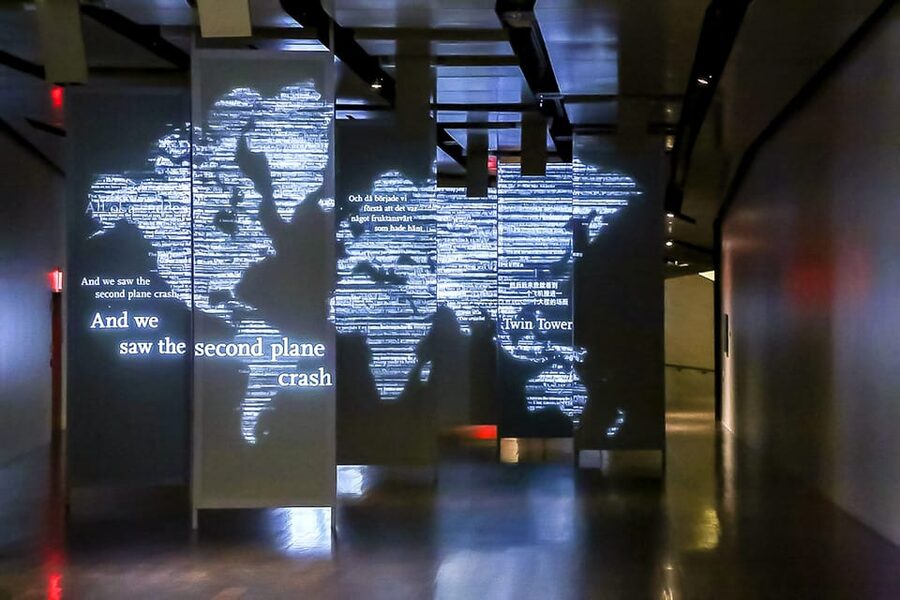
The most powerful part of this experience is the way it connects huge historical events with individual lives. Inside the museum, you move from the story of the attacks to the voices of survivors, rescuers, families, and the people who were lost. Outside, the twin reflecting pools mark the exact footprints of the towers.
I like the timed entry, which keeps arrival simple, and I like that the $25 ticket includes the open-air memorial at no extra cost. The Survivor Tree adds a small but meaningful note of endurance. The main drawback is the emotional weight: this is not a quick sightseeing stop, and some displays may be difficult for children or anyone closely affected by September 11.
- Three permanent exhibitions: Follow the story before, during, and after September 11.
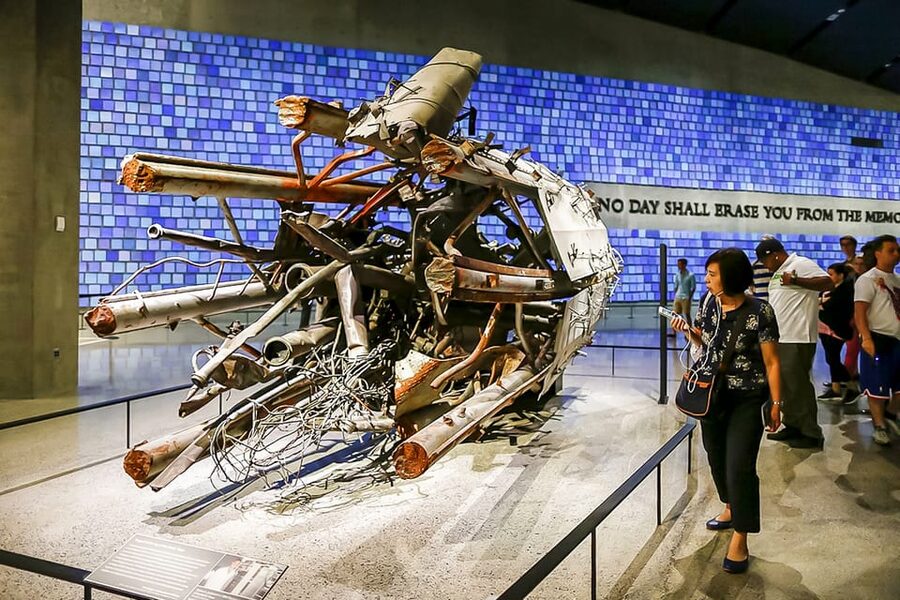
- More than 10,000 artifacts: See damaged objects and large structural remains connected to the attacks.
- Twin reflecting pools: Pay respects beside the bronze panels carrying the names of the dead.
- Foundation Hall: Stand beside the last column and the original slurry wall.
- Survivor Tree and Memorial Glades: Take time outside for a quieter pause.
- Plan at least two hours: Four hours is reasonable if you read carefully and watch the films.
In This Review
- Entering the 9/11 Memorial Museum
- Before September 11, the day itself, and what followed
- In Memoriam, where names become people
- Foundation Hall and the scale of the site
- The twin reflecting pools outside
- The Survivor Tree and Memorial Glades
- How long should you spend inside?
- Is the $25 ticket good value?
- Visiting with children and teenagers
- Practical planning for a respectful visit
- Who should book this experience?
- FAQ
- What does the 9/11 Memorial Museum ticket include?
- Is entry to the 9/11 Memorial free?
- What are the museum’s main exhibitions?
- What is covered in the Historical Exhibition?
- Does the museum include personal stories?
- How many artifacts are displayed?
- Is a guided tour included?
- Do I have to pass through security?
- Can I cancel the ticket?
- Should you book the 9/11 Memorial Museum ticket?
Entering the 9/11 Memorial Museum
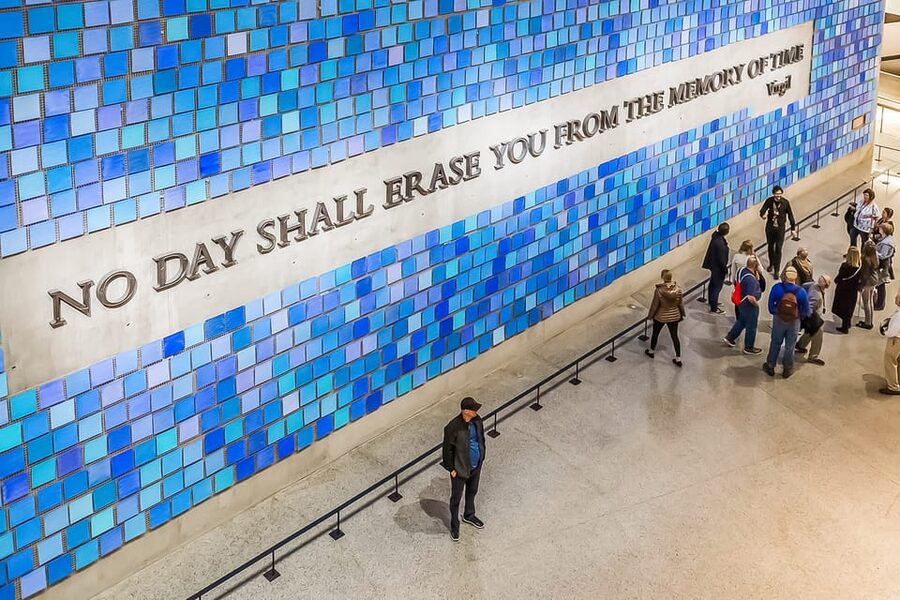
Your ticket gives you a reserved entry time and contactless admission to the National September 11 Memorial Museum. You still pass through airport-style security, so allow a little extra time before your slot and keep your belongings manageable.
The ticket is for the museum, not a guided tour. You explore at your own pace through the current exhibitions, with free Wi-Fi available inside. An audio guide can be rented for an additional cost if you prefer narration rather than reading labels and listening to the built-in presentations.
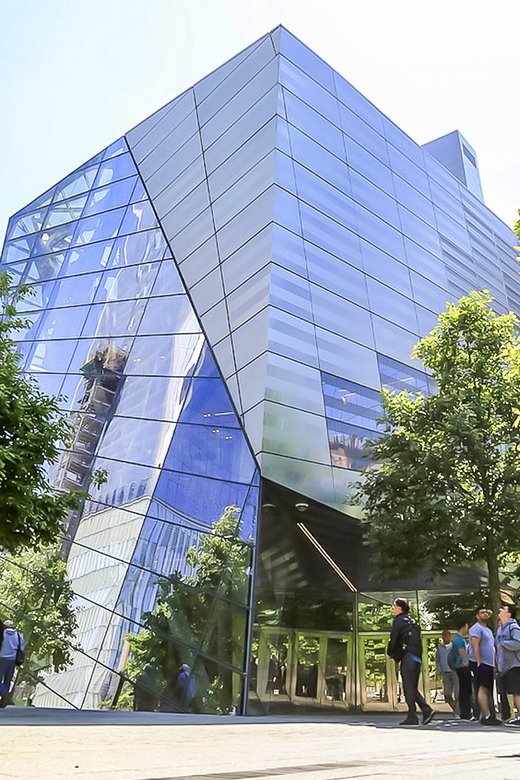
The museum is underground, beneath the former World Trade Center site. That setting matters. You are not simply looking at objects in a gallery. You are moving through the structural remains of the place where the attacks unfolded, and the building uses that fact without turning it into spectacle.
The atmosphere is quiet and respectful. Give yourself room to pause. This is one of those New York attractions where trying to rush through can leave you with a pile of facts but little sense of the human story.
Before September 11, the day itself, and what followed
The Historical Exhibition is arranged in three parts: Before 9/11, the Day of 9/11, and After 9/11. That order gives you useful context before the most intense material begins.
The first section explains the events and conditions leading up to the attacks. The central section follows September 11 as it affected the World Trade Center, the Pentagon, and Flight 93. The final part considers what happened afterward, including the immediate response and the longer period of remembrance and recovery.
You will encounter photographs, recordings, films, and objects that make the timeline easier to follow. Some material is broad and documentary in scale. Other pieces are painfully specific, such as personal messages, accounts from survivors, and reminders of ordinary lives interrupted in an instant.
The museum does not treat September 11 as only a New York story. The inclusion of the Pentagon and Flight 93 helps you understand the attacks as a national event, while the World Trade Center remains the physical and emotional center of the museum.
If you were old enough to remember that morning, the chronology may bring back your own memories. If you were born later, the displays help explain why the event still shapes conversations about New York, the United States, and the wider world.
More 9/11 Memorial and Ground Zero visits:
- 9/11 Memorial, Ground Zero Tour with Optional 9/11 Museum Ticket
★ 5.0 · 6,381 reviews - 9/11 Memorial Museum Admission Ticket
★ 4.5 · 6,376 reviews - All-Access 9/11: Ground Zero Tour, Memorial and Museum, One World Observatory
★ 5.0 · 4,886 reviews
In Memoriam, where names become people
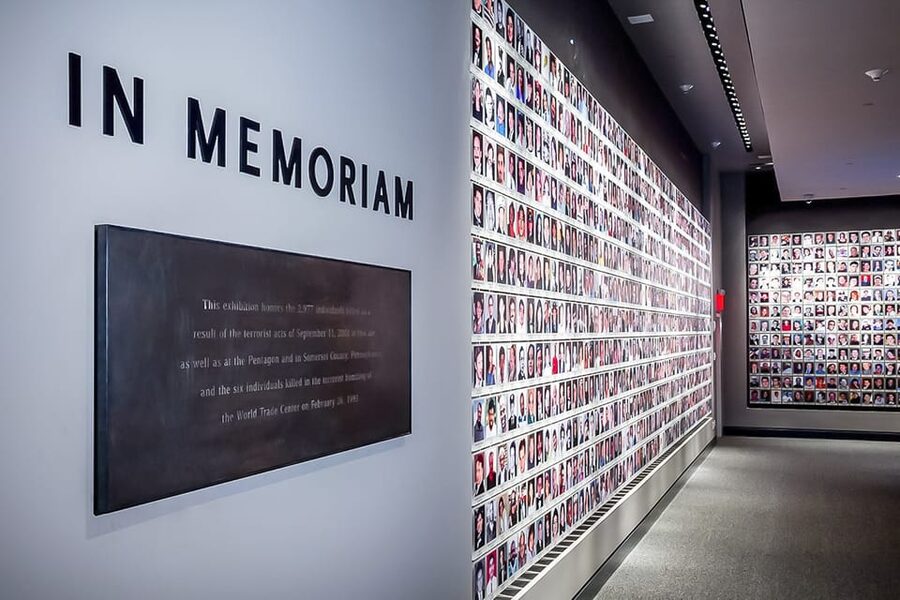
The Memorial Exhibition, In Memoriam, honors the nearly 3,000 people killed on September 11, 2001, along with the six people killed in the February 26, 1993 World Trade Center bombing.
This section is especially important because it resists reducing the dead to a number. You can learn about the men, women, and children who lost their lives. Personal details make clear that these were coworkers, parents, friends, students, emergency workers, and ordinary people beginning a normal day.
Allow more time here than you first expect. Reading names alone is a solemn act, but the personal material gives those names faces and stories. Letters written by children can be particularly hard to encounter, and the emotional effect often arrives in quiet moments rather than dramatic ones.
The museum also honors the courage of firefighters, police officers, emergency workers, and civilians who helped others. The accounts of the 343 firefighters and the bravery of the NYPD receive particular attention, though the broader story includes many other rescuers and survivors.
You do not need to know every detail to appreciate this section. You only need to slow down. The museum is designed for reflection as much as information.
Foundation Hall and the scale of the site
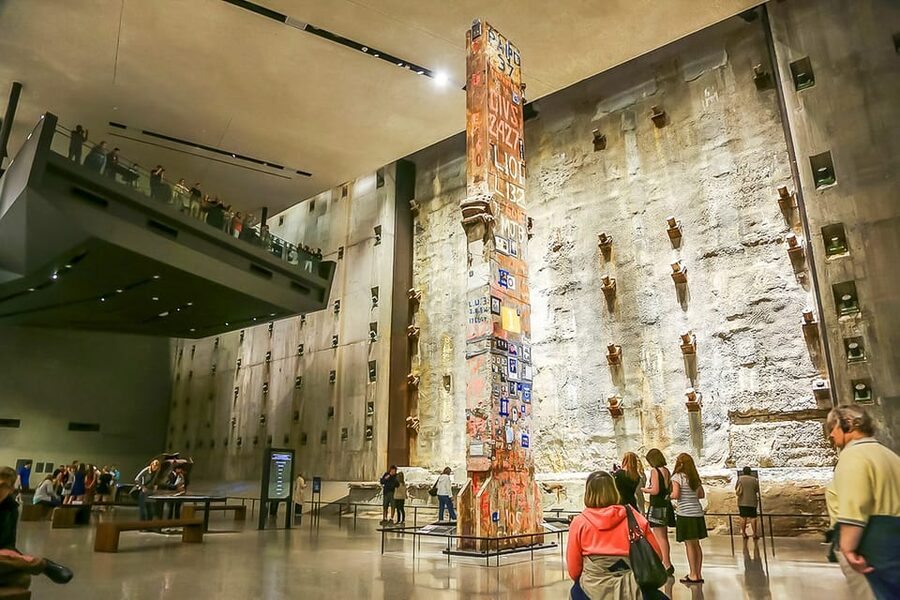
Foundation Hall is a vast room containing two major physical reminders of the original complex: the last column and the slurry wall.
The last column became a symbol of the end of the rescue and recovery effort at the site. The slurry wall helped hold back the Hudson River and remained in place after the towers fell. Seeing these elements in their original setting gives you a sense of the enormous scale of the buildings and the work involved in stabilizing the site.
This is where the museum’s architecture does much of the explaining. A written label can tell you how large the towers were. Standing beside massive structural elements gives that information weight.
The room can feel stark, which suits the subject. Do not expect a bright, conventional museum gallery. The design asks you to consider the physical remains and the empty space around them.
The twin reflecting pools outside

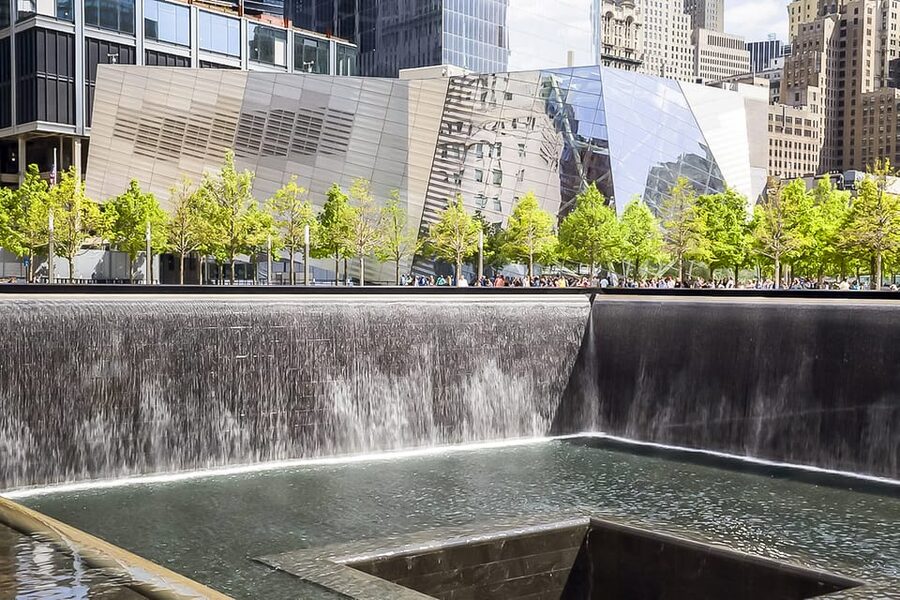
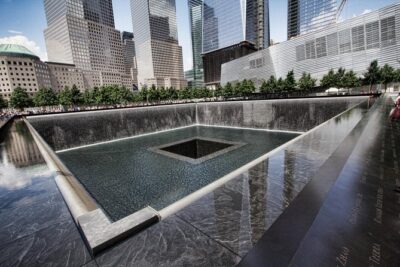
The National September 11 Memorial is free to enter, and it is included naturally with a museum visit. The two reflecting pools occupy the footprints of the Twin Towers, each nearly an acre in size.
Water flows down the sides of both pools into a smaller central opening. The waterfalls are described as the largest manmade waterfalls in North America, but the measurement is less important than the sound and motion. The steady water helps create a pause from the city around you.
Bronze panels around the pools carry the names of every person killed in the 2001 attacks and the 1993 bombing. You can walk along the edges and read individual names, though the full scale of the panels can be overwhelming.
Treat the memorial as a separate part of the visit, not merely an outdoor exit from the museum. Many people spend time here before entering, then return afterward with a better understanding of the names and stories they have encountered inside.
The memorial is located in a busy part of Lower Manhattan, but the mood immediately around the pools is generally quiet and respectful. Photography is possible, yet the setting calls for restraint. This is a place for remembrance first and sightseeing second.
More New York City museums to visit:
- NYC: Empire State Building Tickets – Observatory & Museum
★ 4.7 · 25,757 reviews - New York City: American Museum of Natural History Ticket
★ 4.5 · 15,447 reviews - NYC: Museum of Modern Art (MoMA) Entry Ticket
★ 4.6 · 12,540 reviews - NYC: Intrepid Museum Entry Ticket
★ 4.7 · 4,687 reviews
The Survivor Tree and Memorial Glades
The Survivor Tree is one of the most touching details at the site. It survived the attacks and was later cared for as part of the memorial grounds. Its presence gives the outdoor visit a different tone from the museum’s evidence and testimony.
You may find the tree especially meaningful after spending time with the more difficult exhibits. It does not erase the tragedy, but it offers a living reminder of recovery and continued care.
The Memorial Glades provide another outdoor place to pause. Both the Survivor Tree and the Memorial Glades are free to visit with your museum ticket, so plan a little time for them rather than heading straight back into the city.
These spaces are also useful if your group needs a break. The museum can be intense, and stepping outside gives you time to talk, sit quietly, or simply collect yourself before moving on.
How long should you spend inside?
The official duration is one day, meaning you can use the ticket for your scheduled visit during the available operating period. In practical terms, plan at least two hours for the museum.
Two hours lets you see the major sections without reading every panel. Three hours gives you a more satisfying visit. If you watch the films, study the personal stories, and stop often, four hours is entirely reasonable.
The museum’s size and detail make an early time slot appealing. One visitor found a 9 a.m. arrival quieter, with more room to read and move at a measured pace before the crowds increased. That is useful advice if you want a contemplative visit rather than a packed one.
Do not schedule a tight appointment immediately afterward. The museum may take longer than expected, and you may want time outside at the pools. The experience also requires emotional processing, not just walking time.
Is the $25 ticket good value?
At $25 per person, this is a fair price for a major New York museum with a large collection and a significant site-specific setting. You also receive access to the memorial grounds, Survivor Tree, and Memorial Glades without paying a second admission fee.
The value is strongest if you give the museum enough time. A rushed one-hour visit would make the ticket feel less worthwhile because so much of the material depends on reading, listening, and making connections between exhibits.
The timed reservation is another part of the value. You are not relying on an uncertain walk-up visit during a busy day in Lower Manhattan. Contactless entry also makes the arrival process straightforward, although airport-style security remains required.
An audio guide costs extra, and there is no guided tour included in the standard ticket. If you enjoy independent museum visits, you may not need either. If you want a clear spoken explanation or help arranging the story as you go, the audio guide can add useful structure.
Small-group options may be available depending on the booking choice. If you select one, check carefully what is included, since the basic admission is self-guided. Individual accounts have praised guides named Holly and Joel for adding personal stories and sensitive explanations, but those names should not be taken as a guarantee that either person will lead your visit.
Visiting with children and teenagers
This museum can work well for older children and teenagers, especially those interested in history. The material is detailed, and younger visitors may gain a clearer understanding of an event they know only from textbooks or family memories.
Still, the subject is serious. There are films, recordings, damaged objects, and personal accounts connected to mass death. Parents should decide how much context their children can handle and be ready to take breaks.
Teenagers may appreciate the museum’s factual detail and physical scale, especially the structural remains in Foundation Hall. They may also need time afterward to ask questions. The museum is educational, but it is not a light family attraction.
If you visit as a family, consider splitting the day with time outdoors. The reflecting pools and Memorial Glades give everyone a chance to slow down without leaving the site.
Practical planning for a respectful visit
Choose a time that gives you breathing room. The ticket is timed, but the museum itself is not a fixed tour, so you can move at your own speed once inside.
Wear comfortable shoes. The museum is extensive, and you may spend several hours standing, reading, and walking between sections.
Expect security screening for every visitor. Unaccompanied minors are not allowed, so children must attend with an accompanying adult.
A coat check is available, along with an on-site cafe and interactive exhibit components. Current museum spaces and exhibitions are open to the public, but temporary arrangements can change, so check the available entry time and details when booking.
Free cancellation is available up to 24 hours before the visit, and you can reserve now while paying later. Those options help if your New York schedule is still shifting, but your timed entry remains the detail to protect once your plans are set.
Who should book this experience?
I recommend this ticket if you want to understand September 11 through objects, testimony, and the actual site rather than through a quick photo stop. It suits history-minded adults, older children, teenagers, and anyone who remembers the day and wants a serious place to reflect.
It is less suitable if your New York schedule allows only a short gap between attractions. The museum needs time, and its emotional content can make the rest of your day feel different.
Book it if you value a self-guided visit and want the freedom to stop where you need to. Consider an audio guide or small-group option if you prefer more explanation. Either way, pair the museum with the free reflecting pools and Survivor Tree, because the indoor and outdoor parts make more sense together.
FAQ
What does the 9/11 Memorial Museum ticket include?
The ticket includes timed entry to the 9/11 Memorial Museum, access to its current exhibitions, free Wi-Fi, and complimentary access to the 9/11 Memorial, Survivor Tree, and Memorial Glades.
Is entry to the 9/11 Memorial free?
Yes. The National September 11 Memorial has free entry, and access to it is included with this museum visit.
What are the museum’s main exhibitions?
The museum has three permanent exhibition sections: the Historical Exhibition, the Memorial Exhibition called In Memoriam, and Foundation Hall.
What is covered in the Historical Exhibition?
It is divided into Before 9/11, the Day of 9/11, and After 9/11. It covers the World Trade Center, the Pentagon, and Flight 93, along with events before and after the attacks.
Does the museum include personal stories?
Yes. The exhibitions include personal stories connected to survivors, rescuers, families, and the people killed in the 2001 attacks and the 1993 World Trade Center bombing.
How many artifacts are displayed?
The museum displays more than 10,000 monumental artifacts connected to the events of September 11.
Is a guided tour included?
No. A guided tour is not included with the standard ticket. Small-group availability depends on the option booked, and audio guide rentals are available for purchase at the museum.
Do I have to pass through security?
Yes. All visitors must pass through airport-style security before entering the museum.
Can I cancel the ticket?
Yes. You can cancel up to 24 hours in advance for a full refund. Reserve-now, pay-later booking is also available.
Should you book the 9/11 Memorial Museum ticket?
Yes, if you are prepared to give it time and attention. The $25 admission covers a carefully organized museum, major artifacts, personal accounts, Foundation Hall, and the free memorial outside.
Arrive with patience, allow at least two hours, and do not pack another demanding activity immediately afterward. This is a quiet, sobering visit, but it is also an important way to remember the people behind the numbers and to understand one of the defining events of modern New York.
Just listed around New York City
- NYC: Little Shop of Horrors Off-Broadway Ticket5 reviews
- Private NYC Airport Transfer: LGA to Manhattan – Up to 5★ 3.6 · 5 reviews
- New York City Tour in German★ 4.5 · 5 reviews
- New York: Hamilton and Washington Revolutionary Walking Tour★ 5.0 · 5 reviews
- NYC Freedom Tower Private Photo or Video Experience★ 4.0 · 6 reviews
- New York Afternoon Fall Foliage Cruise with Lunch★ 5.0 · 6 reviews
- Brooklyn Walking Tours by Locals: Private & 100% Personalized★ 4.0 · 6 reviews
- Southold Bay Oyster Farm Tour★ 5.0 · 6 reviews
9/11 Memorial & Ground Zero Tours, compared.
9/11 Memorial, Ground Zero Tour with Optional 9/11 Museum Ticket
Read our review →

All-Access 9/11: Ground Zero Tour, Memorial and Museum, One World Observatory
Read our review →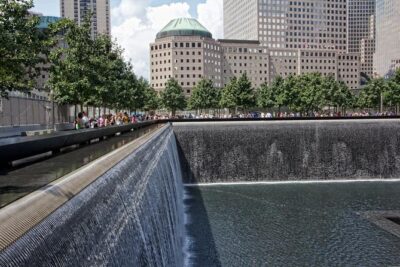
NYC City Tour: Statue of Liberty, 9/11 Memorial, Wall Street
Read our review →
Ground Zero 9/11 Memorial Tour & Optional 9/11 Museum Ticket
Read our review →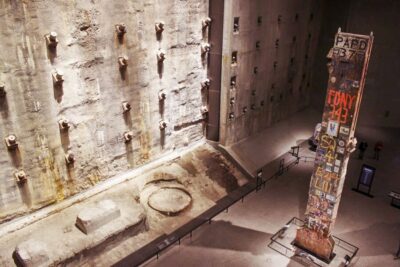

9/11 Memorial Tour and Optional Observatory Ticket
Read our review →
New York 9/11 Memorial Tour with Optional One World Observatory
Read our review →Browse the lists this tour appears in