
Reviewed · NYC ARCHITECTURE TOURS
Custom Private New York Architecture, Art and City Tour
New York makes more sense when you look up. This private walking tour, led by architect Dr. Ivan Shumkov, connects colonial streets, Art Deco towers, converted factories, museums, and new skyscrapers into one readable story. You can focus on the Financial District, East Village, Chelsea, Midtown, or shape a longer route around several areas.
I like the expert-led explanation of buildings, not just a list of names, and I like the chance to bring a camera or sketchbook and pause over design details. The headsets are also a smart touch for a city where traffic and sirens can easily swallow a guide’s voice. The main drawback is the walking: people with mobility problems may find the tour demanding, and the $299 per-person price needs to be weighed against your group size and chosen length.
In This Review
- Key things to know
- Why an architect’s tour changes the way you see New York
- Washington Square Park and the shape of the route
- The Financial District: old New York beside new towers
- East Village, the Lower East Side, Bowery, and SoHo
- Chelsea and the art spaces along the High Line
- Midtown: skyscrapers, Times Square, and twentieth-century design
- What the $299 price means for your group
- Who will get the most from this private walk
- My verdict: book it for the explanation, not just the sights
- FAQ
- Where does the tour start?
- Where does the tour end?
- How long does the tour last?
- Is this a private tour?
- Which New York areas can the tour cover?
- Is the tour offered in languages besides English?
- Are entrance fees included?
- Are headsets provided?
- What happens if the weather is poor?
Key things to know
- Dr. Ivan Shumkov leads the tour: Expect an architect’s view of New York, with attention to design, urban change, and history.
- You choose the focus: Routes can cover the Financial District, East Village, Chelsea, Midtown, or several districts.
- The tour lasts two to eight hours: A short visit can cover one area, while a full day gives you room to connect several parts of Manhattan.
- Washington Square Park is the meeting point: The listed start and end point is Washington Square, New York, NY 10012.
- Professional headsets are included: Each guest receives an individual headset, useful in noisy streets.
- It is a private activity: Only your group takes part, so the pace and interests can be tailored more closely than on a large city walk.
Why an architect’s tour changes the way you see New York
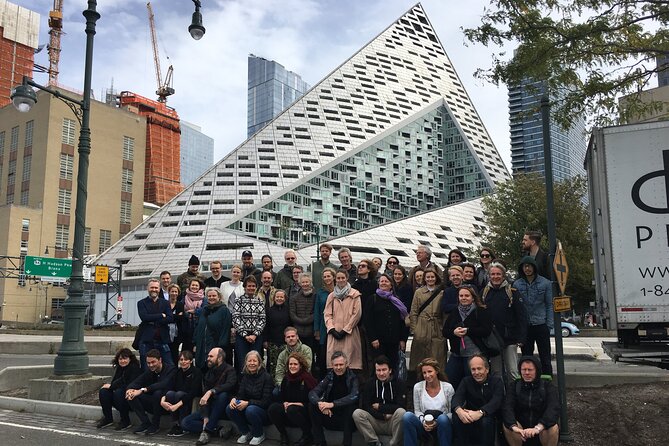
A standard sightseeing walk may point out the Empire State Building, the World Trade Center, or the High Line. This experience aims to explain why those places look the way they do, how they changed their neighborhoods, and what their design says about New York at a particular moment.
That distinction matters. New York can feel like a pileup of styles: brick tenements beside glass towers, old churches beside office blocks, iron-fronted warehouses beside luxury shops. With Dr. Shumkov, you get a guide who approaches the city through architecture and urban history. His background as an architect gives the walk a clear subject, rather than turning it into a general sightseeing circuit.
You also get a private format. If your group cares about modern design, you can give more time to buildings such as the New Museum or Copper Union. If you prefer older New York, the Financial District offers colonial streets, historic churches, and early commercial landmarks. That control is the strongest reason to consider the tour.
The experience is still a walking tour, not an indoor museum program. Admission is free at the listed stops, but the value comes from the explanation, route planning, and access to a guide who can connect the details. Bring a camera, and take a sketchbook if you like drawing buildings. The format clearly welcomes people who want to look carefully rather than rush from one photo stop to the next.
More architecture walks:
- Manhattan Architecture Yacht Cruise
★ 5.0 · 1,395 reviews - NYC: Around Manhattan Official NYC Architecture Cruise
★ 4.8 · 402 reviews - Art Deco and Architecture Midtown Landmarks Tour
★ 5.0 · 142 reviews
Washington Square Park and the shape of the route
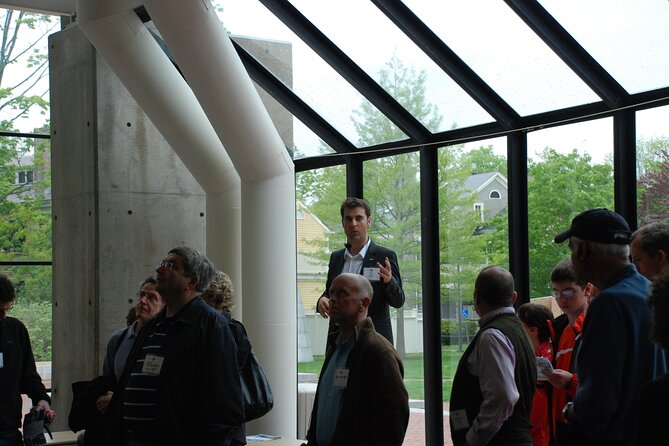
Washington Square Park is the listed meeting point, and it gives the tour a useful starting place in Greenwich Village. From there, the route can be tailored to your interests, though the supplied route descriptions also cover districts well beyond the park.
This is worth clarifying before you book. The tour is advertised for roughly two to eight hours. Each of the four area descriptions is approximately two hours, so you should not expect to cover every location in detail during a short booking. A two-hour session is better suited to one district. A longer booking can link several areas, but the exact order and coverage should be settled with the provider.
The private setup helps here. You are not tied to the interests of a large group, and you can tell the guide if you want more time for buildings, public spaces, art institutions, or city history. The activity is listed as ending back at the meeting point, so make sure that return arrangement fits your plans for the rest of the day.
The Financial District: old New York beside new towers
At Manhattan’s southern end, the Financial District gives you some of the clearest contrasts in the city. The narrow streets and older landmarks recall New York’s colonial past, while the World Trade Center and newer waterfront projects show how quickly the area has changed.
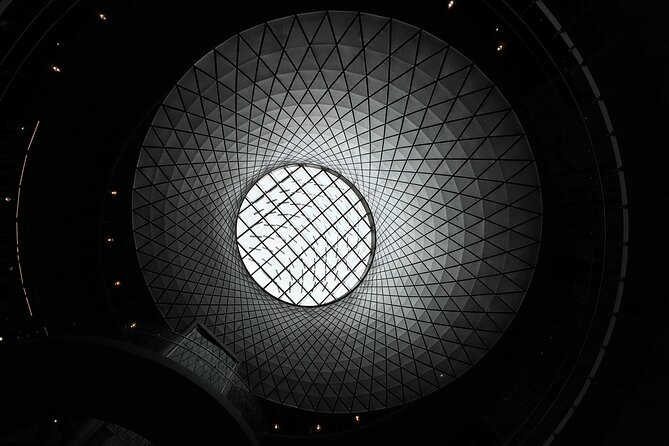
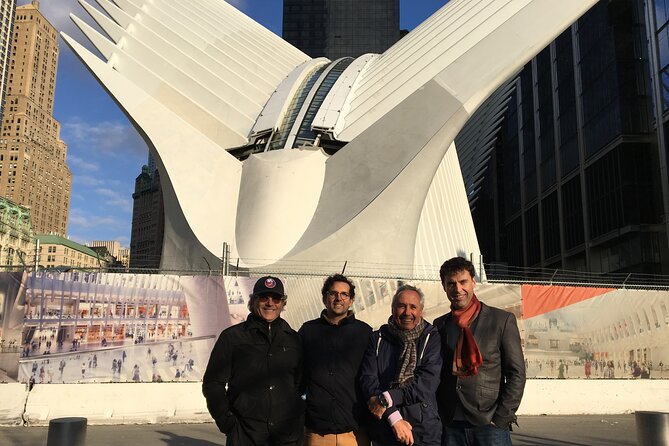
A two-hour walk here can include Battery Park City, Wall Street, Fraunces Tavern, Stone Street, Trinity Church, the World Trade Center, the 9/11 Memorial, Fulton Station, and the East River waterfront. That is a lot of ground and a wide range of subjects, so your guide’s choices will matter.
I like this section for the way it puts history and design next to each other. Stone Street and Trinity Church offer a sense of older Manhattan, while Fulton Station presents a much more recent approach to public architecture and transportation. Battery Park City and the East River waterfront add another question: how does a city remake its edges and reconnect them to daily life?
The World Trade Center and 9/11 Memorial also require a thoughtful pace. They are not simply photo stops. The architectural setting, the memorial design, and the rebuilding of the district carry major historical weight. An architect-led explanation can help you read the site without reducing it to a quick landmark checklist.
The possible weakness is scale. The Financial District is dense, and the listed locations are spread across a busy part of lower Manhattan. If you want a careful look at each place, ask for a focused route rather than trying to collect every stop in two hours.
East Village, the Lower East Side, Bowery, and SoHo
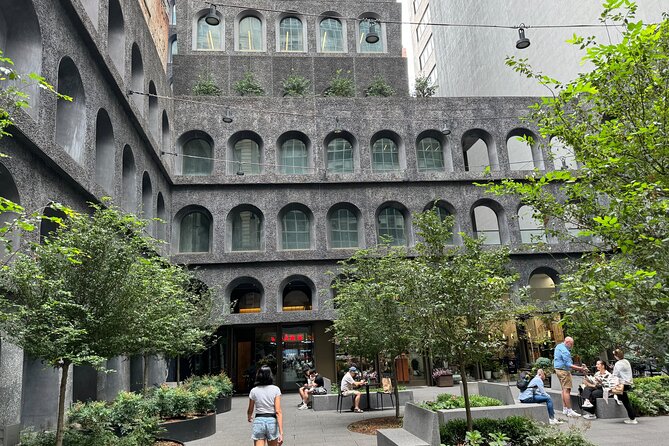
The East Village route reaches into several neighborhoods with different identities and building types. It includes the Lower East Side, the Bowery, and SoHo, where tenement apartments, cast iron commercial buildings, art spaces, and new construction reveal different chapters of city life.
The cast iron structures of SoHo are the obvious architectural draw. Their broad fronts and repeated windows helped create the district’s distinctive look, while the old industrial spaces now serve very different uses. In the Lower East Side, tenement buildings tell another story through compact apartments and dense street walls.
The route also includes the New Museum by SANAA, the Prada flagship designed by Rem Koolhaas, and Copper Union by Morphosis. These modern examples give the walk a useful point of comparison. You are not only looking at preserved older buildings. You are also considering how contemporary architects respond to a neighborhood with a strong existing identity.
This part should suit you if you enjoy seeing architecture in ordinary streets, not only at famous monuments. The appeal comes from the friction between old and new. A tenement, a former industrial building, and a polished modern institution may sit within the same broad area, yet each reflects a different idea of how New York should work.
There is a practical catch: the route names several neighborhoods rather than one tight pocket. If your priority is SoHo’s cast iron architecture, ask for enough time there. If modern buildings matter most, make sure the New Museum, Prada, and Copper Union receive proper attention. A private tour gives you the chance to set those priorities.
A few more New York City picks to weigh up
- Private Central Park Pedicab Tour
★ 5.0 · 6,981 reviews - Private Transfer from Manhattan to NYC Airports (JFK/EWR/LGA)
★ 3.5 · 1,683 reviews - New York City: Private Central Park Pedicab Tour
★ 4.9 · 1,637 reviews - Carriage Ride in Central Park (VIP – PRIVATE) Since 1964™
★ 4.0 · 1,074 reviews
Chelsea and the art spaces along the High Line
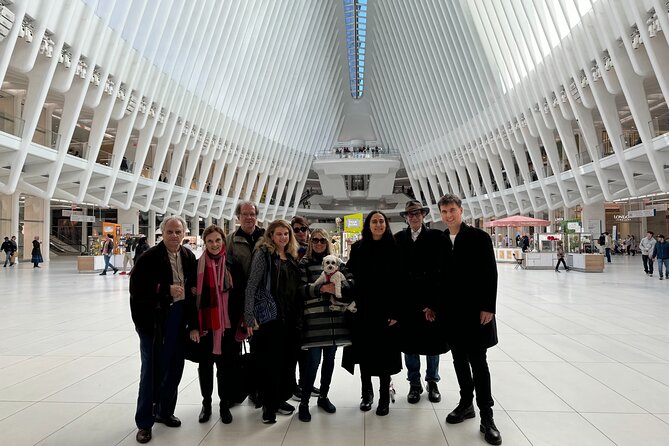
Chelsea and the West Village bring architecture and the New York art world together. Washington Square Park and the NYU campus provide an early part of the route, while Chelsea’s converted factories and warehouses show how former industrial buildings became gallery spaces and cultural addresses.
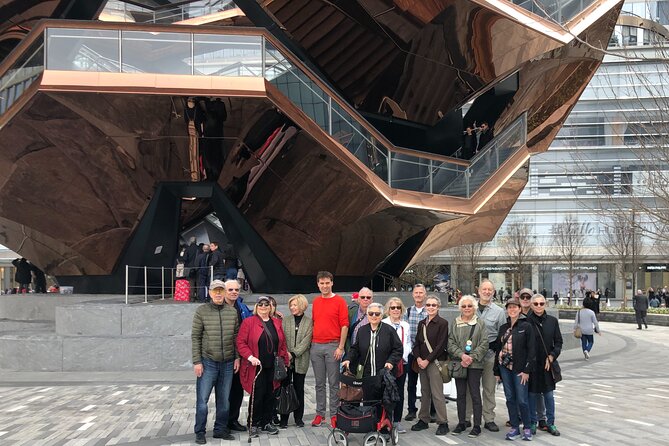
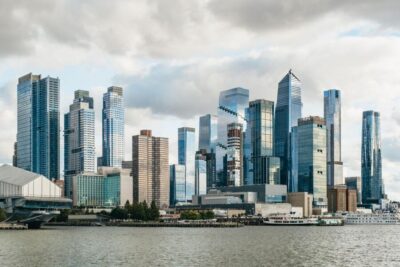
The listed examples include the Whitney Museum, the Standard Hotel, the High Line, Hudson Yards, and the Javits Center. These places offer different ways to think about reuse and new construction. The High Line, in particular, changed how people move through the city by turning an old elevated railway into a public walkway, while nearby developments show how quickly that public space influenced new building activity.
The Whitney adds an art institution to the architectural discussion. The Standard Hotel and Hudson Yards bring in newer commercial and residential development. The Javits Center offers another large-scale building type, tied to conventions and the city’s business role.
I would choose this route if you want art and architecture in equal measure. Chelsea’s former industrial buildings are not just background scenery for galleries. They help explain why the district became important to the art world. The tour can also show you how a neighborhood changes when cultural spaces, public projects, and major new buildings arrive together.
Again, two hours may require firm choices. Washington Square Park, NYU, Chelsea galleries, the Whitney, the High Line, Hudson Yards, and the Javits Center cannot all receive the same level of attention in a short session. A longer booking makes more sense if this is your main interest.
Midtown: skyscrapers, Times Square, and twentieth-century design
Midtown offers the city’s most concentrated display of corporate power and vertical building. Its bright streets and tall towers can feel overwhelming, but an architectural route gives the area a stronger timeline.
The tour begins with early twentieth-century examples and moves toward newer additions. That approach is useful because Midtown is not one single style. Its streets reflect changing ideas about office space, technology, transport, commerce, and public life.
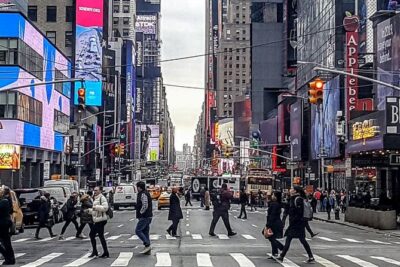
Times Square supplies the visual drama, with bright signs and intense movement. Nearby business towers show a different side of the district, where height and efficiency shape the streets. The route is designed to explain how Midtown developed rather than simply point out its most photographed buildings.
One of the strongest parts of this option is the chance to understand buildings that you might otherwise see only from street level. The guide’s discussion of architectural history and design can help you notice proportions, materials, setbacks, and the relationship between towers and sidewalks. Those details are easy to miss when you are focused on getting through the crowds.
A Midtown walk is a good choice for a first visit if you want a broad introduction to New York’s skyscraper story. It is also a good fit for a repeat visitor who has already seen the famous buildings but wants more context. The tradeoff is the setting itself: Midtown is busy, loud, and visually intense. The included individual headsets should help you follow the explanation in that environment.
What the $299 price means for your group
The listed price is $299 per person, with all fees and taxes included. That is a serious cost for a walking tour, especially for a solo visitor or a couple. The value improves if you are traveling with a group that wants a private guide and can make good use of the full eight-hour option.
You are paying for more than transportation between landmarks. There is no separate admission charge at the listed stops, and the activity is built around interpretation rather than tickets. The main benefit is personal attention, a tailored route, and Dr. Shumkov’s architectural expertise.
For a short two-hour booking, the price may feel high unless architecture is a central reason for your New York visit. For a longer private session, it becomes easier to justify because you can cover more than one district and shape the discussion around your interests.
Compare it with your own plans. If you already have a detailed itinerary and prefer to move quickly, a general sightseeing option may cost less. If you want to understand why New York’s buildings and neighborhoods look as they do, this tour offers a more specialized experience.
Who will get the most from this private walk
This tour is best for you if you enjoy buildings, city planning, art institutions, and the stories behind neighborhood change. It also suits architecture students, artists, photographers, sketchers, and repeat visitors who want a more focused look at Manhattan.
The tour works well for a private group with mixed interests because you can request a balance between history, art, and design. The guide speaks English, Spanish, French, and Italian, which may make the discussion easier for your group.
It is less suitable if you dislike walking or want frequent indoor breaks. The activity specifically is not recommended for people with walking problems. Most people can participate, and service animals are allowed, but you should still plan for an outdoor city walk and check the weather before setting out.
The tour requires good weather. If poor weather cancels it, you will be offered another date or a full refund. For other changes, cancel at least 24 hours before the start time to receive a full refund. Cancellations inside that window are not refunded.
My verdict: book it for the explanation, not just the sights
I would book this tour if I wanted New York’s architecture to become easier to read. Dr. Ivan Shumkov’s architectural background, the private format, and the choice of districts give it a clear purpose. The individual headsets and the option to bring a camera or sketchbook add practical value.
I would choose one area for a two-hour visit and reserve a longer session only if I truly wanted to connect several districts. Ask in advance how the route will handle the listed stops, especially in the Financial District, Chelsea, and the East Village areas.
Book it if you value insight and personal attention more than a low-cost walk. Skip it if your main goal is fast sightseeing, indoor museum time, or minimal walking. For the right audience, this is a thoughtful way to see New York as a city of layers, where old streets, art spaces, memorials, and new towers keep reshaping one another.
FAQ
Where does the tour start?
The listed meeting point is Washington Square Park, Washington Square, New York, NY 10012, USA.
Where does the tour end?
The activity ends back at the meeting point.
How long does the tour last?
The tour lasts approximately two to eight hours, depending on the route and length you book.
Is this a private tour?
Yes. Only your group will participate in the activity.
Which New York areas can the tour cover?
Possible areas include the Financial District, East Village, the Lower East Side, Bowery, SoHo, Chelsea, the West Village, and Midtown.
Is the tour offered in languages besides English?
Yes. In-person guiding is available in English, Spanish, French, and Italian.
Are entrance fees included?
All fees and taxes are included, and the listed stops have no admission ticket charge.
Are headsets provided?
Yes. Professional individual headsets are provided for each guest.
What happens if the weather is poor?
The experience requires good weather. If it is canceled because of poor weather, you will be offered a different date or a full refund.
Just listed around New York City
- NYC: Private Ghostbusters Sites Tour★ 5.0 · 3 reviews
- Tour by Night in Italian★ 5.0 · 3 reviews
- NYC: Private Central Park Pedicab Tours / PICKUP FROM MUSEUM★ 5.0 · 3 reviews
- Tour of Brooklyn Bridge at Sunset★ 3.5 · 3 reviews
- New York City: Manhattan ‘Complete Playground’ Entry Ticket★ 5.0 · 3 reviews
- New York Upper East Side Art and Architecture Tour★ 5.0 · 3 reviews
- PRIVATE Rockefeller Center Artified Walking Tour★ 5.0 · 3 reviews
- Macy’s Thanksgiving Day Parade Premium Viewing Brunch 2025★ 4.5 · 3 reviews
NYC Architecture Tours, compared.
Around Manhattan Official NYC Architecture Cruise
Read our review →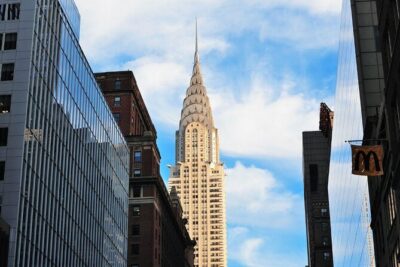
Art Deco and Architecture Midtown Landmarks Tour
Read our review →
Midtown Manhattan Art and Architecture Walking Tour
Read our review →Browse the lists this tour appears in