
Reviewed · BROOKLYN PIZZA & FOOD TOURS
Bagels Dumplings Pizza & Tacos: A Downtown Food Crawl
New York’s best food stories often begin in small shops, not famous dining rooms. This three-hour crawl links Essex Market, Chinatown, and the Lower East Side with generous tastes of bagels, bialys, tacos, dumplings, and pizza, plus candy stores, graffiti, architecture, and local history.
I like the small maximum of 10 people, which lets guide Morgan adjust the route and answer questions. I also like the food-to-walking balance: you are not just eating, you are seeing immigrant neighborhoods change block by block.
The catch is that this is a flexible street crawl, not a tightly timed restaurant tour. Seating can be scarce, the route requires a moderate level of fitness, and the stops may change with the group, weather, and available food.
In This Review
- Key points to know before booking
- Why this downtown food crawl feels different
- Starting at Essex Market on the Lower East Side
- Kossar’s bialys and the first serious bite
- Economy Candy and the pleasure of browsing
- Walking the Lower East Side beyond the menu
- El Cabron Taqueria and the taco stop
- Chinatown and Jin Mei’s street-side dumplings
- Columbus Park and the changing rhythm of the walk
- Nolita Pizza, only if you still have room
- Freeman Alley and a final look at street art
- What the three hours are really like
- Who gets the most from this food crawl
- Is $99 a fair price?
- Should you book Bagels Dumplings Pizza & Tacos?
- FAQ
- Where does the tour begin?
- Where does the tour end?
- How long does the food crawl last?
- What foods are included?
- Are drinks included in the price?
- How many people can join the tour?
- Can I cancel for a full refund?
Key points to know before booking
- Start at Essex Market: The tour begins at 88 Essex Street, in a useful Lower East Side location near public transportation.
- Four major food themes: Expect healthy portions of bagels, dumplings, pizza, and tacos, with additional snacks possible.
- A guide-led neighborhood walk: Morgan mixes food with stories about Chinatown, the Lower East Side, Little Italy, architecture, geology, and street art.
- Small groups matter: The maximum is 10 people, and some departures may feel nearly private.
- Flexible route: The sample path can include Kossar’s, Economy Candy, El Cabron Taqueria, Jin Mei Dumpling, Nolita Pizza, and Freeman Alley.
- Come hungry and wear good shoes: Food is generous, drinks cost extra, and much of the eating happens standing or outdoors.
Why this downtown food crawl feels different
At $99 per person, this is not the cheapest way to buy a bagel, taco, dumpling, or slice of pizza. You are paying for the guide, the planning, the neighborhood knowledge, and the chance to connect several parts of Lower Manhattan in one outing.
That makes the value depend on how you like to explore. If you want four formal restaurant meals with a chair at every stop, this will feel loose. If you want an informed local to lead you through side streets, small shops, food counters, graffiti alleys, and old immigrant districts, the price makes more sense.
Morgan is the guide named throughout the experience, and his style is personal rather than scripted. He asks what you have already seen, what foods you like, and what you want to notice. On some outings, the group has been as small as one party, allowing the walk to stretch well beyond the advertised three hours when everyone is enjoying themselves.
That flexibility is a real strength, but it also means you should not treat the sample itinerary as a promise. You may visit four to six food businesses, and the precise mix can change. The description lists bagels, dumplings, pizza, and tacos as the core foods, but extra stops such as pickles, sponge cake, fruit, dessert, or a candy shop can enter the day.
More Brooklyn pizza stops:
- A Slice of Brooklyn Pizza Tour
★ 5.0 · 306 reviews - Greenwich Village Pizza Walk
★ 5.0 · 158 reviews - NYC: Private Home Alone 2 Stretch Limousine Tour with Pizza
★ 4.6 · 98 reviews
Starting at Essex Market on the Lower East Side
Essex Market is a sensible meeting point because it places you in the Lower East Side from the first minute. The market itself offers a useful introduction to the neighborhood’s food culture, and the opening stop is brief, about 10 minutes.
Do not expect a long indoor market meal at this point. The purpose is to meet the guide, orient yourself, and begin the walk. The real rhythm develops as you move through the surrounding streets.
This area rewards a guide who can explain what you are seeing. The Lower East Side is not simply a collection of food stops. It reflects successive waves of immigration, changing housing patterns, small businesses, religious life, and newer creative industries.
Morgan’s approach, based on the experience design, is to connect those pieces as you walk. That is useful because the area can look like a jumble of old tenements, trendy storefronts, murals, market stalls, and construction until someone points out the links.
Kossar’s bialys and the first serious bite
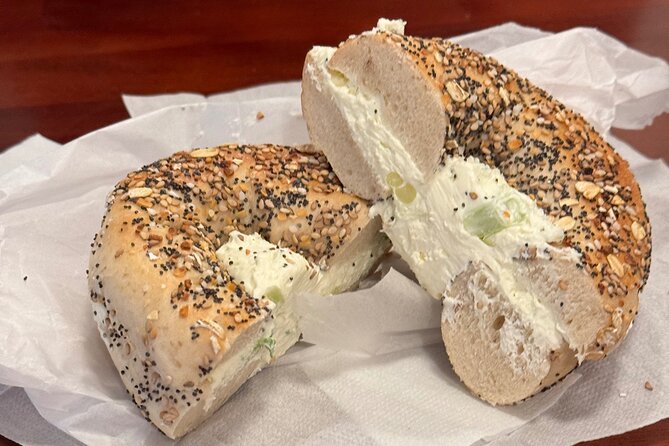
Kossar’s Bagels & Bialys is a possible early stop, and it is one of the more distinctive food choices on the route. The bakery is described as the oldest bialy bakery in the United States, giving the visit a clear place in New York food history.
A bialy is not simply a bagel with a different shape. It is a baked bread with a depression in the center, traditionally associated with Jewish baking traditions. The stop may also include bagels, depending on the route and the group’s preferences.
The larger lesson here is that New York’s famous foods have branches and cousins. A standard bagel tasting is easy to find. A bialy gives you a more specific connection to the Lower East Side’s old food traditions.
Portions across the crawl are said to be generous, so pace yourself. It is tempting to eat everything immediately, but you may still have tacos, dumplings, and pizza ahead.
Economy Candy and the pleasure of browsing
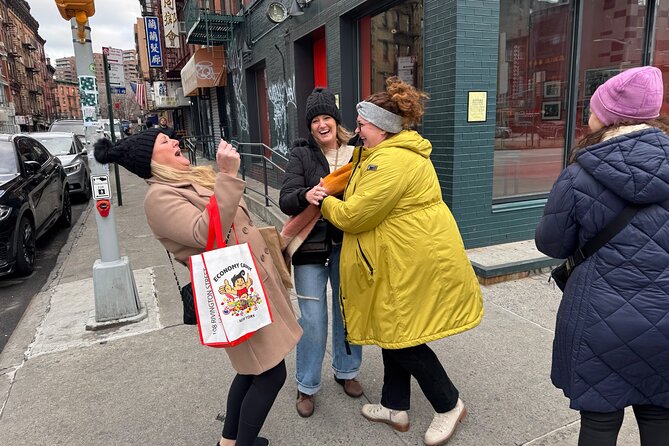
Economy Candy is a short stop, usually around 10 minutes, and no purchase is required. That matters because this is more about enjoying the store than adding another major meal.
The family-owned shop has been operating for almost 100 years and carries sweets from around the world, including candy many people may remember from childhood. The appeal is visual and emotional: shelves of colorful packages, unusual imports, old favorites, and items you may not see in a normal grocery store.
For families, this can be one of the easiest stops for children to enjoy. It also gives adults a break from savory food. If you want to take something home, this is a chance to buy a small edible souvenir, though purchases are your responsibility.
The stop also fits the tour’s larger idea. New York food culture includes bakeries and restaurants, but it also lives in small specialty stores that preserve habits, memories, and neighborhood identity.
More New York City food tours:
- NYC Bus Tour of Brooklyn, Bronx, Queens: Art, Food & Sports
★ 5.0 · 3,805 reviews - NYC: Chinatown & Little Italy Food Tour with 7 Flavorful Tastings
★ 5.0 · 2,733 reviews - Original NYC Guided Food Tour of Chinatown and Little Italy
★ 5.0 · 2,194 reviews - NYC: Greenwich Village Food Tour with 6 Locals Favorites Dishes
★ 5.0 · 1,812 reviews
Walking the Lower East Side beyond the menu
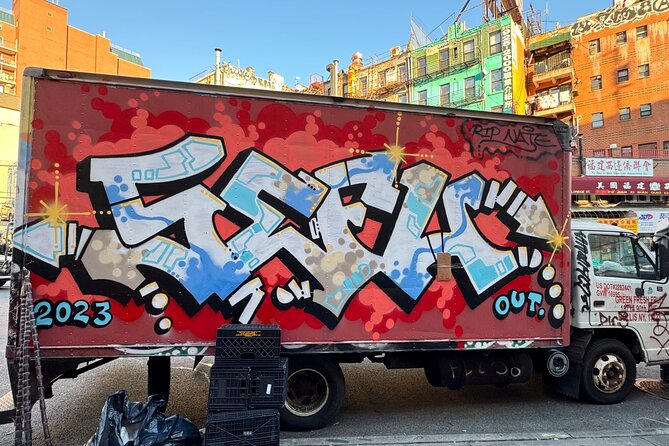
The dedicated Lower East Side portion lasts about 15 minutes, though the guide’s explanations can blend into the walking time before and after. You will look at art, architecture, and the cultures of immigrant groups that shaped the area.
This is where the tour earns its keep as more than lunch. You could visit the food businesses independently, but you would have to supply the connections yourself. Morgan adds context about how the neighborhood developed and how its present-day businesses fit into that past.
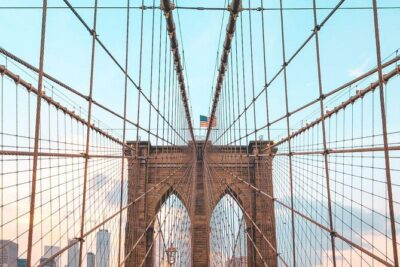
The route may also touch Little Italy and Chinatown, and one long outing included views where the Brooklyn Bridge and Manhattan Bridge could be seen together. That kind of street-level sightseeing is a nice bonus. You are not being marched from attraction to attraction. You are noticing corners, storefronts, alleys, and building details along the way.
The drawback is that the tour does not promise a formal sightseeing lecture at every location. It is conversational. If you prefer a fixed script and exact historical dates, the loose format may feel less polished.
El Cabron Taqueria and the taco stop
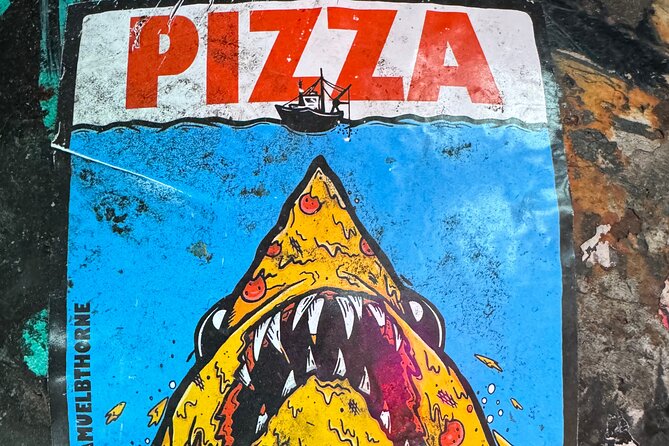
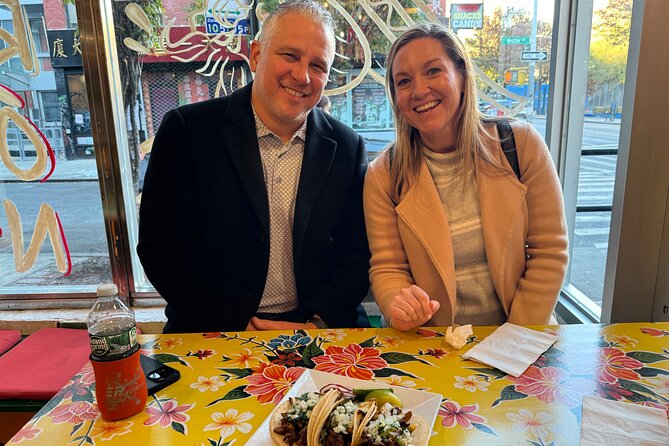
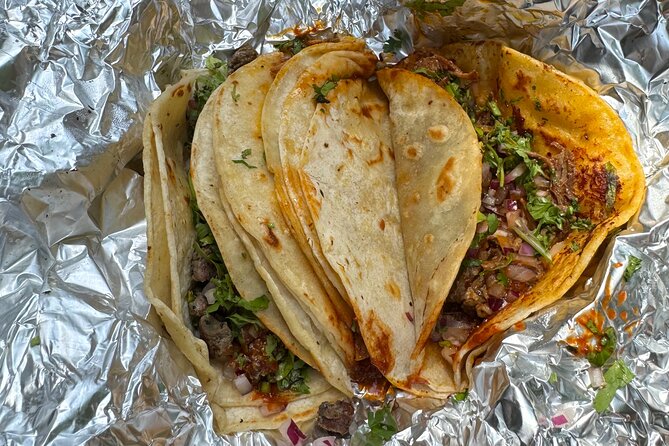
El Cabron Taqueria is a common possible stop for tacos. The food is described as substantial, and you may have the option to buy a beer or margarita, though drinks are not included in the $99 price.
The exact taco choice can vary. One especially useful tip from the experience is to ask about crispy birria tacos if they are available. Birria brings a rich, slow-cooked meat flavor, while the crisp shell adds texture. It is the kind of order worth clarifying before you accept the default.
This stop gives the tour a useful contrast. You move from Jewish bakery traditions to Mexican food, then continue toward Chinatown. That sequence helps you see Lower Manhattan as a place where food cultures overlap rather than sit in separate boxes.
Remember that this is a walking crawl, not a seated taco lunch. Seating may be limited, and you might eat quickly or stand. That is part of the street-food feel, but it is worth knowing if anyone in your group needs regular indoor seating.
Chinatown and Jin Mei’s street-side dumplings
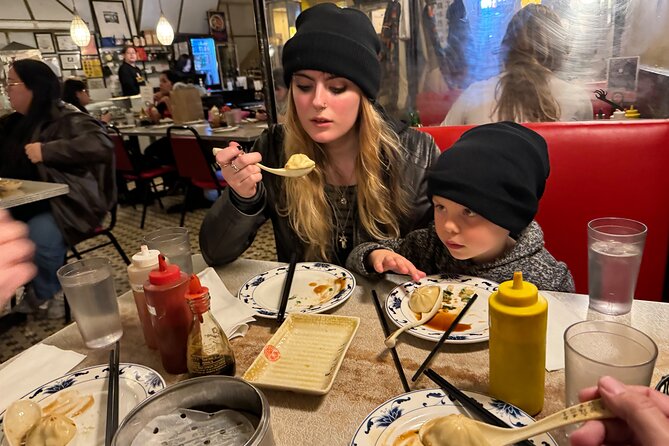
The dumpling stop at Jin Mei Dumpling is often the food highlight. The dumplings are pan-fried, and the plan may involve eating them standing on the street. It is not fancy, but the format suits the dish and the neighborhood.
The guide uses the stop to explain dumplings and Chinatown while you eat. That pairing works well because the food becomes a starting point for conversation rather than a pause between sightseeing segments.
You should arrive ready for a hot, quick bite rather than a long restaurant meal. The listed stop is about 10 minutes, so there may be no lingering over a table. The limited seating is the clearest practical weakness of this part of the crawl.
Still, the small setting is part of the appeal. The experience can take you to a modest food counter near ordinary neighborhood businesses, rather than only to places designed for sightseeing groups. That is where the tour’s local feel is strongest.
Columbus Park and the changing rhythm of the walk
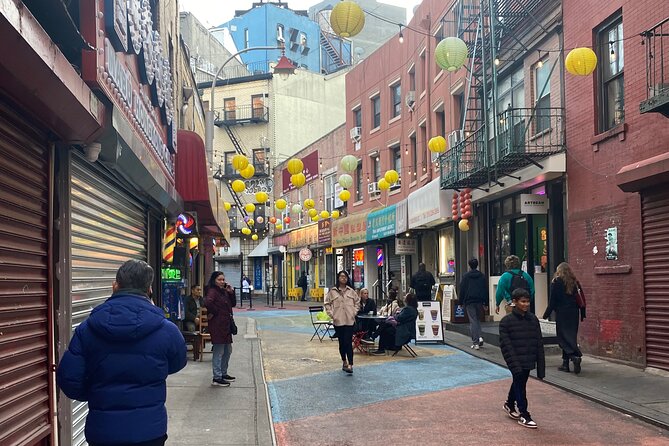
Columbus Park is often used as an ending point or a nearby pause, with about 10 minutes set aside. It is a well-used public space with its own history and a strong connection to daily life in Chinatown.
A stop here gives you room to digest, ask questions, and watch the neighborhood function. Parks are often better places to understand a district than monuments are. You see who uses the space, how people gather, and how public life fits into a dense part of Manhattan.
The timing can vary. If the group is still hungry, the tour may continue. If the food has done its work, Columbus Park can provide a natural breather before the final walk.
Nolita Pizza, only if you still have room
Nolita Pizza is a possible later stop, not a guaranteed final meal. The slices are described as exceptional, and the tour may include pizza if the group has enough appetite.
This is where portion control becomes important. The experience promises that you will leave full, and the combination of bagel, taco, dumpling, and pizza can add up quickly. I would treat the earlier tastings as shared sampling rather than separate full meals, even though the portions are described as healthy.
One memorable detail is pizza with spiced honey. If that option appears on your route, it offers a sweet and savory finish that is different from a basic cheese slice.
The flexible approach also means you can tell Morgan if you are full. The route is designed around group input, so honest communication is more useful than pretending you can keep eating.
Freeman Alley and a final look at street art
Freeman Alley is listed as the endpoint and is known for graffiti and street art that changes frequently. The stop is brief, around 10 minutes, but it gives the crawl a visual finish rather than ending at a random subway entrance.
Street art is a good match for this tour because it reflects the same tension found in the food stops: old neighborhood identity alongside new creative energy. You may see bright colors, large images, and work by artists with wider reputations.
The alley can also be a useful place for photographs. It is not a museum, and the work changes daily, so the experience depends on what is present at the time. One outing even included meeting an artist at work, but that should be treated as a lucky possibility, not a promised part of the tour.
The stated ending is within a few blocks of a subway station, although the exact end point can vary. That makes it easy to continue exploring or return to your hotel.
What the three hours are really like
The advertised duration is about three hours, but the route is not built around a stopwatch. Expect steady walking between stops, short tastings, street observations, and conversation. A past one-person departure lasted much longer, but you should plan your own day around the stated three-hour estimate.
The walk requires a moderate level of physical fitness. You will be on your feet, and some food is eaten outdoors or standing. Comfortable shoes are more important than dressing up for this one.
Morning and afternoon departures are available. A morning crawl can work as a large brunch, while an afternoon departure may function as a late lunch. Since drinks are not included, budget separately for water, coffee, beer, or a margarita.
The tour requires good weather. If poor weather forces a cancellation, you are offered another date or a full refund. You can also cancel up to 24 hours before the start time for a full refund, which gives you reasonable protection when making plans.
Who gets the most from this food crawl
I would recommend this experience to first-time New York visitors who want several neighborhoods and food traditions in one compact outing. It is also useful for returning visitors who already know the major sights and want smaller shops, side streets, and local food counters.
Families can do well here, especially if children enjoy candy, tacos, pizza, and visual stops such as graffiti. Morgan’s conversational style has also worked well for young people, with the guide taking questions and adjusting the pace.
Solo visitors and couples may appreciate the small group format most. With a maximum of 10 people, conversation is easier, and a departure may become nearly private if few people book.
I would think twice if you need a highly structured schedule, guaranteed seating, or strict dietary control. The food list is specific, but the exact businesses and extra tastings can change. Contact the operator before booking if allergies or serious food restrictions are central to your plans.
Is $99 a fair price?
The answer depends on what you count as the product. If you count only the food, $99 is a lot for samples of bagels, dumplings, tacos, and pizza. If you count the three-hour guided walk, the neighborhood interpretation, the small group, the flexible route, and the chance to reach places you might overlook, the cost is easier to defend.
The strongest value comes from the guide’s local knowledge and willingness to customize. You are not merely handed a list of restaurants. You can ask about history, architecture, art, food preferences, and even nearby places to visit later in your trip.
A 4.9 rating from 63 ratings, with all listed participants recommending the experience, points to a consistently strong outing. The repeated praise centers on Morgan’s personal approach, generous food, neighborhood stories, and the feeling of seeing a less tourist-focused side of Manhattan.
Should you book Bagels Dumplings Pizza & Tacos?
Book it if you want a full meal with a neighborhood walk attached, not a formal restaurant tour. The best reason to go is the combination: bialys at an old bakery, dumplings eaten street-side, tacos, possible pizza, candy, bridges, parks, architecture, and graffiti, all linked by one guide.
You should also book early. The experience is often reserved about 45 days ahead, and the 10-person limit keeps the format personal.
Skip it if you want a predictable list of guaranteed stops or lots of indoor seating. For everyone else, this is a smart way to spend three hours in Lower Manhattan, especially near the beginning of a New York visit when Morgan’s tips can help you explore the area on your own afterward.
FAQ
Where does the tour begin?
The tour begins at Essex Market, 88 Essex Street, New York, NY 10002.
Where does the tour end?
The usual endpoint is Freeman Alley, but the exact ending can vary. It will be within a few blocks of a subway station.
How long does the food crawl last?
The advertised duration is approximately three hours.
What foods are included?
The experience includes healthy portions of bagels, dumplings, pizza, and tacos. The route may also include other snacks or food stops.
Are drinks included in the price?
No. Drinks are available during the tour but are not included in the $99 price.
How many people can join the tour?
The maximum group size is 10 people.
Can I cancel for a full refund?
Yes. You can cancel at least 24 hours before the start time for a full refund. Changes or cancellations made less than 24 hours before the start time are not accepted for a refund.
Just listed around New York City
- NYC: Little Shop of Horrors Off-Broadway Ticket5 reviews
- Private NYC Airport Transfer: LGA to Manhattan – Up to 5★ 3.6 · 5 reviews
- New York City Tour in German★ 4.5 · 5 reviews
- New York: Hamilton and Washington Revolutionary Walking Tour★ 5.0 · 5 reviews
- NYC Freedom Tower Private Photo or Video Experience★ 4.0 · 6 reviews
- New York Afternoon Fall Foliage Cruise with Lunch★ 5.0 · 6 reviews
- Brooklyn Walking Tours by Locals: Private & 100% Personalized★ 4.0 · 6 reviews
- Southold Bay Oyster Farm Tour★ 5.0 · 6 reviews
Brooklyn Pizza & Food Tours, compared.
New York Greenwich Village Speakeasy and Ghost Tour (with pizza!)
Read our review →Browse the lists this tour appears in