
Reviewed · TIMES SQUARE & MIDTOWN TOURS
Broadway Backstage: From Times Square to Studio
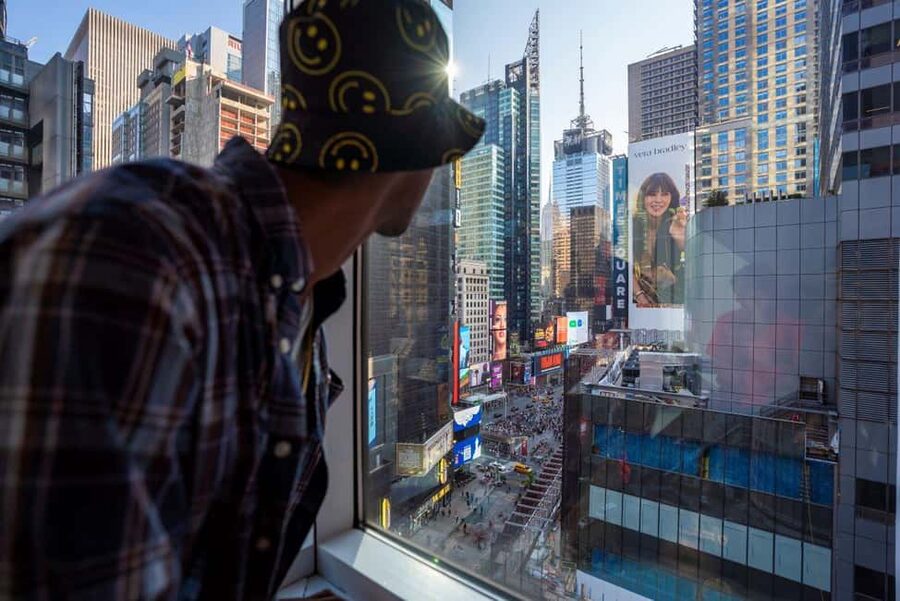
Broadway’s best surprise is not always the marquee. It is the working studio where singers, dancers, choreographers, and crews prepare the show before an audience ever takes a seat. This two-hour walk connects Times Square’s famous theaters with that less polished, more revealing side of the business.
I like the small groups of up to 12, which make it easier to ask questions and hear the guide in the noisy Theater District. I also like the clear story arc, from vaudeville and burlesque to Broadway’s Golden Age, its 1970s troubles, and its modern revival. The main drawback is that the studio requires three flights of stairs, so this is not a good choice for anyone with limited mobility.
In This Review
- Key points to know before you book
- Why the studio visit changes the usual Broadway walk
- Starting under the Winter Garden marquee
- Times Square, Duffy Square, and Broadway’s old names
- The theater district’s landmarks, one doorway at a time
- From vaudeville to the Broadway revival
- Hell’s Kitchen and the working side of theater
- What the two-hour format feels like
- Is $49 a fair price?
- Practical details that affect your choice
- Who will enjoy this Broadway experience most?
- Should you book Broadway Backstage?
- FAQ
- Where does the Broadway Backstage tour meet?
- How long does the tour last?
- What places does the tour visit?
- Is the rehearsal studio visit guaranteed to include a rehearsal?
- Is the tour wheelchair accessible?
- What language is the tour offered in?
- Can children join the tour?
- What happens if it rains?
Key points to know before you book
- The rehearsal studio is the tour’s special access: You may see actors, dancers, or a class at work in a real studio setting.
- The walk covers far more than Times Square: Expect major theaters such as the New Amsterdam, Richard Rodgers, Majestic, Shubert, and Winter Garden.
- The history has a useful beginning-to-present shape: You learn how Broadway grew from vaudeville into the theater center you see today.
- A guide makes the difference: A.J. Stevens, Mickey, Jessie, Hannah, Micaela, and others have been praised for warmth, humor, and theater insight.
- Plan for outdoor weather: The tour runs in rain and cold unless conditions become unsafe, so comfortable shoes and suitable clothing matter.
- At $49, it is strongest for theater fans: You get two hours, a small group, and a studio visit, but not admission to a Broadway show.
Why the studio visit changes the usual Broadway walk
Most Theater District walks stop at the sidewalk and point toward famous doors. This one goes farther, at least in spirit and sometimes literally, by entering a working rehearsal studio in Hell’s Kitchen.
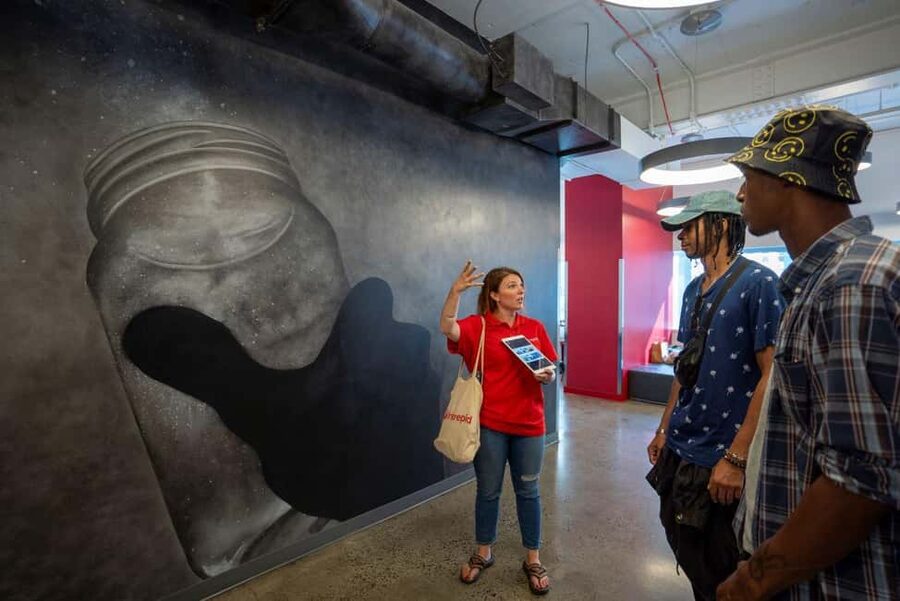
The studio is used by singers and dancers, and it can also serve Broadway productions when a performer is learning a role, music, or choreography. Depending on the schedule, you may hear a rehearsal or see a class in session. Nothing is guaranteed, since working spaces change from hour to hour, but the possibility gives the final part of the tour a real sense of purpose.
That is valuable because Broadway is often presented as a finished product: bright lights, polished costumes, and a two-hour performance. Here, you get a look at the labor behind it. Stagehands, understudies, choreographers, directors, and other theater workers become part of the story.
The studio visit is not a backstage tour of one specific Broadway production. You should not expect to walk through a theater’s dressing rooms or watch a full show rehearsal. It is better understood as a look at the place where theater work happens before opening night.
More Times Square and Midtown walks:
- NYC: Circle Line “The Beast” Midtown/Downtown Speedboat Ride
★ 4.6 · 4,259 reviews - NYC in a Day Tour: Lady Liberty, Times Square, Freedom Tower
★ 5.0 · 1,735 reviews - Broadway and Times Square Insider Tour with Theater Professional
★ 5.0 · 651 reviews
Starting under the Winter Garden marquee
Meet outside the Winter Garden Theatre at 1634 Broadway, directly beneath its large marquee. Do not go inside the theater. The canopy is well lit and easy to spot, but Times Square can be confusing, so arrive about 10 minutes early.
The Winter Garden is a fitting starting point. It places you directly in the Theater District, and it gives the guide a natural way to explain how Broadway theaters became concentrated around this part of Manhattan. From here, the walk moves through Times Square and the surrounding streets before returning to the same theater.
The tour lasts two hours, and it is conducted in English. You will be on foot for the entire experience, with frequent stops for explanations. Wear comfortable shoes. You will also want a coat, hat, or rain layer depending on the forecast because the tour runs outdoors in most conditions.
Times Square, Duffy Square, and Broadway’s old names
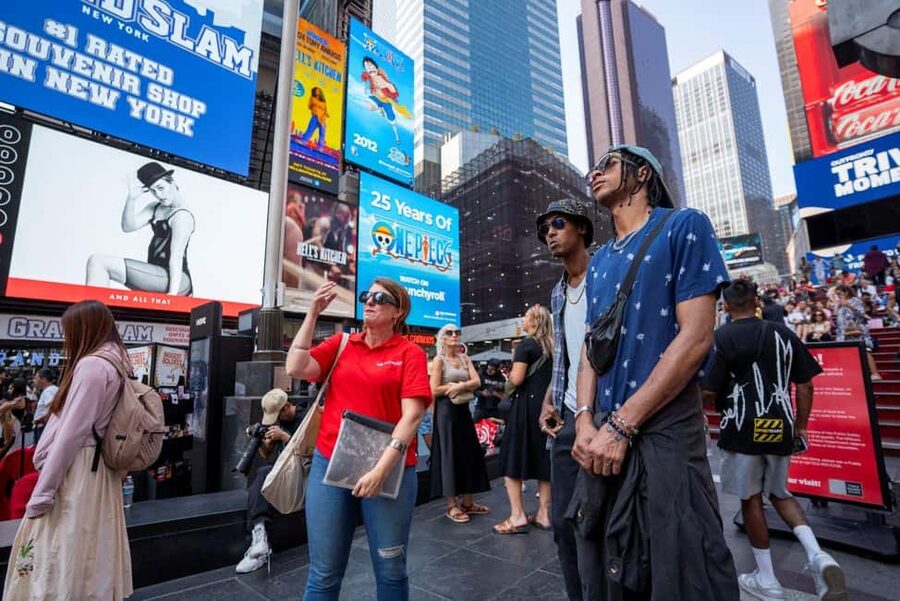
The first part of the walk sets the scene in Times Square, once known as Longacre Square. The guide explains how the district changed into the center of American theater and why this particular area became linked so closely with Broadway.
Duffy Square gives you another useful point of reference. Rather than treating Times Square as a place for quick photographs, the guide uses it to explain the social and commercial forces that helped theater grow here. The bright signs are only the modern surface of the story.
I like this approach because it gives the famous sights a timeline. You are not simply looking at theater facades. You are learning why the district developed as it did, how entertainment styles changed, and how Broadway moved from vaudeville and burlesque toward the large-scale musicals associated with its Golden Age.
The square can be loud, crowded, and hard on the ears. That is part of the setting, but it can make it difficult to hear. A group limited to 12 helps, and a good guide will find quieter corners when possible.
The theater district’s landmarks, one doorway at a time
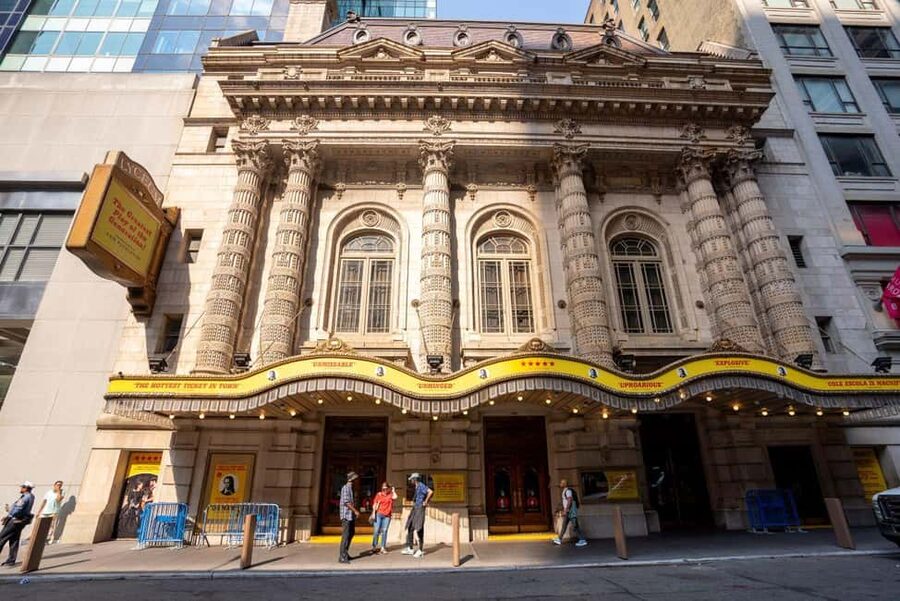
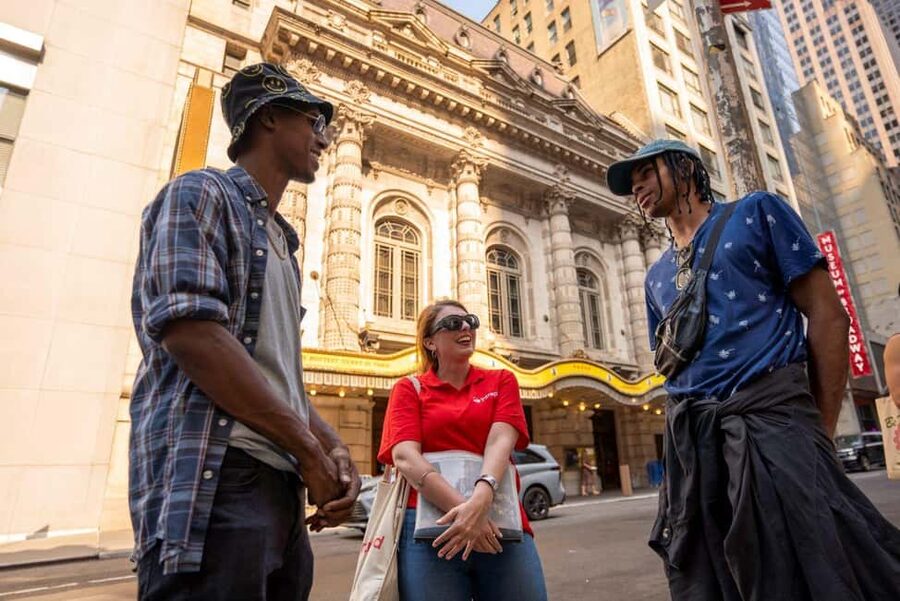
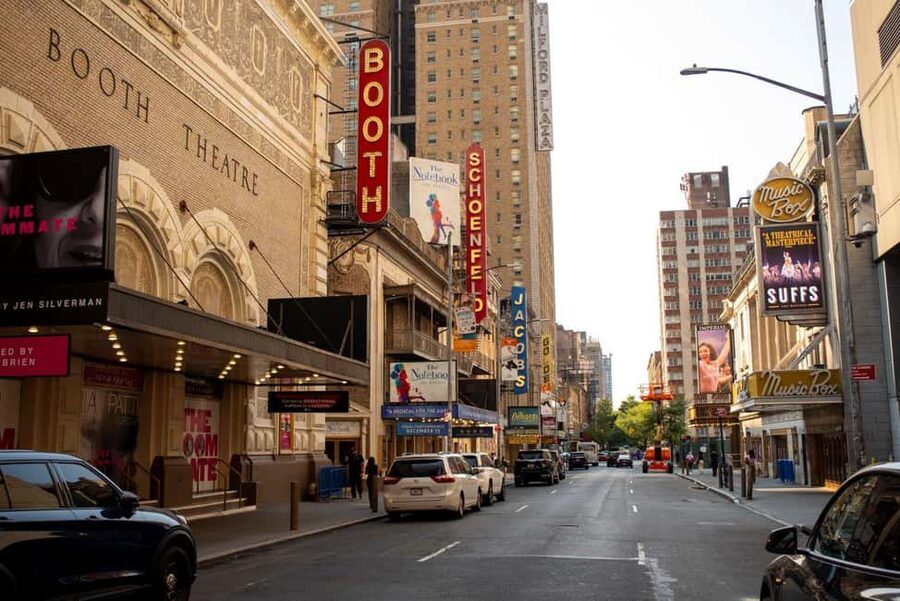
The route includes Broadway theaters such as the Richard Rodgers, Majestic, and Shubert, with the New Amsterdam and other Broadway buildings included along the way. You may pass roughly 20 theaters during the walk, although the exact number and order can vary with the route and street conditions.
Each stop adds a piece to the larger story. The Richard Rodgers Theatre connects the walk to one of Broadway’s best-known venues. The Majestic and Shubert theaters offer more chances to discuss the buildings, productions, and people who shaped the district. You are mainly seeing these places from the outside, so the value comes from the guide’s explanation rather than interior access.
That distinction matters. If you want to sit inside several theaters, this is not the right product. Many doors will be closed, and an active performance venue is not a museum. If you want context for the buildings you pass on the way to a show, the tour works much better.
The best guides add small details about the people behind the performances. You hear about stagehands, understudies, creative teams, and the practical work required to keep a production running. That human focus keeps the walk from becoming a list of theater names.
Guides named Mickey, A.J. Stevens, Jessie, Hannah, Micaela, and Cullen have been especially well received for their enthusiasm, humor, and ability to adjust the conversation to the group. Your guide will vary, but theater knowledge and personal energy are important here. A flat presentation would make the same route feel much less rewarding.
More Broadway seats to book:
- NYC: Aladdin the Musical on Broadway
★ 4.8 · 1,800 reviews - NYC: The Lion King on Broadway
1,609 reviews - NYC: MJ the Musical on Broadway
1,510 reviews - NYC: Moulin Rouge! the Musical on Broadway
1,329 reviews
From vaudeville to the Broadway revival
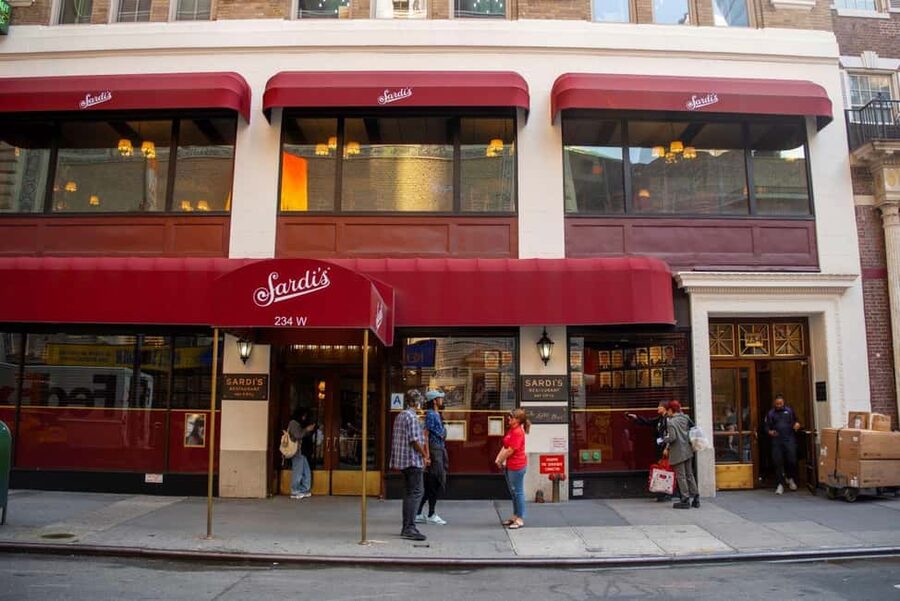
The historical thread is one of the tour’s strongest features. You follow Broadway from its vaudeville roots through the Golden Age of musicals, then into the 1970s decline and the later revival.
That sequence helps explain why Broadway is more than a collection of theaters. It is a business, an art form, and a neighborhood that has gone through difficult periods. The tour places today’s famous productions within that longer story.
The discussion of burlesque and vaudeville is particularly useful if you know Broadway mainly through current musicals. These earlier forms of entertainment shaped the way performers, writers, musicians, and producers worked together. The later focus on the Golden Age shows how the musical became a major American art form.
The 1970s decline gives the history some needed balance. Broadway was not always a sure bet or a polished tourist attraction. Knowing that makes the current revival easier to appreciate. The district’s success required persistence from performers, theater owners, crews, and creative workers.
You do not need a theater degree to follow the tour. The information is aimed at curious visitors, not specialists. At the same time, people who already love Broadway should have plenty to ask about, especially during a small-group walk.
Hell’s Kitchen and the working side of theater
The move into Hell’s Kitchen changes the mood. Times Square is public, loud, and designed to draw attention. The rehearsal studio is practical and workmanlike. It is where performers repeat material, test choreography, and prepare for the pressure of a live production.
The studio visit usually involves three flights of stairs, and that is the most important physical warning. It is not wheelchair accessible, and the activity is not suitable for people with mobility impairments. If stairs are a problem, ask before booking rather than assuming an alternative route will be available.
The visit may include a rehearsal or class, but the schedule is not fixed. You might see the room in use, or you might receive an explanation of how the space supports Broadway productions. A celebrity sighting is possible but should never be treated as part of the package. The reliable value is the chance to understand how performers prepare.
This is also where the tour’s behind-the-scenes promise is strongest. You can picture a singer learning a role, dancers working through choreography, or a production team preparing changes before opening night. At studios such as Open Jar, space can be rented for this kind of work.
Keep your expectations sensible. You are not guaranteed a private performance, a conversation with actors, or access to a current show’s rehearsal. The studio is a working place, and access depends on what is happening that day. That uncertainty is part of what makes the stop feel genuine, but it also means the experience can vary.
What the two-hour format feels like
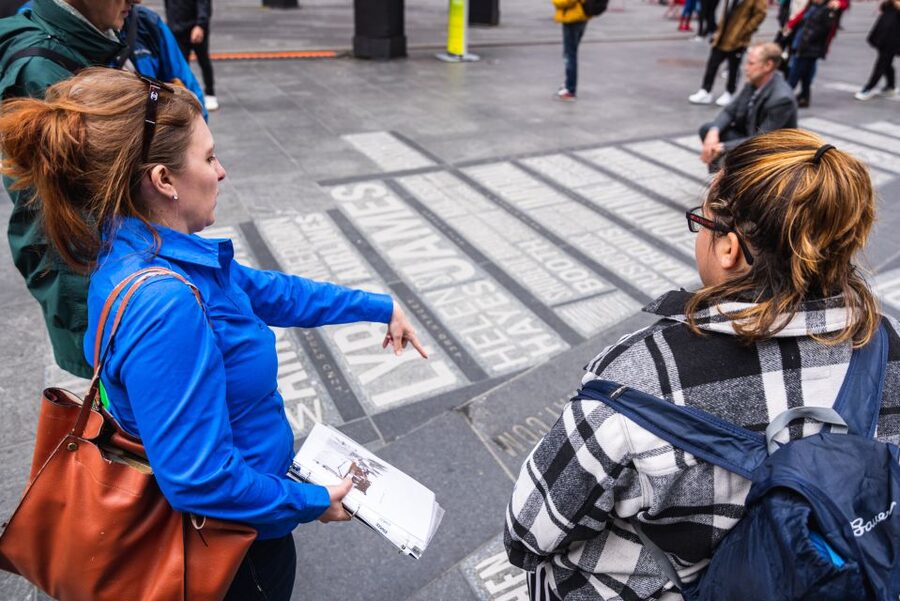
Two hours is enough time to cover the Theater District without turning the tour into an exhausting half-day commitment. You get a focused introduction to Broadway, followed by the studio visit, then return to the Winter Garden Theatre.
The pace includes walking, street-side talks, and stops at several theaters. This is not a rapid march from one photo point to another. The guide needs time to tell the story, answer questions, and manage the transition to Hell’s Kitchen.
A group of up to 12 is a practical size. You can ask about a particular theater or production without holding up a large crowd. On quieter dates, the group may be even smaller. One tour had only three people in difficult winter weather, which allowed the guide to find sheltered spots and begin the route quickly.
Weather can affect the experience. One January group faced temperatures around 28 degrees Fahrenheit and strong wind gusts, yet the guide adapted by using sheltered areas. That is a good reminder to check the forecast and dress for an outdoor walk. In summer, comfortable shoes and water would be sensible, although food and drinks are not included.
Children are welcome, and children under six may join free. The subject can work well for families, especially if a child dreams of performing. Still, young children need to manage two hours of walking, street crossings, outdoor noise, and three flights of stairs.
Is $49 a fair price?
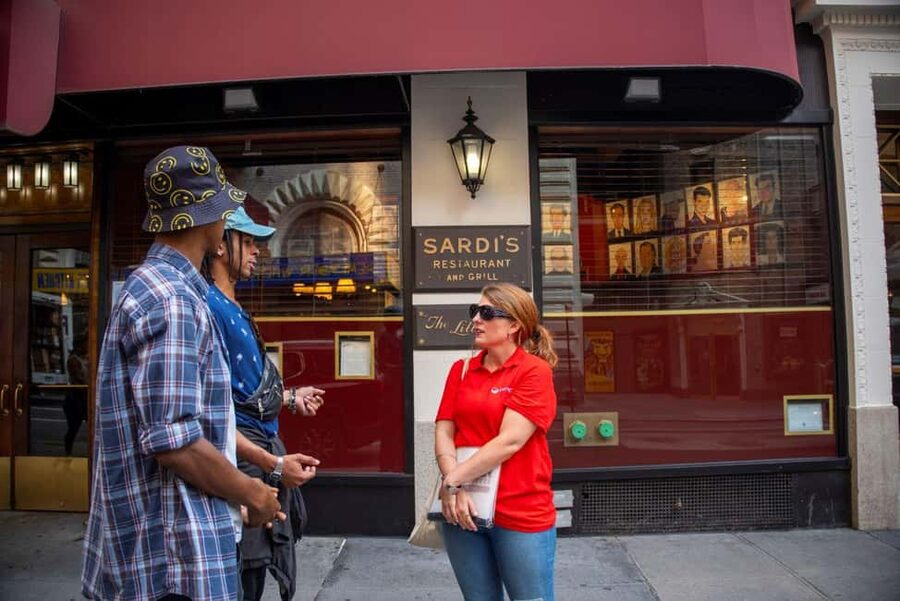
At $49 per person, this is a reasonable price for a two-hour, small-group experience in central Manhattan, especially if the studio visit operates as planned. You are paying for a local English-speaking guide, a focused history of Broadway, a walk past many significant theaters, and access to a working rehearsal space.
The value is strongest when you plan to see a Broadway show. Take the tour before the performance and the theater district will make more sense. You will recognize the buildings, understand the work behind the curtain, and watch the evening show with a better sense of how many people contribute to it.
The price is less compelling if you only want quick photographs of Times Square. You can see the signs and theater marquees without a guide. The fee earns its keep through the explanations and studio stop, not through transportation, food, or entry to a performance.
Private groups are available, which may suit families or friends who want a more personal format. The standard small group should already feel fairly intimate, so compare the private price before paying extra.
Food and drinks are not included. The activity returns to the Winter Garden Theatre, placing you near many places to eat, but you will need to arrange that separately.
Practical details that affect your choice
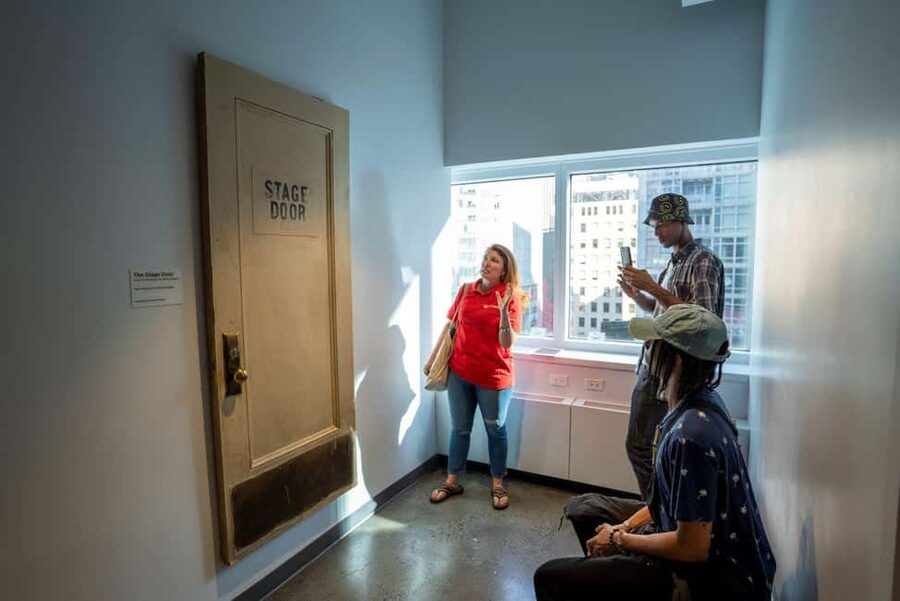
Book with the stairs in mind. The rehearsal studio requires walking up three flights, and the activity is not suitable for people with mobility impairments.
Arrive 10 minutes early at the Winter Garden marquee. Search for Winter Garden Theatre, 1634 Broadway, New York, NY 10019, and wait outside on the sidewalk rather than entering the theater.
The tour runs in rain or shine and is canceled only for unsafe weather. Cancellation is free up to 24 hours before the start time, and you can reserve now and pay later, which helps if your New York schedule is still shifting.
The tour is carbon neutral and operated by a B Corp-certified company. That does not change the route, but it may matter to you if responsible tourism is part of your booking decision.
Who will enjoy this Broadway experience most?
You should book this if you are seeing a Broadway show, love theater history, or want more than a standard Times Square photo stop. It is also a strong pick for a parent and child interested in performance, especially when the guide can tailor the conversation to the child’s questions.
It suits solo visitors, couples, and small groups. A solo participant can join without needing to arrange a private tour, and the limited group size makes it easier to speak with the guide.
It is less suitable if you need wheelchair access, dislike outdoor walking, or want guaranteed contact with a current production. It is also not a substitute for a backstage tour of one specific theater.
Should you book Broadway Backstage?
Book it if you want Broadway explained by someone who understands both the famous theaters and the workers who keep them running. The history, small group, and rehearsal studio make this more useful than a simple walk around Times Square.
I would schedule it before your Broadway performance and arrive ready for weather, stairs, and a flexible studio visit. If the chance to see a rehearsal is the main reason you are booking, keep your expectations open. If you value stories, context, and a look at the work behind the curtain, $49 is a solid use of two hours.
FAQ
Where does the Broadway Backstage tour meet?
Meet your guide outside the Winter Garden Theatre, directly under the large marquee along Broadway. The address is 1634 Broadway, New York, NY 10019. Do not enter the theater.
How long does the tour last?
The walking tour lasts two hours.
What places does the tour visit?
The route includes Times Square, Duffy Square, Broadway, the Richard Rodgers Theatre, the Majestic Theatre, the Shubert Theatre, Hell’s Kitchen, and the Winter Garden Theatre.
Is the rehearsal studio visit guaranteed to include a rehearsal?
No. You may hear a live rehearsal or see a class in session, depending on what is taking place at the studio.
Is the tour wheelchair accessible?
No. The rehearsal studio requires walking up three flights of stairs, and the activity is not suitable for people with mobility impairments.
What language is the tour offered in?
The tour is conducted in English with a live English-speaking guide.
Can children join the tour?
Yes. The tour is child-friendly, and children under six are permitted to join free of charge.
What happens if it rains?
The tour runs rain or shine and is canceled only in unsafe weather conditions. Wear comfortable shoes and dress for the forecast.
Just listed around New York City
- NYC: Little Shop of Horrors Off-Broadway Ticket5 reviews
- Private NYC Airport Transfer: LGA to Manhattan – Up to 5★ 3.6 · 5 reviews
- New York City Tour in German★ 4.5 · 5 reviews
- New York Afternoon Fall Foliage Cruise with Lunch★ 5.0 · 6 reviews
- New York: Hamilton and Washington Revolutionary Walking Tour★ 5.0 · 5 reviews
- NYC Freedom Tower Private Photo or Video Experience★ 4.0 · 6 reviews
- Brooklyn Walking Tours by Locals: Private & 100% Personalized★ 4.0 · 6 reviews
- Southold Bay Oyster Farm Tour★ 5.0 · 6 reviews
Times Square & Midtown Tours, compared.

Circle Line “The Beast” Midtown/Downtown Speedboat Ride
Read our review →
NYC in a Day Tour: Lady Liberty, Times Square, Freedom Tower
Read our review →
Broadway and Times Square Insider Tour with Theater Professional
Read our review →
See Yourself on a Times Square Billboard for 24 Hours
Read our review →
NYC in a Day Tour: Statue of Liberty, Times Square and More
Read our review →
The Escape Game NYC: 60-Minute Adventures in Midtown Manhattan
Read our review →Browse the lists this tour appears in