
Reviewed · BROOKLYN TOURS
Brooklyn: Discover Hidden NYC Subway Secrets – Private
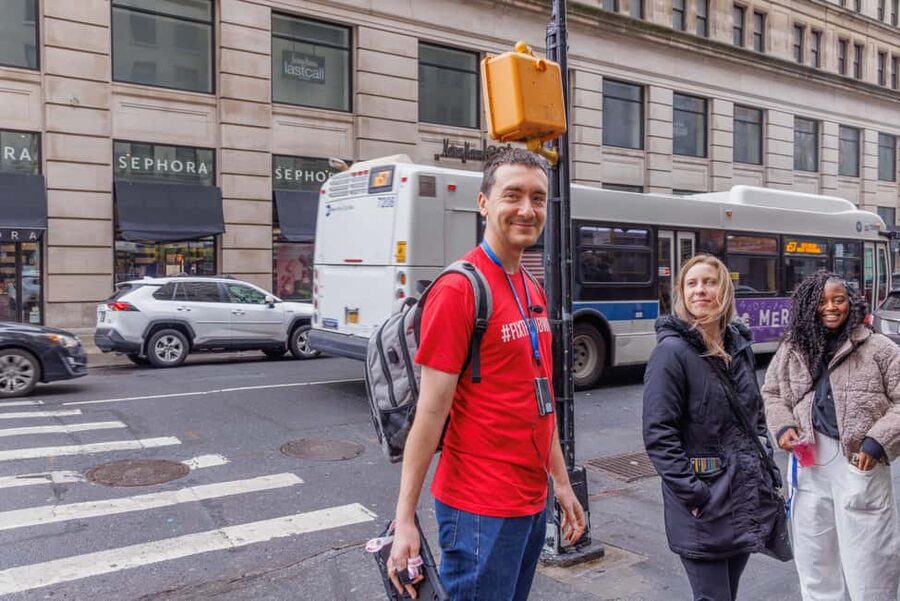
Some of New York’s best stories sit below street level, behind walls, beneath platforms, and in details most riders rush past. On this private Brooklyn tour, Rayn Riel explains how the subway was built, why it took its present shape, and where abandoned stations still hide in plain sight.
I like two things right away: your fare is included, and the tour uses ear pieces so you can hear Rayn even when the station is noisy. I also like that he is a licensed guide and certified urban planner with past MTA experience. The main consideration is physical: you will walk through underground stations and go up and down steps, so comfortable shoes matter.
In This Review
- Key points to know before you book
- Starting at Court Street, where Brooklyn’s subway story begins
- Old stations and the three subway companies
- The closed platforms hiding beside active tracks
- Smith-9 St and the view toward the Gowanus Canal
- The highest rapid transit station outside China
- Public art, architecture, and details commuters miss
- A moonwalk stop with a pop-culture twist
- Reaching Barclays Center in Downtown Brooklyn
- What the private $200 price really covers
- Who will enjoy this Brooklyn subway tour?
- Practical advice for making the most of it
- Should you book it?
- FAQ
- Where does the Brooklyn subway tour start?
- Where does the tour finish?
- How long does the experience last?
- Is the tour private?
- What language is the tour offered in?
- Is subway fare included?
- Does the tour enter abandoned or restricted areas?
- What should I wear?
Key points to know before you book
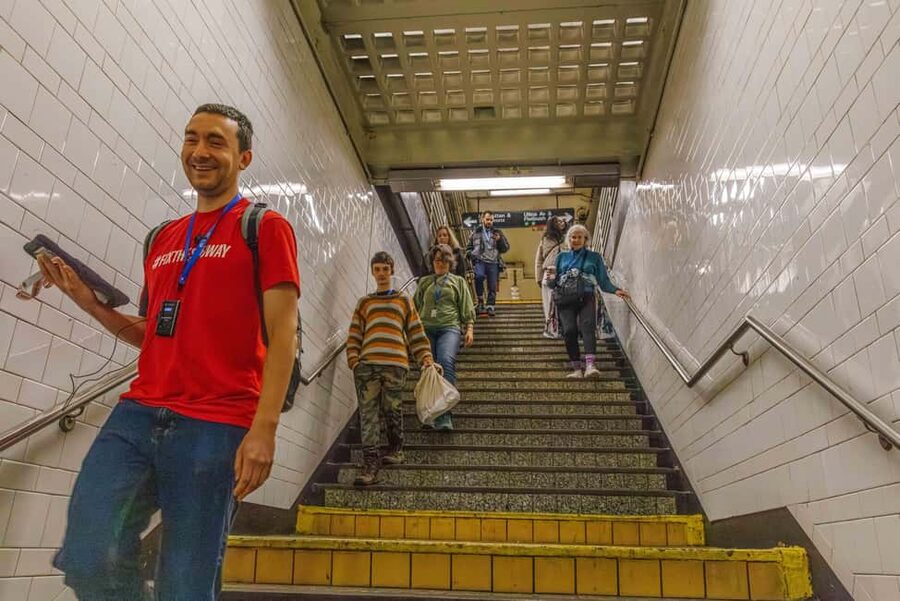
- Abandoned infrastructure remains visible: See closed platforms, unused station spaces, and other subway features from public areas only.
- Several train lines form the lesson: The route can include the 4, 5, D, G, F, and R lines, linking the former IRT, BMT, and IND systems.
- Smith-9 St offers a major view: Look down toward the Gowanus Canal from one of the city’s best-known elevated subway stations.
- Brooklyn’s transit story is also an architecture story: Study old station design, public art, lighting, and small details that explain how the system works.
- The tour has a playful finish: Practice your moonwalk at the spot connected with Michael Jackson’s Bad music video.
- Private pricing favors groups: The $200 rate covers up to 15 people, with subway fares and ear pieces included.
Starting at Court Street, where Brooklyn’s subway story begins
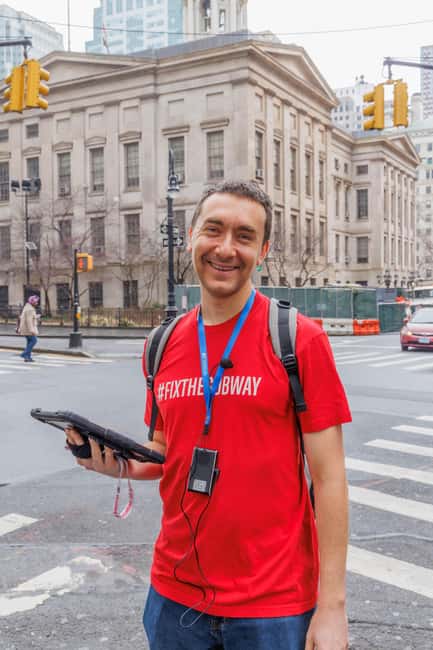
Meet Rayn outside Starbucks at 50 Court Street. This starting point in Downtown Brooklyn is practical rather than grand, but that suits the tour. You are here to move into the city’s working transit system, not spend two hours looking at a display behind glass.
Rayn begins with the basic question: why did New York put its trains underground at the start of the 20th century? That answer connects to the city’s growth, crowded streets, and need for a faster way to move people through the boroughs. You will get the framework first, then see how those early choices still shape your ride today.
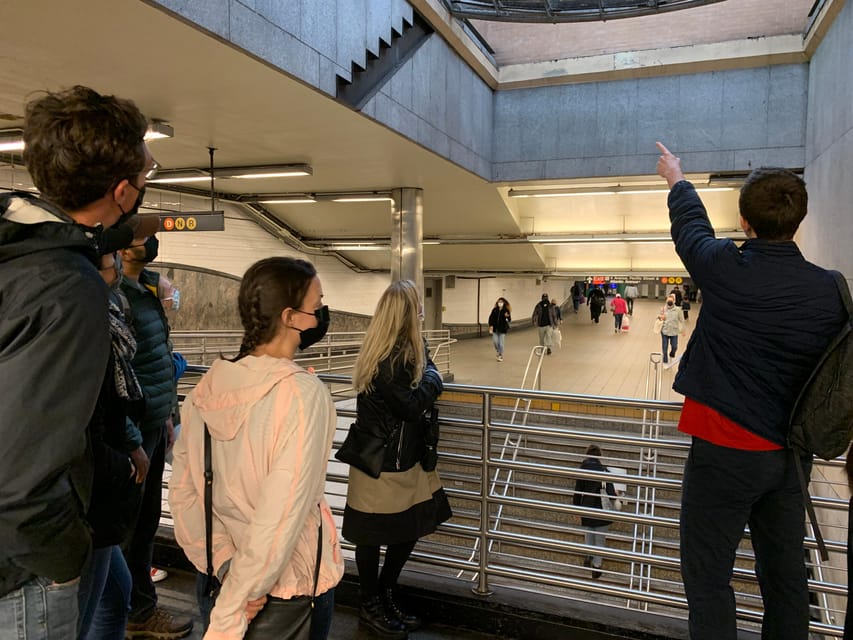
That approach is useful because the subway can feel like a jumble of lines, stations, colors, and odd connections. Rayn connects the parts. A strange stairway, a change in ceiling height, a different light bulb, or an unused platform becomes evidence of an earlier plan.
The tour is private, but private does not mean you have a subway car to yourself. You will be moving through public stations and riding regular trains. The advantage is that your group can stay together and ask questions without trying to compete with a large public tour.
More Brooklyn days out:
- NYC Bus Tour of Brooklyn, Bronx, Queens: Art, Food & Sports
★ 5.0 · 3,805 reviews - NYC Highlights Tour: Bronx, Brooklyn, Harlem, Queens & Coney
★ 4.5 · 2,846 reviews - NYC: Contrasts Tour of Harlem, The Bronx, Queens & Brooklyn
★ 4.5 · 2,167 reviews
Old stations and the three subway companies
Brooklyn’s subway system grew from separate transit companies. The former IRT, BMT, and IND systems had different designs, routes, and operating traditions. During the tour, you may ride parts of the 4, 5, D, G, F, and R lines, giving you a practical look at how those systems fit together.
For me, this is one of the strongest parts of the experience. You are not just hearing about old subway companies in a lecture. You are riding through the system they helped create. The route turns transit history into something you can see through station entrances, platforms, train cars, and transfers.
The oldest subway station in Brooklyn receives special attention for its design. The exact interest is not simply its age. Old stations show how early planners thought about entrances, ornament, passenger flow, and the relationship between a station and the street above it.
You will also learn about public art projects around some of Brooklyn’s older stations. The art is not treated as decoration alone. Rayn explains how artwork and architecture change the experience of passing through a station, even when most riders are focused on catching a train.
Bring questions. One of the tour’s strengths is the guide’s ability to explain small operating details, not just famous dates. You might learn why certain bulbs have a slightly different blue shade or why a vertical cable appears between train cars. These details may sound minor, but they help you read the subway as a machine with a long working life.
The closed platforms hiding beside active tracks
The tour’s title promises subway secrets, and the best ones are the pieces of the system you can see without entering restricted areas. Some stations have abandoned platforms, lower levels, sealed corridors, or unused infrastructure close to the active route.
A key example is the lower level at Nevins Street. You do not enter closed areas, and you should not expect an urban exploration trip. Instead, Rayn points out what can be seen from public space and explains why the unused section exists.
That distinction matters. This is a legal, guided look at subway remnants, not a trespassing adventure. If you are hoping to walk through dark tunnels or climb onto abandoned platforms, this is not the right activity. If you want to understand how abandoned parts survive beside the trains you use every day, it is a much better fit.
The system’s unused infrastructure is one of the tour’s most striking themes. Routes change, stations are rebuilt, and plans are abandoned, but the old work often remains below the street. Rayn uses those traces to show how decisions made 50 or 100 years ago continue to affect today’s subway.
You should keep your eyes open and listen closely. These spaces can be easy to miss, especially when a train arrives or commuters are moving around you. The ear pieces help here. You can stand at a safe public viewing point while still following the explanation.
Smith-9 St and the view toward the Gowanus Canal
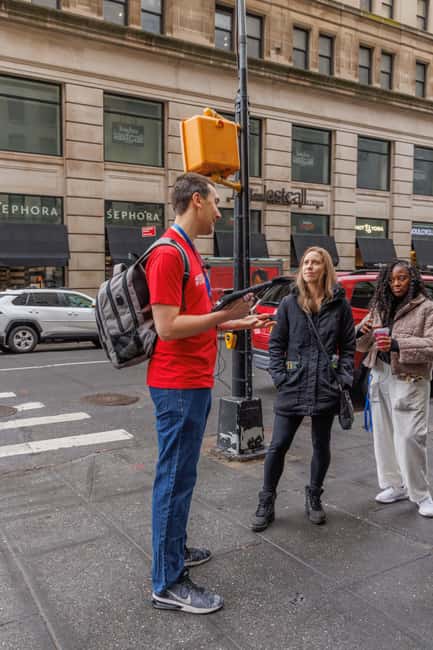
Smith-9 St is one of the tour’s memorable stops. The station gives you a look down toward the Gowanus Canal, and it shows how the subway can rise above the city as well as run below it.
This stop broadens the tour beyond underground architecture. You see the connection between transit and Brooklyn’s streets, waterways, and changing neighborhoods. The elevated setting also makes the subway’s engineering easier to appreciate. A station is not always just a dark platform under the pavement. It can be a high structure with a wide view and a very different sense of space.
The stop is also a good reminder that the tour includes exercise. You will use stairs and walk between areas. The route is only two hours, but the pace involves regular movement rather than long periods of standing in one place.
Wear comfortable shoes. There is no need to dress for a strenuous hike, but thin soles, uncomfortable footwear, or shoes with poor grip will make the experience less pleasant. If someone in your group has trouble with stairs, consider that before booking, since the tour does not promise a step-free route.
A few more New York City picks to weigh up
- Private Central Park Pedicab Tour
★ 5.0 · 6,981 reviews - Private Transfer from Manhattan to NYC Airports (JFK/EWR/LGA)
★ 3.5 · 1,683 reviews - New York City: Private Central Park Pedicab Tour
★ 4.9 · 1,637 reviews - Carriage Ride in Central Park (VIP – PRIVATE) Since 1964™
★ 4.0 · 1,074 reviews
The highest rapid transit station outside China
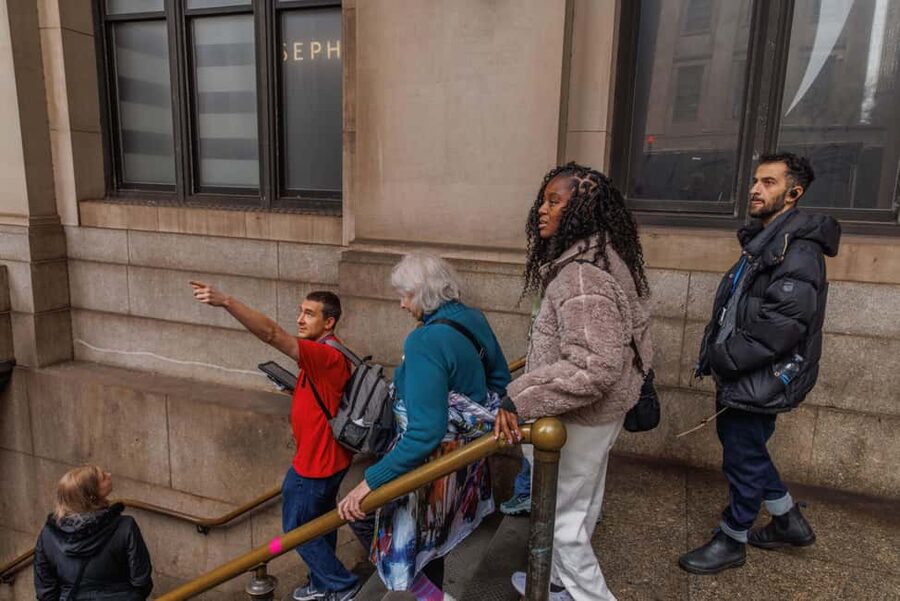
Brooklyn also has a claim that may surprise even longtime New Yorkers: the borough is home to the highest rapid transit station in the Western Hemisphere, and the tour explains why it was built there.
This is the sort of fact that works best on location. You are not memorizing a record in a guidebook. You are seeing the station’s position and learning how engineering, route planning, and local geography shaped the choice.
The stop gives Rayn a chance to explain the practical side of transit planning. A railway line must work with grades, existing streets, bridges, property, and connections to other routes. The result may look obvious once it is finished, but the station’s location reflects decisions made under real constraints.
That is where Rayn’s urban planning background adds value. He does not only describe what you see. He can connect the physical system to the planning choices behind it. For anyone curious about how cities work, this is more useful than a list of subway trivia.
Public art, architecture, and details commuters miss
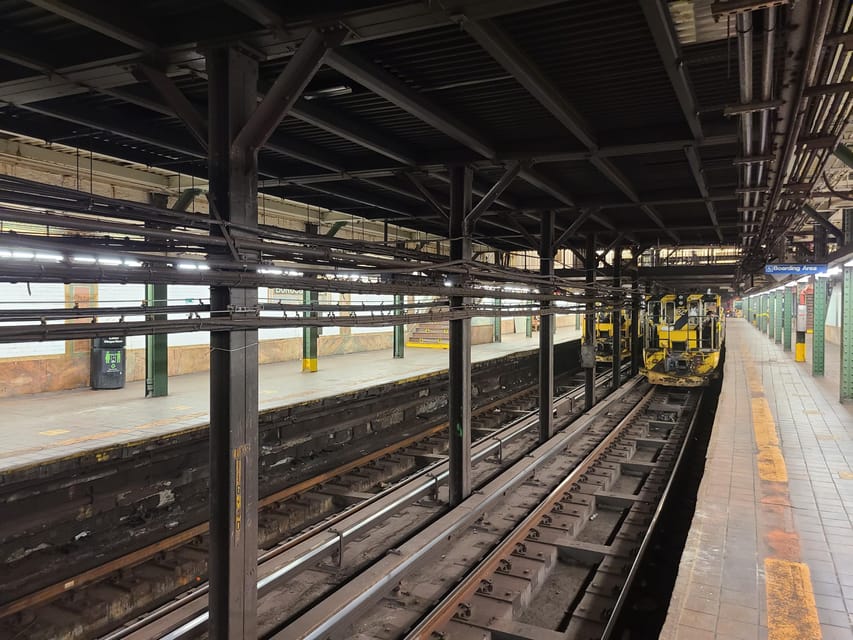
Brooklyn’s subway stations offer a mix of old construction and later public art. During the route, Rayn points out projects and explains the meaning behind selected art and architectural features.
I like this part because it changes how you use the subway afterward. A station is usually a place to hurry through. Once you understand its design, you may notice its colors, tile work, signs, lighting, and layout on your next ride.
The tour also gives you a better sense of scale. New York’s subway is not one uniform system. It is a collection of eras, construction methods, station types, and operating choices joined into one network.
Some stops may be visually impressive. Others may look plain until Rayn explains what was altered, preserved, or left behind. That balance is important. You should not expect every location to be beautiful. The appeal lies in seeing the purpose behind the parts.
This is also why the tour can suit locals. You do not need to be new to New York to learn from it. Familiar stations become more interesting when someone slows the ride down and points out what is normally overlooked.
A moonwalk stop with a pop-culture twist
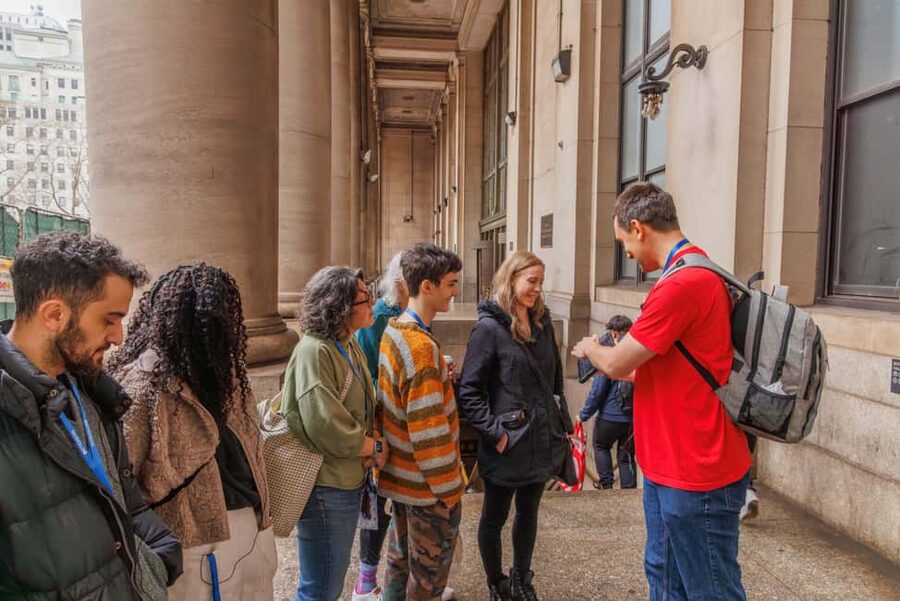
The tour includes a chance to practice your moonwalk at the exact spot where Michael Jackson filmed the music video for Bad. It is a lighter moment in a tour that otherwise focuses on transport, planning, architecture, and old infrastructure.
For families, this can be a welcome change of pace. Children and teenagers may connect with the music-video location more quickly than with a discussion of former subway companies. Adults can enjoy the odd contrast: serious transit history, followed by a few steps of pop choreography in a station.
The stop is not the main reason to book the experience, but it gives the route personality. A good city tour should leave room for a memorable oddity, and this one does.
Reaching Barclays Center in Downtown Brooklyn
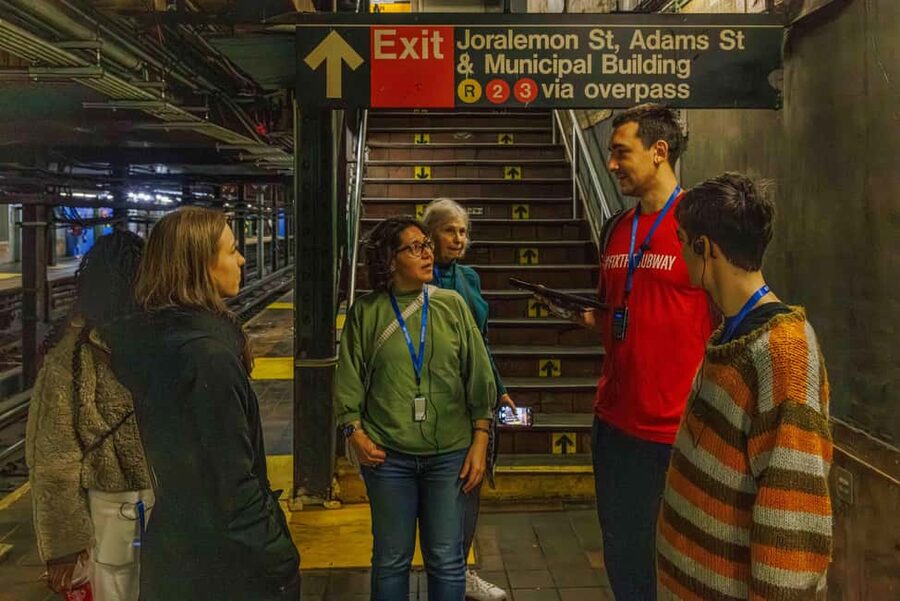
The tour ends at the Barclays Center subway station, putting you near local food options and several train connections. That makes the finish useful for the rest of your day.
You can plan a meal nearby, continue exploring Downtown Brooklyn, or use the station to reach another part of New York. Since the tour uses multiple train lines, the end point also makes practical sense rather than sending you back to the starting address.
The route is designed to cover a lot in two hours. Rayn may adjust the order as trains arrive, especially when working around normal subway schedules. That flexibility is helpful, but it also means the exact rhythm can change from one departure to the next.
Do not treat the tour as a rigid museum itinerary with every minute fixed. The subway is a live system. Trains arrive, platforms fill, and the group must stay safe. The value comes from Rayn’s ability to keep the route moving while explaining what is in front of you.
What the private $200 price really covers
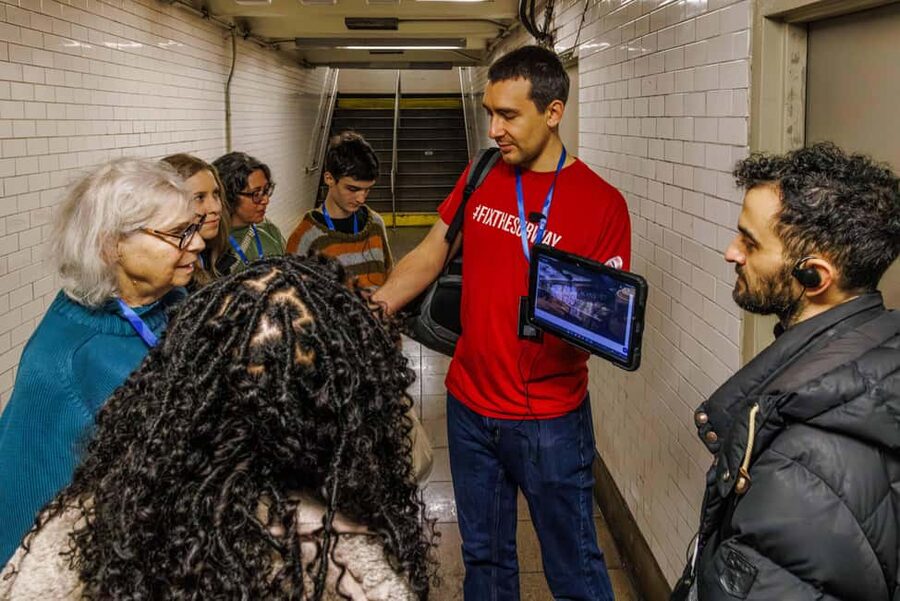
The price is $200 per group of up to 15 people. That is a strong deal for a full group, since the cost is shared rather than charged per person. For two people, it is a much bigger spend per head, so the value depends on how much you enjoy specialized city tours.
Your subway fare is included. Ear pieces are also provided, which is more important than it may sound. Subway stations are noisy, and a guide who cannot be heard loses much of the value of a walking tour.
The tour is led by a licensed NYC guide who is also an award-winning certified urban planner, with MTA experience noted in the guide’s background. That combination is the main reason to choose this rather than simply riding the same lines on your own.
You could learn some subway facts from books and websites. You could also ride these trains without paying for a guide. What you cannot easily reproduce is the route, the timing, the safe public views of abandoned spaces, and the ability to ask Rayn why a feature exists while you are standing beside it.
For a family, school-age group, or group of friends, the math works especially well. A party of 10 to 15 people pays relatively little per person for a private two-hour activity. Smaller groups should book it because they care about the subject, not because it is the cheapest way to see Brooklyn.
Who will enjoy this Brooklyn subway tour?
I would choose this for subway fans, urban planning followers, architecture lovers, repeat New York visitors, and locals who think they already know the system. It also suits families with subway-obsessed children, provided everyone can handle stairs and keep with the group.
The tour works for beginners, too. You do not need to know the difference between the IRT, BMT, and IND before arriving. Rayn builds the story from the basics and adds details as the route develops.
It is less suitable if you want a relaxed surface walking tour, a polished museum experience, or access to closed tunnels. The tour stays in public areas and includes regular subway travel, steps, station noise, and the ordinary movement of city transit.
The private format helps groups with mixed interests. Children can ask questions, adults can focus on planning and architecture, and serious subway fans can pursue technical details. Rayn’s experience with groups also matters because the route can require patience and careful head counts.
Practical advice for making the most of it
Wear comfortable shoes and expect stairs. Keep your belongings secure, stay close to the group, and leave room in your schedule for the possibility that subway timing affects the order of stops.
Meet outside Starbucks at 50 Court Street. The experience lasts two hours and is offered in English with a live guide. Check the available starting times when you book.
I would also bring a curious attitude rather than a checklist. The best moments may be small: a lower platform, an unusual cable, a change in station lighting, or a view that explains why a line was built where it was.
If you have a printed subway map, bring it. A map can make the connections between the former subway companies easier to follow, and one past participant regretted not accepting Rayn’s paper map. That small tool may help you continue the lesson after the tour ends.
Should you book it?
Book this tour if you want to understand New York’s subway as a city-building project, not just a way to get from one stop to the next. Rayn Riel’s mix of transit experience, urban planning, and clear explanations gives the route real substance, while the abandoned spaces, Smith-9 St view, public art, and Bad filming location keep it entertaining.
The $200 group price makes the most sense for families, friends, school groups, and larger private parties. Solo visitors or couples should book only if subway history and city design are a major interest.
You will not enter restricted tunnels, and you should be ready for stairs and station noise. If those limits suit you, this is a smart, unusual way to spend two hours in Brooklyn, with a useful endpoint at Barclays Center and plenty to notice on your next subway ride.
FAQ
Where does the Brooklyn subway tour start?
Meet outside the Starbucks at 50 Court Street in Downtown Brooklyn.
Where does the tour finish?
The tour ends at the Barclays Center subway station, near local food options.
How long does the experience last?
The guided tour lasts two hours.
Is the tour private?
Yes. It is a private group experience for up to 15 people.
What language is the tour offered in?
The live tour guide speaks English.
Is subway fare included?
Yes. Your subway fare during the tour is included in the price.
Does the tour enter abandoned or restricted areas?
No. The tour only visits areas open to the public. You can see some abandoned stations, platforms, and infrastructure from public areas, but you do not enter restricted spaces.
What should I wear?
Wear comfortable shoes. The tour takes place in an underground environment and involves walking up and down steps.
Just listed around New York City
- NYC: Cabaret at the Kit Kat Club on Broadway★ 4.4 · 13 reviews
- NYC: Surprise Proposal Photoshoot – Capture the Yes Forever★ 5.0 · 13 reviews
- Central Park Pedicab Tours – History and Movie Locations★ 5.0 · 13 reviews
- New York City Airport Arrival Transfer by Sprinter LGA JFK EWR★ 4.5 · 13 reviews
- Central Park Movie Locations and Celebrity Homes Pedicab Tour★ 5.0 · 13 reviews
- Central Park Yoga Class with a View in the Heart of New York City★ 5.0 · 13 reviews
- Ghosts of New York Walking Tour★ 3.5 · 13 reviews
- Private Transfer from LaGuardia Airport (LGA) to Manhattan★ 4.0 · 13 reviews
Brooklyn Tours, compared.

NYC Bus Tour of Brooklyn, Bronx, Queens: Art, Food & Sports
Read our review →
NYC Highlights Tour: Bronx, Brooklyn, Harlem, Queens & Coney
Read our review →
Contrasts Tour of Harlem, The Bronx, Queens & Brooklyn
Read our review →
Brooklyn Nets NBA Game Ticket at Barclays Center
Read our review →
Contrasts of Bronx, Queens, Brooklyn, & Manhattan Tour
Read our review →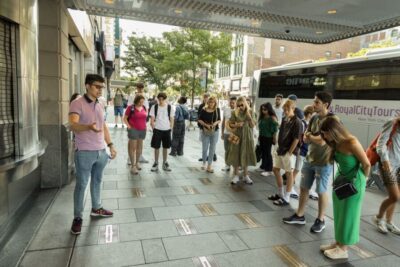
Brooklyn Bridge & DUMBO Neighborhood Tour – from Manhattan to Brooklyn
Read our review →Browse the lists this tour appears in