
Reviewed · BROOKLYN BRIDGE & DUMBO TOURS
Brooklyn: The Bridge, DUMBO, & Brooklyn Heights Best of Tour
The most memorable part of this three-hour tour is the way it connects the Brooklyn Bridge to the people and neighborhoods around it. You walk from Manhattan across one of the 19th century’s great engineering feats, then follow Brooklyn’s story through DUMBO, Brooklyn Bridge Park, and Brooklyn Heights.
I like the strong mix of big views and small details. You get the Manhattan skyline, the restored 1922 carousel, and the Brooklyn Heights Promenade, but also hear about abolitionist Henry Ward Beecher, Truman Capote, Moonstruck, and the family behind the bridge. The main consideration is the pace: this is an all-outdoor walking tour in rain, snow, or sun, and it is not suited to young children, low fitness levels, or people with mobility or heart concerns.
In This Review
- Key points to know
- Starting at the Tweed Courthouse in Lower Manhattan
- Crossing the Brooklyn Bridge on foot
- DUMBO and the meeting of old industry with new Brooklyn
- Brooklyn Bridge Park and the 1922 Jane’s Carousel
- A chocolate stop at Jacques Torres
- Brooklyn Heights and the Promenade
- Revolutionary War stories and Civil War-era Brooklyn
- Bruce’s storytelling style and what it adds
- Is $47 a fair price for three hours?
- Who should book this Brooklyn walk?
- Final verdict: a smart choice for history and views
- FAQ
- How long is the Brooklyn Bridge and Brooklyn Heights tour?
- Where does the tour meet?
- Does the tour include a walk across the Brooklyn Bridge?
- Which places are included?
- Who leads the tour?
- Is food included in the price?
- Is the tour suitable for children and people with mobility concerns?
Key points to know
- Walk across the Brooklyn Bridge: Begin in Manhattan and see the bridge from its elevated pedestrian path.
- Follow Brooklyn’s changing identity: DUMBO’s industrial past meets its present-day art, food, and design scene.
- Hear stories from Bruce: Your guide has 25 years of experience and a master’s degree in American History.
- Take in classic waterfront views: Brooklyn Bridge Park and the Brooklyn Heights Promenade provide some of the city’s finest skyline outlooks.
- Add chocolate and cinema to the history: Stop at Jacques Torres Chocolate and see locations connected with Breakfast at Tiffany’s and Moonstruck.
- Plan for a proper walk: Wear comfortable shoes, carry water, and dress for changing outdoor conditions.
Starting at the Tweed Courthouse in Lower Manhattan
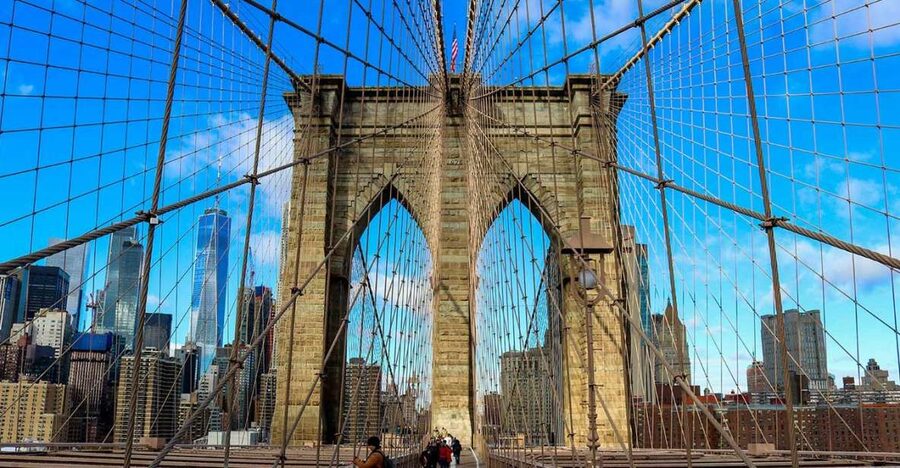
The tour meets on the steps of 52 Chambers Street, also known as the Tweed Courthouse. That puts you in Lower Manhattan, close to the civic and government center of old New York before the walk heads toward Brooklyn.
This meeting point is practical for a bridge tour because you begin on the Manhattan side rather than spending the first part of the outing getting across town. You should arrive ready to walk, with water and weather-appropriate clothing already sorted.
The guide is Bruce, a licensed New York City tour guide and historian with 25 years of experience and a master’s degree in American History. That background matters here. The tour is built around stories, not just photo stops, so Bruce’s role is to explain why the bridge and neighborhoods matter, not simply point them out.
The tour is conducted in English. Since the entire outing takes place outside, your comfort will depend heavily on the day’s weather. Good shoes are more important than smart clothes, and a light rain layer can make a major difference.
More Brooklyn Bridge and DUMBO walks:
- Brooklyn Bridge & DUMBO Neighborhood Tour – from Manhattan to Brooklyn
★ 5.0 · 826 reviews - Brooklyn Bridge & DUMBO Food Tour: Local Eats & Landmarks
★ 5.0 · 478 reviews - From Manhattan: 2-Hour Brooklyn Bridge Bike Tour
★ 4.4 · 230 reviews
Crossing the Brooklyn Bridge on foot
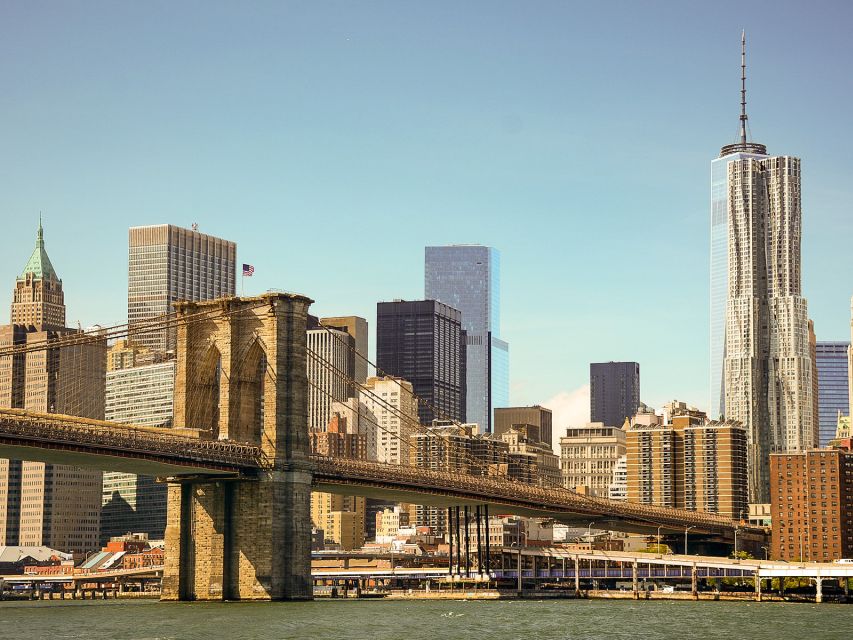
The bridge crossing is the headline attraction, and rightly so. You see the structure from its pedestrian walkway while Manhattan opens behind you and Brooklyn rises ahead. The bridge itself becomes part of the lesson, with its cables, towers, family story, and place in the development of modern New York.
This is not just a skyline stroll. You hear about the people who planned and built the bridge, along with the extraordinary engineering problems involved in connecting Manhattan and Brooklyn. The bridge is often treated as a backdrop for photographs, but a good explanation gives the crossing a sense of purpose.
I especially like this part for first-time visitors because it quickly gives you a sense of New York’s scale. You are above the traffic, surrounded by a structure that has carried generations of pedestrians, and looking at two boroughs at once.
The walking path can be busy, so you should expect to share space with other pedestrians and cyclists. Keep your attention on the guide and your surroundings. The views are a reward, but the bridge is still a working public crossing, not a quiet museum walkway.
DUMBO and the meeting of old industry with new Brooklyn
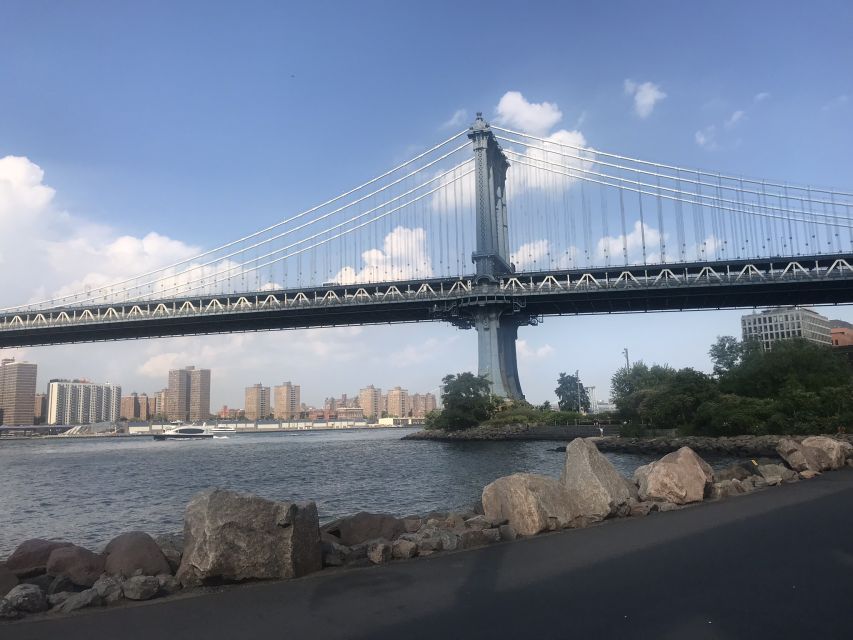
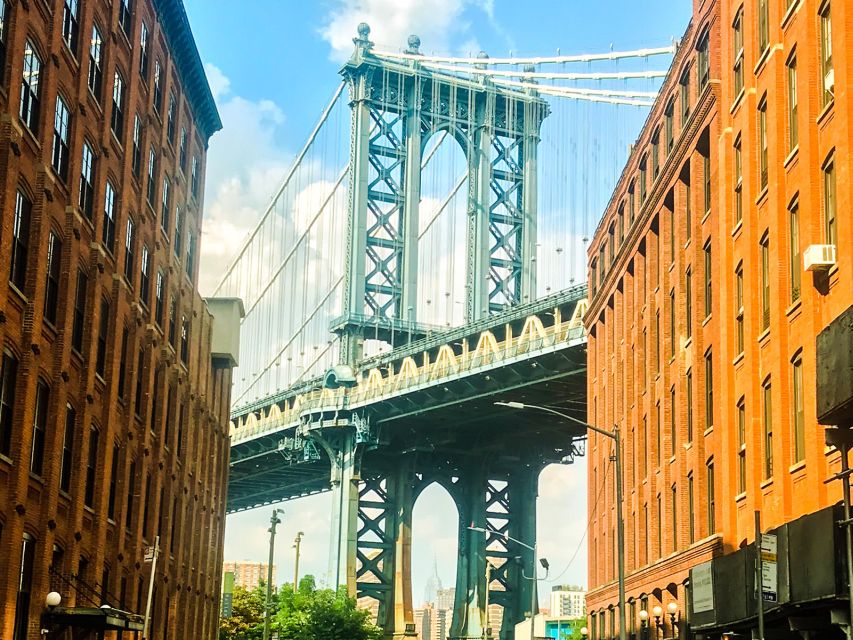
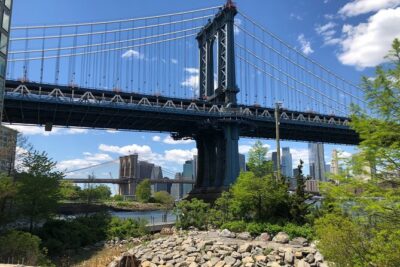
On the Brooklyn side, the tour moves into DUMBO, the neighborhood beneath the Manhattan Bridge Overpass. Its character comes from the contrast between former industrial buildings and the restaurants, art spaces, shops, and creative businesses that now fill the area.
This is where the tour shifts from a single monument to a whole neighborhood. You learn how Brooklyn changed from a working waterfront and manufacturing center into one of New York’s best-known cultural districts.
DUMBO is also a strong place for understanding Brooklyn’s technological and commercial story. The old warehouses and infrastructure are not decoration. They show how the waterfront once supported trade and industry, then gained a new role as offices, studios, and public destinations.
You will want your camera ready, but try not to reduce DUMBO to one familiar photograph. The value of this stop is the connection between architecture, work, transportation, and changing city life. Bruce’s background in American history should help put those changes in context.
The area can feel crowded and energetic, especially around its most photographed streets. That is part of the setting, but it also means this is not a slow, empty neighborhood walk. You are seeing a popular part of Brooklyn at close range.
Brooklyn Bridge Park and the 1922 Jane’s Carousel
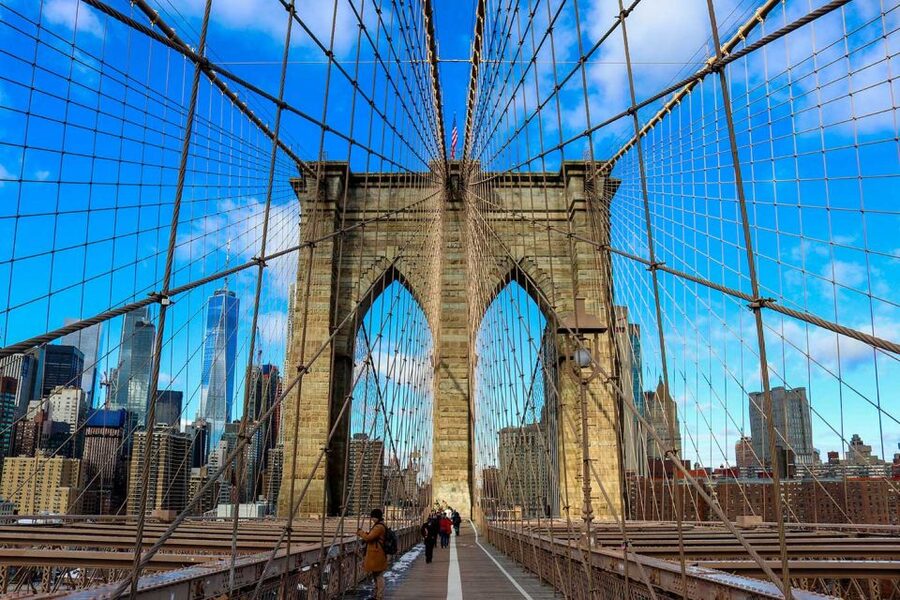
Brooklyn Bridge Park provides the waterfront pause in the middle of the route. This public park transformed former working piers into open space with lawns, views, and places to look back at Lower Manhattan across the East River.
The view is the obvious draw, yet the park also helps you understand Brooklyn’s relationship with the water. From here, the bridge, skyline, river, and old industrial edge of DUMBO come together in one scene.
One of the most unusual sights is the fully restored 1922 carousel. The beautifully preserved ride adds a touch of old-fashioned fun to a tour otherwise focused on engineering, war, politics, and architecture. It is a useful reminder that Brooklyn’s public life has always included entertainment as well as work.
The carousel can be a particularly nice moment for families with older children. Children under six are not considered suitable for this tour, and the route is not designed as a child-focused activity, but the carousel gives younger members of an older family group something visual and memorable to enjoy.
This is also a good place to pace yourself. The tour lasts three hours, and the route combines bridge walking with neighborhood streets and waterfront paths. Use any natural pause to drink water and adjust your clothing.
More Brooklyn days out:
- NYC Bus Tour of Brooklyn, Bronx, Queens: Art, Food & Sports
★ 5.0 · 3,805 reviews - NYC Highlights Tour: Bronx, Brooklyn, Harlem, Queens & Coney
★ 4.5 · 2,846 reviews - NYC: Contrasts Tour of Harlem, The Bronx, Queens & Brooklyn
★ 4.5 · 2,167 reviews - NYC: Brooklyn Nets NBA Game Ticket at Barclays Center
★ 4.7 · 2,033 reviews
A chocolate stop at Jacques Torres
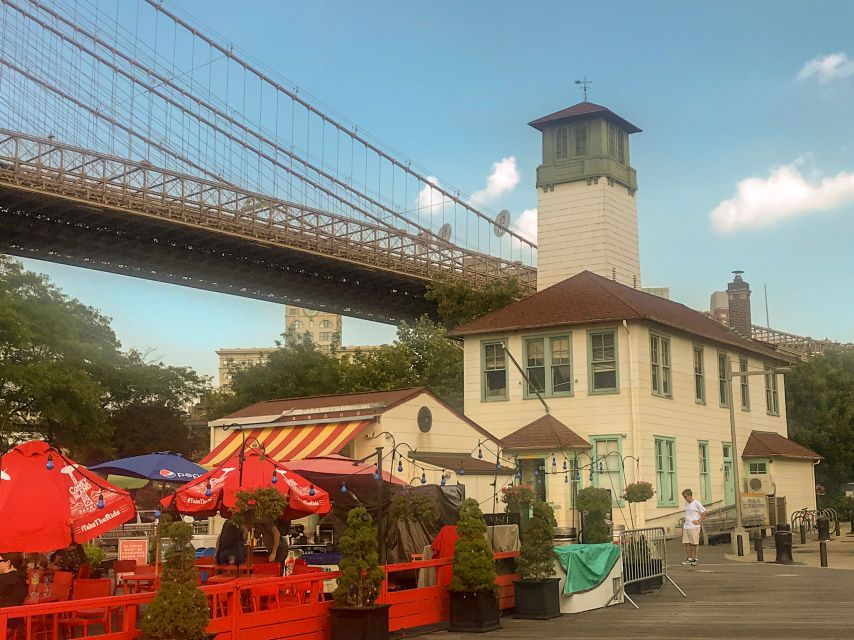
The visit to Jacques Torres Chocolate adds a welcome food element to the history and architecture. Jacques Torres is a well-known New York chocolatier, and the shop has also appeared on Netflix’s Nailed It!.
Food stops can sometimes feel tacked onto a sightseeing route. Here, it gives you a short change of rhythm and a taste of the modern DUMBO scene. You are not booking a food tour, and food and drinks are not included in the $47 price, so plan to pay separately if you want to buy something.
That distinction is worth noting. The chocolate shop is an opportunity, not a full tasting package. If you are watching your budget, you can enjoy the stop without treating it as a required purchase. If you like pairing local history with a small edible souvenir, it is an easy addition.
For me, this is one of the tour’s more sensible contrasts. The bridge and Brooklyn Heights carry serious stories, while Jacques Torres shows the neighborhood’s current appeal. You get a clearer picture of DUMBO when both sides appear in the same walk.
Brooklyn Heights and the Promenade
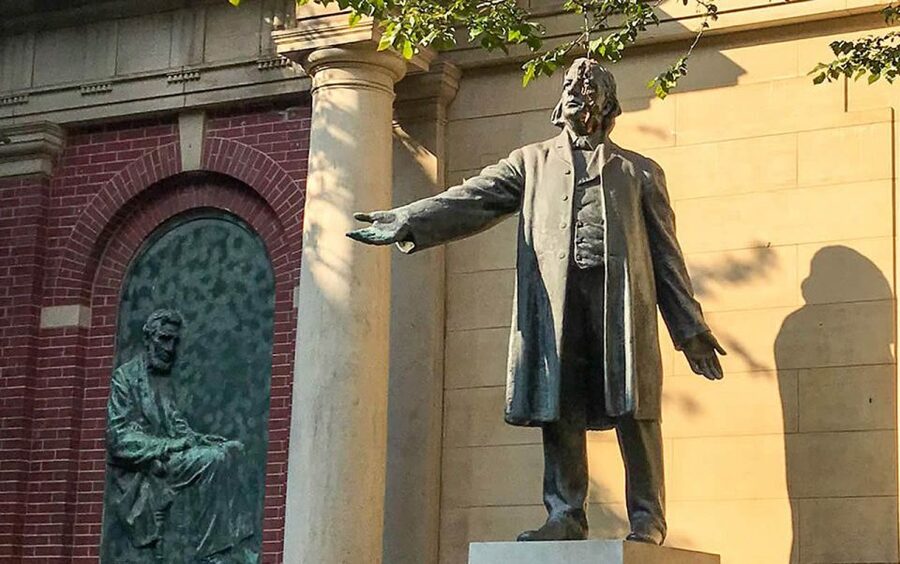
Brooklyn Heights has a different feel from DUMBO. The route takes you through tree-lined streets and past elegant townhouses dating from the 1800s. The neighborhood feels residential and composed, with architecture that reflects Brooklyn’s earlier prosperity.
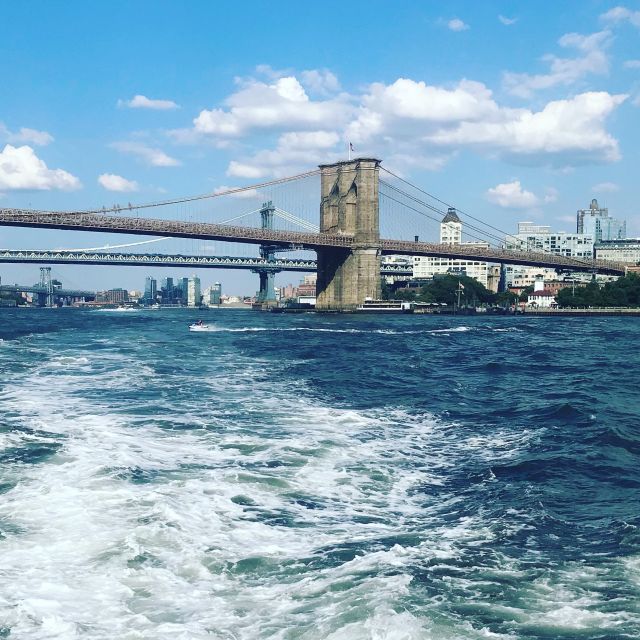
The Brooklyn Heights Promenade is the scenic high point. From its edge, you get broad views toward Manhattan, the East River, and the Brooklyn Bridge. It is one of the best places on the route to stop, look around, and understand the geography you have just crossed.
I like that the tour does not treat Brooklyn Heights as just another photo stop. Its streets help explain how the borough grew as a place where merchants, writers, ministers, and civic leaders lived. The buildings give the stories a physical setting.
The neighborhood also supplies some of the tour’s literary and film connections. You see Truman Capote’s former residence, associated with his writing of Breakfast at Tiffany’s, and filming locations connected with Moonstruck. Those details are small, but they make the walk feel tied to real people and familiar cultural touchstones.
Do not expect every stop to look like a formal museum exhibit. The appeal is in seeing the actual streets and buildings within their everyday setting. The reward comes from paying attention to the guide rather than waiting for a grand interior visit.
Revolutionary War stories and Civil War-era Brooklyn
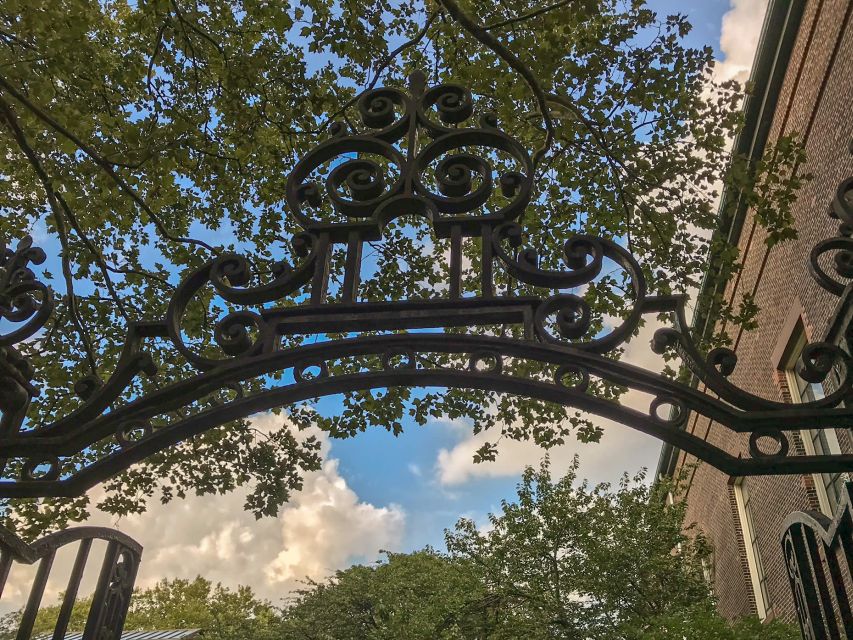
The tour reaches beyond architecture to Brooklyn’s role in American history. You hear about the Revolutionary War and the people who shaped the borough during periods of conflict and change.
The Civil War section centers on Plymouth Church and the abolitionist minister Henry Ward Beecher. The church became an important place for anti-slavery preaching before and during the Civil War, and its inclusion gives the tour a useful moral and political dimension.
This is one reason Bruce’s history training is relevant. Brooklyn is easy to experience as a collection of attractive streets and waterfront views. The political stories show that the borough also played a role in national arguments about freedom, slavery, religion, and public action.
The focus on revolutionary men and women helps keep the past from becoming a list of dates. You learn how individuals, institutions, and neighborhoods influenced the country around them. If you enjoy American history, this part may be the strongest reason to choose the tour.
The subject matter is not always light. Families with children aged 10 and 16 have enjoyed the storytelling, but the tour is still an adult-oriented history walk rather than a children’s program. Older children who like stories may follow it well, while very young children are not permitted.
Bruce’s storytelling style and what it adds
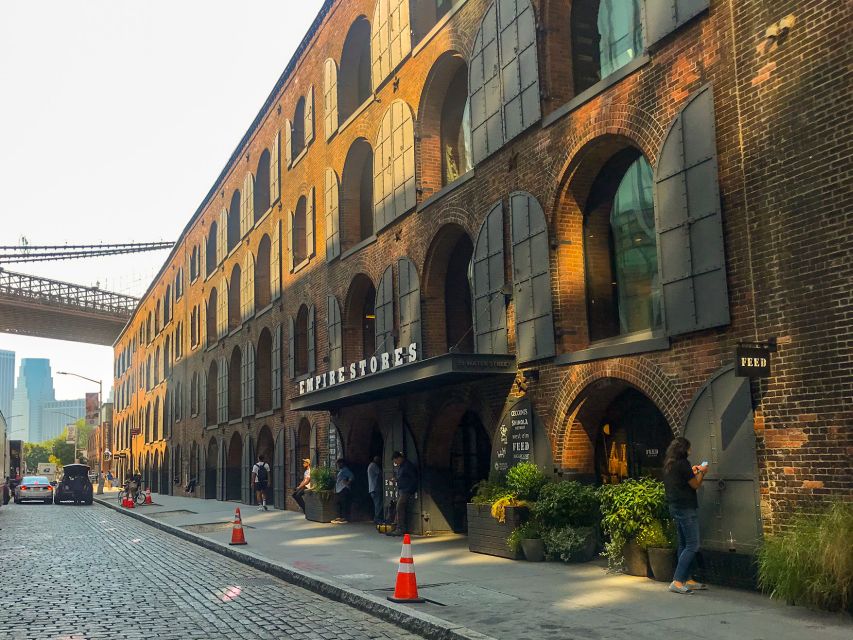
A walking tour succeeds or fails on the guide. Here, Bruce is the central feature, not an extra. His long experience, clear voice, and academic training shape a route that depends on spoken explanation.
You should expect detailed stories about buildings, monuments, bridge construction, and the people connected with them. The guide’s job is not only to tell you what you are looking at, but to connect one place with the next.
That approach is useful in Brooklyn because the route covers several different periods. The bridge represents 19th century engineering, DUMBO reflects industrial and technological change, Brooklyn Heights preserves older domestic architecture, and Plymouth Church connects the neighborhood to national conflict.
The strongest praise for Bruce centers on his storytelling and his ability to make history interesting to different ages. That is especially important on a three-hour walk. You are not simply ticking off Brooklyn Bridge, DUMBO, the park, and the promenade. You are listening for the links between them.
The tradeoff is that a history-heavy guide may provide more detail than someone seeking a quick orientation. If you want only a few photographs and a short walk, this may feel long. If you want context, anecdotes, and a fuller sense of Brooklyn, the length is useful.
Is $47 a fair price for three hours?
At $47 per person, the tour sits at a reasonable price for a three-hour guided walk in New York. You are paying for a licensed guide with substantial experience and formal training, plus a route that covers several major Brooklyn sights rather than a single monument.
The value is strongest if you would otherwise visit the Brooklyn Bridge, DUMBO, Brooklyn Bridge Park, and Brooklyn Heights without understanding how they connect. A self-guided walk can provide the views, but it takes time to research the bridge’s construction, the church’s abolitionist role, Capote’s home, and the neighborhood’s film links.
Food and drinks are not included, so keep a little extra money available for Jacques Torres Chocolate or anything else you choose to buy. That is a minor cost, but it is better to know in advance.
The tour also offers free cancellation up to 24 hours before the start and a reserve-now, pay-later option. Those policies make it easier to fit the walk into a changing New York schedule, particularly when the weather forecast is uncertain.
Who should book this Brooklyn walk?
You should consider this tour if you want:
- A guided crossing of the Brooklyn Bridge rather than a quick photo visit
- American history mixed with architecture, film, food, and city views
- A detailed explanation of DUMBO and Brooklyn Heights
- A guide who can speak at length about New York and national history
- A three-hour outdoor route with several major sights in one outing
It is a good match for couples, solo visitors, families with children over six, and New Yorkers who want more context for familiar places. The route is especially useful early in a New York visit because it introduces Brooklyn’s geography and gives you several areas to revisit later.
It is less suitable if you have mobility limitations, heart problems, or a low level of fitness. The outing is all outdoors and takes place in rain, snow, or sunshine, so anyone sensitive to weather should choose clothing carefully or keep a flexible booking.
You should also think about your attention span. The tour leans heavily on stories and explanation. If you prefer a quick, independent stroll, you may find the three-hour format more than you need.
Final verdict: a smart choice for history and views
I would choose this tour if I wanted more than the standard Brooklyn Bridge photograph. Its strongest qualities are the combination of excellent skyline views, a varied route, and Bruce’s story-led approach to Brooklyn’s past.
The walk gives you the bridge, DUMBO, Brooklyn Bridge Park, the 1922 carousel, Brooklyn Heights, the Promenade, Plymouth Church, Jacques Torres Chocolate, and several literary and film connections. That is a lot for $47, provided you are comfortable walking outdoors for three hours.
Book it if you want Brooklyn to make sense as a place shaped by engineering, industry, religion, politics, art, and ordinary neighborhood life. Skip it if you need a short, sheltered activity or an accessible route. For an active visitor who likes history with a strong view at the end, it is a well-balanced introduction to one of New York’s most rewarding boroughs.
FAQ
How long is the Brooklyn Bridge and Brooklyn Heights tour?
The tour lasts three hours.
Where does the tour meet?
Meet on the steps of 52 Chambers Street, also known as the Tweed Courthouse, in Manhattan.
Does the tour include a walk across the Brooklyn Bridge?
Yes. The tour begins in Manhattan with a walk across the Brooklyn Bridge.
Which places are included?
The route includes the Brooklyn Bridge, DUMBO, Brooklyn Bridge Park, Brooklyn Heights, and the Brooklyn Heights Promenade. It also includes the 1922 carousel, Jacques Torres Chocolate, Plymouth Church, Truman Capote’s former residence, and film locations connected with Moonstruck.
Who leads the tour?
Bruce leads the tour. He is a licensed New York City tour guide and historian with 25 years of experience and a master’s degree in American History.
Is food included in the price?
No. Food and drinks are not included. You can choose to purchase chocolate at Jacques Torres Chocolate during the tour.
Is the tour suitable for children and people with mobility concerns?
Children under six are not permitted. The tour is also not suitable for people with mobility impairments, heart problems, or a low level of fitness. It takes place entirely outdoors in rain, snow, and sunshine.
Just listed around New York City
- New York Christmas Holiday Lights Walking Tour★ 5.0 · 8 reviews
- Private Brooklyn Walking Tour: Brooklyn Bridge DUMBO and Brooklyn Heights★ 5.0 · 8 reviews
- New York City Night Views – A panoramic hop-on-hop-off tour★ 4.6 · 8 reviews
- New York City’s Financial District: A Self-Guided Audio Tour★ 4.5 · 8 reviews
- NYC Pub Crawl Experience★ 4.8 · 8 reviews
- Statue of Liberty and Ellis Island Tour★ 4.8 · 8 reviews
- Philadelphia and Washington DC 2-Day Trip from New York★ 3.6 · 8 reviews
- Private NYC Central Park 4 Hour Adventure Tour★ 5.0 · 8 reviews
Brooklyn Bridge & DUMBO Tours, compared.
Brooklyn Bridge & DUMBO Neighborhood Tour – from Manhattan to Brooklyn
Read our review →
Brooklyn Bridge & DUMBO Food Tour: Local Eats & Landmarks
Read our review →
Walking tour in Manhattan Brooklyn Bridge and Waterfront
Read our review →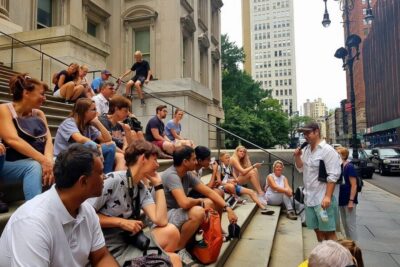
Brooklyn Bridge and Dumbo District Walking Tour
Read our review →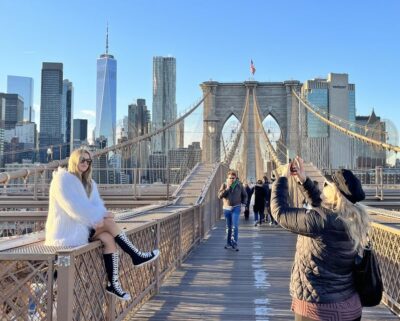
Brooklyn Bridge and Waterfront 2-hour Guided Bike Tour
Read our review →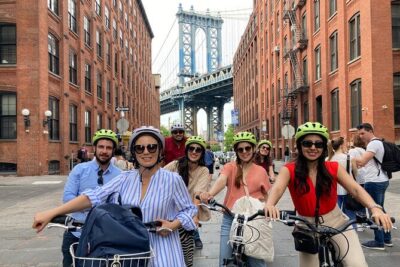
Browse the lists this tour appears in