
Reviewed · HARLEM & GOSPEL TOURS
Central Harlem African-American Culture Walking Tour
Harlem’s story is written on its streets, from the Apollo Theater and Hotel Theresa to Strivers Row and the Harlem Hospital murals. This two-hour walk connects those places with the Harlem Renaissance, civil rights, jazz, gospel, architecture, and the neighborhood’s life today. It is much more than a quick look at 125th Street.
I like the small 15-person limit, which makes it easier to hear the guide and ask questions. I also like the local perspective: guides such as George, William, Keith, and Dr. Keith Taylor have been praised for bringing personal stories and strong knowledge of Harlem to the walk. The main caution is timing. The route covers a lot, and one tour ran well beyond two hours, so do not schedule a tight connection afterward.
In This Review
- Key points to know before you book
- Why this walk gives Harlem useful context
- Starting near 145th Street
- Strivers Row and Harlem’s residential architecture
- Harlem School of the Arts and cultural institutions
- Little Senegal and the 125th Street corridor
- Speaker’s Corner, Hotel Theresa, and the Apollo Theater
- How the guides shape the experience
- Timing, pace, and the $30 value
- Who should book this Harlem walk
- Should you book it?
- FAQ
- Where does the Central Harlem African-American Culture Walking Tour start?
- Where does the tour end?
- How long does the walking tour last?
- What places are included?
- Does the tour include a church visit or live music?
- How large is the group?
- What language is the tour offered in?
- What should I wear?
- Is the tour suitable for children?
- Can I cancel for a refund?
- What happens if bad weather cancels the tour?
Key points to know before you book
- The route runs downhill through Harlem from about 145th Street to 125th Street, covering a broad slice of the historic district.
- The Apollo Theater is the finishing point, but the published starting address is 700 St Nicholas Avenue, so check your confirmation carefully.
- You see history in place, including Strivers Row, the Schomburg Center, Harlem Hospital murals, Hotel Theresa, Speaker’s Corner, and Little Senegal.
- The tour is about neighborhood history, not a music performance or church visit.
- A Harlem resident leads the walk, with guides including George, William, Keith, Jo, and Dr. Keith Taylor.
- At $30, the tour is good value for an introduction, especially if you want context before exploring Harlem on your own.
Why this walk gives Harlem useful context
Harlem can be easy to misread if you only visit the Apollo Theater, take a photograph, and leave. This walk gives you a wider frame. You move through several parts of the neighborhood while learning how migration, music, politics, education, housing, and local business shaped the streets around you.
The tour’s focus is African-American culture, but it also addresses Harlem’s multiple ethnic communities and changing population. That wider view matters. Harlem is not one single story frozen in the 1920s. The guide discusses the Harlem Renaissance, the civil rights era, and more recent changes, helping you connect famous names and events with actual blocks and buildings.
I especially like the route because it combines major landmarks with ordinary streets. The Apollo Theater is important, but so are the homes, shops, schools, murals, and cultural centers along the way. You get a sense of Harlem as a place where people live, work, worship, study, and build businesses, not simply as a museum district.
The experience has a 4.6 rating from 97 reviews, with 92 percent of people recommending it. That is a strong record, though not a guarantee of a perfect outing. The quality depends heavily on the guide, and one sharply negative account described a quiet guide who offered too little explanation. Most of the positive feedback centers on guides who are lively, prepared, and willing to answer questions.
More Harlem visits and gospel mornings:
- NYC Highlights Tour: Bronx, Brooklyn, Harlem, Queens & Coney
★ 4.5 · 2,846 reviews - NYC: Contrasts Tour of Harlem, The Bronx, Queens & Brooklyn
★ 4.5 · 2,167 reviews - NYC: Harlem Hallelujah! Gospel Wednesday Concert
★ 4.7 · 1,638 reviews
Starting near 145th Street
The published meeting point is 700 St Nicholas Avenue, New York, NY 10031, with a 10:00 a.m. start. The route then works toward 125th Street and finishes at the Apollo Theater.
The material also describes the Apollo as an easy meeting landmark, so there is a small point to clarify before setting out: the stated starting address and the Apollo end point are different. Use the address and instructions in your booking confirmation rather than assuming you should meet at the theater.
Starting farther north lets you see more than the best-known shopping corridor. You begin among streets associated with Hamilton Heights and Sugar Hill, then work south through the historic district. One particularly useful part of this section is the attention given to architecture. Several people who enjoyed the tour singled out Harlem’s grand homes and streets as a surprise, especially those who had previously associated New York’s impressive buildings mainly with Midtown and Fifth Avenue.
You should expect steady walking rather than a series of long stops. The route covers a substantial distance, and the guide may pause on sidewalks or outside buildings while explaining what happened there. Comfortable shoes are essential. The tour notes that it can be moderately difficult for people with physical limitations and recommends a moderate level of fitness.
Strivers Row and Harlem’s residential architecture
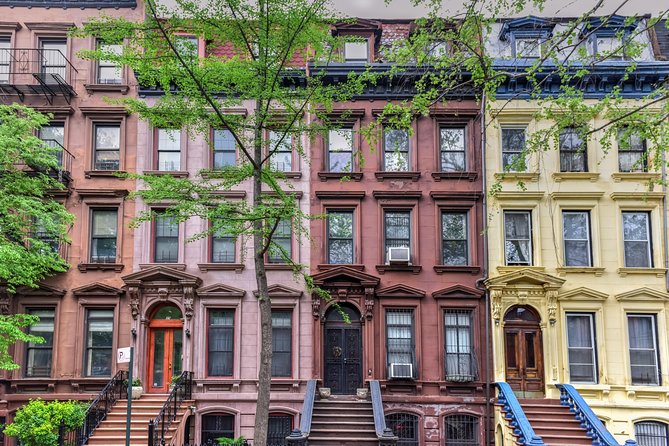
Strivers Row is one of the route’s best stops for anyone who likes city buildings. The handsome row houses help show how Harlem developed as a residential neighborhood and how architecture can reveal social ambition, housing patterns, and changing fortunes.
This is also where a local guide can add more than a plaque or a quick internet search. Guides such as Keith and Dr. Taylor have been praised for connecting the buildings to Harlem’s people and growth. Dr. Taylor, described as Harlem-born and raised, has been especially appreciated for linking family and local experience to the wider story.
Do not expect an interior visit or a formal architectural tour. The value comes from seeing the streets with an explanation of why they matter. If you enjoy design, urban planning, or old neighborhoods, this portion may be one of the morning’s highlights.
The broader Harlem architecture story continues near the City College of New York and the Hamilton Heights and Sugar Hill areas. One particularly enthusiastic account called the Gothic campus of City College a must-see, though the exact amount of time spent there can vary with the guide and pace. The route’s appeal is that it puts African-American cultural history beside the physical setting that supported it.
Harlem School of the Arts and cultural institutions
The Harlem School of the Arts is among the places included along the route. Its presence fits the tour’s larger theme: Harlem’s cultural identity has been built not only by famous performers but also through education, arts training, libraries, archives, and community institutions.
The Schomburg Center for Research in Black Culture is another major stop. Even from outside, it gives the walk a strong link to the preservation and study of African-American life, literature, art, and historical records. Several people have specifically valued this part of the route because it turns a general lesson about Harlem into something tied to a real institution.
The tour does not promise an extended indoor visit. Think of the Schomburg Center as a place the guide interprets within the walking route, not as a separate museum admission. If you want to spend serious time inside, allow another visit later.
Harlem Hospital murals add a visual element. The murals help show how public art can tell community stories in a neighborhood where culture appears on walls as well as in theaters, schools, and archives. This is a good reminder to look above street level and beyond famous storefronts.
More New York City walking tours:
- SoHo, Little Italy, and Chinatown Walking Tour in New York
★ 5.0 · 3,153 reviews - Secrets of Grand Central Station Walking Tour New York City
★ 5.0 · 1,796 reviews - Greenwich Village Walking and Food Tasting Tour
★ 5.0 · 1,572 reviews - Artistic, Alternative Greenwich Village Walking Tour
★ 5.0 · 971 reviews
Little Senegal and the 125th Street corridor
The route includes the African Market in Little Senegal and the shopping corridor along 125th Street. These stops broaden the tour beyond the Harlem of jazz clubs and Renaissance writers. You see a neighborhood shaped by more than one generation and more than one national background.
The African Market is valuable because it gives you a chance to notice commerce and daily life alongside the historical narration. The guide can explain how Harlem has continued to change while remaining a major center of African-American life. You may want to return after the tour with time to browse, though the supplied details do not promise shopping time or specific purchases.
125th Street is the practical, public face of Central Harlem. It is a busy corridor with shops and transport links, and it gives you a clear sense of how the area functions today. The guide discusses current developments as well as older events, so the walk does not treat Harlem as a relic of the past.
This part can feel less intimate than the residential streets. That is not a flaw so much as a change of setting. The tour moves from carefully preserved homes and cultural institutions into a commercial avenue where the modern neighborhood is more visible.
Speaker’s Corner, Hotel Theresa, and the Apollo Theater
Speaker’s Corner and Hotel Theresa help explain Harlem’s political and public life. These sites connect the neighborhood to speeches, organizing, prominent visitors, and the long struggle for civil rights. The exact detail you receive will depend on your guide, but the route is designed to place these subjects within the streets where they unfolded.
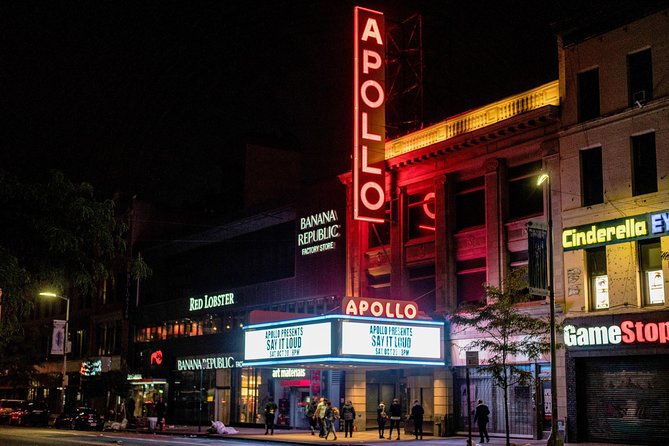
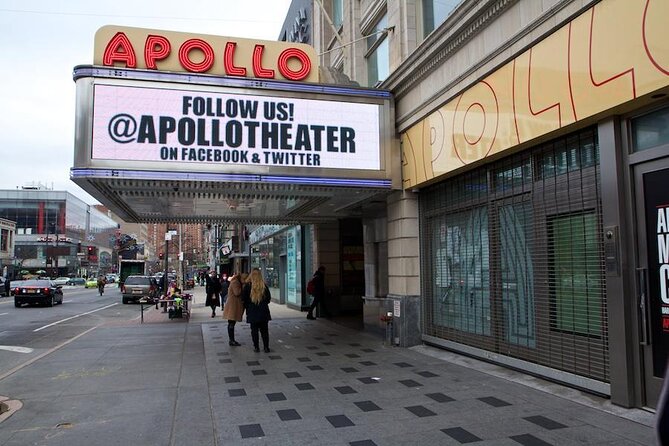
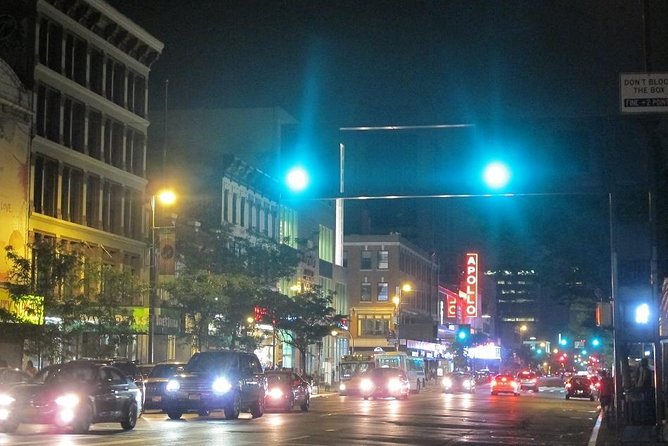
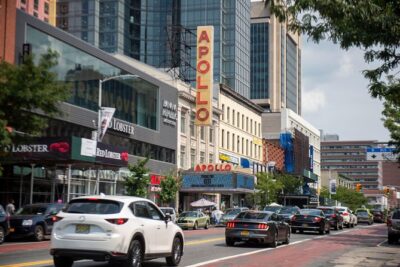
The Apollo Theater is the natural climax. Its fame comes from its role in African-American music and entertainment, and it gives the tour a direct link to jazz, gospel, and other musical forms. You learn about the theater from outside as part of the walk. This is not a concert, backstage visit, or ticketed performance.
That distinction is important. If you want live music or a gospel service, this is not the right product by itself. The tour specifically focuses on neighborhood history and does not include a church visit or music. If you already have Apollo tickets, the walk can provide useful context before or after your show, but make sure the timing works.
The Apollo is listed as the endpoint at 233 West 125th Street, on the third floor, while the walking route itself finishes in that area. Check the final instructions so you know exactly where the guide will leave you.
How the guides shape the experience
The strongest feature is the guide. George has been described as engaging, entertaining, and well paced. William has been praised for passion and for caring about Harlem and its people. Keith, including Dr. Keith Taylor, has received repeated praise for his local knowledge, humor, warmth, and ability to cover a large amount of material.
Jo has also been singled out for an informative walk that supports a local community organization. The range of guide names suggests that the experience is not built around one fixed presenter, so your morning may differ from someone else’s.
A strong guide matters here because Harlem’s history cannot be reduced to dates and landmark names. You want someone who can explain how the Harlem Renaissance connects to migration, how music relates to community life, and why a row of buildings or a public mural deserves attention.
The best guides also make room for questions. Dr. Taylor, for example, has been praised for humor and for responding well to questions. Groups have included solo visitors, families, couples, friends, and students and professors from a European conservatory. That mix can make the walk more social, though small children may not have the attention span for a history-heavy two hours.
Timing, pace, and the $30 value
The advertised duration is about two hours, and the price is $30 per person. For New York, that is a reasonable price for a licensed guide and a small group covering several important sites. You are paying for interpretation and local perspective, not entry tickets, food, transport, or a performance.
The value is strongest if you are new to Harlem. In two hours, you get a framework that can help you decide where to return: the Schomburg Center for more research, the Apollo for a show, the shopping corridor for browsing, or the residential streets for a slower architectural walk.
The main practical concern is pace. The route includes a lot of material between 145th and 125th Street. One tour began late while waiting for absent participants, then continued past the planned finish because the guide had more ground to cover. A participant who had a 1:30 p.m. booking and a 30-minute subway ride afterward had to leave early and missed the civil rights section and Apollo Theater.
I would leave a generous buffer after the walk. Do not plan another fixed activity immediately afterward. The tour may finish close to two hours, but the route and storytelling can make it run longer. If your schedule is tight, tell the guide at the start and confirm the expected finish time.
The small group limit of 15 helps offset the walking route’s size. You can usually hear better than in a large coach group, and questions are easier to handle. The experience is offered in English and uses a mobile ticket.
Who should book this Harlem walk
I would recommend it to anyone who wants an introduction to Harlem before exploring on their own. It suits solo visitors, couples, families with older children, and students interested in African-American history, urban culture, architecture, or music.
It is especially useful for people who want local framing rather than a list of attractions. The strongest guides bring humor, personal stories, and a clear affection for Harlem. That can make difficult subjects easier to understand without turning the neighborhood into a simple history lesson.
You should think twice if you want a music-centered experience, a church service, or a museum tour with lots of indoor time. You should also reconsider if you dislike walking several miles at a steady pace or need a firm end time.
The tour requires suitable clothing and footwear, and it depends on good weather. If poor weather cancels the walk, you are offered another date or a full refund. A minimum group size is also required. You can cancel for a full refund up to 24 hours before the start, but changes or cancellations inside that window are not accepted.
Should you book it?
Book this tour if you want Harlem’s famous names and places explained in their neighborhood setting. At $30, the small group and local guide make it a sound first step, particularly if you have never spent time north of Central Park.
Go in with comfortable shoes, an open schedule, and realistic expectations. You will not attend a concert or enter every landmark, and the finish may run late. But with a strong guide such as George, William, Keith, Jo, or Dr. Taylor, you can leave with a much clearer sense of how Harlem’s architecture, culture, politics, and daily life fit together.
FAQ
Where does the Central Harlem African-American Culture Walking Tour start?
The published starting point is 700 St Nicholas Avenue, New York, NY 10031, with a 10:00 a.m. start. Check your booking confirmation because the Apollo Theater is also used as a key meeting and endpoint landmark.
Where does the tour end?
The listed endpoint is the Apollo Theater at 233 West 125th Street, third floor, New York, NY 10027.
How long does the walking tour last?
The advertised duration is approximately two hours. You should allow extra time because one reported outing ran considerably longer than planned.
What places are included?
The route can include the Apollo Theater, Speaker’s Corner, Hotel Theresa, the African Market in Little Senegal, Strivers Row, Harlem School of the Arts, Harlem Hospital murals, the Schomburg Center, Astor Place, and the 125th Street shopping corridor.
Does the tour include a church visit or live music?
No. The experience focuses on neighborhood history and does not include a church visit or music.
How large is the group?
The tour has a maximum of 15 participants.
What language is the tour offered in?
The tour is offered in English.
What should I wear?
Wear comfortable clothing and walking shoes. The activity covers a substantial route and can be moderately difficult for people with physical limitations.
Is the tour suitable for children?
The supplied information does not set a minimum age. The material indicates that small children may struggle to maintain interest during the history-focused walk.
Can I cancel for a refund?
Yes. You can cancel at least 24 hours before the local start time for a full refund. Cancellations or changes made less than 24 hours before the start are not accepted.
What happens if bad weather cancels the tour?
You will be offered a different date or a full refund if poor weather causes the cancellation. A different date, another experience, or a full refund is also offered if the minimum number of participants is not reached.
Just listed around New York City
- NYC: Little Shop of Horrors Off-Broadway Ticket5 reviews
- Private NYC Airport Transfer: LGA to Manhattan – Up to 5★ 3.6 · 5 reviews
- New York City Tour in German★ 4.5 · 5 reviews
- New York: Hamilton and Washington Revolutionary Walking Tour★ 5.0 · 5 reviews
- NYC Freedom Tower Private Photo or Video Experience★ 4.0 · 6 reviews
- New York Afternoon Fall Foliage Cruise with Lunch★ 5.0 · 6 reviews
- Brooklyn Walking Tours by Locals: Private & 100% Personalized★ 4.0 · 6 reviews
- Southold Bay Oyster Farm Tour★ 5.0 · 6 reviews
Harlem & Gospel Tours, compared.

NYC Highlights Tour: Bronx, Brooklyn, Harlem, Queens & Coney
Read our review →
Contrasts Tour of Harlem, The Bronx, Queens & Brooklyn
Read our review →


Browse the lists this tour appears in