
Reviewed · CENTRAL PARK TOURS
Central Park Guided Walking Tour
Central Park makes a poor first impression if you treat it like a rectangle to cross. Its paths twist, its views change quickly, and much of its design only makes sense when someone points it out. This two-hour walking tour brings the park’s history, wildlife, architecture, and movie connections into focus.
I like the small maximum of 12 people, which makes it easier to hear Chris and ask questions. I also like that the route is on foot, giving you access to paths and areas cyclists cannot reach. The main drawback is simple: two hours can only cover part of a park this large, and some groups have wanted a northern-section tour afterward.
In This Review
- Key points about the Central Park walk
- Why Central Park makes a better walk than a quick stop
- Starting at 7th Avenue and 59th Street
- What the guide adds to the scenery
- The southern park route and its changing views
- The Ramble, wildlife, and designed nature
- History, buildings, films, and city culture
- A closer look at the walking demands
- Is $44.20 a fair price?
- Who will enjoy this tour most
- Planning your day around the two-hour walk
- Should you book the Central Park walking tour?
- FAQ
- How long does the Central Park walking tour last?
- Where does the tour begin and end?
- Who leads the tour?
- How large is the group?
- What should I bring or wear?
- What happens if I cancel or the weather is poor?
Key points about the Central Park walk
- Chris is the main guide praised for clear, lively storytelling, local insight, and an easy pace.
- The small-group limit of 12 allows more personal interaction than a large sightseeing group.
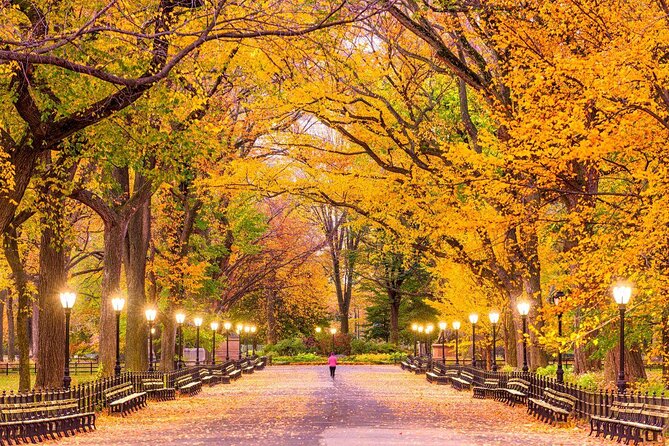
- The walk covers design, history, plants, animals, architecture, and movie locations, not just famous photo stops.
- The Ramble offers a quieter change of mood, with a chance to notice Central Park’s birdlife and carefully planned natural setting.
- The tour begins and ends at 7th Avenue and 59th Street, near Central Park South.
- The $44.20 price is strongest for first-time visitors who want context and orientation rather than a quick stroll alone.
Why Central Park makes a better walk than a quick stop
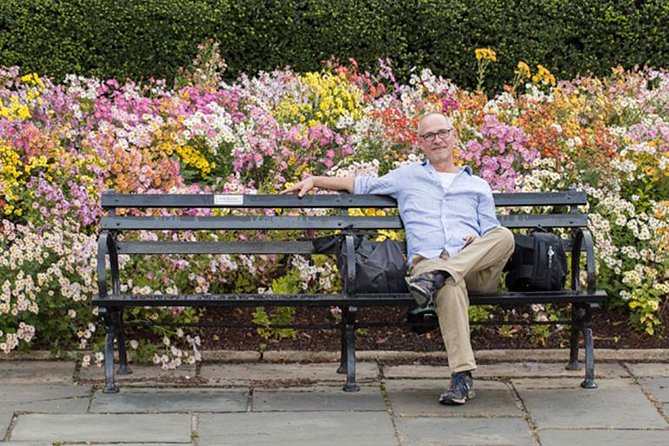
Central Park is not simply a patch of green between tall buildings. It was shaped as a designed public space, with roads, paths, bridges, water, trees, rock, and open views arranged to create changing scenes.
That is the central reason to take a guided walk. Alone, you can enjoy the park’s beauty, but you may miss why a path bends, why a view opens at a certain point, or how the park’s natural-looking corners were planned. The tour explains the choices behind what you see.
The walk also connects the park to the city around it. You can expect attention to surrounding buildings, New York history, local culture, sculptures, architecture, and the park’s role in television and film.
I especially like this broad mix. You do not need to be a garden expert or a serious architecture fan. The guide can move from a landmark to a plant, from a movie scene to a skyline view, without making the tour feel like a lecture.
More Central Park tours:
- Central Park Pedicab Guided Tours
★ 5.0 · 7,108 reviews - Private Central Park Pedicab Tour
★ 5.0 · 6,981 reviews - NYC: Central Park Bike Rentals
★ 4.2 · 2,528 reviews
Starting at 7th Avenue and 59th Street
The meeting point is at NYC Central Park Horse Carriage Rides, near 7th Avenue and 59th Street in Central Park South. This is a useful starting area because it places you at the park’s busy southern edge, close to major Midtown sights and public transportation.
Give yourself time to find the exact meeting point. Central Park South has plenty of activity, traffic, pedestrians, carriage rides, and several nearby entrances. Your confirmation will provide the booking details, and the operator may communicate with you before the walk.
The activity returns to the same meeting point. That makes planning easier if you want to visit another Midtown sight afterward, though the walking route itself may leave you with a different sense of where you are inside the park.
The tour is offered in English and uses a mobile ticket. There is no need to collect a paper voucher, but you should have your phone ready and charged.
What the guide adds to the scenery
The strongest part of this experience is the guide’s role. Chris is repeatedly praised for his clear voice, friendly manner, humor, and ability to answer questions. Those traits matter in Central Park, where a guide can easily lose a group among paths and distractions.
Chris also brings a local point of view. The tour is not limited to dates and names. It includes observations about New York life, nearby buildings, the park’s upkeep, and the way the city uses this public space.
I like the balance between prepared information and conversation. You can ask about the park’s design, wildlife, film connections, or the buildings around it. The small group makes that exchange more practical than it would be on a large coach-style tour.
One especially useful detail is audibility. A guide with a clear voice is important in a city park where traffic, crowds, cyclists, and street noise can compete with the narration. Chris is repeatedly noted as easy to hear and understand.
The southern park route and its changing views
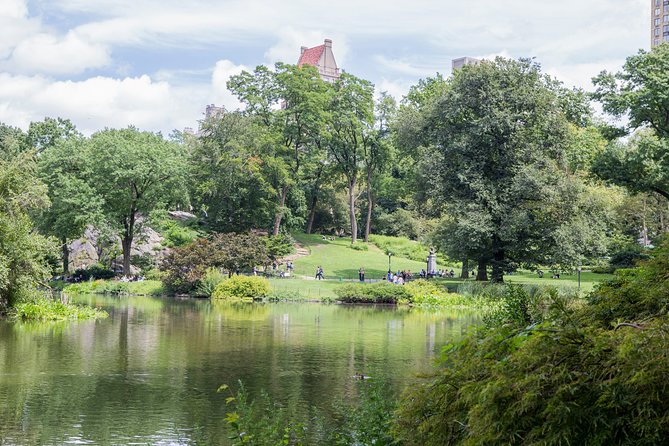
The exact path can vary, but the tour focuses on the southern portion and nearby highlights rather than trying to cover every corner of Central Park. That is a sensible choice for a two-hour activity.
You can expect a mix of main sights and quieter paths. The guide points out prominent locations, sculptures, structures, views toward the city, and less obvious places that are easy to pass without understanding their purpose.
Several people describe the pace as moderate and easy, even though the walk can add up to many steps. One account estimates more than 10,000 steps, while another describes the route as roughly five miles. Those figures may reflect the specific route, group, or pace, so I would not treat them as a fixed distance.
The practical lesson is clear: this is not a short photo stop. Wear comfortable walking shoes. Bring water, especially in hot weather, and dress for the season. The walk has taken place in heat and snow, and both conditions can change how comfortable two hours outdoors feels.
More New York City walking tours:
- SoHo, Little Italy, and Chinatown Walking Tour in New York
★ 5.0 · 3,153 reviews - Secrets of Grand Central Station Walking Tour New York City
★ 5.0 · 1,796 reviews - Greenwich Village Walking and Food Tasting Tour
★ 5.0 · 1,572 reviews - Artistic, Alternative Greenwich Village Walking Tour
★ 5.0 · 971 reviews
The Ramble, wildlife, and designed nature
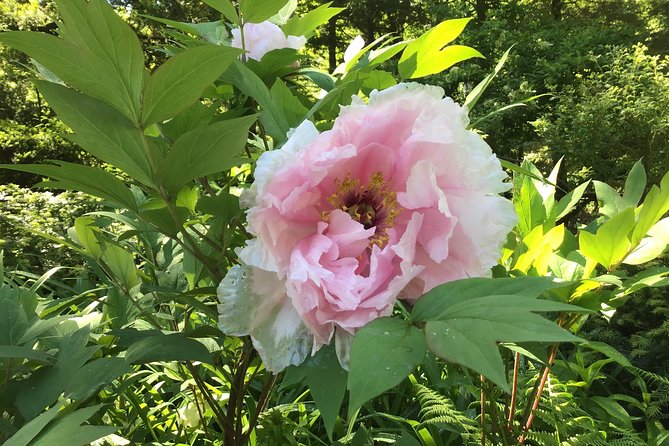
The Ramble is one of the most appealing parts of the experience. It feels more secluded and natural than the park’s open lawns and famous promenades, yet its character comes from deliberate design.
The tour explains how Frederick Law Olmsted and Calvert Vaux shaped Central Park’s scenery, including areas that appear untouched. The operator’s own explanation points out that the Ramble’s natural appearance was planned as part of the park’s design.
This is where the tour’s nature content becomes especially useful. The guide discusses plants and animals, and you might notice birdlife that would be easy to overlook on your own. A Cooper’s hawk has been spotted in the Ramble during a tour, though wildlife sightings are never guaranteed.
The Ramble also provides a welcome change from the city’s noise. You may still be close to Manhattan’s buildings, but the winding paths and trees can make the surroundings feel far removed from Midtown.
Cyclists cannot reach every part of the park’s walking paths, which gives this tour a real advantage over a bike-based overview. If you want a quick sweep of distance, a bicycle has its place. If you want to understand the park’s smaller paths and designed spaces, walking is the better fit.
History, buildings, films, and city culture
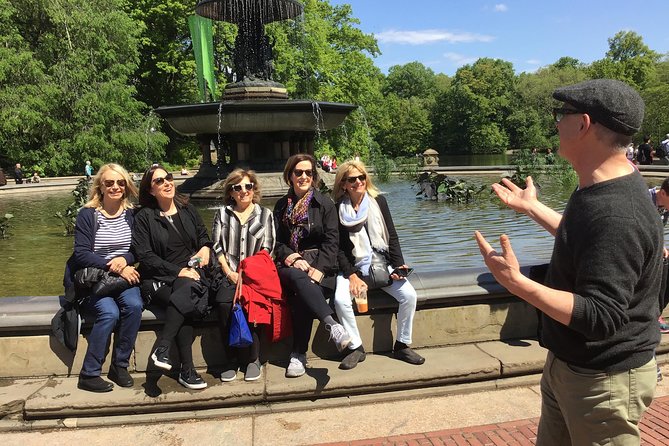
The tour does not treat Central Park as an isolated attraction. Its story is tied to the development of New York, the growth of the surrounding neighborhoods, and the changing skyline beyond the trees.
You can expect background on the park’s creation and development, along with details about architecture, geology, art, and local history. The guide also discusses buildings around the park, including older structures and newer skyscrapers.
The film and television angle adds an easy way into the subject. Central Park has been used as a setting for many screen stories, and recognizing familiar locations can make the walk more fun for families and casual visitors.
This mix also helps families. Children may not want a long lesson on urban planning, but they can follow stories about animals, movies, unusual features, and city landmarks. Adults can appreciate the larger questions about design, preservation, and public space.
The tour’s value comes from the connections. A bridge is not just a bridge. A rock outcrop is not just something to climb. A skyline view is not just a backdrop for a photograph. The guide helps you see how these pieces work together.
A closer look at the walking demands
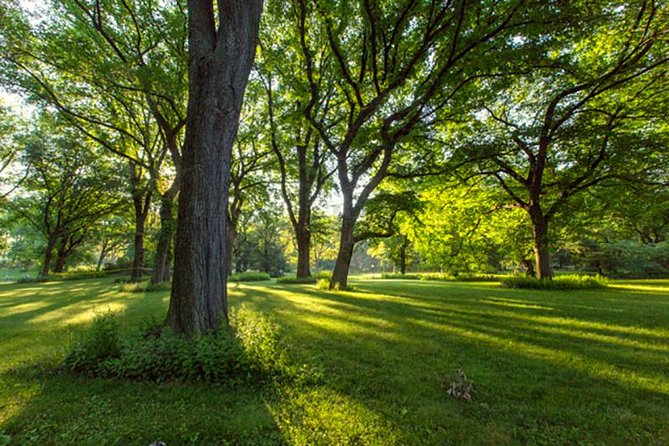
The physical level is listed as moderate. That does not mean strenuous hiking, but you should be ready to walk continuously for about two hours on park paths and city-adjacent routes.
The pace is generally described as easy, with stops for explanations and questions. Still, the route can produce a high step count, and Central Park is large enough that you should not plan on wearing uncomfortable shoes.
Weather matters. The experience requires good weather, and poor conditions can lead to a new date or a full refund. In warm weather, carry water and consider a hat. In cold weather, the park can feel more exposed than the surrounding streets.
The tour allows service animals. It is near public transportation, which helps with arrival and departure. The supplied information does not give detailed accessibility notes for every path, so anyone with specific mobility needs should confirm route conditions before booking.
Is $44.20 a fair price?

At $44.20 per person, this is not the cheapest way to enter Central Park. You can walk into the park for free and explore on your own.
The real question is what you want from your visit. If you are happy to follow a map, read signs, and accept that some details will pass unnoticed, an independent walk costs less. If you want a clear explanation of the park’s design, history, wildlife, buildings, and screen appearances, the fee is easier to justify.
A private tour would normally offer more control but at a higher total cost. This small-group format gives you some of the benefits of a personal guide without paying for a private booking.
The value is strongest early in a New York visit. The walk helps you understand the park’s layout and gives you ideas for returning on your own. It may also save time by steering you toward meaningful areas instead of leaving you to wander without a plan.
For repeat New York visitors, the value depends on your interests. A native New Yorker has been impressed by the tour’s historical details, so prior familiarity does not rule it out. But if you have already taken several Central Park tours, you may prefer a more specialized route.
Who will enjoy this tour most
I would recommend it to first-time visitors who want Central Park to make sense, not just look pretty. It suits couples, families, friends, and solo visitors who like asking questions and learning as they walk.
It is also a good choice for people who have visited the park before but have mainly seen the edges, the ice rink, the zoo, or the southern entrances. The guide can add the background that those casual visits often miss.
Families should find the mix of animals, movie locations, stories, and city views easy to enjoy. The guide’s entertaining approach helps keep the information from becoming too formal.
The tour may be less suitable if you have only a narrow window in New York or want to cover the entire park. Two hours is enough for a strong overview, not every major location. One useful way to think about it is as an introduction to the park rather than a complete survey.
Planning your day around the two-hour walk
The tour starts and ends at Central Park South, so pair it with nearby Midtown plans if that suits your schedule. You could also use it as a first look, then return independently to spend more time in the areas that caught your attention.
Allow extra time before the start to reach the meeting point. The park’s entrances can look similar, and the southern edge is active enough that a rushed arrival is avoidable trouble.
Book ahead if your dates are fixed. The experience is often reserved about 31 days in advance, suggesting that popular periods may fill before your trip.
The cancellation terms are practical but firm. You receive a full refund if you cancel at least 24 hours before the start time. Cancellations or changes inside that window are not refunded or accepted. If poor weather forces cancellation, you are offered another date or a full refund.
Should you book the Central Park walking tour?
Book it if you want a human guide to explain why Central Park looks the way it does. The strongest reasons are the small group, the walking-only access to quieter paths, and Chris’s clear, lively presentation of history, nature, architecture, and film locations.
Skip it if you prefer complete freedom, dislike guided commentary, or want to cover the entire park in one outing. You can explore independently for less money, but you will need to do the work of finding the right paths and supplying the context yourself.
For most first visits, I think the $44.20 fee is fair. Treat this as a well-paced orientation with plenty of useful detail, then return on your own for the parts the two-hour route cannot reach. The tour has earned a 4.9 rating from 774 reviews, with 99 percent recommending it, and the praise centers on the guide’s warmth, clarity, and command of the park.
FAQ
How long does the Central Park walking tour last?
The tour lasts approximately two hours. The route covers selected parts of Central Park rather than the entire park.
Where does the tour begin and end?
It begins at NYC Central Park Horse Carriage Rides near 7th Avenue and 59th Street, Central Park South. The activity ends back at the same meeting point.
Who leads the tour?
Chris is the guide specifically named in the supplied experience details. He is described as clear, friendly, entertaining, and well informed about Central Park and New York City.
How large is the group?
The tour has a maximum of 12 travelers. This small-group limit allows more personal interaction and time for questions.
What should I bring or wear?
You should wear comfortable walking shoes and bring water, especially in hot weather. The walk takes place outdoors and requires a moderate level of physical fitness.
What happens if I cancel or the weather is poor?
You receive a full refund if you cancel at least 24 hours before the start time. Cancellations and changes made less than 24 hours before the start are not refunded or accepted. If poor weather cancels the tour, you are offered another date or a full refund.
Just listed around New York City
- NYC: Little Shop of Horrors Off-Broadway Ticket5 reviews
- Private NYC Airport Transfer: LGA to Manhattan – Up to 5★ 3.6 · 5 reviews
- New York City Tour in German★ 4.5 · 5 reviews
- New York: Hamilton and Washington Revolutionary Walking Tour★ 5.0 · 5 reviews
- NYC Freedom Tower Private Photo or Video Experience★ 4.0 · 6 reviews
- New York Afternoon Fall Foliage Cruise with Lunch★ 5.0 · 6 reviews
- Brooklyn Walking Tours by Locals: Private & 100% Personalized★ 4.0 · 6 reviews
- Southold Bay Oyster Farm Tour★ 5.0 · 6 reviews
Central Park Tours, compared.

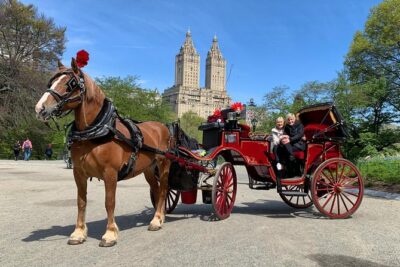
Official NYC Horse Carriage Rides in Central Park since 1979 ™
Read our review →


Carriage Ride in Central Park (VIP – PRIVATE) Since 1964™
Read our review →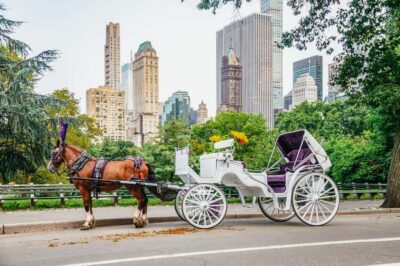
Browse the lists this tour appears in