
Reviewed · CENTRAL PARK TOURS
Central Park New York Guided Walking Tour Semi-Private 12ppl Max
Central Park is easier to appreciate when someone explains why its bridges, lawns, terraces, and winding paths were placed where they are. This 2.5-hour walk takes you from the park’s southeast corner to its west side, mixing major sights with small details such as a 1912 horse drinking fountain and the acoustics beneath Bethesda Terrace.
I like the small group of no more than 12 people, which gives you a better chance to hear the guide and ask questions. I also like the range of stops: Gapstow Bridge, Bow Bridge, Strawberry Fields, the Dakota, Turtle Pond, and Bethesda Fountain give you a strong first look at the park without requiring several days of wandering.
The main thing to consider is the pace. You will cover a lot of ground, and the route runs rain or shine. Comfortable shoes, water, and weather protection are not optional extras here, especially if you want to enjoy the walk rather than simply keep up.
In This Review
- Key points at a glance
- Why this Central Park walk works so well
- Starting beside 59th Street and the city towers
- Gapstow Bridge and the southeast corner
- Bow Bridge and the Mall
- Bethesda Terrace, Fountain, and the park’s best pause
- Turtle Pond, the Great Lawn, and Sheep Meadow
- Strawberry Fields and the Dakota
- Statues, stories, and details you could miss
- Is $51.94 a fair price?
- Practical details for a comfortable walk
- Who should book this Central Park tour?
- Final verdict: book it for context, not just directions
- FAQ
- How long does the Central Park walking tour last?
- How many people can join the tour?
- Where does the tour begin?
- Where does the tour end?
- Is Central Park Zoo admission included?
- What should I bring?
- Can I cancel for a full refund?
Key points at a glance
- A full east-to-west Central Park route: Begin near 59th Street and finish on Central Park West.
- Two famous bridges included: See Gapstow Bridge’s skyline view and Bow Bridge’s ornate cast-iron design.
- John Lennon sites: Visit Strawberry Fields and the Dakota, where Lennon lived and was killed in 1980.
- A small group capped at 12: The format feels more personal than a large sightseeing march.
- A guide-led look at park design: Hear about the park’s creation, maintenance, statues, buildings, and local stories.
- Good value at $51.94: The tour includes a professional guide and all walking stops, but not zoo admission, transport, or tips.
Why this Central Park walk works so well
Central Park can look simple on a map. In reality, its paths twist through rock outcrops, lawns, bridges, ponds, woods, terraces, and open fields. You can certainly stroll on your own, but it is easy to miss the reason a certain view opens up at one point, or why one bridge looks decorative while another barely calls attention to itself.
That is where this tour earns its price. You are not paying for entry to a single monument. You are paying for a guide who connects the park’s design with New York’s buildings, artists, musicians, residents, and daily life.
The route also gives you a good variety of Central Park. You will see grand formal spaces such as Bethesda Terrace, quiet corners around Strawberry Fields, wide recreation areas such as Sheep Meadow and the Great Lawn, and city views framed by bridges and towers.
The small-group setup matters. With 12 people or fewer, you can usually stay close enough to hear commentary and stop for questions. The experience is still a group walk, not a private tour, but it should feel less anonymous than a large coach-style outing.
Guides named in the feedback include Mark, sometimes called Manhattan Mark, and Jeff. Mark’s tour style includes park history, nearby streets and buildings, natural details, local lore, and even music. One memorable stop involved listening to a soprano busker in the Bethesda Arcade, where the acoustics can make a brief pause feel like part of the tour itself. Jeff used old photographs to show the area before, during, and after construction, giving the park’s design a clear sense of change over time.
Guide quality is important here because Central Park itself is free. A weak guide would leave you with a long walk and a list of names. A good one helps you see the park as a planned work of art and as a place New Yorkers actually use.
More Central Park tours:
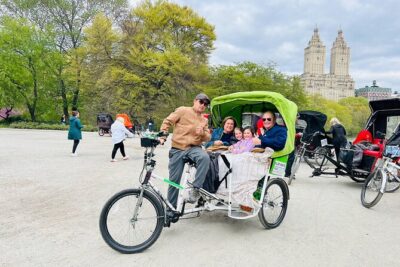
- Central Park Pedicab Guided Tours
★ 5.0 · 7,108 reviews - Private Central Park Pedicab Tour
★ 5.0 · 6,981 reviews - NYC: Central Park Bike Rentals
★ 4.2 · 2,528 reviews
Starting beside 59th Street and the city towers
The meeting information places the start near Central Park South, by the Latin America History equestrian statues at the corner of Sixth Avenue and 59th Street. Confirm the precise meeting instructions before setting out, since the park has several nearby entrances and a busy south edge.
One of the first details is an ASPCA horse drinking fountain dating from 1912. It is a small object, but it gives you a glimpse of an older New York, when horses were part of the city’s transport system. The fountain is described as the only place in the city where someone could bring a horse to drink, an amusing detail to contrast with today’s traffic and towers.
The route then moves west, where the buildings lining Central Park South become part of the view. You can spot 432 Park Avenue, one of New York’s tallest residential towers, behind One World Trade Center in the broader skyline ranking. The effect is classic Manhattan: formal parkland in the foreground, high-rise walls behind it.
You also pass the Time Warner Center, a two-tower complex joined by a multi-story atrium. Its shops, offices, and residences make it a useful reminder that Central Park is not isolated from the city. The buildings press right up against the park, creating the sharp contrast that makes many Central Park photographs work.
These early stops are brief, around 10 minutes each in the planned outline. You should expect explanation and viewing time, not a long visit inside any building. Increased security can also mean some places are viewed only from outside.
Gapstow Bridge and the southeast corner
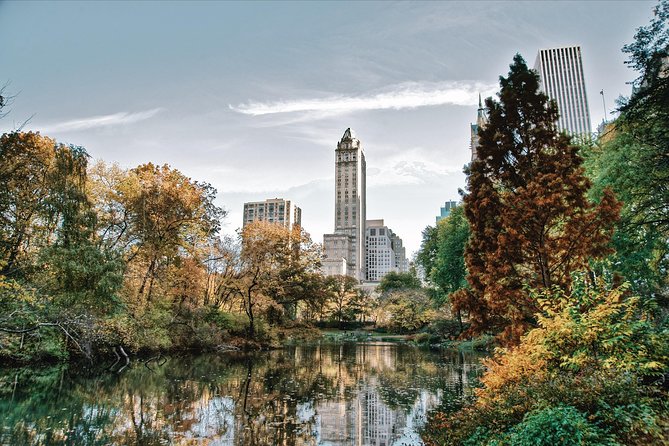
Gapstow Bridge was first built in 1874 and offers one of the tour’s best city views. From the bridge, the skyline rises beyond the water and trees, giving you a clean picture of how Central Park frames Manhattan rather than simply occupying space between buildings.
The bridge is also a good lesson in the park’s design. It is attractive without feeling oversized, and its setting makes the view as important as the structure itself. Bring your camera, but also pause long enough to look beyond the usual skyline shot.
The walk ends later at the Central Park Zoo, at the southeast corner, but the tour does not include zoo admission. You can remain in the park afterward or follow the guide toward the nearest subway. This is useful if you have evening plans, though you should not assume the guide will provide hotel transport. Uber or a taxi is recommended for pickup and drop-off needs.
Bow Bridge and the Mall
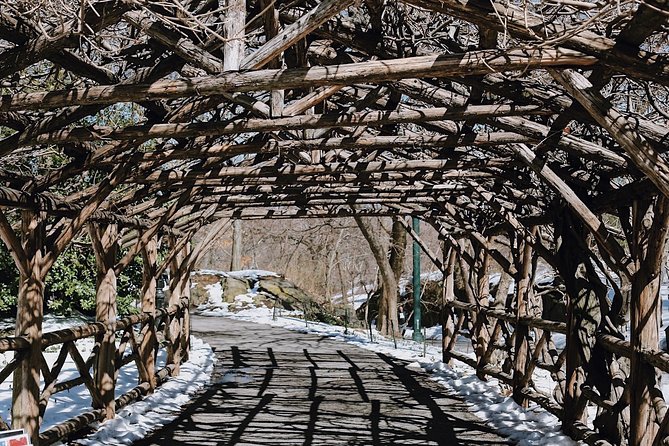
Bow Bridge is the largest bridge in the park and one of its most recognizable structures. It is made of cast iron, with classical Greek details, an interlocking-circle railing, and decorative work beneath the arch.
Unlike several quieter park bridges, Bow Bridge was designed to attract attention. Its shape and ornament make it a natural photo stop, but the guide can help you see it as part of the park’s planned visual sequence. The route uses the bridge on the way toward Strawberry Fields, so you get both the architecture and the changing views around it.
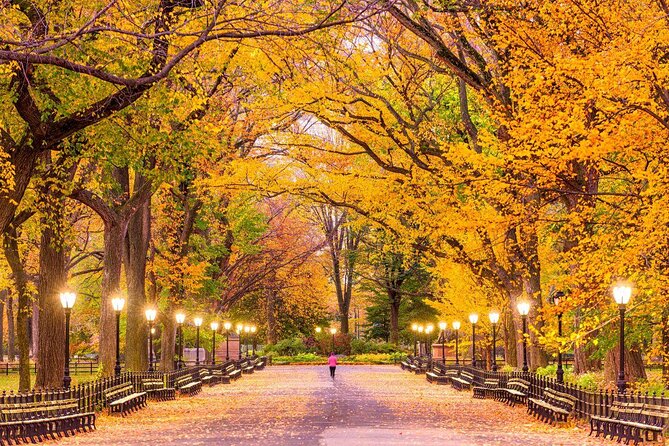
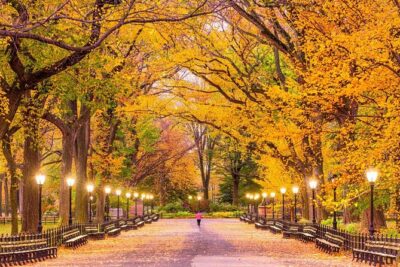
The tree-lined Mall brings a different mood. This broad promenade is associated with literary figures and formal park movement. It is one of the places where Central Park feels deliberately grand, with the trees creating a long corridor toward Bethesda Terrace.
If your guide uses historical photographs, this is one of the sections where they can help you imagine how the park changed from a major 19th-century public project into the heavily used city retreat you see today. The point is not simply that the park is old. It was built to give city residents a break from dense urban life, and the design still serves that purpose.
More New York City walking tours:
- SoHo, Little Italy, and Chinatown Walking Tour in New York
★ 5.0 · 3,153 reviews - Secrets of Grand Central Station Walking Tour New York City
★ 5.0 · 1,796 reviews - Greenwich Village Walking and Food Tasting Tour
★ 5.0 · 1,572 reviews - Artistic, Alternative Greenwich Village Walking Tour
★ 5.0 · 971 reviews
Bethesda Terrace, Fountain, and the park’s best pause
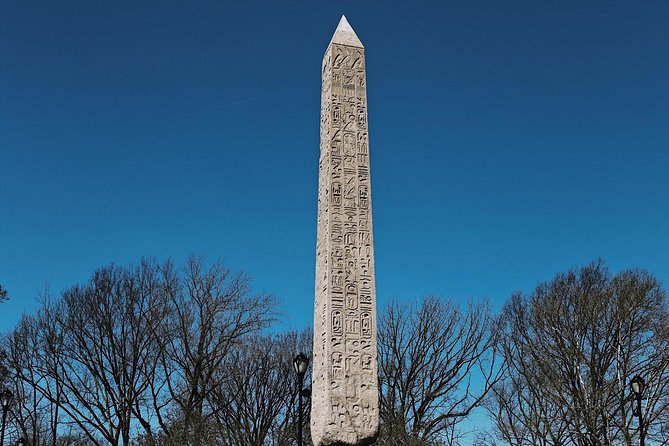
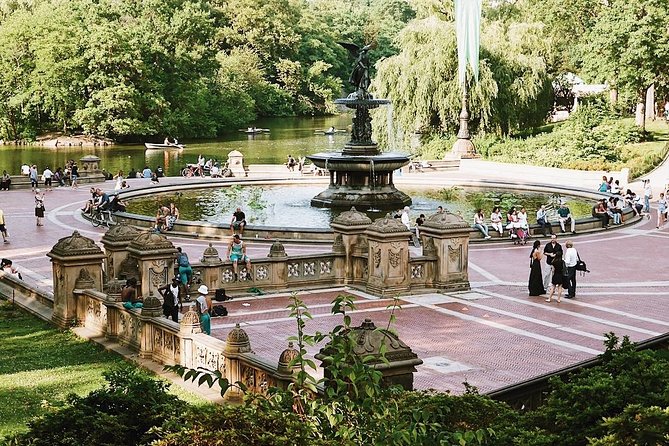
Bethesda Terrace and Fountain form the visual heart of the route. The Angel of Bethesda sits above the fountain, and the sculpture has a special place in New York public art history because it was the city’s first major public commission awarded to a woman.
The terrace combines stairs, carved details, open space, and views toward the water. It is also where the tour may offer one of its most atmospheric moments. The Bethesda Arcade has remarkable acoustics, and a pause to hear a soprano busker can turn a standard sightseeing stop into something more personal.
I would give this area your full attention. It is easy to rush through while taking photographs, but the terrace rewards a slower look. Notice how the approach, arcade, fountain, and open space work together. Your guide’s explanation helps you understand why the place feels ceremonial even when people are simply sitting, walking, or listening to music.
This is also a likely point for photographs and questions. Since the tour covers many stops, the guide may not linger indefinitely, so keep your camera ready and listen for the next meeting point if the group spreads out.
Turtle Pond, the Great Lawn, and Sheep Meadow
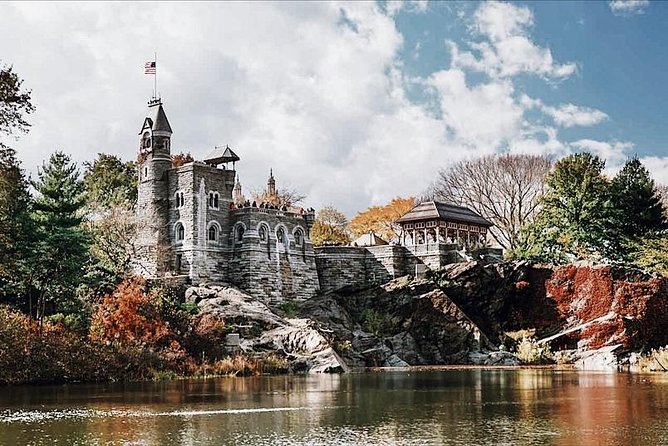
Near the Great Lawn, the park opens into a broad 55-acre area used for picnics, sunbathing, and outdoor life. This change from enclosed paths to wide open grass is one reason the walk feels varied rather than repetitive.
Turtle Pond sits nearby, offering a quieter stop and a look at some of the park’s resident turtles. The visit is not a wildlife excursion, so sightings and viewing conditions can vary. Still, the pond gives the guide a natural topic after the stone bridges, statues, and city towers.
You may also pass Sheep Meadow, where New Yorkers relax and kick back. This is a useful place to remember that Central Park is not only a monument-filled sightseeing zone. It is a working public space, used by residents for ordinary leisure.
The park’s maintenance is part of the tour’s subject. Keeping these lawns, trees, ponds, paths, and historic structures in shape is a continuing task. That practical side adds value because it explains why the park looks carefully designed rather than simply left wild.
Strawberry Fields and the Dakota
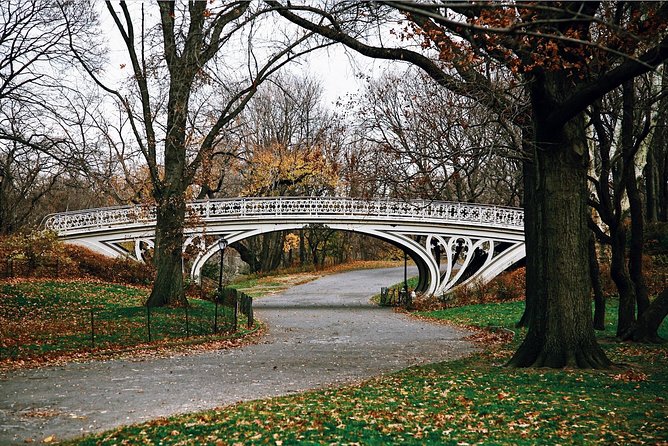
Strawberry Fields is a 2.5-acre memorial to John Lennon. Its elm trees, shrubs, flowers, and rocks create a quiet area within the larger park, and the setting asks for a more respectful pause than the busier photo stops.
From there, you visit the Dakota, the cooperative building where Lennon lived until his murder in the building’s archway in 1980. The Dakota was built in 1884 and retains much of its original character. The tour focuses on the exterior, and increased security means you should not expect access inside.
The pairing of Strawberry Fields and the Dakota gives you both sides of the story: a public memorial in the park and a private residence across the street. If you are interested in music history, this will likely be one of the most meaningful sections. If you are not, the guide still places the sites within the larger story of Central Park and its surrounding buildings.
This part of the route can also feel emotionally heavier than the bridge and lawn stops. The guide’s tone matters, and the small group makes it easier to pause without the noise and confusion of a large crowd.
Statues, stories, and details you could miss
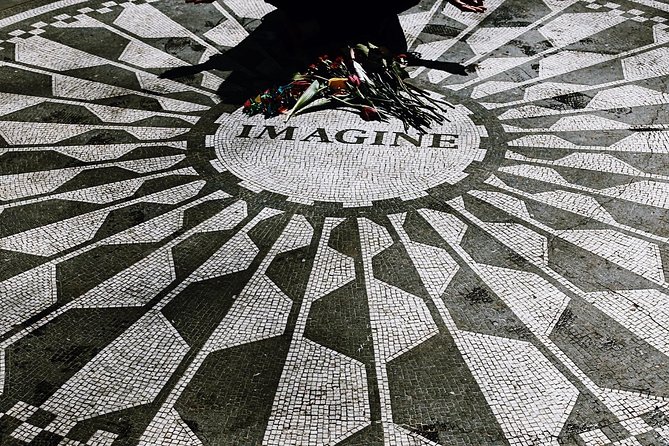
Central Park has plenty of famous monuments, but the guide also points out details that are easy to walk past. You might see statues of Simón Bolívar and José Martí, along with more playful figures such as Balto, the sled dog, and the characters from Alice in Wonderland.
These stops help keep the walk from becoming a parade of only grand architecture. Balto and Alice in Wonderland add humor and family appeal, while Bolívar and Martí connect the park to Latin American history.
The route also passes other notable spaces and buildings, including Tavern on the Green. You might choose to book dinner there later, although the tour does not include a meal or reservation. The practical advantage is that you finish with several options: remain in the park, continue exploring on your own, find a nearby restaurant, or head toward the subway.
Is $51.94 a fair price?
At $51.94 per person, this is a reasonable price for a guided small-group walk in Manhattan. Central Park itself costs nothing to enter, so the value depends almost entirely on the guide’s interpretation and the efficiency of the route.
You get a professional guide, a 2.5-hour walk, and a broad selection of the park’s major sights. You also avoid spending your first afternoon guessing which paths lead to Bethesda Terrace or Strawberry Fields. For a first visit, that structure can save time and help you understand what you later want to revisit alone.
The price is less compelling if you already know Central Park well or prefer slow wandering. You will cover a substantial distance and follow the group’s schedule. Tips are not included, and zoo admission is separate, so budget for those only if you plan to use them.
Group discounts may be available, and the maximum group size is 12. The tour requires at least two people to operate. If that minimum is not met, you will be offered another date or a full refund.
Practical details for a comfortable walk
The tour runs rain or shine. Wear shoes suited to 2.5 hours of walking, bring water, and carry an umbrella if rain is possible. A hat helps in summer, especially across the Great Lawn and other open areas.
Do not bring large bags or suitcases. Hotel pickup and drop-off are not provided, so plan your own route to the meeting point and from the Central Park West finish. The tour is near public transportation, and the guide may accompany you to the nearest subway at the end.
Children must be with an adult, and participants should have a moderate level of physical fitness. The route can be affected by national celebrations. If that happens, an alternative route is used so you can still see the main highlights, but refunds or discounts are not offered for the change.
You can cancel for a full refund up to 24 hours before the start time. Changes or cancellations made less than 24 hours before the start time are not accepted for a refund.
Who should book this Central Park tour?
I would choose this walk for a first-time New York visitor who wants the main sights explained in one morning or afternoon. It also suits couples, families with older children, and anyone who wants a personal guide without paying for a private tour.
The route is especially useful if you care about architecture, city planning, music history, public art, or the contrast between urban towers and open park space. Mark’s mix of local lore, old photographs, natural details, and music shows how much range a good guide can bring to the walk. Jeff’s use of construction-era images offers another strong approach.
I would hesitate if your priority is a very slow pace, a private schedule, or indoor access. This is an outdoor route with many stops, not a museum visit or a relaxed picnic outing.
Final verdict: book it for context, not just directions
Book this tour if you want Central Park to make sense, not simply appear in a series of photographs. The bridges, lawns, memorials, buildings, and terraces are impressive on their own, but the guide’s stories give them order and meaning.
The strongest reason to book is the combination of a manageable group size, a broad route, and guides who bring in old images, local history, natural details, and music. The main tradeoff is the steady walking pace and the lack of included transport or zoo admission.
For $51.94, I consider it good value for a first visit. You can always return afterward to sit in Sheep Meadow, revisit Bethesda Terrace, or explore the park at your own speed.
FAQ
How long does the Central Park walking tour last?
The tour lasts approximately 2 hours and 30 minutes.
How many people can join the tour?
The group has a maximum of 12 people. At least two people are required for the tour to operate.
Where does the tour begin?
The meeting information places the start at Central Park South, near the Latin America History equestrian statues at the corner of Sixth Avenue and 59th Street.
Where does the tour end?
The tour ends on Central Park West, near the Central Park Zoo area. The guide may accompany you to the nearest subway.
Is Central Park Zoo admission included?
No. Admission to Central Park Zoo is not included in the tour price.
What should I bring?
Wear comfortable shoes and bring water. An umbrella is recommended in rainy weather, and a hat is useful during summer. Large bags and suitcases are not allowed.
Can I cancel for a full refund?
Yes. You can cancel at least 24 hours before the experience start time for a full refund. Cancellations or changes made less than 24 hours before the start time are not accepted for a refund.
Just listed around New York City
- NYC: Private Ghostbusters Sites Tour★ 5.0 · 3 reviews
- Tour by Night in Italian★ 5.0 · 3 reviews
- NYC: Private Central Park Pedicab Tours / PICKUP FROM MUSEUM★ 5.0 · 3 reviews
- Tour of Brooklyn Bridge at Sunset★ 3.5 · 3 reviews
- New York City: Manhattan ‘Complete Playground’ Entry Ticket★ 5.0 · 3 reviews
- New York Upper East Side Art and Architecture Tour★ 5.0 · 3 reviews
- PRIVATE Rockefeller Center Artified Walking Tour★ 5.0 · 3 reviews
- Macy’s Thanksgiving Day Parade Premium Viewing Brunch 2025★ 4.5 · 3 reviews
Central Park Tours, compared.
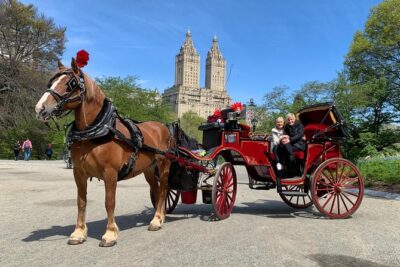
Official NYC Horse Carriage Rides in Central Park since 1979 ™
Read our review →

Carriage Ride in Central Park (VIP – PRIVATE) Since 1964™
Read our review →
Browse the lists this tour appears in