
Reviewed · CENTRAL PARK TOURS
Central Park: Scandal & Vice Walking Tour
Central Park has a polished public face, but this walk shows you the park’s stranger side: evictions, corruption, indecency arrests, suspicious deaths, political protests, and nighttime police raids. It is less about postcard views and more about the human trouble that unfolded among them.
I like the small group of no more than 15, which gives you a fair chance to ask questions. I also like the route’s range, from the Arsenal’s 19th-century violence to the Ramble’s cruising history and the Central Park Conservancy’s origins.
The main consideration is the subject matter. This is not a gentle park stroll, and some stories involve murder, sex, poverty, and exploitation. The tour also ends far from its starting point, so you should plan your subway ride home.
In This Review
- Key points
- Why This Central Park Walk Feels Different
- The Arsenal and Central Park’s Unwelcome Beginnings
- The Central Park Zoo’s Odd Origins
- Balto, Statues, and the Politics of Public Memory
- Rumsey Playfield and a Prohibition-Era Nightclub
- Bethesda Terrace, Jacob Wrey Mould, and the Birth of Reform
- Sheep Meadow, Hooverville, and Public Protest
- Strawberry Fields and a Murder Shaped by Class
- The San Remo and the Park’s Suspicious Deaths
- The American Museum of Natural History and Two Troubling Incidents
- The Ramble’s Cruising History and the Final Walk Out
- What the $40 Price Buys You
- Who Should Book This Walk?
- Should You Book Central Park: Scandal & Vice?
- FAQ
- How long does the Central Park: Scandal & Vice Walking Tour last?
- What time does the tour start?
- Where does the tour begin?
- Where does the tour end?
- Which subway station is closest to the ending point?
- How large is the group?
- Is the tour offered in English?
- Can I cancel for a refund?
Key points
- The Arsenal sets a grim tone: Learn about Central Park’s early evictions and the building’s connection to 19th-century violence.
- The Zoo has an unusual past: Its origins and indecency arrests reveal a side of the park rarely covered on standard sightseeing walks.
- Bethesda Terrace connects scandal and reform: Hear about Jacob Wrey Mould, vandalism, crime, and the rise of the Central Park Conservancy.
- Sheep Meadow tells a social story: The stop covers Depression-era Hooverville, protests, and public demonstrations.
- The Ramble is the most provocative finish: Its history includes cruising, police raids, nighttime incidents, and screen portrayals.
- The route is practical but one-way: You begin at The Arsenal at 11 a.m. and finish near West 77th Street, close to the Museum of Natural History subway station.
Why This Central Park Walk Feels Different
Most Central Park tours focus on scenery, movie locations, famous fountains, and design. This one asks a less comfortable question: what happened here after the park became a public stage?
You will hear about people pushed out before construction began, crimes committed in the park, social groups using public space in unexpected ways, and city officials struggling to control what happened after dark. That gives you a more complicated picture of Central Park. It was planned as a place of order and beauty, but public parks always reflect the tensions of the city around them.
The tone should suit you if you enjoy urban history with a dark edge. The guide covers scandal and vice without turning the walk into a cheap shock show. The short stops also keep the pace moving. You are not parked in one spot for a long lecture, and the two-hour length fits neatly into a busy New York day.
Still, you should know what you are booking. This is not mainly a nature walk, architecture tour, or family entertainment option. The route takes place outdoors and involves walking between stops, while the stories can be mature and unsettling.
More Central Park tours:
- Central Park Pedicab Guided Tours
★ 5.0 · 7,108 reviews - Private Central Park Pedicab Tour
★ 5.0 · 6,981 reviews - NYC: Central Park Bike Rentals
★ 4.2 · 2,528 reviews
The Arsenal and Central Park’s Unwelcome Beginnings
The tour begins at The Arsenal, at 830 Fifth Avenue, near the park’s southeastern corner. The opening gives you a short overview of Central Park before turning to the building’s 19th-century infamy and violence.
The more important context comes from the people who lived on the land before the park was built. Their evictions are part of the story, and that matters because Central Park is often presented as if it simply appeared for the benefit of all New Yorkers. The reality was more forceful. Creating the park required clearing existing communities and reshaping a large piece of Manhattan.
This first stop helps you understand the tour’s method. The guide is not treating Central Park as a sealed-off fantasy world. Instead, you see how city power, class, law, and public behavior collided here.
The stop lasts about five minutes, so expect a concise introduction rather than a long architectural lecture. Arrive ready to listen, since the opening context will make later stories easier to place.
The Central Park Zoo’s Odd Origins
The next stop is the Central Park Zoo, where the focus shifts to the park’s unusual beginnings and arrests for indecency.
Many standard Central Park walks treat the Zoo as a pleasant family attraction. This tour asks how the site first took shape and how people behaved there once it became part of the city’s public life. The contrast is part of the fun. A location that now feels organized and respectable once had a much stranger reputation.
The stop is brief, around five minutes. That is enough for the guide to establish the story, but not enough to explore every chapter of the Zoo’s development. If you want a full history of the animals, exhibits, or current operation, this is not that kind of visit.
You will also want to keep your expectations clear about admission. The tour uses outdoor locations, and admission tickets are not required at the stops. This is a walking experience, not a Zoo entry package.
Balto, Statues, and the Politics of Public Memory
At the Balto statue, the subject is not only the famous sled dog. You will hear about the controversy surrounding New York City’s first dog statue, along with scandalous stories tied to other statues in Central Park.
Public monuments often look permanent and neutral. They are neither. Someone chooses whom to honor, where to place the monument, and what kind of story deserves space. The Balto stop gives you a way to think about those choices, including the arguments and odd details that rarely make it into a quick photo stop.
This is one of the longer early stops, at about 15 minutes. That gives the guide room to connect Balto with the park’s wider collection of statues and the strange episodes linked to them.
I like this part because it changes how you look at the park. Afterward, a statue is no longer just decoration. It can be a statement about civic values, public emotion, and the people who wanted their version of history carved in stone.
More New York City walking tours:
- SoHo, Little Italy, and Chinatown Walking Tour in New York
★ 5.0 · 3,153 reviews - Secrets of Grand Central Station Walking Tour New York City
★ 5.0 · 1,796 reviews - Greenwich Village Walking and Food Tasting Tour
★ 5.0 · 1,572 reviews - Artistic, Alternative Greenwich Village Walking Tour
★ 5.0 · 971 reviews
Rumsey Playfield and a Prohibition-Era Nightclub
Rumsey Playfield brings two unrelated-sounding subjects together: quarrels over the Wisteria Pergola and a prohibition nightclub that once operated in Central Park.
The pergola story shows that disputes over park design are not new. Central Park has always involved arguments over how public space should look and who gets to decide. The nightclub story adds a more illicit layer, pointing to the nightlife that survived even when the law tried to shut it down.
This stop takes about seven minutes. It is a useful reminder that Central Park was not only a place for quiet walks and formal recreation. It also offered cover, opportunity, and a degree of privacy in the middle of Manhattan.
The experience works best if you enjoy connections between architecture and social history. If you prefer only big, dramatic crime stories, the design dispute may feel like a slower change of pace. I find that contrast worthwhile because it keeps the tour from becoming a simple parade of shocking tales.
Bethesda Terrace, Jacob Wrey Mould, and the Birth of Reform
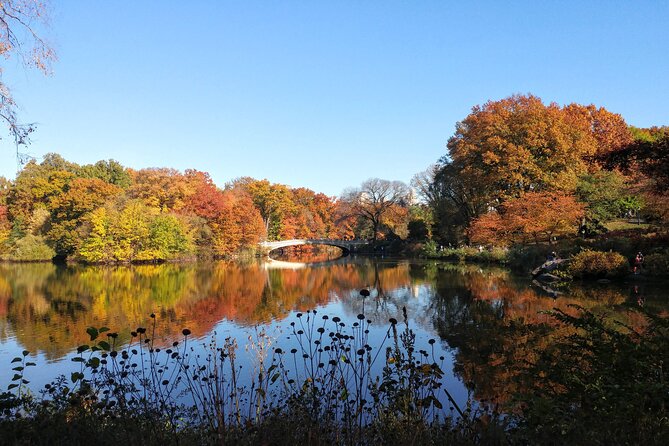
Bethesda Terrace is one of Central Park’s grandest spaces, and here the guide discusses Jacob Wrey Mould, an important but often overlooked designer involved in the park’s creation. The focus is a scandalous affair connected with Mould, followed by the history of crime and vandalism that helped lead to the Central Park Conservancy.
This stop lasts about ten minutes and carries some of the tour’s strongest historical weight. Mould’s story reminds you that the park’s design was shaped by more than the two names usually attached to Central Park. The site reflects the work of additional artists and planners whose contributions can disappear behind the headline version of history.
The crime and vandalism section explains why preservation and maintenance later became such urgent issues. A public park can deteriorate quickly when city services fail or when people feel little connection to the place. The Central Park Conservancy became a major force in reversing that decline.
You get more than gossip here. The scandal attracts attention, but the larger lesson concerns who builds public spaces, who controls them, and what happens when a city stops caring for them.
Sheep Meadow, Hooverville, and Public Protest
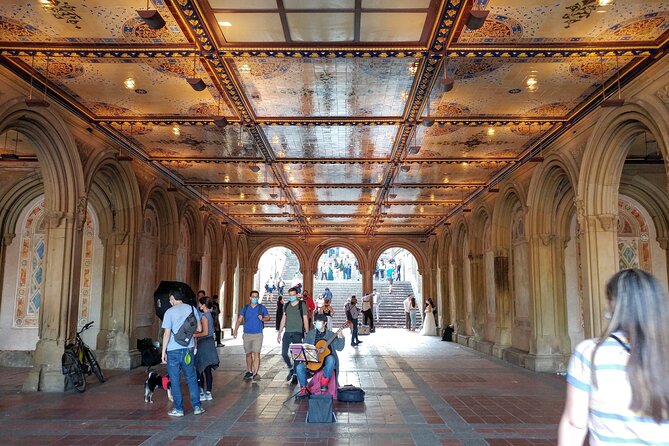
At Sheep Meadow, the tour moves from personal scandal to economic hardship and political expression. You will hear about the Hooverville settlement that occupied part of Central Park during the Great Depression, then about the meadow’s long history of protests and demonstrations.
The Depression-era story brings class into focus. Sheep Meadow can look like an open lawn made for picnics, but it has also served as a place where people without stable housing, money, or political power made their presence visible.
The protest history matters for the same reason. Public parks provide a city with room for assembly, and that freedom can be noisy, inconvenient, and politically important. A park is not only somewhere to relax. It can also be a forum.
The stop lasts about ten minutes. You will likely find this section less sensational than the murder and vice stories, but it may be one of the most useful parts of the walk. It connects Central Park to national crises and public debate rather than treating it as an isolated attraction.
Strawberry Fields and a Murder Shaped by Class
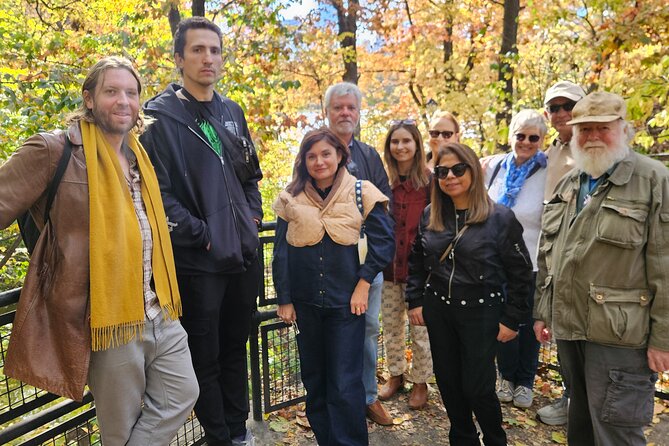
At Strawberry Fields, the guide tells a gruesome murder story linked to the area and examines its connection with class and subculture.
The memorial’s peaceful reputation creates a sharp contrast with the crime story. That contrast is central to New York: a place can carry one public meaning while holding several darker layers beneath it. You will see why a familiar landmark can look different after you know what happened nearby.
The stop lasts around ten minutes. The subject is difficult, so it may not suit young children or anyone looking for a light afternoon in the park. The tour does not present the crime as an isolated horror tale. The class and subculture angle gives it a wider social frame.
I appreciate that distinction. Crime stories can become empty entertainment when they are stripped of context. Here, the point is not simply that something terrible happened. You are asked to consider who was involved, how the city reacted, and how public memory changes over time.
The San Remo and the Park’s Suspicious Deaths
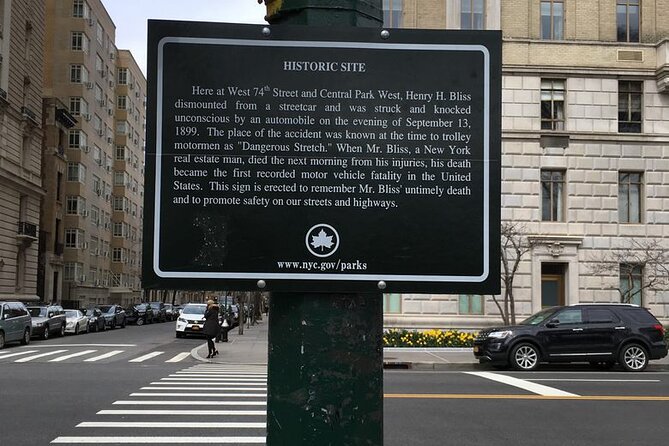
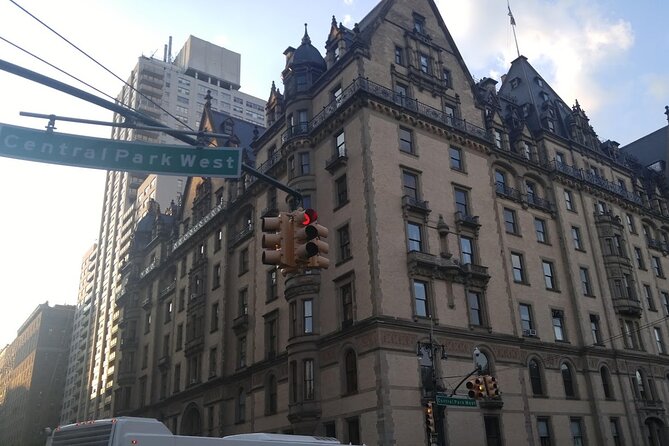
The San Remo stop looks toward the famous twin-towered building and connects it with accidents, stunts, and suspicious deaths associated with Central Park.
The stories here deal with the boundary between spectacle and danger. New York has always attracted people willing to test limits in public, sometimes for attention, sometimes for thrill, and sometimes for reasons that remain unclear. Central Park provided a large and visible setting for those acts.
The stop runs about ten minutes. The San Remo itself is not presented as a building tour, so do not expect access inside or a detailed account of its interiors. Its value is as a landmark tied to a chain of park-related stories.
This section should appeal to you if you like New York’s odd corners and unresolved questions. It also keeps the walk from focusing only on organized crime or vice. Accidents and stunts reveal another side of city life, where public space becomes a stage.
The American Museum of Natural History and Two Troubling Incidents
Near the American Museum of Natural History, you will hear about a notorious heist connected with the park and a witness protection incident that went badly wrong.
This is a useful change in scale. The tour moves beyond events inside the park and considers how nearby institutions, streets, and neighborhoods connect with Central Park’s story. The museum is a major cultural landmark, but the surrounding area has also figured in crime and danger.
The stop lasts about ten minutes. You will not be entering the museum as part of this experience, and the museum’s collections are not the subject. If you want to visit it, plan that separately and allow several hours.
The location is practical for another reason: the tour’s end point is close to the 81 St-Museum of Natural History subway station, served by the B and C trains near West 77th Street and Central Park West. That makes the final return to the rest of New York fairly straightforward.
The Ramble’s Cruising History and the Final Walk Out
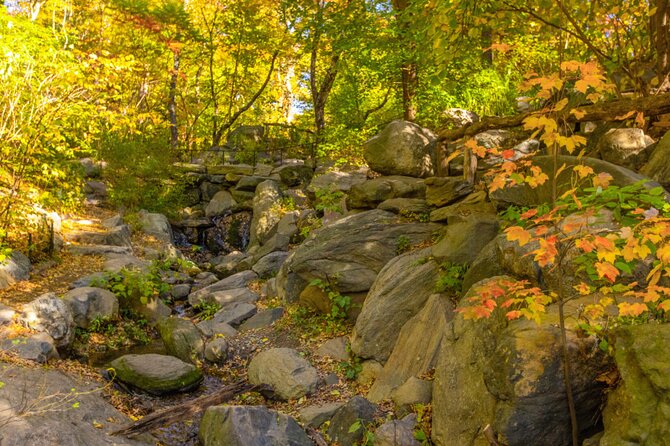
The final stop is The Ramble, at Ramble Stone Arch near Oak Bridge. This wooded section of Central Park has a history of cruising, nighttime incidents, police raids, and films and television shows inspired by that activity.
It is a fitting finish because The Ramble feels more secluded than many other parts of the park. The setting helps you understand why certain forms of social life developed there, while the police raids show how authorities tried to control the space.
The stop lasts about ten minutes, but the walking route and transitions fill out the full two-hour experience. After the talk, the guide escorts you out of The Ramble unless you choose to remain. The nearest exit is around West 77th Street and Central Park West.
You should take that ending seriously. This is not a loop back to The Arsenal. Wear comfortable shoes, keep your phone charged for navigation, and avoid scheduling an immediate appointment downtown. The one-way route is part of the design, but it requires a little planning.
What the $40 Price Buys You
The cost is $40 per person. For two hours with an English-speaking, in-person guide, a capped group of 15, and no extra admission fees at the stops, that is a reasonable price if you care about interpretation rather than simple sightseeing.
You are paying for the selection and linking of stories. Anyone can walk past the Arsenal, Balto statue, Bethesda Terrace, or Sheep Meadow. The value comes from learning why those places matter and how crime, politics, class, public design, and private behavior overlap.
The small group improves the value. A group of 15 is large enough to have some energy but small enough for questions. One published experience describes the guide as very accommodating, which fits the format: a smaller group gives the guide more room to respond instead of delivering a fixed speech to a crowd.
There are no bottled-water provisions, so bring your own. The walk is outdoors, and Central Park can make two hours feel longer if you arrive without water or proper shoes.
Who Should Book This Walk?
I would choose this tour if you have already seen Central Park’s famous sights and want a new way to read the park. It also suits first-time visitors who prefer social history, crime, architecture, and unusual city stories to a standard highlights tour.
It is especially good for:
- Adults interested in dark history and urban scandals
- Visitors who enjoy asking questions during a small-group walk
- Friends who want a shared activity beyond museums and restaurants
- Repeat New York visitors looking for less familiar stories
- Anyone curious about protests, public space, and changing city values
I would be more cautious if you want a relaxed garden walk, a photography-focused outing, or a detailed tour of Central Park’s plants and landscapes. The material includes mature themes, and the route ends in The Ramble rather than returning to Fifth Avenue.
The tour is offered in English, and most people can participate. Service animals are allowed, and the starting point is near public transportation. Confirmation is provided when you book, and free cancellation is available up to 24 hours before the 11 a.m. start time. Changes or cancellations inside that window are not accepted for a refund.
Should You Book Central Park: Scandal & Vice?
Book it if you want Central Park to feel less like a postcard and more like a living part of New York. The strongest sections are the eviction story at The Arsenal, the class and protest material at Sheep Meadow, the design and reform discussion at Bethesda Terrace, and the provocative history of The Ramble.
At $40, the tour offers good value for a focused two-hour experience, particularly because the group is limited to 15 and the route uses free-access locations. Just bring water, wear shoes for a long park walk, and keep your afternoon flexible after the one-way finish.
If the idea of murders, indecency arrests, poverty, scandal, and police raids sounds more interesting than another view of the skyline, this is a smart Central Park choice.
FAQ
How long does the Central Park: Scandal & Vice Walking Tour last?
The tour lasts approximately two hours.
What time does the tour start?
The tour starts at 11:00 a.m.
Where does the tour begin?
The meeting point is The Arsenal at 830 Fifth Avenue, New York, NY 10065.
Where does the tour end?
The tour ends at Ramble Stone Arch near Oak Bridge in Central Park. You can remain in The Ramble if you wish, or the guide will escort you out.
Which subway station is closest to the ending point?
The nearest exit is around West 77th Street and Central Park West, close to the 81 St-Museum of Natural History station, served by the B and C trains.
How large is the group?
The activity has a maximum of 15 participants.
Is the tour offered in English?
Yes. It includes an English-speaking, in-person guide.
Can I cancel for a refund?
Yes. You can cancel at least 24 hours before the local start time for a full refund. Cancellations or changes made less than 24 hours before the start are not accepted for a refund.
Just listed around New York City
- NYC: Little Shop of Horrors Off-Broadway Ticket5 reviews
- Private NYC Airport Transfer: LGA to Manhattan – Up to 5★ 3.6 · 5 reviews
- New York City Tour in German★ 4.5 · 5 reviews
- New York: Hamilton and Washington Revolutionary Walking Tour★ 5.0 · 5 reviews
- NYC Freedom Tower Private Photo or Video Experience★ 4.0 · 6 reviews
- New York Afternoon Fall Foliage Cruise with Lunch★ 5.0 · 6 reviews
- Brooklyn Walking Tours by Locals: Private & 100% Personalized★ 4.0 · 6 reviews
- Southold Bay Oyster Farm Tour★ 5.0 · 6 reviews
Central Park Tours, compared.
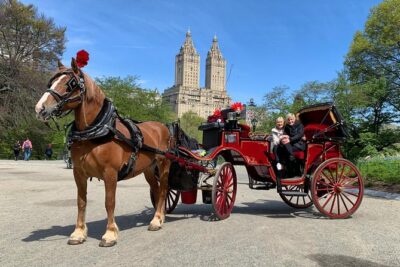
Official NYC Horse Carriage Rides in Central Park since 1979 ™
Read our review →


Carriage Ride in Central Park (VIP – PRIVATE) Since 1964™
Read our review →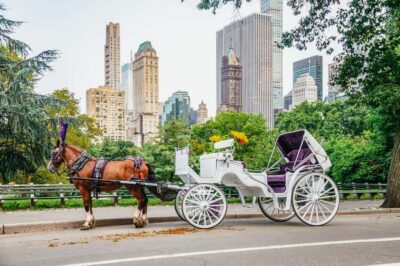
Browse the lists this tour appears in