

Reviewed · BROADWAY SHOWS & TICKETS
Hamilton and Washington Revolutionary Walking Tour
Lower Manhattan is where the American Revolution, the early republic, and the careers of Alexander Hamilton and George Washington collide. This three-hour walk turns familiar places such as Wall Street and Trinity Church into chapters of a very old New York story, with stops tied to the musical Hamilton along the way.
I like the small group of no more than 16, which gives a skilled guide room to answer questions and adjust the pace. I also like the focus on real locations, from the destroyed statue of King George III at Bowling Green to Washington’s farewell at Fraunces Tavern and Hamilton’s grave at Trinity Church. The main drawback is simple: you spend several hours outside, walking and standing, and admission to some buildings is not included.
In This Review
- Key things to know before you book
- Why Lower Manhattan tells the Hamilton story so well
- Starting at the Alexander Hamilton U.S. Custom House
- Bowling Green and the fall of King George III
- Peter Minuit Plaza and Hamilton’s early New York
- Fraunces Tavern and Washington’s farewell
- The New York Stock Exchange and Hamilton’s financial plan
- Wall Street, Hamilton’s bank, and Aaron Burr
- Federal Hall and Washington’s inauguration
- Trinity Church and the Hamilton family grave
- What the $52.95 price gets you
- Walking, weather, and the right way to prepare
- Who will get the most from this walk
- Should you book the Hamilton and Washington tour?
- FAQ
- How long does the Hamilton and Washington Revolutionary Walking Tour last?
- Where does the tour start and finish?
- What is included in the tour price?
- Are admission fees included?
- Is Federal Hall open every day?
- Can I cancel for a full refund?
Key things to know before you book

- The tour links eight important Lower Manhattan sites in about three hours, from the Alexander Hamilton U.S. Custom House to Trinity Church.
- Bruce is the guide most often named by participants, while George has also led the walk. Both are licensed New York City guides with a strong focus on early American history.
- The group is capped at 16 people, a useful size for hearing the guide and asking questions.
- The musical is only one doorway into the subject. You also learn about the Revolution, Washington’s leadership, Hamilton’s financial plans, and Aaron Burr’s ambitions.
- You will walk and stand outdoors, so wear comfortable shoes and dress for the forecast. Cold, wind, heat, rain, and snow can all affect the experience.
- The $52.95 price covers the guide and the tour itself, but some admission fees and gratuity are extra.
Why Lower Manhattan tells the Hamilton story so well
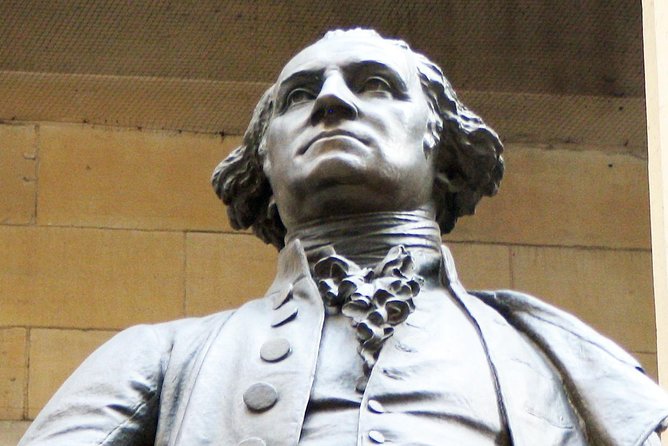
The musical gives Hamilton a modern voice, but Lower Manhattan gives you the setting. The streets here connect his personal story with the wider problems facing the new United States: how to pay war debts, how to build a federal government, how much power the president should have, and how a new nation could survive among older European empires.
That broader frame is what makes this walk more than a musical-themed photo stop. You learn about Hamilton as Washington’s aide and Treasury secretary, but also about Washington as a military commander and president. Aaron Burr enters the story as a political rival with ambitions of his own.
The tour is led by a licensed New York City guide and historian. Bruce is the guide most frequently named in the supplied feedback, with George also receiving praise for working well with a multigenerational group. The recurring strength is not simply the number of facts. It is the way the guide connects people, decisions, buildings, and events into one readable story.
That matters in Lower Manhattan because many Revolutionary-era buildings are gone or changed. You often stand on a modern street while hearing about an earlier city. A good guide has to explain what once occupied the space and why it mattered. This tour depends heavily on that storytelling skill, and the available comments repeatedly point to Bruce’s humor, passion, organization, and ability to speak to both adults and younger people.
More Broadway seats to book:
- NYC: Aladdin the Musical on Broadway
★ 4.8 · 1,800 reviews - NYC: The Lion King on Broadway
1,609 reviews - NYC: MJ the Musical on Broadway
1,510 reviews
Starting at the Alexander Hamilton U.S. Custom House
The walk begins at 1 Bowling Green, beside the Alexander Hamilton U.S. Custom House. The building is tied to Hamilton’s work as the first Secretary of the Treasury, so it gives the tour an immediate connection between a visible landmark and a major piece of early federal policy.
Allow about 20 minutes here. The stop is less about wandering through a grand interior and more about understanding Hamilton’s financial role and the importance of customs revenue to the young United States. The experience lists admission as not included, so you should not assume that an interior visit is part of the price.
This is a useful opening because it puts Hamilton in the world of government and finance, not only in the world of duels and political drama. You begin with the practical question of how the new nation would fund itself. From there, the walk can move naturally into the political anger and revolutionary events that shaped the country Hamilton later helped organize.
If you are visiting New York for the musical, this first stop helps separate stage shorthand from the historical setting. You still get the recognizable Hamilton connection, but you also see why his Treasury work mattered.
Bowling Green and the fall of King George III
Bowling Green receives about 20 minutes and is one of the most vivid stops because the story centers on a physical act of protest. The site is linked to the destruction of a 4,000-pound lead statue of King George III, an event that captures the fury building before and during the Revolutionary War.
You can picture the political message clearly. The king was not an abstract figure to New Yorkers. His statue occupied a public place, and its destruction showed how quickly loyalty could turn into rebellion. The story also gives the guide a chance to explain the events leading toward war without treating the Revolution as a single dramatic moment.
Bowling Green is free to visit, and it is an outdoor stop. Since this is the meeting point as well as one of the early locations, arrive ready to begin outside. The walk does not provide a long indoor warm-up, which is worth remembering in winter.
I especially like this stop for families and younger participants. A destroyed statue is easier to imagine than a paragraph about colonial resistance. It gives the guide something concrete to point toward while explaining a much larger political shift.
Peter Minuit Plaza and Hamilton’s early New York
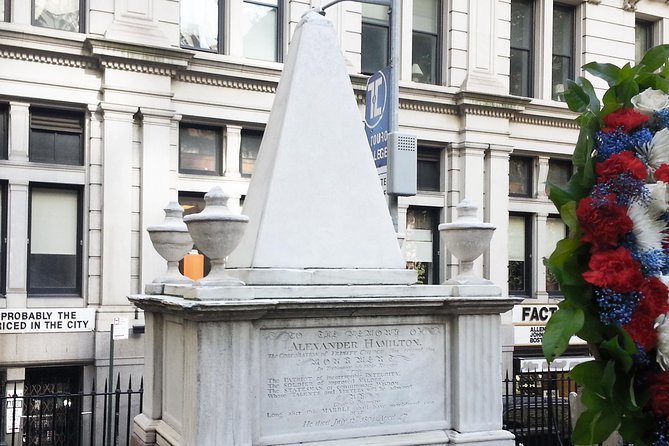
At Peter Minuit Plaza, the discussion turns to New York City at the beginning of the Revolutionary War and to Hamilton’s origins. The stop lasts about 20 minutes and is free.
This part helps keep the tour from becoming only a Washington and Hamilton greatest-hits program. You learn about the city itself and the setting that shaped Hamilton before he became a national figure. The guide’s task here is to connect a young man’s beginnings with the larger city around him, then place those beginnings within the crisis of the Revolution.
The value of this stop lies in context. Hamilton’s later influence can seem enormous, but he did not enter the story fully formed. Hearing about his origins in the same southern tip of Manhattan where major political and commercial events unfolded gives the biography a sense of place.
The plaza is also a reminder that modern New York can hide its earlier layers. You may be looking at contemporary streets and transportation connections while the guide reconstructs an eighteenth-century city in words. If you prefer preserved buildings at every stop, that may feel less satisfying. If you enjoy history brought together through explanation, it is an important part of the walk.
More New York City walking tours:
- SoHo, Little Italy, and Chinatown Walking Tour in New York
★ 5.0 · 3,153 reviews - Secrets of Grand Central Station Walking Tour New York City
★ 5.0 · 1,796 reviews - Greenwich Village Walking and Food Tasting Tour
★ 5.0 · 1,572 reviews - Artistic, Alternative Greenwich Village Walking Tour
★ 5.0 · 971 reviews
Fraunces Tavern and Washington’s farewell
Fraunces Tavern is one of the tour’s strongest Washington stops. The tavern is where George Washington bade farewell to his officers, and the guide discusses why his departure as a military leader was so unusual.
Set aside about 15 minutes here. Admission is not included, so the tour should be understood as a guided historical stop rather than a guaranteed museum visit. The building’s association with Washington gives the story a powerful human scale. Instead of hearing only about battles and offices, you hear about a commander saying goodbye to the people who had served with him.
The guide also uses the tavern to explain the importance of Washington’s choice. His departure from military power was nearly unprecedented, making it a useful window into the political ideals and tensions of the new republic. The point is not just that Washington was famous. It is that his conduct helped shape expectations about leadership.
This stop may appeal to people who want more than Hamilton references. Washington’s role is treated as a central part of the tour, and the tavern provides one of the clearest places to explore his character and public decisions.
The New York Stock Exchange and Hamilton’s financial plan
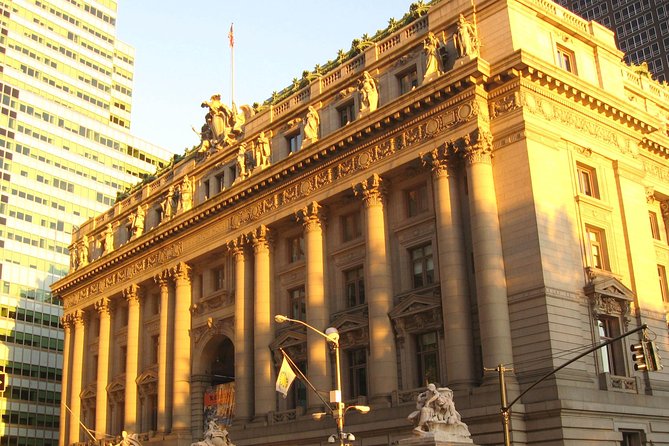
The walk then reaches the New York Stock Exchange for roughly 15 minutes. Here, the subject is Hamilton’s financial plan and his connection to the institution.
The stop works best as a bridge between early federal policy and modern Wall Street. You are not simply looking at a financial landmark. You are considering how Hamilton’s ideas about national finance helped shape the economic direction of the United States.
Admission is not included. The tour listing also does not promise an interior visit, so plan on learning about the site from the guide rather than expecting a full building tour.
This is one of the places where a strong narrator makes the difference. Financial policy can become dry fast, especially on a walking tour. Bruce is repeatedly praised for explaining difficult material in an engaging way, making the subject easier to follow for people who did not arrive with a background in American economic history.
Wall Street, Hamilton’s bank, and Aaron Burr
At Wall Street, the tour spends about 20 minutes discussing Hamilton’s Bank of New York and Aaron Burr’s political ambitions. This is where the personal and political sides of the story begin to press against each other.
The Hamilton and Burr material has obvious appeal for fans of the musical, but the stop also adds useful detail beyond the stage version. You hear about Burr as a politician pursuing influence, while Hamilton is linked to the financial institutions and arguments shaping the new nation.
Wall Street is free to explore, though the tour is still an outdoor walking experience. The modern setting can make the historical contrast especially sharp. Today, the street is shorthand for American finance. The guide helps you trace that meaning backward, to the early republic and to Hamilton’s efforts to build a national financial system.
This section may be the most familiar to people who booked because of Hamilton. It should also be one of the most rewarding, since the guide can place the rivalry in a wider political setting instead of presenting it as a simple personal feud.
Federal Hall and Washington’s inauguration
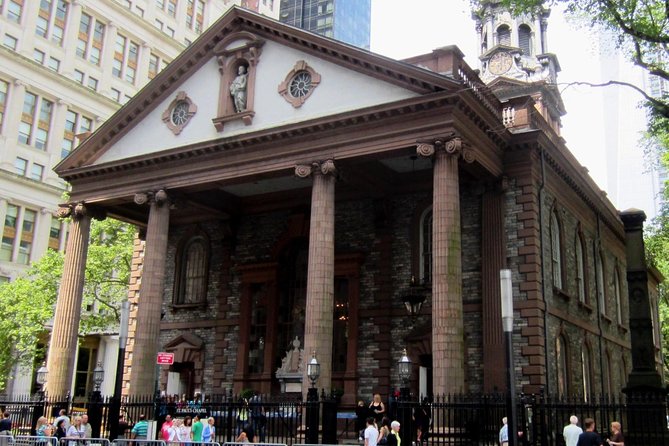
Federal Hall receives about 20 minutes and marks several foundational events. The site served as the first Capitol of the United States under the Constitution, hosted the first meeting of Congress, and was where Washington was inaugurated.
The building is closed on weekends, an important detail when choosing your date. Admission is not included, so you should check the available schedule if seeing the interior matters to you.
Even from the outside, this is a major stop because it gathers several early national milestones into one place. The tour can move from the Revolution to the difficult work of governing afterward. Washington’s inauguration becomes more than a familiar schoolbook image. It represents the attempt to turn a fragile union into a functioning government.
I find this kind of stop especially useful for understanding sequence. The Revolution did not end the problems. The new country still needed institutions, money, leadership, and rules. Federal Hall lets the guide show how Washington and Hamilton operated within that new system, even when they disagreed with others around them.
Trinity Church and the Hamilton family grave
The final stop is Trinity Church, where Alexander and Eliza Hamilton are buried. The churchyard also includes other Revolutionary War figures, including Hercules Mulligan. The visit lasts about 20 minutes and is free, but entry depends on the church and graveyard being open at the scheduled time.
Ending here gives the tour a quiet change of tone. After streets, financial plans, public protests, and political conflict, you finish at the graves of Hamilton and Eliza. It is a direct physical connection to the people whose lives have filled the previous three hours.
This stop is especially meaningful for musical fans, but it should not feel limited to them. Eliza’s presence matters, and the inclusion of Hercules Mulligan widens the story beyond the best-known names. You get a final reminder that the Revolution involved networks of people, not just the leaders who later appeared in textbooks and theater.
The endpoint is at 89 Broadway, so you finish in a useful central location in Lower Manhattan. The tour does not return you to Bowling Green, but the ending near Trinity Church makes it easy to continue exploring the area on your own.
What the $52.95 price gets you
At $52.95 per person, this is not the cheapest way to see Lower Manhattan. You can walk past many of these sites for free. The value comes from the guide’s interpretation, the compact route, and the connections between places that are easy to miss when visited on your own.
The group limit of 16 is important. A smaller group usually makes it easier to hear explanations on busy streets and to ask about a detail that catches your attention. It also supports the personal style praised in the supplied comments, including the guide’s effort to involve children, adults, solo participants, and multigenerational families.
You should budget extra for gratuity and for any admission you choose to pay at the Custom House, Fraunces Tavern, the New York Stock Exchange, or Federal Hall. Those places are listed as stops, but admission is not part of the tour price.
If you want a polished sightseeing package with many included entries, this may not be your best match. If you want a focused history lesson led by someone who can explain why each location matters, the price is easier to justify.
Walking, weather, and the right way to prepare
The tour lasts about three hours and includes walking and standing. One participant described a hot, muggy day, while another pointed out how cold the southern tip of Manhattan can feel in February. The practical lesson is clear: dress for the day, not the season printed on your calendar.
Wear comfortable shoes and bring weather protection. You will be outside for much of the experience, and there is no promise of indoor shelter at every stop. The tour goes out in rain, snow, and sunshine, and changes or cancellations for rain or snow are not accepted within 24 hours of the start time.
The published cancellation terms also say that poor weather can lead to a cancellation with a different date or a full refund. Since weather decisions can affect the schedule, check the provider’s current instructions before setting out.
Most people can take part, service animals are allowed, and the meeting point is near public transportation. Children must be accompanied by an adult. Confirmation is provided when you book, and the tour is offered in English through a mobile ticket.
Who will get the most from this walk
I would choose this tour if you want American history tied to actual places, not only a list of famous names. It suits first-time visitors who want a guided introduction to Lower Manhattan and repeat visitors who have walked Wall Street without knowing how much early national history happened nearby.
It is a strong fit for fans of Hamilton, especially those who want to test the musical’s characters against the real city. It also works for people more interested in Washington, the Revolution, early federal government, or the beginnings of American finance.
Families can benefit from the guide’s interactive approach, but parents should prepare children for standing and listening rather than a hands-on attraction. Solo visitors and couples may appreciate the small group, while larger parties should remember that the maximum is 16 people.
I would think twice if you dislike outdoor tours, need frequent indoor breaks, or want extensive time inside museums. The walk covers a small area, but the storytelling is dense. One piece of useful advice from the feedback is that the route may not feel like a huge physical trek, yet you still spend a good deal of time on your feet.
Should you book the Hamilton and Washington tour?
Book it if you want the musical’s world placed in the streets, churches, taverns, and financial centers where the early republic took shape. The best reason to go is not simply to see Hamilton-related sites. It is to understand how Washington, Hamilton, Burr, Eliza Hamilton, and lesser-known figures fit into New York’s role in the Revolution and the country’s first years.
The strongest part is the guide-led storytelling, particularly when Bruce is leading the group. The main caution is the outdoor format and the extra cost of gratuities or admission. Choose a day when you can handle three hours outside, check whether Federal Hall and Trinity Church are open, and arrive ready to listen closely.
For a focused, human-scale introduction to Revolutionary New York, this is a sound choice. It gives you enough structure to make Lower Manhattan readable, while leaving you at Trinity Church with plenty of nearby history still to explore.
FAQ
How long does the Hamilton and Washington Revolutionary Walking Tour last?
The tour lasts approximately three hours.
Where does the tour start and finish?
It starts at 1 Bowling Green in New York City and finishes at Trinity Church, 89 Broadway.
What is included in the tour price?
The price includes a licensed New York City tour guide and historian, with a maximum group size of 16 people.
Are admission fees included?
No. Admission is not included for the Alexander Hamilton U.S. Custom House, Fraunces Tavern Museum, the New York Stock Exchange, or Federal Hall. Bowling Green, Peter Minuit Plaza, Wall Street, and Trinity Church are listed as free stops, though Trinity Church entry depends on its opening times.
Is Federal Hall open every day?
Federal Hall is closed on weekends. Check the available tour date if visiting the building is important to you.
Can I cancel for a full refund?
Yes, if you cancel at least 24 hours before the experience start time. Cancellations or changes made less than 24 hours in advance are not refunded or accepted. If the tour is canceled because of poor weather or because the minimum number of participants is not met, you are offered another date or experience, or a full refund.
Just listed around New York City
- NYC: Little Shop of Horrors Off-Broadway Ticket5 reviews
- Private NYC Airport Transfer: LGA to Manhattan – Up to 5★ 3.6 · 5 reviews
- New York City Tour in German★ 4.5 · 5 reviews
- New York: Hamilton and Washington Revolutionary Walking Tour★ 5.0 · 5 reviews
- NYC Freedom Tower Private Photo or Video Experience★ 4.0 · 6 reviews
- New York Afternoon Fall Foliage Cruise with Lunch★ 5.0 · 6 reviews
- Brooklyn Walking Tours by Locals: Private & 100% Personalized★ 4.0 · 6 reviews
- Southold Bay Oyster Farm Tour★ 5.0 · 6 reviews
Broadway Shows & Tickets, compared.






Broadway and Times Square Insider Tour with Theater Professional
Read our review →
Browse the lists this tour appears in