
Reviewed · HARLEM & GOSPEL TOURS
Harlem & The Rise Of Gospel Music Walking Tour
Harlem’s gospel tradition comes alive here not in a museum, but during a real church service with a live choir. The morning also links music to Harlem’s long fight for equal rights, moving from Malcolm X Boulevard and the Apollo Theater to churches that served as centers of worship, education, and social action.
I like the way the tour connects famous names with ordinary streets, and I like having a licensed, New York City-born guide explain what you are seeing through a portable audio and video system. The main consideration is the early 7:30 a.m. start and the 3 to 4 hours of walking, so this suits you best if you are ready to begin the day on foot.
In This Review
- Key points to know before you book
- Why this Harlem walk is more than a gospel concert
- Starting at Mt. Olivet Baptist Church at 7:30 a.m.
- Malcolm X Boulevard and the Harlem Renaissance
- The Apollo Theater and Harlem’s music landmarks
- Adam Clayton Powell Jr. Boulevard and Lenox Avenue
- Mother AME Zion, the Freedom Church
- Entering the gospel tradition at an active church
- Abyssinian Baptist Church and the final stop
- Guides, languages, and group size
- Who gets the best value from the $57 price
- Should you book the Harlem gospel walk?
- FAQ
- Where does the Harlem gospel walking tour start?
- What time does the tour begin?
- Where does the tour end?
- Is the gospel service included?
- Is the Apollo Theater admission included?
- Is the tour available in French?
Key points to know before you book

- A live gospel service is the morning’s centerpiece: You hear a choir in an active church setting rather than watching a staged performance.
- Harlem’s churches are treated as social institutions: The tour explains how congregations supported abolition, civil rights, community work, and Black leadership.
- The walk follows important Harlem streets: Malcolm X Boulevard, Lenox Avenue, Adam Clayton Powell Jr. Boulevard, and West 133rd and 135th Streets all help frame the neighborhood.
- The Apollo Theater gets a brief stop: You see the famous venue associated with performers such as Billie Holiday, but admission is not included.
- English and French options are available: Kaissa Tours offers tours with native speakers of each language.
- The group is limited to 25 people: That is small enough for a more personal walk, though the size can still feel substantial in narrow city spaces.
Why this Harlem walk is more than a gospel concert
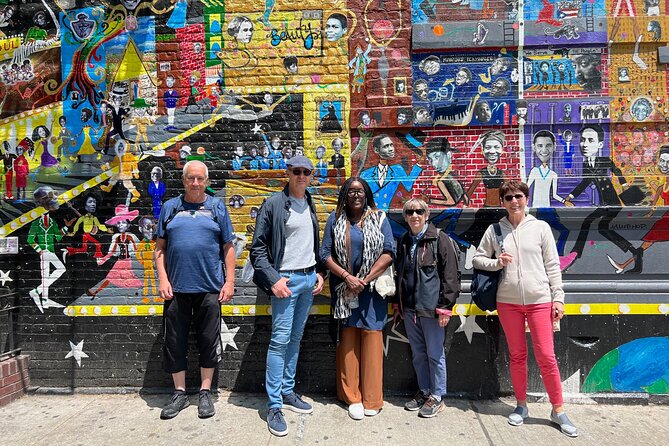
The best reason to book this experience is that it places gospel music inside the story that created it. You do not simply hear songs and then move on. You learn how Black churches in New York gave people places to worship, organize, teach, and resist unfair treatment.
That context matters. Harlem is often reduced to a few famous names and a few famous buildings, but this walk uses the streets and congregations to show how the neighborhood developed. The stops along Malcolm X Boulevard and Lenox Avenue connect the Harlem Renaissance, music, religion, and political activism.
I also appreciate the choice of a walking format. You move through the area at street level, with time to notice the changing blocks and the relationship between churches, theaters, and major avenues. The guide’s portable audio and video equipment should help you hear explanations in a city environment, especially when the group is spread out.
The tour costs $57 per person. That is a fair value if you want a guided introduction to Harlem that includes a church service, several historic congregations, and a professional guide. It is less compelling if you are looking only for a short gospel concert or if you prefer to explore at your own pace. Much of the value comes from the historical explanation and the way the stops fit together.
More Harlem visits and gospel mornings:
- NYC Highlights Tour: Bronx, Brooklyn, Harlem, Queens & Coney
★ 4.5 · 2,846 reviews - NYC: Contrasts Tour of Harlem, The Bronx, Queens & Brooklyn
★ 4.5 · 2,167 reviews - NYC: Harlem Hallelujah! Gospel Wednesday Concert
★ 4.7 · 1,638 reviews
Starting at Mt. Olivet Baptist Church at 7:30 a.m.
The morning begins at Mt. Olivet Baptist Church, at 201 Malcolm X Boulevard. Arrive ready to start on time. Since there is no hotel pickup, you will need to make your own way to the meeting point by public transportation or another form of city transport.
Mt. Olivet is a Southern Baptist church that has served its local community for more than 200 years. The first stop is listed for about 15 minutes, so do not expect a long interior visit or a full architectural tour here. Instead, it gives you an early example of the kind of church-based community life that shapes the rest of the morning.
Starting at a church also sets the right tone. This is not a sightseeing walk that happens to pass religious buildings. Churches are central to the subject, and the opening stop makes that clear before you reach the best-known music and civil rights sites.
The early hour has two sides. You get a full morning in Harlem and finish around midday, leaving time for lunch or another New York activity. But 7:30 a.m. can be tough after a late evening in Manhattan. I would choose this tour only if you are willing to plan your morning around it.
Malcolm X Boulevard and the Harlem Renaissance
From Mt. Olivet, the route continues through the heart of Harlem. One stop near 118th and 120th Streets highlights Malcolm X Boulevard, formerly Lenox Avenue. That name change tells you something about the area’s public memory, and the guide can place the street within Harlem’s broader cultural and political story.
The next stop is at Malcolm X Boulevard and West 124th Street, where the Harlem Renaissance becomes a central theme. The tour allots about 15 minutes here. That is enough for a focused explanation and a look around, but not enough for a full lecture on the movement.
You should think of these street stops as pieces of a larger story. The Harlem Renaissance was not just a period of art and literature. It helped shape how Black identity, music, politics, and public life were expressed in New York. Walking the avenues gives those subjects a physical setting.
This part may appeal most to you if you enjoy context more than a long list of attractions. The streets themselves are not presented as ticketed sights, and there are no included admissions at these stops. Their value comes from the guide’s interpretation and from seeing where the story unfolded.
The Apollo Theater and Harlem’s music landmarks
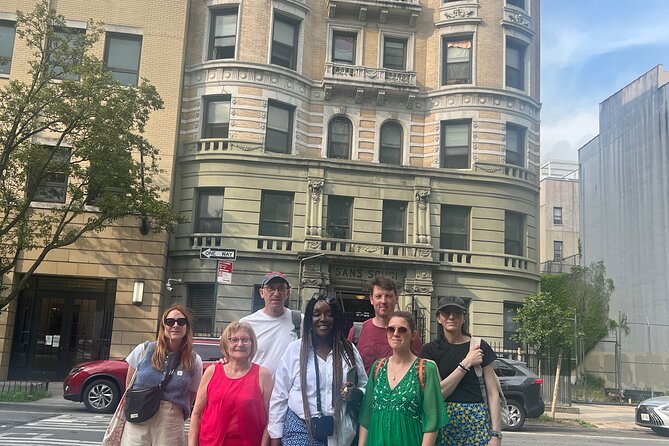
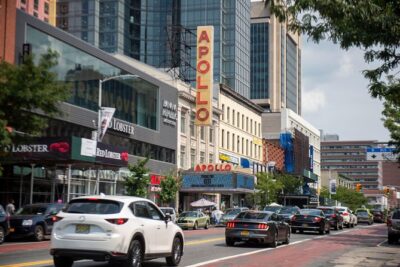
The Apollo Theater receives a short stop of about five minutes. The theater is famous for performances by musicians and comedians, including Billie Holiday. Its place in American entertainment is enormous, but this tour does not include admission.
That detail is important. You should treat the Apollo stop as a quick orientation point rather than a theater visit. You may have time to see the building and hear about its importance, but you will not be taking a full guided tour inside as part of the $57 price.
Still, the Apollo fits naturally into a gospel-focused morning. It represents the public stage, while the churches represent the spiritual and community foundation behind much of Harlem’s musical life. The contrast helps explain why the tour does not treat gospel as an isolated style of music.
The short timing can be a drawback if the Apollo is your main reason for booking. If you want an extended theater experience, you would need to arrange that separately. If you want the Apollo as one stop in a wider Harlem walk, five minutes is enough to place it on the map without taking over the morning.
More New York City walking tours:
- SoHo, Little Italy, and Chinatown Walking Tour in New York
★ 5.0 · 3,153 reviews - Secrets of Grand Central Station Walking Tour New York City
★ 5.0 · 1,796 reviews - Greenwich Village Walking and Food Tasting Tour
★ 5.0 · 1,572 reviews - Artistic, Alternative Greenwich Village Walking Tour
★ 5.0 · 971 reviews
Adam Clayton Powell Jr. Boulevard and Lenox Avenue
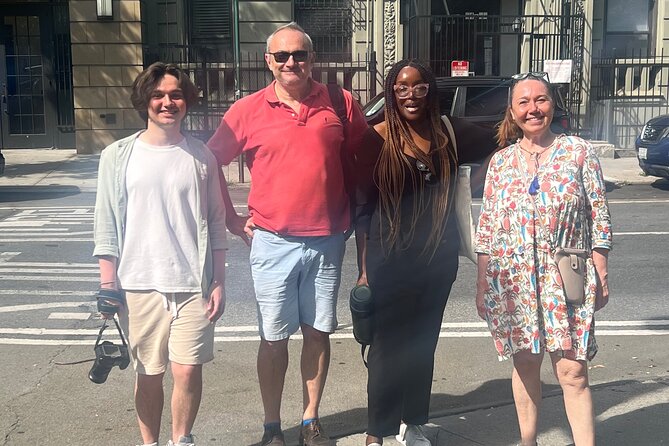
The route continues to Adam Clayton Powell Jr. Boulevard and West 133rd Street, followed by Lenox Avenue and West 135th Street. Each stop takes about 15 minutes. These locations help carry the story from the Harlem Renaissance and theater world toward the churches and gospel traditions at the end of the walk.
Adam Clayton Powell Jr. was an important Harlem political figure, and the boulevard bearing his name reflects the neighborhood’s connection to Black political leadership. The supplied tour details do not promise a long biography, so expect the guide to use the street as part of the wider explanation rather than as a standalone attraction.
The Lenox Avenue and West 135th Street stop is labeled Songbird. Since no additional detail is supplied about that reference, I would not book the tour expecting a separate performance or a named attraction there. Think of it as another point where the guide develops the connections among Harlem’s streets, music, and people.
These stops also make the walking element clear. You are not being driven between distant sights. You are moving through central Harlem, with several short explanations along the way. Wear comfortable shoes and expect to remain on your feet for much of the morning.
Mother AME Zion, the Freedom Church
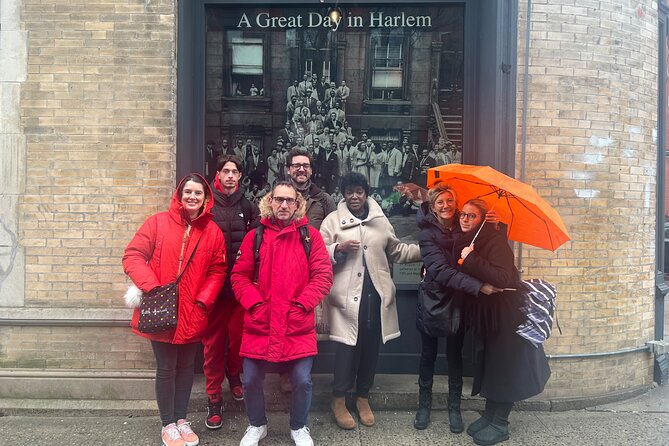
Mother African Methodist Episcopal Zion Church receives about 20 minutes. The guide explains why it is known as the Freedom Church and why its founding matters to the history of Black religious life in New York.
The congregation formed in 1796 when African-American members left the predominantly white John Street Methodist Church. That church opposed abolition, but racial segregation still shaped worship. Black members were not allowed to receive Holy Communion until all white members, including children, had done so.
This detail gives the stop real force. It shows that a church could oppose slavery in principle and still enforce racial separation in practice. The creation of an independent Black congregation was therefore both a religious decision and an act of self-determination.
The church’s later story adds another important layer. Its first foundation stone was laid in 1819, and Peter Williams Jr., who served as rector from 1826 to 1840, was a leading abolitionist and the first African-American Episcopal priest in New York. He also served on the first executive committee of the American Anti-Slavery Society.
You do not need to know all these names before arriving. That is precisely why this stop works well with a guide. The church becomes more than an old building. It represents the way religious communities built institutions and leadership when other parts of society shut them out.
Entering the gospel tradition at an active church
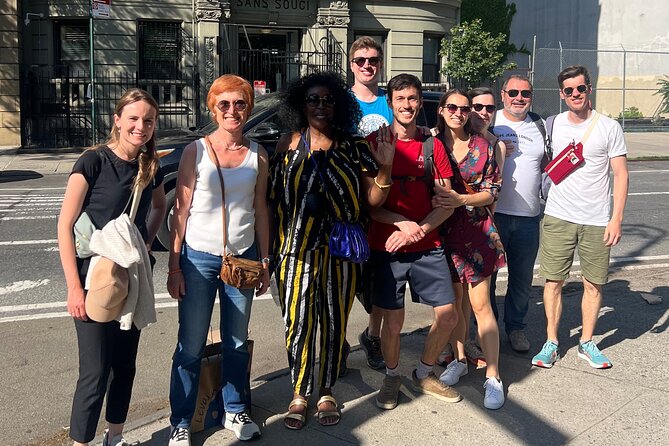
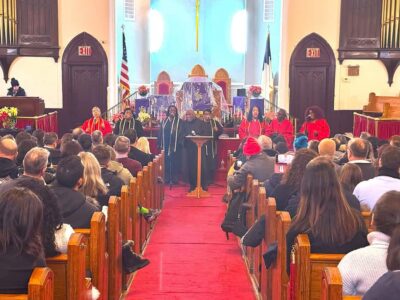
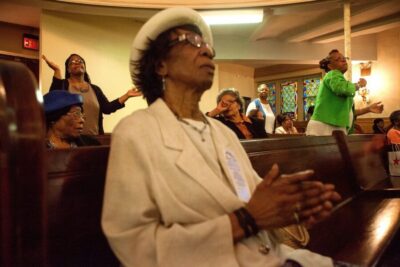
The live church service is the emotional center of the experience. You listen to a gospel choir in a real worship setting, which gives the music a different weight from a staged show designed only for visitors.
You should approach this part with respect. A church service is not a theater performance, and the timing and tone belong to the congregation. The tour’s goal is to let you hear gospel in the setting where it grew as a form of worship and community expression.
One especially appealing detail is the possibility of a guide adding music to the morning. Kaissa, the guide associated with the French-language experience, has been praised for explaining Harlem through anecdotes and even singing during the walk. You should not book on the promise of a personal performance, since that is not listed as a formal feature, but it gives you an idea of the warm, human tone the guide may bring.
The service also helps explain the tour’s title. Gospel is not presented only as a genre linked to famous singers. It is connected to faith, public speaking, communal response, and the long work of Black churches. That makes the experience more meaningful than a quick stop at a music venue.
Abyssinian Baptist Church and the final stop
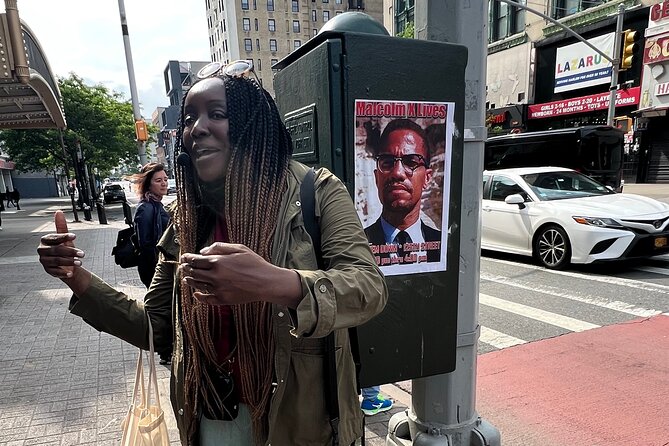
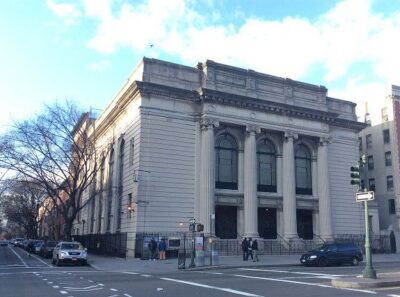
The tour ends at Abyssinian Baptist Church, at 132 West 138th Street. Founded in 1808, it is one of the oldest African-American Baptist churches in the United States. The building has Gothic and Tudor elements, and the guide discusses its role in worship, leadership, social activism, and community service.
Ending here makes good historical sense. You finish with a congregation that brings together many of the morning’s themes: religious life, public leadership, music, and service to Harlem. The final stop is scheduled for about 20 minutes, giving the guide time to explain the church rather than simply point out its facade.
The end point is different from the starting point, so plan your onward route from West 138th Street. No hotel drop-off is included. The location is near public transportation, which makes it practical to continue exploring Harlem or return to another part of New York.
Because the church is an active place of worship, the experience may feel more serious and structured than a standard sightseeing stop. That is a strength if you want a respectful introduction to Harlem’s religious institutions. It may feel less satisfying if you want free time inside each building or a long architectural visit.
Guides, languages, and group size
The tour includes a licensed New York City-born guide. Tours are offered in English or French, with native speakers of each language. That is useful if you want historical details explained naturally rather than relying on a translation app or a mixed-language group.
Kaissa is the guide name connected with the French option. If you specifically want Kaissa, confirm guide availability before booking, since another guide may lead the tour on your chosen date. A French-language option is a meaningful advantage for visitors who want to discuss Harlem’s history in French.
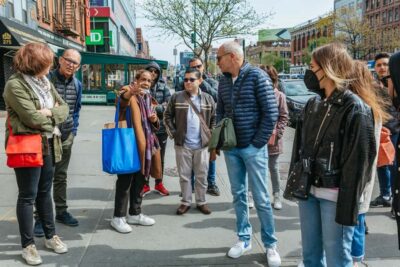
The maximum group size is 25 people. That is not a private walk, but it is more manageable than a large coach group. The portable audio and video system should make it easier to follow along, especially at busy intersections or when the group is gathered outdoors.
You need moderate physical fitness. The tour lasts approximately 3 to 4 hours and includes repeated walking between stops. The details do not specify the exact walking distance or seating at each location, so plan for an active morning rather than a relaxed ride with occasional stops.
Who gets the best value from the $57 price
I would recommend this tour to you if you want three things in one morning: Harlem street history, gospel music, and church-based social history. The live choir is the part that gives the experience its strongest sense of place, while the guide’s explanations provide the background you would likely miss on your own.
The price also covers a licensed guide and the structure of a carefully timed route. You are paying for interpretation, not just transportation or entry tickets. Most stops are free, and Apollo Theater admission is not included, so the value rests mainly on the guide and the service.
This may not be your best choice if you want a flexible schedule. The early start, fixed route, and active church setting leave less room for wandering or photography. The Apollo stop is also short, and the tour does not promise extensive interior access at every church.
It suits first-time visitors to Harlem, people interested in African-American religious history, music fans, and anyone who wants a more grounded alternative to a simple landmark checklist. A small group of up to 25 and the French-language option make it useful for several kinds of visitors.
Free cancellation is available if you cancel at least 24 hours before the start time. Changes or cancellations made inside that window are not refunded, so keep the 7:30 a.m. appointment in mind before you commit.
Should you book the Harlem gospel walk?
Book it if hearing gospel in an active church matters more to you than seeing a long list of interiors. The strongest parts are the live choir, the church-centered account of Harlem’s social activism, and the chance to connect Malcolm X Boulevard, the Apollo Theater, and historic congregations in one morning.
Skip it if you want a late start, a private guide, or a full Apollo Theater visit. For everyone else, $57 buys a focused, personal introduction to Harlem, with enough music and history to make the streets feel connected rather than scattered.
FAQ
Where does the Harlem gospel walking tour start?
The tour starts at Mt. Olivet Baptist Church, 201 Malcolm X Boulevard, New York, NY 10027.
What time does the tour begin?
The scheduled start time is 7:30 a.m.
Where does the tour end?
The tour ends at Abyssinian Baptist Church, 132 West 138th Street, New York, NY 10030.
Is the gospel service included?
Yes. The experience includes attending a real church service and listening to a live gospel choir.
Is the Apollo Theater admission included?
No. The Apollo Theater is a stop on the route, but admission is not included.
Is the tour available in French?
Yes. The tour is offered in English and French, with native speakers of each language.
Just listed around New York City
- NYC: Little Shop of Horrors Off-Broadway Ticket5 reviews
- Private NYC Airport Transfer: LGA to Manhattan – Up to 5★ 3.6 · 5 reviews
- New York City Tour in German★ 4.5 · 5 reviews
- New York: Hamilton and Washington Revolutionary Walking Tour★ 5.0 · 5 reviews
- NYC Freedom Tower Private Photo or Video Experience★ 4.0 · 6 reviews
- New York Afternoon Fall Foliage Cruise with Lunch★ 5.0 · 6 reviews
- Brooklyn Walking Tours by Locals: Private & 100% Personalized★ 4.0 · 6 reviews
- Southold Bay Oyster Farm Tour★ 5.0 · 6 reviews
Harlem & Gospel Tours, compared.
NYC Highlights Tour: Bronx, Brooklyn, Harlem, Queens & Coney
Read our review →
Contrasts Tour of Harlem, The Bronx, Queens & Brooklyn
Read our review →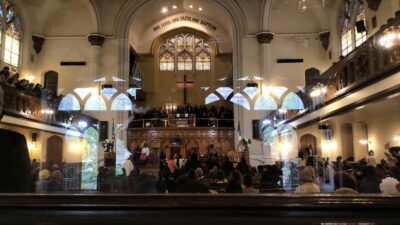
Browse the lists this tour appears in