
Reviewed · LOWER EAST SIDE & EAST VILLAGE TOURS
Lower East Side Food Tour: Taste NYC’s American Dream
New York’s food story is clearest when you eat it one neighborhood at a time. This three-hour walk connects the African Burial Ground, Five Points, Chinatown, Little Italy, and the Lower East Side through four snack stops, including dumplings, pizza, knish, and empanada. The food gives the history a useful anchor: you are not just hearing about immigration, you are tasting its lasting mark on the city.
I like the small group of no more than 14, which makes it easier to hear the guide and ask questions. I also like the range of places covered, from the original St. Patrick’s Cathedral to M’Finda Kalunga Garden and the street art of Nolita.
The main thing to understand is that this is a history walking tour with food, not a restaurant crawl. Most tastings are quick, and much of the three hours is spent outdoors. If you want several sit-down meals, this will feel light. If you want context with your snacks, it is a strong value at $54.14.
In This Review
- Key points to know before you book
- Why this Lower Manhattan route works
- African Burial Ground and the old Supreme Court district
- Columbus Park and the memory of Five Points
- Chinatown, dumplings, and a quick taste of daily life
- Little Italy, Mulberry Street, and an old Italian food shop
- Nolita and the original St. Patrick’s Cathedral
- Sara D. Roosevelt Park and Latin American New York
- The Lower East Side, tenements, and the final tasting
- What the four tastings are really worth
- Pace, weather, and group size
- Dietary limits and practical booking advice
- Who should book this Lower East Side food walk
- Should you book it?
- FAQ
- Where does the Lower East Side food tour begin?
- Where does the tour end?
- How long is the tour?
- How much walking is involved?
- What food is included?
- Are drinks included?
- Can the tour accommodate vegan or gluten-free diets?
- Is the tour suitable for children?
- What happens if it rains or snows?
- How far in advance can I cancel?
Key points to know before you book
- Four culturally linked tastings: Expect samples such as dumplings, pizza, knish, and empanada, with each stop tied to the neighborhood’s immigrant story.
- One mile at a relaxed pace: The walk includes regular stops, making it manageable for most ages and fitness levels.
- A history-first route: African American, Irish, Chinese, Italian, Jewish, German, and Latin American stories all appear along the way.
- Small groups matter: The maximum group size is 14, and some departures may be much smaller.
- Outdoor for most of the morning or afternoon: Wear shoes and clothing suited to the season. The tour runs in rain, snow, or sunshine unless conditions become unsafe.
- Not suitable for every diet: Vegan and gluten-free requirements cannot be accommodated, while other requests must be shared at least 24 hours ahead.
Why this Lower Manhattan route works
The route begins at 290 Broadway, close to the African Burial Ground National Monument, and ends in the Lower East Side near the Tenement Museum. That point-to-point design is useful. You get a guided introduction to several historic districts, then finish where you can keep exploring on your own.
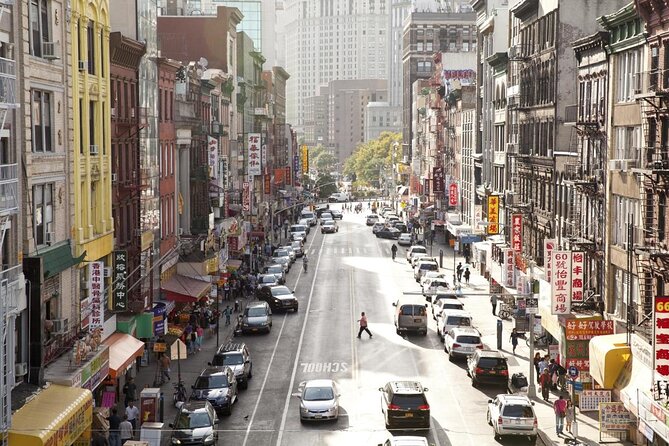
The neighborhoods are close on a map, but their stories are distinct. Chinatown, Little Italy, Nolita, and the Lower East Side overlap geographically, yet each reflects a different period of immigration and urban change. I like that the tour does not treat food as a detached list of things to eat. A dumpling, a slice of pizza, or a knish becomes a clue to who lived here and how communities adapted to New York.
The pace is designed for sightseeing rather than exercise. You walk about 1.6 kilometers, or one mile, over roughly three hours. That is not a hard distance, but city sidewalks, crowds, traffic crossings, and standing outdoors can make the outing feel longer on a hot or wet day.
More Lower East Side walks:
- NYC Lower East Side Walking and Food Tour
★ 5.0 · 646 reviews - NYC: Taste the American Dream a Lower East Side Food Tour
★ 4.8 · 307 reviews - East Village Rock and Roll Tour *Rock Junket Tours
★ 5.0 · 170 reviews
African Burial Ground and the old Supreme Court district
The first stop, the African Burial Ground National Monument, gives the tour a necessary starting point. The site recalls Africans, both enslaved and free, who were buried here through much of the 18th century. The guide explains how the burial ground was discovered and why the memorial’s design carries meaning.
You spend about five minutes here, so this is an introduction rather than a full museum visit. Still, it broadens the usual New York arrival story. The city’s past did not begin with European immigrant waves, and this stop makes that clear at the very start.
The route then reaches the New York City Supreme Court. Here, the guide discusses the polluted pond that once occupied the area and the poor Irish community that later lived nearby. You also see the courthouse known to television viewers from Law & Order.
This is a brief stop, but it shows how quickly Lower Manhattan changed. A former pond became part of a crowded immigrant district, and that district later became a familiar civic and television backdrop. I find these small layers more useful than a long list of dates because they help you read the streets as you walk.
Columbus Park and the memory of Five Points
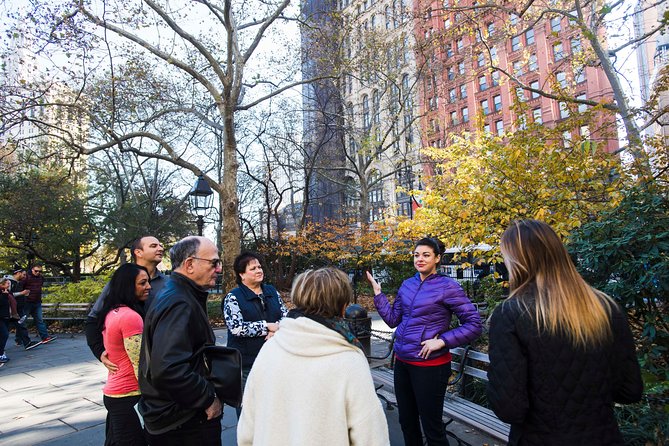
At Columbus Park, the tour reaches the edge of Chinatown and the former Five Points neighborhood. The guide uses historic photographs to show what this area once looked like and discusses Irish immigration and the hard conditions faced by new arrivals.
The stop lasts only about five minutes, so do not expect a detailed study of Five Points. Its value is visual and geographic. You are standing in a place often described through poverty, overcrowding, and crime, while today the park offers a calmer pause beside Chinatown.
This is also one reason the walk works well for families. Younger visitors may not remember every historical detail, but they can see how a neighborhood can change almost beyond recognition. Guides including Astrid have been praised for explaining these themes in a way that works for preteens, while guides such as Tavia have used photographs to make tenement history easier to picture.
Chinatown, dumplings, and a quick taste of daily life
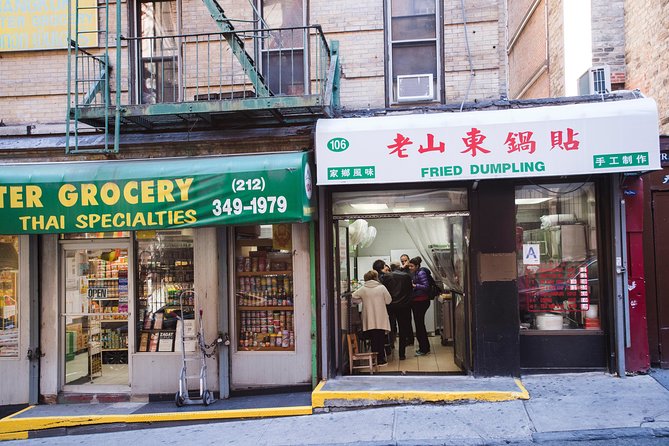
Chinatown is the first major food section. You walk through part of the neighborhood, hear about Chinese immigration, and stop at a dumpling shop described as a local favorite. The tasting may include dumplings or potstickers, depending on the day’s arrangements.
This is not a long restaurant meal. You should expect a sample and a short stop, with time for the guide to point out other places worth visiting in Chinatown. That format keeps the route moving, though it also explains why some people may wish for larger portions or more time at the tables.
I like this part because the food is simple and directly connected to the district. Dumplings are easy to share, usually approachable for children, and substantial enough to take the edge off hunger. Families have found the food lineup, including potstickers, pizza, and empanadas, workable for children ages seven and nine.
Chinatown is also one place where the group can become temporarily separated by crowds. Stay close to the guide and listen for instructions. A small group helps, but busy sidewalks remain busy sidewalks.
More American Dream visits:
- The Escape Game New Jersey: 60-Minute Adventure at American Dream
★ 5.0 · 341 reviews - American Dream DreamWorks Indoor Water Park Ticket
★ 3.5 · 137 reviews - American Dream Nickelodeon Universe Indoor Theme Park Ticket
★ 3.0 · 87 reviews - SEA LIFE New Jersey Admission Tickets at American Dream
★ 3.5 · 29 reviews
Little Italy, Mulberry Street, and an old Italian food shop
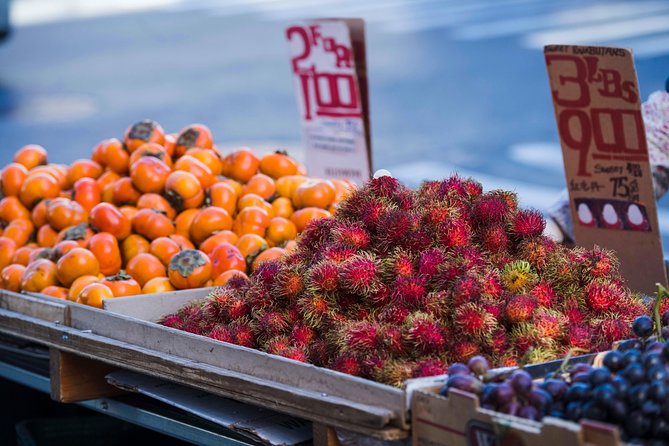
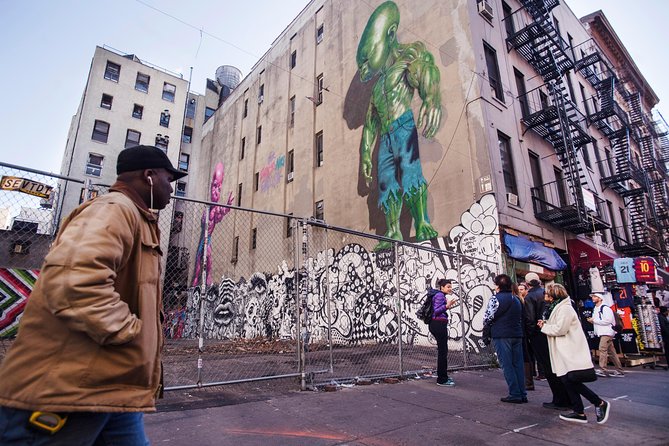
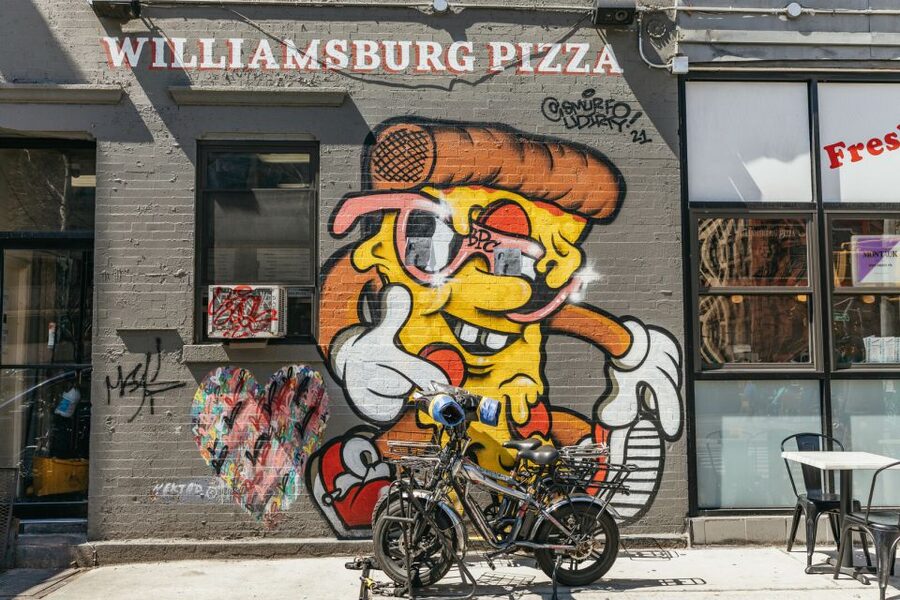
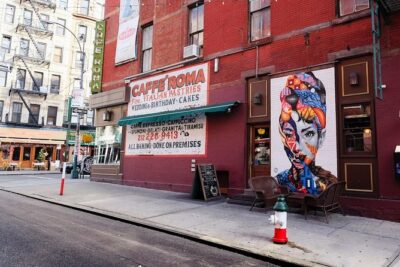
From Chinatown, you head toward Little Italy and follow parts of Mulberry Street. The guide talks about Italian immigration, organized crime stories, and the neighborhood’s changing identity. You also see modern street art, which adds a contemporary layer to the older storefronts and churches.
The food stop takes place at an historic local Italian shop. Pizza is one possible tasting, and it helps explain why this part of Lower Manhattan still carries an Italian label even as the boundaries of Little Italy have narrowed.
This section balances familiar images with a less polished story. It is easy to reduce Little Italy to restaurant signs and souvenir menus, but the tour brings in immigrant hardship and the role of family food shops. The tasting is modest, yet the setting gives it more meaning than a random slice bought between attractions.
The organized crime stories are part of the neighborhood’s popular image, but they do not take over the tour. The larger subject is movement: who arrived, where they lived, how businesses survived, and how one community’s district gradually became another’s.
Nolita and the original St. Patrick’s Cathedral
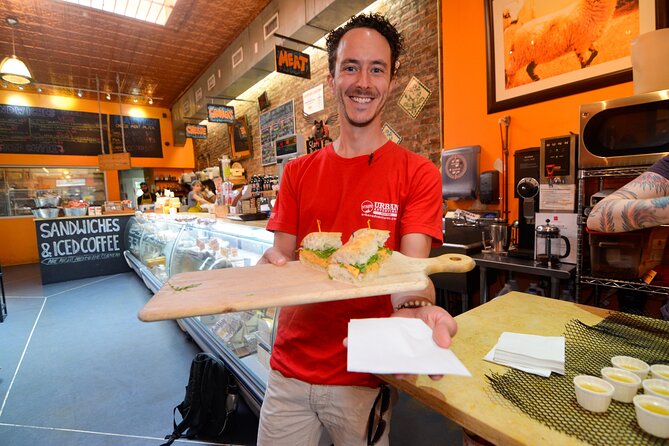
Nolita offers a sharp contrast. The neighborhood was once part of Little Italy, but now has hip bars, restaurants, and prominent street art. The guide uses the walk through Nolita to explain how Lower Manhattan continues to change.
That change is worth watching as you walk. New businesses sit near older religious and community buildings, and the tour asks you to notice the difference rather than simply label the area trendy. I appreciate this part because it connects immigration history to current gentrification without pretending the neighborhood is frozen in the past.
The Basilica of St. Patrick’s Old Cathedral appears along the way. This was the original St. Patrick’s, and the guide discusses the hardships faced by Catholic immigrants when they first came to the United States.
You only pause for about five minutes, so the cathedral is mainly an exterior landmark on this route. It still gives the Irish and Catholic story a physical presence. For visitors who enjoy architecture, it is one of the more memorable buildings between food stops.
Sara D. Roosevelt Park and Latin American New York
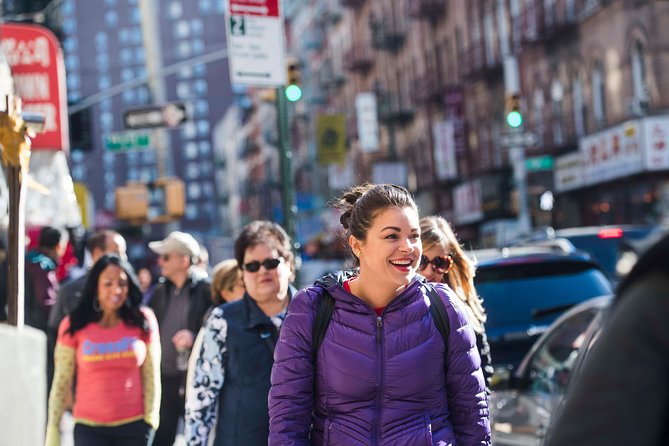
The route continues through the northern end of Sara D. Roosevelt Park. Named for Franklin D. Roosevelt’s mother, the park provides a short break from the city blocks and a chance to discuss later waves of immigration.
At M’Finda Kalunga Garden, the conversation turns toward Latin American immigration and the neighborhood’s changing population. This section prevents the tour from ending with the familiar Chinatown and Little Italy pairing. The Lower East Side’s story kept developing after the older European and Chinese communities became established.
The park stop lasts about ten minutes. It is not a major attraction visit, but it gives the walking route breathing room. On a warm day, this may be one of the more comfortable stretches. On a wet or cold day, you will still be outside, so bring the clothing you need rather than counting on indoor shelter.
The Lower East Side, tenements, and the final tasting
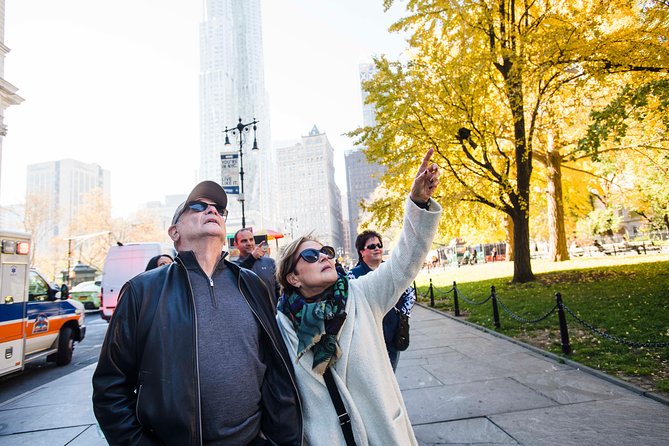
The final stretch focuses on the Lower East Side itself. The guide points out street art, community gardens, and the visible shift from crowded tenements and poverty toward gentrification. You hear about Jewish, German, and Latin American immigration before stopping for another traditional food sample.
A knish or empanada may appear here, depending on the food arrangements. These are useful closing tastings because they represent the mix of old and newer food traditions associated with the neighborhood.
The Lower East Side has plenty of trendy bars and restaurants today, but the tour looks for older food habits that remain in plain sight. That contrast is one of the experience’s best ideas. You are not being told that the past disappeared. You are shown how it survives in food shops, religious buildings, gardens, street names, and recipes.
The tour finishes near the Tenement Museum. The guide shares a little about the museum’s founding and can offer advice on tickets and the gift shop. Museum admission is not included, but the ending makes it easy to add a separate visit if you want a fuller look at immigrant apartment life.
What the four tastings are really worth
At $54.14 per person, the value depends on what you expect from a food tour. You receive four food samples, a three-hour guided walk, neighborhood interpretation, and tips for further eating and sightseeing. You do not receive drinks, extra food, or a sequence of full restaurant meals.
I see the price as fair for a compact introduction to several districts, especially if you are new to Lower Manhattan. A private guide for a very small party can make the cost feel even better, but you should not book this expecting four large servings to replace lunch.
Some food tours give you more tastings but less historical explanation. This one puts the balance closer to walking tour first, food tour second. Guides such as Astrid, Erik, Jesse, Ace, David, and Cullen have been singled out for their storytelling, warmth, and ability to answer questions. The guide can make a large difference here because the food portions are only part of what you are paying for.
A practical tip: eat a light breakfast, not no breakfast. One guide has been praised for plentiful food, but another experience felt rushed between samples, and a separate comment suggested that two additional tastings would have been welcome. Come hungry enough to enjoy the stops, but do not count on a full meal.
Pace, weather, and group size
The maximum group size is 14, which is small enough for a more personal feel without promising a private tour. Some departures may have only two people, creating an almost private experience, but you should treat that as a possibility rather than a guarantee.
Most of the tour is outdoors. Wear comfortable shoes, check the forecast, and bring water if the weather is warm. The route runs in rain, sunshine, or snow unless conditions create a safety risk, in which case it may be postponed or canceled.
The pace is generally relaxed, with regular stops and about one mile of walking. It suits families, older visitors, and anyone who prefers a gentle route. Still, one person found the tour rushed because so much ground and history had to fit into three hours. If you like lingering over food, taking photos, or browsing every shop, you may want more free time afterward.
Children under four can join free, and reduced pricing applies from ages four through 11. The food choices can work well for children, but parents should remember that this is also a serious history walk. The guide may discuss slavery, poverty, immigration hardship, and organized crime.
Dietary limits and practical booking advice
This experience cannot accommodate vegans or people with gluten allergies or intolerances. Other dietary requests should be shared at least 24 hours before the start so the local team can plan.
The tour is offered in English and includes a mobile ticket. It begins at 290 Broadway and ends in the Lower East Side near the Tenement Museum. Public transportation is nearby, and the end point leaves you in a useful part of the city for further exploring.
Free cancellation is available up to 24 hours before the start time. Inside that window, the price is not refunded and changes are not accepted. Keep the local cut-off time in mind when making plans.
Who should book this Lower East Side food walk
I would book this for a first or second visit to New York when I wanted a clear introduction to Lower Manhattan. It is especially useful if you have seen the major sights but do not yet understand how Chinatown, Little Italy, Nolita, and the Lower East Side fit together.
Families can do well here, particularly with children who enjoy trying small portions of familiar foods. Solo visitors and couples also benefit from the small group, since it is easy to ask questions and get neighborhood tips.
I would choose another kind of tour if your priority is a long lunch, fine dining, or a large number of tastings. I would also skip it if you need vegan or gluten-free food. For everyone else, the combination of dumplings, pizza, knish, and empanada with immigration stories gives you a useful, affordable way to get oriented.
Should you book it?
Book this Lower East Side tour if you want food with a strong sense of place. The best parts are the range of communities covered, the thoughtful route, and guides who bring buildings and streets to life through personal stories, photographs, and clear explanations.
Go in expecting four samples rather than a feast. You will spend most of the time walking and listening, with quick food stops along the way. If that balance suits you, $54.14 buys a practical introduction to one of New York’s most layered areas, plus a good starting point for your own Chinatown, Little Italy, and Lower East Side explorations.
FAQ
Where does the Lower East Side food tour begin?
The tour begins at 290 Broadway, New York, NY 10007, USA.
Where does the tour end?
It ends in the heart of the Lower East Side, near the Tenement Museum, in the New York, NY 10002 area.
How long is the tour?
The tour lasts approximately three hours.
How much walking is involved?
You walk about 1.6 kilometers, or one mile, at a relaxed pace with regular stops.
What food is included?
The experience includes four historic dish samples at four food stops. Possible samples include dumplings, pizza, knish, and empanada.
Are drinks included?
No. Drinks and additional food are not included.
Can the tour accommodate vegan or gluten-free diets?
No. Vegan diets and gluten allergies or intolerances cannot be accommodated. Other specific dietary requests should be provided at least 24 hours before the tour.
Is the tour suitable for children?
Yes. Children under four can join free, and reduced pricing applies to children ages four through 11.
What happens if it rains or snows?
The tour runs in rain, sunshine, or snow. If weather creates a safety risk, the experience may be postponed or canceled.
How far in advance can I cancel?
You can cancel at least 24 hours before the start time for a full refund. Cancellations or changes made within 24 hours are not accepted for a refund.
More New York City food tours
- NYC Bus Tour of Brooklyn, Bronx, Queens: Art, Food & Sports
★ 5.0 · 3,805 reviews - NYC: Chinatown & Little Italy Food Tour with 7 Flavorful Tastings
★ 5.0 · 2,733 reviews - Original NYC Guided Food Tour of Chinatown and Little Italy
★ 5.0 · 2,194 reviews - NYC: Greenwich Village Food Tour with 6 Locals Favorites Dishes
★ 5.0 · 1,812 reviews
Just listed around New York City
- NYC: Little Shop of Horrors Off-Broadway Ticket5 reviews
- Private NYC Airport Transfer: LGA to Manhattan – Up to 5★ 3.6 · 5 reviews
- New York City Tour in German★ 4.5 · 5 reviews
- New York: Hamilton and Washington Revolutionary Walking Tour★ 5.0 · 5 reviews
- NYC Freedom Tower Private Photo or Video Experience★ 4.0 · 6 reviews
- New York Afternoon Fall Foliage Cruise with Lunch★ 5.0 · 6 reviews
- Brooklyn Walking Tours by Locals: Private & 100% Personalized★ 4.0 · 6 reviews
- Southold Bay Oyster Farm Tour★ 5.0 · 6 reviews
Lower East Side & East Village Tours, compared.
Taste the American Dream a Lower East Side Food Tour
Read our review →
East Village Rock and Roll Tour *Rock Junket Tours
Read our review →

Guided tour of Lower East Side, Chinatown and Little Italy in French
Read our review →
Lower East Side, Chinatown and Little Italy Food Tour
Read our review →Browse the lists this tour appears in