
Reviewed · HIGH LINE & CHELSEA TOURS
New York City: Secrets Of High Line Park Walking Tour
New York’s High Line is more than a pleasant stroll above the streets. It is a lesson in how an old freight railway became a treasured public park, and this tour adds the surrounding story: Chelsea Market, the Meatpacking District, Little Island, and the bold towers of Hudson Yards. Guide Debby brings extra personality, old photos, local facts, and plenty of New York humor to the walk.
I especially like the full length of the High Line, since you do not stop after the most famous southern section. I also like the stop at Little Island, which gives you river views and a different kind of urban park before you reach the High Line. The main caution is the walking: expect about 1.5 miles over two and a half to three hours, mostly on your feet, in whatever weather the city sends your way.
In This Review
- Key points at a glance
- Why this High Line walk is different
- Meeting at Chelsea Market
- The Meatpacking District before the makeover
- Little Island and the Hudson River
- Walking the entire 1.45-mile High Line
- The Shed, Vessel, and Hudson Yards
- What Debby adds to the walk
- Timing, weather, and what to bring
- Is $47 a fair price?
- Who should book this experience?
- Final verdict: book it for the stories
- FAQ
- How long does the tour last?
- How far do you walk?
- Where does the tour begin?
- How do I find the meeting point?
- Where does the tour finish?
- Is the tour conducted in English?
- Is Little Island included?
- Are food and drinks included?
- What should I bring?
- Can I cancel for a refund?
Key points at a glance
- Walk all 1.45 miles of the High Line: You see the park from its southern entrance near Chelsea Market to Hudson Yards.
- Start inside Chelsea Market: Learn how the former Nabisco bakery connects to the Oreo cookie and the neighborhood’s industrial past.
- Add Little Island: Spend about 30 minutes in the unusual Hudson River park, with time for photos and a guided look around.
- Hear the city through Debby’s stories: Expect architecture, local history, pop culture, old photographs, and New York humor.
- Finish among modern icons: The route includes The Shed, Vessel, the High Line Plinth, and the Moynihan Train Hall Connector.
- Plan for moderate walking: Comfortable shoes, water, snacks, sunglasses, and rain gear will make a real difference.
Why this High Line walk is different
You can walk the High Line on your own for free, so the value here comes from the story and the route planning. A self-guided visit shows you flowers, railings, views, and buildings. A good guide explains why the railway was built, why it nearly vanished, and how the surrounding district changed from an industrial zone into one of Manhattan’s most expensive addresses.
This experience also links several places that are easy to visit separately but more meaningful together. Chelsea Market gives you the food hall and old factory setting. Little Island shows a newer idea of public space on the Hudson. The High Line connects those places to the striking buildings of Hudson Yards.
The pace is deliberately relaxed. That matters because the best part of the High Line is not simply getting from one end to the other. You will want time to stop for photographs, look down at the streets, notice public art, and hear about the buildings close to the path.
The tour costs $47 per person. That is not a bargain if you only want a casual park walk, but it is fair if you want a guide for the entire route and the connected neighborhoods. You also avoid the work of deciding where to enter, which direction to walk, and what deserves your attention along the way.
More High Line and Chelsea walks:
- High Line and Chelsea Small Group Tour
★ 5.0 · 1,238 reviews - Chelsea Market and High Line Guided Food Tour
★ 5.0 · 827 reviews - Manhattan Adventure Sightseeing Boat Tour – from Chelsea Piers
★ 5.0 · 688 reviews
Meeting at Chelsea Market
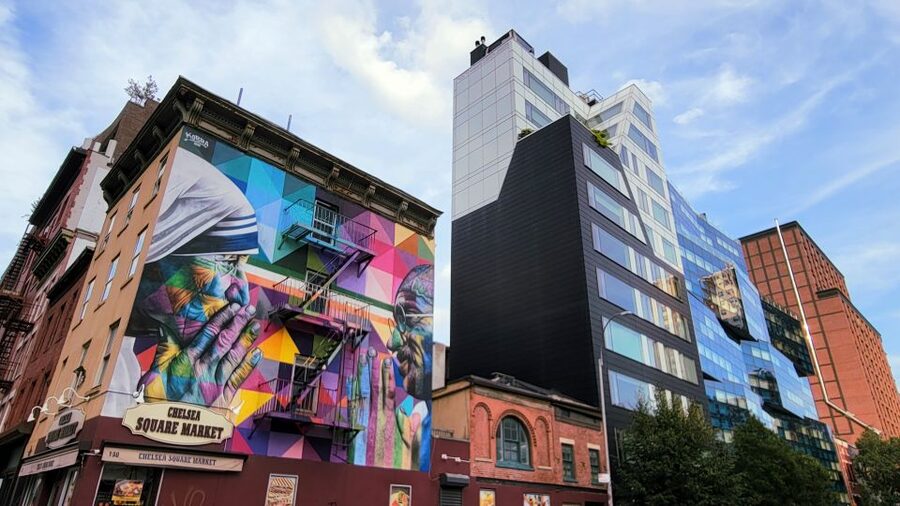
The meeting point is precise: the northwest corner of West 15th Street and Ninth Avenue, outside Chelsea Market at 75 Ninth Avenue. Look for the white Anthropologie banner wrapped around the northwest corner of the building.
This is a useful starting place because Chelsea Market is not just a convenient landmark. It occupies the former Nabisco bakery, once one of the world’s largest bakeries and the birthplace of the Oreo cookie. Your guide explains that industrial connection while leading you through the market for about 15 minutes.
Expect a food and shopping hall rather than a quiet museum. You may find it crowded, especially around popular food counters, so stay close to the guide during the opening explanation. Purchases are not included, and you should buy any drink or snack before the tour begins if you want to carry it along.
I like this beginning because it gives the High Line a practical reason for existing. The elevated railway was built to move freight through a working part of Manhattan. The market and nearby buildings help you picture that earlier city, before the district became a destination for restaurants, galleries, luxury shops, and new apartments.
The Meatpacking District before the makeover
From Chelsea Market, the walk turns to the Meatpacking District. The guide discusses its earlier industrial role and the hard years that followed, when the area became run-down and associated with drugs and crime.
This is one of the tour’s more useful contrasts. The polished streets around Chelsea Market can make the district seem as if it was always fashionable. They were not. The story is about decline, redevelopment, changing land values, and the way old industrial buildings were given new uses.
Debby’s style, according to the details available about her tours, includes personal New York perspective, architecture facts, pop culture references, and historic photographs shown on an iPad. That kind of visual aid can help when a building’s past is difficult to imagine from its current facade.
The district portion lasts about 15 minutes, so do not expect an exhaustive neighborhood tour. Instead, it works as a short bridge between the old bakery, the riverfront, and the elevated park.
Little Island and the Hudson River
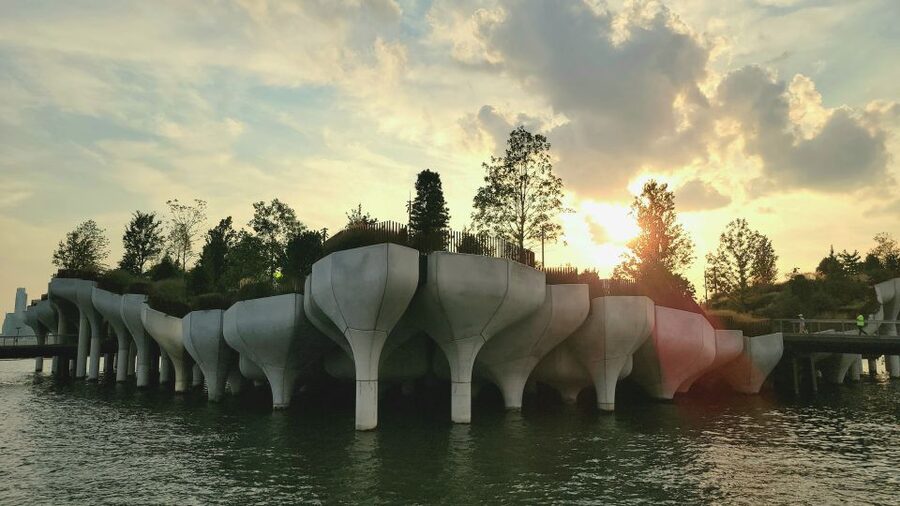
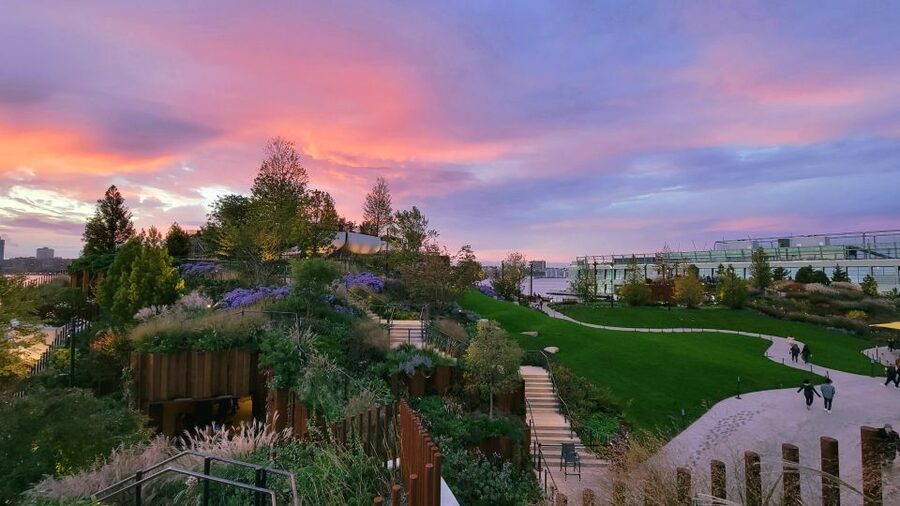
The route includes about 30 minutes at Little Island, a 2.4-acre park built out over the Hudson River. Its unusual shape is the first thing you notice. The park’s position gives you open views that feel quite different from the enclosed streets of Chelsea.
This stop is a real strength. It breaks up the walking and gives you time for photographs before the longer High Line section. Your guide provides context and points out views along the river, while you get a chance to look around at your own pace during the planned break.
Little Island also helps explain the changing west side of Manhattan. The area is no longer defined only by warehouses, rail lines, and freight yards. It now includes ambitious public spaces and modern architecture, often placed directly beside older buildings.
You should not treat this as a separate Little Island tour. Thirty minutes is enough for an introduction, some photos, and a look at the park’s design, but not for a long independent visit. If Little Island is a major priority for you, consider returning later with more time.
More New York City walking tours:
- SoHo, Little Italy, and Chinatown Walking Tour in New York
★ 5.0 · 3,153 reviews - Secrets of Grand Central Station Walking Tour New York City
★ 5.0 · 1,796 reviews - Greenwich Village Walking and Food Tasting Tour
★ 5.0 · 1,572 reviews - Artistic, Alternative Greenwich Village Walking Tour
★ 5.0 · 971 reviews
Walking the entire 1.45-mile High Line
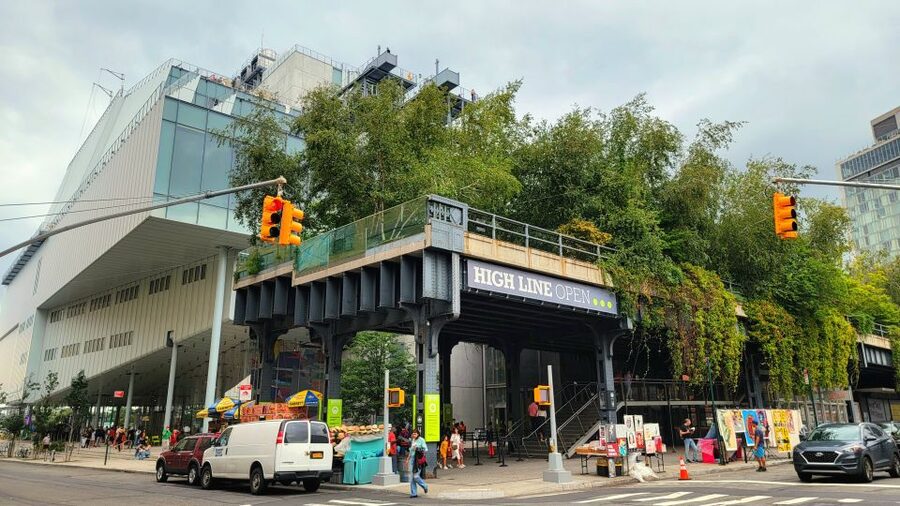
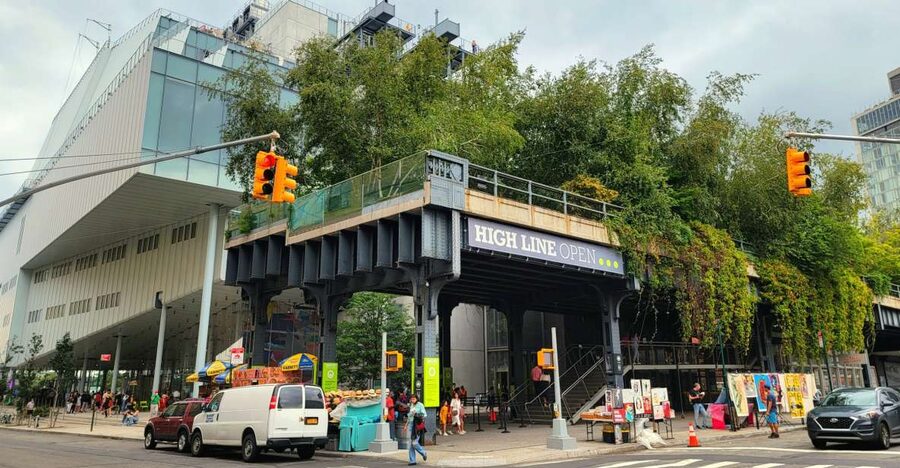
The main section takes about 75 minutes and covers the full 1.45-mile, or 2.33-kilometer, High Line. The park follows the former elevated freight rail line of the New York Central Railroad.
The railway’s survival is central to the experience. After the line stopped serving its original purpose, it faced demolition. Its transformation into an elevated greenway was influenced by Paris’s Promenade Plantée. Today, the High Line is one of New York’s most visited public spaces, with roughly six million visits a year.
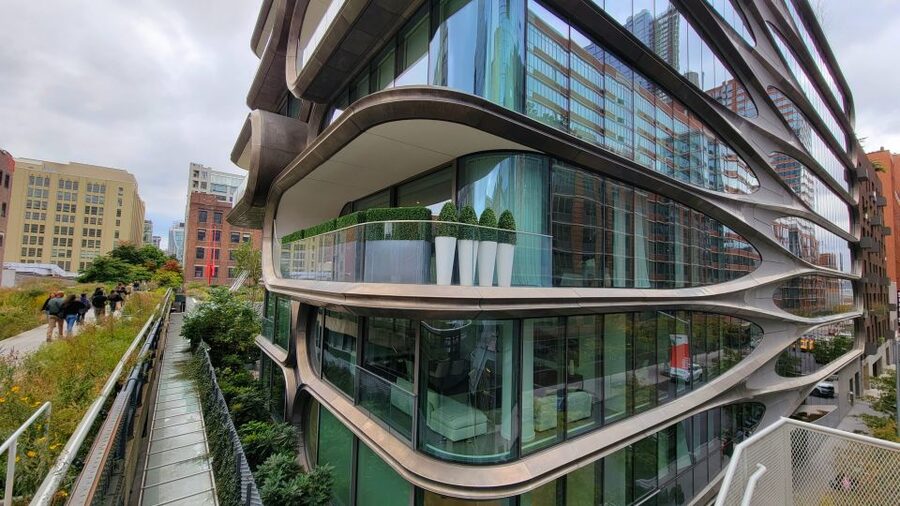
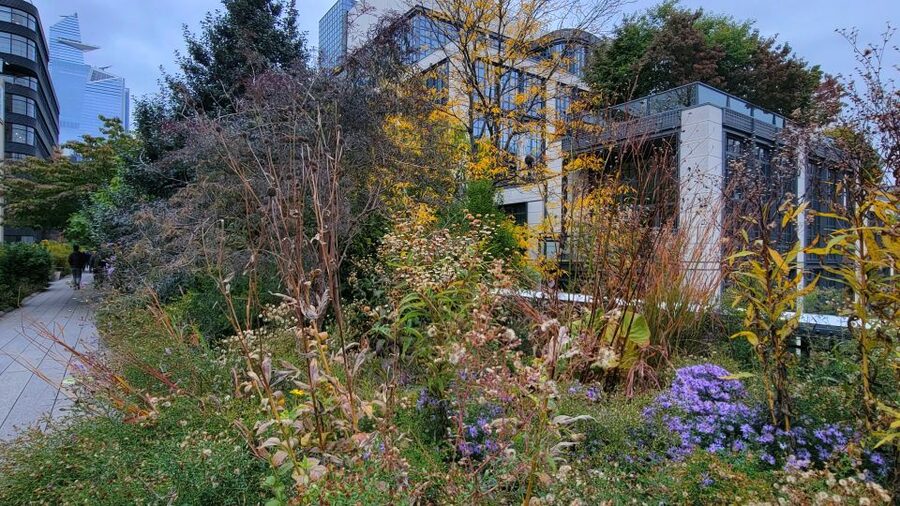
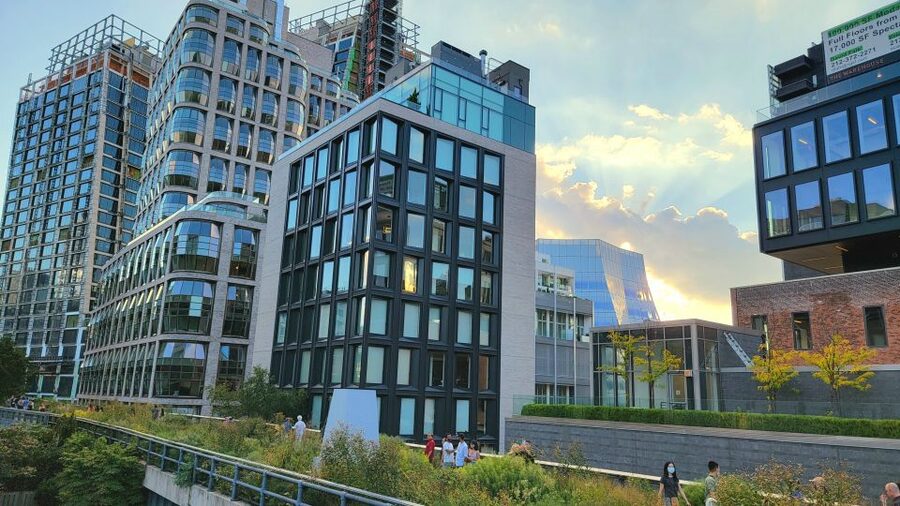
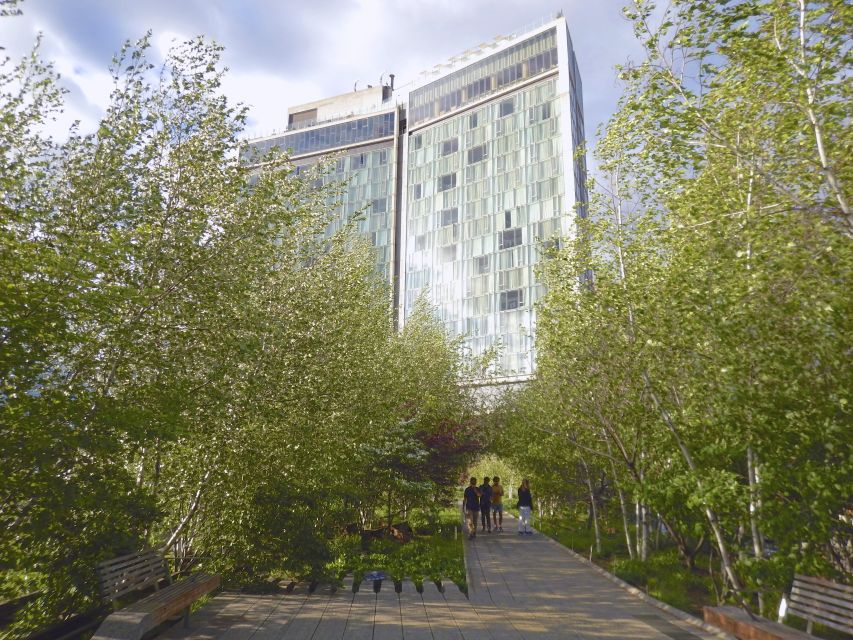
Walking the whole route is more satisfying than seeing only the famous southern stretch. You get a clearer sense of the park as a continuous urban idea, not merely a scenic walkway near Chelsea Market. The views shift as you go: streets below, old industrial structures, new apartment towers, office buildings, and the Hudson River.
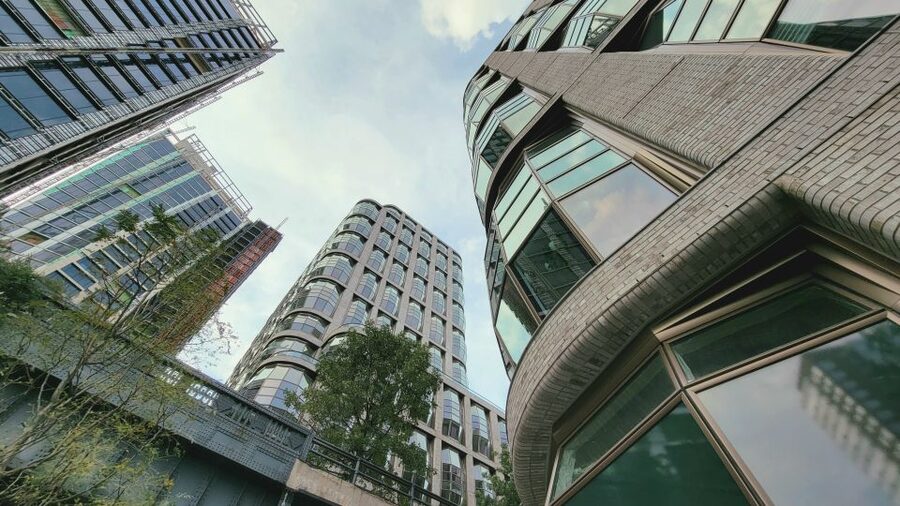
The guide’s role is especially useful here. Much of the High Line’s appeal is easy to see, but the surrounding architecture can become a blur of glass, concrete, balconies, and construction. Debby uses historic images and stories to show how the streets and buildings looked before the transformation.
You will also get help finding strong photo angles. Several of the available comments about Debby emphasize her attention to photo stops, and that is important on a route where the best view is not always directly ahead. Bring your camera, but keep it put away long enough to listen.
The park is elevated, but this is not a strenuous hike. The issue is duration rather than steep climbs. You will walk at a leisurely pace, yet you remain on your feet for much of the tour. Back problems, heart conditions, walking difficulties, and other physical limitations may make the experience unsuitable. Wheelchair users are specifically listed as not suitable for this activity.
The Shed, Vessel, and Hudson Yards
As the High Line continues north, the route passes The Shed for about five minutes. You do not get a full performance venue visit, but the stop gives your guide a chance to discuss the area’s newer architecture and the way cultural buildings fit into the redevelopment of the west side.
Next comes Vessel, the honeycomb-like structure at Hudson Yards. The tour allows about 10 minutes for a visit, guided explanation, and photographs. Its repeating staircases and copper-colored exterior make it one of the easiest places on the route to recognize in your pictures.
This is a quick stop, not an architectural lecture. You will learn how Vessel fits into the Hudson Yards project and have time to photograph it, but you should not expect a long interior exploration.
The route also includes about 10 minutes at the High Line Plinth, a space for large-scale public art. The installation changes over time, so the specific artwork can vary. The value of the stop is learning how the High Line uses art as part of the park rather than treating it as decoration added after the fact.
The final High Line-related stop is the Moynihan Train Hall Connector, another 10-minute photo and information stop. It links the elevated park area with the major transportation hub nearby and shows how new construction has extended the High Line’s reach beyond the original park itself.
The tour finishes at 20 Hudson Yards. You receive some free time in Hudson Yards, which is handy for a meal, shopping, or further sightseeing. The guided portion ends there, so plan your next activity with that location in mind.
What Debby adds to the walk
The strongest feature of this experience is the human guide. Debby is repeatedly described in the supplied material as warm, funny, and full of New York stories. She is a New York native, and her explanations range from 19th-century building history to architecture, art, photography, and pop culture.
She also sings and dances during her tours, according to the information provided. That will not suit everyone, but it gives you a clear picture of the tone: this is meant to be social and entertaining, not a formal academic lecture.
Her use of photographs on an iPad is particularly practical. A current luxury tower rarely tells you what stood there before. Old images give shape to the industrial past and make the neighborhood’s changes easier to understand.
The tour is conducted in English only. A translator cannot accompany you during the walk because of the distraction it may create for the group. If you are comfortable following an English-speaking guide for three hours, this should be manageable. If not, the storytelling will be harder to enjoy.
Timing, weather, and what to bring
The advertised duration is 150 minutes, while the route description allows two and a half to three hours. Allow the longer window, particularly if the group pauses for photographs or discussion.
The tour runs in all weather unless the provider says otherwise. Wear comfortable shoes, carry water, and bring sunglasses, snacks, and rain gear. Drinks and snacks are allowed during the walk, but purchases should be made before the start.
Rain may not ruin the experience, but it can make photography less appealing and the open riverfront section less comfortable. In severe or potentially dangerous weather, the tour may be cancelled and you will be offered another date.
Children must be accompanied by an adult, and unaccompanied minors are not permitted. The moderate activity level makes this a better match for people who enjoy a long city walk than for anyone looking for a short sightseeing stop.
Is $47 a fair price?
The High Line itself costs nothing to enter, which is the first fact to keep in mind. You are paying for the guide, the small-group format, the planned sequence of stops, and the added history of Chelsea Market, the Meatpacking District, Little Island, and Hudson Yards.
I would consider the price good value if this is your first visit to the High Line, if you want context for the architecture, or if you prefer not to manage the route yourself. It is also useful for repeat visitors who have walked the park before but want to understand how the district changed.
The value is weaker if you mainly want quiet time in the park or if you plan to spend hours at Little Island, Chelsea Market, or Hudson Yards. The tour gives each place an introduction, not unlimited free time.
A small group helps keep the walk personal, though the exact number of participants is not specified. You can expect a more focused experience than a large coach excursion, but you should still be ready to share the guide’s attention.
Who should book this experience?
I would recommend it to first-time New York visitors who want one well-organized walk through the city’s changing west side. It suits people who enjoy history, architecture, public art, photography, and stories about how neighborhoods change.
It also works well for repeat visitors. The High Line is familiar to many people as a park, but the connections to old freight rail, Nabisco, the Meatpacking District, and Hudson Yards add useful context.
You should think twice if you have serious heart or back problems, difficulty walking, or a condition that makes two and a half to three hours on foot uncomfortable. The tour is not suitable for wheelchair users, and the provider does not recommend it for people with mobility impairments.
Final verdict: book it for the stories
Book this tour if you want the High Line to make sense, not just look pretty. The full route, Little Island stop, Chelsea Market opening, and Hudson Yards finish create a well-shaped half-day introduction to Manhattan’s west side.
The biggest reason to choose it is Debby’s personal, lively approach, supported by old photographs and strong local knowledge. Skip it if you only want independent park time or need a fully accessible, low-walking outing. For most visitors who can manage the distance and enjoy a guide with plenty of personality, $47 buys much more than a walk above the street.
FAQ
How long does the tour last?
The activity lasts 150 minutes, and the walking tour is described as taking about two and a half to three hours.
How far do you walk?
The tour includes approximately 1.5 miles of walking and covers the full 1.45-mile High Line, or 2.33 kilometers.
Where does the tour begin?
It begins at the northwest corner of West 15th Street and Ninth Avenue, outside Chelsea Market at 75 Ninth Avenue.
How do I find the meeting point?
Look for the white Anthropologie banner wrapped around the northwest corner of the Chelsea Market building.
Where does the tour finish?
The guided tour finishes at 20 Hudson Yards, followed by free time in Hudson Yards.
Is the tour conducted in English?
Yes. The live tour is currently conducted in English only.
Is Little Island included?
Yes. The route includes a visit to Little Island with a photo stop, guided information, and about 30 minutes there.
Are food and drinks included?
No. Beverages and snacks are not included in the $47 price. You may bring them, but purchases should be made before the tour begins.
What should I bring?
Bring comfortable shoes, water, sunglasses, snacks, and rain gear.
Can I cancel for a refund?
You can cancel up to 24 hours before the activity for a full refund. You can also reserve now and pay later.
Just listed around New York City
- NYC: Little Shop of Horrors Off-Broadway Ticket5 reviews
- Private NYC Airport Transfer: LGA to Manhattan – Up to 5★ 3.6 · 5 reviews
- New York City Tour in German★ 4.5 · 5 reviews
- New York: Hamilton and Washington Revolutionary Walking Tour★ 5.0 · 5 reviews
- NYC Freedom Tower Private Photo or Video Experience★ 4.0 · 6 reviews
- New York Afternoon Fall Foliage Cruise with Lunch★ 5.0 · 6 reviews
- Brooklyn Walking Tours by Locals: Private & 100% Personalized★ 4.0 · 6 reviews
- Southold Bay Oyster Farm Tour★ 5.0 · 6 reviews
High Line & Chelsea Tours, compared.

High Line Park and Greenwich Village Food Tour
Read our review →
High Line, Chelsea, & Meatpacking District Walking Tour
Read our review →
Statue of Liberty Speedboat Tour – from Chelsea Piers
Read our review →
Foods of NY Tours Chelsea Market Food Tour & High Line Park
Read our review →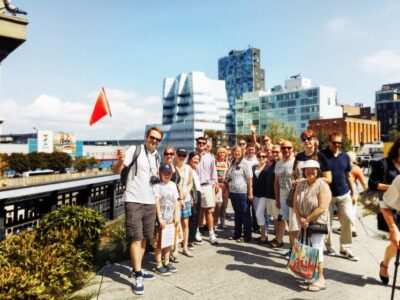
Hudson Yards & High Line Tour with Optional Edge Ticket
Read our review →
Chelsea Market, Meatpacking, High Line Food Tour
Read our review →Browse the lists this tour appears in