
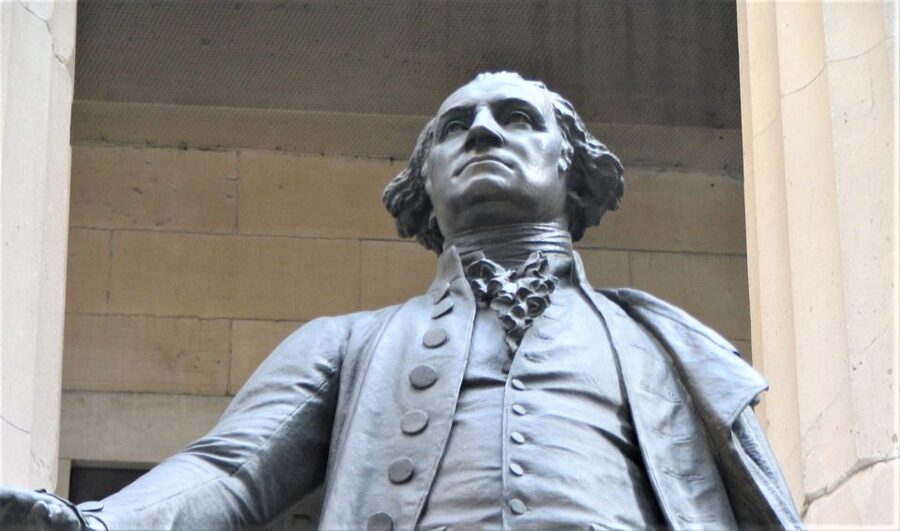
Reviewed · BROADWAY SHOWS & TICKETS
New York: Hamilton and Washington Revolutionary Walking Tour
The most striking part of this three-hour walk is the way Lower Manhattan becomes an outdoor stage for the American Revolution. You move from the old colonial port to the birth of the federal government, following the linked stories of George Washington and Alexander Hamilton.
I like the focus on real turning points, especially Washington’s daring retreat after the Battle of Brooklyn and his emotional farewell to his officers at Fraunces Tavern. I also like that the tour makes room for women, African Americans, and ordinary New Yorkers, not just the famous Founders. The main drawback is simple: three hours can only cover so much, so anyone hungry for the full Revolutionary War story may leave wanting more.
- Declaration Day at Bowling Green: Recreate the July 9, 1776 reading that helped turn protest into open rebellion.
- Washington’s narrow escape: Learn how the Continental Army survived the disastrous Battle of Brooklyn.
- Fraunces Tavern: Visit the setting of Washington’s moving farewell to his officers.
- Hamilton’s financial vision: See how his plans helped shape the new nation’s economy.
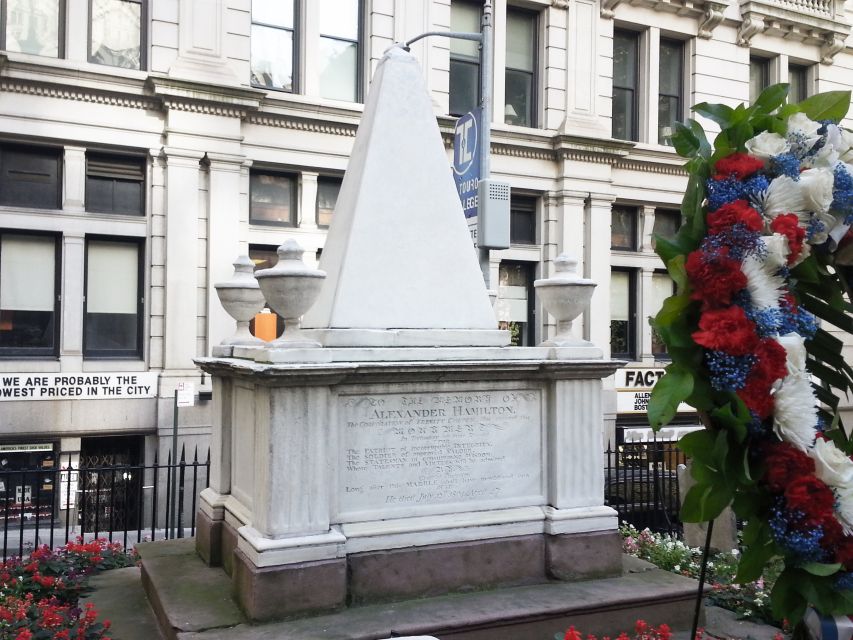
- Two Hamilton graves: Pay respects at the resting place of Alexander Hamilton and Eliza Schuyler Hamilton.
- A guide with serious background: Your English-speaking guide is a licensed New York City tour guide and historian with a master’s degree in American history and more than 25 years of experience.
In This Review
- Lower Manhattan Before It Became New York’s Financial District
- Bowling Green and the Moment New York Turned Against the Crown
- The Battle of Brooklyn and Washington’s Risky Retreat
- Hamilton’s New York Begins With Ambition
- Fraunces Tavern and Washington’s Farewell
- New York as the First Capital of the United States
- The People Often Left Out of Founder Stories
- The Hamilton Graves and the Cost of Public Life
- What the Three Hours Feel Like
- Is $47 a Fair Price?
- Who Will Get the Most From This Walk?
- Should You Book the Hamilton and Washington Revolutionary Walking Tour?
- FAQ
- Where does the tour meet?
- How long does the tour last?
- What language is the tour conducted in?
- Who leads the tour?
- What historical topics does the tour cover?
- Will I visit Fraunces Tavern?
- Will I see Alexander Hamilton’s grave?
- What should I bring?
- Does the tour run in bad weather?
Lower Manhattan Before It Became New York’s Financial District
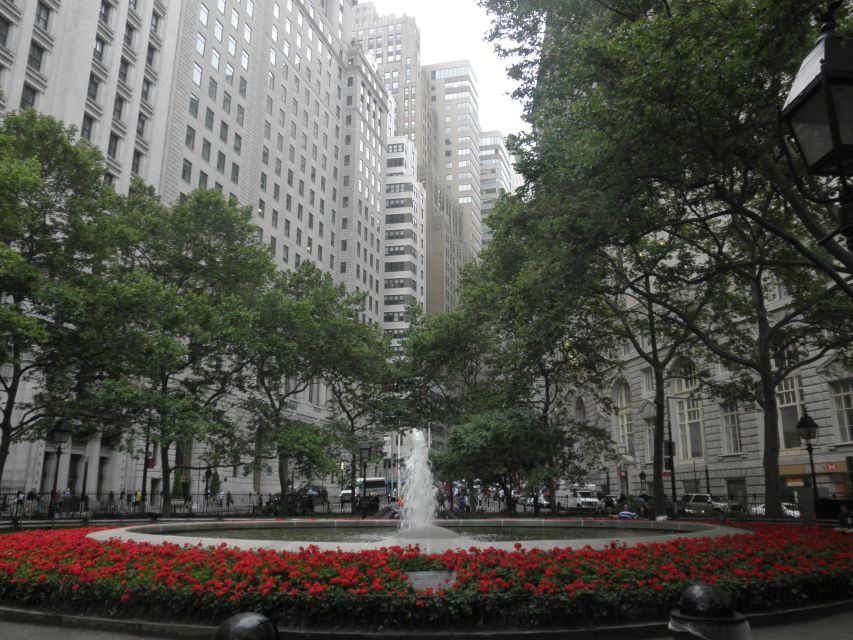
This tour gives you a useful change of scale. Modern Lower Manhattan can feel dominated by glass towers, traffic, and hurried office workers. The walk asks you to picture the same streets as a colonial port, a British-occupied city, a wartime capital, and the first seat of the new United States government.
That contrast is part of the fun. You are not visiting a distant battlefield or a preserved village. You are walking through one of the busiest parts of New York, where the old stories can be easy to miss unless someone points them out.
The meeting point is on the steps of 1 Bowling Green, home to the Alexander Hamilton U.S. Custom House and the National Museum of the American Indian. This is a practical place to begin because it puts you near several key Revolutionary-era locations, while the building itself connects the neighborhood to the commercial and political life of the young country.
Wear comfortable shoes. The tour lasts three hours and takes place outdoors in rain, snow, or sunshine, so check the forecast and dress for the conditions. Food and drinks are not included, and pets are not allowed.
Bowling Green and the Moment New York Turned Against the Crown
One of the early highlights is the historic park where colonists tore down a statue of King George III. The tour also recreates the public reading of the Declaration of Independence on July 9, 1776.
That scene matters because the Declaration was not merely a document read in a quiet room. In New York, the reading became a public act. It helped move the city from opposition to British rule toward a direct break with the Crown.
I like this part of the walk because it gives the Declaration a physical setting. You can picture people gathering in the park, hear the political stakes explained, and understand how quickly public anger could turn into action.
The stop also introduces the tour’s larger theme: the Revolution was not just a military contest. It was a struggle over loyalty, money, power, public opinion, and the future shape of government. Those questions follow you through the rest of the route.
More Broadway seats to book:
- NYC: Aladdin the Musical on Broadway
★ 4.8 · 1,800 reviews - NYC: The Lion King on Broadway
1,609 reviews - NYC: MJ the Musical on Broadway
1,510 reviews
The Battle of Brooklyn and Washington’s Risky Retreat
The Battle of Brooklyn was a major disaster for the American forces. Washington’s army suffered a devastating defeat, and the British position in New York became much stronger.
The important story here is what happened after the loss. Washington had to save his army from destruction, leading to a daring retreat. That withdrawal is often less famous than the battle itself, but it was crucial. Without it, the American cause might have ended very early in the war.
Your guide uses the streets of Lower Manhattan to explain the pressure facing Washington and his soldiers. The point is not simply to memorize troop movements. It is to understand how uncertain the Revolution looked at the time, and how close the American forces came to collapse.
This is likely the most useful section for anyone who knows the broad outline of the war but wants a clearer sense of its risks. The tour does not present independence as an easy or inevitable achievement. It shows the fear, confusion, and sacrifice behind it.
Hamilton’s New York Begins With Ambition
Alexander Hamilton’s connection to New York is central to the walk. You follow the story of a young, ambitious man who arrived hungry for opportunity and found a role in the Revolutionary cause and the new government.
The tour then connects Hamilton’s wartime partnership with Washington to his later work as the nation’s leading financial planner. That link is important. Hamilton was not only a soldier and political operator. He also had a clear idea of how the new country could gain financial strength and credibility.
You learn about Hamilton’s groundbreaking financial system and the political arguments surrounding it. These topics can sound dry in a classroom, but they make more sense when tied to the city where the new government was trying to function.
The focus is not only on Hamilton’s success. His ambition created enemies, and the tour follows the explosive rivalry between Hamilton and Aaron Burr. That conflict gives the story a personal edge, while also showing how bitter early American politics could become.
If you know Hamilton mainly from the musical, this section adds useful context. The real story includes familiar themes of ambition, immigration, politics, and personal rivalry, but the tour places them in the actual streets and institutions where they unfolded.
Fraunces Tavern and Washington’s Farewell
Fraunces Tavern is one of the most memorable locations on the route. It is famous as the place where Washington gave a moving farewell to his officers after the Revolutionary War.
This stop shifts the mood from battle and political argument to loyalty, exhaustion, and loss. Washington’s farewell was emotional because the officers had endured years of war together. The moment also raised a difficult question: what would happen to the military leader who had just helped win independence?
The tour uses the tavern to show Washington as more than a distant national symbol. He was a commander saying goodbye to people who had shared the danger with him. That human detail helps balance the larger political story.
Fraunces Tavern is also a good reminder that New York’s surviving historic places are not all grand government buildings. Taverns, streets, meeting spaces, and commercial buildings mattered because people used them for political debate, military planning, and personal gatherings.
More New York City walking tours:
- SoHo, Little Italy, and Chinatown Walking Tour in New York
★ 5.0 · 3,153 reviews - Secrets of Grand Central Station Walking Tour New York City
★ 5.0 · 1,796 reviews - Greenwich Village Walking and Food Tasting Tour
★ 5.0 · 1,572 reviews - Artistic, Alternative Greenwich Village Walking Tour
★ 5.0 · 971 reviews
New York as the First Capital of the United States
After the war, New York took on a new role as the first capital of the United States. The tour explains how the city became a setting for the first U.S. Congress and for the early work of the federal government.
This section helps you see the difference between winning independence and building a functioning country. The new nation had to decide how to raise money, manage debt, organize its government, and balance federal authority with local power.
Washington’s presidency and Hamilton’s financial plan come together here. Washington provided political leadership and public trust, while Hamilton pushed an ambitious program to stabilize the national finances. Their partnership was one of the important working relationships of the early republic.
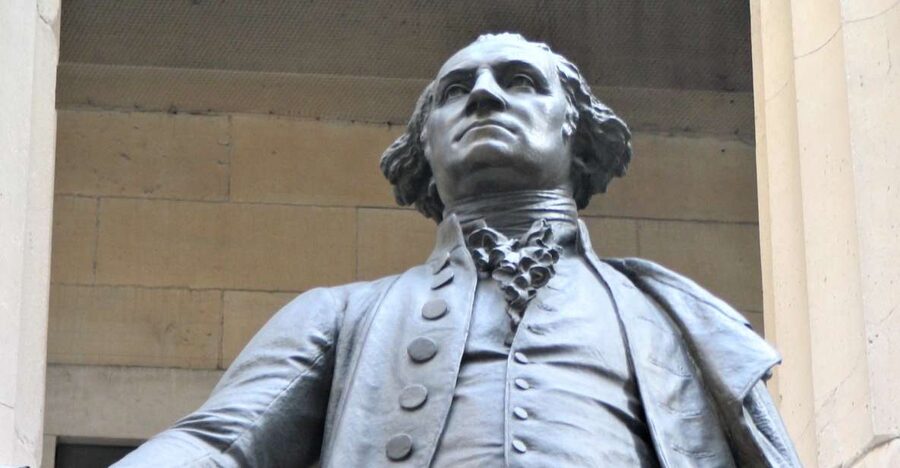
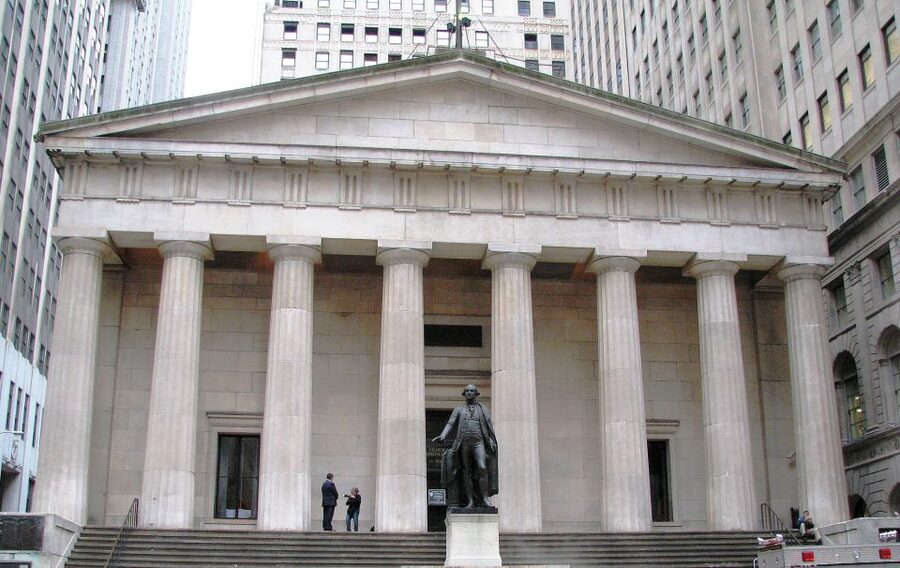
You also see the site connected with Washington’s inauguration as the first president, including the statue that marks the location. It is a compact way to connect the Revolution with the constitutional government that followed it.
I appreciate that the tour does not stop at the military victory. Many history walks end once the fighting is over. This one continues into the harder work of administration, finance, and political compromise.
The People Often Left Out of Founder Stories
The tour also brings attention to women, African Americans, and everyday New Yorkers who helped shape the country’s early identity. That wider focus makes the walk stronger.
Founding-era stories can become a parade of famous men. Here, you are encouraged to think about the people whose labor, courage, resistance, and resilience supported the city during war and political change.
The supplied information does not give a full list of the individuals covered, so you should not expect a separate stop for every group or person. Still, this is an important part of the tour’s approach. It helps you ask who had power, who carried the burden of war, and whose work was left out of the traditional national story.
That broader lens is especially useful if you are traveling with teenagers or anyone who finds political history more interesting when it includes real lives. It also keeps the tour from becoming only a Washington and Hamilton biography.
The Hamilton Graves and the Cost of Public Life
The final resting place of Alexander Hamilton and Eliza Schuyler Hamilton gives the tour a quiet ending. After the public arguments, financial plans, and political rivalry, you arrive at a place tied to both Hamilton and his wife.
Including Eliza matters. Hamilton’s story is often presented as a solo rise from obscurity, but his family life and partnership with Eliza were part of his world. The stop adds a personal dimension to a figure often remembered mainly for his career and death.
This is also a chance to think about the cost of the public life Hamilton chose. His work helped shape the financial system of the United States, but his ambition brought him into repeated conflict. His rivalry with Burr ended in tragedy, and the tour connects that personal story to the wider political culture of the early republic.
The graves provide a natural moment to pause. After three hours of battles, speeches, government, and rivalry, the setting brings the story back to individuals rather than institutions.
What the Three Hours Feel Like
Three hours is long enough to create a clear story but short enough to fit into a full day in New York. You should expect a steady walking experience with regular historical explanations and stops at places connected to Washington, Hamilton, the Revolution, and the first federal government.
The guide uses period images and vivid storytelling to help you picture locations that have changed greatly. That visual support matters in Lower Manhattan, where modern streets can make eighteenth-century events hard to imagine.
The walk is led in English by a professional licensed New York City guide and historian with a master’s degree in American history. The guide also has more than 25 years of experience, which should be useful when you want to ask follow-up questions. One participant with a strong interest in the Revolution found that each answer raised more questions, a good sign for curious history fans, though perhaps less ideal if you prefer a short, simple sightseeing tour.
The tour takes place rain or shine, including snow. That is worth treating as a real planning issue, not a minor note. Comfortable shoes and weather-appropriate clothing will make a noticeable difference, especially because the experience is entirely built around being outside and moving between sites.
Is $47 a Fair Price?
At $47 per person, this is not the cheapest way to walk around Lower Manhattan. You can visit many streets and public places on your own for free, and the area has plenty of self-guided history resources.
The value comes from the structure and the guide. Instead of seeing a park, a tavern, or a monument as isolated sights, you get a connected story about the Revolution, Washington’s leadership, Hamilton’s financial program, and New York’s role as the first capital.
The guide’s license, master’s degree in American history, and more than 25 years of experience also help explain the price. You are paying for interpretation, not transportation, admission, food, or drinks. If you already know the subject well and enjoy reading plaques on your own, the cost may feel less appealing.
If you want the history placed in order and tied to specific streets, $47 is reasonable for a three-hour, specialist-led walk. It offers stronger value for people who would otherwise spend hours trying to connect scattered sites on their own.
Who Will Get the Most From This Walk?
I would choose this tour if you have a strong interest in the American Revolution, enjoy the Hamilton musical but want the real setting, or like city walks that explain how politics shaped a place.
It also suits visitors who want more than famous names. The attention to women, African Americans, and everyday New Yorkers adds useful depth without losing the main Washington and Hamilton story.
You may want to skip it if you dislike outdoor walking, need a fully indoor activity, or want a broad survey of all New York history. The focus is specific: the Revolution, the early republic, Washington, Hamilton, and the political birth of the United States.
Families should consider the three-hour length and the subject matter. Older children and teenagers with an interest in battles, political rivalry, or the musical may enjoy it. Younger children may find the financial and governmental sections slow.
Free cancellation up to 24 hours before the start gives you some flexibility, and you can reserve now and pay later. Check the available starting times when booking, since the exact schedule is not fixed here.
Should You Book the Hamilton and Washington Revolutionary Walking Tour?
Book it if you want a story-led history walk rather than a basic list of landmarks. The strongest parts are the Declaration reading, Washington’s retreat, Fraunces Tavern, Hamilton’s financial plans, and the closing visit to the Hamilton graves.
I especially recommend it for people who want to understand how the Revolution led into the difficult work of running a country. The one caution is that three hours will leave you with more questions than answers if the period already fascinates you. For many people, that is a benefit. For anyone seeking only a quick introduction, it may be more detail than needed.
FAQ
Where does the tour meet?
The meeting point is on the steps of 1 Bowling Green, at the Alexander Hamilton U.S. Custom House and the National Museum of the American Indian.
How long does the tour last?
The walking tour lasts three hours.
What language is the tour conducted in?
The live tour is conducted in English.
Who leads the tour?
The tour is led by a professional licensed New York City tour guide and historian with a master’s degree in American history. The guide has more than 25 years of experience.
What historical topics does the tour cover?
It covers the Declaration of Independence reading in 1776, the Battle of Brooklyn and Washington’s retreat, Washington’s farewell to his officers, his presidency, Hamilton’s financial plan, the first U.S. Congress, and the Hamilton and Burr rivalry.
Will I visit Fraunces Tavern?
The itinerary includes the famous tavern connected with Washington’s emotional farewell to his officers.
Will I see Alexander Hamilton’s grave?
Yes. The tour includes the resting place of Alexander Hamilton and his wife, Eliza Schuyler Hamilton.
What should I bring?
Bring comfortable shoes and clothing suited to the weather.
Does the tour run in bad weather?
Yes. The tour takes place in snow, rain, or sunshine. Food and drinks are not included, and pets are not allowed.
Just listed around New York City
- NYC: Little Shop of Horrors Off-Broadway Ticket5 reviews
- Private NYC Airport Transfer: LGA to Manhattan – Up to 5★ 3.6 · 5 reviews
- New York City Tour in German★ 4.5 · 5 reviews
- NYC Freedom Tower Private Photo or Video Experience★ 4.0 · 6 reviews
- New York Afternoon Fall Foliage Cruise with Lunch★ 5.0 · 6 reviews
- Brooklyn Walking Tours by Locals: Private & 100% Personalized★ 4.0 · 6 reviews
- Southold Bay Oyster Farm Tour★ 5.0 · 6 reviews
- NYC: Holiday Lights Guided Bus Tour★ 4.3 · 6 reviews
Broadway Shows & Tickets, compared.







Broadway and Times Square Insider Tour with Theater Professional
Read our review →
Browse the lists this tour appears in