
Reviewed · CENTRAL PARK HORSE CARRIAGE RIDES
NYC Horse and Carriage Central Park Tours
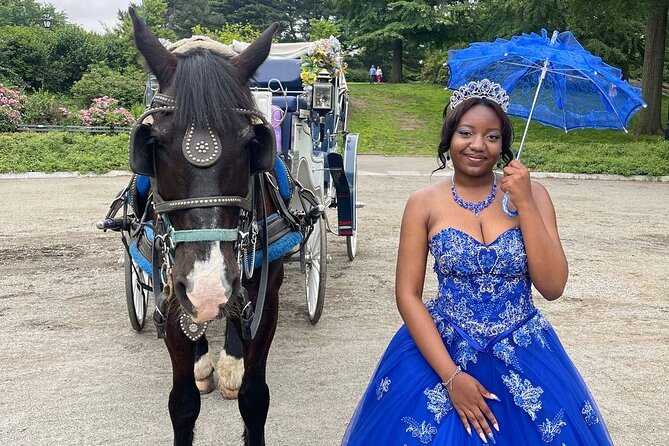
The best part of this ride is the change of pace. Manhattan may be loud and fast just outside the park, but from a private carriage you can roll beneath elm trees, pass fountains and bridges, and see Central Park without covering miles on foot. It is a gentle introduction to a very large park.
I like the private format, since your group gets the carriage and the driver’s attention rather than joining a packed sightseeing vehicle. I also like the chance to choose a ride time, plus the useful commentary from guides such as Leo, Peter, and Pharvis. One thing to keep in mind: the ride may stop only once for a bathroom break, and photo stops can feel brief when the next booking is waiting.
In This Review
- Key points to know before you book
- Why a horse carriage can be a smart way to see Central Park
- Starting at Central Park South
- From the Carousel to Wollman Rink
- The Dairy and the Children’s District
- The Mall and the Balto statue
- Rumsey Playfield and the Model Boat Pond
- The Lake, Loeb Boathouse, and Bethesda Fountain
- Cherry Hill and the Bow Bridge area
- Strawberry Fields and the western side
- Sheep Meadow, Tavern on the Green, and Pinebank Arch
- What the timing really allows
- Value, comfort, and who should book
- Should you book this Central Park carriage ride?
- FAQ
- How long does the Central Park carriage tour last?
- Where does the tour begin?
- Where does the tour end?
- Is this a private tour?
- What ticket format is provided?
- Are service animals allowed?
- What happens if bad weather cancels the ride?
Key points to know before you book
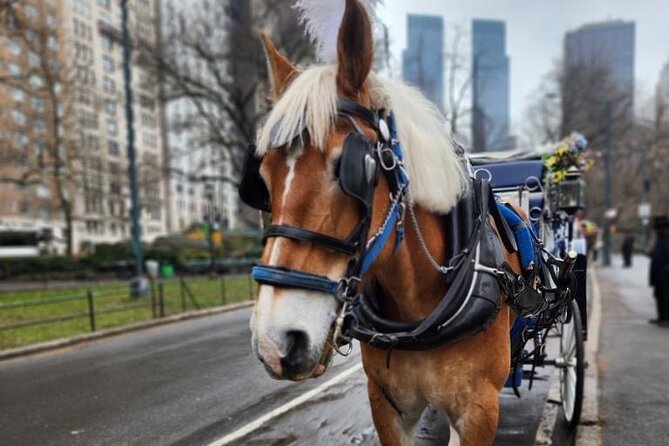
- A private 40 to 45 minute ride gives your group a restful way to see major Central Park sights.
- The Ritz-Carlton meeting point is at 50 Central Park South, with the ride returning there.
- Guide quality matters, and Leo, Peter, and Pharvis have each been singled out for friendly service, humor, and clear park information.
- Bethesda Fountain, Cherry Hill, and Strawberry Fields provide the strongest photo and sightseeing moments.
- You stay in the carriage for most of the route, so this works best for a broad overview, not a close look at every attraction.
- Free cancellation is available up to 24 hours before departure, while bad weather may lead to a new date or full refund.
Why a horse carriage can be a smart way to see Central Park
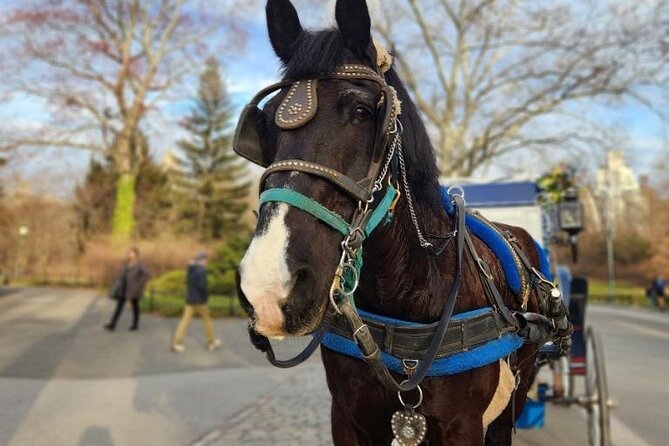
Central Park covers a great deal of ground, and its main sights are spread across winding paths, open lawns, wooded corners, and water views. A walking tour can give you more time at each place, but it also asks you to cover that ground on foot. This carriage ride gives you a pleasant overview without turning your morning or afternoon into a long hike.
The ride lasts about 40 to 45 minutes and is private for your group. That matters if you want to ask questions, take pictures, or simply enjoy a quiet stretch of New York without keeping pace with strangers.
The driver provides commentary as you go. The quality of that narration depends on your guide, but the named guides associated with this experience include Leo, Peter, and Pharvis. Leo has been praised for introducing his horse Lily and stopping at several landmarks for pictures. Pharvis is described as funny and well informed, while Peter is noted for making the trip relaxing and informative.
Those details are useful because the driver is not just steering the horse. The driver shapes the whole experience. A good one helps you notice why a fountain, bridge, or patch of grass matters instead of letting the park blur into a series of trees.
More carriage rides through the park:
- Official NYC Horse Carriage Rides in Central Park since 1979 ™
★ 5.0 · 2,365 reviews - Carriage Ride in Central Park (VIP – PRIVATE) Since 1964™
★ 4.0 · 1,074 reviews - NYC: Guided Central Park Horse Carriage Ride
★ 4.8 · 877 reviews
Starting at Central Park South
The meeting point is outside The Ritz-Carlton New York, Central Park, at 50 Central Park South. This is a clear location on the park’s southern edge, but allow time to find the exact carriage and driver. One booking had a delayed meeting, with the passenger waiting about 15 minutes and sending several messages before receiving a call.
That does not appear to be the usual pattern, but it is a sensible reason to arrive a little early and keep your phone available. Another ride handled a late arrival caused by a plane and traffic by placing the group on the next available carriage. Flexibility may be possible, but you should contact the provider rather than assume it.
Once you meet your driver, the carriage takes you into the park and returns to the same meeting point. Mobile tickets make the start simple. You do not need a printed voucher, and confirmation arrives when you book.
From the Carousel to Wollman Rink
The southern part of the route brings you near the Central Park Carousel. The attraction has entertained people since 1871, and about 250,000 riders use it each year. You may not have time to ride it during this carriage trip, but its long connection with the park helps explain why this corner feels lively and family-focused.
Nearby Wollman Rink is one of Central Park’s best-known seasonal attractions. It opened in 1949 and offers ice skating in fall and winter, with the Manhattan skyline around the rink. From a carriage, you get a quick look rather than skating time, but the setting is one of the more memorable city-and-park combinations on the route.
The Chess and Checkers House adds another small piece of park life. Built in 1952, it has an octagonal brick building surrounded by 24 game tables beneath a wooden trellis. This is a good example of Central Park’s mix of grand scenery and simple public spaces. The park is not only about monuments and views. It also gives people places to sit down and play.
The Dairy and the Children’s District
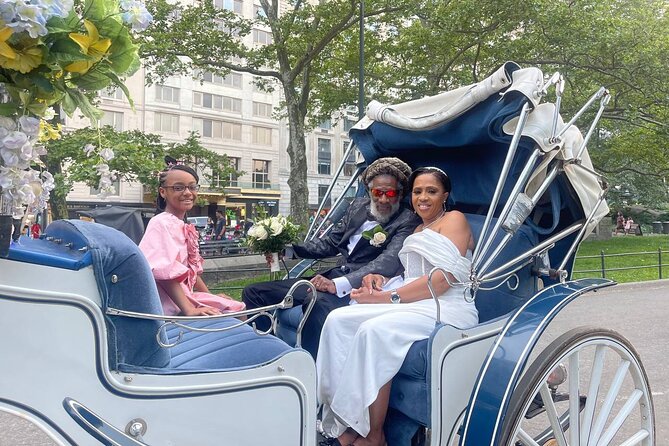
The Children’s District was completed in 1872, at a time when modern playgrounds did not yet exist. The Dairy was part of the effort to create a place suited to children visiting the park.
That background gives this section more meaning than a quick glance might suggest. Central Park was planned as a place for city residents to rest and spend time outdoors, and the Children’s District shows that families were part of that plan from the beginning.
You will not get the same close look you would have on foot, but the carriage gives you a useful sense of how the park’s different areas connect. Families may especially appreciate this part of the route, while visitors focused on famous monuments may find it less essential.
More Central Park tours:
- Central Park Pedicab Guided Tours
★ 5.0 · 7,108 reviews - Private Central Park Pedicab Tour
★ 5.0 · 6,981 reviews - NYC: Central Park Bike Rentals
★ 4.2 · 2,528 reviews - NYC: Central Park Bike Rental
★ 4.1 · 1,651 reviews
The Mall and the Balto statue
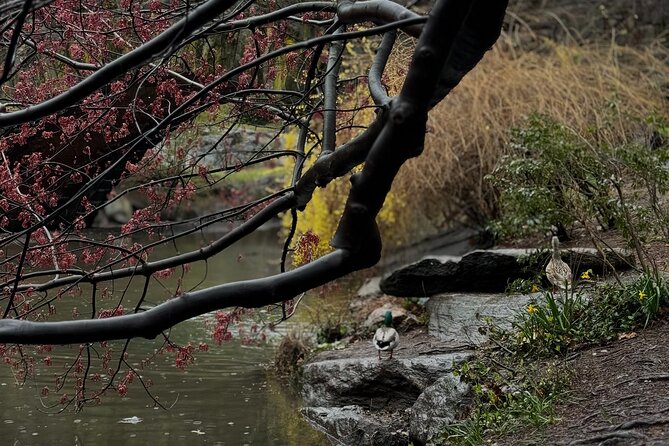
The Mall is one of the park’s most formal spaces. Two rows of American elm trees line the wide, straight path, creating a classic promenade where people stroll, sit, listen to music, look at monuments, and watch one another.
The design comes from Frederick Law Olmsted and Calvert Vaux, the men who shaped Central Park. The Mall is one of the few places where the park’s original public purpose is easy to read. It was made for people to gather and move through a carefully framed setting, not simply to pass between attractions.
The Balto statue offers a different kind of story. Balto was a sled dog involved in the 1925 effort to carry diphtheria vaccine to Nome, Alaska. Twenty dog teams and mushers moved the medicine nearly 700 miles through blizzards, extreme cold, ice, and mountain country in five days and seven hours.
The statue is a favorite with children, who often recognize it as a dog monument even before hearing the full story. Your driver’s commentary can turn a brief stop into a memorable piece of American history.
Rumsey Playfield and the Model Boat Pond
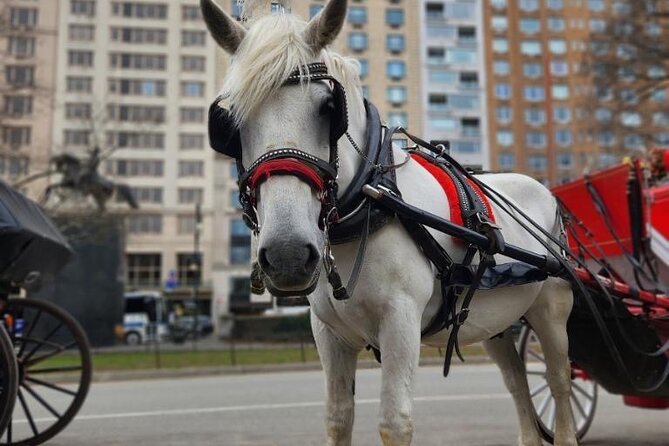
Rumsey Playfield has changed uses over the years. The site once held a restaurant called the Casino, designed by Calvert Vaux. Despite its name, it had nothing to do with gambling. The word referred to a small house in Italian.
Today, Rumsey Playfield is connected with performances and open-air activity. From the carriage, you get a passing view of how Central Park’s public spaces have been adapted over time.
The Model Boat Pond, also called the ornamental pond, is one of the park’s quieter attractions. Children and hobbyists launch miniature sailboats and yachts here, with boats stored and rented at the nearby Kerbs Boathouse, which also has a cafe.
This is the sort of stop I appreciate on a first visit because it shows a calmer side of the park. It is less famous than Bethesda Fountain, yet it gives you a glimpse of ordinary recreation in the middle of Manhattan.
The Lake, Loeb Boathouse, and Bethesda Fountain
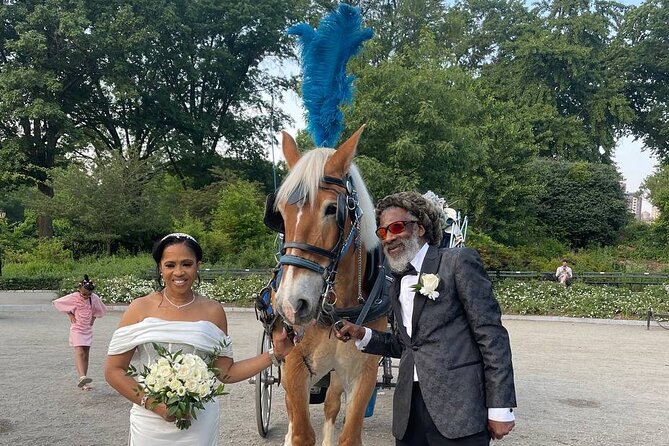
The Lake is one of the route’s most attractive settings. Loeb Boathouse sits on its eastern edge and serves as a launch point for rowboats. A carriage ride cannot give you the same experience as rowing across the water, but it does provide a broad view of this central park setting.
A major highlight is the approach to Bethesda Terrace and Bethesda Fountain. At the fountain’s center is Angel of the Waters, a bronze angel with raised wings stepping onto a stone that sends water into the basins below. Water then spills into a large circular pool.
You get about five minutes at Bethesda Fountain, with no admission charge. That is enough for a quick picture and a look around, but not enough for a leisurely visit to the terrace, arcade, and nearby paths. If this is the sight you most want to explore, plan to return on foot later.
The fountain is especially photogenic because it combines sculpture, water, architecture, and open views. The carriage gives you a relaxed arrival, but do not expect every photo stop to be long. One passenger found the end of the ride rushed during a busy holiday period.
Cherry Hill and the Bow Bridge area
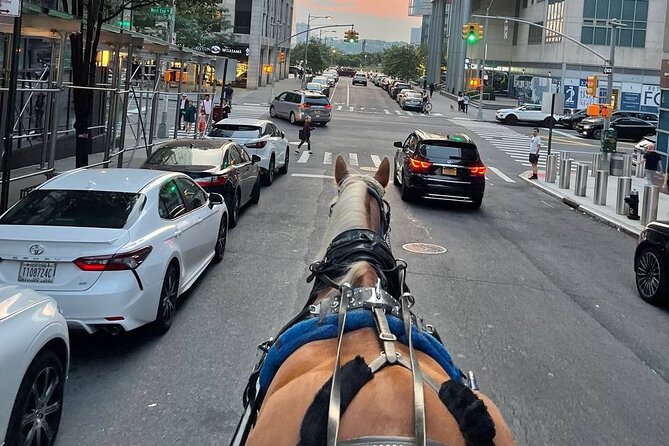
Cherry Hill Fountain sits at the center of the carriage concourse at the top of Cherry Hill. Its design is unusually detailed, with a stone base, small saucers for birds, an eight-globe light fixture, and water that drips into a granite and tile base before reaching the basin.
You get about five minutes here as well. It is a short stop, but the fountain rewards a close look because it is more delicate than the larger Bethesda Fountain. The stop also gives you a chance to take pictures without having to walk far from the carriage.
The Bow Bridge area is another important photo point. The bridge was created as an entrance to the Ramble and as a link toward Bethesda Terrace. It offers broad views across the Lake and nearby scenery, which explains its popularity for photographs and marriage proposals.
The route’s timing matters here. You can see the bridge and its setting from the carriage, but the best way to appreciate its curves and views is on foot. Think of this ride as a preview that helps you decide where to return.
Strawberry Fields and the western side
Strawberry Fields is a five-acre memorial to John Lennon near the West 72nd Street entrance. Its best-known feature is the Imagine mosaic, where people come to remember Lennon and his work with the Beatles.
The stop lasts about three minutes and is free. That is enough to see the memorial, but not enough to linger if the area is busy or you want a quiet moment. You may want to return later if Lennon’s music has personal meaning for you.
The route also passes the Daniel Webster monument, a bronze figure of the American lawyer and statesman along West Drive near 72nd Street. Webster is shown looking into the distance as if preparing to speak, with books at his feet.
This kind of monument can be easy to overlook when you are walking quickly through the park. A driver’s explanation helps connect it to the larger collection of public art spread through Central Park.
Sheep Meadow, Tavern on the Green, and Pinebank Arch
Tavern on the Green occupies the historic building once known as the Sheepfold. It has been a fine-dining destination in Central Park since the 1930s. The carriage passes a piece of park history that remains tied to dining and special occasions.
Sheep Meadow offers a sharp contrast. It is one of the park’s major open lawns and expresses the basic idea behind Central Park: a place to rest away from city streets. You may see it as a broad green field, but its real value is the sense of space it creates among the surrounding buildings.
Pinebank Arch is a cast-iron bridge spanning the bridle path in the southern part of the park. It is a smaller feature than Bethesda Fountain or Bow Bridge, yet it adds another layer to the ride. The park’s charm comes partly from these repeated changes in scale, from wide lawns to narrow bridges and wooded paths.
The route also reaches the shopping area associated with the Macy’s parade. This is a useful reminder that Central Park sits directly beside some of Manhattan’s busiest commercial streets. The carriage helps you see the contrast between the park and the city without leaving the park’s paths.
What the timing really allows
The listed duration is about 40 to 45 minutes, and most of that time is spent moving through the park. The itinerary includes many points of interest, but they are not all formal stops with time to get out.
Bethesda Fountain and Cherry Hill allow about five minutes each. Strawberry Fields allows about three minutes. There may also be a bathroom break, but you should not count on stopping at every landmark for photographs.
This is important if you are booking the ride mainly for pictures. One guide took pictures at several landmarks, which made that ride feel generous. Another passenger had only one stop for the bathroom and felt hurried when getting off. The experience can vary with traffic, demand, weather, and the driver’s route.
You should also remember that this is a private ride, not a private walking tour. You will see a lot, hear stories, and get your bearings quickly. You will not study every monument or explore the park’s paths in detail.
Value, comfort, and who should book
No tour price is provided here, so I cannot judge the exact cost against other carriage rides. The value depends on how much you prize privacy, comfort, and a broad introduction to Central Park. For a group that would otherwise need several hours of walking, a private 40 to 45 minute ride can be a sensible use of time.
I would especially consider it for first-time visitors, couples, families with children, older visitors, and anyone fitting Central Park into a crowded New York schedule. It also suits people who want to avoid the noise and effort of a large walking group.
I would choose a different approach if your main goal is detailed history, long photo sessions, or time inside individual attractions. A self-guided walk or longer private walking tour would give you more control over each stop.
Service animals are allowed, most people can participate, and the meeting point is near public transportation. The activity requires good weather. If poor weather cancels the ride, you are offered another date or a full refund. You can cancel for a full refund up to 24 hours before the start time, but cancellations and changes inside that window are not accepted.
Should you book this Central Park carriage ride?
Book it if you want a calm, private overview with a real sense of Central Park’s variety. The strongest parts are the carriage itself, the park stories, the views around Bethesda Fountain and the Lake, and the chance to let guides such as Leo, Peter, or Pharvis shape the ride.
Go in with realistic expectations. This is not a long stop-and-explore tour, and picture time may be limited. Arrive early, keep your phone on, confirm the carriage with the provider, and treat the ride as both sightseeing and a way to choose the places you want to revisit on foot.
FAQ
How long does the Central Park carriage tour last?
The ride lasts approximately 40 to 45 minutes.
Where does the tour begin?
The meeting point is The Ritz-Carlton New York, Central Park, at 50 Central Park South, New York, NY 10019.
Where does the tour end?
The activity ends back at the meeting point.
Is this a private tour?
Yes. Only your group participates in the private tour or activity.
What ticket format is provided?
The experience uses a mobile ticket, and confirmation is received at the time of booking.
Are service animals allowed?
Yes, service animals are allowed.
What happens if bad weather cancels the ride?
You are offered a different date or a full refund if poor weather causes the experience to be canceled. You can also cancel for a full refund at least 24 hours before the start time.
More Horses in New York City
- NYC: Private Central Park Horse Carriage Ride with Guide
★ 4.9 · 790 reviews - Official Private NYC Central Park Horse Carriage Ride Since 1970™
★ 4.5 · 447 reviews - NYC Central Park Horse Carriage Ride (Up to 4 Adults)
★ 4.5 · 302 reviews - New York City Christmas Lights Private Horse Carriage Ride
★ 4.5 · 237 reviews
Just listed around New York City
- NYC Holiday Lights Tour★ 4.5 · 16 reviews
- Greenwich Village NYC Pizza Walking Tour★ 4.9 · 16 reviews
- Mafia Gangster History Walking Tour in Little Italy, New York★ 4.5 · 16 reviews
- Luci e Ponti di New York- Night Tour in Italiano★ 4.3 · 16 reviews
- Central Park Electric Scooter Rentals★ 4.5 · 16 reviews
- Empire State Building Walking Tour from NYC★ 5.0 · 16 reviews
- Paramus Indoor Skydiving Experience with 2 Flights & Personalized Certificate★ 4.5 · 16 reviews
- NYC: Bottomless Brunch Cruise★ 3.8 · 16 reviews
Central Park Horse Carriage Rides, compared.
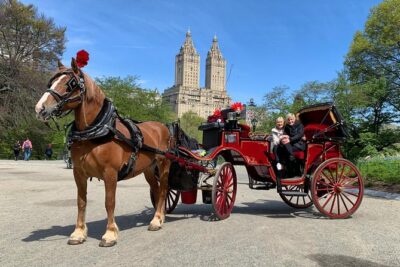
Official NYC Horse Carriage Rides in Central Park since 1979 ™
Read our review →
Carriage Ride in Central Park (VIP – PRIVATE) Since 1964™
Read our review →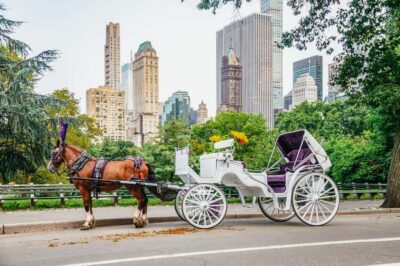
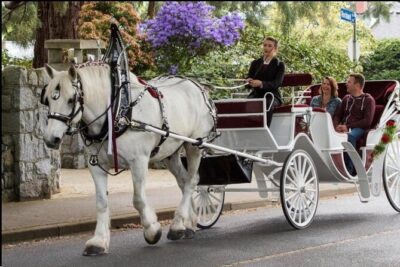
Official Private NYC Central Park Horse Carriage Ride Since 1970™
Read our review →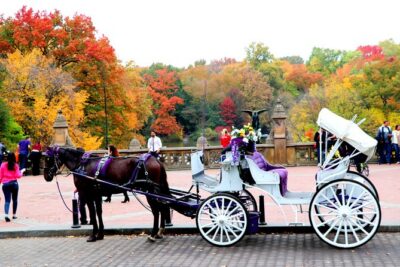
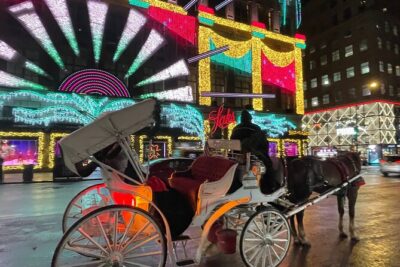
New York City Christmas Lights Private Horse Carriage Ride
Read our review →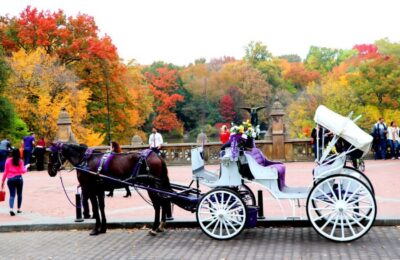
Browse the lists this tour appears in