
Reviewed · CENTRAL PARK TOURS
Official Central Park Walking Tour
Central Park was not simply left to grow on its own. Its designers turned rocky, swampy ground into a carefully planned public park, and this 90-minute walking tour shows you the most famous results. You’ll see the Manhattan skyline from Sheep Meadow, pass beneath American elms on the Mall, and finish at Bethesda Terrace, the park’s great picture stop.
I like the route for two clear reasons: it covers the classic Central Park sights without wasting time, and the guides bring in design, architecture, and park history as you walk. The $33 price is fair for a small-group introduction, though the tour is short, and its focus on the southern end means you will not see the Ramble, Conservatory Garden, or northern park.
In This Review
- Key points to know before you book
- Why this short Central Park route works
- Starting at Columbus Circle and the Maine Monument
- Greyshot Arch and Pinebank Arch
- Heckscher Ballfields and the working park
- Sheep Meadow and the Manhattan skyline
- The Mall and its American elms
- Bethesda Terrace, the Lake, and the boathouse
- The guides make the difference
- What $33 buys you
- Who should take this walk
- Practical advice for a smoother visit
- Should you book it?
- FAQ
- How long does the Official Central Park Walking Tour last?
- Where does the tour begin?
- Where does the tour end?
- What sights are included?
- How many people can join the tour?
- What happens if bad weather cancels the tour?
Key points to know before you book
- 90 minutes from Columbus Circle to Bethesda Terrace: The route crosses the park’s southern and central sections, with the tour ending near 72nd Street.
- Sheep Meadow gives you the skyline view: This is one of the best places on the route for a broad look back toward Manhattan.
- Bethesda Terrace is the grand finale: You finish near the famous fountain, the Lake, and the boathouse.
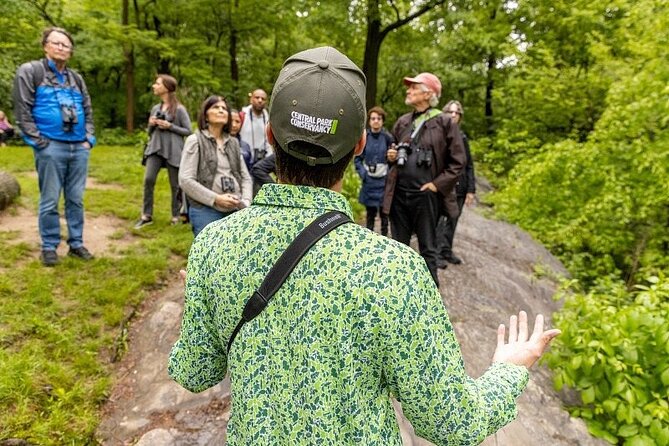
- The Central Park Conservancy leads the experience: Guides such as Jose, Carla, Ryan, Juan, and Desiree have led related Conservancy walks, with especially strong praise for their storytelling and enthusiasm.
- The group can include up to 25 people: That is manageable, but a smaller departure can feel much more personal.
- The tour requires good weather: It is non-refundable if you cancel, but a weather cancellation brings the choice of another date or a full refund.
Why this short Central Park route works
Central Park can feel confusing at first. The paths curve, the park stretches for 843 acres, and famous spots are scattered rather than arranged in a neat row. A guide helps you connect the scenery to the plan behind it.
This walk is aimed at the must-see side of Central Park. You are not signing up for a quiet nature walk or a specialist tour about one neighborhood, plant family, or social group. Instead, you get a brisk introduction to the park’s best-known views and structures.
That focus makes the tour particularly useful on a first New York visit. In an hour and a half, you can see several major sights and learn why the park looks so carefully composed. You also finish in a useful location, Bethesda Terrace at 72nd Street, where you can continue exploring on your own.
The pace appears designed for ordinary walking rather than athletic hiking. Still, you are outside for the whole experience, and the route includes several stops rather than one long talk. Wear comfortable shoes and allow a little extra time to find the meeting point at the Maine Monument on the west side of Central Park South.
More Central Park tours:
- Central Park Pedicab Guided Tours
★ 5.0 · 7,108 reviews - Private Central Park Pedicab Tour
★ 5.0 · 6,981 reviews - NYC: Central Park Bike Rentals
★ 4.2 · 2,528 reviews
Starting at Columbus Circle and the Maine Monument
The meeting point is the Maine Monument, on the west side of Central Park South near Columbus Circle. This is a practical starting area because it is close to public transportation and easy to combine with a visit to the southwest corner of the park.
Do not treat the meeting point as a vague somewhere near Columbus Circle. The park has many entrances, and one participant arrived late after getting turned around. The group waited, but you should still use the exact map location and arrive early.
The monument itself gives the tour an appropriate opening. From here, your guide can set up the basic story of Central Park: this was planned land, not untouched countryside. The park’s designers had to reshape difficult ground and create a public place that looked natural while relying on considerable engineering and design.
That idea matters. As you walk, the rocky outcrops, open lawns, bridges, water, and tree-lined paths seem effortless. A good guide helps you see the work hidden behind that appearance.
Greyshot Arch and Pinebank Arch
Greyshot Arch is the first bridge stop. Central Park is full of arches and bridges, and they do more than provide crossings. They divide the park into changing scenes, frame paths, and help create the sense that each bend reveals something new.
Ten minutes here is enough to look at the structure and hear why these bridges matter to the park’s overall design. You will not spend a long time on one architectural feature, which keeps the tour moving.
Next comes Pinebank Arch, an ornamental cast-iron bridge in the southern end of Central Park. It is one of the more distinctive decorative elements on this part of the route. If you have wandered through the park alone, you may have admired such structures without knowing why they were placed there.
This is where the tour’s design theme becomes useful. The bridges are not random decorations scattered around a large lawn. They help control the rhythm of the walk, shifting you from open space to shaded path and from city views to more enclosed park scenery.
The drawback is that the itinerary gives about ten minutes to each arch, so the treatment will be introductory. If you are an architecture enthusiast hoping for a detailed study of every bridge, this is not that tour. For a first visit, though, the stops add shape and meaning to what might otherwise seem like attractive background scenery.
Heckscher Ballfields and the working park
The Heckscher Ballfields offer a different view of Central Park. These playing fields have been reserved for sports since the park’s creation, reminding you that the park was built not only for scenery but also for public recreation.
This stop helps correct the idea that Central Park is just a giant garden for strolling and photographs. It is also a place for active city life. The contrast between sports fields, formal terraces, open lawns, and wooded paths is part of the park’s appeal.
The stop is brief, so expect a look and an explanation rather than a long pause for games. That is sensible on a highlights route. You get enough context to understand the space, then continue toward one of the tour’s strongest views.
More New York City walking tours:
- SoHo, Little Italy, and Chinatown Walking Tour in New York
★ 5.0 · 3,153 reviews - Secrets of Grand Central Station Walking Tour New York City
★ 5.0 · 1,796 reviews - Greenwich Village Walking and Food Tasting Tour
★ 5.0 · 1,572 reviews - Artistic, Alternative Greenwich Village Walking Tour
★ 5.0 · 971 reviews
Sheep Meadow and the Manhattan skyline
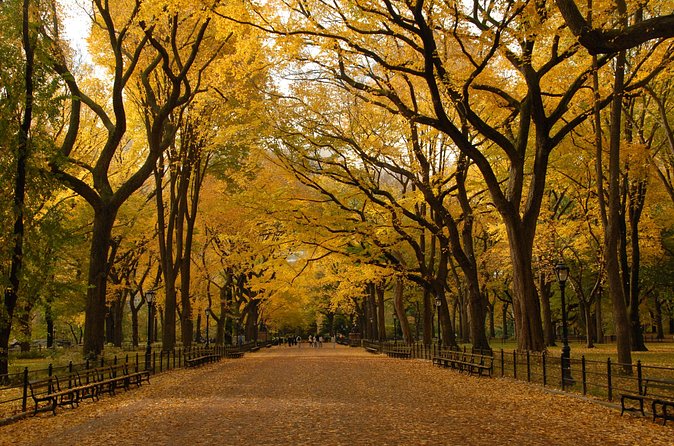
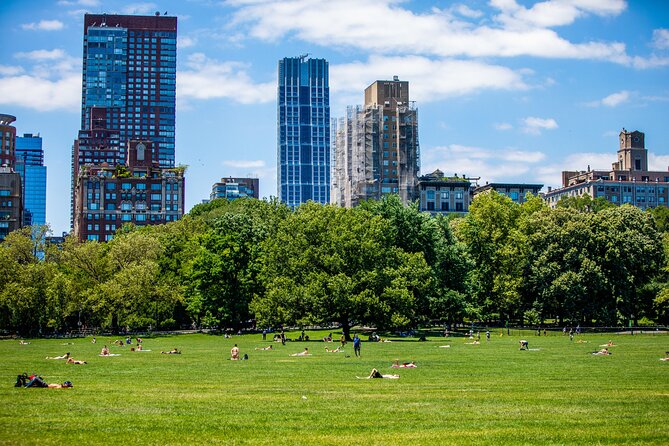
Sheep Meadow is one of the most rewarding stops for a first-time visitor. The broad lawn opens toward the city, giving you the familiar Central Park image of grass in the foreground and Manhattan rising behind it.
The name is a reminder of the park’s old pastoral image, though the main value today is the view and the sense of space. After the bridges and paths, the open meadow gives your eyes room to travel.
I like this stop because it connects the park to New York rather than pretending the city has disappeared. You can appreciate the park as a calm public space while still seeing the towers that surround it.
Your guide may use the view to explain how the park was designed as an escape from dense urban streets. The point is not to erase the city but to give city residents a different pace and outlook.
There is one practical limitation. Sheep Meadow is an open area, so conditions can shape the experience. Bright sun, wind, or rain will be more noticeable here than under the trees. The tour requires good weather, and that policy makes sense for a walk built around outdoor views.
The Mall and its American elms
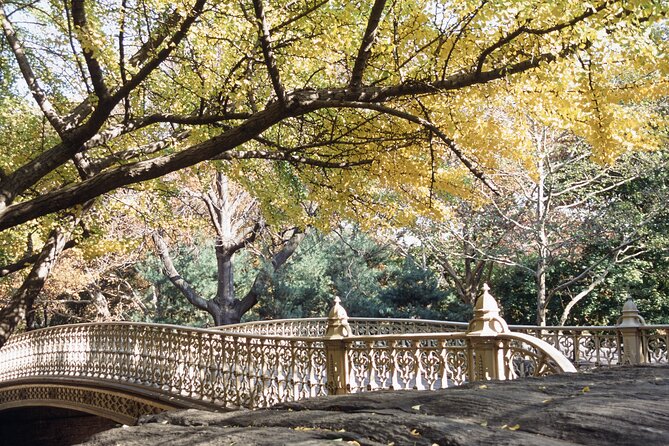
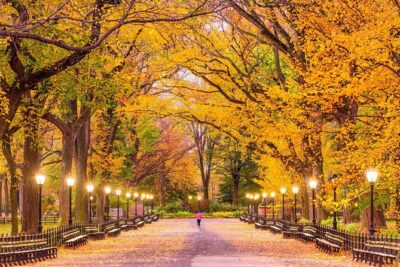
The Mall is one of Central Park’s most recognizable walkways, lined by American elms that form a high canopy overhead. This is the elegant, straight section of the route, a fine contrast to the park’s winding paths and rocky scenery.
The avenue gives you a strong sense of Central Park’s planned side. The trees, path, and views work together in a formal composition. It is also a popular spot for photographs, so your guide may need to keep the group moving and gather everyone before continuing.
This section is especially good for understanding the park as designed scenery. Central Park often looks natural, but its major views were carefully arranged. The Mall makes that planning easy to see.
You should not expect the route to stop at every major attraction nearby. This is a highlights walk, not an all-day circuit. The benefit is that you cover ground without becoming tired or losing the thread of the story.
Bethesda Terrace, the Lake, and the boathouse
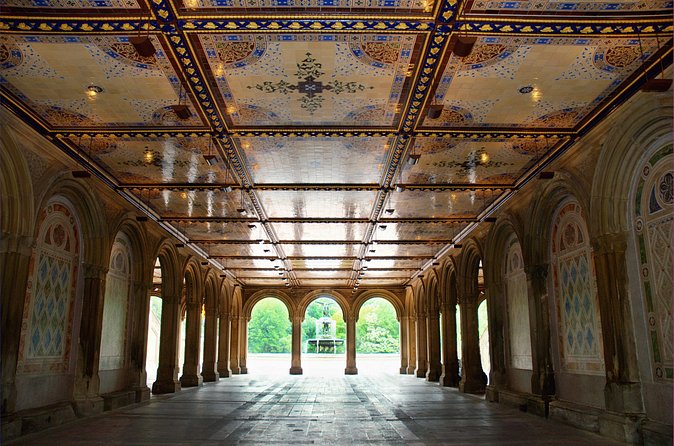
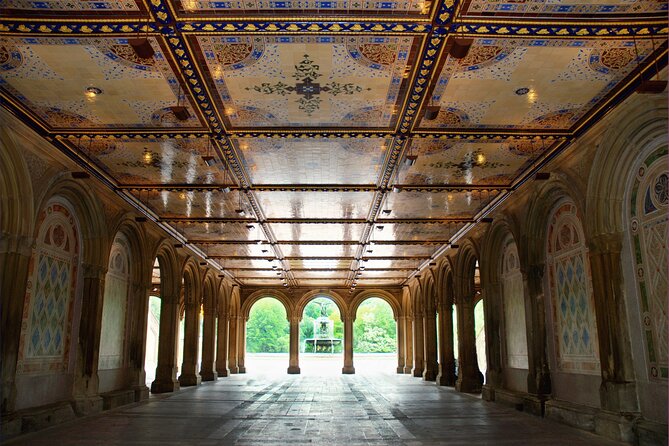
The tour ends at Bethesda Terrace, one of Central Park’s most famous landmarks. The terrace is known for its fountain, grand steps, and views toward the Lake and the boathouse.
Ending here is a smart choice. Bethesda Terrace gives you a strong final image, and it is also a useful place to continue exploring after the guide leaves. You finish in the middle of the park at 72nd Street rather than being returned to the starting point, so plan your next move before the walk begins.
This final stop pulls together several ideas from the tour: architecture, water, open views, and carefully controlled movement through the park. The Lake and boathouse add the picturesque scenery promised by the walk, while Bethesda Terrace supplies the formal centerpiece.
Allow time for photographs, but remember that the official tour lasts about 90 minutes. The stated stop times total less than the full duration, so walking between locations and guide commentary fill the rest. You should expect a steady route, not long free periods at each sight.
The guides make the difference
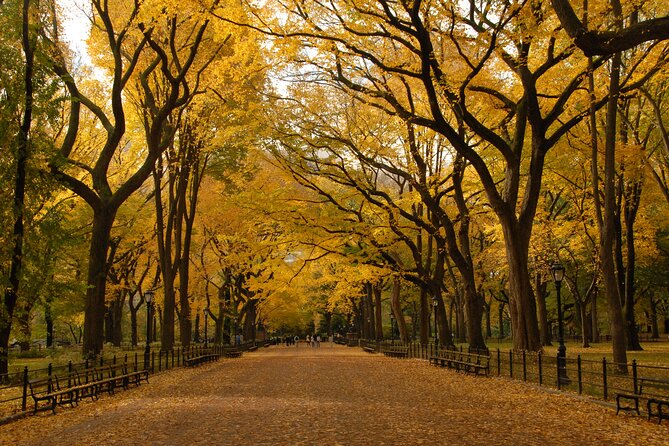
The strongest pattern in the guide feedback is clear, engaging storytelling. Jose was described as punctual, informative, and entertaining, while Carla received praise for explaining park history and pointing out less obvious details. Ryan was praised for his expertise in history, geography, ecology, and literature, along with a kind and enjoyable manner.
Juan was especially warmly described for combining passion, knowledge, and friendliness. Desiree also appears frequently among the praised guides, with a reputation for explaining park history in an enthusiastic, personable way.
Those names come from different Central Park Conservancy experiences, so you should not assume that a specific person will lead your departure. Guide assignments can vary. Still, they give you a useful sense of the standard to expect: the best part of this tour is not simply walking from one famous spot to another, but hearing the park explained by someone who cares about how it was made and maintained.
The small group size can improve that experience. The maximum is 25 people, which is not private, but still far better than being lost in a huge crowd. Some departures have been very small, including one with only three people and another with a single participant. That can make it easier to ask questions and hear the guide clearly.
Do not count on having a private tour, though. A small departure is a pleasant possibility, not a feature you are guaranteed to receive.
What $33 buys you
At $33 per person, this is not the cheapest way to walk through Central Park. You can enter the park free and follow a map or self-guided route without paying anything.
The value comes from the interpretation. In a short visit, a guide saves you from spending time guessing which path leads to the Mall, Sheep Meadow, or Bethesda Terrace. You also get a historical framework that makes the scenery more memorable.
I consider the price reasonable for a first-time visitor who wants an organized introduction. It is less compelling if you already know Central Park well or prefer to wander at your own speed. The tour covers the famous southern and central sights, so repeat visitors may want a more specialized walk instead.
The Conservancy connection is another reason to consider it. The guides focus on how the park was designed, how difficult land was transformed, and why the place requires ongoing care. That gives the walk more substance than a simple photo checklist.
Who should take this walk
This is best for a first visit to New York, especially if Central Park is on your must-see list but you have limited time. Families, couples, and solo visitors can all manage the 90-minute format, and most people can participate.
It also suits you if you enjoy architecture, public parks, city planning, or the stories behind familiar places. You do not need specialist knowledge. The route gives you enough explanation to notice more on your own afterward.
You may want another option if you are looking for the park’s quieter northern sections, the Ramble, or a nature-focused experience. Related Conservancy walks cover subjects such as the Ramble and queer history, but this particular route is built around iconic views and famous sites.
The tour also requires a little planning around the weather. Because the experience is outdoors and non-refundable, do not book it casually if your schedule is highly uncertain. If the operator cancels for poor weather, you will be offered another date or a full refund. If you cancel or request a change for another reason, you will not receive a refund.
Practical advice for a smoother visit
Arrive early at the Maine Monument near Columbus Circle. The meeting area is close to public transportation, but Central Park’s entrances and paths can make a short distance feel less direct than it looks on a map.
Wear shoes suited to 90 minutes of walking. Bring water and dress for exposure at Sheep Meadow as well as shade along the Mall and the park paths. The information provided does not promise a particular pace or accessibility arrangement, but most people can participate.
Keep the end point in mind. Bethesda Terrace is at 72nd Street, mid-park, and the tour does not return you to Columbus Circle. That is helpful if you want to continue toward the Lake or nearby park sights, but you should allow time to orient yourself afterward.
For the best experience, listen for the connections between the stops. The arches, sports fields, meadow, tree-lined Mall, and terrace are more interesting as parts of one designed park than as isolated attractions.
Should you book it?
Book this walk if you want a focused introduction to Central Park’s most famous sights, especially on your first New York visit. The route is efficient, the price is reasonable for guided context, and the finish at Bethesda Terrace gives you one of the park’s best final views.
Skip it if you want a long, slow nature walk or already know the southern half of the park. You will see only one section of this enormous space.
For most first-time visitors, I would choose it early in a New York stay. After 90 minutes with a guide, you can return later on your own and explore with a better sense of where you are and what you are seeing.
FAQ
How long does the Official Central Park Walking Tour last?
The tour lasts approximately 1 hour and 30 minutes.
Where does the tour begin?
It begins at the Maine Monument on the west side of Central Park South near Columbus Circle in New York City.
Where does the tour end?
The tour ends at Bethesda Terrace, mid-park at 72nd Street.
What sights are included?
The route includes Greyshot Arch, Pinebank Arch, Heckscher Ballfields, Sheep Meadow, the Mall, and Bethesda Terrace, with views of the Lake and boathouse.
How many people can join the tour?
The maximum group size is 25 people.
What happens if bad weather cancels the tour?
If the tour is canceled because of poor weather, you will be offered a different date or a full refund. The experience is otherwise non-refundable and cannot be changed for another reason.
Just listed around New York City
- NYC: Little Shop of Horrors Off-Broadway Ticket5 reviews
- Private NYC Airport Transfer: LGA to Manhattan – Up to 5★ 3.6 · 5 reviews
- New York City Tour in German★ 4.5 · 5 reviews
- New York Afternoon Fall Foliage Cruise with Lunch★ 5.0 · 6 reviews
- New York: Hamilton and Washington Revolutionary Walking Tour★ 5.0 · 5 reviews
- NYC Freedom Tower Private Photo or Video Experience★ 4.0 · 6 reviews
- Brooklyn Walking Tours by Locals: Private & 100% Personalized★ 4.0 · 6 reviews
- Southold Bay Oyster Farm Tour★ 5.0 · 6 reviews
Central Park Tours, compared.

Official NYC Horse Carriage Rides in Central Park since 1979 ™
Read our review →

Carriage Ride in Central Park (VIP – PRIVATE) Since 1964™
Read our review →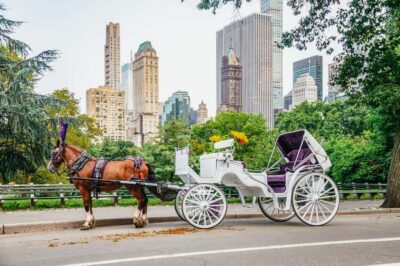
Browse the lists this tour appears in