

Reviewed · CENTRAL PARK TOURS
Story Behind Central Park: Manhattan’s Backyard, Wilderness by Design
Central Park was not simply left in place. It was planned, shaped, and filled with stories, and Kitt Garrett’s recorded tour explains how this enormous urban park came to be. You’ll move from its southern edge toward Duke Ellington Circle while learning about monuments, events, films, and corners many New Yorkers never notice.
I like the clear historical storytelling and the practical self-guided PDF, which lets you choose the parts of the park that matter most to you. I also like the low $25 group price, especially if several people use the tour together. The main drawback is that the format needs careful checking: the description mentions a limousine pickup and private sightseeing, while the core experience is presented as a recorded virtual tour with a PDF.
In This Review
- Key points to know before you book
- Central Park explained as a work of design
- A 1-hour-41-minute route from south to north
- The history, monuments, and people behind the scenery
- Using the PDF to plan your own park day
- The limousine description needs clarification
- What the $25 group price really offers
- Who will get the most from this experience
- Making the most of the recorded tour
- Should you book Story Behind Central Park?
- FAQ
- How long does the Central Park experience last?
- What does the tour cover?
- Does the tour include a self-guided PDF?
- Where does the stated Central Park route begin and end?
- How much does the experience cost?
- Is this a private activity?
- Is transportation included?
- Can I cancel or change the booking?
Key points to know before you book

- Kitt Garrett’s recorded tour explains Central Park’s design, origins, landmarks, famous events, and movie locations.
- The self-guided PDF is a real planning tool, helping you decide where to go during an actual park visit.
- The tour runs about 1 hour and 41 minutes, making it a useful overview before a longer day in the park.
- The $25 price covers a group of up to 15, though another description refers to a Lincoln MKT limousine with room for eight.
- The route runs from 2 Central Park South to Duke Ellington Circle, covering the park from south to north.
- The experience suits people with mobility limits or visitors who cannot yet reach New York, but confirm the exact delivery format before paying.
Central Park explained as a work of design
Central Park can feel like open countryside dropped into Manhattan. Garrett’s central idea is that this impression is carefully made. The park’s rocks, woods, paths, water, lawns, monuments, and views work together to create a sense of wilderness inside one of the world’s busiest cities.
That framing gives the tour more purpose than a simple list of famous sights. You are not only told what a statue or bridge is called. You learn why the park exists, how its spaces were created, and how people have used them over time.
The recorded presentation also tackles a practical question: how much time should you spend here? There is no single answer. Central Park offers ice skating, biking, jogging, rowing, rollerblading, salsa dancing, bird watching, music, opera, and quiet walks. Your best visit depends on your interests and energy.
I find that approach useful because many first-time visitors try to cover too much. The park is large enough that a little planning can save you from spending the whole day walking between places that do not interest you. The PDF helps you make those choices before you arrive.
More Central Park tours:
- Central Park Pedicab Guided Tours
★ 5.0 · 7,108 reviews - Private Central Park Pedicab Tour
★ 5.0 · 6,981 reviews - NYC: Central Park Bike Rentals
★ 4.2 · 2,528 reviews
A 1-hour-41-minute route from south to north
The stated route begins at 2 Central Park South, near the park’s southern edge, and ends at Duke Ellington Circle on the north side. That gives the tour a clear shape. Instead of presenting disconnected facts, it follows the park across Manhattan.
The southern entrance is a sensible starting point. This is where many visitors first meet Central Park, and it gives the tour a chance to explain how the park relates to the city around it. From there, the recording guides you through the park’s creation and the places that have made it famous.
As you continue north, the focus expands beyond the best-known postcard views. You hear about monuments, special events, characters connected with the park, and spots used in films and television. The route helps you understand that Central Park is not one attraction. It is a series of different settings, each with its own role and mood.
The ending at Duke Ellington Circle also matters. It makes clear that the park extends well beyond the area most visitors see on a quick walk near the southern edge. If you have only visited the park around its most famous central sights, this tour may encourage you to see the northern section too.
The duration is long enough to offer substance but short enough to fit into a planning session. You can listen before a trip, use it as a refresher after arriving in New York, or split your actual park visit into smaller sections.
The history, monuments, and people behind the scenery
The most praised part of this experience is its storytelling. The presentation explains the origins and creation of Central Park, then connects the physical spaces to the people and events that shaped its identity.
That means you are likely to get more from the park’s monuments after listening. A monument is easy to walk past when you know only the name on its base. A story about the person represented, the reason the memorial was placed there, or the way the site has been used can change how you see it.
Garrett also brings attention to details that even long-time New Yorkers may have missed. One particularly useful point is that a person can know the city well and still have plenty to learn about Central Park. The park is so large and varied that repeated visits do not guarantee a full understanding of it.
The guide also covers famous events and entertainment. You may hear about music performances, seasonal activities, public gatherings, and the park’s use as a setting for movies and television. These details give the park a connection to popular culture without reducing it to a film-location checklist.
I especially like the idea of comparing the park across seasons. The trees, plants, wildlife, water, and changing light make the same spot look different at different times of year. Garrett encourages you to take photographs and build a personal record of your visits through Tripcast. That suggestion turns a single tour into the start of a longer project.
Using the PDF to plan your own park day
The PDF is one of the most useful parts of the experience. It gives you something to carry on your device after the recording ends, so you can visit the locations that caught your attention.
You do not need to follow every stop. In fact, the material is more useful if you treat it as a menu. Pick a few monuments, paths, scenic areas, or story points that fit your available time. Then use the PDF to organize your own route.
This matters because Central Park can be tiring. A visitor who wants a slow walk and photographs needs a different plan from someone hoping to bike, jog, row, or visit several landmarks. The guide recognizes that one fixed route cannot suit everyone.
The PDF is also helpful if you are planning from outside New York. You can learn the park’s basic layout before your trip and decide which sections deserve your limited time. Instead of arriving with a vague goal to see Central Park, you can arrive with a short list of places and stories.
For people with mobility challenges, the virtual format has another advantage. You can learn about the park without first dealing with its size, walking distances, weather, or uneven demands of a long outing. The experience does not replace an in-person visit, but it helps you decide what kind of visit is realistic.
The supplied details say service animals are allowed and that the activity is near public transportation. Most people can participate. Still, because the information describes both a virtual tour and a limousine sightseeing service, I would confirm exactly how you receive the recording and PDF, and whether transportation is part of the specific booking you are considering.
A few more New York City picks to weigh up
- Acadia National Park & Boston 3-Day Tour from NYC | Kids 50% Off
★ 5.0 · 18 reviews
The limousine description needs clarification
The experience information includes a private day tour by Lincoln MKT limousine. It says pickup is available within 15 miles, or 24 kilometers, of Midtown Manhattan, with music and beverages during the ride. It also describes space for eight passengers and the option to visit top Manhattan attractions or customize the route.
At the same time, the main Central Park experience is described as a recorded virtual tour lasting about 1 hour and 41 minutes. The meeting points are listed at 2 Central Park South and Duke Ellington Circle, not as a conventional hotel pickup and drop-off.
Those details may refer to related services or different ways of experiencing the material. They should not be treated as identical without confirmation. If you are specifically booking a limousine tour, ask about the vehicle, passenger limit, pickup area, beverages, music, and customization. If you want the recorded Central Park presentation, confirm that the recording and PDF are included and find out how they are delivered.
This is not a reason to reject the experience. It is a reason to read the booking details carefully. The price and format are attractive, but the distinction affects what you should expect on the day.
What the $25 group price really offers
At $25 per group for up to 15 people, the price is unusually low if your group actually uses the material together. Split among several people, it costs very little per person. Even a couple can view it as a modest planning expense before spending money and time on a Central Park visit.
The value is strongest for people who want context, not just directions. A basic map can show you where to go. This tour aims to explain why the park looks the way it does and why certain locations matter.
The price is less compelling if you expect a live guide walking beside you, personal questions answered in real time, or a fully escorted sightseeing outing. The information provided points primarily to a recorded presentation and self-guided material. That makes it a planning and interpretation tool rather than a standard live walking tour.
The private group structure can also be useful for families, friends, or a classroom-style group. Up to 15 people can share the same experience, though the separate limousine information says eight passengers. Again, confirm which capacity applies to your booking.
There is no refund if you cancel or request a change. That makes the pre-booking check especially important. Make sure you want the recorded format, understand the group size, and know whether transportation is included before you commit.
Who will get the most from this experience
I would recommend it most strongly to four kinds of people.
First, it suits a first-time Central Park visitor who wants more than a quick walk through the famous southern section. The route and PDF provide a framework for making sense of a very large park.
Second, it works well for a returning visitor. You may already know the major lawns and monuments, but the stories about creation, events, characters, and film locations can give a familiar place new meaning.
Third, it is a good choice for New Yorkers who think they know the park. The presentation was created to reveal less obvious details, and even extensive city experience does not guarantee that you have explored every section.
Fourth, it helps people planning from a distance or managing limited mobility. You can learn the layout and select priorities before attempting a full visit. That saves time and lets you build a day around your own pace.
I would be more cautious if you want a live, highly interactive guide or if the limousine component is the main reason you are booking. The format described here does not clearly promise live commentary, and the transportation details need confirmation.
Making the most of the recorded tour
Set aside the full 1 hour and 41 minutes rather than treating the recording as background noise. You will get more from it if you keep the PDF nearby and mark the locations that interest you.
As you listen, divide your future park visit into three simple categories:
- Places you want to see for the history
- Places you want to see for scenery or activities
- Places you want to see because you recognize them from film and television
This prevents the park from becoming an exhausting checklist. You might select a few monuments, one activity, and a scenic section instead of trying to cover every point.
If you are visiting with a friend or family member, choose different favorite locations and compare them. The guide’s suggestion to photograph the same places during different seasons is also practical. Central Park changes constantly, so a personal photo record can become more interesting over time.
The experience is also useful before choosing how long to spend in the park. The answer may be a short walk, a full day, or several visits. The important thing is to match your plan to what you actually want to do.
Should you book Story Behind Central Park?
Book it if you want a thoughtful introduction to Central Park’s design, origins, stories, monuments, events, and screen appearances, especially if you will use the accompanying PDF to plan your own route. The low group price makes it easy to share, and the recorded format works well for visitors who are still at home or who need to plan around mobility limits.
Skip it if you are looking only for a live walking tour with a guide beside you. Also pause before booking if you expect a limousine ride, since the supplied details describe both a Lincoln MKT sightseeing service and a recorded virtual experience.
For most readers, the best decision is simple: confirm the exact format first. If the booking includes the Central Park recording and self-guided PDF you want, this is a useful, inexpensive way to turn a famous park into a place you understand rather than merely pass through.
FAQ
How long does the Central Park experience last?
The recorded tour lasts approximately 1 hour and 41 minutes.
What does the tour cover?
It covers the origins and creation of Central Park, its history, famous and lesser-known secrets, monuments, special events, and movie and television locations.
Does the tour include a self-guided PDF?
Yes. A self-guided tour PDF is provided so you can plan an actual visit and choose the locations that interest you most.
Where does the stated Central Park route begin and end?
The listed starting point is 2 Central Park South in New York. The listed end point is Duke Ellington Circle.
How much does the experience cost?
The stated price is $25 per group, with up to 15 people in the group.
Is this a private activity?
Yes. The activity is described as private, with only your group participating.
Is transportation included?
The experience information also describes a Lincoln MKT limousine, pickup within 15 miles of Midtown Manhattan, music, beverages, and customizable sightseeing. Because the Central Park product is also described as a recorded virtual tour, confirm whether transportation applies to your specific booking.
Can I cancel or change the booking?
No. The experience is non-refundable and cannot be changed for any reason after booking.
Just listed around New York City
- New York City: Movie and TV Show Locations Tour★ 5.0 · 5 reviews
- Private Transfer: Newark Airport EWR to New York by Luxury SUV★ 4.0 · 5 reviews
- 3-Day Immersive Photography Workshop in New York City★ 5.0 · 5 reviews
- Customized Facial★ 4.0 · 5 reviews
- Good Vibes on the Lower East Side: Art-full Discovery Walk★ 5.0 · 5 reviews
- 9 Hours tour in the city (New York City) – Explore the city 🙂★ 4.0 · 5 reviews
- Statue of Liberty Ellis Island & 911 Memorial Pools Early★ 3.0 · 5 reviews
- 2-Day Niagara Falls Experience from NYC★ 4.5 · 5 reviews
Central Park Tours, compared.



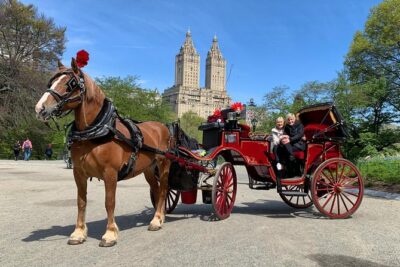
Official NYC Horse Carriage Rides in Central Park since 1979 ™
Read our review →


Carriage Ride in Central Park (VIP – PRIVATE) Since 1964™
Read our review →
Browse the lists this tour appears in