
Reviewed · HARLEM & GOSPEL TOURS
Washington Heights – Sugar Hill North Harlem Walking Tour
North Harlem tells a different New York story. On this walk from Washington Heights to Sugar Hill, you move from an 18th-century mansion and old estates to Harlem Renaissance addresses, Dominican shops, and the final home of Alexander Hamilton. It is a useful reminder that Manhattan is not one tidy postcard.
I like the small group of no more than 15 because a neighborhood walk works best when you can hear the guide and ask questions. I also like the route’s mix of architecture, politics, immigration, and daily life. The main drawback is that it is a fairly long urban walk with some physical demands, and the tour may be canceled if too few people book.
In This Review
- Key points about the Washington Heights and Sugar Hill walk
- Why Sugar Hill makes a smart New York walking tour
- Starting near St Nicholas Avenue at 10:00 a.m.
- Morris-Jumel Mansion and New York’s country past
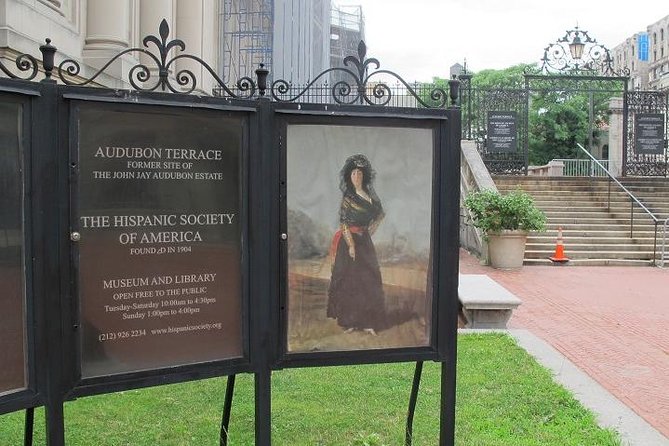
- The Hispanic Society of America and art from the Spanish-speaking world
- Churches, cemeteries, and the people behind New York’s growth
- Bailey House and the architecture of Sugar Hill
- From Revolutionary War ground to a Dominican center
- Hamilton Grange gives the walk a fitting finish
- What the guide adds to the experience
- Is $30 a fair price?
- Who should book this North Harlem walk?
- Should you book the Sugar Hill tour?
- FAQ
- How long does the Washington Heights and Sugar Hill tour last?
- What time does the tour begin?
- Where does the tour begin?
- Where does the tour end?
- Is admission to Morris-Jumel Mansion included?
- How many people can join the tour?
Key points about the Washington Heights and Sugar Hill walk
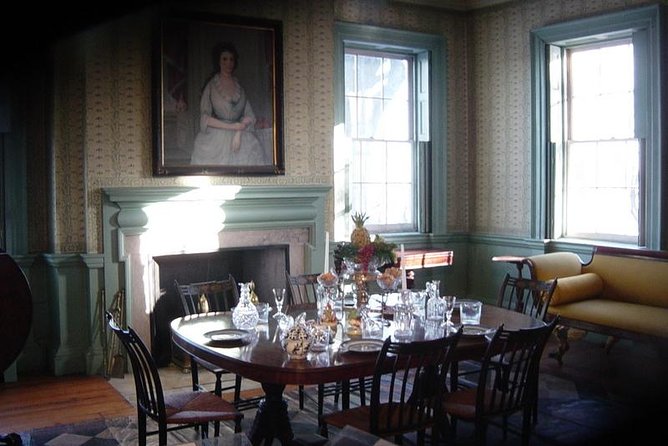
- Morris-Jumel Mansion: See one of northern Manhattan’s oldest surviving houses, with mid-18th-century roots and Federal-style design.
- A changing North Harlem story: Follow the area from rural estates and Revolutionary War ground to the center of New York’s Dominican community.
- Architecture beyond the famous sights: Pass the Church of the Intercession, Trinity Cemetery, Bailey House, and Harlem Renaissance residences.
- A guide with local connections: The walk is led by a licensed guide who lives in Harlem. William has also taken groups inside Audubon and CUNY when possible.
- A practical 2.5-hour route: Start at 10:00 a.m. near 1000 to 1002 St Nicholas Avenue and finish near Hamilton Grange and the 145th Street subway station.
- Good value at $30: You receive a focused neighborhood tour rather than admission to a collection of museums or historic houses.
Why Sugar Hill makes a smart New York walking tour
Many first visits to New York stay below 110th Street. That is understandable, but it leaves out a part of Manhattan where old country estates, grand apartment buildings, churches, cemeteries, and immigrant communities sit close together.
This walk gives you a clear way into North Harlem. You do not need to keep checking a map or guess which blocks matter. Your guide connects the physical streets with the people who shaped them, from wealthy landowners and Revolutionary War figures to artists, musicians, politicians, and Dominican families.
I especially like the route because it does not treat Harlem as a single story. You see the neighborhood’s older architectural layers, then hear how the district changed over time. The result is more useful than simply collecting photographs of attractive buildings.
The experience lasts about two and a half hours and costs $30 per person. That is a fair price for a small-group, guided walk in New York, especially since the guide supplies the context that you would otherwise have to piece together yourself. The value is in the interpretation, not in included admissions. The two named sites on the route do not require a paid ticket as part of this tour.
More Harlem visits and gospel mornings:
- NYC Highlights Tour: Bronx, Brooklyn, Harlem, Queens & Coney
★ 4.5 · 2,846 reviews - NYC: Contrasts Tour of Harlem, The Bronx, Queens & Brooklyn
★ 4.5 · 2,167 reviews - NYC: Harlem Hallelujah! Gospel Wednesday Concert
★ 4.7 · 1,638 reviews
Starting near St Nicholas Avenue at 10:00 a.m.
The meeting point is 1000 to 1002 St Nicholas Avenue in Washington Heights. The walk begins at 10:00 a.m., so plan enough time to reach upper Manhattan without rushing.
The tour ends near Hamilton Grange National Memorial at West 141st Street and St Nicholas Avenue. The nearby 145th Street station serves the A, B, C, and D trains, making the finish convenient if you are continuing elsewhere in New York.
The start and finish are in different places, which is useful to know before booking. You are not returning to your starting point, so avoid leaving anything there or planning around a parked car. A mobile ticket makes entry simple, but you still need to arrive at the correct street address.
Wear shoes you can comfortably use for a two-and-a-half-hour city walk. The route is not presented as a strenuous hike, but the operator advises a moderate fitness level and notes that it may be moderately difficult for people with physical limitations.
Morris-Jumel Mansion and New York’s country past
The Morris-Jumel Mansion is the first major stop. With roots reaching back to the mid-18th century, it is a Federal-style house that recalls a time when northern Manhattan was made up of estates and countryside rather than dense city blocks.
That contrast is the point. You are not seeing an isolated old house in a rural setting. You are seeing a historic home surrounded by modern New York, which makes the city’s growth easier to picture.
The tour allows about 10 minutes at the mansion, and admission to the interior is not included. This is important: the stop is part of the walking route and interpretation, not a scheduled museum visit. You should expect to view the site and hear about its place in local history rather than spend a long time touring its rooms.
That short visit suits the pace of the walk. The mansion gives you a strong anchor, then the guide carries the story into the surrounding streets. If you want a full interior visit, you would need to arrange that separately, if available on your date.
The Hispanic Society of America and art from the Spanish-speaking world
The route also includes the Hispanic Society of America, a museum and reference library devoted to the arts and cultures of Spain and Portugal, along with former colonies in Latin America, the Philippines, and Portuguese India.
The stop is listed as about 10 minutes, with free admission. Again, the timing suggests a brief look and explanation rather than a long gallery visit. Ask your guide what access is available that day, since the walking tour’s schedule is built around the neighborhood rather than a full museum program.
This stop adds an important cultural layer. The tour is not only about old houses and wealthy New Yorkers. The Hispanic Society connects North Harlem to a much wider Spanish and Portuguese-speaking world, giving you a better sense of the institutions and communities that shaped upper Manhattan.
The available information does not promise a full museum visit, so I would not book this tour mainly for the collections. Think of the society as one meaningful stop within a broader walk.
More New York City walking tours:
- SoHo, Little Italy, and Chinatown Walking Tour in New York
★ 5.0 · 3,153 reviews - Secrets of Grand Central Station Walking Tour New York City
★ 5.0 · 1,796 reviews - Greenwich Village Walking and Food Tasting Tour
★ 5.0 · 1,572 reviews - Artistic, Alternative Greenwich Village Walking Tour
★ 5.0 · 971 reviews
Churches, cemeteries, and the people behind New York’s growth
The route passes the Church of the Intercession and Trinity Cemetery. The cemetery is described as the resting place of members of New York’s aristocracy and politicians who influenced the city’s development.
This is the kind of stop that rewards a guide. A cemetery can look like a quiet patch of stone and trees if you do not know who is buried there or why the site matters. Your guide provides the names and connections that turn it into part of the city’s story.
The tour does not include entry into the church, and it is not a music tour. That distinction matters. If you are hoping to hear gospel, visit a service, or explore the church interior, this experience is not designed for that. Its focus is neighborhood history, architecture, and the people associated with the area.
I like this restraint. It keeps the walk focused, though it also means you should choose another Harlem experience if church music is your main goal.
Bailey House and the architecture of Sugar Hill
Along the route, you view Bailey House from the street. This castle-like residence was built for James Bailey of Barnum and Bailey Circus.
The building gives the walk one of its more memorable architectural moments. It also helps explain how wealthy and famous figures left their mark on northern Manhattan. You see a grand private residence, but you do not enter it, so the guide’s explanation is what makes the stop worthwhile.
The walk continues through Sugar Hill, an area associated with Harlem’s cultural and residential history. You pass residences connected with figures from the Harlem Renaissance and learn how the neighborhood developed from rural land and estates into a dense urban district.
Because the tour moves on foot, you get a better feel for how these buildings relate to one another. A bus can show you a facade, but walking lets you notice the changes from block to block. You can compare old institutional buildings, private homes, apartment streets, and present-day businesses at an ordinary city pace.
From Revolutionary War ground to a Dominican center
One of the strongest themes is change over time. The guide traces North Harlem from rural countryside and estates, through its connection with the Revolutionary War, to its role today as a center of New York’s Dominican community.
That broad time span gives the route purpose. You are not simply stopping at unrelated landmarks. The mansion, cemetery, churches, homes, and neighborhood businesses become chapters in the same story.
I find the modern community angle especially valuable. Historic walks can sometimes freeze a neighborhood in the past. This one connects older buildings with present-day North Harlem, including the local Dominican influence that shapes the area now.
The guide can also help with practical local details. William, one guide associated with this experience, has been praised for explaining how to order a sandwich at a neighborhood deli and suggesting where to eat lunch. That is a small detail, but it can make the tour more useful after it ends. You leave with an idea of where to continue your afternoon, not only a list of dates.
Hamilton Grange gives the walk a fitting finish
The route ends near Hamilton Grange National Memorial, at West 141st Street and St Nicholas Avenue. The tour information also refers to this as the Alexander Hamilton National Monument.
This is a logical ending because Hamilton Grange brings the story back to an important early American figure and to the older estates of northern Manhattan. The walk begins with Morris-Jumel Mansion and finishes near another historic home, giving the route a satisfying frame.
The end point is also practical. The 145th Street station, served by the A, B, C, and D trains, is close by. You can use the subway to continue to another part of Manhattan without retracing the route.
The tour does not promise an interior visit at Hamilton Grange. Treat it as the finishing landmark and a convenient place to continue on your own.
What the guide adds to the experience
This walk depends heavily on the guide. The buildings are worthwhile, but much of the value comes from knowing why a particular house, cemetery, or street matters.
You are booked with a licensed guide who lives in Harlem. That local connection can add useful context about present-day neighborhood life, not just old stories. William has been described as especially willing to add stops or brief interior visits when possible, including Audubon and CUNY. Those extra visits should not be treated as guaranteed parts of every departure, but they show how a good guide can make the route feel personal rather than scripted.
The group size is capped at 15 people. That is small enough for questions and a slower pace, while still large enough to keep the tour running as a shared experience. A smaller group also helps on ordinary city sidewalks, where a large crowd can become awkward.
Still, guide-led walks vary. If your guide has a different style, the balance between architecture, politics, community life, and personal stories may shift. The stated focus remains neighborhood history, so this is best for people who enjoy listening, asking questions, and looking closely at buildings.
Is $30 a fair price?
At $30, I consider this a reasonable purchase for New York. You get about 150 minutes with a licensed local guide, a planned route across two neighborhoods, and interpretation at several places that would be easy to pass without noticing.
You are not paying for a series of costly admissions. Morris-Jumel Mansion does not include an admission ticket, and the Hispanic Society stop is free. If you want museum interiors, that may limit the tour’s value for you.
The price makes more sense if you want orientation and local context. After the walk, you should understand North Harlem better and have a clearer idea of where to spend the rest of your day. At $30, that is a useful trade for visitors who prefer a focused introduction over wandering without a plan.
The tour is booked about 15 days ahead on average, so I would not leave it until the last minute if the date matters to you. It requires a minimum number of participants, and a departure can be canceled if that number is not reached. In that case, you are offered another date or experience, or a full refund.
Who should book this North Harlem walk?
I would choose this tour if you have already seen the central Manhattan sights and want a more local view of New York. It also suits anyone interested in architecture, Harlem’s political and cultural past, immigration, or the way old estates became part of a modern city.
It is a good match for you if:
- You enjoy walking and want a guide to explain what you are seeing.
- You prefer a small group to a large bus tour.
- You want to understand Sugar Hill and Washington Heights beyond a quick photo stop.
- You are interested in both historic buildings and present-day Dominican community life.
- You like finishing near public transportation.
I would skip it if you want a music-focused Harlem outing, a church service, or extended indoor museum time. I would also think twice if a 2.5-hour walk is likely to be uncomfortable for you. The operator specifically recommends appropriate clothing and footwear and says a moderate fitness level is needed.
Free cancellation is available up to 24 hours before the 10:00 a.m. start time. Changes or cancellations made later are not accepted for a refund.
Should you book the Sugar Hill tour?
Book it if you want the story behind North Harlem rather than another checklist of famous Manhattan sights. The combination of Morris-Jumel Mansion, the Hispanic Society, Trinity Cemetery, Bailey House, Harlem Renaissance residences, and Hamilton Grange gives you a varied route with a strong sense of place.
The best reason to go is the guide’s local interpretation. William’s practical suggestions about food and his willingness, when possible, to show visitors places such as Audubon and CUNY add a human touch to the history.
The main caution is simple: this is a neighborhood walk, not a ticketed museum tour or a music experience. Bring comfortable shoes, arrive ready to walk, and confirm your plans with the possibility of a low-registration cancellation in mind. For $30, it is a smart choice for curious visitors who want to see how North Harlem’s past and present meet on the same streets.
FAQ
How long does the Washington Heights and Sugar Hill tour last?
The tour lasts approximately 2 hours and 30 minutes.
What time does the tour begin?
The tour starts at 10:00 a.m.
Where does the tour begin?
The meeting point is 1000 to 1002 St Nicholas Avenue, New York, NY 10032.
Where does the tour end?
The tour ends near Hamilton Grange National Memorial at West 141st Street and St Nicholas Avenue. The nearby 145th Street station is served by the A, B, C, and D trains.
Is admission to Morris-Jumel Mansion included?
No. The stop at Morris-Jumel Mansion does not include an admission ticket.
How many people can join the tour?
The tour has a maximum of 15 participants.
Just listed around New York City
- NYC: Central Park Guided Bike Tour★ 4.8 · 11 reviews
- 5th & Park – Film & Fiction Walking Tour of Carnegie Hill Along Museum Mile★ 4.5 · 11 reviews
- Guided Tour (with Audio) Hamilton Musical in Lower Manhattan NYC★ 5.0 · 11 reviews
- 3 Hour Lower Manhattan Walking Tour★ 5.0 · 11 reviews
- New York City Shore Excursion: Post-Cruise Half-Day Private Tour★ 4.5 · 11 reviews
- Chinatown Walking Food Tour of New York★ 4.8 · 11 reviews
- NYC Midtown Manhattan Times Square & Skyscraper Walking Tour★ 5.0 · 11 reviews
- City Cruises NYC: Skyline Dinner Cruise from New Jersey★ 3.5 · 11 reviews
Harlem & Gospel Tours, compared.

NYC Highlights Tour: Bronx, Brooklyn, Harlem, Queens & Coney
Read our review →
Contrasts Tour of Harlem, The Bronx, Queens & Brooklyn
Read our review →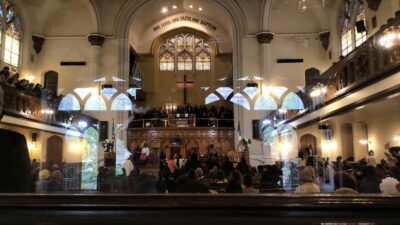




Browse the lists this tour appears in