

Reviewed · BROADWAY SHOWS & TICKETS
Broadway Theatre District Tour
Broadway is more than a row of bright signs. This two-hour walking tour shows you how the theatre district fits together, from the Majestic Theatre and Sardi’s to Shubert Alley, Duffy Square, and the cluster of playhouses along 45th Street. Guides with entertainment-industry experience, including Patrick and Luke on past tours, add the kind of backstage tales you will not get from a sidewalk plaque.
I like the small group of no more than 10 people, which makes it easier to hear a guide on noisy theatre streets. I also like the price: $39 is fair for two hours of focused Broadway context, especially if you care about plays, musicals, and New York show business.
The main drawback is simple: you walk outside for the full tour, and backstage or theatre lobby access is not promised. Rain, heat, and crowded sidewalks can affect the experience, so wear good shoes and bring water.
In This Review
- Key points to know before you book
- Why this $39 Broadway walk is worth considering
- Starting at the Majestic Theatre
- St. James, Broadhurst, and a pause at Sardi’s
- Shubert Alley and the theatre business
- 45th Street, Broadway’s greatest concentration
- The Marriott Marquis and the Marquis Theatre
- Hamilton at the Richard Rodgers Theatre
- Duffy Square and the making of Times Square
- The Palace Theatre, Edison Hotel, and Hell’s Kitchen
- Chicago, Off-Broadway, and the final theatres
- What the guides add to the experience
- Who should book, and who should skip it
- Should you book the Broadway Theatre District Tour?
- FAQ
- Where does the Broadway Theatre District Tour begin?
- How long does the tour last?
- How much does the tour cost?
- What language is the tour conducted in?
- How large is the group?
- Which theatres are included?
- Does the tour include backstage access?
- What should I bring?
- Does the tour operate in bad weather?
- Can I cancel for a full refund?
Key points to know before you book
- Starts at the Majestic Theatre: Begin near the theatre associated with The Phantom of the Opera and hear about famous productions connected with the building.
- Covers a remarkable theatre cluster: The route includes many major venues on 45th Street, plus theatres around Times Square.
- Led by entertainment professionals: Guides such as Patrick and Luke have brought personal industry experience to the tour.
- Includes Sardi’s and Shubert Alley: These are useful stops for understanding Broadway’s social and professional world.
- Ends near Wicked: Finish by Circle in the Square and the Gershwin Theatre, home of Wicked.
- Best for theatre fans: You do not need to know every show, but your interest in plays and musicals will shape how much you enjoy it.
Why this $39 Broadway walk is worth considering
At $39 per person, this tour sits in a useful middle ground. You are not paying for a theatre ticket, and you are not promised a backstage visit. Instead, you get two hours of guided context in one of New York’s most famous districts.
That matters because Broadway can be hard to read on your own. A theatre marquee tells you what is playing, but not why the building matters, how a particular show changed the district, or how the theatre business works. A good guide connects those pieces while you walk.
The group limit of 10 is another reason the price makes sense. A small party should feel more personal than a large street lecture, especially when the guide is explaining stories outside a theatre entrance or answering questions about productions.
The strongest fit is someone who already has at least a modest interest in musicals, plays, actors, or New York entertainment. You do not need to be a Broadway expert. Still, if you have no interest in theatre at all, the route may feel like a long walk past buildings rather than a full New York experience.
More Broadway seats to book:
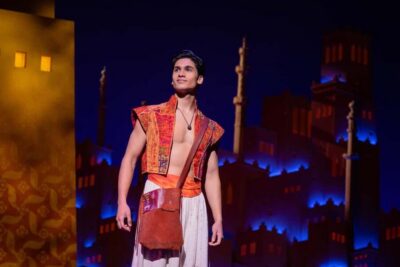
- NYC: Aladdin the Musical on Broadway
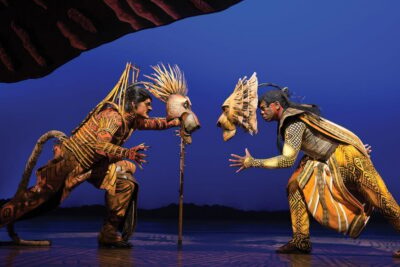
★ 4.8 · 1,800 reviews - NYC: The Lion King on Broadway
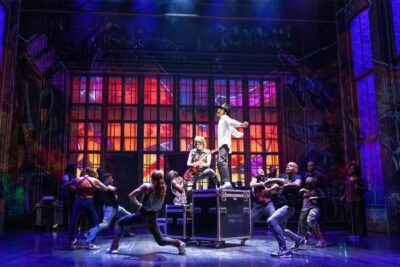
1,609 reviews - NYC: MJ the Musical on Broadway
1,510 reviews
Starting at the Majestic Theatre
The meeting point is in front of the Majestic Theatre, associated with The Phantom of the Opera. The tour begins by using that building as a way into the larger Broadway story.
You will hear about the mega-musical connected with the theatre and other well-known shows that opened there. This is a practical start because it places you in front of a real working Broadway venue rather than beginning with a general lecture about Times Square.
The guide’s job here is not simply to point at the entrance. The useful part is the link between a theatre building and the productions that made it famous. Guides with acting or entertainment backgrounds can also explain the business from a personal angle. Patrick, who has led this tour, is an actor, and that kind of experience has helped make the discussion more direct and less like a textbook.
The tour is conducted in English. If you want to take photos, you will have time to do so during the walk, but this is not a stop-and-shoot sightseeing tour. The focus is on listening while moving between venues.
St. James, Broadhurst, and a pause at Sardi’s
From the Majestic, you walk to the St. James and Broadhurst theatres. This early stretch gives you a quick sense of how close many Broadway houses are to one another.
That proximity is one of the district’s defining features. You can pass several theatres in a few minutes, yet each building has its own name, owners, productions, and place in Broadway lore. The guide helps separate one from the next.
The route then pauses at Sardi’s, the famous theatre-district restaurant and watering hole. The stop is valuable because it shifts the story away from buildings and toward people. Sardi’s is tied to the working life of Broadway, where performers, producers, writers, critics, and theatre regulars have gathered.
You should not expect a meal or a guaranteed interior visit. The point is to discuss Sardi’s role and why this particular address became part of the district’s identity. If you enjoy the social side of theatre, this may be one of the more memorable stops.
Shubert Alley and the theatre business
Next comes Shubert Alley and the Shubert Theatre. The guide discusses the theatre itself and the Shubert organization, giving you a look at the ownership and management side of Broadway.
This is where the tour can become more useful than a basic sightseeing walk. Broadway is often presented as a collection of famous titles, but theatres also belong to organizations with long-running influence. Understanding that structure gives you a clearer idea of why certain buildings and streets matter.
Shubert Alley is also a good place to think about Broadway as a compact working district. It is not only a tourist backdrop. It is a network of theatres, offices, restaurants, hotels, performers, and production companies packed into a small area.
Since the route is outdoors, street noise and foot traffic may make some moments harder to catch. Stay close to the guide, especially when the group is moving between stops.
Another side of New York City for the same day:
- NYC: SUMMIT One Vanderbilt Tickets
★ 4.7 · 51,195 reviews - NYC: 9/11 Memorial & Museum Timed-Entry Ticket
★ 4.8 · 31,428 reviews - NYC: Empire State Building Tickets – Observatory & Museum
★ 4.7 · 25,757 reviews - New York City: Statue of Liberty & Ellis Island with Ferry
★ 4.6 · 18,683 reviews
45th Street, Broadway’s greatest concentration
The walk turns onto 45th Street, one of the tour’s busiest theatre stretches. Here you see a long list of major venues, including the Booth Theatre, Minskoff Theatre, Schoenfeld Theatre, Jacobs Theatre, Golden Theatre, Hirschfeld Theatre, Imperial Theatre, and Music Box Theatre.
You will not enter every building. The value is in seeing how many major theatres sit within a short walk and hearing the stories tied to them. A street that may first look like a line of grand entrances becomes a map of productions, theatre families, and changing show-business fortunes.
For first-time visitors, this section can be the strongest reason to book. You gain a physical sense of Broadway’s scale. Instead of treating each theatre as an isolated photo stop, the guide shows you the district as a connected group of venues.
There is also a practical limitation. The more buildings a tour covers, the less time it can spend at each one. If you want a long discussion of a single musical or theatre, a dedicated theatre talk may suit you better. This tour favors range and movement.
The Marriott Marquis and the Marquis Theatre
The route includes the Marriott Marquis Hotel and the Marquis Theatre. The guide discusses the hotel’s history and what occupied the site before the hotel was built.
That detail adds an important layer to the walk. Times Square is not frozen in the era of old Broadway posters. Hotels, large developments, theatre conversions, and changing streets have reshaped the area. Looking at what stood on a site before a major hotel gives you a better sense of how the district has changed.
You may find this stop especially useful if you are interested in city planning as well as theatre. It reminds you that Broadway exists inside a larger commercial district, not apart from it.
The tour does not promise hotel or theatre interior access. Treat the Marriott Marquis as an exterior stop and listening point.
Hamilton at the Richard Rodgers Theatre
After leaving the hotel, the walk reaches the Richard Rodgers Theatre, associated with Hamilton. The guide then discusses the Lunt-Fontanne Theatre.
This part connects a famous current production with the physical theatre that houses it. Hamilton is more than a popular title in the Broadway story, and a guide with industry experience can place its success alongside other productions and the broader business of staging a hit.
The Lunt-Fontanne discussion keeps the focus on the buildings as well as the shows. That balance is helpful. You get production stories, but you also learn to recognize the theatres themselves.
If you are visiting New York around a show you have already booked, this section can make the evening feel more connected to the neighborhood. You will know more about the building before you return for your performance.
Duffy Square and the making of Times Square
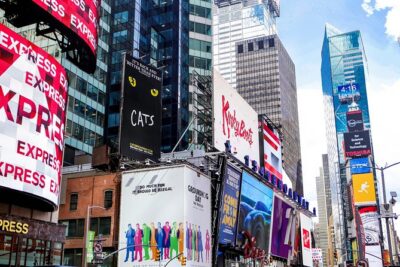
The tour then heads to Duffy Square, described as the heart of Times Square. Here you learn how the area became known as the crossroads of the world.
This is an important change of subject. Until this point, the route is mostly about Broadway theatres and the people who work in them. Duffy Square widens the view to the rise of Times Square as a major meeting point and public destination.
The best way to use this stop is to look around while listening. The signs, crowds, traffic, hotels, theatres, and constant movement make the modern district easy to recognize. The guide’s explanation helps you understand that this identity developed over time rather than appearing fully formed.
Times Square can be loud and distracting. If you want every detail, stand near the guide and avoid drifting toward the brightest sign or busiest corner. The setting is part of the experience, but it can also compete with the commentary.
The Palace Theatre, Edison Hotel, and Hell’s Kitchen
After seeing the Palace Theatre, the group heads north. The route includes the Edison Hotel and the Barrymore Theatre, then moves into a discussion of Hell’s Kitchen history.
This section shows how quickly the character of Midtown changes as you walk north. The tour remains centered on theatre, but the Hell’s Kitchen discussion gives you a wider neighborhood frame. Broadway did not develop in isolation from the streets around it.
The Edison Hotel adds another notable address to the route, while the Barrymore Theatre keeps the focus on playhouses and productions. As with the earlier stops, you should expect exterior discussion rather than guaranteed access inside.
You will walk a decent amount during the two hours. Comfortable shoes are not optional advice here. Warm weather can make the route tiring, so bring water or another cold drink. The tour operates in all weather conditions unless poor weather forces a cancellation, so check the forecast and dress for the day.
Chicago, Off-Broadway, and the final theatres
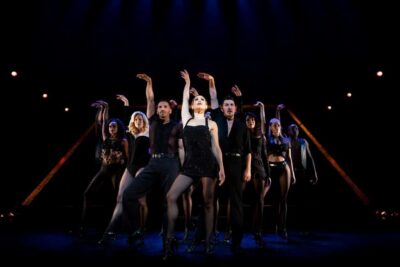
The final stretch passes the Walter Kerr Theatre, Eugene O’Neill Theatre, and Ambassador Theatre, home of Chicago. You then visit New World Stages, where the guide explains Off-Broadway theatre.
This is a useful finish because it moves beyond the biggest Broadway names. Off-Broadway gives you another part of New York’s theatre system, with different venues and a different place in the performing arts world. The guide can help you see that New York theatre is not limited to the most famous marquees.
The route ends near Circle in the Square and the Gershwin Theatre, home of Wicked. Ending beside two recognizable venues gives the walk a clear finish and leaves you in a central part of the theatre district.
Do not read the ending as an invitation to enter the theatres. Lobby and backstage access are not guaranteed. The tour is built around outdoor commentary, theatre exteriors, and the guide’s stories.
What the guides add to the experience
The most praised feature of this tour is the guide quality. Patrick has been described as an actor who brings stories about current and former productions, theatre buildings, and the theatre business. Luke has also led the walk, offering strong insight into the district and personal experience.
That background matters because the tour depends heavily on the person leading it. You are not using an audio guide or following a printed route. The guide controls the pace, selects the stories, and makes the difference between a useful theatre walk and a simple list of names.
The English-language format also means you should be comfortable following spoken explanations outdoors. A past tour remained enjoyable even in the rain because the guide kept the group engaged, but weather will still affect your comfort.
Who should book, and who should skip it
I would choose this tour if you want a quick, organized introduction to Broadway before seeing a show. It also suits repeat New York visitors who know Times Square but want more context about the theatres and the people behind them.
It is a good match for:
- Musical and play fans
- Visitors who want theatre background without buying a performance ticket
- First-time visitors who want to understand the district’s layout
- People who enjoy actor-led stories and entertainment-industry insight
- Anyone comfortable with two hours of outdoor walking
I would skip it if you need indoor shelter, guaranteed theatre entry, or a relaxed pace with long breaks. It is also less suitable if Broadway does not interest you, since the tour’s strongest material centers on productions, venues, and show business.
Free cancellation is available up to 24 hours before the start, and you can reserve now while paying later. If poor weather cancels the tour, you are offered another date or a full refund. If you cannot attend, calling the supplier at 718-806-1706 is courteous so the guide does not wait for you.
Should you book the Broadway Theatre District Tour?
Book it if you want the Broadway district explained by someone with entertainment experience, not just photographed from the sidewalk. At $39, the small group and two-hour route make good value for theatre fans, especially when you plan to see a show afterward.
Go in with the right expectations: this is an outdoor walking tour, not a backstage pass. Wear comfortable shoes, carry water, prepare for weather, and expect access to lobbies or backstage areas to depend on circumstances. If those limits suit you, the tour gives you a practical, story-filled way to understand why these few Midtown blocks matter so much.
FAQ
Where does the Broadway Theatre District Tour begin?
The tour begins in front of the Majestic Theatre, associated with The Phantom of the Opera.
How long does the tour last?
The tour lasts two hours.
How much does the tour cost?
The price is $39 per person.
What language is the tour conducted in?
The live tour is conducted in English.
How large is the group?
The group is limited to 10 participants.
Which theatres are included?
The route includes the Majestic, St. James, Broadhurst, Shubert, Booth, Minskoff, Schoenfeld, Jacobs, Golden, Hirschfeld, Imperial, Music Box, Marquis, Richard Rodgers, Lunt-Fontanne, Palace, Barrymore, Walter Kerr, Eugene O’Neill, Ambassador, Circle in the Square, and Gershwin theatres.
Does the tour include backstage access?
Backstage and theatre lobby access are not guaranteed.
What should I bring?
Bring comfortable shoes and a face mask or protective covering. In warmer weather, water or another cold beverage is also recommended.
Does the tour operate in bad weather?
The tour operates in all weather conditions, but it may be canceled because of poor weather. If that happens, you are offered an alternative date or a full refund.
Can I cancel for a full refund?
Yes. You can cancel up to 24 hours in advance for a full refund.
Just listed around New York City
- New York: Photoshoot in NYC DUMBO BROOKLYN BRIDGE★ 4.8 · 8 reviews
- New York City: Central Park Yoga and Walking Tour★ 4.8 · 8 reviews
- NYC: Central Park Rickshaw Tour / Private and Guided★ 4.8 · 8 reviews
- Guided Admission to Modern Art and Metropolitan Museums in NYC★ 4.0 · 8 reviews
- Heart & Soul of Greenwich Village Food and Culture Tour★ 4.7 · 8 reviews
- Lower Manhattan and Brooklyn Bridge Guided Fiets Tour (Dutch)★ 4.5 · 8 reviews
- Private Transfer: Newark Airport to Manhattan Up to 10pax★ 4.8 · 9 reviews
- Brooklyn Bridge, Statue of Liberty & Manhattan Tour★ 3.5 · 8 reviews
Broadway Shows & Tickets, compared.
Broadway and Times Square Insider Tour with Theater Professional
Read our review →
Browse the lists this tour appears in