
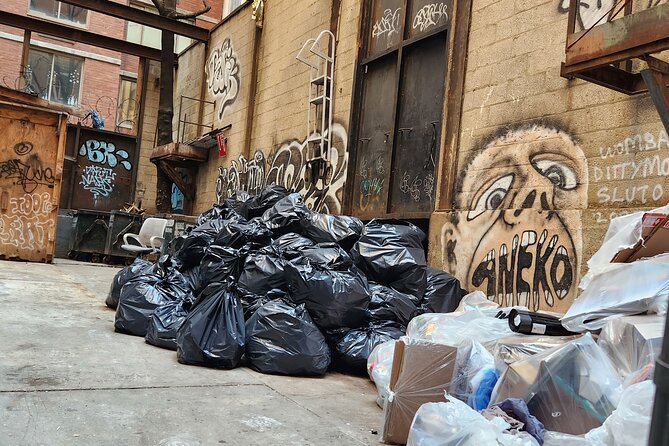
Reviewed · CITY TOURS
Garbage and Rats in New York City Walking Tour
New York’s story looks different when you follow its garbage. This 2.5-hour walk from Wall Street to City Hall connects landfill, sanitation, political power, slavery, fish markets, rat fights, and public health. Guide Suzanne brings a clear voice, sharp humor, and an unusual amount of care to a subject most city tours avoid.
I like the small group of no more than 15 people, since the subject invites questions and the guide can keep the discussion personal. I also like the way the tour joins science with social history: you learn about rat biology and behavior, but also about the people, policies, and working conditions that helped shape New York.
The main drawback is simple: this is a long urban walk, with about two and a half hours on foot and no bottled water included. The subject also includes unpleasant material such as rat waste, rat breeding, animal fights, and sanitation failures, so this is not the right pick if you want a polished sightseeing stroll.
In This Review
- Key points to know before you book
- Why garbage is a useful way to see New York
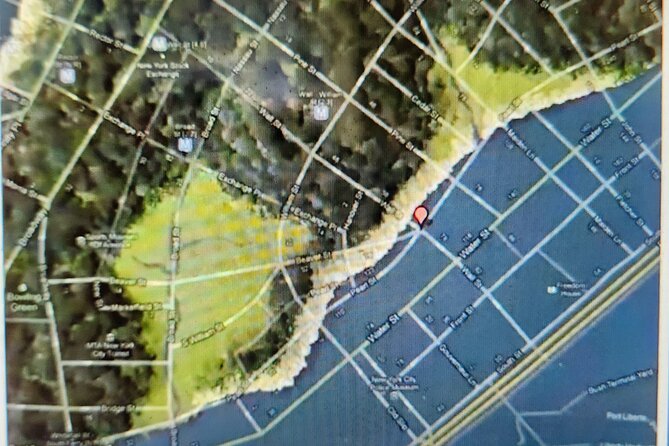
- Starting at Wall Street and Pearl Street
- South Street Seaport, fish markets, and rat fights
- DeLury Square and the 1968 garbage strike
- Ann Street, Theatre Alley, and City Hall Park
- Suzanne’s guiding style
- What the $45 price gets you
- Who should book this walk
- Book it or skip it?
- FAQ
- How long is the Garbage and Rats in New York City Walking Tour?
- How much does the tour cost?
- Where does the tour begin?
- Where does the tour end?
- What language is the tour offered in?
- How large is the group?
- Is bottled water included?
- Can service animals join the tour?
- What happens if bad weather cancels the tour?
Key points to know before you book
- Wall Street once served as a garbage dump: The opening stop links New Amsterdam’s waste problems with the market where enslaved Africans were bought and rented.
- South Street Seaport carries the longest section: Expect fish-market history, landfill stories, rat control, and the grim tale of Sportsman’s Hall.
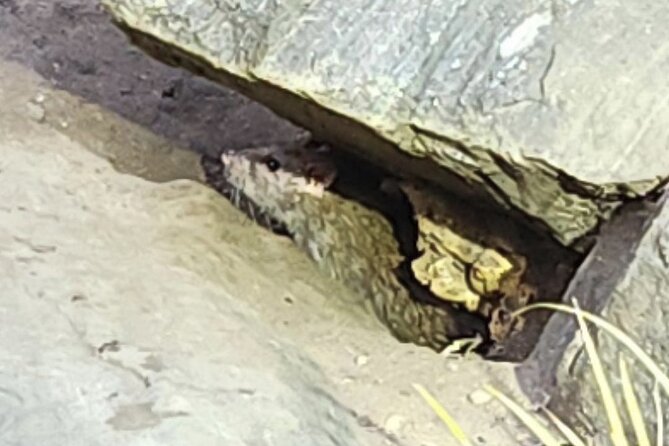
- Science gives the tour its bite: Suzanne explains rat poop, rat sex, bait, breeding, tunnels, and the ways human habits support rat populations.
- The 1968 garbage strike matters: DeLury Square connects sanitation work with labor rights, John DeLury, and the sanitation union.
- The route ends near City Hall: Ann Street, Theatre Alley, and City Hall Park add more rat lore and political history.
- Bring stamina and curiosity: The tour is in English, uses a mobile ticket, and needs good weather to go ahead.
Why garbage is a useful way to see New York
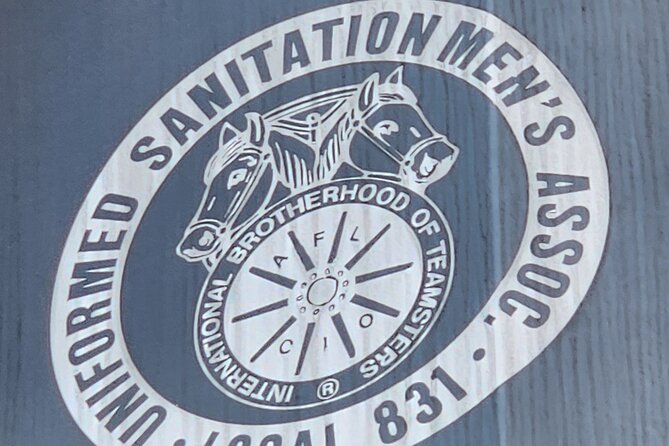
Many New York walks focus on grand buildings, famous names, and financial power. This one asks a more practical question: what happened to the waste created by all those people?
That question leads to uncomfortable places. Trash shows who had power, who did the dirty work, where the city chose to put its waste, and how public officials reacted when conditions became impossible to ignore. Rats become part of the story, not as a cheap scare tactic, but as a sign of how people build cities and then create food, shelter, and hiding places for other species.
Suzanne’s approach also gives the walk a broad scope. You are not spending 150 minutes hearing one fact after another about rodents. You are looking at New York through sanitation, public health, labor, politics, commerce, and human behavior.
That mix explains why the tour suits repeat visitors and New Yorkers as well as first-time visitors. You can know Lower Manhattan’s famous landmarks and still have little idea how garbage shaped the streets beneath your feet.
More New York City walking tours:
- SoHo, Little Italy, and Chinatown Walking Tour in New York
★ 5.0 · 3,153 reviews - Secrets of Grand Central Station Walking Tour New York City
★ 5.0 · 1,796 reviews - Greenwich Village Walking and Food Tasting Tour
★ 5.0 · 1,572 reviews
Starting at Wall Street and Pearl Street
The meeting point is at Wall Street and Pearl Street, a fitting place to begin. The area now suggests banking, markets, and global money. The tour starts by showing that this same part of New Amsterdam once functioned as a garbage dump.
That shift in perspective is the first useful lesson. New York’s most valuable real estate was not always treated as valuable. Streets changed purpose over time, and waste was often pushed into public spaces until business, health, or politics forced a new response.
The opening discussion also addresses Wall Street as the official market for buying and renting enslaved African people. This is an important part of the tour’s design. Garbage is not treated as an isolated municipal issue. The walk connects waste, commerce, exploitation, and the systems that allowed the early city to grow.
You receive no admission ticket to any site because this is an outdoor walking tour. That keeps the price focused on Suzanne’s research, storytelling, and guidance rather than museum entry. It also means the city itself is the exhibit.
South Street Seaport, fish markets, and rat fights
The longest section runs along South Street toward the former Fulton Street Fish Market. Allow about 75 minutes here, including walking and stops. This is where the tour’s central themes come together most fully.
Fish markets created food waste, smells, pests, and hard work on a huge scale. The discussion of the former market helps explain why sanitation is not simply a matter of putting a bin on the curb. A market can feed a city while also producing the conditions that attract rats and demand constant cleanup.
The route also covers landfill and the changing ways New York handled garbage. You will hear how waste affected the waterfront and how the city’s physical growth depended on filling, moving, or hiding unwanted material.
Then comes the former site of Sportsman’s Hall, a notorious rat pit. The stop covers rat fights, a grim form of entertainment that adds a disturbing human element to the story. It shows that rats were not only pests to remove. At times, people captured, bred, baited, and used them for sport.
This is likely the section where the tour feels most macabre. Suzanne discusses rat waste, mating, bait, and breeding in direct terms. The material is memorable, but it is not softened for comfort. If you prefer a family outing with only light historical anecdotes, think carefully before booking.
The route can also include rat tunnels and a chance to look for the animals themselves, as conditions allow. That does not turn the walk into a guaranteed wildlife sighting. It simply makes the subject immediate: you are learning about rats while moving through the places where they live alongside people.
DeLury Square and the 1968 garbage strike
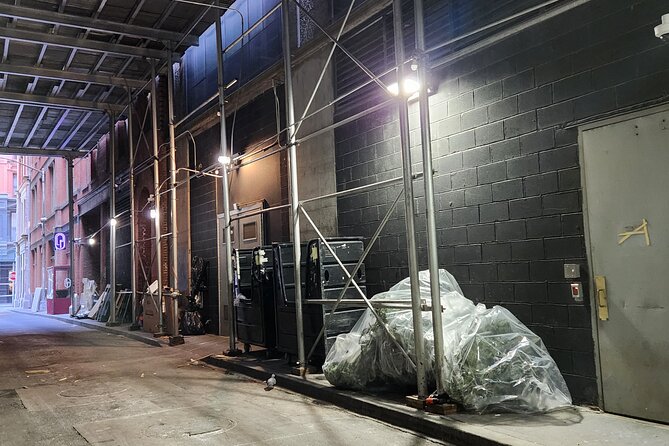
At DeLury Square, the focus shifts from rats to the workers responsible for keeping the city clean. The stop covers John DeLury, the sanitation union, and New York’s 1968 garbage strike.
This is one of the tour’s most valuable turns. Sanitation can seem invisible when it works. You place a bag outside, it disappears, and the city carries on. A strike reveals how quickly that system matters. Garbage becomes a labor issue, a public health issue, and a political crisis all at once.
The story also gives you a better sense of the people behind city services. Sanitation workers are not background figures in this account. Their work, demands, and organizing helped shape how New York dealt with waste.
After DeLury Square, the group strolls through Ryder Alley and Eden Alley. These smaller historic lanes provide a change from the major streets and offer a more intimate part of Lower Manhattan. The guide uses them to keep the discussion grounded in the city’s older street pattern rather than rushing from landmark to landmark.
A few more New York City picks to weigh up
- New York City: Statue of Liberty & Ellis Island with Ferry
★ 4.6 · 18,683 reviews - New York City: American Museum of Natural History Ticket
★ 4.5 · 15,447 reviews - New York City: Manhattan Helicopter Tour
★ 4.7 · 7,076 reviews - New York City: The FRIENDS™ Experience Entry Ticket
★ 4.7 · 6,234 reviews
Ann Street, Theatre Alley, and City Hall Park
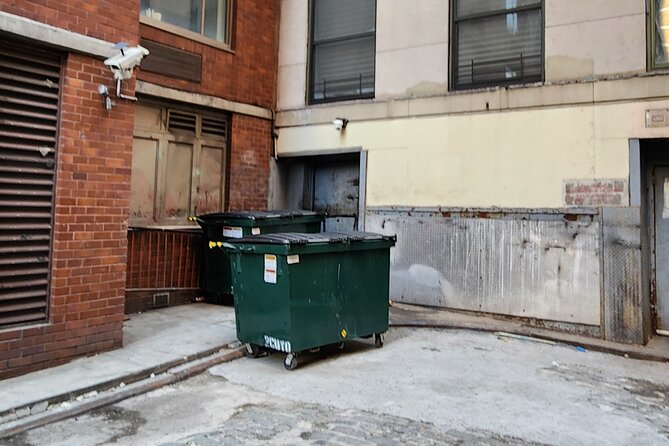
The final section moves up Ann Street, including the site of an infamous rat attack in 1979. That story adds a more personal and unsettling edge to the tour’s broader discussion of public sanitation.
From there, the route continues through Theatre Alley and toward City Hall Park. More rat lore and trash-related facts fill this stretch, but the ending also returns to the larger question: how well does a major city manage the waste produced by millions of people?
City Hall is a fitting finish because sanitation depends on public decisions. Collection systems, street cleaning, pest control, labor rules, and waste policy all involve government. The route closes with the idea that New York’s rat problem is not just about rats. It is also about food waste, building conditions, human choices, and how the city manages shared space.
The tour ends in a different location from its Wall Street starting point. That matters when planning your day. It is convenient if you want to continue sightseeing around City Hall, but you should not expect to return to the meeting point automatically.
Suzanne’s guiding style
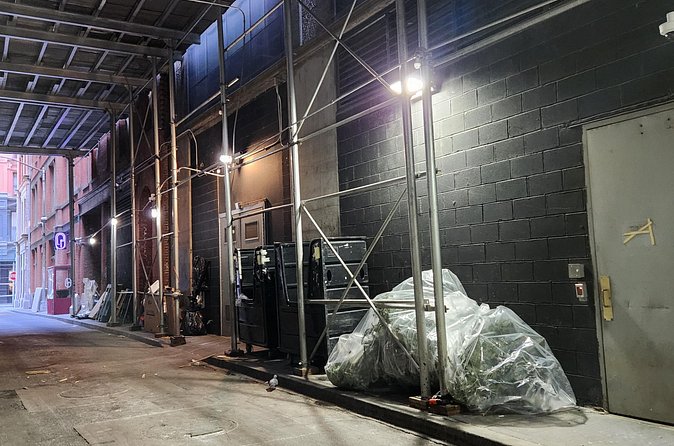
The guide, Suzanne, is central to the experience. Her style combines humor with serious research, and the subject gives her plenty of room for both. She explains technical material in an accessible way, then connects it to the streets around you.
A strong guide is especially important on a topic like this. Garbage and rats can easily become a string of gross-out jokes. Suzanne instead uses the humor to keep you listening while making room for harder questions about human impact and public responsibility.
The tour is offered in English, and the group is capped at 15 people. That is a useful size for a walking discussion. You should be able to hear the guide clearly and ask questions without feeling lost in a crowd.
The pace includes about two hours and 30 minutes of walking, talking, and stopping. Wear comfortable shoes and bring water, since bottled water is not included. The activity requires good weather, so a cancellation caused by poor conditions comes with the choice of another date or a full refund.
What the $45 price gets you
At $45 per person, this costs more than a casual self-guided walk but less than many private city experiences. There are no attraction admissions included, because the tour takes place outdoors. Your payment goes toward the guide’s time and the specialized research needed to make this subject coherent.
I think the price is fair if you value interpretation rather than a checklist of sights. You could walk from Wall Street to City Hall for free, but you would miss the connections between garbage dumps, enslaved labor, fish markets, rat pits, sanitation workers, and city policy.
The value is also stronger for people who have already seen the usual Lower Manhattan highlights. This tour gives you a new way to read familiar streets. It may even change how you look at curbside bags, market waste, alleyways, and subway entrances afterward.
The tradeoff is that the experience has a narrow theme. If you want grand architecture, panoramic views, or entry to historic interiors, spend the $45 elsewhere. If you enjoy social history, science, urban problems, and strange facts, the subject earns its place in your schedule.
Who should book this walk
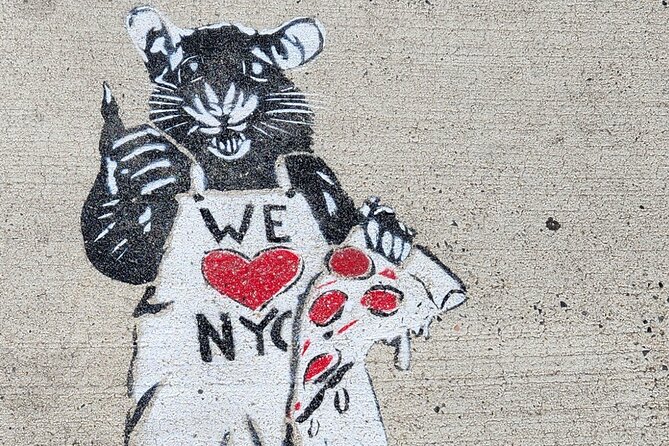
I would recommend it to curious adults, history fans, repeat visitors, students of cities, and anyone interested in public health or urban ecology. It also suits New Yorkers who want to understand the city beyond its famous skyline.
It can work for families, since most participants can take part, but parents should judge the subject matter carefully. Rat reproduction, waste, animal fights, and an attack story are part of the material.
You should also be comfortable walking for 150 minutes in changing weather. The small group helps, but the tour is still an outdoor activity with city traffic, ordinary sidewalks, and no promise of a quiet route.
Book it or skip it?
Book this tour if you want New York explained through the systems that keep it running, and sometimes failing. Suzanne’s walk offers unusual facts, strong storytelling, and a clear link between the city’s past and its present rat problem.
Skip it if you dislike grim subjects, want a landmark-heavy route, or prefer a relaxed stroll with little walking. For everyone else, the Garbage and Rats in New York City Walking Tour is a smart, memorable way to see Lower Manhattan from street level, where the city’s grand story meets its daily mess.
Free cancellation is available up to 24 hours before the start time for a full refund. Changes made inside that window are not accepted, and a weather cancellation offers another date or a full refund.
FAQ
How long is the Garbage and Rats in New York City Walking Tour?
The tour lasts approximately 2 hours and 30 minutes.
How much does the tour cost?
The listed price is $45 per person.
Where does the tour begin?
It begins at Wall Street and Pearl Street in New York City.
Where does the tour end?
It ends at a different location from the starting point, in the City Hall area.
What language is the tour offered in?
The tour is offered in English.
How large is the group?
The tour has a maximum of 15 participants.
Is bottled water included?
No. Bottled water is not included, so you should bring your own.
Can service animals join the tour?
Yes. Service animals are allowed.
What happens if bad weather cancels the tour?
You will be offered a different date or a full refund if poor weather causes the experience to be canceled.
Just listed around New York City
- NYC: Little Shop of Horrors Off-Broadway Ticket5 reviews
- Private NYC Airport Transfer: LGA to Manhattan – Up to 5★ 3.6 · 5 reviews
- New York City Tour in German★ 4.5 · 5 reviews
- New York: Hamilton and Washington Revolutionary Walking Tour★ 5.0 · 5 reviews
- NYC Freedom Tower Private Photo or Video Experience★ 4.0 · 6 reviews
- New York Afternoon Fall Foliage Cruise with Lunch★ 5.0 · 6 reviews
- Southold Bay Oyster Farm Tour★ 5.0 · 6 reviews
- Brooklyn Walking Tours by Locals: Private & 100% Personalized★ 4.0 · 6 reviews
City Tours, compared.


Top of the Rock Observation Deck New York City Ticket
Read our review →

Circle Line: 2hr – New York City Harbor Lights Cruise
Read our review →
Browse the lists this tour appears in