
Reviewed · GRAND CENTRAL TERMINAL TOURS
Grand Central Terminal Walking Tour
Grand Central Terminal is far more than a place to catch a train. Its great hall hides a story of engineering, money, disaster, politics, and near-demolition. This guided walk helps you read the building instead of simply passing through it on the way to the subway.
I like the small-group feel, with a maximum of 35 people and the chance for a guide such as Martin to answer questions directly. I also like the efficient timing: at about 90 minutes to two hours, the tour gives you useful context without taking a whole morning or afternoon.
The main consideration is that this is a walking and listening tour, not a ticketed attraction with a large collection of exhibits. You will spend much of the time inside the terminal, with some attention to the exterior, and the experience depends on the guide and the group staying together.
In This Review
- Key points to know before booking
- Why Grand Central deserves a guided walk
- Starting at 90 East 42nd Street
- The first story: why the terminal was built
- Reading the Main Concourse ceiling
- Architecture, materials, and the details you might miss
- The preservation fight and Jacqueline Kennedy Onassis
- Myths, secrets, and the guide’s storytelling
- How long the walk takes and how it feels
- Is $35 a fair price?
- Who will get the most from this walk
- Booking, weather, and cancellation details
- Should you book the Grand Central Terminal Walking Tour?
- FAQ
- Where does the Grand Central Terminal Walking Tour start?
- Where does the tour end?
- How long does the tour last?
- How much does the tour cost?
- Is the tour offered in English?
- Are morning and afternoon tour times available?
- Is a mobile ticket available?
- How many people can join the tour?
- Is the tour accessible by public transportation?
- What is the cancellation policy?
Key points to know before booking
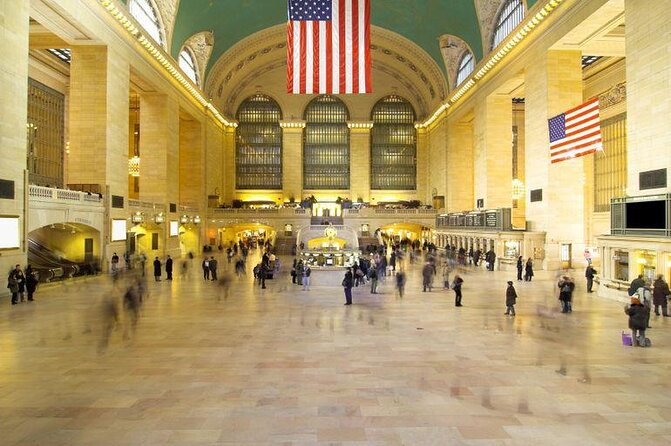
- The Main Concourse is only the beginning: Learn why the famous ceiling shows the night sky, along with the building’s broader design story.
- The tour explains the reason Grand Central exists: A terrible accident helped push New York toward the terminal’s construction.
- Jacqueline Kennedy Onassis has a central role: You will hear how her campaign helped protect the building from demolition.
- Martin has led especially engaging tours: His approach includes historical photographs and time for questions.
- Morning and afternoon departures are available: You can fit the walk around other New York plans.
- The price is $35 per person: That is fair if you want meaning and context, rather than only a quick look at the building.
Why Grand Central deserves a guided walk
You can enter Grand Central Terminal for free and see its famous Main Concourse in a few minutes. That is useful, but it leaves out the reasons the building looks the way it does and why it nearly disappeared.
This tour is built around those missing pieces. You learn why the terminal was placed where it is, what occupied the site before it, and what led to its construction. Those questions turn the building from a pretty backdrop into a record of New York’s growth.
I find that especially useful in New York, where grand buildings can blur together after a few days of sightseeing. A guide gives you a thread to follow. Here, that thread runs from early city development to the Vanderbilt family, from transportation accidents to architectural planning, and from demolition plans to preservation.
The tour also promises the building’s secrets, myths, and urban legends. That is a good fit for Grand Central, where fact and storytelling often share the same hallway. You will not just hear what a detail is. You will consider why people repeat certain stories and how the terminal’s design helped create them.
More Grand Central visits:
- Secrets of Grand Central Station Walking Tour New York City
★ 5.0 · 1,796 reviews - NYC: The Secrets of Grand Central Terminal
★ 4.8 · 718 reviews - NYC: Official Grand Central Terminal Tour
★ 5.0 · 458 reviews
Starting at 90 East 42nd Street
The meeting point is 90 E 42nd St, close to Grand Central Terminal. Since the activity ends back at the same meeting point, you do not have to plan for a separate return location or arrange a pickup elsewhere in Manhattan.
The location is convenient for public transportation, which matters in New York. You can build the tour into a day around Midtown without treating it as a major cross-town project. Still, give yourself enough time to arrive at the stated meeting point. Grand Central is large, and a station entrance, a concourse, and a street address are not always the same thing in practical terms.
The tour is offered in English, with morning and afternoon choices. I like having both options because Grand Central can fit several kinds of day. A morning walk leaves room for museums, shopping, or another neighborhood later. An afternoon tour can work after a morning elsewhere in Manhattan.
The group can include up to 35 people. That is not an intimate private tour, but it is still a controlled size for a public building. The strongest experience will depend on staying near the guide and speaking up when you have a question.
The first story: why the terminal was built
The opening part of the tour sets up the basic question: why is Grand Central here at all? You will hear what stood on the site before the terminal and how the city’s transportation needs changed.
A terrible accident is part of the story leading to construction. That detail gives the tour a sharp human focus. Grand Central was not simply commissioned because someone wanted a grander station. Its creation was tied to serious problems with the way rail traffic operated in the city.
I appreciate this kind of context because it explains public buildings through pressure and consequence. You can look at the stone, columns, and grand stairways differently once you understand that the terminal answered real safety and transportation concerns.
The Vanderbilt family also comes into the early history. Their role connects Grand Central to the people and businesses that shaped New York’s rail network. You will not be looking at an isolated monument. You will be tracing the work of finance, railroads, city planning, and architecture.
Reading the Main Concourse ceiling
The Main Concourse is the visual heart of the experience. Many people walk in, look up, take a picture, and move on. A guide gives you time to consider what you are seeing and why the ceiling was designed that way.
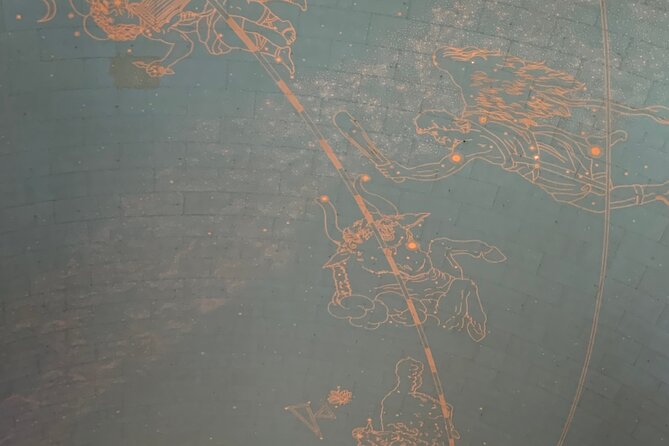
The tour explains the astronomy of the ceiling, including its representation of the night sky. That is one of the most useful reasons to take a guided walk here. The ceiling is not just decoration. It asks you to connect the terminal with a larger view of science, travel, and the world beyond the station.
You will also hear about the architecture and materials used in the terminal. One review specifically praised the chance to learn how the structure was made, not only what it looks like. That distinction matters. Design is easier to appreciate when you understand the choices behind it.
The guide may use historical photographs to show how the terminal and its surroundings looked at earlier points in time. Martin, one named guide associated with this experience, has been praised for bringing photos into the explanation. Visual comparisons can make the building’s changes easier to follow than a long spoken lecture.
Grand Central is an active public place, so you should expect a working terminal rather than a silent museum. Announcements, foot traffic, and general station noise are part of the setting. The guide’s clarity and your position in the group will affect how much you catch.
More New York City walking tours:
- SoHo, Little Italy, and Chinatown Walking Tour in New York
★ 5.0 · 3,153 reviews - Greenwich Village Walking and Food Tasting Tour
★ 5.0 · 1,572 reviews - Artistic, Alternative Greenwich Village Walking Tour
★ 5.0 · 971 reviews - True Crime NYC: Mafia Walk w/Ret. NYPD Detective and Local Food
★ 5.0 · 848 reviews
Architecture, materials, and the details you might miss
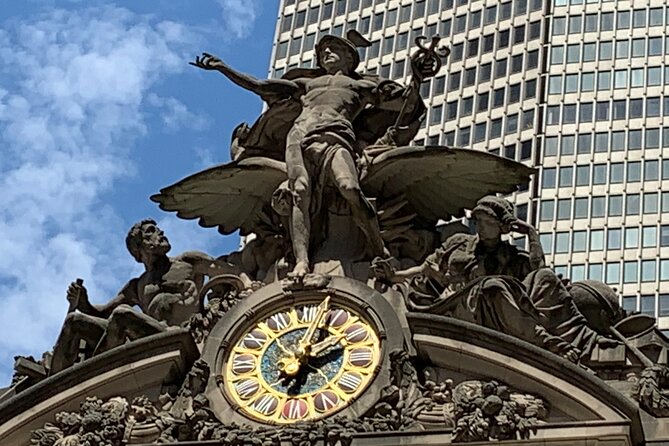
The tour looks at the terminal as a complete architectural project, not only at the Main Concourse. You learn about the materials used and the ideas that shaped the station’s major spaces.
That broader approach is valuable for anyone interested in buildings. You can compare scale, light, symbols, and movement as you go. Grand Central was made to direct large numbers of people through a complicated transportation system, yet it was also designed to make arrival feel important.
I would pay attention to how the guide links practical function with decoration. The best part of a station tour is not simply learning that a surface is marble or that a ceiling has painted stars. It is understanding why a public building received such care and how those choices affected the people using it.
The review comments describe a good flow through the material, moving from the terminal’s beginnings to its architecture and related stories. That is important during a two-hour walk. A guide who lists facts without a clear path can make even a beautiful building tiring. This tour seems designed to build one idea on the next.
The preservation fight and Jacqueline Kennedy Onassis
Grand Central’s survival is one of the tour’s most important subjects. You will hear how Jacqueline Kennedy Onassis helped save the terminal when demolition threatened it.
This part adds a modern political chapter to the building’s story. It also shows that historic places do not survive simply because everyone agrees they are valuable. They need public attention, organized pressure, and people willing to challenge plans that seem inevitable.
I find this especially useful for understanding preservation in New York. A building can be admired and still be vulnerable. The story helps you see Grand Central as something protected through effort, not as an untouched object that was always guaranteed a future.
You will also be able to connect the preservation campaign with what you are seeing in front of you. The terminal’s grand spaces have an emotional effect, but the tour gives that feeling a practical explanation. Someone had to argue that this building mattered, and someone had to persuade officials and the public to act.
Myths, secrets, and the guide’s storytelling
Grand Central has plenty of stories attached to it, and the tour includes common myths and urban legends. This is a good counterweight to the formal architecture discussion.
I like tours that separate the documented past from the stories people enjoy repeating. You can have fun with a legend without accepting every part of it as fact. The guide’s job is to explain what can be supported, what remains uncertain, and why a particular tale became popular.
Martin’s reported style is enthusiastic and full of information, with historical images and room for questions. A guide who welcomes questions can make this section more useful, especially if you have heard one of the terminal’s famous stories before and want to understand its background.
The setting also helps. You are not discussing legends in a classroom. You are standing in the building where those stories circulate. That makes the myths feel connected to the architecture, the crowds, and the way people experience Grand Central.
How long the walk takes and how it feels
The advertised duration is approximately one hour and 30 minutes to two hours, while the itinerary describes an almost two-hour experience. I would plan for the longer end, especially if the group asks questions or pauses for photographs and explanations.
This is a sensible length for the subject. A shorter tour might give you only the Main Concourse and a few quick facts. A much longer one could feel repetitive inside a busy terminal. Two hours allows the guide to cover the building’s origin, architecture, preservation fight, and legends without turning the experience into a full-day commitment.
The route includes attention to the exterior as well as the interior. One account describes a chilly evening when Martin checked that the group was comfortable while viewing the outside of the building. That means weather can affect part of the tour, even though Grand Central itself offers indoor shelter.
Wear shoes suited to walking and dress for the forecast. The practical issue is not difficult terrain, but time on your feet, station noise, and the possibility of pausing outdoors. If you need frequent breaks, ask the guide when the group stops and use the question period to settle in.
Is $35 a fair price?
At $35 per person, the value rests on the explanation rather than admission. There is no separate admission ticket for the terminal portion, so you are paying for the guide’s preparation, structure, stories, and ability to make sense of a place you could otherwise enter on your own.
That can be a good use of money if you are curious about architecture, New York history, or preservation. You are paying for a focused lesson in a landmark you may already plan to visit. The value is weaker if you only want a photograph of the ceiling or a quick look before catching a train.
The small group helps the price feel more reasonable. With a maximum of 35 people, this is not an enormous procession. The strongest feedback focuses on the guide’s ability to answer questions and keep the tour flowing, particularly when the group is small. You should not count on a four-person group, but the format can work well when the number is modest.
I would compare the cost with your priorities. For a first visit to New York, the tour gives you background that can improve a later independent visit. For repeat visitors, the myths, construction story, and preservation battle may provide enough new material to justify the fee.
Who will get the most from this walk
I would recommend the tour to you if you like places with layers of meaning. It suits people interested in architecture, urban planning, railroads, New York families such as the Vanderbilts, and the fight to protect older buildings.
It also works well for first-time visitors who want a short, organized activity in Midtown. The morning and afternoon choices make it easy to fit around a larger sightseeing plan. Since the walk returns to the starting point, you can continue from Grand Central without solving a new transportation problem.
Families and mixed-age groups may find the subject accessible because it includes accidents, big personalities, engineering, ceiling design, and myths. The guide’s ability to answer questions will matter here, especially if younger participants want to focus on the more unusual stories.
You may want to skip it if you strongly prefer to explore alone or if you do not enjoy listening in an active public space. The terminal is not arranged like a quiet museum, and a group tour requires you to keep pace and stay attentive.
The activity allows service animals, is near public transportation, and says most people can participate. That is useful general guidance, but you should consider your own walking and standing needs before booking.
Booking, weather, and cancellation details
Confirmation is provided when you book, and you receive a mobile ticket. That is convenient for a city day when you may not want to carry extra paper.
Free cancellation is available until 24 hours before the start time for a full refund. Cancellations or changes inside that 24-hour window are not accepted for a refund, and the cut-off follows New York local time.
The tour requires good weather and a minimum number of participants. If poor weather cancels it, you will be offered another date or a full refund. If the minimum number is not reached, you will be offered another date or experience, or a full refund.
I would avoid placing this tour right before a fixed, expensive reservation. Give yourself breathing room, since the walk can last close to two hours and changes inside the final 24 hours are restricted.
Should you book the Grand Central Terminal Walking Tour?
Book it if you want to understand why Grand Central Terminal looks and feels the way it does. The strongest reasons are the clear focus on the terminal’s origin, the astronomy of the Main Concourse, the materials and architecture, the Jacqueline Kennedy Onassis preservation story, and the myths tied to the building.
The $35 price is reasonable for a guided explanation, especially if you value the chance to ask questions. A guide such as Martin can add historical photographs and a strong narrative flow, but you should still expect a public, sometimes noisy station and a walking experience rather than a private tour.
Skip it if you only need a quick photo or are content to wander independently. For everyone else, this is a compact way to turn Grand Central from a famous transit stop into one of New York’s most readable buildings.
FAQ
Where does the Grand Central Terminal Walking Tour start?
It starts at 90 E 42nd St, New York, NY 10017, USA.
Where does the tour end?
The activity ends back at the meeting point.
How long does the tour last?
The tour lasts approximately one hour and 30 minutes to two hours. The itinerary describes it as an almost two-hour experience.
How much does the tour cost?
The price is $35 per person.
Is the tour offered in English?
Yes. The experience is offered in English.
Are morning and afternoon tour times available?
Yes. You can choose between morning and afternoon options.
Is a mobile ticket available?
Yes. The tour includes a mobile ticket.
How many people can join the tour?
The activity has a maximum group size of 35 participants.
Is the tour accessible by public transportation?
Yes. The meeting area is near public transportation.
What is the cancellation policy?
You can cancel up to 24 hours before the experience starts for a full refund. Cancellations or changes made less than 24 hours before the start time are not accepted for a refund. If poor weather or an insufficient number of participants cancels the tour, you will be offered another date or experience, or a full refund.
Just listed around New York City
- NYC: Little Shop of Horrors Off-Broadway Ticket5 reviews
- Private NYC Airport Transfer: LGA to Manhattan – Up to 5★ 3.6 · 5 reviews
- New York City Tour in German★ 4.5 · 5 reviews
- New York: Hamilton and Washington Revolutionary Walking Tour★ 5.0 · 5 reviews
- NYC Freedom Tower Private Photo or Video Experience★ 4.0 · 6 reviews
- New York Afternoon Fall Foliage Cruise with Lunch★ 5.0 · 6 reviews
- Brooklyn Walking Tours by Locals: Private & 100% Personalized★ 4.0 · 6 reviews
- Southold Bay Oyster Farm Tour★ 5.0 · 6 reviews
Grand Central Terminal Tours, compared.
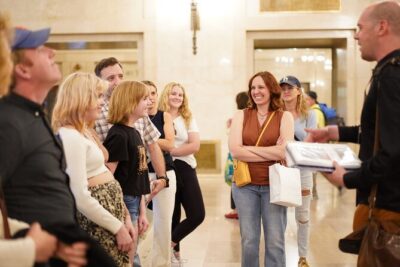
Secrets of Grand Central Station Walking Tour New York City
Read our review →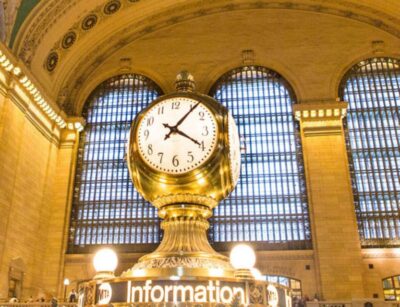


SUMMIT One Vanderbilt with Grand Central Terminal Tour
Read our review →
NYC Secrets of Grand Central Private Walking Tour
Read our review →
Best NYC Sightseeing Tour: Times Square, Grand Central, & More
Read our review →
SUMMIT One Vanderbilt Ticket and Grand Central Tour
Read our review →Browse the lists this tour appears in