
Reviewed · GRAND CENTRAL TERMINAL TOURS
NYC: Official Grand Central Terminal Tour
Grand Central Terminal is more than a place to catch a train. It is a grand public room, a maze of passageways, a former entertainment center, and a building that nearly slipped into decline before its 1980s rescue. This 90-minute walking tour connects those pieces in a tidy route, led by guides such as Joe, Kevin, Sean, Kathryn, and Dwayne.
I like the way the tour goes beyond the main concourse to the Whispering Gallery, Graybar Passage, Grand Central Market, and a former movie theater. I also like the small-group limit of 20 people and the provided headsets, which help you hear the guide in a noisy terminal. The main caution is that the tour stays in public areas, so regular commuters may already know some sights, and current MTA rules can limit behind-the-scenes material.
In This Review
- Key points to know before you book
- Why Grand Central makes a good guided tour
- Starting beneath the famous clock
- Vanderbilt Hall and the terminal’s turnaround
- The Tiffany clock from Pershing Square
- Campbell Apartment and a glimpse of old New York
- The Whispering Gallery and the building below your feet
- Graybar Passage and local makers
- A former movie theater for young passengers
- Grand Central Market and the return to the concourse
- What $39 buys you
- Timing, walking, and meeting-point advice
- Who will get the most from this tour
- Should you book the Official Grand Central Terminal Tour?
- FAQ
- How long is the Official Grand Central Terminal Tour?
- How much does the tour cost?
- What language is the tour offered in?
- Where does the tour begin?
- Where does the tour end?
- Is the tour wheelchair and stroller accessible?
- How many people can join the tour?
- Is hotel pickup or drop-off included?
- Can I cancel for a refund?
Key points to know before you book
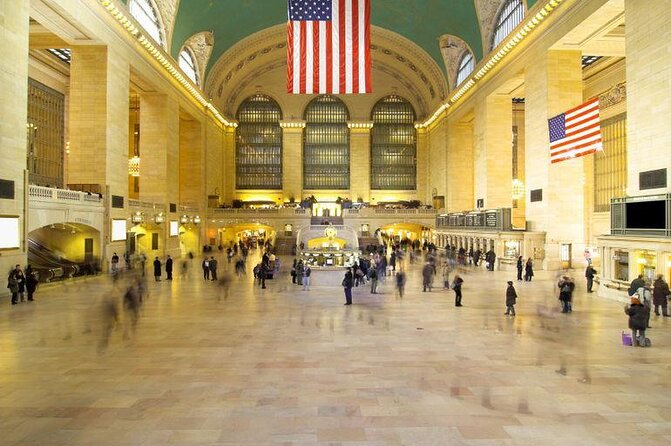
- The main concourse is only the beginning: You also visit Vanderbilt Hall, Campbell Apartment, the Whispering Gallery, Graybar Passage, Grand Central Market, and more.
- The history is unusually personal: Stories connect the terminal to Cornelius Vanderbilt, railroad tycoons, the 1980s restoration, and the people who used the building in its heyday.
- You step outside briefly: The route includes Pershing Square on 42nd Street for a look at the world’s largest Tiffany clock.
- Audio equipment matters: Headsets are supplied, though one past tour had problems with them, so tell your guide at once if you cannot hear.
- The price is reasonable for a focused introduction: At $39 per person, you pay for a guide who organizes a huge building into a clear story.
- Meeting-point care is important: Grand Central is busy, and unclear directions have caused confusion, so arrive early and confirm the exact tour booth location.
Why Grand Central makes a good guided tour
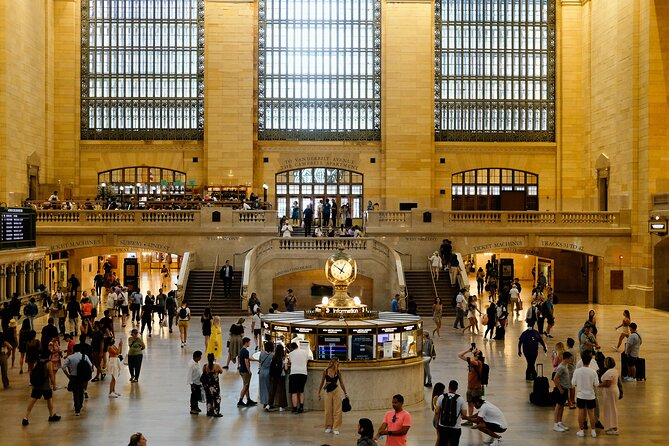
You can walk into Grand Central Terminal for free and see the main concourse on your own. That is exactly why this tour needs to offer more than a quick look upward at the famous ceiling. Its value lies in showing you the parts you would likely miss, then explaining why they matter.
The route also gives the terminal a human story. You hear about Cornelius Vanderbilt and the original Grand Central Depot, then follow the building through decline, changing use, and renewal. One detail that often catches people off guard is that the current terminal is the third building on this site.
I find the 90-minute length well judged. Grand Central contains far more than any short tour can cover, so the guide has to make choices. The strongest guides, including Joe, Sean, Kevin, and Kathryn, have been praised for keeping the pace moving while adding humor and plenty of context.
This is not a private-access tour of railway operations. The most satisfying parts are the public rooms and less obvious corners. If you commute through Grand Central every day, you may already know the easy-to-see sights. If you are visiting New York for the first time, or even grew up nearby, the stories can change the way you look at the building.
More Grand Central visits:
- Secrets of Grand Central Station Walking Tour New York City
★ 5.0 · 1,796 reviews - NYC: The Secrets of Grand Central Terminal
★ 4.8 · 718 reviews - NYC: Official Grand Central Terminal Guided Tour
★ 4.6 · 251 reviews
Starting beneath the famous clock
The tour begins in the main concourse, the terminal’s modern-day heart. You meet near Grand Central Terminal in the 42nd Street area, then gather around the information booth and its well-known clock.
Your guide uses the clock as a doorway into the building’s story. You learn about its rumored value, then move into the tale of Cornelius Vanderbilt and the original terminal. The exact facts matter less than the connection: this is not just decorative architecture, but a project shaped by money, railroads, ambition, and New York’s growth.
The concourse can be loud and crowded. That is where the audio headsets earn their keep. Several guides have been praised for speaking clearly, and the equipment usually lets you hear without standing directly beside the guide. Still, check your headset early. One person reported missing key details because of equipment trouble.
The opening portion lasts about 15 minutes. That is enough time to get your bearings without spending the entire tour in the room you could have explored alone.
Vanderbilt Hall and the terminal’s turnaround
From the concourse, you go to Vanderbilt Hall. Today, its polished setting can make it easy to forget that Grand Central went through a troubled period before its restoration in the 1980s.
The hall works well as a stop because it shows the building’s change in fortunes. Your guide explains the terminal’s move from decline toward renewed public life. Rather than treating restoration as a dry architectural subject, the tour frames it as a decision about what New York wanted to keep.
That context gives the rest of the visit more weight. You are not simply admiring a beautiful room. You are seeing a place that survived because people decided its old spaces still had value.
The first indoor section is fairly short, so you should not expect a long architectural lecture here. The strength is the link between the room and the terminal’s wider story.
The Tiffany clock from Pershing Square
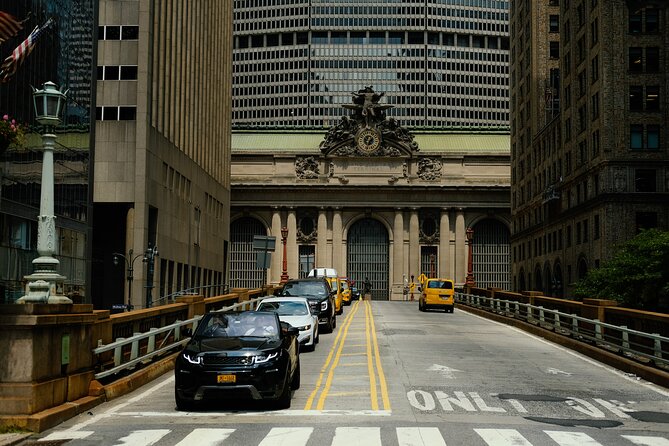
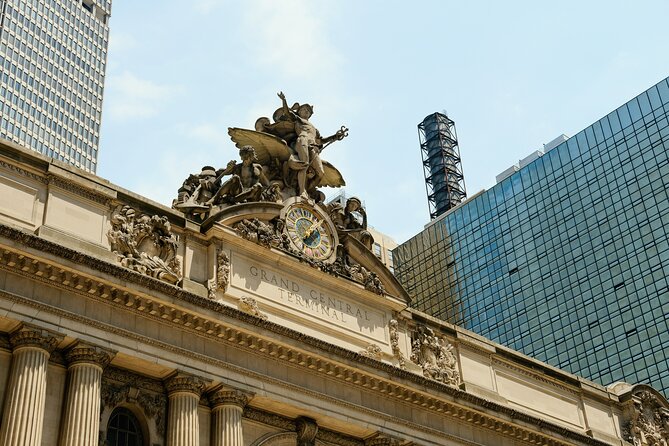
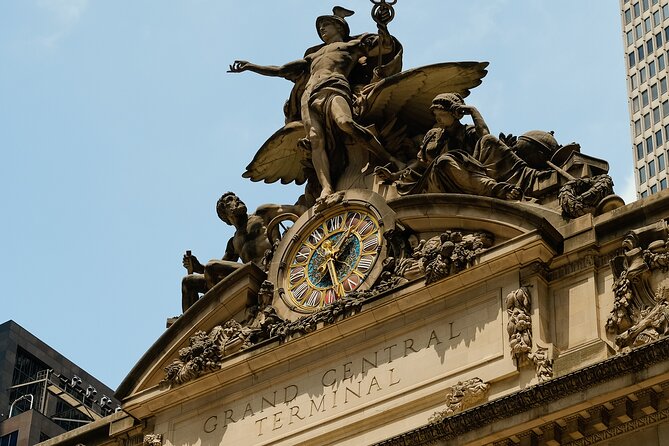
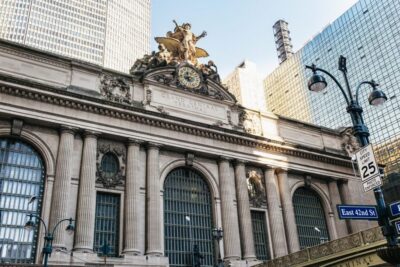
The route briefly leaves the terminal and crosses toward Pershing Square on 42nd Street. From there, you look back at the largest Tiffany clock in the world.
This outdoor stop is short, about 10 minutes, but it changes your view. Inside Grand Central, it is easy to focus on ceilings, arches, and corridors. Outside, you see how the terminal fits into the street and how its grand frontage meets the daily movement of Midtown.
Bring clothing suited to the weather because this portion is outdoors. It is not a long street walk, but the stop adds variety and gives the guide a chance to point out the building from a different angle.
The Chrysler Building is passed along the way rather than visited. Treat it as a quick visual extra, not a separate stop or an included interior visit.
Another side of New York City for the same day:
- NYC: SUMMIT One Vanderbilt Tickets
★ 4.7 · 51,195 reviews - NYC: 9/11 Memorial & Museum Timed-Entry Ticket
★ 4.8 · 31,428 reviews - NYC: Empire State Building Tickets – Observatory & Museum
★ 4.7 · 25,757 reviews - New York City: Statue of Liberty & Ellis Island with Ferry
★ 4.6 · 18,683 reviews
Campbell Apartment and a glimpse of old New York
Back inside, the tour visits Campbell Apartment, a speakeasy-style bar with an unusual past. A century ago, the room served as the private office of a major railroad tycoon.
This is one of the more atmospheric stops. The main concourse is public and monumental. Campbell Apartment feels more personal, with a setting that suggests private business, old New York power, and the social world of the 1920s.
You spend about 10 minutes here. That is enough to understand the room’s former use and see how sharply it differs from the grand public spaces. The visit does not turn into a full bar experience, so you should think of it as a historic interior, not a drinking stop.
I especially like this part for visitors who enjoy social history. It shows how Grand Central was tied not only to trains, but also to business, status, and the people who controlled the railroads.
The Whispering Gallery and the building below your feet
The next section is the longest, about 35 minutes, and covers several of the tour’s most distinctive stops. You enter the Whispering Gallery, where the curved architecture lets a quiet voice carry across the passage and be heard clearly on the other side.
The point is simple, but it is best experienced in person. Your guide explains how the sound travels, then gives you a chance to understand the effect. This is a good moment for children and adults alike because it turns an architectural detail into a small experiment.
You also get a look at one of the world’s largest lost-and-found departments. That stop brings Grand Central down from the level of grand architecture to ordinary human life. In a place used by so many people, a lost object can become part of the terminal’s daily story.
The building’s lower levels also come into the discussion. One person was surprised to learn how many floors extend underground. The tour does not give you unrestricted access to every level, but the information helps you picture the amount of infrastructure beneath the rooms you see.
This is also the part most affected by access rules. One person expected more trackside and operational material, but current MTA restrictions can limit what guides may discuss or show. If your main goal is restricted railway access, this may not be the right tour.
Graybar Passage and local makers
In Graybar Passage, you see handcrafted designs and jewelry sold by local artisans. This stop gives the route a present-day touch after the earlier focus on railroad history and historic rooms.
The passage is also useful as a reminder that Grand Central remains part of New York’s working city. It is not only preserved architecture. It continues to hold shops, food businesses, services, and places where people pass through every day.
The artisan displays may appeal to you if you like browsing local work, though this is not a shopping tour. The guide’s role is to explain the passage and its place in the terminal rather than give you a long block of free shopping time.
A former movie theater for young passengers
The tour then steps into a former movie theater. In Grand Central’s earlier heyday, travel-weary young passengers could watch entertainment there while waiting or passing through the terminal.
This is an easy detail to miss without a guide. Most people entering Grand Central look toward the concourse ceiling or hurry toward a train. The old theater points to a different side of the building, one designed around comfort and distraction as well as transport.
It also makes the terminal feel like a small city under one roof. People could arrive, wait, eat, shop, meet someone, lose something, and find entertainment without leaving the building.
The theater is not presented as a full performance venue today. You are seeing a former function and hearing how the terminal once served its public.
Grand Central Market and the return to the concourse
Near the end, you walk through Grand Central Market. The colorful food corridor provides a pleasant change after the formal rooms and historical explanations.
This is a practical stop, too. If you plan to eat at Grand Central, the market gives you a quick sense of what is available. The tour does not include food, and you should not expect time for a full meal during the 90-minute route.
The tour finishes back at the main concourse, near the Transit Museum Gift Shop area at 89 East 42nd Street. That ending works well because you return to the room where the story began, now with more awareness of the corridors, rooms, and history behind it.
A useful weekend note: the Oyster Bar, a famous terminal landmark, is closed on weekends. The restaurant is not listed as a tour stop, but this matters if you plan to combine the tour with a visit there.
What $39 buys you
The cost is $39 per person. Grand Central itself does not charge an admission fee, so the price is entirely for the guided experience.
That can be good value if you want a clear introduction and would otherwise spend time trying to piece the terminal together on your own. You are paying for route planning, historical explanation, and access to several public spaces that are easy to overlook.
The group can have up to 20 people. That is not a private tour, but it is small enough to remain manageable in most sections. The headsets are an important part of the format, especially when trains, announcements, and crowds compete with the guide’s voice.
The value is weaker if you already know Grand Central well and want restricted areas, railway operations, or extensive trackside content. In that case, the public-route format may feel familiar.
Timing, walking, and meeting-point advice
Plan on about 90 minutes of walking at a moderate pace. You go indoors and outdoors, and the route includes a short stretch on 42nd Street. Wear comfortable shoes and allow room in your schedule for the terminal’s crowds.
The experience is wheelchair and stroller accessible. Grand Central has public elevators and ramps, and the tour is designed to accommodate people with disabilities. You should still arrive early enough to find the meeting point without rushing.
The meeting instructions deserve attention. One person had trouble locating the start, while another was directed to the tour booth on the same wall as the ticket counter. Grand Central has several entrances and plenty of signs, so confirm the exact location before you arrive.
The experience is offered in English only. It is near public transportation, but hotel pickup and drop-off are not included.
You can cancel for a full refund up to 24 hours before the start time. Cancellations or changes made within 24 hours are not refundable, and a missed meeting can be treated as a no-show, so do not leave this one to a last-minute rush.
Who will get the most from this tour
I would choose this tour for a first visit to Grand Central, especially if you want more than photographs of the main concourse. It also suits families because the Whispering Gallery, old movie theater, lost-and-found department, and market keep the route varied.
It is a good choice for curious New Yorkers, too. The tour’s strength is not only the famous architecture. It is the small details, from the terminal’s third building on the site to its former private office and entertainment spaces.
You should also consider it if you prefer a measured walking tour to a long city excursion. The route is focused, the duration is manageable, and the guide can answer questions along the way.
I would hesitate if your priority is access to working tracks, railway control areas, or private rooms. Current rules may limit those subjects, and the tour does not promise restricted access.
Should you book the Official Grand Central Terminal Tour?
I would book it if you want the terminal’s main sights placed into a story. At $39, it is a fair price for 90 minutes with an English-speaking guide, a small group, audio equipment, and a route that includes more than the central concourse.
The strongest reason to go is the range of stops: Vanderbilt Hall, Pershing Square, Campbell Apartment, the Whispering Gallery, Graybar Passage, the former movie theater, and Grand Central Market. The main drawback is the public nature of the route. A regular commuter may find some sights familiar, and anyone hoping for extensive behind-the-scenes access should lower expectations.
Arrive early, check the meeting point, test your headset, and consider visiting the Oyster Bar on a weekday if it is part of your plan. With those details handled, this tour is a useful, well-paced way to understand one of New York’s most remarkable public buildings.
FAQ
How long is the Official Grand Central Terminal Tour?
The tour lasts approximately 1 hour and 30 minutes.
How much does the tour cost?
The price is $39 per person.
What language is the tour offered in?
The tour is offered in English with a local English-speaking guide.
Where does the tour begin?
The tour begins at Grand Central Terminal in New York, New York 10017.
Where does the tour end?
The tour ends at 89 East 42nd Street, New York, New York 10017, near the Transit Museum Gift Shop area inside Grand Central Terminal.
Is the tour wheelchair and stroller accessible?
Yes. Grand Central Terminal has public elevators and ramps, and the experience is described as accessible to people with disabilities and to strollers.
How many people can join the tour?
The maximum group size is 20 people.
Is hotel pickup or drop-off included?
No. Hotel pickup and drop-off are not included. You meet at Grand Central Terminal and travel to and from the tour independently.
Can I cancel for a refund?
Yes, if you cancel at least 24 hours before the experience start time. Cancellations or changes made less than 24 hours before the start time are not refundable.
Just listed around New York City
- NYC: Little Shop of Horrors Off-Broadway Ticket5 reviews
- Private NYC Airport Transfer: LGA to Manhattan – Up to 5★ 3.6 · 5 reviews
- New York City Tour in German★ 4.5 · 5 reviews
- New York Afternoon Fall Foliage Cruise with Lunch★ 5.0 · 6 reviews
- New York: Hamilton and Washington Revolutionary Walking Tour★ 5.0 · 5 reviews
- NYC Freedom Tower Private Photo or Video Experience★ 4.0 · 6 reviews
- Brooklyn Walking Tours by Locals: Private & 100% Personalized★ 4.0 · 6 reviews
- Southold Bay Oyster Farm Tour★ 5.0 · 6 reviews
Grand Central Terminal Tours, compared.
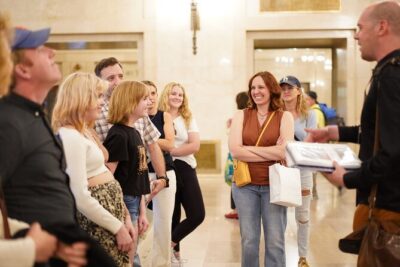
Secrets of Grand Central Station Walking Tour New York City
Read our review →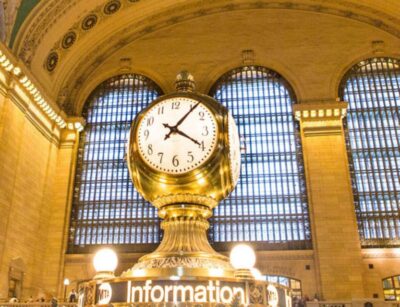

SUMMIT One Vanderbilt with Grand Central Terminal Tour
Read our review →
NYC Secrets of Grand Central Private Walking Tour
Read our review →
Best NYC Sightseeing Tour: Times Square, Grand Central, & More
Read our review →
SUMMIT One Vanderbilt Ticket and Grand Central Tour
Read our review →
Secrets of Grand Central Terminal and/or Penn Station – Private
Read our review →Browse the lists this tour appears in