
Reviewed · GREENWICH VILLAGE TOURS
Greenwich Village Soho Little Italy/Paris Chinatown Walking Tour
New York changes block by block, and this walk shows you exactly how. In a few hours, you move from the bohemian roots of Greenwich Village to Stonewall, SoHo’s cast-iron streets, the fading Italian character of Little Italy, and the Chinese world around Doyers Street. I like the strong historical focus and the way the route connects neighborhoods instead of treating them as isolated stops. I also like that the guide points out places you could easily pass without noticing.
The main consideration is the pace. Six stops in roughly 2 to 3 hours means the tour offers a broad introduction rather than a slow, detailed look at each neighborhood. The route also involves a fair amount of walking, and tips are not included in the $56 price.
In This Review
- Six neighborhoods, one changing New York
- Washington Square Park and the Village’s creative past
- Stonewall Inn and the road to Pride
- SoHo’s cast-iron streets and luxury shops
- Little Paris and a neighborhood still taking shape
- Little Italy after its borders have shrunk
- Chinatown and the finish on Doyers Street
- What the $56 price buys you
- Timing, walking, and practical planning
- The guide’s role and the tone of the walk
- Who should book this walk
- Should you book the Greenwich Village to Chinatown walk?
- FAQ
- Where does the walking tour start?
- Where does the tour end?
- How long does the tour last?
- Is the tour offered in English?
- What neighborhoods are included?
- Can I cancel for a full refund?
Six neighborhoods, one changing New York
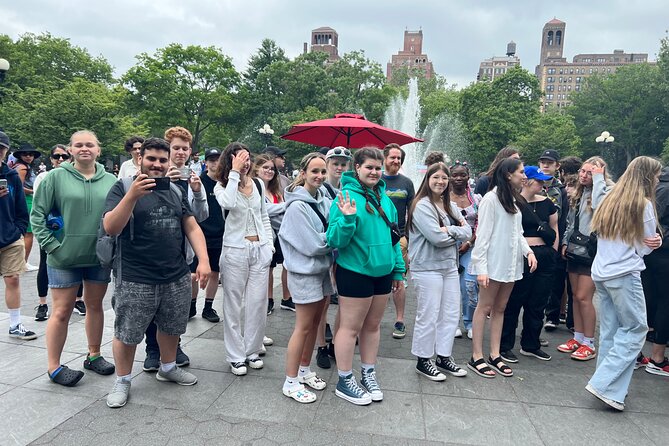
This walk is useful because it gives you a quick map of lower Manhattan’s cultural layers. Greenwich Village brings artists, music, and political change. Stonewall adds the story of the LGBTQIA+ rights movement. SoHo shows how old industrial buildings became a luxury shopping district, while Little Italy and Chinatown reveal how immigration shaped the city and continues to reshape it.
The tour begins at Washington Square Arch and ends at Apotheke Chinatown on Doyers Street. That north-to-south direction makes practical sense: you start in a large, open park and finish among the narrow streets and food shops of Chinatown.
Here are the details I find most useful:
- Washington Square Park begins the story with artists and bohemian New York: Expect discussion of the Village’s music, Beat culture, and changing creative life.
- Stonewall adds an important social and political chapter: The guide covers life before the uprising, the events at the Stonewall Inn, the aftermath, and the rise of Pride.
- SoHo is an architecture lesson as much as a shopping stop: Look up at the cast-iron façades, then notice how the same buildings now house luxury boutiques.
- Little Paris gives the route a modern twist: The sign marks a proposed French enclave between SoHo and Little Italy.
- Little Italy is presented as a shrinking neighborhood: You see what remains of its Italian atmosphere alongside stories about organized crime.
- Chinatown finishes with the strongest sensory change: The area feels like a separate city, and the tour ends near Doyers Street in its center.
Washington Square Park and the Village’s creative past
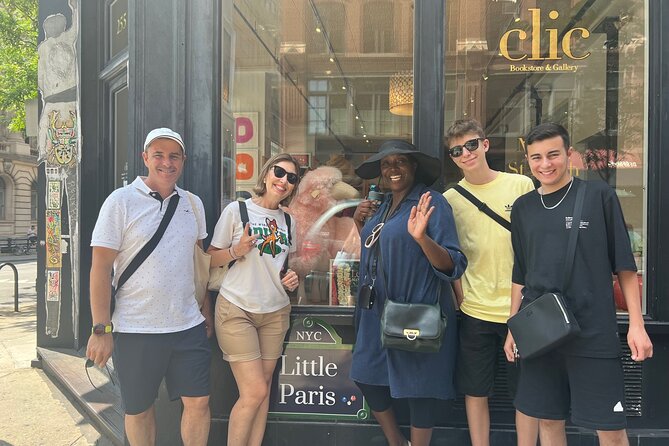
Washington Square Park is a good place to begin because it gives you room to get oriented before the streets tighten. The arch is the meeting point, and the park provides a clear setting for a story about Greenwich Village’s many lives.
The focus here is the Village as a home for artists, musicians, and outsiders. The guide discusses Bohemian culture and the Beat generation, along with the area’s long connection to live music. You may come away with a better sense of why this part of Manhattan became linked with creative freedom rather than simply seeing it as a pleasant park and a collection of expensive apartments.
The stop is scheduled for about 30 minutes. That is enough time for an introduction, but not enough for a detailed tour of every musical or literary address. I see this as a strength if you are new to the Village and want useful context before exploring on your own.
The park is also a helpful place to begin if your group includes people with different interests. History fans get the cultural background, while architecture lovers can start noticing the surrounding streets and buildings. You do not need an admission ticket for this stop.
More Greenwich Village walks:
- NYC: Greenwich Village Food Tour with 6 Locals Favorites Dishes
★ 5.0 · 1,812 reviews - Greenwich Village Walking and Food Tasting Tour
★ 5.0 · 1,572 reviews - Artistic, Alternative Greenwich Village Walking Tour
★ 5.0 · 971 reviews
Stonewall Inn and the road to Pride
The move from Washington Square Park to the Stonewall Inn changes the subject from creative culture to civil rights. The guide covers the New York LGBTQIA+ community before the uprising, the uprising itself, its immediate aftermath, and the growth of Pride.
This is one of the most important parts of the walk because it avoids treating Stonewall as only a photo stop. You get a timeline that links the neighborhood to the people and events that made it a central place in LGBTQIA+ history.
The Stonewall Inn sits in Greenwich Village, but its meaning reaches far beyond the building. A guide is especially useful here because the significance is not always obvious from the street. The stop is planned for about 30 minutes, giving the subject more attention than a passing explanation would.
I would expect the tone here to be more serious than at Washington Square Park. That is appropriate. The tour’s historical approach also includes a critical look at colonialism and capitalism in New York, a point that appealed to one person who found the guide’s social context especially strong.
The tour does not list an admission visit inside the inn. You should think of this as an exterior history stop with narration, not a bar visit or nightlife experience.
SoHo’s cast-iron streets and luxury shops
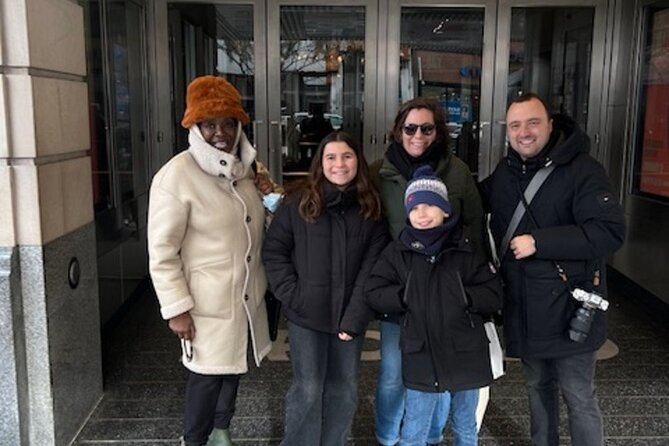
SoHo is where the walk turns toward architecture and urban change. The neighborhood is known for its cast-iron buildings, and the guide explains the structures that now hold luxury boutiques.
The practical lesson here is to look above the storefronts. Shopping can pull your eyes toward the displays, but the buildings are the real reason this section belongs on a history walk. Their façades help explain how an older commercial area became one of Manhattan’s most fashionable shopping districts.
This stop lasts about 30 minutes. That gives you time to study the streets and hear the basic story without turning the tour into a long architectural lecture. If you want to shop, the tour may help you identify streets to revisit later, but shopping is not the main activity.
SoHo can feel very different from the Village. That contrast is part of the value. In one neighborhood, the focus is artistic and bohemian identity. In the next, the same idea of creative fashion has become tied to high-end retail and property value.
I would keep your attention on the upper floors and iron details. The guide may point out features you would miss if you only came for stores and photographs.
Little Paris and a neighborhood still taking shape
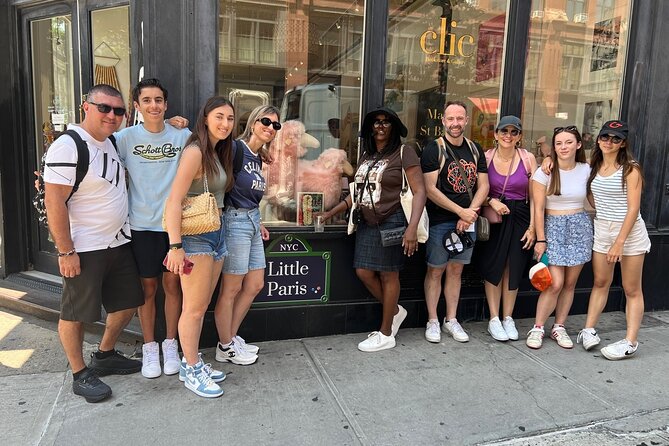
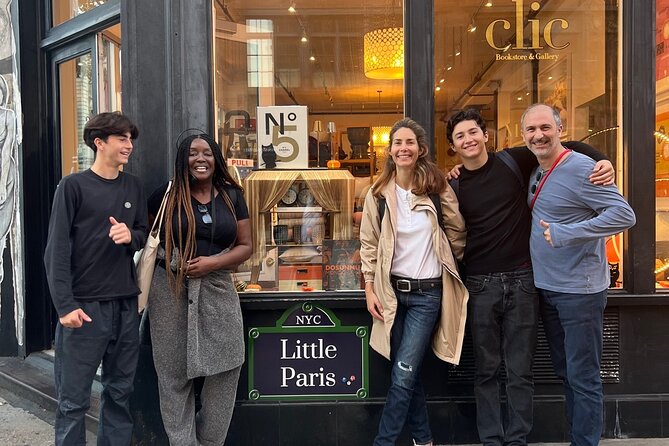
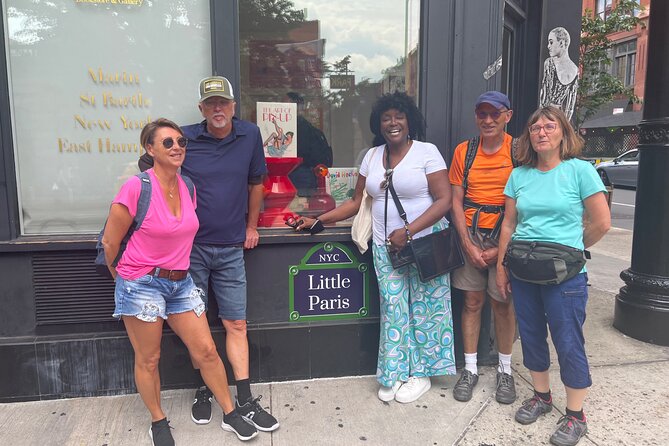
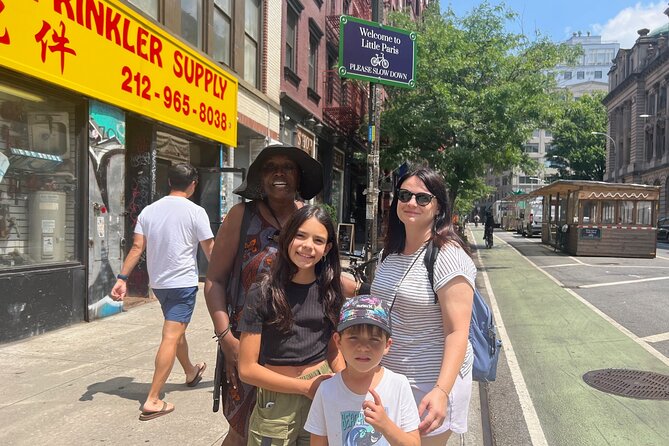
The Little Paris sign offers one of the more unusual stops. It sits between SoHo and Little Italy and marks a proposed French enclave that is described as soon to be officially recognized.
This is not the same kind of established district as Chinatown or SoHo. That makes it useful as a snapshot of New York in progress. Neighborhood names and cultural identities can grow from businesses, residents, signs, and local promotion before they become fixed parts of the city’s official map.
The guide spends about 30 minutes explaining the idea. You should not expect a large, clearly bounded French quarter. Instead, this is a short look at how Manhattan keeps creating new cultural labels on top of older ones.
For me, this stop helps tie the whole route together. The walk is not only about famous places from the past. It also asks you to notice how the city keeps changing and how one neighborhood can be described in several ways at once.
More SoHo, Little Italy and Chinatown walks:
- SoHo, Little Italy, and Chinatown Walking Tour in New York
★ 5.0 · 3,153 reviews - NYC: Chinatown & Little Italy Food Tour with 7 Flavorful Tastings
★ 5.0 · 2,733 reviews - Original NYC Guided Food Tour of Chinatown and Little Italy
★ 5.0 · 2,194 reviews - NYC Food Tour: Chinatown and Little Italy
★ 5.0 · 1,090 reviews
Little Italy after its borders have shrunk
Little Italy is presented as a remnant of a much larger Italian neighborhood. The tour looks at what remains of its atmosphere and discusses the period when organized crime held major power there.
That combination gives the stop more substance than a quick look at restaurant signs. You get both the cultural story and the darker side of the neighborhood’s past. The area’s current size also helps you understand how Chinatown and other nearby communities changed the boundaries of old immigrant districts.
The guide allows about 30 minutes here. That is enough for a clear introduction to the remaining streets, but you should not expect a full treatment of Italian immigration in New York or a long discussion of every crime figure connected with the area.
Little Italy may be one of the places where a guide adds the most value. On your own, it can be hard to tell what is historic, what is recent, and what is mainly aimed at visitors. The narration helps separate the neighborhood’s surviving character from its modern restaurant trade.
If food is your main interest, take note of places you may want to return to after the walk. The tour itself does not include a meal or tastings.
Chinatown and the finish on Doyers Street
The final section enters Chinatown, described as a city within a city. The change in atmosphere is part of the experience: streets, signs, shops, and food create a clear break from the areas you have just crossed.
The guide presents Chinatown as a return trip to Shanghai, using the neighborhood to show how a distinct community developed within Manhattan. The language about awakening all the senses is fitting in a practical sense: this is the point where you are most likely to notice strong visual, culinary, and street-level contrasts.
The tour ends at Apotheke Chinatown, 9 Doyers Street. That is a useful finish because you are left in the heart of the neighborhood rather than sent back to the starting point. You can continue exploring, look for a meal, or use the guide’s suggestions to plan another visit.
The route does not include food, drinks, or entry to Apotheke. The ending location is simply where the walking tour concludes. If you want to eat afterward, Chinatown gives you a natural place to do so, but you will need to make your own arrangements.
What the $56 price buys you
At $56 per person, this is not the cheapest way to walk through these neighborhoods. You can visit every area without paying an admission fee, and the tour does not include food, drinks, or special entry.
The value comes from the guide’s interpretation. You are paying to connect six locations in a short period and to hear the historical links between them. That matters in New York, where a few blocks can contain several different stories, but the evidence of those stories is not always easy to read.
The walk may be a good use of money if you have limited time or want to get your bearings early in a New York visit. The route gives you ideas for later shopping and eating, and it can save you from wandering without knowing what you are looking at.
The value is weaker if you prefer to explore at your own speed, stop often for photos, or spend a long time inside one neighborhood. Six half-hour sections create a full route, but they also limit the time available at each stop.
A group size of up to 25 people is another factor. That is small enough to remain manageable, but it is not a private walk. Ask questions when you can, stay close to the guide, and expect a shared pace.
Timing, walking, and practical planning
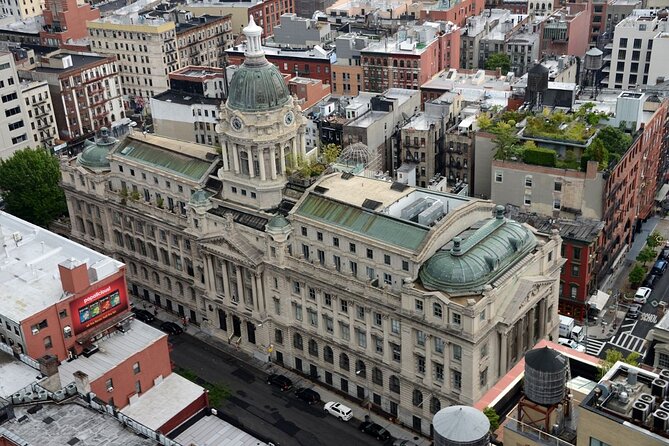
The walk lasts approximately 2 to 3 hours. The six scheduled stops are each listed at about 30 minutes, so the total time may vary with the walking between neighborhoods, the group, and the guide’s presentation.
You should have a moderate level of physical fitness. This is a city walking tour, not a seated sightseeing experience. Wear comfortable shoes, and plan for the possibility that the group will keep moving between stops.
The starting point is Washington Square Arch at Washington Square North. The end is Apotheke Chinatown at 9 Doyers Street. Since the tour does not return to the start, plan your day around finishing downtown.
The experience is offered in English and uses a mobile ticket. A speaker is included, which should help the guide address a group of up to 25 people in city streets.
Confirmation is sent within 48 hours of booking, subject to availability. Service animals are allowed, and the route is near public transportation. You can cancel for a full refund if you cancel at least 24 hours before the start time. Changes or cancellations made later are not accepted for a refund.
The guide’s role and the tone of the walk
The guide is the main reason to choose this experience over a self-guided route. Kaissa is named in the tour material, and one direct account describes her as friendly, passionate about New York, and able to accommodate individual needs.
The tone is not limited to postcard stories. The walk includes a critical view of colonialism and capitalism in New York, along with cultural history and neighborhood change. That approach will suit you if you want more than famous names and attractive façades.
The guide also brings the city’s past into the present. Artists and Beat culture, Stonewall and Pride, luxury retail, French identity, organized crime, and Chinatown are not treated as unrelated subjects. They are part of a larger story about who gets space in New York and how that space changes.
The strongest feedback centers on the guide’s historical skill, friendly manner, and ability to reveal places people might otherwise skip. That is important because this route depends on explanation. Without narration, some sections would feel like a long walk between popular neighborhoods.
Who should book this walk
I would recommend it for a first or second visit to New York, especially if you want to understand lower Manhattan before returning to individual neighborhoods on your own.
It also suits repeat visitors. One person taking a fourth trip to New York used the walk to find areas outside the standard attractions. That is exactly where this tour can help: it gives you a fresh route through familiar-sounding parts of the city and points your attention toward details you may have missed.
The walk is a good fit for you if:
- You want cultural and political history, not only sightseeing.
- You enjoy seeing several neighborhoods in one outing.
- You want suggestions for later shopping and eating.
- You prefer a guide to explain architecture and social change.
- You can maintain a moderate walking pace.
- You are comfortable sharing the experience with a group of up to 25.
It may not suit you if you want a private tour, a food tour, a detailed architectural study, or long free time at each stop. It is also not designed as a nightlife outing, despite ending near a well-known Chinatown bar.
Should you book the Greenwich Village to Chinatown walk?
Book this tour if you want a compact, thoughtful introduction to the parts of New York between Washington Square Park and Chinatown. The strongest reasons are the Stonewall coverage, the contrast between SoHo and Little Italy, and the guide’s focus on how culture and power shape neighborhoods.
At $56, the walk is best judged as a guide-led orientation rather than a collection of paid attractions. You are not paying for entry tickets. You are paying for the connections, explanations, and local direction that make the streets easier to understand.
I would choose it early in a New York stay, then use the finish in Chinatown to continue the day with your own food and shopping plans. If you want a slow, intimate look at one district, choose something narrower. If you want several major stories in one practical city walk, this is a solid choice.
FAQ
Where does the walking tour start?
The tour starts at Washington Square Arch, Washington Square North, New York, NY 10012.
Where does the tour end?
It ends at Apotheke Chinatown, 9 Doyers Street, New York, NY 10013, in the heart of Chinatown.
How long does the tour last?
The tour lasts approximately 2 to 3 hours.
Is the tour offered in English?
Yes. The experience is offered in English.
What neighborhoods are included?
The route includes Greenwich Village, Stonewall, SoHo, Little Paris, Little Italy, and Chinatown.
Can I cancel for a full refund?
Yes. You must cancel at least 24 hours before the experience start time for a full refund. Cancellations or changes made less than 24 hours before the start time are not accepted for a refund.
More New York City walking tours
- Secrets of Grand Central Station Walking Tour New York City
★ 5.0 · 1,796 reviews - True Crime NYC: Mafia Walk w/Ret. NYPD Detective and Local Food
★ 5.0 · 848 reviews - Central Park Guided Walking Tour
★ 5.0 · 774 reviews - New York City: Private Walking Tour with a Local
★ 4.6 · 771 reviews
Just listed around New York City
- NYC: Little Shop of Horrors Off-Broadway Ticket5 reviews
- Private NYC Airport Transfer: LGA to Manhattan – Up to 5★ 3.6 · 5 reviews
- New York City Tour in German★ 4.5 · 5 reviews
- New York: Hamilton and Washington Revolutionary Walking Tour★ 5.0 · 5 reviews
- NYC Freedom Tower Private Photo or Video Experience★ 4.0 · 6 reviews
- New York Afternoon Fall Foliage Cruise with Lunch★ 5.0 · 6 reviews
- Brooklyn Walking Tours by Locals: Private & 100% Personalized★ 4.0 · 6 reviews
- Southold Bay Oyster Farm Tour★ 5.0 · 6 reviews
Greenwich Village Tours, compared.

Greenwich Village Food Tour with 6 Locals Favorites Dishes
Read our review →
Greenwich Village Walking and Food Tasting Tour
Read our review →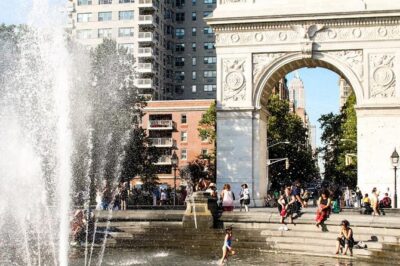
Artistic, Alternative Greenwich Village Walking Tour
Read our review →
NYC Greenwich Village Italian Food Guided Walking Tour
Read our review →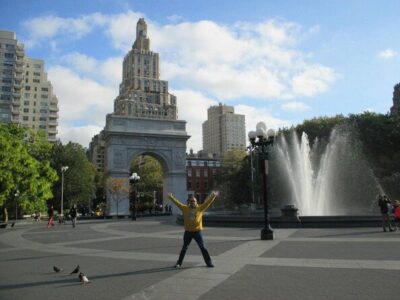

High Line Park and Greenwich Village Food Tour
Read our review →
Browse the lists this tour appears in