
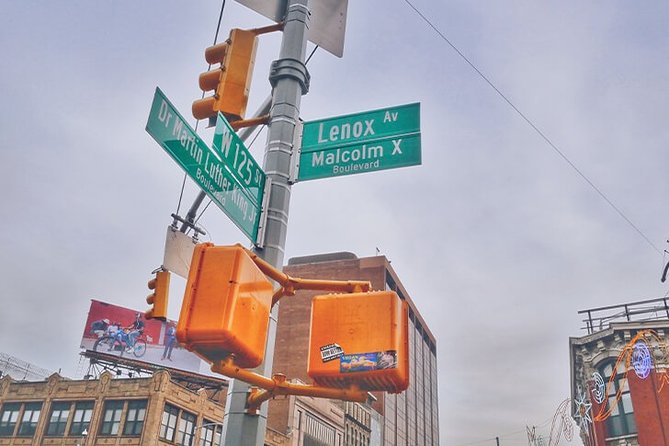
Reviewed · HARLEM & GOSPEL TOURS
Half-Day Civil Rights Walking Tour in Harlem with Lunch
Harlem’s civil rights story comes alive block by block on this three-hour walk. You’ll connect Malcolm X’s former Temple No. 7, the Schomburg Center, churches tied to protest, and the homes of major Harlem figures to the wider fight for equal rights in America.
I like the local focus and the way the tour ties Harlem to the March on Washington. I also like that lunch is included, giving you time to remain in the neighborhood rather than rushing off after the final stop.
The main point to consider is the walking. You need a moderate level of fitness, and a group of up to 30 people can feel less personal than a small private tour.
In This Review
- Key points to know before booking
- Why this Harlem walk matters
- Starting at 130 Malcolm X Boulevard
- Malcolm X’s former Temple No. 7
- Churches that became places of protest
- The Harlem hotel once called its Waldorf
- Langston Hughes and the power of a home address
- Fifteen minutes at the Schomburg Center
- Adam Clayton Powell Jr. and Sr.
- The March on Washington from a Harlem angle
- Understanding the two Harlem riots
- The guides: Carolyn and Doris
- Lunch after the walk
- Is $82 a fair price?
- Walking effort and practical planning
- Who should book this Harlem experience?
- Should you book the Civil Rights Walking Tour?
- FAQ
- How long is the Harlem civil rights walking tour?
- What time does the tour start?
- Where does the tour begin?
- Where does the tour end?
- Is lunch included?
- What happens if bad weather cancels the tour?
Key points to know before booking
- Malcolm X’s former Temple No. 7 gives the walk a direct connection to one of Harlem’s strongest civil rights voices.
- The Schomburg Center adds an important cultural and research angle, with about 15 minutes set aside there.
- Churches, hotels, homes, and public sites help you see how Harlem’s movement grew through everyday neighborhood institutions.
- Guides Carolyn and Doris have been praised for clear, engaging talks about Harlem and New York.
- Lunch is included after the walk, a useful value at a price of $82 per person.
- The tour ends near 515 Malcolm X Boulevard, not back at the starting point.
Why this Harlem walk matters
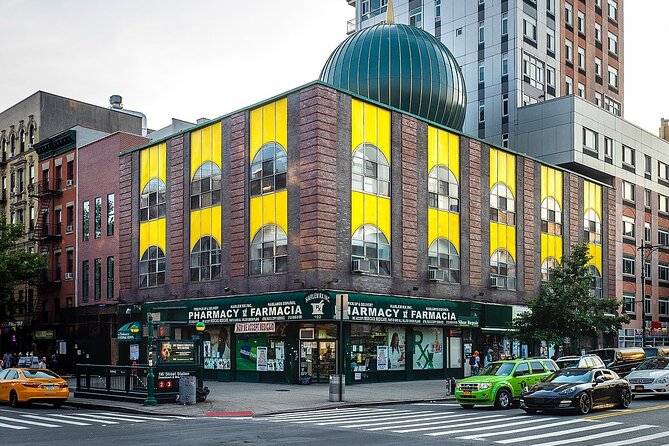
Many New York tours treat Harlem as a quick stop for music, food, or architecture. This one gives you a more focused subject: the people, churches, buildings, and protests connected to the civil rights movement.
You’ll hear about Harlem’s link to the March on Washington, then look at the neighborhood through a more local lens. The point is not simply to name famous leaders. It is to show how political work took place in churches, hotels, homes, libraries, and streets.
That approach suits me. Civil rights history can feel distant when it is presented only through dates and national speeches. Here, the subject is placed in the streets of Harlem, where Malcolm X preached, Paul Robeson attended services, Langston Hughes lived, and the Powell family built a political base.
The walk also addresses the two Harlem riots. That part may be less comfortable than the tour’s famous names, but it matters. A useful Harlem tour should explain conflict, frustration, and discrimination along with achievement. You should expect a serious look at the forces that shaped the neighborhood, not a polished postcard version.
More Harlem visits and gospel mornings:
- NYC Highlights Tour: Bronx, Brooklyn, Harlem, Queens & Coney
★ 4.5 · 2,846 reviews - NYC: Contrasts Tour of Harlem, The Bronx, Queens & Brooklyn
★ 4.5 · 2,167 reviews - NYC: Harlem Hallelujah! Gospel Wednesday Concert
★ 4.7 · 1,638 reviews
Starting at 130 Malcolm X Boulevard
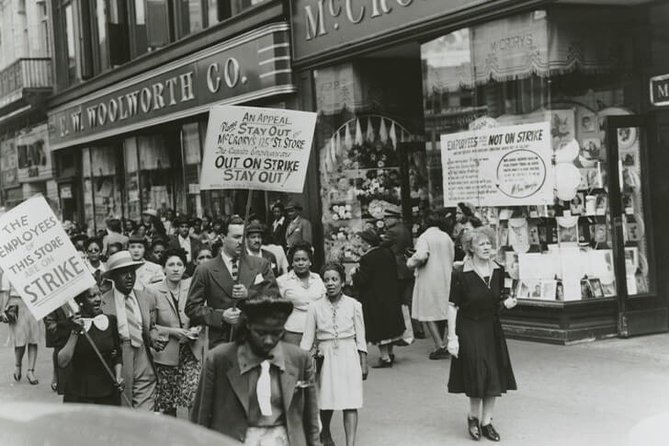
The tour begins at 11 a.m. at 130 Malcolm X Boulevard. That meeting point puts you directly in the part of Harlem central to the experience, instead of starting with a long transfer from another section of Manhattan.
The location is near public transportation, which makes arrival easier. Still, plan your route before the morning of the tour. The end point is in the general area of 515 Malcolm X Boulevard, so you should not assume you will finish where you began.
A mobile ticket is provided, and the tour is offered in English. Confirmation arrives when you book. The group can reach 30 people, which is a reasonable size for a public walking tour but not ideal if you want constant access to the guide.
Malcolm X’s former Temple No. 7
One of the first important stops is the original Temple No. 7 led by Malcolm X. This gives the tour an immediate connection to a powerful speaker and organizer whose work shaped Harlem’s public life.
The value of this stop is its setting. You are not only hearing about Malcolm X in a museum or lecture hall. You are seeing the place associated with his leadership in Harlem and beginning to understand how religious spaces could also serve as centers of political thought.
The tour does not promise an interior visit, so you should expect to learn about the site from outside rather than count on entering. That is typical of a neighborhood walk, and it keeps the pace moving, but anyone hoping for extended indoor access should adjust expectations.
Churches that became places of protest
Churches appear more than once during the route, and each has a different connection to the movement.
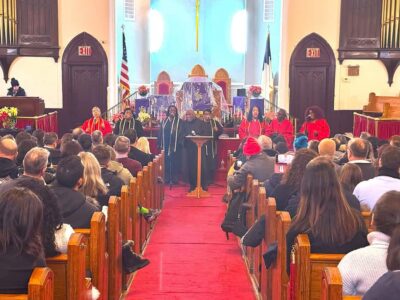
One church was led by Wyatt Tee Walker, a major civil rights organizer and close associate of Martin Luther King Jr. Another is known as the Freedom Church. Paul Robeson attended services there and spoke against discrimination.
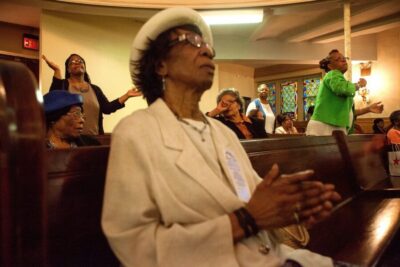
These stops help explain why churches mattered so much. They were places of worship, but they also gave organizers a platform, a meeting place, and a trusted public voice. You get a better sense of the movement when you see the institutions that supported it.
The church stops are also a good reason to listen closely to your guide. The supplied details do not promise interior access or a service visit. You should expect exterior interpretation and neighborhood context, not a formal church tour.
A few more New York City picks to weigh up
- NYC: City Cruises Luxury Brunch, Lunch or Dinner Cruise
★ 4.6 · 881 reviews - NYC: City Cruises Brunch, Lunch, or Dinner Buffet Cruise
★ 4.3 · 417 reviews - City Cruises New York Signature Lunch Cruise
★ 4.5 · 206 reviews - City Cruises New Jersey: NYC Buffet Lunch or Dinner Cruise
★ 4.1 · 100 reviews
The Harlem hotel once called its Waldorf
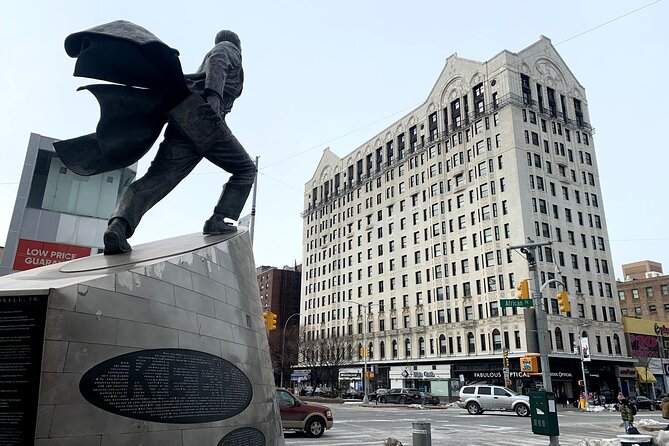
The route passes the premier hotel in Harlem, once known as the Waldorf of Harlem. This stop adds a social and economic layer to the walk.
A hotel can tell you something different from a church or activist’s home. It points to Harlem as a place where Black business, entertainment, politics, and social life gathered. The stop helps broaden the tour beyond protest marches and famous speeches.
The information provided does not identify the hotel by name or promise entry. Think of it as a short but useful piece of the street story. Your guide can place the building in the wider account of Harlem’s public life.
Langston Hughes and the power of a home address
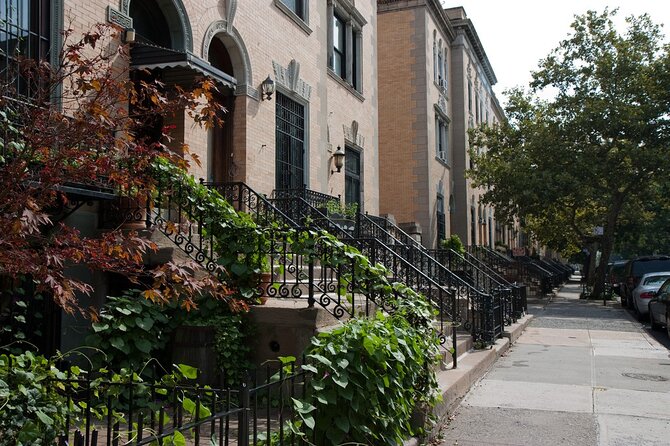
You’ll pass the home of Langston Hughes, one of the best-known writers connected to Harlem. A home stop brings the cultural side of the neighborhood into a tour centered on civil rights.
That connection is important. Political change does not happen only through marches. Writers, artists, churches, and public speakers help shape how a community sees itself and how the wider country sees that community.
Again, this is a pass-by stop rather than a promised interior visit. I would treat it as a chance to pause, look carefully, and hear the guide explain Hughes’s place in Harlem rather than expect a house museum experience.
Fifteen minutes at the Schomburg Center
The Schomburg Center for Research in Black Culture is the one stop with a stated visit length, about 15 minutes. It is described as a world-leading institution for African American culture.
This is one of the strongest parts of the itinerary because it gives the walk a lasting resource, not just a series of addresses. The center represents the preservation and study of Black books, records, images, and ideas. It also gives you a place to continue learning after the tour.
Admission is free, which is a small but useful detail. The tour does not say that you receive a full guided interior visit, so expect a brief stop rather than hours inside the collections.
If you have strong interest in Harlem’s cultural history, you may want to return to the Schomburg Center on your own time. The 15-minute visit can introduce the institution, but it cannot cover everything it holds.
Adam Clayton Powell Jr. and Sr.
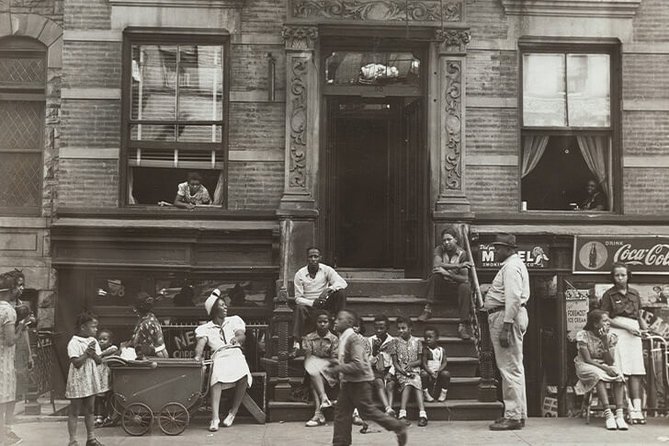
Another stop is the house that Adam Clayton Powell Jr. and Sr. built. This brings Harlem’s political leadership into the walk.
The Powell name connects religious leadership, local politics, and national public life. Seeing the family home makes that story more tangible than hearing a list of offices and achievements. It also reinforces one of the tour’s central ideas: Harlem’s civil rights story was built by people who lived and worked in the neighborhood.
The tour details do not promise entry into the house. You’ll likely get the most from this stop by asking your guide how the two generations differed and how their work shaped Harlem.
The March on Washington from a Harlem angle
The March on Washington is one of the tour’s headline subjects. That national event is familiar to many people, but the Harlem connection gives it a more grounded frame.
You’ll learn how Harlem related to the march and the wider movement. The exact balance between national background and local detail may depend on the guide, but the subject fits the route well. The walk shows that famous events were connected to neighborhoods, congregations, organizers, and ordinary political work.
I like this part because it prevents the March on Washington from becoming a single date in a textbook. Harlem gives you a place to think about who supported the movement, how messages spread, and how local activism connected to Washington.
Understanding the two Harlem riots
The two Harlem riots are another major subject. This may be the most challenging portion of the tour, but it is also one of the most useful.
A tour that discusses only Harlem’s famous artists and leaders leaves out the anger and pressure that shaped the community. Learning what happened during the riots helps you understand discrimination, strained relations, and the conditions behind public unrest.
The supplied information does not give the dates or detailed causes, so I would not book this expecting a full academic lecture on the riots. Instead, expect an overview tied to the streets and the larger civil rights story.
This is where a local guide can make a real difference. Doris is described as a Harlem native who knows both the neighborhood and New York history. Carolyn is also noted for giving clear, engaging explanations. If either leads your walk, you can expect the human setting to matter as much as the timeline.
The guides: Carolyn and Doris
The strongest personal detail attached to this experience is the guides’ names. Carolyn and Doris have led the walk, and their styles appear to bring different strengths.
Carolyn is described as well informed, warm, and pleasant company for an afternoon. Doris is presented as a Harlem native who can place the neighborhood within the wider story of New York. Those details matter because a walking tour depends heavily on the person holding the group together.
You should also remember that guide assignment is not guaranteed. The experience is offered by Welcome to Harlem, and the available information names Carolyn and Doris without saying that one specific guide will lead your booking.
The tour is in English only. If you enjoy asking questions, a group of up to 30 may limit the time available for individual conversation. Still, the three-hour length gives the guide enough room to connect the stops rather than race through a checklist.
Lunch after the walk
Lunch is included, which makes the $82 price easier to assess. You are paying for a three-hour guided walk and a meal, not just a short orientation around Harlem.
The exact restaurant, menu, and dietary choices are not provided, so do not book this expecting a specified dish or a food-focused tour. Lunch is a useful finish to the experience, but the main value remains the historical guiding.
I like the timing. After several hours on foot, you get to remain in the neighborhood and eat there instead of immediately searching for a place on your own. One direct account describes the lunch as excellent, but your experience can depend on the day and the meal served.
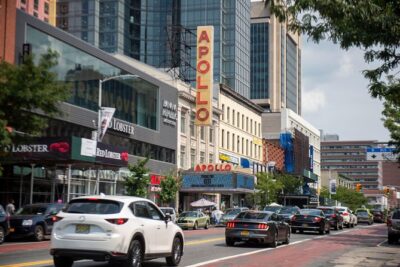
The meal also leaves you in a good position to continue exploring. You might visit the Apollo Theatre another time, as one participant planned, or spend more time around Malcolm X Boulevard. The tour gives you a starting point, not a full day of Harlem sightseeing.
Is $82 a fair price?
At $82 per person, this is not the cheapest way to walk through Harlem. The price is easier to justify if you value a guide who can connect many separate sites into one story and you appreciate having lunch included.
You are not paying for major admission tickets. The Schomburg Center stop has free admission, and the other listed sites appear to be viewed as part of the street route. The value comes from interpretation, organization, and the meal.
A group size of 30 can affect that value. If the guide is excellent, you receive a strong introduction to Harlem without having to research each location yourself. If you prefer a quiet, private conversation, the maximum group may feel large.
The tour is booked an average of 37 days in advance, so you should not leave it until the last moment if the date matters to you. That booking pattern also suggests that advance planning is sensible, especially during a busy New York visit.
Walking effort and practical planning
The tour lasts about three hours and requires moderate physical fitness. Wear shoes you can comfortably use for a sustained city walk, and arrive ready to remain outdoors for much of the experience.
The experience requires good weather. If poor weather cancels it, you are offered another date or a full refund. You can also cancel for a full refund up to 24 hours before the start time. Less than 24 hours before the tour, refunds and changes are not accepted.
Because the tour starts at 11 a.m. and ends around 2 p.m., lunch comes at the end of the scheduled walk. The exact endpoint is given only as the general area around 515 Malcolm X Boulevard, so leave extra time if you have a tight afternoon booking elsewhere.
This is not presented as an accessible or low-effort outing. The available information confirms public transportation nearby, mobile tickets, English-language guiding, and a moderate fitness requirement, but it does not provide details about step-free access or specific mobility arrangements.
Who should book this Harlem experience?
I would choose this tour if you want a serious introduction to Harlem and prefer learning through places rather than sitting in a classroom. It fits first-time visitors who want context before returning to the neighborhood on their own.
It is also a good match for anyone interested in Malcolm X, Paul Robeson, Langston Hughes, the Powell family, Black cultural institutions, or the March on Washington. The route brings those subjects together without requiring you to plan several separate stops.
Families with older children and teenagers may find the subject useful, but the three-hour walking format and serious discussion of riots may not suit very young children. History students and repeat visitors to New York may appreciate the local angle, though you should check how much of the route you already know.
I would look elsewhere if your main goal is gospel music, architecture, food tasting, or an interior tour of Harlem landmarks. Those subjects may appear in passing, but they are not the focus here.
Should you book the Civil Rights Walking Tour?
Book it if you want Harlem explained through its civil rights leaders, churches, cultural institutions, and streets. The included lunch improves the value, and the chance to walk with guides such as Carolyn or Doris gives the experience a personal touch.
Skip it if you dislike group walks, need a short and easy outing, or want a tightly specified food menu and indoor sightseeing. For most visitors with moderate fitness and a real interest in American civil rights, this is a thoughtful way to spend three hours in Harlem, with enough local context to make a return visit more rewarding.
FAQ
How long is the Harlem civil rights walking tour?
The experience lasts approximately three hours.
What time does the tour start?
The tour starts at 11 a.m.
Where does the tour begin?
It begins at 130 Malcolm X Boulevard, New York, New York 10026.
Where does the tour end?
It ends in the general area of 515 Malcolm X Boulevard, New York, New York 10037.
Is lunch included?
Yes. Lunch is included in the tour price.
What happens if bad weather cancels the tour?
Because the experience requires good weather, a cancellation caused by poor weather gives you the choice of another date or a full refund.
More Half-Day in New York City
- Half-Day Bus Tour of NYC Top Highlights
★ 5.0 · 1,764 reviews - From Manhattan: Bronx, Queens and Brooklyn Half-Day Tour
★ 4.3 · 1,321 reviews - Top Rated Brooklyn Half-Day Food, History & Culture Tour via bus
★ 5.0 · 758 reviews - Half-Day Hell’s Kitchen Food Tour and Central Park Stroll
★ 5.0 · 335 reviews
More New York City walking tours
- SoHo, Little Italy, and Chinatown Walking Tour in New York
★ 5.0 · 3,153 reviews - Secrets of Grand Central Station Walking Tour New York City
★ 5.0 · 1,796 reviews - Greenwich Village Walking and Food Tasting Tour
★ 5.0 · 1,572 reviews - Artistic, Alternative Greenwich Village Walking Tour
★ 5.0 · 971 reviews
Just listed around New York City
- Brooklyn Heights: New York City’s First Suburb★ 5.0 · 4 reviews
- New York Princess Cruises★ 3.0 · 4 reviews
- Central Park Bike Tour with Authentic Dutch Bikes or Ebikes!★ 5.0 · 4 reviews
- New York City: Top-Rated Central Park Pedicab Tour★ 4.5 · 4 reviews
- NYC Limousine Tour By Stretch Limo-King And Queen Limo NYC★ 5.0 · 4 reviews
- JFK Airport – Manhattan Pickup / Drop Off★ 3.0 · 4 reviews
- New York Upper West Side Art and Architecture Tour★ 5.0 · 4 reviews
- New York City: Central Park Horse Carriage 25-min Ride★ 4.4 · 4 reviews
Harlem & Gospel Tours, compared.
NYC Highlights Tour: Bronx, Brooklyn, Harlem, Queens & Coney
Read our review →
Contrasts Tour of Harlem, The Bronx, Queens & Brooklyn
Read our review →
Browse the lists this tour appears in