
Reviewed · HARLEM & GOSPEL TOURS
Harlem and Gospel Tour with Transportation on Sundays
Harlem’s Sunday welcome is the heart of this tour. You ride through one of New York’s most important Black neighborhoods, hear how the Harlem Renaissance shaped American culture, and spend an hour inside a Gospel church with a joyful choir. The guide also connects Harlem’s past with present-day change, including gentrification.
I like the way the tour joins major landmarks with local context, rather than treating Harlem as a quick photo stop. I also like the practical bus format: you cover a lot of ground in four hours, from the Morris-Jumel Mansion to the Apollo Theater, without piecing together several subway trips.
The main consideration is the group size, which can reach 45 people. You should also expect a sightseeing tour rather than a series of long interior visits. Most stops are brief, and the church or exact route can change.
In This Review
- Key things to know before booking
- Why the gospel service is the tour’s main event
- St. John the Divine and Columbia University
- Morris-Jumel Mansion and the American Revolution
- Hamilton Grange and the city’s founding story
- Striver’s Row and Harlem’s residential character
- The Apollo Theater and Harlem’s cultural identity
- Two hours to see Harlem in motion
- What the $95 price includes
- Timing, meeting point, and group size
- Who will get the most from this Harlem morning
- Should you book the Harlem and Gospel Tour?
- FAQ
- How long is the Harlem and Gospel Tour?
- What time does the tour start?
- Where does the tour begin and end?
- Is the Gospel church service included?
- Which landmarks are included on the route?
- Are admissions to the historic buildings included?
- How many people can join the tour?
- Can I cancel for a full refund?
Key things to know before booking
- Sunday gospel service: Admission to the church service is included, with about an hour set aside for worship.
- Harlem history beyond clichés: The guide covers the Harlem Renaissance, famous residents, architecture, and gentrification.
- Several major landmarks in one ride: You pass Columbia University and visit or view St. John the Divine, Morris-Jumel Mansion, Hamilton Grange, Striver’s Row, and the Apollo Theater.
- Midtown departure: The tour begins at 9:00 a.m. at 810 8th Avenue, with the subway transfer to the meeting point on your own.
- Four-hour format: This is a compact overview, useful if you want orientation before exploring Harlem independently.
- Small review sample, strong reaction: The four published ratings are five stars, with particular praise for guide Martine’s warmth and her ability to present Harlem outside familiar stereotypes.
Why the gospel service is the tour’s main event
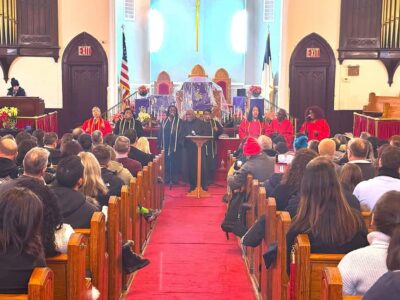
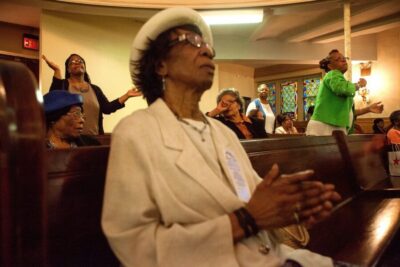
Many Harlem tours focus on façades, famous names, and music history. This one adds a Sunday church service, which gives the morning a different rhythm. Instead of only looking at Harlem from a bus window, you spend time inside a community institution, where the choir and congregation create the day’s most direct connection to local religious life.
The church is listed as Mt. Olivet Baptist Church, but the location can change. That matters if you have your heart set on one particular building. The service itself is included in the $95 price, and roughly one hour is assigned to it. You should plan for a participatory worship setting, not a short performance arranged only for sightseeing.
The published feedback gives special attention to the church visit. One French-language review describes the service as motivating, while another praises the morning as surprising and memorable. Those comments fit the design of the tour: the church is not an afterthought squeezed into a landmark loop. It is the emotional center of the day.
You should be respectful of the setting and follow the guide’s instructions. The tour’s purpose is to introduce you to Harlem, not to turn worship into a stage show. If you prefer strictly secular sightseeing, this may not be your ideal New York excursion. If you want music, history, and a chance to see a living neighborhood tradition, the service adds real value.
More Harlem visits and gospel mornings:
- NYC Highlights Tour: Bronx, Brooklyn, Harlem, Queens & Coney
★ 4.5 · 2,846 reviews - NYC: Contrasts Tour of Harlem, The Bronx, Queens & Brooklyn
★ 4.5 · 2,167 reviews - NYC: Harlem Hallelujah! Gospel Wednesday Concert
★ 4.7 · 1,638 reviews
St. John the Divine and Columbia University
The morning begins with the Cathedral Church of Saint John the Divine, one of the world’s largest cathedral buildings and the seat of a bishop. The tour allows about 15 minutes here, with admission not included. The stop is mainly an exterior look at the building and its art.
That short visit is useful for orientation. You get a sense of the cathedral’s scale without spending a large part of the morning inside. The drawback is clear: if you want a full cathedral visit, this tour does not provide one. You would need to return on your own another time.
The bus also passes Columbia University. You do not get a dedicated campus tour, but the ride gives you a view of the university’s size and setting. This is a good example of how the bus format works. Some places are proper stops, while others are visual markers that help you understand how Upper Manhattan fits together.
I like this early portion because it places Harlem beside major institutions that many first-time visitors may not connect with the neighborhood. You see grand religious and academic architecture, then continue toward Harlem’s political, cultural, and residential landmarks.
Morris-Jumel Mansion and the American Revolution
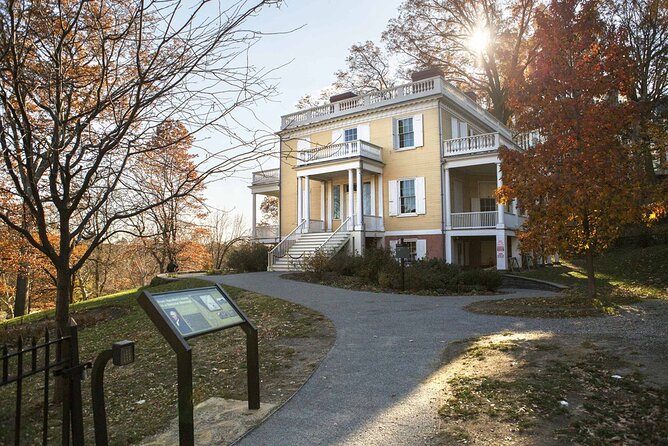
The Morris-Jumel Mansion receives about 20 minutes. Built in 1765 for British military officer Roger Morris, the house later served as a headquarters for General George Washington during the American Revolution. It is a National Historic Landmark.
This is one of the tour’s more unusual stops. Harlem is often introduced through twentieth-century music, literature, and civil rights history, but the mansion reaches much further back. It reminds you that northern Manhattan had an important role in the colonial and Revolutionary era long before the Harlem Renaissance.
The tour does not include admission to the mansion, so you should treat this as an exterior visit unless the guide says otherwise. Twenty minutes is enough to see the site and hear its story, but not enough for a detailed house tour. The added Hamilton connection makes the stop even more appealing to theater fans: the mansion is associated with the writing of the musical Hamilton.
That detail gives the stop a pleasing mix of old and new. You move from Washington’s wartime New York to a modern stage hit about Alexander Hamilton, then continue to Hamilton’s actual home. Few city tours connect those dots so neatly.
Hamilton Grange and the city’s founding story
Hamilton Grange National Memorial is another roughly 20-minute stop. It honors Alexander Hamilton, the first Secretary of the Treasury, and preserves a house linked to early American architecture.
The stop works best if you enjoy American political history or have seen Hamilton. It places the man behind the musical in a real New York setting. The tour’s treatment is brief, though, and admission is not listed as included. You should expect an introduction and an exterior view rather than a long museum visit.
I find this part valuable because it keeps Harlem from being presented as a single-period neighborhood. Its story includes colonial landowners, Revolutionary War activity, early national politics, Black cultural achievement, and modern urban change. A good guide can help you see those layers without pretending they all belong to the same era.
The guide’s role matters here. Martine is named in the published feedback and is praised for changing a visitor’s view of Harlem through an enthusiastic, personal presentation. Guides can change, but the experience clearly depends on someone who can move between architecture, politics, music, and neighborhood life without reducing Harlem to a list of dates.
Another side of New York City for the same day:
- NYC: SUMMIT One Vanderbilt Tickets
★ 4.7 · 51,195 reviews - NYC: 9/11 Memorial & Museum Timed-Entry Ticket
★ 4.8 · 31,428 reviews - NYC: Empire State Building Tickets – Observatory & Museum
★ 4.7 · 25,757 reviews - New York City: Statue of Liberty & Ellis Island with Ferry
★ 4.6 · 18,683 reviews
Striver’s Row and Harlem’s residential character
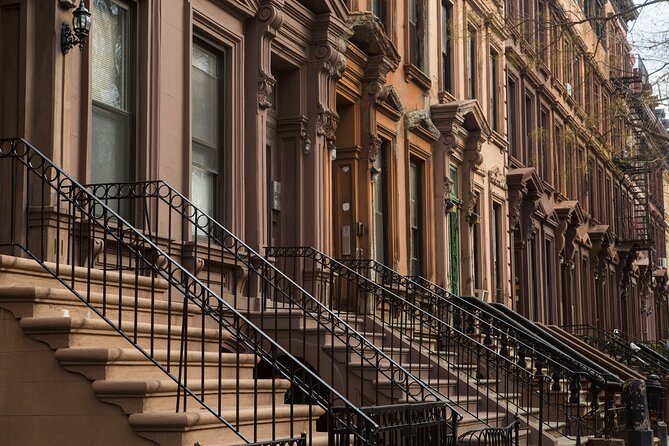
The route includes two beautiful streets built by prominent New York architects, commonly associated with Striver’s Row. The supplied details do not give a separate stop time, so this part is likely viewed from the bus or handled as a short roadside look.
Striver’s Row matters because Harlem is not only churches, theaters, and famous names. These residential blocks show the neighborhood’s architectural side. You get a glimpse of carefully planned homes and a more private part of Harlem, away from the best-known avenues.
This is also where the bus is useful. You can see more than one small section of the neighborhood in a morning, even if you do not get time to walk every street. The tradeoff is that views from a moving vehicle are less personal than a walking tour. If residential architecture is your main interest, you may want to return later for a slower look.
The Apollo Theater and Harlem’s cultural identity
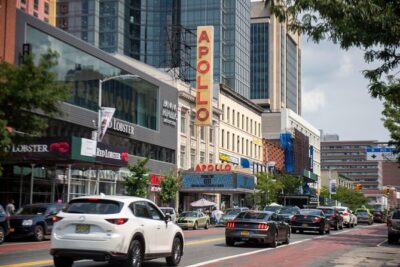
The Apollo Theater gets a 15-minute stop. Admission is free, but the tour does not promise an interior visit. You should expect to see the iconic performance space and hear about its place in Harlem’s cultural life.
Even a brief visit has meaning. The Apollo is tied to the neighborhood’s role in Black music and performance, and it helps explain why Harlem has influenced American popular culture far beyond New York. It is the kind of landmark that benefits from context. A photograph alone tells you very little; a guide’s explanation gives the building a place in the larger story.
The short timing is the limitation. You will not have time for a full theater program, museum visit, or detailed architectural inspection. Think of the Apollo as one strong piece in a larger portrait of Harlem, not the entire focus of the tour.
I like the balance here. The tour does not spend the whole morning chasing celebrity history, yet it does not ignore the Apollo’s importance. It places the theater beside churches, homes, universities, and historic houses, which gives you a more complete picture of the neighborhood.
Two hours to see Harlem in motion
The itinerary allows about two hours for Harlem itself, though the exact division between riding, sightseeing, and brief stops can vary. This broad section is where the guide can explain the Harlem Renaissance, neighborhood change, and the difference between popular images of Harlem and daily life on its streets.
The Harlem Renaissance is an essential part of the story. During the early twentieth century, Harlem became a major center for Black writers, artists, musicians, and political thinkers. The tour’s value lies in connecting that cultural period to physical places rather than presenting it as an isolated chapter in a textbook.
The discussion of gentrification also gives the tour a current edge. Harlem is not frozen in the past, and a useful guide should help you understand the pressures and changes affecting the neighborhood today. The information provided does not spell out the precise examples used, so you should expect broad local context rather than a specialized urban-planning lecture.
This portion may feel less structured than the named stops. That is normal for a neighborhood overview. You may pass streets, churches, businesses, and buildings without stopping at each one. The benefit is a wider sense of place. The drawback is that you will not control the pace or choose which blocks deserve more time.
What the $95 price includes
At $95 per person, this tour costs more than a simple bus ride but less than many private sightseeing experiences. The price includes about four hours of transportation with a licensed guide and admission to the Gospel mass. That church admission is the key financial benefit, since it is the one major interior experience included in the program.
The listed landmarks are mostly viewed from outside or passed by. Admission to St. John the Divine, Morris-Jumel Mansion, and Hamilton Grange is not included, and the Apollo stop is free. You are paying mainly for transportation, guiding, local interpretation, and access to the Sunday service.
I think the price is fair if you value convenience and a structured introduction. You can cover a wide area without figuring out the route yourself, and a good guide can provide the connections that signs and self-guided maps often miss. It is less compelling if you want lengthy museum visits or a slow walking tour.
Tips for the guide and personal expenses are extra. The subway transfer to the Midtown meeting point is also your responsibility. Build that small cost and extra travel time into your morning plan.
Timing, meeting point, and group size
The tour starts at 9:00 a.m. at 810 8th Avenue in New York City and returns to the same meeting point. The location is near public transportation, but you must arrange your own subway transfer to get there.
The advertised duration is about four hours. The individual stop estimates add up to more than a simple four-hour sequence, so you should read them as approximate sightseeing allocations rather than a strict minute-by-minute schedule. Some listed time may include riding through Harlem, passing landmarks, and moving between stops.
The group can reach 45 people. That is a fairly large coach group, and it affects the feel of the morning. You gain a lower price than a private tour, but you may have less chance to ask long questions or linger at each site. Arrive ready to follow the guide’s timing, especially before the church service.
Confirmation is sent within 48 hours, subject to availability. The tour requires a minimum number of participants and good weather. If poor weather or low enrollment cancels the experience, you are offered another date or experience, or a full refund.
Free cancellation is available up to 24 hours before the start time. Cancellations or changes made later do not qualify for a refund, so check your plans before the cutoff.
Who will get the most from this Harlem morning
I would choose this tour if you are visiting New York for the first time and want a broad introduction to Harlem without spending a full day on local transportation. It also suits you if a Sunday Gospel service is a major reason for visiting the neighborhood.
The tour is a good fit for:
- First-time New York visitors who want Harlem added to a busy itinerary
- People interested in Black American culture, music, religion, and architecture
- Fans of Hamilton who want to connect the story to Morris-Jumel Mansion and Hamilton Grange
- Visitors who prefer a bus to a long urban walk
- Anyone who wants a guide to explain gentrification and neighborhood change
You may want another format if you prefer independent exploration, long museum visits, or a very small group. The maximum of 45 people and short landmark stops mean you will receive an overview, not a private neighborhood study.
The published feedback is limited to four ratings, so I would not treat the perfect score as proof that every guide or church service will feel identical. Still, the repeated praise for Martine’s warmth, enthusiasm, and ability to move beyond stereotypes points to the tour’s strongest feature: the human explanation of Harlem.
Should you book the Harlem and Gospel Tour?
Book it if you want Harlem’s culture and Sunday worship to anchor your morning. The Gospel service, local guide, and broad route give you more than a landmark checklist, while the bus keeps the neighborhood accessible in a short visit.
Skip it if you want to enter every historic building, set your own pace, or avoid a large group. At $95, the value comes from the guide, transportation, and included church service, not from a long list of included admissions.
For many visitors, this is a useful first look. Afterward, you will know which parts of Harlem deserve a return visit on foot, and you will have seen the neighborhood through more than its familiar clichés.
FAQ
How long is the Harlem and Gospel Tour?
The tour lasts approximately four hours.
What time does the tour start?
The tour starts at 9:00 a.m.
Where does the tour begin and end?
It begins at 810 8th Avenue, New York, NY 10019, and ends back at the same meeting point.
Is the Gospel church service included?
Yes. Admission to the Gospel mass is included in the tour price.
Which landmarks are included on the route?
The route includes St. John the Divine, Columbia University as a pass-by, Morris-Jumel Mansion, Hamilton Grange National Memorial, two historic residential streets, Mt. Olivet Baptist Church or another church if the location changes, the Apollo Theater, and Harlem.
Are admissions to the historic buildings included?
No. Admission tickets for St. John the Divine, Morris-Jumel Mansion, and Hamilton Grange are not included. The Apollo Theater stop is free.
How many people can join the tour?
The tour can have a maximum of 45 participants.
Can I cancel for a full refund?
Yes, if you cancel at least 24 hours before the scheduled start time. Later cancellations and changes are not accepted for a refund.
Just listed around New York City
- Private Transfer: NYC Airports to Manhattan –105 Min Free Wait★ 4.0 · 4 reviews
- Dyker Heights Christmas Lights Tour from Times Square★ 3.0 · 4 reviews
- 3 Hour Midtown Manhattan Walking Tour★ 5.0 · 4 reviews
- Vip Contrasts in Spanish / Contrastes Vip de Nueva York★ 4.5 · 4 reviews
- NY: Bear Mountain State Park&Beacon Day Tour | Kids 50% Off★ 5.0 · 4 reviews
- NYC: Panoramic Tour by Air, Water and Land★ 3.1 · 4 reviews
- Art, History & Waterfront Views in DUMBO★ 5.0 · 4 reviews
- New York City Helicopter Tour at Night★ 5.0 · 4 reviews
Harlem & Gospel Tours, compared.
NYC Highlights Tour: Bronx, Brooklyn, Harlem, Queens & Coney
Read our review →
Contrasts Tour of Harlem, The Bronx, Queens & Brooklyn
Read our review →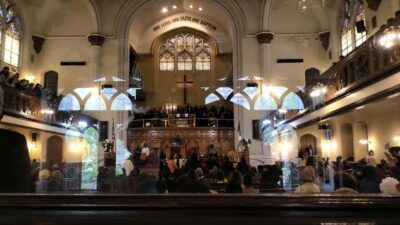


Browse the lists this tour appears in