
Reviewed · WALL STREET & FINANCIAL DISTRICT TOURS
How Money Was Made Wall Street Walking Tour
Wall Street’s money story begins before the stock market. On this two-hour walk, you trace New York’s rise from Dutch trading post to American financial center, with stops tied to Alexander Hamilton, George Washington, the New York Stock Exchange, and the Federal Reserve. It is a useful way to read the city’s grand stone buildings as political and economic landmarks, not just photo backdrops.
I like two things here: the strong historical thread, which links trade, revolution, government, and finance, and the short format, which fits neatly into a busy New York day. Guides such as Jess, a former SEC lawyer, can add an insider’s view, while Maia has been praised for clear speaking, memorable stories, and taking time for questions.
The main limitation is that this is an exterior walking tour. You do not enter the NYSE, Federal Reserve, Fraunces Tavern Museum, or the National Museum of the American Indian, so the $49 price is paying for interpretation and access to the district’s story, not museum admission.
In This Review
- Key points to know before you book
- Why this Wall Street walk is more than a photo stop
- Starting at the Custom House and Bowling Green
- Battery Park and the Netherland Monument
- The Charging Bull and Wall Street’s public image
- Fraunces Tavern and the revolutionary city
- Thirty-five minutes around the heart of Wall Street
- The Federal Reserve and the gold beneath New York
- Ending at Trinity Church and Alexander Hamilton
- Is $49 a fair price?
- Who should book this experience?
- Practical details that affect your choice
- Should you book the Wall Street walking tour?
- FAQ
- How long does the Wall Street walking tour last?
- Where does the tour begin?
- Where does the tour end?
- Is the tour offered in English?
- Is entry to the New York Stock Exchange included?
- Are museum admissions included?
- How much does the tour cost?
- How large can the group be?
- Are service animals allowed?
- Can I cancel for a full refund?
Key points to know before you book
- See the financial district as a story, not just a cluster of offices: The route connects early trade, the American Revolution, Hamilton’s financial system, and modern Wall Street.
- Expect about two hours on foot: The route is compact, but you should have a moderate level of physical fitness.
- The tour begins at 1 Bowling Green: It ends at Trinity Church, 89 Broadway, making it easy to continue exploring Lower Manhattan.
- Most major stops are exterior visits: The NYSE is viewed from outside, and entry is not included.
- Guide quality matters here: Jess brings a former SEC lawyer’s perspective, while Maia is noted for speaking clearly and welcoming questions.
- Small enough to stay personal, but not private: The group can include up to 30 people.
Why this Wall Street walk is more than a photo stop
Lower Manhattan can feel like a wall of stone, marble, and office windows. Without context, it is easy to walk past Federal Hall or the New York Stock Exchange, snap a picture of the Charging Bull, and move on.
This tour gives those places a timeline. You begin with trade and colonial New York, move through the Revolutionary period and early federal government, then arrive at the institutions that shaped American finance. That order gives the walk a useful logic.
I especially like the political angle. This is not only a tour about stock prices or famous banks. It asks how a port city became a center of commerce, how the new United States organized its finances, and why Wall Street remains tied to national power.
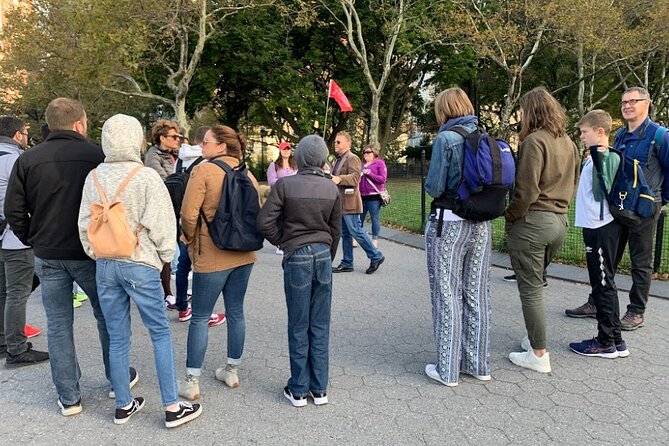
The experience is offered in English, with a licensed guide and mobile ticketing. The group size can reach 30, so do not expect a private conversation at every stop. Still, the guide-led format is important here. Many of the buildings are meaningful because of what happened inside them, and a good explanation turns an ordinary facade into part of the American story.
More Wall Street walks:
- NYC City Tour: Statue of Liberty, 9/11 Memorial, Wall Street
★ 4.5 · 2,059 reviews - Wall Street Insider Tour with a Finance Professional
★ 4.5 · 660 reviews - Wall Street Insider Tour with a Finance Professional
★ 4.5 · 571 reviews
Starting at the Custom House and Bowling Green
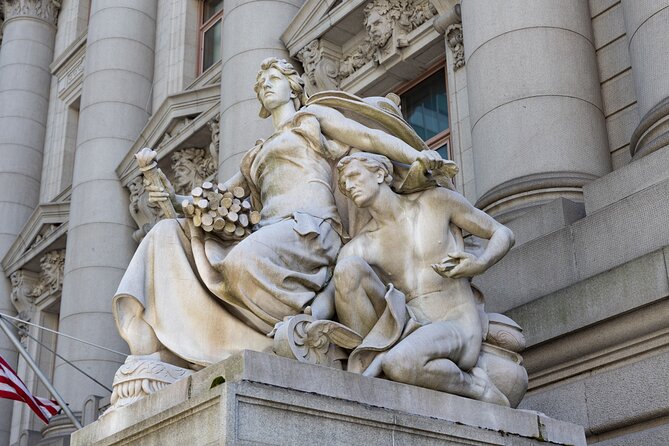
Meet at 1 Bowling Green, beside one of the oldest public spaces in New York. The first stop is the former Alexander Hamilton Custom House, now home to the National Museum of the American Indian.
The building dates to 1907 and was designed as a grand Beaux-Arts monument to trade and commerce. You visit the exterior, not the museum galleries, so this portion is brief, about 10 minutes. Even from outside, the building helps set the theme: New York’s wealth grew from ships, cargo, customs duties, and the movement of goods.
The museum contains three floors of Native American art and artifacts, but admission is not part of the walking tour. If the subject interests you, you can return on your own after the tour. Do not count on entering during the group walk.
Next comes Bowling Green, New York City’s oldest park. The Dutch once called this area the Plain, and it served as a parade ground, meeting place, and cattle market. The guide allows about 20 minutes here, which gives you time to understand how a small open space could serve many roles in an early city.
This is one of the most useful stops for getting past the modern image of Wall Street. Before glass towers and financial terminals, this was a public center tied to trade, livestock, civic gatherings, and colonial power. The park is also a practical place to get oriented at the start of the walk.
Battery Park and the Netherland Monument
From Bowling Green, the route continues to Battery Park for about 15 minutes. The park has served as a recreational area, a defensive site, and an immigration center over more than two centuries.
That combination says a lot about New York. The waterfront was not merely scenic. It helped protect the city, receive newcomers, and provide public space. The tour also includes the Netherland Monument in Battery Park, a reminder of the Dutch connection to New York’s earliest development.
You should expect this stop to provide context rather than a long formal visit. Battery Park is a public space, and the value comes from hearing how its purpose changed as the city grew. If you want a long waterfront stroll or time at every monument, you will need to return separately.
The park also gives the financial district a wider frame. Wall Street was never isolated from the harbor. Trade, immigration, defense, and finance all developed close together, and the walk makes that connection visible.
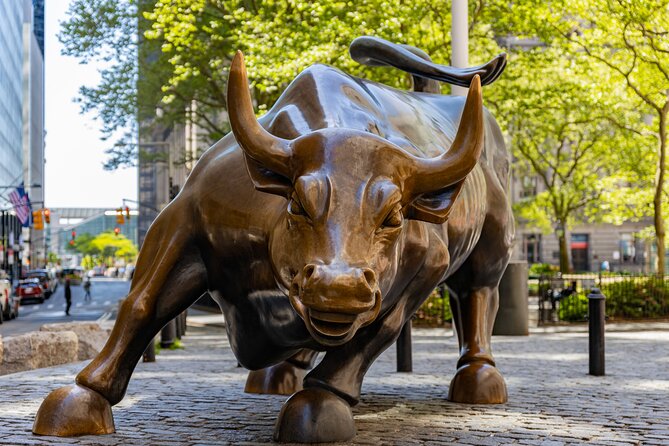
The Charging Bull and Wall Street’s public image
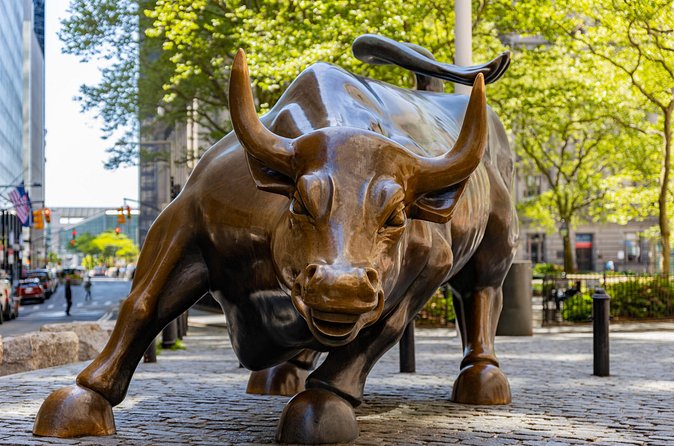
The Charging Bull gets about 10 minutes. It is the most instantly recognizable photo stop on the route, but the guide uses it to discuss the image of Wall Street itself.
The bull has come to represent strength, resilience, and the lasting power associated with the financial district. You will not need an admission ticket, and the stop is short, so it fits easily into the larger story without taking over the tour.
I appreciate that balance. The bull is famous, but it tells only one part of Wall Street’s story. Its message is bold and modern, while the surrounding district carries centuries of political and commercial change. The guide can help connect the symbol to the more complicated institutions nearby.
If your main goal is a bull photo, you can do that without paying for a tour. The value here comes from the explanation around it and from placing the sculpture within a route that includes Hamilton, the NYSE, Federal Hall, and the Federal Reserve.
More New York City walking tours:
- SoHo, Little Italy, and Chinatown Walking Tour in New York
★ 5.0 · 3,153 reviews - Secrets of Grand Central Station Walking Tour New York City
★ 5.0 · 1,796 reviews - Greenwich Village Walking and Food Tasting Tour
★ 5.0 · 1,572 reviews - Artistic, Alternative Greenwich Village Walking Tour
★ 5.0 · 971 reviews
Fraunces Tavern and the revolutionary city
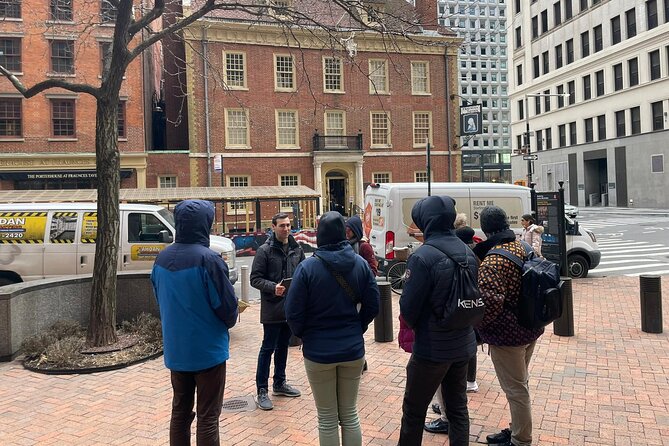
Fraunces Tavern receives about 15 minutes from the outside. At different points in its past, it served as a headquarters for George Washington, a site for peace talks with the British, and a location for federal offices during the early years of the United States.
That makes it an important bridge between Wall Street and the founding of the country. Finance did not develop apart from politics. The new government needed money, offices, negotiations, and a functioning commercial center.
The museum itself is not included, so you will not tour its rooms as part of this experience. The exterior stop works best for people who want a concise introduction before deciding if they want to return for a longer museum visit.
This is also a place where a skilled guide can make a real difference. The building’s importance is not always obvious from the street. A few clear stories can explain why this tavern belongs on a financial history route rather than only a Revolutionary War itinerary.
Thirty-five minutes around the heart of Wall Street
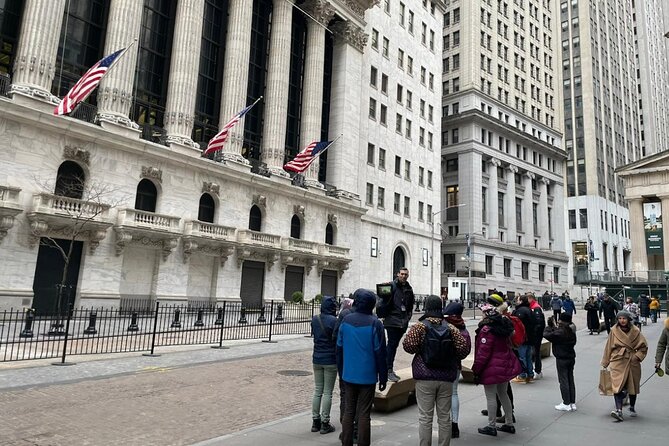
The longest stop is Wall Street itself, at about 35 minutes. The route covers the exterior of the New York Stock Exchange, Federal Hall, Trinity Church, and the JP Morgan Building.
This is the core of the experience. You get time to look at the buildings, ask questions, and connect several institutions that are often treated as separate sights.
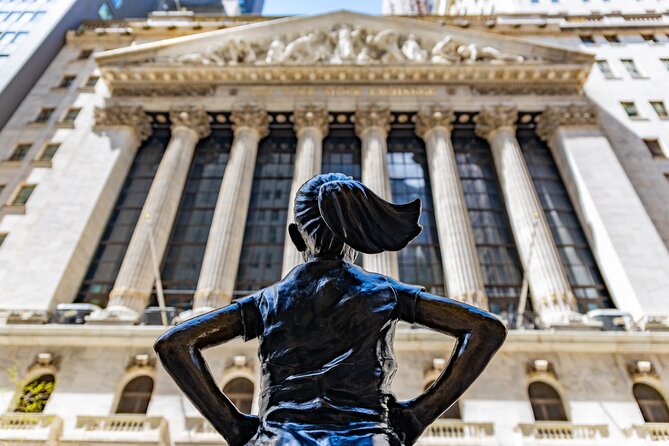
The New York Stock Exchange is the obvious symbol of modern finance, but you do not go inside. Entry is specifically excluded, so plan on an exterior view and a guide’s explanation rather than a trading-floor visit. For many people, that is enough, especially since public access to financial institutions can be limited and controlled.
Federal Hall adds the political side of the story. It is tied to the early national government and helps explain why Lower Manhattan mattered during the formation of the United States. The presence of Trinity Church and the JP Morgan Building widens the picture again, linking religion, banking, public life, and commerce in a compact area.
This is where the tour’s $49 price is easiest to judge. If you only want a quick look at the NYSE sign, the Charging Bull, and a few famous buildings, you can walk through the district on your own for free. If you want the connections explained in real time, with a guide who can answer questions and keep the story moving, the fee becomes more reasonable.
A group of up to 30 people is not tiny, but the route is short and the main stops are close together. Maia, one of the guides associated with this experience, is noted for speaking loudly and clearly without using headphones. That detail matters in a noisy district. You avoid bulky audio equipment, though you still need to stay near the guide in a larger group.
The Federal Reserve and the gold beneath New York

The route then reaches the Federal Reserve Bank of New York for about 10 minutes. You visit the exterior. Beneath the building are highly secured vaults holding a very large reserve of foreign-held gold bullion.
That fact gives the tour a strong closing movement. You have already seen the city’s early commercial spaces, Revolutionary landmarks, the national government’s beginnings, and the stock exchange. The Federal Reserve represents the modern system that manages money and banking at a national and international level.
The vaults are not part of the visit, and admission is not included. Still, the building’s role is significant enough to make the exterior stop worthwhile for anyone interested in economics or politics.
This portion is especially useful if you want more than a general sightseeing walk. The tour does not turn you into a financial expert, but it gives you a framework for understanding why this small part of Manhattan has such global importance.
Ending at Trinity Church and Alexander Hamilton

The walk ends at Trinity Church, at 89 Broadway. The church is associated with one of New York City’s oldest congregations and is the burial place of Alexander Hamilton, a central figure in the development of the American financial system.
That ending ties the route together neatly. Hamilton’s name appears near the beginning at the Custom House and returns at Trinity Church, linking New York’s commercial past to the creation of the United States financial system.
The end point is convenient for continuing your day in Lower Manhattan. You are still close to the district’s major sights, though the tour itself does not include interior admission to Trinity Church.
You should allow for walking and standing throughout the two hours. A moderate level of physical fitness is requested, and comfortable footwear makes sense. Service animals are allowed.
Is $49 a fair price?
At $49 per person, this is not the cheapest way to walk around Wall Street. Most of the route is in public spaces, and you can see the exterior landmarks without paying an admission fee.
The fee pays for a licensed guide, structure, historical explanation, and the chance to ask questions while moving through the district. That is useful if you do not want to spend time piecing the story together from plaques or phone searches.
The price is strongest for people interested in politics, economics, and American history. It is less compelling if you mainly want photographs or a quick orientation. Since no museum or NYSE entry is included, compare the experience with your own interests before booking.
The two-hour length helps. You are not committing half a day, and the walk can fit before or after other Lower Manhattan sights. The activity is commonly booked about 16 days ahead, so planning early is sensible if your dates are fixed.
Who should book this experience?
I would choose this tour if you want to understand how several major American institutions developed in one small district. It suits first-time visitors who want a guided introduction, as well as repeat visitors who have walked past these buildings without knowing why they matter.
It is also a good match for anyone interested in the relationship between commerce and government. The route includes Dutch New York, colonial trade, the Revolutionary period, Hamilton’s financial system, the NYSE, and the Federal Reserve.
Families with older children may find the short route manageable, though the subject is more suited to people who enjoy history and public affairs than to those seeking entertainment at every stop. A moderate fitness level is needed, and anyone wanting extensive interior visits should choose a different activity or add museums separately.
The guide can shape the experience. Jess, with a background as a lawyer at the SEC, offers an unusual connection to modern financial regulation. Maia is a strong choice if you value clear delivery, memorable stories, and time for questions. Guide assignments can vary, so do not assume one specific person will lead your date.
Practical details that affect your choice
The experience is a mobile-ticket activity conducted in English. It starts at 1 Bowling Green and ends at Trinity Church, 89 Broadway. That point-to-point format is helpful because you do not need to return to the starting location.
The maximum group size is 30 people. You should be prepared to walk and stand for around two hours, with stops ranging from 10 to 35 minutes.
Several stops are exterior only: the Custom House and National Museum of the American Indian, Fraunces Tavern, the NYSE, the Federal Reserve, and Trinity Church. The NYSE has no included entry, and the museum admissions named along the route are not included either.
Free cancellation is available up to 24 hours before the start time for a full refund. Changes or cancellations made less than 24 hours ahead are not accepted for a refund. The experience also requires a minimum number of participants, so a cancellation by the operator would result in another date or experience, or a full refund.
Should you book the Wall Street walking tour?
Book it if you want a focused, well-paced explanation of Lower Manhattan’s financial and political past, rather than a simple list of photo stops. The route is compact, the two-hour length is practical, and the strongest guides add useful perspective, especially on the SEC, Hamilton, and the link between government and finance.
Skip it if you want to enter the NYSE, visit museum interiors, or explore the district entirely at your own pace. You can see the major exterior landmarks for free.
For most history-minded visitors, the value comes from the connections. The bull may draw the camera, but Hamilton, Federal Hall, the NYSE, and the Federal Reserve give the walk its substance.
FAQ
How long does the Wall Street walking tour last?
The tour lasts approximately two hours.
Where does the tour begin?
It begins at 1 Bowling Green, New York, NY 10004.
Where does the tour end?
It ends at Trinity Church, 89 Broadway, New York, NY 10006.
Is the tour offered in English?
Yes. The experience is offered in English.
Is entry to the New York Stock Exchange included?
No. The NYSE is visited from the exterior, and entry is not included.
Are museum admissions included?
No. Admission to the National Museum of the American Indian and Fraunces Tavern Museum is not included. Those locations are exterior visits during the walk.
How much does the tour cost?
The listed price is $49 per person.
How large can the group be?
The maximum group size is 30 participants.
Are service animals allowed?
Yes. Service animals are allowed on the tour.
Can I cancel for a full refund?
Yes. You can cancel at least 24 hours before the start time for a full refund. Cancellations made less than 24 hours before the start time are not refunded.
Just listed around New York City
- NYC: Little Shop of Horrors Off-Broadway Ticket5 reviews
- Private NYC Airport Transfer: LGA to Manhattan – Up to 5★ 3.6 · 5 reviews
- New York City Tour in German★ 4.5 · 5 reviews
- New York: Hamilton and Washington Revolutionary Walking Tour★ 5.0 · 5 reviews
- NYC Freedom Tower Private Photo or Video Experience★ 4.0 · 6 reviews
- New York Afternoon Fall Foliage Cruise with Lunch★ 5.0 · 6 reviews
- Brooklyn Walking Tours by Locals: Private & 100% Personalized★ 4.0 · 6 reviews
- Southold Bay Oyster Farm Tour★ 5.0 · 6 reviews
Wall Street & Financial District Tours, compared.

NYC City Tour: Statue of Liberty, 9/11 Memorial, Wall Street
Read our review →
Wall Street Insider Tour with a Finance Professional
Read our review →Wall Street Insider Tour with a Finance Professional
Read our review →
Manhattan Group Tour Including Wall Street and 911 Memorial
Read our review →
Wall Street Tour with 9/11 Memorial and Statue Ferry
Read our review →
Wall Street and Financial District Walking Tour
Read our review →
Wall Street and Financial District Walking Tour
Read our review →
Wall Street, Financial District Walking Tour Lower Manhattan, NYC
Read our review →Browse the lists this tour appears in