
Reviewed · CENTRAL PARK TOURS
New York City: Central Park Highlights Walking Tour
Central Park is more than a patch of green between skyscrapers. It is a carefully planned work of city design, built to give New Yorkers a place to walk, rest, play, and breathe. This tour shows you how the park changed the idea of what an American city could be, while also pointing out movie locations, grand bridges, and quiet paths.
I like the small group of up to 10 people, which makes it easier to hear the guide and ask questions. I also like the thoughtful pace. One guest specifically praised guide Jeremy for making the walk comfortable for someone who struggles to walk fast.
The main consideration is the length and surface of the route. You will be walking for 150 minutes in all weather, and the tour is not suitable for people with mobility impairments. Bring comfortable shoes, arrive on time, and expect the park to provide the scenery rather than indoor shelter.
In This Review
- Key points to know before you book
- Why Central Park deserves a guided walk
- Meeting at Grand Army Plaza
- The Pond and Gapstow Bridge
- Central Park Zoo and the Delacorte Clock
- The Mall, Literary Walk, and Bandshell
- Bethesda Terrace and the lake
- The Ramble, Bow Bridge, and Cherry Hill
- Strawberry Fields and the finish near West 72nd Street
- How the small-group format affects the experience
- Is $35 a fair price?
- Who should book this Central Park walk?
- Should you book it?
- FAQ
- Where does the Central Park walking tour begin?
- Where does the tour finish?
- How long does the tour last?
- What language is the tour conducted in?
- How large is the group?
- What sights might be included?
- What should I bring?
- Does the tour run in bad weather?
Key points to know before you book
- A history lesson inside a city park: Learn how Frederick Law Olmsted and Calvert Vaux planned Central Park and influenced American city design.
- A compact group: With no more than 10 participants, you get a more personal guide-led experience.
- A film-location walk: See spots used in countless movies and television shows, along with Central Park’s best-known landmarks.
- A leisurely two-and-a-half-hour route: The pace is designed for sightseeing, photos, and conversation rather than a fast march.
- A route across the park: Begin at the General Sherman monument by Grand Army Plaza and finish near 1 West 72nd Street on the Upper West Side.
- A rain-or-shine outing: The tour runs throughout the year, so each season brings different conditions and views.
Why Central Park deserves a guided walk
Central Park can look simple on a map: a long rectangle of trees, water, paths, and lawns in the middle of Manhattan. Once you enter it, the scale becomes harder to read. Bridges appear around bends, paths split into wooded areas, and familiar sights can be surprisingly far apart.
That is where a guide earns the $35 price. You are not just strolling past scenery. You are hearing why the park was designed as it was, how it changed the way cities thought about public space, and which places deserve your attention.
I find that Central Park is easy to appreciate visually but harder to understand on your own. A self-guided walk can show you the lake or Bethesda Terrace, but it may not explain the careful planning behind the views, the history of the park’s designers, or the reason so many filmmakers return here.
The tour also gives you a useful first orientation. After 150 minutes, you should have a clearer sense of where the major sights sit and which parts you may want to revisit later. That matters in a park this large, especially if you have only a short stay in New York.
More Central Park tours:
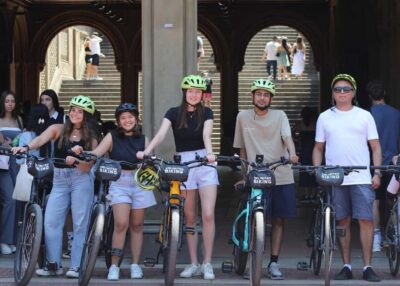
- Central Park Pedicab Guided Tours
★ 5.0 · 7,108 reviews - Private Central Park Pedicab Tour
★ 5.0 · 6,981 reviews - NYC: Central Park Bike Rentals
★ 4.2 · 2,528 reviews
Meeting at Grand Army Plaza
The tour begins in front of the General Sherman monument at Manhattan’s Grand Army Plaza. This is a practical meeting place on the park’s southeast side and a recognizable starting point for a walk into Central Park.
The Grand Army Plaza stop lasts about 15 minutes. Use that time to get settled, meet your guide, and look around before the main walk begins. The monument gives the opening a bit of ceremony, while the park entrance quickly moves you away from heavy city traffic.
This first stop also sets up one of the tour’s central ideas: Central Park was not simply left-over land. It was planned as a major public work, with designed views, formal paths, water features, bridges, and open areas meant to create a break from Manhattan’s streets.
Arrive on time. Late arrivals cannot be accommodated, which is especially important here because the group will leave the meeting point and continue into the park.
The Pond and Gapstow Bridge
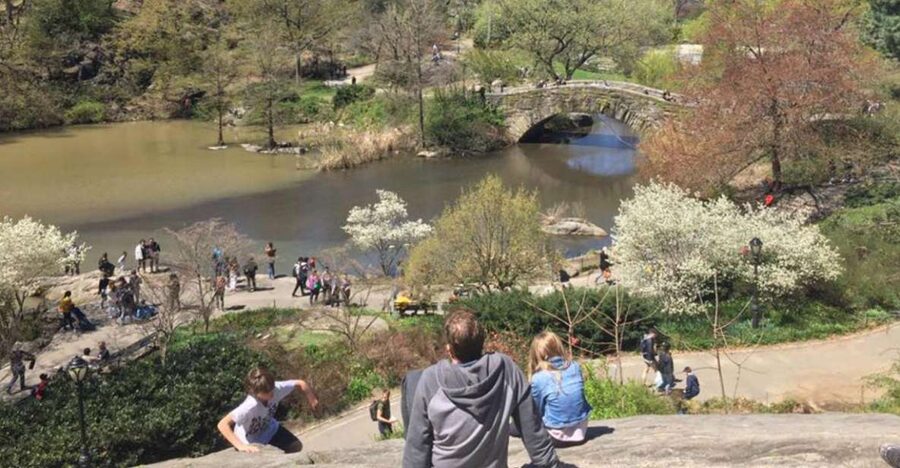
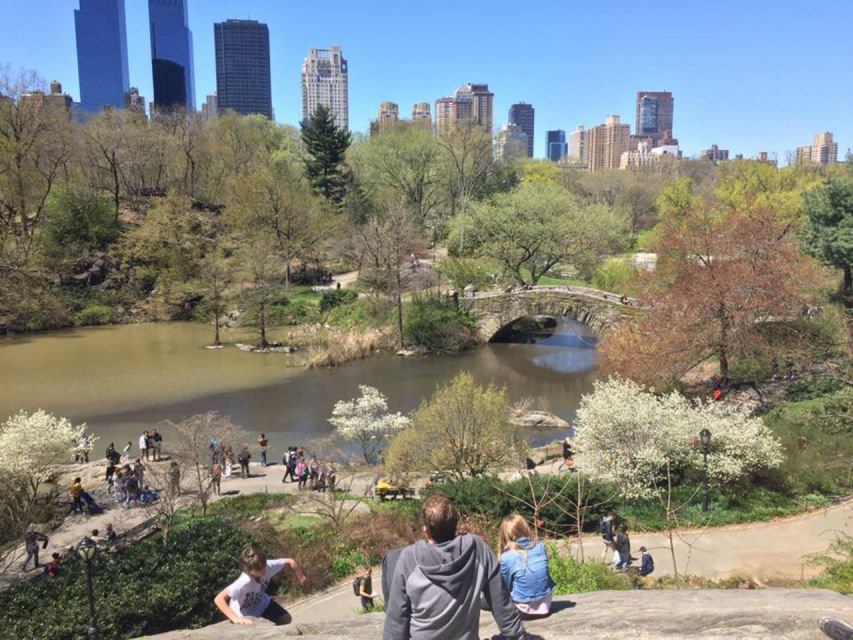
The route may include The Pond and Gapstow Bridge, two of the park’s most effective introductions. The Pond is a small body of water near the southern end of the park, while Gapstow Bridge offers a classic Central Park view framed by trees, water, and the city beyond.
This is one of the places where your camera will work harder than your feet. The bridge is a strong photo stop, but the guide adds value by showing how the park combines natural-looking scenery with careful design.
That distinction is worth noticing. Central Park may feel spontaneous, yet its views were planned to unfold as you move. A bend in the path can reveal a bridge, water, or skyline at just the right moment. A guide can help you notice that construction rather than treating every pleasant view as an accident.
The nearby Central Park Zoo may also be part of the route. The tour does not include a zoo visit, so think of it as a landmark and orientation point rather than a separate attraction included in your ticket.
Central Park Zoo and the Delacorte Clock
The Central Park Zoo is one of the familiar names on the southern section of the park. Nearby, the Delacorte Clock adds a small, whimsical detail to the walk and is especially appealing if you like the park’s less formal features.
The clock is the sort of sight that can be easy to miss when you are focused on larger landmarks. A local guide helps keep the route from becoming a checklist of only the biggest names.
You may also pass The Dairy, another historic park building. These stops help show that Central Park is not just lawns and trees. It includes buildings, monuments, paths, water, music spaces, and carefully arranged gathering places.
The strength of this part of the outing is variety. In a short stretch, you can move from formal architecture to family-friendly park sights and then back to quiet greenery. The drawback is that a 150-minute tour cannot give every location equal time. If one stop captures your interest, you may want to return later on your own.
More New York City walking tours:
- SoHo, Little Italy, and Chinatown Walking Tour in New York
★ 5.0 · 3,153 reviews - Secrets of Grand Central Station Walking Tour New York City
★ 5.0 · 1,796 reviews - Greenwich Village Walking and Food Tasting Tour
★ 5.0 · 1,572 reviews - Artistic, Alternative Greenwich Village Walking Tour
★ 5.0 · 971 reviews
The Mall, Literary Walk, and Bandshell
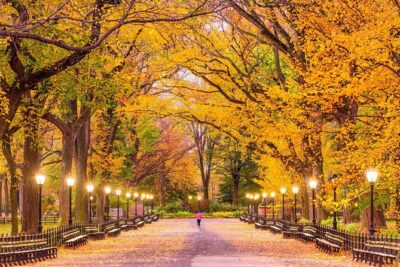
The Mall is one of Central Park’s most recognizable straight paths. Lined with trees and public art, it gives the park a more formal feel than the winding routes found elsewhere.
The Literary Walk adds another layer to the scene. Here, the park’s broad design meets the city’s cultural identity. A guide can connect the setting with the writers and public figures represented along this part of the route, while also explaining why the area has become such a familiar backdrop for photographs and film.
The Bandshell may also be included. It is a reminder that Central Park is not only a place for quiet contemplation. It has long been designed for public gathering and performance as well as walking.
I like this section because it shows the park’s range in a direct way. One moment feels ceremonial, the next feels literary, and the next points to music and public life. You get more than scenery. You get an explanation of how the park serves different purposes within one carefully arranged space.
Bethesda Terrace and the lake
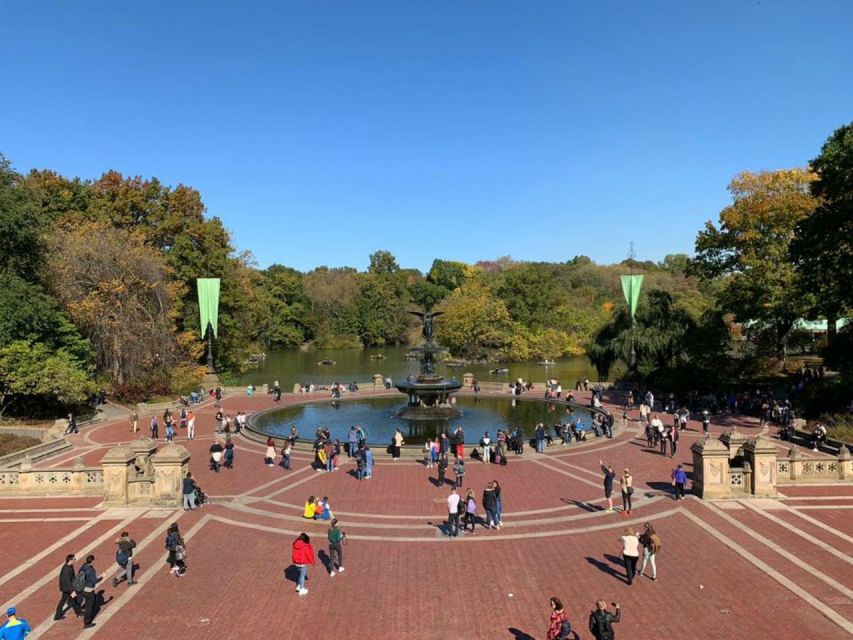
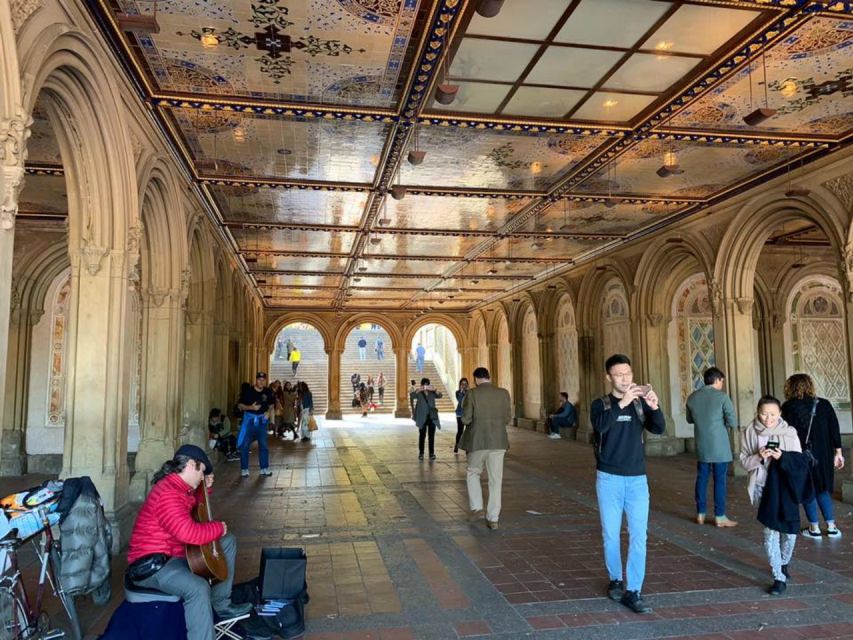
Bethesda Terrace is likely to be one of the tour’s major stops. Its architecture, broad steps, and position beside the lake give it the feel of a grand outdoor room.
This is a place to slow down for photos and listen. The terrace is famous because it brings together water, sculpture, architecture, and open space in one view. It also makes clear why Central Park is often described as one of America’s great works of art.
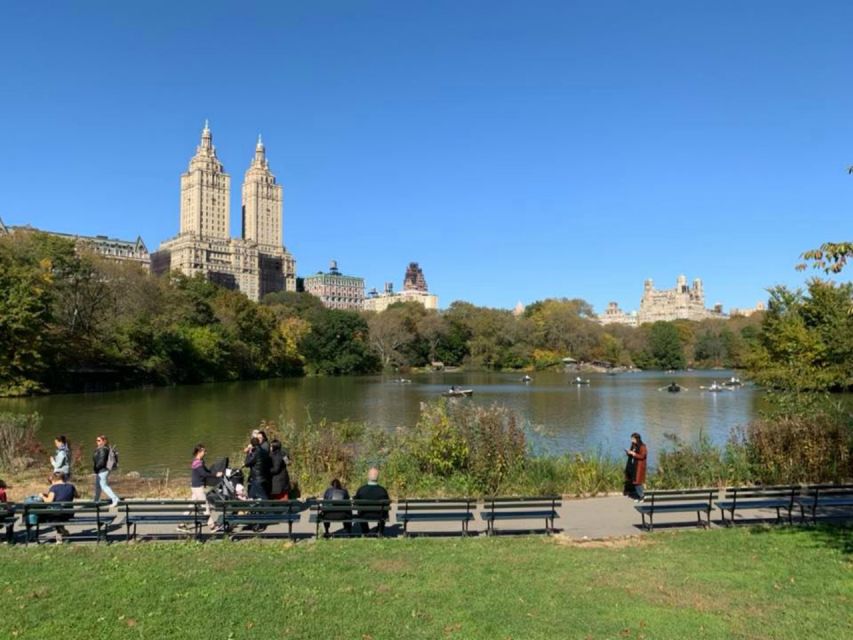
The nearby lake and Boathouse add a softer mood. Water changes the pace of the park, and the lake gives you a broad view rather than another enclosed path or formal avenue.
Keep in mind that the tour schedule is shared across many stops. You will have time to see Bethesda Terrace and the lake, but this is not a long photography session at each location. If you want a full set of portraits or detailed architectural pictures, plan to return after the tour.
The Ramble, Bow Bridge, and Cherry Hill
The Ramble is one of the park’s more wooded areas. Its winding routes create a stronger sense of separation from the city, even though Manhattan remains close by.
This is where the tour’s promise of escape from urban noise feels most direct. The city does not disappear, but the paths and trees change your sense of pace. You are still in Manhattan, yet the experience becomes less about traffic and more about shade, water, and movement through the park.
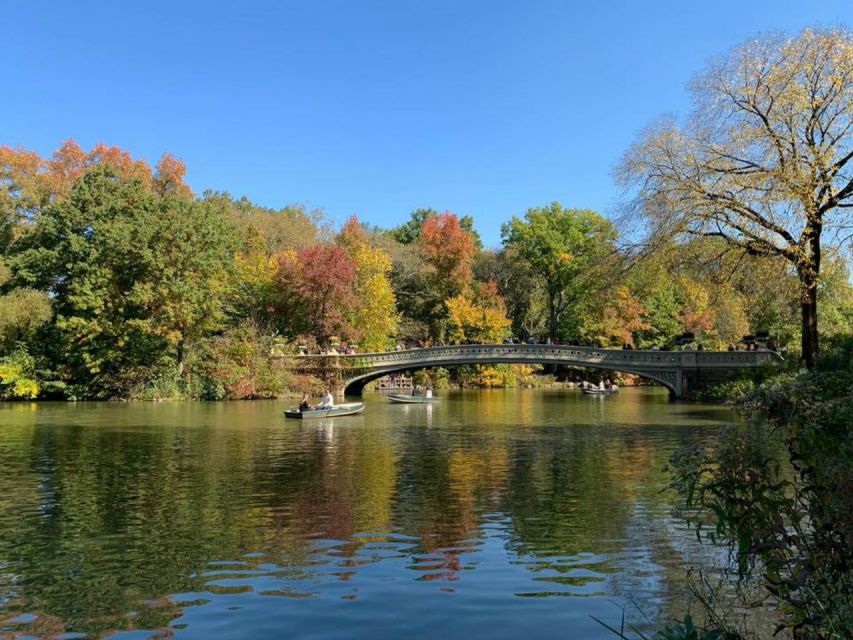
Bow Bridge is another major photo stop. Its elegant shape and position over the lake make it one of the park’s most recognizable sights. Cherry Hill offers another scenic point and adds seasonal interest, especially when the trees and plantings change color or bloom.
The tour runs all year, and that matters here. You are not buying the same visual experience in every month. Spring, summer, autumn, and winter each alter the park’s appearance, comfort, and amount of cover. The activity description does not promise a particular seasonal feature, so book it as a year-round walk rather than a guaranteed foliage or blossom tour.
Strawberry Fields and the finish near West 72nd Street
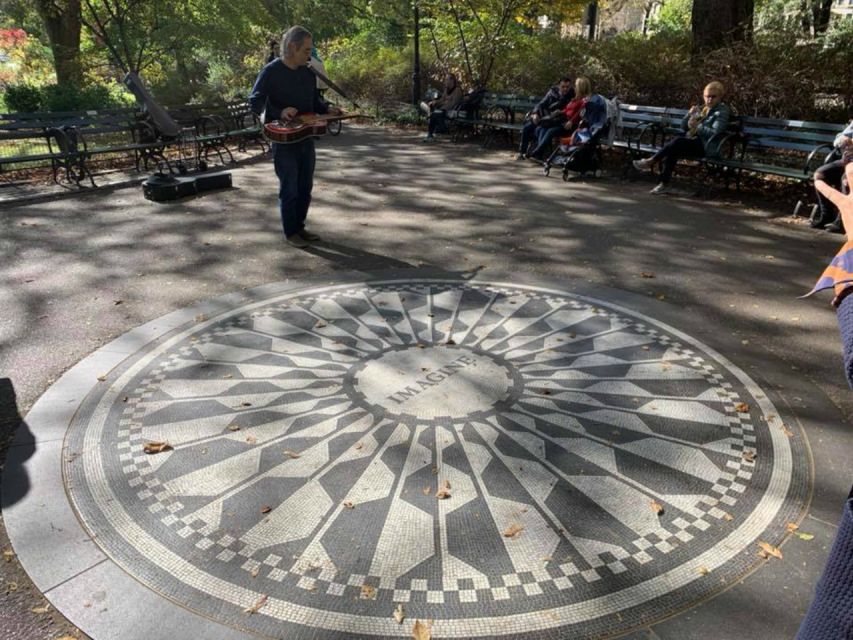
Strawberry Fields may be included toward the western side of the park. It is one of Central Park’s best-known memorial areas and gives the walk a more reflective ending.
The tour finishes near 1 West 72nd Street, in the Upper West Side. That is useful for the rest of your day because you will not end where you started. If you are planning lunch, another neighborhood walk, or a return to your hotel, note the change in location before booking.
Ending on the Upper West Side also gives the route a satisfying sense of movement across the park. You begin near Grand Army Plaza and finish at the park’s west side, rather than spending the entire time circling one small area.
Do not expect a private, untouched wilderness at the end. Central Park remains a popular public space, and the most famous landmarks can be busy. The guide’s job is to help you see beyond the crowds and understand why each area matters.
How the small-group format affects the experience
The group is limited to 10 participants. That is a useful middle ground: small enough for the guide to manage a thoughtful pace, but large enough to retain the social feel of a walking tour.
A smaller group also helps at photo stops. You are less likely to lose the guide in a large crowd, and questions are easier to ask. The tour is conducted in English with a live local guide.
Guide Jeremy is specifically associated with a well-received outing and was praised for keeping the pace considerate for a participant who found fast walking difficult. That does not guarantee that Jeremy will lead your departure, but it gives you a useful sense of the tour’s intended style: informative, patient, and not built around rushing from one sight to the next.
Even a relaxed pace still requires steady walking. The tour is not suitable for people with mobility impairments, and the route takes place outdoors on park paths. Comfortable shoes are essential, not optional advice printed in small type.
Is $35 a fair price?
At $35 per person, this tour is reasonably priced for a 150-minute guided walk in one of New York’s major sights. The small-group format, local guide, and complimentary park map add practical value.
The strongest reason to pay for this experience is interpretation. Central Park is free to enter, and you can walk through it without a ticket. What you are paying for is the structure, the historical context, the film-location knowledge, and the chance to cover many important sights without spending time figuring out the route.
The price makes the most sense for a first visit, a short New York stay, or anyone who wants a clear introduction before exploring independently. It is less useful if you already know Central Park well or prefer to wander alone with no fixed schedule.
Free cancellation up to 24 hours before the tour and the option to reserve now and pay later make the booking less rigid. The outing runs rain or shine, so check the forecast and dress for the season before you commit to the walking time.
Who should book this Central Park walk?
I would recommend it to first-time visitors, film fans, city-history enthusiasts, and anyone who wants a calm break from Manhattan’s streets. It also suits people who prefer a guide to provide the route and explanation while they focus on scenery and photographs.
The tour is a good fit for solo visitors and couples because the group size stays limited. Families may also appreciate the variety of bridges, water, monuments, and park sights, although the 150-minute duration may feel long for very young children.
You should think twice if you have mobility limitations, dislike outdoor activities in poor weather, or want extended time at one landmark. This is a broad introduction, not a deep visit to the zoo, Boathouse, or any single museum or building.
Should you book it?
Book this tour if you want to understand Central Park rather than simply pass through it. For $35, you get a carefully paced route, a compact group, a local English-speaking guide, and a useful run through landmarks from Grand Army Plaza to the Upper West Side.
Skip it if you already have a detailed Central Park plan and prefer complete freedom over a two-and-a-half-hour schedule. For most first visits, though, the combination of history, movie locations, photo stops, and quiet paths makes this a smart way to get your bearings fast.
FAQ
Where does the Central Park walking tour begin?
The tour begins in front of the General Sherman monument at Grand Army Plaza in Manhattan.
Where does the tour finish?
The tour ends at 1 West 72nd Street in New York’s Upper West Side.
How long does the tour last?
The walking tour lasts 150 minutes, or two and a half hours.
What language is the tour conducted in?
The tour is conducted in English with a live local guide.
How large is the group?
The group is limited to 10 participants.
What sights might be included?
The route may include Grand Army Plaza, The Pond, Gapstow Bridge, Central Park Zoo, Delacorte Clock, The Dairy, Literary Walk, The Mall, the Bandshell, Bethesda Terrace, the lake, the Boathouse, the Ramble, Bow Bridge, Cherry Hill, and Strawberry Fields.
What should I bring?
Bring comfortable shoes. The tour takes place outdoors and involves walking through Central Park.
Does the tour run in bad weather?
Yes. The tour takes place rain or shine and runs throughout the year. Late arrivals cannot be accommodated.
Just listed around New York City
- NYC: Little Shop of Horrors Off-Broadway Ticket5 reviews
- Private NYC Airport Transfer: LGA to Manhattan – Up to 5★ 3.6 · 5 reviews
- New York City Tour in German★ 4.5 · 5 reviews
- New York: Hamilton and Washington Revolutionary Walking Tour★ 5.0 · 5 reviews
- NYC Freedom Tower Private Photo or Video Experience★ 4.0 · 6 reviews
- New York Afternoon Fall Foliage Cruise with Lunch★ 5.0 · 6 reviews
- Brooklyn Walking Tours by Locals: Private & 100% Personalized★ 4.0 · 6 reviews
- Southold Bay Oyster Farm Tour★ 5.0 · 6 reviews
Central Park Tours, compared.
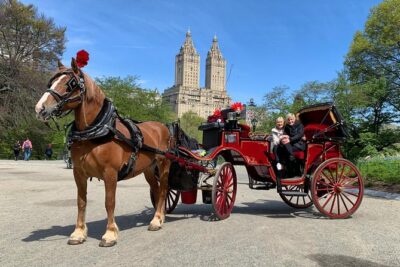
Official NYC Horse Carriage Rides in Central Park since 1979 ™
Read our review →

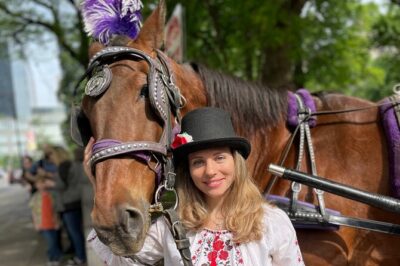
Carriage Ride in Central Park (VIP – PRIVATE) Since 1964™
Read our review →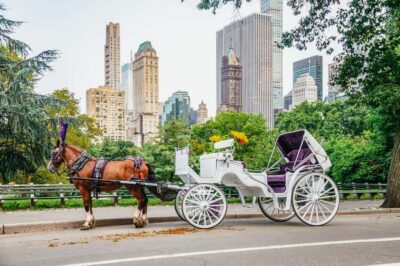
Browse the lists this tour appears in