

Reviewed · HIGH LINE & CHELSEA TOURS
New York City’s High Line: A Self-Guided Audio Tour
New York’s High Line is more than a pleasant path above the streets. This audio walk explains how an abandoned freight railway became one of Manhattan’s most unusual public spaces, from the dangerous days of Death Avenue to the oddball proposals that nearly reshaped the line. The story gives the views a purpose.
I like the story-led narration, which turns facts into memorable episodes, and I like the freedom of a self-guided walk. You can pause for food at Chelsea Market, linger near the Whitney, or adjust your pace without holding up a group.
The main drawback is the app’s timing. One person found the audio did not always match their walking speed, so you should be ready to pause or restart clips. The tour also requires your own smartphone and headphones, and the non-refundable booking policy makes advance planning important.
In This Review
- Key points to know before you walk
- Why the High Line is best understood through its past
- From Death Avenue to an elevated railway
- The Whitney Museum and the southern end
- Pier 57 and the changing waterfront
- Chelsea Market: a useful break in the walk
- The Standard Hotel and the High Line’s famous awkward moments
- The General Theological Seminary and quieter surroundings
- Hudson Yards and the final approach
- Vessel, the stairway to nowhere
- How the VoiceMap app works on the walk
- Is $14.99 a fair price?
- Who should book this High Line audio tour?
- Should you book it?
- FAQ
- How long does the High Line audio tour take?
- Where does the tour start?
- Where does the tour end?
- What language is the tour offered in?
- What does the $14.99 price include?
- Do I need to bring my own phone and headphones?
- Can I cancel or change the booking?
Key points to know before you walk

- A 90-minute history walk: Follow the High Line from Washington Street through Chelsea toward Hudson Yards.
- Stories instead of a fact dump: Hear about Death Avenue, the railway’s rescue plans, and the strange ideas proposed for the old tracks.
- Eight notable stops: The route includes the Whitney Museum, Pier 57, Chelsea Market, the General Theological Seminary, Hudson Yards, and Vessel.
- Offline access helps: Download the VoiceMap app, audio, maps, and location data before setting out.
- A flexible private experience: Only your group takes part, with no live guide or fixed departure time.
- Bring your own setup: The $14.99 price excludes a smartphone, headphones, transportation, food, and admission fees.
Why the High Line is best understood through its past
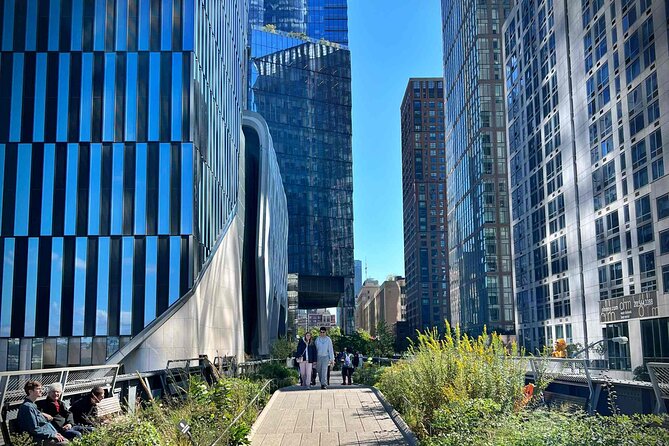
The High Line can look simple at first: a planted walkway, city views, public art, and a steady stream of people. The audio gives you the missing piece. It explains why these tracks were built above Manhattan streets, why the railway became dangerous, and how close New York came to losing this unusual strip of industrial infrastructure.
The walk begins at Friends of The High Line at 820 Washington Street, near the southern end of the park. From here, you follow the elevated route toward Hudson Yards. The tour lasts about an hour and a half, though your actual time can stretch if you stop at food stalls, museums, overlooks, or public spaces along the way.
I like this format because the High Line is easy to walk but not always easy to read. A modern park sits on top of an old freight route, and many of the original clues are easy to miss. The narration connects the city below with the structure beneath your feet.
This is not a live guided tour, so you do not get questions answered in real time. In exchange, you can start when it suits you, pause whenever you like, and take the route with only your own group.
More High Line and Chelsea walks:
- High Line and Chelsea Small Group Tour
★ 5.0 · 1,238 reviews - Chelsea Market and High Line Guided Food Tour
★ 5.0 · 827 reviews - Manhattan Adventure Sightseeing Boat Tour – from Chelsea Piers
★ 5.0 · 688 reviews
From Death Avenue to an elevated railway
One of the strongest parts of the tour is the opening chapter about the street-level train lines of the late 1800s. Freight trains once ran through crowded streets, and so many pedestrians were killed that the area became known as Death Avenue.
That detail changes the way you see the High Line. The elevated route was not simply an engineering experiment or a shortcut for cargo. It was a response to a serious city problem, built to move trains above street traffic and reduce danger below.
The audio does useful work here by making the railway’s original purpose clear. You are not just walking through a park that happens to use old tracks. You are tracing a piece of urban infrastructure that once carried freight through Manhattan’s industrial districts.
The narration also covers the High Line’s later decline and the debate over what should happen to the abandoned structure. More than 700 ideas were submitted for its reuse. Some were practical, while others were wonderfully strange, including a mile-long swimming pool and a rollercoaster winding between buildings.
These proposals are worth hearing because they show how uncertain the High Line’s future once was. The park you see today was not inevitable. It was one possible answer among many, and some alternatives would have produced a very different New York.
The Whitney Museum and the southern end
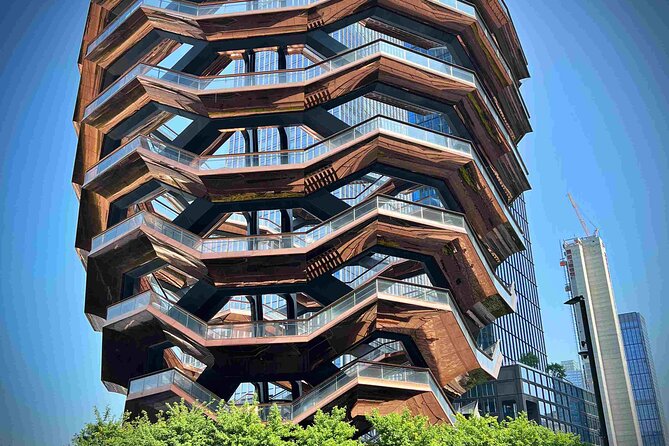
The Whitney Museum of American Art appears early on the route. The tour does not include museum admission, so you should treat it as a landmark along the walk rather than part of the ticket.
The museum is useful as a reference point. It anchors the southern end of the High Line in the Meatpacking District, where old industrial buildings now sit beside major cultural attractions. The audio helps you notice how the park links these areas rather than functioning as an isolated walkway.
If you plan to visit the Whitney, allow extra time beyond the 90-minute estimate. The audio tour is designed to keep you moving along the High Line, while a museum visit requires its own admission and schedule. You can also simply admire the building from the route and continue.
The start at Washington Street makes practical sense for visitors who want to combine the walk with nearby sights. Still, the supplied meeting information says the activity ends back at the meeting point, while the route description says it finishes at Vessel in Hudson Yards. Confirm the end point in the app or booking details before you set out, especially if you have a later reservation.
Pier 57 and the changing waterfront
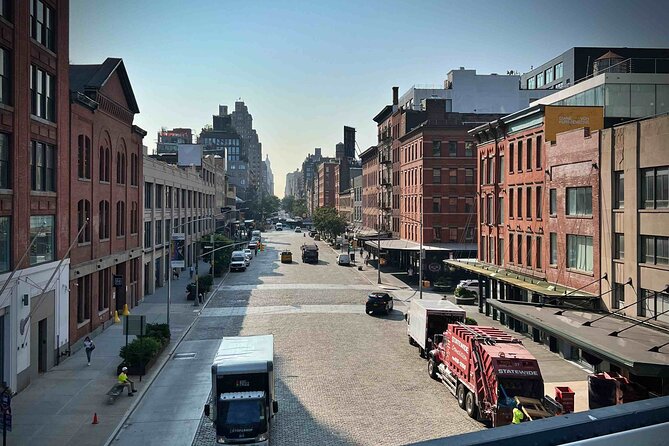
Pier 57 is another stop on the route. Its inclusion broadens the story beyond the railway itself and points toward the Hudson River edge, where former working spaces have taken on new public uses.
You should expect this part of the tour to work as context rather than as a separate attraction with an included entry. The audio points out the location while you remain on the walking route. Food, drinks, transportation, and any admission fees are your responsibility.
This is one reason the tour works well for independent visitors. You can pause when the route intersects with something you want to explore, then resume the narration. The tradeoff is that you must manage your own time and keep an eye on the app.
A few more New York City picks to weigh up
- An Epic Scavenger Hunt: New York City Central Park Adventure
★ 4.5 · 244 reviews - Skyline Night Bus Audio Narrated Tour Experience
★ 4.5 · 138 reviews - NYC: Metropolitan Museum of Art Guided or Self-Guided Tour
★ 4.0 · 56 reviews - NYC: St. Patrick’s Cathedral Official Self-Guided Audio Tour
★ 3.5 · 45 reviews
Chelsea Market: a useful break in the walk
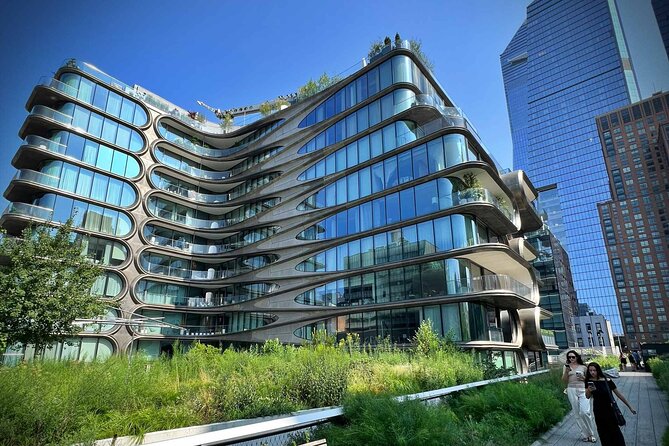
Chelsea Market is one of the most practical stops. The market occupies a former industrial setting and is known for food vendors and media connections, including filming associated with Food Network shows.
The stop gives you a natural place to break up the walk. You might want a snack or a drink, though nothing is included in the tour price. Since the audio lasts roughly 90 minutes, a short pause here can make the experience more comfortable without turning it into a full afternoon outing.
I also like the way Chelsea Market fits the larger theme. The High Line’s story is about changing use. Rail infrastructure became a park, industrial buildings became food and media spaces, and old working districts took on new roles. You can see that transition in a compact stretch of Manhattan.
If you prefer a quiet, uninterrupted walk, Chelsea Market may slow you down. The tour itself does not control crowd levels, and you should not expect the audio to provide reserved access or a guided entry.
The Standard Hotel and the High Line’s famous awkward moments

Near the southern part of the route, the audio discusses the Standard Hotel, sometimes nicknamed the Eyefull Tower because hotel rooms overlook the High Line. The story includes the building’s notoriety for guests exposing themselves to people in the park, along with the widely reported elevator incident involving Beyonce’s sister and Jay-Z.
These anecdotes add humor and pop culture to a route that could otherwise become heavy with railway dates and planning debates. They also remind you that the High Line is not separated from the city around it. Buildings, windows, businesses, and public space all meet at close range.
The material is not likely to appeal to every listener. If you want only architecture or engineering, these episodes may feel like a detour. For most people, they provide a memorable change of pace and help explain the High Line’s unusual relationship with nearby buildings.
The General Theological Seminary and quieter surroundings
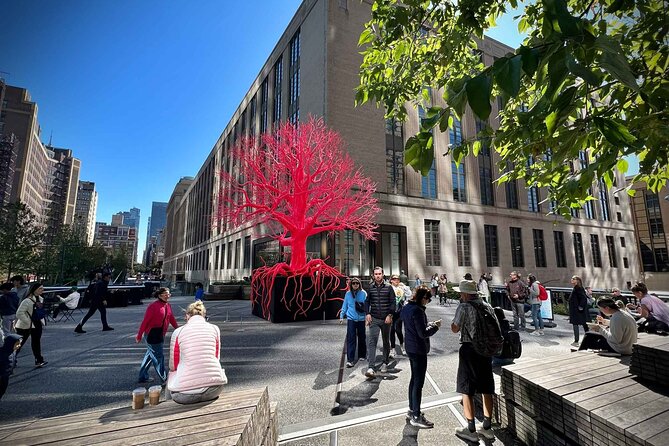
The General Theological Seminary appears later in the walk. It offers another shift in mood, moving you away from freight lines, markets, and hotel stories toward a more institutional part of Chelsea.
The value here is contrast. The High Line passes through several versions of Manhattan within a relatively short distance. You get old rail infrastructure, cultural buildings, food halls, religious institutions, high-rise development, and public art without needing a subway ride between them.
The audio helps you see the route as a connected sequence rather than a string of unrelated photo stops. That storytelling approach is one of the tour’s strongest features. One published rating specifically praised the commentary for telling stories instead of simply listing facts, and that is the right expectation to bring.
Hudson Yards and the final approach
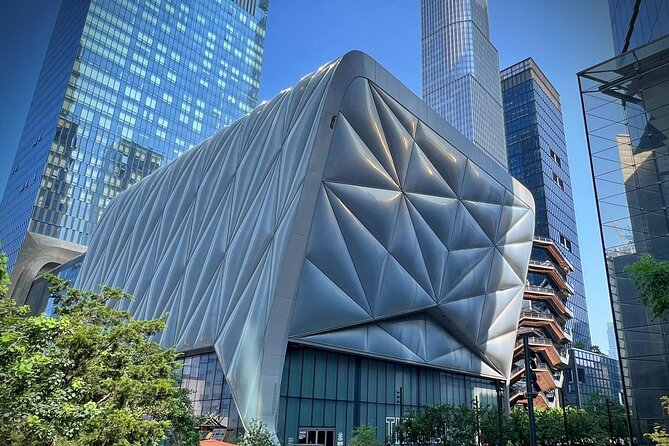
As you continue north, the surroundings shift toward Hudson Yards. The district’s newer architecture creates a sharp contrast with the High Line’s older steel structure and planted path.
This section is valuable for anyone interested in how New York continues to rebuild itself. The route shows the old and new side by side: a former freight line preserved as public space, next to a major modern development designed around offices, residences, retail, and public attractions.
You may find this part less intimate than the southern end. The old rail story remains central, but the newer buildings can make the walk feel more urban and monumental. The audio gives you a reason to pay attention to that contrast rather than treating Hudson Yards as merely the finish line.
Vessel, the stairway to nowhere
The route ends at Vessel, the sixteen-story structure built as a Hudson Yards icon. Its honeycomb-like stairways were designed for climbing and viewing, though access conditions can change. The tour does not include entry fees to attractions, so do not assume that the audio ticket covers admission.
The narration also addresses Vessel’s darker history. The structure became associated with suicides and was described as a tragic suicide magnet. That is important context, but it is also sensitive material. If you are walking with children or prefer a lighter ending, be aware that the final section is not only about design and social media.
Vessel works as a closing point because it brings together several themes from the tour: grand public design, ambitious reuse of urban space, Instagram culture, and the complications that follow when a structure becomes a powerful symbol.
The phrase stairway to nowhere captures its visual appeal, but the audio encourages you to consider what happens when architecture is designed as an image as much as a place. That makes the ending more thoughtful than a simple photo stop.
How the VoiceMap app works on the walk
Your purchase includes lifetime access to the English tour through the VoiceMap application. You also receive offline access to the audio, maps, and geodata, which is helpful if your phone connection is unreliable or you want to avoid using mobile data.
Download the app and tour before arriving. You need your own smartphone and headphones, and the experience does not provide transportation. Since the narration is tied to your position, keep your phone accessible and watch for prompts as you walk.
The app is generally easy to download and start. The main technical issue is matching the narration to your pace. If you walk faster or slower than the audio expects, a clip may get ahead of you or lag behind. Pause the narration when you stop, and do not hesitate to replay a section if you miss a detail.
The offline maps are especially useful because they let you focus on the route instead of worrying about signal. You still need enough battery power for the walk, since the audio and location features run on your phone.
Is $14.99 a fair price?
At $14.99 per person, this is a modest price for a private, self-guided experience that lasts about 90 minutes and includes lifetime access in English. You are paying for the narration, app, route planning, and offline material, not for a live guide or attraction admissions.
The value is strongest if you enjoy moving at your own pace and want more background than the park’s signs provide. A live private tour would normally cost more, while a free walk would give you less organized context. This sits between the two.
The price is less attractive if you already know the High Line’s history, dislike listening through headphones, or plan to spend most of your time inside Chelsea Market or the Whitney. Food, transportation, and museum or attraction entry fees can also add to the day’s total.
The tour is private in the sense that only your group participates, but it is not personalized guiding. You will not have a person adjusting the route to your interests. Think of it as a well-planned audio companion for a public walk.
Who should book this High Line audio tour?
I would choose this for first-time High Line visitors who want context without joining a scheduled group. It also suits couples, families with older children, and independent visitors who prefer to stop for food or photos without losing a guide.
It is a good match if you enjoy city planning, industrial history, architecture, pop culture, and unusual urban stories. The mix keeps the walk from becoming a dry lecture.
I would be more cautious if you need a fully guided, hands-on experience. The app cannot answer questions, and the pace may require occasional adjustment. I would also avoid booking casually because the experience is non-refundable and cannot be changed for any reason.
Service animals are allowed, the route is near public transportation, and most people can participate. The experience is offered in English only.
Should you book it?
Book this High Line audio tour if you want the park’s backstory, prefer flexibility, and are comfortable managing an app. The best parts are the clear storytelling, the Death Avenue history, the unusual reuse proposals, and the way the route connects Chelsea’s old industrial character with Hudson Yards’ new development.
Skip it if you want a live guide, museum entry, food, or a guaranteed perfectly synchronized walking soundtrack. For $14.99, it offers a useful layer of meaning to one of New York’s most distinctive walks, but your phone, headphones, timing, and curiosity do some of the work.
FAQ
How long does the High Line audio tour take?
The tour lasts approximately 1 hour and 30 minutes.
Where does the tour start?
It starts at Friends of The High Line, 820 Washington Street, New York, NY 10014.
Where does the tour end?
The route description says the walk ends at Vessel in Hudson Yards. The meeting information also says the activity ends back at the meeting point, so confirm the final endpoint in the app or booking details before walking.
What language is the tour offered in?
The tour is offered in English.
What does the $14.99 price include?
The price includes lifetime access to the English tour, the VoiceMap application, and offline access to the audio, maps, and geodata.
Do I need to bring my own phone and headphones?
Yes. A smartphone and headphones are not included.
Can I cancel or change the booking?
No. The experience is non-refundable and cannot be changed for any reason after booking.
More Audio Tours in New York City
- Statue Of Liberty & Ellis Island Skip The Queue Audio Guide Tour
★ 5.0 · 19 reviews - A Gilded Age Audio Guide: New York’s Millionaire Row
★ 5.0 · 13 reviews - Guided Tour (with Audio) Hamilton Musical in Lower Manhattan NYC
★ 5.0 · 11 reviews - New York City’s Financial District: A Self-Guided Audio Tour
★ 4.5 · 8 reviews
Just listed around New York City
- NYC: Private Ghostbusters Sites Tour★ 5.0 · 3 reviews
- Tour by Night in Italian★ 5.0 · 3 reviews
- NYC: Private Central Park Pedicab Tours / PICKUP FROM MUSEUM★ 5.0 · 3 reviews
- Tour of Brooklyn Bridge at Sunset★ 3.5 · 3 reviews
- New York City: Manhattan ‘Complete Playground’ Entry Ticket★ 5.0 · 3 reviews
- New York Upper East Side Art and Architecture Tour★ 5.0 · 3 reviews
- PRIVATE Rockefeller Center Artified Walking Tour★ 5.0 · 3 reviews
- Macy’s Thanksgiving Day Parade Premium Viewing Brunch 2025★ 4.5 · 3 reviews
High Line & Chelsea Tours, compared.



High Line Park and Greenwich Village Food Tour
Read our review →
High Line, Chelsea, & Meatpacking District Walking Tour
Read our review →
Statue of Liberty Speedboat Tour – from Chelsea Piers
Read our review →
Foods of NY Tours Chelsea Market Food Tour & High Line Park
Read our review →
Hudson Yards & High Line Tour with Optional Edge Ticket
Read our review →
Chelsea Market, Meatpacking, High Line Food Tour
Read our review →Browse the lists this tour appears in