

Reviewed · AUDIO TOURS
A Gilded Age Audio Guide: New York’s Millionaire Row
Fifth Avenue’s Millionaire Row was built to show the world who had money, power, and a private entrance. This self-guided walk brings that era to life, starting outside the Metropolitan Club, founded by J. P. Morgan, and ending at The Metropolitan Museum of Art.
I like the GPS-triggered narration, which tells you when to move, stop, cross the street, or look in a certain direction. I also like the freedom to pause for a phone call, restroom stop, or closer look without losing your place. The main consideration is that you must supply your own smartphone and headphones, and the tour cannot be refunded or changed after booking.
In This Review
- Key points to know before you walk
- What this Millionaire Row walk is really about
- Starting outside the Metropolitan Club on East 60th Street
- Fifth Avenue and the private world of old New York
- Central Park, The Arsenal, and a change of scenery
- Beekman Mansion and the Vanderbilt Sloane White Mansion
- The Frick Collection and the influence of Henry Clay Frick
- Richard Morris Hunt Memorial and the architects of power
- Herbert N. Strauss House and Edward S. Harkness House
- Madison Avenue and the Stuyvesant Fish story
- James B. Duke House and the final walk to The Met
- How the GPS audio system works
- Timing, pace, and who should book
- Is $14.99 good value?
- My take: should you book it?
- FAQ
- Where does the audio tour start?
- Where does the tour end?
- How long does the tour take?
- Is the tour guided by a person?
- What language is available?
- Do I need to start at a set time?
- Are a smartphone and headphones included?
- Can I use the tour offline?
- Does the price include admission to The Met or The Frick Collection?
Key points to know before you walk
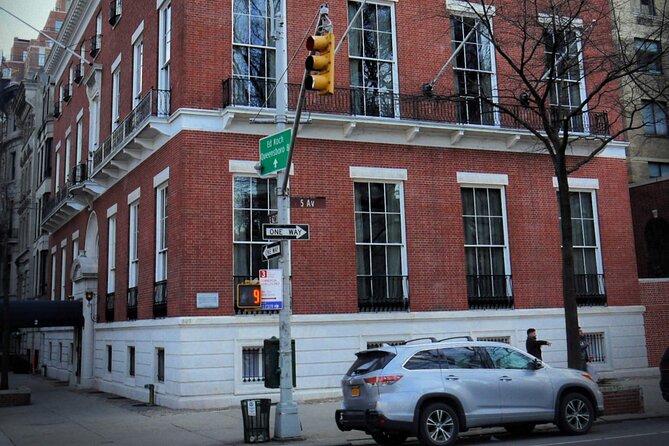
- Start at the Metropolitan Club: Begin on East 60th Street beside one of the clearest symbols of Gilded Age privilege.
- Walk past surviving mansions: Fifth Avenue still reveals grand homes linked to the Vanderbilt, Beekman, Duke, Harkness, and other powerful families.
- Let GPS handle the route: The app gives spoken directions and warns you if you stray from the path.
- Expect 80 to 100 minutes: The route covers a substantial stretch of Fifth Avenue and the Upper East Side.
- Finish at The Met: The final stop places you beside one of New York’s great art museums, though museum admission is not included.
- Pay $14.99 for lasting access: You can use the tour before or after your booked date, and play it from anywhere in virtual audiobook mode.
What this Millionaire Row walk is really about
This is not a tour of grand interiors. It is a street-level look at how New York’s wealthiest families shaped Fifth Avenue, and how much of that world still survives in stone, iron, and carefully guarded entrances.
The Gilded Age was a period of rapid industrial growth and extreme inequality. Men such as J. P. Morgan and James B. Duke made fortunes in finance and tobacco, then spent heavily on houses, clubs, art, and social influence. As you walk, the audio connects those fortunes to the buildings in front of you.
That context matters because Fifth Avenue can otherwise feel like a parade of luxury shops and traffic. The narration gives the street a human story. You learn who lived here, who socialized here, and how architecture became a public display of status.
The route is self-guided, but it is not simply a downloadable recording with a map. The GPS system starts the right passage as you reach each location. You can pause and resume, and one particularly useful feature is the warning that you have walked off course. That makes the experience easier to manage than a standard podcast.
A few more New York City picks to weigh up
- An Epic Scavenger Hunt: New York City Central Park Adventure
★ 4.5 · 244 reviews - Skyline Night Bus Audio Narrated Tour Experience
★ 4.5 · 138 reviews - NYC: Metropolitan Museum of Art Guided or Self-Guided Tour
★ 4.0 · 56 reviews
Starting outside the Metropolitan Club on East 60th Street
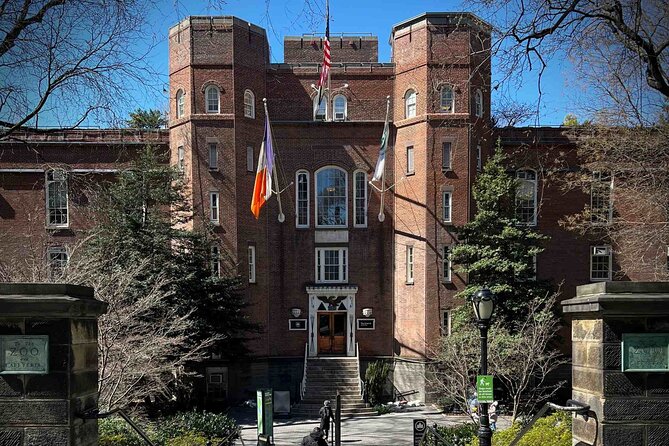
The walk begins outside the Metropolitan Club, founded by J. P. Morgan. It is a fitting place to start, since private clubs were central to the social life of New York’s old elite.
You will not be touring the club’s interior. The value here is the setting and the introduction to the people who controlled finance, business, politics, and social access. The audio uses the building as a doorway into the larger story of Millionaire Row.
Give yourself a moment to get oriented before pressing play. The tour provides directions to the start, and the booking information lists the location as East 60th Street. Since this is a city walk rather than a timed entry, you do not need to arrive for a scheduled departure.
Fifth Avenue and the private world of old New York
From the Metropolitan Club, the route continues along Fifth Avenue, once the city’s most prized residential address. The avenue now mixes luxury retail, traffic, offices, and cultural institutions, but its grand scale still hints at the homes that once lined it.
The Knickerbocker Club is another important stop. Like the Metropolitan Club, it represents the private social network that helped define upper-class New York. A club facade can look quiet and formal, but the story behind it is about who gained access, who remained outside, and how social connections reinforced financial power.
This is one reason the audio format works well here. A live guide might gather a group on a busy sidewalk and speak for several minutes. With the app, you can stand where you have the best view, move closer when the pavement allows, or continue walking while the story plays.
Central Park, The Arsenal, and a change of scenery
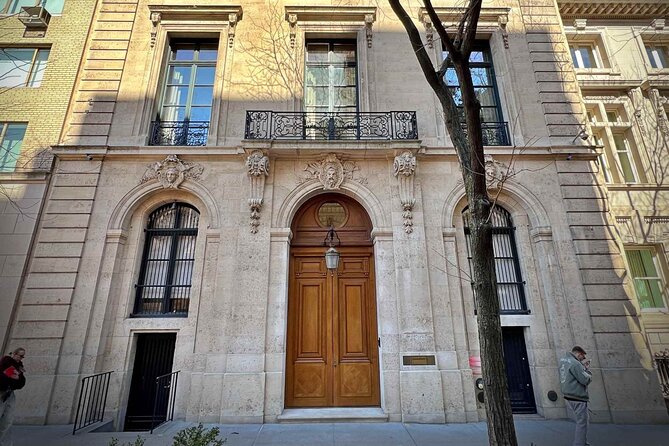
Central Park provides a welcome pause from Fifth Avenue’s hard stone and traffic. The park was also essential to the avenue’s appeal. Wealthy residents wanted impressive houses, but they also wanted open views and a broad green space nearby.
The tour points you toward The Arsenal, a historic building that once served as a military arsenal and now houses the Central Park Conservancy. It adds a different layer to the walk. Not every important building here was a mansion or private club. Some were tied to the city’s public and military past.
You may appreciate this change in subject if you are interested in urban development rather than only famous families. The stop shows how Fifth Avenue’s prestigious address depended partly on the public park beside it.
Another side of New York City for the same day:
- NYC: SUMMIT One Vanderbilt Tickets
★ 4.7 · 51,195 reviews - NYC: 9/11 Memorial & Museum Timed-Entry Ticket
★ 4.8 · 31,428 reviews - NYC: Empire State Building Tickets – Observatory & Museum
★ 4.7 · 25,757 reviews - New York City: Statue of Liberty & Ellis Island with Ferry
★ 4.6 · 18,683 reviews
Beekman Mansion and the Vanderbilt Sloane White Mansion
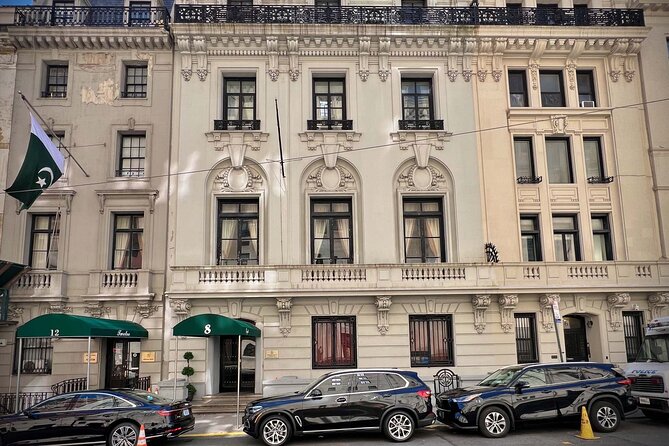
The Beekman Mansion gives you another look at Gilded Age residential architecture. It was once home to prominent New York families, and its scale helps explain how private houses could function almost like public statements.
The Emily Thorn Vanderbilt Sloane White Mansion continues that story. Its name alone points to the complicated network of marriage, inheritance, and social standing that shaped the city’s upper class. The audio helps connect the facade to the people who lived there, rather than leaving you to admire the windows and stonework without context.
These stops are especially useful for anyone who assumes that all the mansions disappeared. Many residences were demolished, altered, or replaced, but this route still brings you to several substantial examples. You should expect to view the exteriors from the public street, not enter private homes.
That distinction is important. This is an architectural and historical walk, not a house tour. The reward is seeing how the buildings fit into the avenue and hearing the stories attached to them.
The Frick Collection and the influence of Henry Clay Frick
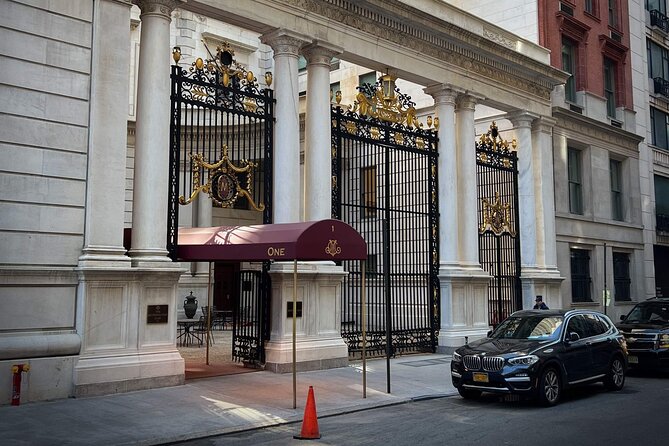
The Frick Collection occupies the former residence of industrialist Henry Clay Frick. The building links two Gilded Age habits: collecting European art and creating a home grand enough to display it.
The museum is a major attraction in its own right, with European masterpieces inside. This audio experience does not include museum admission, so consider it a separate visit if you want to see the collection. The tour uses the exterior and Frick’s story as part of its walk toward the Upper East Side.
I like this stop because it broadens the idea of wealth. The millionaires did not spend only on houses. They bought art, hired architects, joined exclusive clubs, and used cultural institutions to shape their public image.
Richard Morris Hunt Memorial and the architects of power
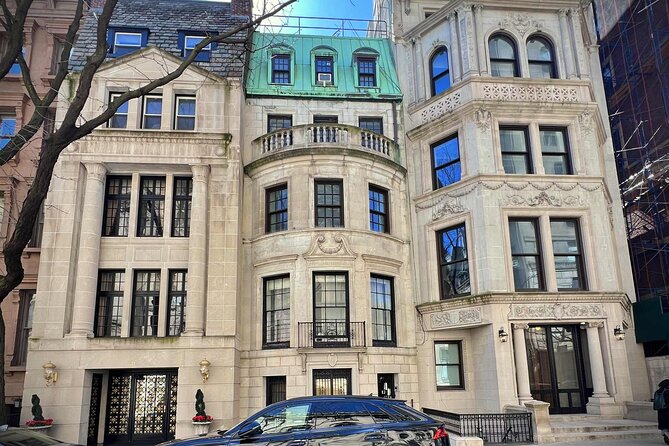
The Richard Morris Hunt Memorial honors an architect who helped shape New York’s appearance. His inclusion reminds you that Millionaire Row was not created by industrial fortunes alone. Architects translated those fortunes into stone facades, formal entrances, and European-inspired styles.
The memorial also gives the walk an architectural focus. You begin to notice that these homes were designed to communicate rank from the sidewalk. The details were not merely decorative. They helped announce the family’s place in society.
If you are more interested in buildings than biographies, this section will likely be one of the most rewarding parts of the route. If you mainly want interior access, you may find the exterior-only format limiting.
Herbert N. Strauss House and Edward S. Harkness House
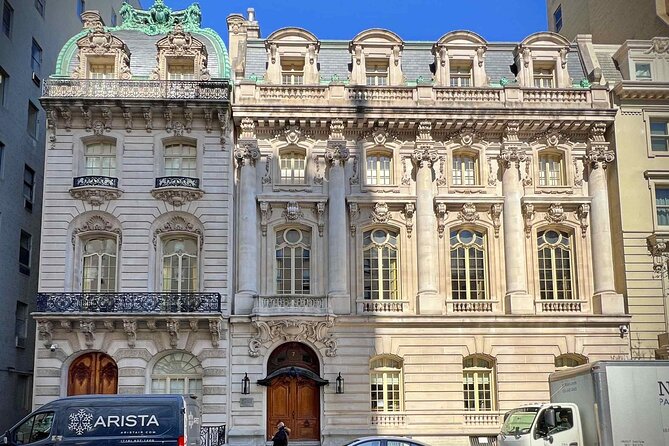
The Herbert N. Strauss House is presented as an example of Gilded Age grandeur and elegance. It gives the tour another chance to show how wealthy families commissioned homes that were large, formal, and visually distinct from ordinary city residences.
The Edward S. Harkness House adds another landmark to the Upper East Side sequence. Together, these houses make the route feel less like a single famous mansion stop and more like a survey of an entire social district.
The audio also connects the old fortunes with modern millionaires and billionaires. That comparison helps you see that New York’s habit of displaying wealth did not end with the Gilded Age. The names and industries changed, but the relationship between money, property, and status remained familiar.
Madison Avenue and the Stuyvesant Fish story
Madison Avenue brings a shift in mood. It is known for upscale shops, luxury boutiques, and polished storefronts, so it shows how the district functions today as well as how it looked in the past.
The route also introduces the legacy of Stuyvesant Fish, a prominent figure in New York’s social and political circles during the Gilded Age. His story adds a useful reminder that social power was not limited to industrialists. Status could come through family, politics, public life, and connections.
This stretch may be less visually dramatic than the large mansions, but it helps tie the route together. You are walking through a living commercial district, not an open-air museum. The modern shops and traffic are part of the experience, even if they sometimes compete with the narration.
James B. Duke House and the final walk to The Met
The James B. Duke House is one of the route’s strongest architectural stops. Built for the tobacco tycoon and philanthropist, it reflects the scale and formality of Beaux-Arts design.
The house gives the story a clear example of how a fortune could become a residence designed for social display. It also brings philanthropy into the discussion, since wealthy New Yorkers often presented themselves not only as business leaders but also as benefactors.
The tour ends at The Metropolitan Museum of Art, at 1000 Fifth Avenue. This is a practical and satisfying finish. You end beside one of the world’s largest art museums, with the option of continuing your day indoors if you choose to buy museum admission separately.
The Met is open for the tour’s purposes at all hours because the audio route is available 24 hours a day. That does not mean the museum itself is open around the clock, so check the museum’s own hours if you plan to enter.
How the GPS audio system works
The technical side is a major part of the value. Once you have the app and reach the correct starting point, the tour can trigger the appropriate narration based on your location.
The audio gives walking directions and tells you when to look left or right. It can also alert you if you have gone off route. That is helpful on Fifth Avenue, where it is easy to keep walking while looking at buildings and lose track of the next turn.
You can pause, rewind, stop for a break, and resume later. The app includes offline access to audio, maps, and geodata, which is useful if you do not want to depend on a steady mobile connection.
Bring a charged smartphone and headphones. Neither is included. The tour is offered in English, and the virtual playback option lets you listen from anywhere like an audiobook, even before your New York walk.
Timing, pace, and who should book
Plan on about 1 hour 20 minutes to 1 hour 40 minutes for the route. Your pace, photo stops, and pauses will affect the total. Since you control the start time, you can choose a quiet morning, a sunny afternoon, or any other point during the day.
This format suits solo visitors, couples, history fans, and people who dislike fixed group departures. It also works well for introverts because you do not have to keep up with a guide or make conversation with strangers.
Families and groups can use it too, but the narration may appeal most to adults and older children who enjoy architecture, New York history, or stories about power and money. It is described as a private activity, with only your group participating, though the experience remains self-guided rather than led by a person walking beside you.
The tour is near public transportation, and most people can participate. Service animals are allowed. The route uses city sidewalks, so sensible shoes and a charged phone are practical choices, even though the supplied information does not specify the route’s accessibility details.
Is $14.99 good value?
At $14.99 per person, this is a low-cost way to spend roughly 90 minutes on one of New York’s most expensive streets. A live private guide would normally cost far more, while a free walk would not provide the same sequence of stories, directions, and location-based narration.
The strongest value comes from unlimited lifetime use. You can use the tour before or after the booked date, replay sections, and access the virtual version from anywhere. If you are visiting with a friend or family member, that flexibility makes the price easier to justify.
The tradeoff is that you do not get personal questions answered on the spot. You also pay even if the weather turns poor, since the experience is non-refundable and cannot be changed after booking. I would book it when the route fits firmly into your plans, not as a last-minute option dependent on perfect weather.
The experience has a 5.0 rating from 13 submitted ratings, with 100 percent recommending it. The most consistently praised features are the clear script, entertaining narration, accurate GPS cues, off-route warning, and freedom to walk at your own pace.
My take: should you book it?
Book this tour if you want an affordable, flexible introduction to Fifth Avenue’s mansions, clubs, architects, and wealthy families. It is especially useful if you want to explore alone or prefer not to meet a guide at an exact time.
Skip it if your main goal is to enter private mansions, receive live commentary, or visit The Frick Collection and The Met as part of the ticket. Those are nearby cultural attractions, but admission is not included.
For most visitors, I would pair the walk with extra time at Central Park or The Met. The audio gives you the story of the buildings, while your own slower stop at the park or museum lets you enjoy the district beyond the narration.
FAQ
Where does the audio tour start?
It starts on East 60th Street in New York City, outside the Metropolitan Club.
Where does the tour end?
The tour ends at The Metropolitan Museum of Art, located at 1000 Fifth Avenue, New York, NY 10028.
How long does the tour take?
The estimated duration is about 1 hour 20 minutes to 1 hour 40 minutes.
Is the tour guided by a person?
No. It is a self-guided GPS audio tour. The app provides narration, walking directions, and location-based prompts.
What language is available?
The tour is offered in English.
Do I need to start at a set time?
No. The tour is available 24 hours a day, and you can explore at your own pace.
Are a smartphone and headphones included?
No. You need to provide your own smartphone and headphones.
Can I use the tour offline?
Yes. Offline access is available for the audio, maps, and geodata.
Does the price include admission to The Met or The Frick Collection?
No. The tour ends at The Met and passes the Frick Collection, but museum admission is not included.
Just listed around New York City
- NYC: Little Shop of Horrors Off-Broadway Ticket5 reviews
- Private NYC Airport Transfer: LGA to Manhattan – Up to 5★ 3.6 · 5 reviews
- New York City Tour in German★ 4.5 · 5 reviews
- NYC Freedom Tower Private Photo or Video Experience★ 4.0 · 6 reviews
- New York Afternoon Fall Foliage Cruise with Lunch★ 5.0 · 6 reviews
- New York: Hamilton and Washington Revolutionary Walking Tour★ 5.0 · 5 reviews
- Brooklyn Walking Tours by Locals: Private & 100% Personalized★ 4.0 · 6 reviews
- Southold Bay Oyster Farm Tour★ 5.0 · 6 reviews
Audio Tours, compared.

Skyline Night Bus Audio Narrated Tour Experience
Read our review →
St. Patrick’s Cathedral Official Self-Guided Audio Tour
Read our review →
Statue Of Liberty & Ellis Island Skip The Queue Audio Guide Tour
Read our review →
Guided Tour (with Audio) Hamilton Musical in Lower Manhattan NYC
Read our review →
New York City’s Financial District: A Self-Guided Audio Tour
Read our review →Browse the lists this tour appears in