
Reviewed · PHOTOGRAPHY SESSIONS
NYC After-Dark Photography Tour
Times Square after dark is a ready-made photography lesson: brilliant signs, moving crowds, taxis, and tall buildings all compete for your attention. This four-hour tour helps you turn that visual overload into deliberate pictures, with long-exposure work, flash practice, and carefully chosen shooting spots.
I like the maximum group size of four, which gives you room to ask about your own camera instead of waiting behind a crowd. I also like the range of subjects, from the ABC news ticker and Army Recruiting Office to Bryant Park and the Empire State Building. The main catch is that this is a photo class, not a broad sightseeing tour, so you should bring patience for camera settings and tripod work.
In This Review
- Key points at a glance
- Why Times Square works as your nighttime classroom
- The ABC ticker and Army Recruiting Office
- Bryant Park changes the lesson
- Crossing the Theater District and Times Square
- Photographing the Empire State Building at night
- What the photographer guide adds
- Is $150 a fair price?
- Who will get the most from this tour?
- Timing, weather, and planning details
- Should you book the NYC After-Dark Photography Tour?
- FAQ
- Where does the NYC After-Dark Photography Tour start and end?
- How long does the tour last?
- How many people can join the tour?
- What photography skills are taught?
- Is admission to the attractions included?
- Is the tour available in English?
- What happens if the weather is poor?
Key points at a glance
- Times Square gets two hours: You have the longest session where moving lights and traffic make long exposures useful.
- Vim or Zim may guide the tour: The guides are praised for handling different cameras and organizing strong places to set up.
- Bryant Park adds a flash lesson: This short stop changes the task from light trails to close-range nighttime technique.
- You photograph famous sights from outside: Admission is free at the listed stops, but the Empire State Building is a photo subject, not an included observatory visit.
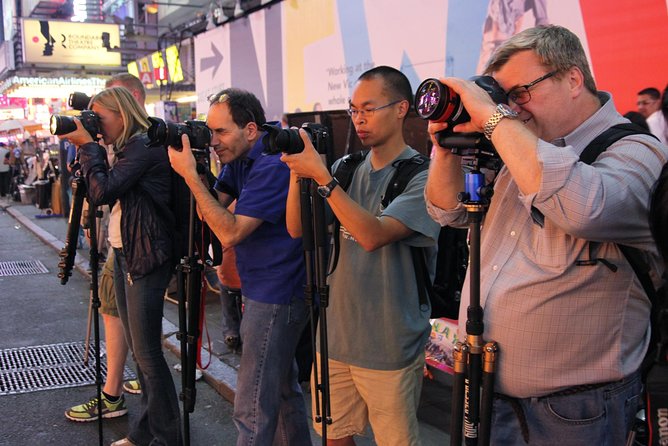
- The group is capped at four: This is a strong fit for hands-on instruction and personal questions.
- Weather matters: The tour can be moved or refunded if poor conditions make the experience impractical.
Why Times Square works as your nighttime classroom
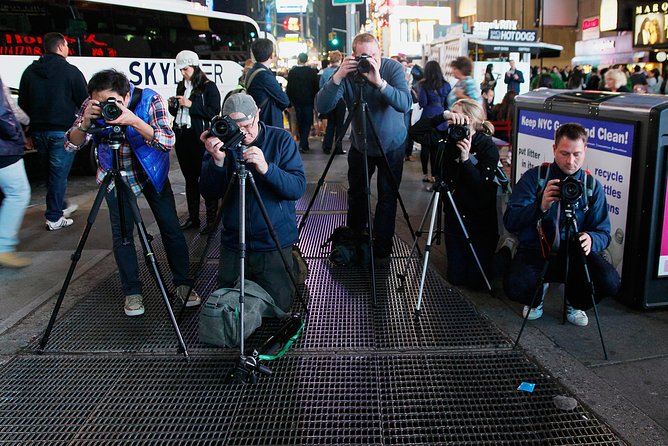
Times Square can feel like visual chaos. That is exactly why it is useful for learning. The signs give you bright color, the streets provide movement, and the surrounding buildings create strong vertical lines. You can work on exposure choices while the city supplies changing light.
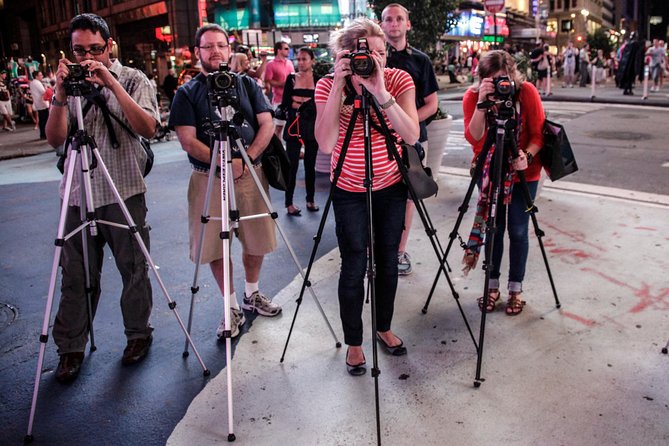
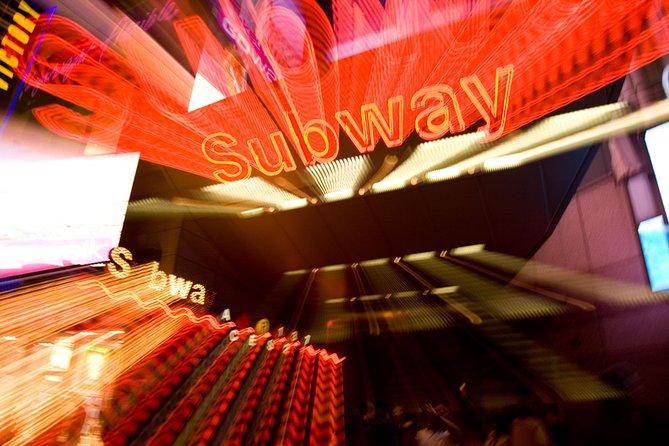
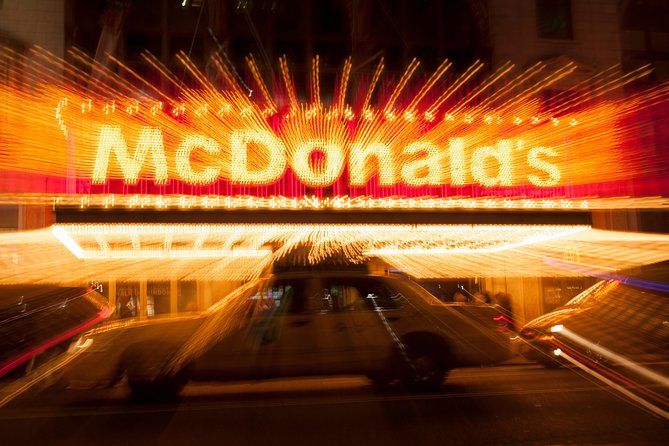
The first two hours focus on long-exposure photography. You may use a tripod, steady framing, and a slower shutter speed to show the movement of vehicles and people. The goal is not simply to record Times Square, but to decide how much motion belongs in the picture.
This is the tour’s most substantial teaching block, and that matters. A quick stop can show you a camera setting, but two hours gives you time to try it, check the result, and adjust. You can expect to spend less time rushing from one landmark to the next and more time making several versions of a photograph.
The guide also helps you find sensible places to set up a tripod. In a crowded part of Manhattan, that practical help is worth something. You do not have to spend half the evening searching for a workable angle or trying to avoid blocking everyone around you.
A few more New York City picks to weigh up
- NYC Professional Photoshoot and Walking Tour with Private Guide
★ 5.0 · 608 reviews - New York Icon Photography Tour led by a Local Photographer
★ 5.0 · 155 reviews - New York: 1-hour Photoshoot in Iconic Locations
★ 5.0 · 101 reviews
The ABC ticker and Army Recruiting Office
The US Army Recruiting Office in Times Square is one of the specific subjects on the route. Its place among the giant signs gives you a chance to practice framing a recognizable city scene without relying only on the biggest billboards.
The stop lasts about 15 minutes, so think of it as a focused exercise rather than a long shoot. You will need to work quickly, choose a composition, and make the most of the available light. That short limit can be useful if you tend to overthink every frame.
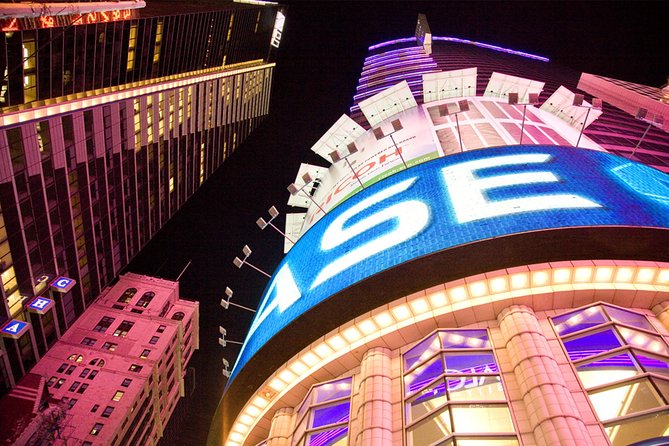
Another brief stop takes you to the ABC Studios area to photograph the news ticker in Times Square. A scrolling ticker adds motion and repeated lines to the image. It can help you think about timing, focus, and how much of the surrounding scene to include.
These stops are not designed as indoor studio visits or news broadcasts. They are outdoor photography locations. Admission is not charged, but the value comes from instruction and composition advice rather than entry to an attraction.
Bryant Park changes the lesson
Bryant Park covers 9.6 acres, yet the tour gives you a short 20-minute session there. The park offers a different setting from Times Square, with more breathing room and a shift in the kind of light you need to manage.
Here, the lesson turns to using your camera’s flash. That is a useful change because nighttime city photography is not only about long exposures. Flash can help with nearby subjects, but it can also create harsh light if used without care. The guide can show you how to make better use of the flash already built into your camera.
One participant specifically praised learning more about in-camera flash. That detail makes this stop especially useful for people who have ignored their flash or only use it as a last resort. You are not limited to collecting bright skyline pictures. You also get a chance to improve a camera feature that often sits unused.
The park stop is brief, so you should not expect a full walk through every corner of Bryant Park. Think of it as a compact technical session inside a large public space. The guide helps you get oriented instead of leaving you to wander around looking for a place to shoot.
Crossing the Theater District and Times Square
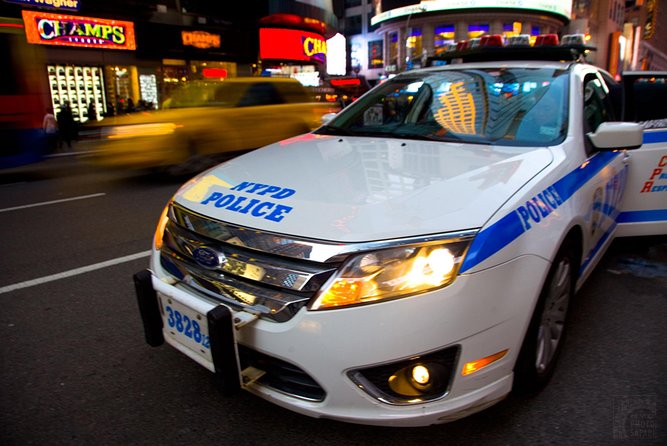
The route also includes about 30 minutes around Times Square and the Theater District. The description frames the area as a crossroads to the world, and the photographic point is easy to understand: this is where signs, streets, theaters, and pedestrians compress into a small area.
You can use this part of the tour to work on composition. Try to decide what deserves attention in a scene packed with possible subjects. A picture can quickly become a collection of unrelated lights, so the guide’s role is to help you find a clear center.
The itinerary notes several points in the middle of Times Square that make good photo locations. Since the group stays in the same general area, the tour avoids spending much of its four hours on long transfers. That is a practical advantage in a city where a short distance can take longer than expected.
Still, you should know what this tour does not promise. It is not a quiet evening stroll through lesser-known neighborhoods. Times Square is loud, crowded, and highly commercial. If you want New York at its most polished and iconic, it fits. If you prefer empty streets and subtle architecture, you may find the setting tiring.
Another side of New York City for the same day:
- NYC: SUMMIT One Vanderbilt Tickets
★ 4.7 · 51,195 reviews - NYC: 9/11 Memorial & Museum Timed-Entry Ticket
★ 4.8 · 31,428 reviews - NYC: Empire State Building Tickets – Observatory & Museum
★ 4.7 · 25,757 reviews - New York City: Statue of Liberty & Ellis Island with Ferry
★ 4.6 · 18,683 reviews
Photographing the Empire State Building at night
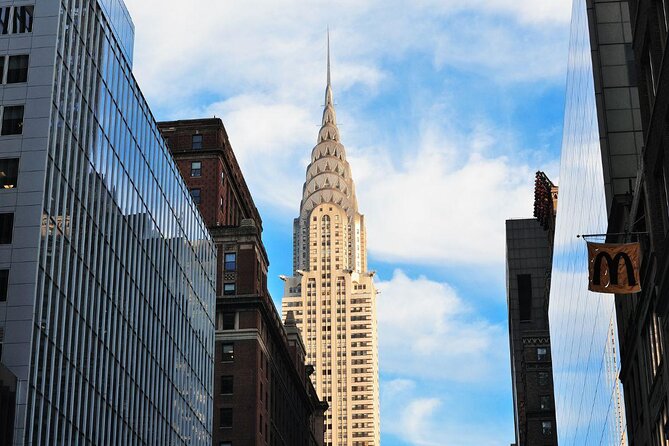
The Empire State Building is scheduled for about 15 minutes. It is one of New York’s most recognizable subjects, and its shape reads well after dark. The short session gives you a chance to work on a clean composition and use the building as a strong vertical anchor.
Admission is not included, and the tour does not present this as a visit to the observation decks. You are photographing the building from outside. That keeps the activity focused and avoids adding an attraction ticket to the $150 price.
One person began the evening with the Empire State Building while the moon sat beside it, creating a strong natural detail in the frame. You cannot count on the moon appearing in the same position, but the example shows how a guide may help you notice more than the building itself. Night photography often improves when you include a second point of interest.
The Empire State Building stop is short compared with Times Square. Treat it as a final subject or a concentrated composition exercise, not as a full landmark visit.
What the photographer guide adds
The professional photographer guide is the central reason to book this experience. The route itself is easy to follow, but instruction is harder to arrange on your own in the middle of Manhattan.
The guides are identified in the supplied feedback as Vim and Zim. Vim was praised for working with a variety of cameras, organizing photo ideas, and knowing good tripod positions. Zim was described as a strong teacher and an enjoyable person to spend time with.
That camera flexibility matters. The tour is not limited to one camera brand or one level of experience. You can bring your own camera and ask about the controls that confuse you, though the exact equipment support is not specified.
The teaching style appears to be practical. You learn through actual city subjects, then adjust your settings as the light changes. This is more useful than hearing a long lecture about shutter speed in a room with no moving lights.
The maximum of four people gives the experience a private-feeling shape without making it a fully private tour. You should get more direct help than you would in a large photo walk, but you are still sharing the guide’s attention with up to three other participants.
Is $150 a fair price?
At $150 per person, this is not a cheap way to see Times Square. You can walk through the same streets without paying an admission fee, and all listed stops are free to access except that no Empire State Building admission is included because the tour focuses on photographing it.
The price makes more sense if you treat the experience as a four-hour photography lesson in the city. You are paying for a professional guide, route planning, camera advice, tripod-location help, and a very small group. If you already know how to handle long exposures and flash, the value may be less clear.
For a beginner, the cost can be easier to justify. You get several kinds of nighttime light in one outing, and you do not need to design a route between Times Square, Bryant Park, and the Empire State Building yourself. You also avoid losing the best part of the evening to trial and error.
The tour includes local taxes, but not hotel pickup, drop-off, or transportation to and from the meeting point. You need to make your own way to Times Square and return there at the end. Since both the start and finish are in Times Square, the route is simple to plan around, but transport costs are still yours.
Who will get the most from this tour?
I would choose this for a photographer who wants direct help with night settings and prefers learning by making pictures. It should also suit someone visiting New York with a camera but no firm plan for where to shoot after dark.
It is a good match for:
- Beginners who want help with long exposure and flash
- Camera owners who use different brands or still feel unsure about manual settings
- People who prefer a small group to a large photo walk
- Visitors who want classic New York images in a structured evening
- Photographers who need help finding places to set up a tripod
You may want to skip it if your main goal is to enter the Empire State Building, tour ABC Studios, or receive hotel transportation. None of those is part of the experience.
Minors must be accompanied by an adult. Service animals are allowed, and the tour is near public transportation. Most people can participate, but nighttime city walking and camera equipment may still require your own judgment about comfort and stamina.
Timing, weather, and planning details
The tour lasts about four hours and is offered in English. It is booked, on average, 37 days ahead, so you should not leave it until the last moment if your New York dates are fixed.
The experience depends on good weather. If poor conditions cause a cancellation, you are offered another date or a full refund. You can also cancel for a full refund if you do so at least 24 hours before the start time. Cancellations or changes inside that window are not accepted, and the stated amount is not refunded.
Bring the camera you want to learn, along with any tripod you plan to use, though the supplied details do not confirm that equipment is provided. Since the instruction includes long exposures and tripod placement, having your own familiar gear should make the lesson more useful.
Keep your expectations focused. You are not paying for admission, a meal, or a private car. You are paying for four hours of guidance in some of New York’s most photographable nighttime locations.
Should you book the NYC After-Dark Photography Tour?
Book it if you want hands-on night photography instruction and like the idea of working in a group of no more than four. The strongest parts are the two-hour Times Square session, the practical flash lesson in Bryant Park, and the guide’s help with different cameras and tripod positions.
I would be less quick to book it for a confident photographer who already handles exposure, flash, and composition without help. In that case, the $150 fee may be better spent on another New York activity.
For everyone else, this is a focused way to turn an evening in Times Square into a real photography lesson. You will leave with more than a route through bright streets: you will have practiced how to control the light, time the shot, and choose a frame in one of the city’s most demanding settings.
FAQ
Where does the NYC After-Dark Photography Tour start and end?
It starts and ends in Times Square, New York, NY 10036. Hotel pickup and drop-off are not included.
How long does the tour last?
The experience lasts approximately four hours.
How many people can join the tour?
The tour has a maximum of four participants.
What photography skills are taught?
The tour covers long-exposure photography in Times Square and use of your camera’s flash in Bryant Park. The guide also helps with photo ideas and places to set up tripods.
Is admission to the attractions included?
The listed stops have no admission fee. Admission to the Empire State Building is not included, and the experience focuses on photographing the building rather than entering it.
Is the tour available in English?
Yes. The tour is offered in English.
What happens if the weather is poor?
The experience requires good weather. If it is canceled because of poor weather, you can choose a different date or receive a full refund.
Just listed around New York City
- NYC: Manhattan’s Only Whiskey Distillery Tour and Tasting★ 4.6 · 15 reviews
- Central Park Horse and Carriage Rides★ 5.0 · 15 reviews
- Electric Bike Tour: Classic Manhattan And More!★ 3.4 · 15 reviews
- East Village Food Tour★ 5.0 · 15 reviews
- NYC Private Photoshoot at Your Iconic Spots in New York City★ 5.0 · 15 reviews
- From NYC:Taste of Chinatown&Little Italy Culture&Food Tour★ 4.7 · 15 reviews
- New York City Private Vintage Car Tour and Wine Tasting★ 4.5 · 15 reviews
- NYC: VIP Rockefeller Center Tour with Observation Deck Entry★ 4.9 · 15 reviews
Photography Sessions, compared.
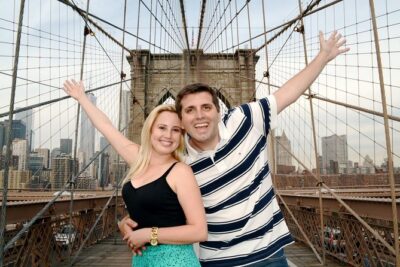
NYC Professional Photoshoot and Walking Tour with Private Guide
Read our review →
New York Icon Photography Tour led by a Local Photographer
Read our review →
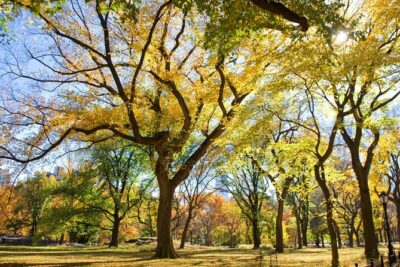
Central Park Photography Tour with Local Photographer
Read our review →
Photo sessions in New York with a French-speaking photographer
Read our review →
Your NYC Story in Photos: Custom 2-Hour Tour & Photo Shoot
Read our review →
Browse the lists this tour appears in