
Reviewed · WALKING TOURS
NYC Gangster and Mob Private Walking Tour
New York’s old crime story comes alive in the streets of Little Italy, Chinatown, and Five Points, where gang bosses, immigrant communities, police raids, and movie legends all overlap. This two-hour private walk connects real places to tales of John Gotti, the city’s Five Families, Chinese Tong gangs, and the rough Five Points district shown in Gangs of New York.
I like the private format, since your group can ask questions and set a pace that works for you. I also like the guides’ use of photos, newspaper clippings, humor, and sound effects, which help put names and faces to streets that have changed. The main drawback is that modern Little Italy has shrunk to only a few blocks, so this is more about storytelling and context than a long parade of preserved mob buildings.
In This Review
- Key points at a glance
- Starting at Lt. Petrosino Square
- Little Italy and the fall of John Gotti
- Chinatown and the Tong gangs
- Five Points, immigrant poverty, and movie fame
- St. Patrick’s Old Cathedral and The Godfather
- What makes the guide important
- Pace, walking, and group size
- Is $275 a fair price?
- Who should book this walk?
- Finishing near Mulberry and Canal Streets
- Cancellation and booking advice
- Final verdict: a good choice for mob history fans
- FAQ
- How much does the NYC Gangster and Mob Private Walking Tour cost?
- How long does the walking tour last?
- Where does the tour begin?
- Where does the tour end?
- What language is the tour offered in?
- Is hotel pickup or drop-off included?
- Is admission to St. Patrick’s Old Cathedral included?
- Can I cancel for a refund?
Key points at a glance
- John Gotti’s Little Italy: Hear how the last major New York don built power, faced trial, and eventually fell.
- Chinese gang history: Look for traces of the Tong conflicts, including the area connected with secret escape tunnels and the old Chinese Opera House.
- Five Points and film history: Connect the former immigrant district to Gangs of New York and the city’s early gang culture.
- Personal guide attention: This is a private tour for up to 10 people, with flexible departure times.
- Helpful visual aids: Guides including Ray and Robin have used binders, old photographs, and newspaper clippings to explain the past.
- A useful food finish: The walk ends near Mulberry and Canal Streets, close to Italian restaurants and cannoli shops.
Starting at Lt. Petrosino Square
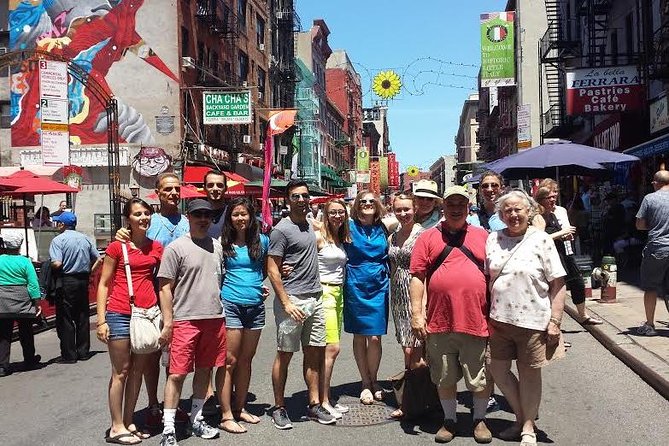
The tour begins at Lt. Petrosino Square, at Lafayette Street and Cleveland Place. That meeting point puts you near the northern edge of the route and within easy reach of Little Italy, Chinatown, and the former Five Points district.
You meet your English-speaking guide there and begin on foot. Hotel pickup and drop-off are not included, so you need to make your own way to the square. The meeting point is near public transportation, which helps if you are coming from another part of Manhattan.
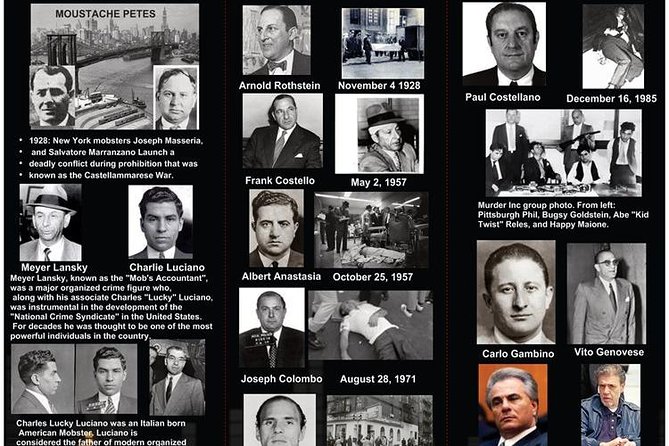
The walk lasts about two hours. That sounds modest, but the route covers several neighborhoods and a lot of names, dates, and stories. One guide, Ray, was praised for carrying a large binder filled with photographs and newspaper clippings. That sort of visual material matters here because many old meeting places have changed beyond recognition.
The tour is offered Monday through Sunday between 10 a.m. and 4 p.m. for the listed 2026 operating period. Departure times are flexible, which is useful if you are fitting the walk between a museum visit, lunch, or another downtown plan. Confirmation arrives within 48 hours of booking, subject to availability, and the experience is often reserved about 35 days ahead. I would not leave this one until the last minute if your schedule is tight.
More New York City walking tours:
- SoHo, Little Italy, and Chinatown Walking Tour in New York
★ 5.0 · 3,153 reviews - Secrets of Grand Central Station Walking Tour New York City
★ 5.0 · 1,796 reviews - Greenwich Village Walking and Food Tasting Tour
★ 5.0 · 1,572 reviews
Little Italy and the fall of John Gotti
Little Italy is the main stage for the tour. The neighborhood was once far larger than the restaurant-lined section you see today. The walk uses its streets to explain how organized crime took root among immigrant communities, how rackets affected daily life, and why certain names became famous far beyond New York.
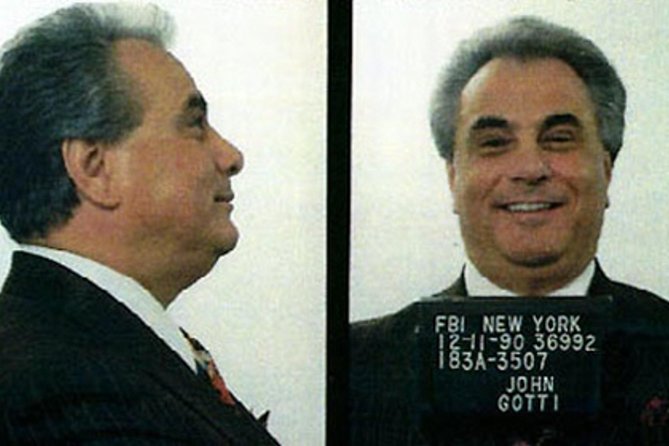
The focus is not simply on movie gangsters. You hear about the American Mafia, also called Cosa Nostra, and the way mob members were killed in street shootings. The central figure is John Gotti, described as one of the most powerful crime bosses in the United States and the last don of the old era.
Gotti’s trial and sentence give the story a clear arc. You move from public power and neighborhood influence to surveillance, prosecution, and collapse. I find that more useful than a string of disconnected crime anecdotes because it shows how the city’s underworld changed over time.
The guide may point out places connected with the old mob, including the Ravenite Social Club. The Ravenite is important because it is tied to Gotti and the Gambino family in the public memory of New York crime. Do not expect to walk into a preserved club or a museum exhibit. The value comes from standing in the neighborhood while the guide explains what happened there and how the street looked in earlier decades.
Little Italy’s smaller footprint is worth understanding before you book. One past guide used a picture book to compare the neighborhood of years ago with the streets you see now. That comparison can be striking, especially if you expect an entire district untouched by time. Today, the area is much more compact, and some stops work best as a backdrop for the guide’s account.
Chinatown and the Tong gangs
The route then shifts into Chinatown, where the subject changes from Italian-American organized crime to the Tong gangs that fought one another. This part gives the tour a wider view of New York’s underworld rather than treating the Mafia as the city’s only crime story.
You learn about the conflicts between Chinese gangs and see places tied to the old Chinese Opera House. The guide also points out secret tunnels used by gang members to escape. The wording matters: you spot the sites and hear how they were used, but this is a street walk, not a tunnel visit.
Chinatown adds a different set of social and political details to the tour. The area’s story is not interchangeable with Little Italy’s, and the change of neighborhood helps show how different immigrant communities developed their own networks and conflicts.
This is also a point where a private guide can be especially helpful. You can stop to ask how the Tong gangs differed from the Mafia, or ask for clarification when several names begin to run together. With a group of up to 10, you get a more personal experience than on a large scheduled walk, though the quality and style will depend on the guide assigned to your date.
Five Points, immigrant poverty, and movie fame
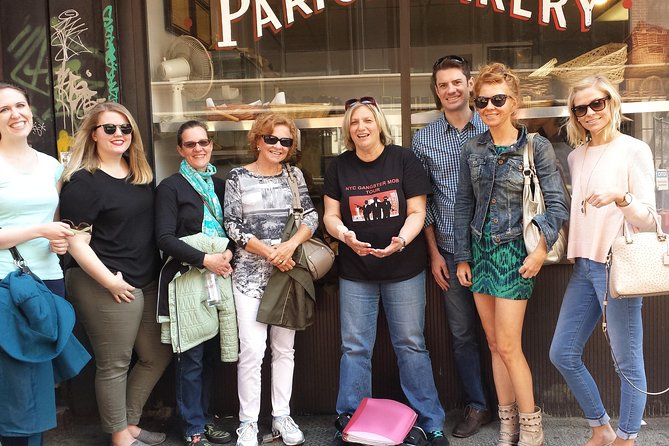
The walk continues to Five Points, a former neighborhood associated with Irish immigration, poverty, prostitution, gangs, and crime. Five Points has become famous around the world through Martin Scorsese’s 2002 film Gangs of New York, but the tour puts the movie reference inside the broader story of the district.
This is one of the most useful parts for anyone who knows the film. You can separate the dramatic version from the actual neighborhood setting and understand why Five Points became such a powerful symbol of early New York. The tour does not present the area as a quaint old quarter. It explains the harsh conditions that helped gangs gain influence.
The old district is not preserved as a complete historical set. Streets, buildings, and uses have changed. That can disappoint anyone expecting a row of original gang hangouts, but it also makes the guide’s role more important. You are using the present-day streets to picture a vanished place.
The route includes Columbus Park, which provides a physical point for discussing the old neighborhood. The park and surrounding streets help you grasp how densely packed and poor the district once was, even though the exact old setting is no longer intact.
A few more New York City picks to weigh up
- Private Central Park Pedicab Tour
★ 5.0 · 6,981 reviews - Private Transfer from Manhattan to NYC Airports (JFK/EWR/LGA)
★ 3.5 · 1,683 reviews - New York City: Private Central Park Pedicab Tour
★ 4.9 · 1,637 reviews - Carriage Ride in Central Park (VIP – PRIVATE) Since 1964™
★ 4.0 · 1,074 reviews
St. Patrick’s Old Cathedral and The Godfather
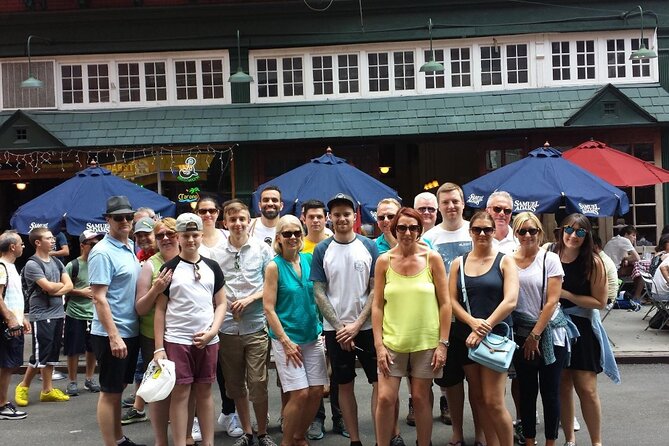
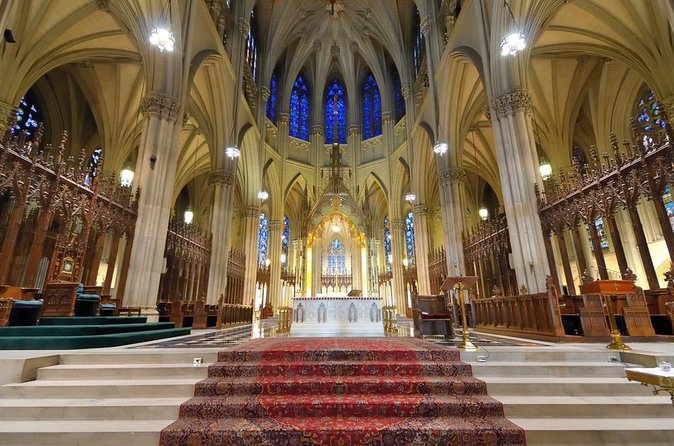
The Basilica of St. Patrick’s Old Cathedral is another key stop. The church is connected with The Godfather, giving film fans a direct link to one of the most famous fictional crime stories ever set in New York.
The stop is listed as about five minutes, so do not plan on a long church visit as part of the standard tour. Admission is not included. If you want to go inside, you should be prepared for a separate admission arrangement and the time it may require.
The cathedral adds a welcome change of tone. After streets linked with shootings, gangs, and rackets, the church shows another side of the neighborhood’s past. It also helps explain how immigrant communities built institutions and places of worship while facing poverty and discrimination.
If you enjoy comparing movie locations with real New York, this will likely be one of your favorite stops. If your main goal is a detailed architectural tour of the cathedral, the short scheduled visit may feel too brief.
What makes the guide important
The route is only half the experience. The guide has to turn ordinary-looking blocks into a readable story, and the strongest examples in the supplied information do that with energy and visual support.
Tom has been described as energetic and able to connect area history with mob stories. Ray is associated with a fast-paced presentation, facts, humor, and a binder of images and newspaper clippings. Joel has led tours centered on the Five Families and used entertaining storytelling to keep the subject moving.
Robin’s approach included photographs that showed how Little Italy looked in earlier decades. She also managed to keep a 15-year-old engaged for the full two hours, which is useful information for families with older children. Another guide, Russ, was noted for patience when a group had trouble finding the meeting point.
Guide assignments can vary, so you should not book with the assumption that you will receive one particular person. Still, the range of guide styles gives you a good idea of the experience: expect a spoken history walk, plenty of stories, and possibly photos or clippings to make the past easier to picture.
Some guides use funny sound effects and a lively delivery. That can make violent or complicated stories easier to follow, but it may not suit someone seeking a quiet, academic lecture. The tour is built for engagement, not solemn museum-style interpretation.
Pace, walking, and group size
You should have a moderate level of physical fitness. The tour covers several downtown neighborhoods on foot, and the guide keeps the group moving between stops. One account described Ray’s tour as fast-paced, so you should wear comfortable shoes and avoid treating this as a slow photography stroll.
The private setup is a major advantage for families, couples, or friends with a shared interest in crime history. Only your group participates, and the maximum group size is 10. A private walk also gives you more freedom to ask questions than a large public tour.
The two-hour length works well as an introduction. You get a focused route without giving up half a day, and you can easily add lunch or another downtown sight afterward. The tradeoff is that the subject is broad. Little Italy, Chinatown, Five Points, the Five Families, Tong gangs, John Gotti, the Ravenite, the cathedral, and film connections make for a full program.
Bad weather does not necessarily ruin the walk. One guide handled a cool, rainy day by choosing sheltered places to stop while explaining buildings and stories. Still, the experience remains outdoors, so check the forecast and dress for the season.
Service animals are allowed. The tour is near public transportation, but hotel transfers are not part of the price.
Is $275 a fair price?

The cost is $275 per group, not per person, for up to 10 people. That works out to $27.50 per person if you fill the group, $55 each for five people, or $137.50 each for a couple.
That pricing makes the most sense for a family or group of friends. A private guide, flexible departure time, and a route tailored to your questions can be good value when the cost is shared. For just two people, the price is harder to justify unless you place a high value on privacy and personal attention.
There are no separate hotel transfers included, and admission to St. Patrick’s Old Cathedral is not included. The tour’s real product is the guide’s interpretation of public streets and historic sites, not entry to a collection of private attractions.
I would compare it with your own interests. If you already know a great deal about New York organized crime, the walk may repeat familiar names. If you mainly want restaurant stops or film locations, the mob history remains the main focus. If you want stories that connect real neighborhoods with famous crime figures, the price becomes easier to defend.
Who should book this walk?
I would recommend it to adults, couples, and families with older children who enjoy organized crime history, New York neighborhoods, or movies such as The Godfather and Gangs of New York. The guide’s humor and visual aids make the subject accessible, while the private format lets you steer the conversation toward the stories that interest you most.
Young children may not find two hours of mob history entertaining. The stories include violence, prostitution, poverty, and crime, so parents should decide if the subject fits their children.
You should also book it if you prefer context over a checklist of attractions. Many of the places are ordinary city streets today. Their importance comes from knowing what once happened there, how the neighborhood changed, and why the names still matter.
Finishing near Mulberry and Canal Streets
The tour ends at 125 Mulberry Street, on the corner of Mulberry and Canal Streets. This is a practical finish because you are left in an area with Italian restaurants and cannoli shops.
One guide offered advice on authentic Italian restaurants and good cannoli nearby. That sort of local food tip is a useful bonus, especially if you plan lunch after the walk. Just remember that restaurant recommendations are not a formal inclusion, and the meal is your own expense.
The finish also makes it easy to continue exploring Chinatown or Little Italy independently. You can use the walk as a starting point, then return to a building or street that caught your attention.
Cancellation and booking advice
You can cancel for a full refund if you do so at least 24 hours before the start time. Cancellations or changes made less than 24 hours ahead are not accepted for a refund, and cut-off times use New York local time.
Confirmation is sent within 48 hours, subject to availability. Since the tour is often booked about 35 days in advance, I would reserve early if you need a specific departure window during a short New York visit.
Final verdict: a good choice for mob history fans
Book this tour if you want a lively, private walk through the places linked with New York’s Mafia, Chinese gang conflicts, Five Points, and famous crime films. The best parts are the guide’s storytelling, the old photographs and newspaper clippings, and the chance to connect John Gotti and the Five Families with real downtown streets.
Skip it if you want preserved interiors, extensive cathedral time, or a slow architectural tour. Little Italy is smaller than many people expect, and the route depends heavily on the guide’s ability to make changed streets meaningful.
For a group of several people, $275 is a reasonable way to get two hours of focused attention. For two people, it is a splurge. If that subject is high on your New York list, the personal format and strong guide reports make it a worthwhile one.
FAQ
How much does the NYC Gangster and Mob Private Walking Tour cost?
The tour costs $275 per group, with up to 10 people included.
How long does the walking tour last?
The tour lasts approximately two hours.
Where does the tour begin?
The meeting point is Lt. Petrosino Square at Lafayette Street and Cleveland Place, New York, NY 10012.
Where does the tour end?
The tour ends at 125 Mulberry Street, on the corner of Mulberry Street and Canal Street.
What language is the tour offered in?
The tour is offered in English.
Is hotel pickup or drop-off included?
No. Hotel pickup and drop-off are not included.
Is admission to St. Patrick’s Old Cathedral included?
No. Admission to the Basilica of St. Patrick’s Old Cathedral is not included.
Can I cancel for a refund?
Yes. You can receive a full refund if you cancel at least 24 hours before the experience begins. Changes or cancellations made less than 24 hours before the start time are not accepted for a refund.
Just listed around New York City
- NYC: Little Shop of Horrors Off-Broadway Ticket5 reviews
- Private NYC Airport Transfer: LGA to Manhattan – Up to 5★ 3.6 · 5 reviews
- New York City Tour in German★ 4.5 · 5 reviews
- New York: Hamilton and Washington Revolutionary Walking Tour★ 5.0 · 5 reviews
- NYC Freedom Tower Private Photo or Video Experience★ 4.0 · 6 reviews
- New York Afternoon Fall Foliage Cruise with Lunch★ 5.0 · 6 reviews
- Brooklyn Walking Tours by Locals: Private & 100% Personalized★ 4.0 · 6 reviews
- Southold Bay Oyster Farm Tour★ 5.0 · 6 reviews
Walking Tours, compared.
SoHo, Little Italy, and Chinatown Walking Tour in New York
Read our review →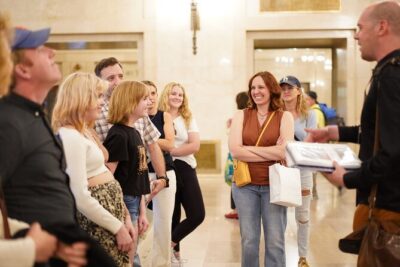
Secrets of Grand Central Station Walking Tour New York City
Read our review →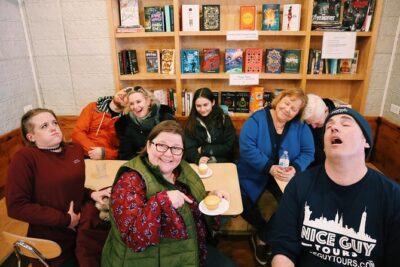
Greenwich Village Walking and Food Tasting Tour
Read our review →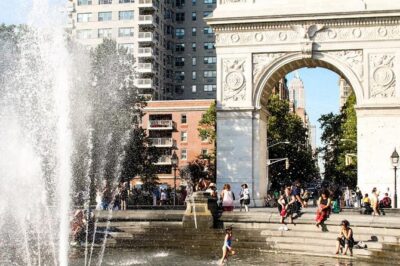
Artistic, Alternative Greenwich Village Walking Tour
Read our review →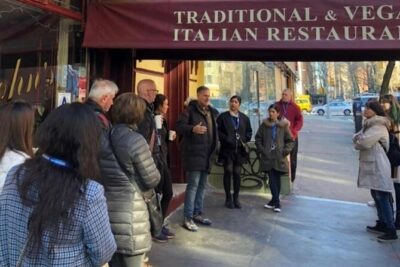
True Crime NYC: Mafia Walk w/Ret. NYPD Detective and Local Food
Read our review →
Browse the lists this tour appears in