Reviewed · PRIVATE
Private Theatre District Tour
Broadway’s history is packed into a few Manhattan blocks, and this private Theater District tour gives you a clear way to read the streets. You start at the Majestic Theatre, home of The Phantom of the Opera, pass Sardi’s and a long run of famous theaters, then finish outside the Gershwin Theatre, home of Wicked.
I like the one-on-one format, since your guide can shape the conversation around your interest in Broadway, musical theater, or New York history. I also like the route itself: it links famous shows such as Hamilton to the older theaters and neighborhoods that made the district what it is. The main consideration is simple: you stay outside the theaters, and backstage or lobby access is not guaranteed.
In This Review
- Key points to know
- From the Majestic Theatre to Broadway’s front door
- Sardi’s and the social world of Broadway
- Shubert Theatre and the story of the theater block
- Forty-fifth Street, where the theater names come quickly
- The Marquis Theatre and what the Marriott changed
- The Richard Rodgers Theatre and the Hamilton effect
- Duffy Square and the making of Times Square
- Hell’s Kitchen and the Off-Broadway conversation
- Ending at the Gershwin Theatre and Wicked
- What $80 buys you
- Practical details that affect your day
- Who will get the most from this walk
- Should you book the Private Theater District Tour?
- FAQ
- How long does the Private Theater District Tour last?
- Where does the tour begin?
- Where does the tour end?
- Is the tour private?
- Is theater admission included?
- What language is the tour offered in?
- Is transportation included?
- Can I cancel for a full refund?
Key points to know
- A private route from the Majestic Theatre to the Gershwin Theatre: You cross the heart of Broadway in about two hours.
- Industry-focused storytelling: Guides including Patrick and Lucas explain how shows, theaters, and the musical theater form developed.
- More than a photo stop at Times Square: You hear how the area changed into New York’s theater center.
- A strong lineup of theater exteriors: The route includes the Booth, Jacobs, Golden, Imperial, Hirschfeld, Music Box, Richard Rodgers, Marquis, and Gershwin theaters.
- Useful for theater fans of different ages: Children under 18 may join when accompanied by an adult at least 21 years old.
- A walking tour in all weather: Wear good shoes and bring clothing suited to the forecast.
From the Majestic Theatre to Broadway’s front door
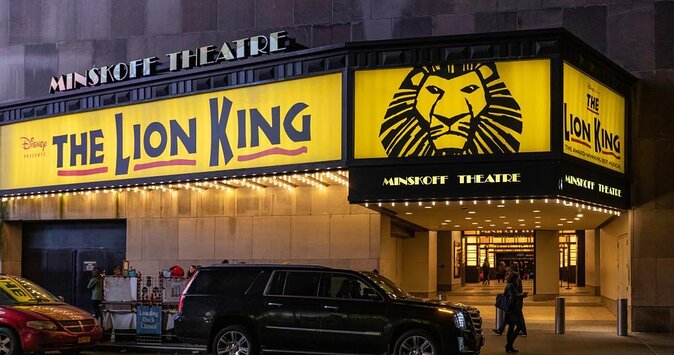
Meet your guide outside the Majestic Theatre at 245 West 44th Street. This is a fitting starting point. The theater is closely tied to The Phantom of the Opera, and your guide uses the building to explain how one Broadway house can become linked with a single long-running show while also hosting other productions over the years.
You are not entering for a performance or theater tour. The experience takes place on the sidewalk and along the surrounding streets, so the value comes from the guide’s explanation and your ability to connect the buildings with the stories behind them.
The route then moves toward several well-known venues. This early stretch is useful because it gets you oriented before Times Square’s bright signs and crowds take over. Instead of seeing Broadway as a wall of marquees, you begin to see the theater district as a working neighborhood with its own pattern of stages, restaurants, hotels, and side streets.
A few more New York City picks to weigh up
- Private Central Park Pedicab Tour
★ 5.0 · 6,981 reviews - Private Transfer from Manhattan to NYC Airports (JFK/EWR/LGA)
★ 3.5 · 1,683 reviews - New York City: Private Central Park Pedicab Tour
★ 4.9 · 1,637 reviews
Sardi’s and the social world of Broadway
A stop outside Sardi’s adds an important piece to the story. This famous restaurant has long been associated with theater professionals and Broadway fans, making it more than just another recognizable sign in the district.
Your guide explains how restaurants and gathering places fit into theater life. Productions are created by large teams, including actors, directors, producers, choreographers, and composers. A theater district tour is at its best when it shows you that Broadway is not only what happens during a performance. It is also a network of people meeting, planning, eating, celebrating, and trading stories around the stages.
This is one area where a private guide can be especially helpful. You can ask about the parts of theater-making that interest you most, instead of simply moving from one building to the next.
Shubert Theatre and the story of the theater block
The walk continues past the Shubert Theatre, with commentary about its place in Broadway history. The district contains theaters from different periods, and the buildings do not all tell the same story. Some are tied to famous productions, some to theater owners and producing organizations, and some to changes in the shape of the neighborhood.
The tour also looks at the creation of the musical and the golden age of musical theater. Those subjects give the walk some structure. You learn not only where famous shows played, but how the form itself developed and why musical theater became such a major part of American culture.
This historical context is the difference between a simple theater-exterior walk and a guided experience. You still get the pictures, but you also gain a better sense of why these particular blocks matter.
Forty-fifth Street, where the theater names come quickly
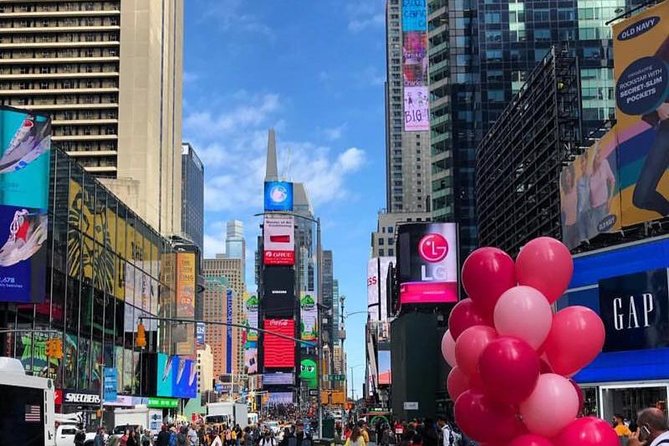
Turning onto 45th Street brings you past a concentrated run of Broadway houses. You see the Booth Theatre, Jacobs Theatre, Golden Theatre, Imperial Theatre, Hirschfeld Theatre, and Music Box Theatre from the outside.
This is a good section for theater fans because the names come with plenty of associations. Your guide discusses the buildings, shows, and people connected to Broadway, along with behind-the-scenes stories and industry details. The information is presented as a walking conversation rather than an audio recording, so you can pause and ask questions.
The tradeoff is that the number of theaters can become a lot to absorb in a short time. If you want detailed architectural study of every building, two hours will feel limited. If you want a broad, lively introduction with enough detail to make the district easier to understand, the pace makes sense.
The route is also active. You should expect a decent amount of walking, and comfortable shoes are not optional advice here. The tour operates in all weather conditions unless dangerous weather forces a cancellation, so check the forecast before you leave.
Another side of New York City for the same day:
- NYC: SUMMIT One Vanderbilt Tickets
★ 4.7 · 51,195 reviews - NYC: 9/11 Memorial & Museum Timed-Entry Ticket
★ 4.8 · 31,428 reviews - NYC: Empire State Building Tickets – Observatory & Museum
★ 4.7 · 25,757 reviews - New York City: Statue of Liberty & Ellis Island with Ferry
★ 4.6 · 18,683 reviews
The Marquis Theatre and what the Marriott changed
The Marriott Marquis Hotel is another useful stop because it shows how the Theater District has changed. Here, you learn about the Marquis Theatre and what occupied the site before the hotel and theater complex took shape.
This part helps prevent a common mistake: assuming Broadway has always looked the way it does today. Hotels, redevelopment, changing property values, and the needs of large productions have all shaped the area. A modern venue can still be part of the Broadway story, even if its surroundings differ from the older theaters nearby.
The guide’s explanation gives you a chance to compare the older houses on 45th Street with the larger hotel and theater complex. It also reinforces a practical point: the Theater District is a living part of Manhattan, not a preserved museum of stage history.
The Richard Rodgers Theatre and the Hamilton effect
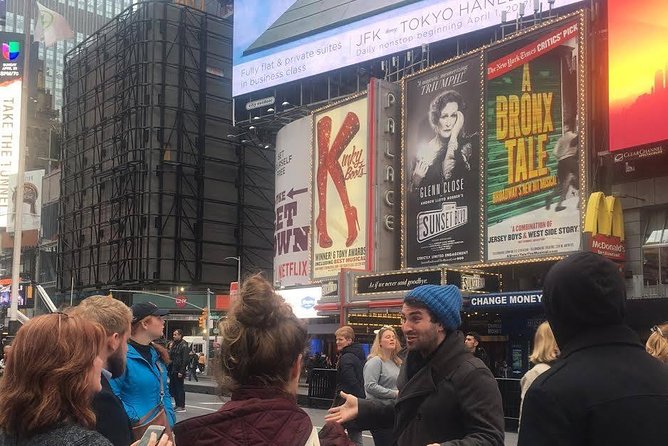
The Richard Rodgers Theatre is one of the tour’s major stops because it is home to Hamilton. Your guide explains the cultural impact of the show and places it within the longer story of American musical theater.
You will not enter the theater as part of this experience, but seeing the building from outside still has value. A show that became a major cultural phenomenon is tied to a specific address, and the guide connects the theater, the production, and Broadway’s wider development.
This is likely to be a favorite point for fans of Hamilton. It is also useful if your interest goes beyond one show. The tour treats Hamilton as part of a larger discussion about how musicals reflect history, politics, music, and popular culture.
The private setup works well here. You can ask about the show’s place in Broadway history or shift back to older musical traditions. Guides Patrick and Lucas have received particularly strong praise for their storytelling and theater knowledge, while Patrick is noted for adding personal anecdotes and extra detail along the route.
Duffy Square and the making of Times Square
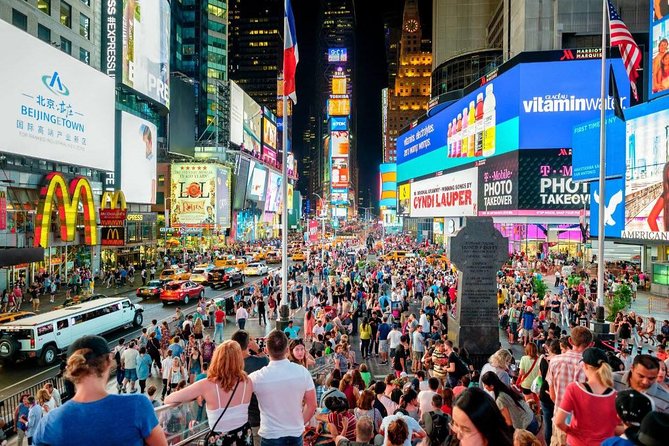
The route continues to Duffy Square, at the center of Times Square. This is where the tour widens from Broadway history to the story of Manhattan itself.
Your guide explains how this part of the city became such a famous location. The signs and crowds are the obvious features, but the more useful question is why theaters gathered here and how the area gained its identity as a symbol of New York entertainment.
Duffy Square can be crowded, noisy, and visually overwhelming. That is part of the experience, but it can make it harder to hear or keep a steady pace. Since this is a private tour, you can ask the guide to repeat a point or pause when needed, though the exact flow depends on street conditions and the group.
If you are visiting Times Square on your own, you may take in the lights without learning much about the area. This stop gives the spectacle some context. It also helps you see the square as a crossroads for theater, tourism, commerce, and city life.
Hell’s Kitchen and the Off-Broadway conversation
After Times Square, the walk passes more theaters and includes stories about Hell’s Kitchen. The neighborhood’s connection to the Theater District adds another layer to the tour, since Broadway does not exist in isolation from the blocks around it.
You also hear about Off-Broadway. That is a valuable addition for anyone who wants a fuller picture of New York theater. The Broadway houses are the most famous, but the city’s stage culture includes smaller productions and different kinds of venues beyond the main theater row.
The tour does not promise entrance to Off-Broadway venues, and the route remains focused on the Theater District. Still, this portion keeps the experience from becoming only a parade of large theaters. It shows that New York’s theater world has more than one level and more than one kind of audience.
Ending at the Gershwin Theatre and Wicked
The tour ends outside the Gershwin Theatre at 222 West 51st Street, home of Wicked. Ending here gives you one last major Broadway landmark and leaves you in a useful part of Midtown.
You can use the location as a base for continuing your day, though transportation to and from the tour is not included. The end point is close to public transportation, so it is practical for moving on to another activity.
The Gershwin stop also rounds out the tour’s show list. You begin with The Phantom of the Opera, hear about Hamilton in the middle, and finish with Wicked. Those productions represent different moments in Broadway’s recent story, while the buildings along the way add a much longer timeline.
What $80 buys you
The price is $80 per person. For a private two-hour walk, that can be fair value if you care about theater and want access to a guide’s attention rather than a large group lecture.
You are paying for the local guide and private format. You are not paying for theater admission, transportation, hotel pickup, drop-off, or an audio guide that translates the tour. It is important to understand that distinction before booking. The experience is about interpretation, stories, and seeing the buildings from the street.
I would compare the price with your plans for a Broadway show. If you already have tickets and want to understand the district before the curtain rises, this walk can add meaning to the evening. If you only want a quick list of theater names and photo opportunities, you can cover much of the area independently for less.
The private format is most useful for families, theater groups, or a small party with focused interests. It also helps if you want to ask questions about musical theater history, Hamilton, Wicked, The Phantom of the Opera, or the difference between Broadway and Off-Broadway.
Practical details that affect your day
The tour lasts about two hours and is offered in English. Confirmation is sent within 48 hours of booking, subject to availability, and the experience is typically booked about 14 days ahead. If your schedule is fixed, booking early is sensible.
The meeting point is outside the Majestic Theatre, and the end point is outside the Gershwin Theatre. Plan your route to the starting point in advance, since transportation to the attraction is not included.
Wear shoes suited to steady city walking. The tour runs in all weather, so dress for rain, cold, heat, or strong sun as needed. If dangerous weather cancels the experience, you can choose another date or receive a full refund.
Children under 18 must be accompanied by an adult who is at least 21. Service animals are allowed, and most people can participate. Since the tour takes place outdoors and involves walking through busy streets, anyone who needs frequent rest should consider the pace and length before booking.
Free cancellation is available up to 24 hours before the start time for a full refund. Changes or cancellations made less than 24 hours before the start time are not accepted for a refund under the stated policy.
Who will get the most from this walk
I would recommend this tour most strongly to people who already enjoy theater or want a readable introduction before seeing a Broadway show. It suits families with theater-loving children, couples planning a Midtown day, and small groups that prefer a conversation over a standard shared tour.
The strongest part is the guide’s storytelling. Patrick is known for a warm storytelling style, theater anecdotes, and extra effort along the route. Lucas is also praised for explaining the Broadway theaters in a way that works for both adults and younger theater fans.
You should choose a different activity if your main goal is to go inside theaters. Lobby and backstage access is not guaranteed, and no theater admission is included. You should also think twice if you dislike outdoor walking, crowded streets, or fixed English-language commentary.
Should you book the Private Theater District Tour?
Book it if you want the Theater District to feel like more than a row of bright signs. The route covers a remarkable number of famous venues, and the private guide gives you room to ask questions and follow your own interests.
At $80 per person, the tour makes the most sense when you value context and personal attention. It is not a theater admission ticket, architectural tour, or backstage visit. It is a focused walk through Broadway’s core, with stories about the people, productions, neighborhoods, and cultural moments that shaped the area.
For theater fans, especially those interested in Hamilton, Wicked, musical theater history, or the golden age of Broadway, I think it is a solid choice. Just wear good shoes, keep your expectations centered on outdoor viewing, and leave enough time to reach the Majestic Theatre before the 10:00 AM to 4:00 PM operating window.
FAQ
How long does the Private Theater District Tour last?
The tour lasts approximately two hours.
Where does the tour begin?
It begins outside the Majestic Theatre at 245 West 44th Street in New York City.
Where does the tour end?
The tour ends outside the Gershwin Theatre at 222 West 51st Street.
Is the tour private?
Yes. Only your group participates in the private tour.
Is theater admission included?
No. The tour includes outside views and does not include entrance to theaters. Backstage and lobby access are not guaranteed.
What language is the tour offered in?
The tour is offered in English.
Is transportation included?
No. Hotel pickup, drop-off, and transportation to and from the attraction are not included.
Can I cancel for a full refund?
Yes. You can cancel at least 24 hours before the experience start time for a full refund. If dangerous weather causes the provider to cancel, you can choose another date or receive a full refund.
Just listed around New York City
- Tour of Contrasts in Italian★ 4.0 · 6 reviews
- Jewish History of NYC Private Tour with Transfers★ 4.8 · 6 reviews
- Hudson Valley Wine and Food Day Trip with Sommelier host from NYC★ 5.0 · 6 reviews
- NYC: Operation Mincemeat on Broadway6 reviews
- The NYC Speakeasy Adventure: A Tipsy Trip Through History★ 5.0 · 6 reviews
- Manhattan’s Famous Artists: Exploration Game and Tour★ 5.0 · 6 reviews
- Chelsea and the High Line NYC Architecture Walking Tour★ 5.0 · 6 reviews
- New York: Holiday Lights Tour with Rockefeller Tree★ 5.0 · 6 reviews
Private, compared.

Private Transfer from Manhattan to NYC Airports (JFK/EWR/LGA)
Read our review →
Carriage Ride in Central Park (VIP – PRIVATE) Since 1964™
Read our review →

Private Statue of Liberty and Ellis Island Tour
Read our review →