
Reviewed · WALKING TOURS
Private Walking Tour: 5th Avenue and the Gilded Age Mansions
New York’s Gilded Age comes into focus on this walk from Grand Army Plaza to the Jewish Museum. You’ll see where the Astors, Carnegies, Warburgs, and other families built homes to announce their place in society, then connect those mansions to Central Park’s design and social life. The stories are the real attraction, not simply the facades.
I like the private format, which lets your guide adjust the pace and answer questions without a larger group slowing things down. I also like the route’s unusual details, from wealthy New Yorkers releasing exotic pets in Central Park to the survival story behind Klimt paintings. The main consideration is the price: $478.73 per group is reasonable for 15 people, but costly for one or two.
In This Review
- Key points to know before booking
- From Grand Army Plaza to the address that changed New York
- Temple Emanu-El and the power of an Astor invitation
- Central Park Zoo, an armory and a rather odd origin story
- Alice in Wonderland and the park as a place to play
- C. P. H. Gilbert’s French Gothic influence
- Klimt, Austrian art, and stories of survival
- Andrew Carnegie’s mansion, built as a garden cottage
- The Reservoir view over Manhattan’s wealthy north side
- The Warburg mansion and twentieth-century influence
- Is $478.73 good value for a private walk?
- Who will enjoy this 5th Avenue walk?
- Should you book it?
- FAQ
- How long does the private walking tour last?
- How much does the tour cost?
- Where does the tour begin?
- Where does the tour end?
- Is the tour private?
- What language is the tour offered in?
Key points to know before booking
- The route links 5th Avenue mansions with Central Park, so architecture and park history share equal billing.
- Grand Army Plaza and Temple Emanu-El set the social scene, explaining how 5th Avenue became Manhattan’s top address.
- Andrew Carnegie’s former home and the Warburg mansion reveal how grand private residences later took on public and cultural roles.
- The Reservoir provides one of the tour’s best views, looking over one of New York’s wealthiest neighborhoods.
- The private group can include up to 15 people, making the flat rate good for a family or larger party.
- Jonathan and Billy are named guides connected with the experience, and the tour is offered in English.
From Grand Army Plaza to the address that changed New York
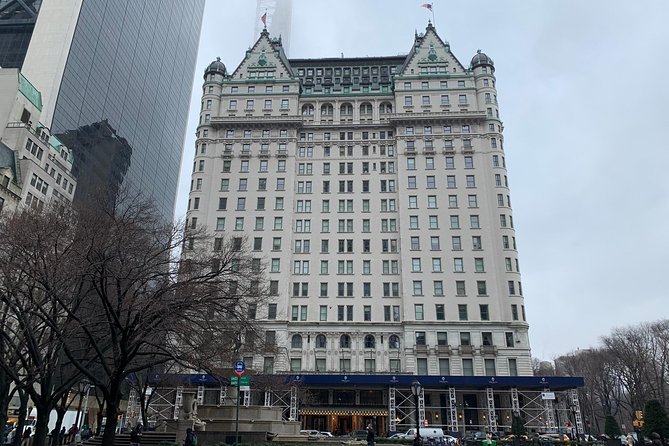
The meeting point is Pulitzer Fountain at 764 Central Park South, beside Grand Army Plaza. This is a useful place to begin because the setting gives you instant visual context: Central Park is at your back, 5th Avenue runs north, and the grand residential corridor opens ahead.
The first 20 minutes introduce the Gilded Age and explain how 5th Avenue became the premier address for Manhattan’s upper class. That matters because the mansions were not scattered randomly. They formed a social map, with proximity to Central Park, fashionable neighbors, and the right entrance all carrying meaning.
You’ll learn to look past the basic question of who lived in each building. The more revealing question is why these families wanted to live here and what their houses communicated. A mansion was a home, but it was also a calling card, a place for formal visits, and a stage for social competition.
This opening section should suit you if you enjoy architecture with a human story attached. It is less useful if you want a purely visual stroll with little historical explanation. The guide’s role matters here, and the private setup gives you room to ask about families, buildings, and the customs of the period.
More New York City walking tours:
- SoHo, Little Italy, and Chinatown Walking Tour in New York
★ 5.0 · 3,153 reviews - Secrets of Grand Central Station Walking Tour New York City
★ 5.0 · 1,796 reviews - Greenwich Village Walking and Food Tasting Tour
★ 5.0 · 1,572 reviews
Temple Emanu-El and the power of an Astor invitation
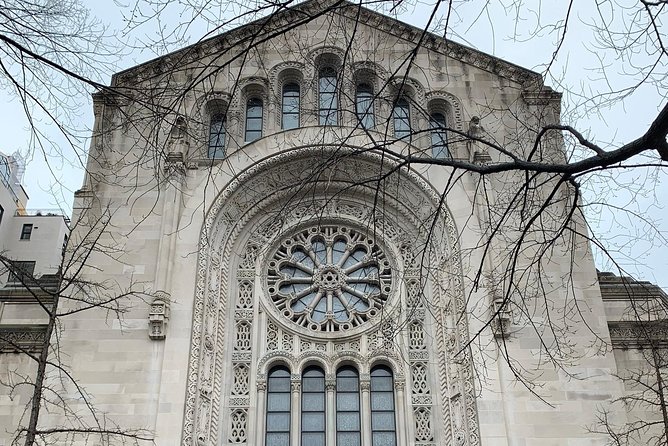
The walk continues to Temple Emanu-El, described as the largest synagogue in North America. The building itself brings a different religious and cultural presence to 5th Avenue, but the stop also points to the former mansion of Mrs. Astor.
Mrs. Astor’s home was more than a private residence. An invitation there signaled that you had entered New York’s top social circle. The tour uses that setting to explain how status worked in the Gilded Age, when dinners, calling cards, and invitations could matter as much as money.
I like this stop because it shifts the tour away from a simple parade of wealthy names. You begin to see how a neighborhood operated as a social system. The avenue was not just expensive real estate. It was a place where families guarded rank and measured one another.
Temple Emanu-El is also a reminder that 5th Avenue’s story includes institutions as well as mansions. You get a better sense of how the area changed over time, even as some addresses retained their connection to power, culture, and wealth.
No admission ticket is listed for the stop, so the visit is an exterior and neighborhood-focused part of the walk rather than a separate interior tour. If you want detailed information about the synagogue’s interior, ask your guide what can be covered during the scheduled time.
Central Park Zoo, an armory and a rather odd origin story
At Central Park Zoo, the focus turns from elite homes to the park itself. An old US military armory is one of the few surviving structures included in Central Park’s original design, giving this stop an architectural connection to the park’s early planning.
The stranger story concerns the zoo’s beginnings. The tour explains that wealthy residents of 5th Avenue sometimes released exotic pets into the park after the novelty wore off. Those unwanted animals helped lead to a collection that eventually became a zoo.
It is an amusing story, but it also says something serious about the era. Wealth brought access to rare animals, unusual decorations, and fashionable amusements. It did not always bring a plan for what happened when those amusements became inconvenient.
The stop lasts about 10 minutes, so expect a quick explanation rather than a full visit to the zoo. Admission is not included here, and the experience does not present itself as a zoo tour. You’ll see the area as part of the larger story of Central Park and the people who shaped its use.
Alice in Wonderland and the park as a place to play
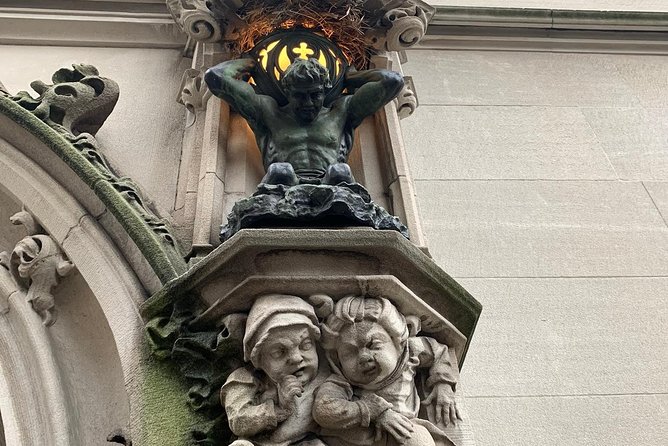
The Alice in Wonderland statue offers a lighter pause. The planned stop is about 10 minutes, enough for a photo and a short discussion of Central Park as a place for recreation and restoration.
This is a welcome change of mood after the formal world of Astor dinners and mansion building. Central Park was not only a scenic border for rich homes. It was designed as a public space where New Yorkers could escape the city’s hard edges, enjoy open air, and spend time away from work and social rules.
The statue makes an easy photo stop, especially for families. It also gives your guide a chance to explain the park’s recreational purpose without turning the entire tour into a design lecture.
Keep your expectations in check. This is a brief stop, not a guided look at every sculpture or feature in Central Park. Its value comes from the contrast it creates: after hearing how the wealthy used the neighborhood to display status, you see the park as a place meant for ordinary enjoyment as well.
A few more New York City picks to weigh up
- Private Central Park Pedicab Tour
★ 5.0 · 6,981 reviews - Private Transfer from Manhattan to NYC Airports (JFK/EWR/LGA)
★ 3.5 · 1,683 reviews - New York City: Private Central Park Pedicab Tour
★ 4.9 · 1,637 reviews - Carriage Ride in Central Park (VIP – PRIVATE) Since 1964™
★ 4.0 · 1,074 reviews
C. P. H. Gilbert’s French Gothic influence
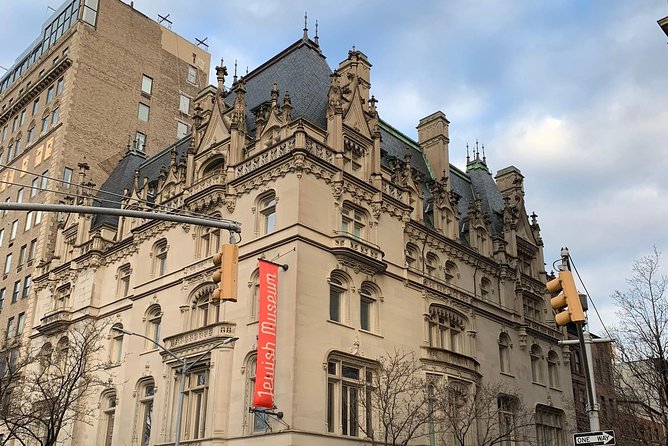
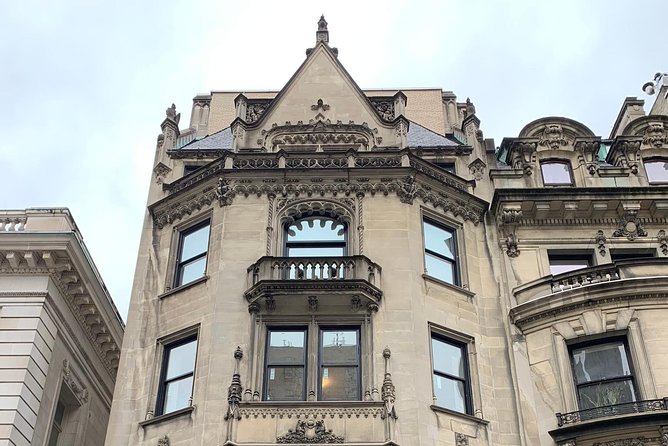
The route includes a look at the French Gothic Revival work of C. P. H. Gilbert, an architect whose style influenced many mansions in Manhattan and Brooklyn. The supplied timing does not give this stop a separate duration, so your guide will fold it into the walking route.
This is one of the better moments for architecture fans. Instead of simply hearing that a building is grand, you can consider the design language behind it. French Gothic Revival architecture helped give New York residences a strong European identity, with dramatic forms that made private homes look almost institutional or aristocratic.
The point is not just that these houses were large. Their style helped create a public image for their owners. A home could suggest age, taste, refinement, and permanence, even when the family’s fortune was relatively new.
If you are interested in buildings, ask your guide to point out the features that connect Gilbert’s work with other mansions. Since this is a walking tour rather than an interior architecture program, the reward comes from seeing patterns across the street rather than entering rooms.
Klimt, Austrian art, and stories of survival
Another portion of the walk concerns a modern German and Austrian art collection and the dramatic survival stories connected with Klimt paintings. The material adds a twentieth-century chapter to a route usually associated with nineteenth-century wealth.
This section broadens the tour in a useful way. The people linked to 5th Avenue did not only build houses. Their families and institutions also shaped art collections, museums, and cultural life. Paintings can carry stories of war, displacement, loss, and preservation, making the artwork’s survival as compelling as the image on the canvas.
The stop is especially suited to you if you want the tour to move beyond architecture. It gives the walk a cultural angle and shows how the neighborhood’s old mansions became connected with public collections and major art institutions.
The information provided does not promise entry into an art museum or a viewing of specific paintings during the walk. Think of this as an explained exterior stop or cultural reference along the route. If a particular Klimt work matters to you, ask the guide how much detail can fit into the two-and-a-half-hour schedule.
Andrew Carnegie’s mansion, built as a garden cottage
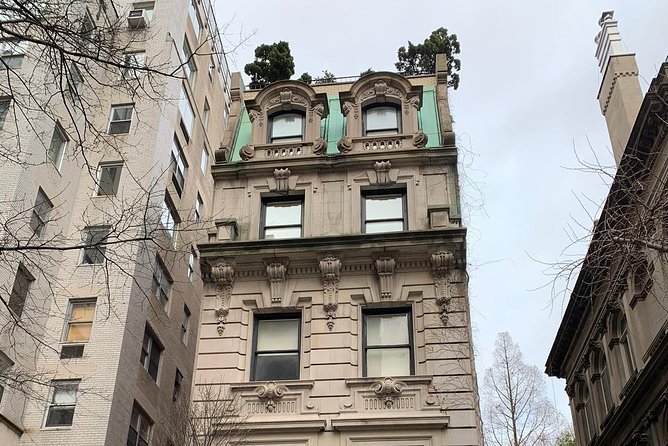
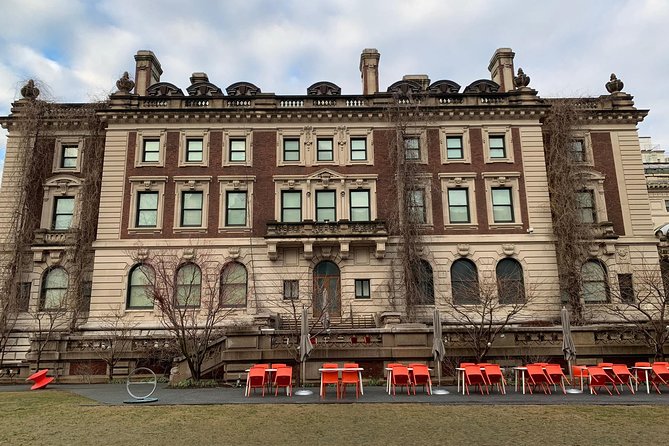
Andrew Carnegie’s former mansion is one of the central addresses on the route. The tour frames the house as a garden cottage in Carnegie’s eyes, a wonderfully revealing description when you consider the scale of many New York residences.
That phrase helps explain the mindset of the era. A house could be immense by normal standards and still seem modest to a person accustomed to grand estates, private grounds, and European examples. Carnegie’s home lets you discuss not only his fortune but also the expectations of families who wanted a suitable setting for their wealth.
You’ll also see how the residential character of 5th Avenue has changed. Some former private homes now serve cultural or institutional purposes, allowing the public to connect with buildings that were once designed for a very small circle of people.
For me, this is the kind of stop that justifies a guided walk. You can photograph a mansion on your own, but the comparison between a garden cottage and a New York mega-residence gives the building a sharper meaning. It turns size into evidence of a social world.
The Reservoir view over Manhattan’s wealthy north side
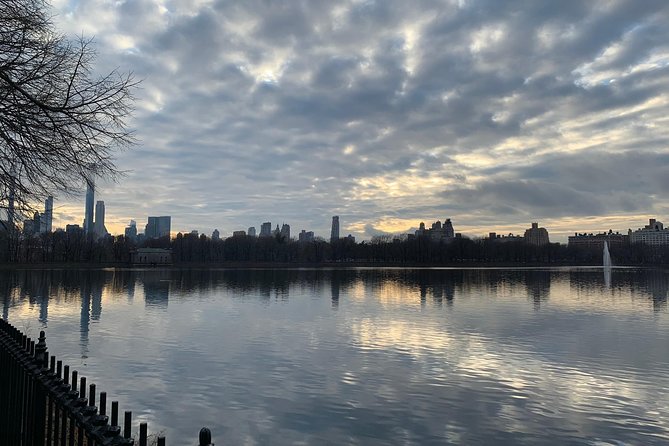
The Jacqueline Kennedy Onassis Reservoir is the northern highlight of the walk. The planned stop lasts about 10 minutes and includes admission, with a view across one of the city’s wealthiest ZIP codes.
This is where the route opens up. Earlier stops focus on individual buildings and social customs. At the Reservoir, you can take in the broader relationship between Central Park and the avenue. The park’s open water and walking paths create a strong contrast with the dense city blocks and private fortunes around it.
The view also helps explain why Central Park mattered so much to the mansion owners. A home facing or near the park had more than a pleasant outlook. It had access to a carefully planned public setting that added prestige and breathing room to an otherwise crowded city.
The Reservoir stop is brief, so it is not a long rest break or a full circuit. Still, it gives the tour a needed visual pause. Bring comfortable shoes and keep your camera ready, since this is one of the route’s clearest wide views.
The Warburg mansion and twentieth-century influence
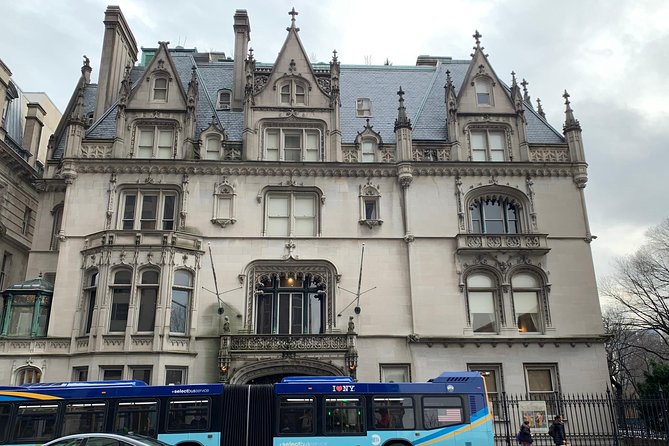
The old Warburg mansion provides another link between private wealth and public events. The tour presents the house as having played a critical role in major events of the twentieth century.
That makes this a useful final chapter. The Gilded Age did not end when the original mansion owners died. Their homes, families, collections, and institutions continued to affect New York and the wider world. The Warburg address allows your guide to follow those connections beyond the period of horse-drawn carriages and formal calls.
The finish is at the Jewish Museum, at the corner of 92nd Street and 5th Avenue. That location fits the route’s cultural direction, tying together Jewish New York, art, architecture, and the social history of the avenue.
The tour does not include admission to the museum itself. If you want to visit afterward, you can treat the end point as a convenient handoff to a separate museum visit, but the supplied details do not specify museum hours or ticket arrangements.
Is $478.73 good value for a private walk?
The price is $478.73 per group of up to 15 people for about two hours and 30 minutes. At the full group limit, that works out to roughly $32 per person, which is a fair rate for a private guide in Manhattan.
For two people, the calculation changes sharply. You would be paying nearly $240 each, so the value depends on how much you care about having the guide to yourselves. Families, reunions, school groups, and friend groups can make much better use of the flat rate.
The private format is the main reason to choose this over a standard group walk. You can ask follow-up questions, linger briefly at a building, and keep the focus on architecture, social history, art, or Central Park depending on your interests. The guide is included, and the activity is offered in English.
The experience is typically booked about 12 days in advance. That is not a rule, but it is a sensible reason to reserve ahead if your New York dates are fixed.
Who will enjoy this 5th Avenue walk?
I would recommend it most strongly to:
- Architecture fans who want to connect styles, architects, and old mansion addresses.
- History buffs interested in New York’s elite, religious institutions, art collections, and changing neighborhoods.
- Families or groups of up to 15 who can spread the flat price across several people.
- Returning New York visitors who have seen the main sights but want a more focused story about one avenue and its park.
- Visitors who value conversation, since a private guide can respond to your questions as you go.
It may be less suitable if you want extensive interior access, a museum tour, or a fast overview of all Manhattan landmarks. The route is mainly about outdoor buildings, Central Park settings, and interpretation.
Guides associated with the experience include Jonathan and Billy. The available feedback highlights Jonathan for making the neighborhood understandable even to someone from New York, while Billy is described as interesting, patient, and accommodating when a train delay caused a late arrival. Guide assignments can vary, so you should not assume either person will lead your booking.
The walk is near public transportation, and most people can take part. Service animals are allowed. Confirmation arrives at booking, and free cancellation is available if you cancel at least 24 hours before the start time. Changes or cancellations inside that window are not refunded.
Should you book it?
Book this private walk if you want the stories behind 5th Avenue rather than a simple list of famous names. The strongest parts are the social history around Mrs. Astor, the unusual Central Park zoo story, Carnegie’s oversized garden cottage, the Reservoir view, and the way the route connects old wealth with art and twentieth-century events.
For a group of several people, the price is sensible. For a couple, it is a splurge, but the personal attention may be worthwhile if architecture and New York history are high on your list. You should also allow for a steady two-and-a-half-hour walk and remember that the tour does not include general admission to the Jewish Museum or the Central Park Zoo.
FAQ
How long does the private walking tour last?
The tour lasts approximately 2 hours and 30 minutes.
How much does the tour cost?
The listed price is $478.73 per group, with up to 15 people included.
Where does the tour begin?
It begins at Pulitzer Fountain, 764 Central Park South, New York, NY 10019, near Grand Army Plaza.
Where does the tour end?
The walk ends at the Jewish Museum at 1109 5th Avenue, at the corner of East 92nd Street and 5th Avenue.
Is the tour private?
Yes. Only your group participates in the activity.
What language is the tour offered in?
The tour is offered in English.
Just listed around New York City
- 3 Days – Niagara Falls & 1000 Islands Cruise★ 5.0 · 4 reviews
- Gypsy starring Audra McDonald on Broadway Ticket★ 4.0 · 4 reviews
- Christmas in New York: Skip-the-Line Holiday Lights Tour★ 4.7 · 4 reviews
- Central Park Pedicab Guided Tours with Theater★ 5.0 · 4 reviews
- Full-Day Sightseeing Tour in New York City★ 4.5 · 4 reviews
- Private Marvelous Mrs. Maisel Sites Guided Tour★ 5.0 · 4 reviews
- Fabulous Hells Kitchen Walking Tour★ 5.0 · 4 reviews
- New York City or Brooklyn: Photoshoot in Iconic Locations★ 4.0 · 4 reviews
Walking Tours, compared.

SoHo, Little Italy, and Chinatown Walking Tour in New York
Read our review →
Secrets of Grand Central Station Walking Tour New York City
Read our review →
Greenwich Village Walking and Food Tasting Tour
Read our review →
Artistic, Alternative Greenwich Village Walking Tour
Read our review →
True Crime NYC: Mafia Walk w/Ret. NYPD Detective and Local Food
Read our review →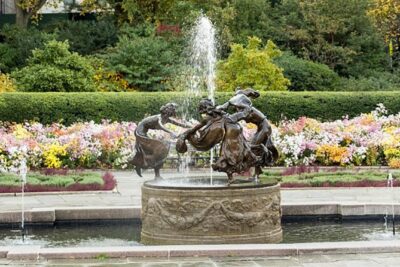

Browse the lists this tour appears in