
Reviewed · WALKING TOURS
Private Walking Tour: Footsteps of Dylan and Springsteen
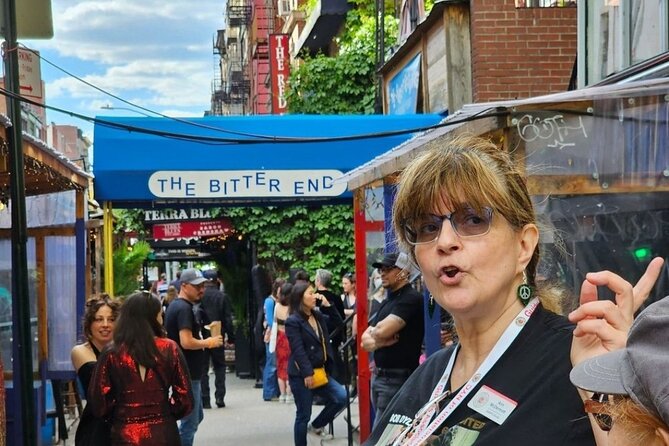
Greenwich Village is where Bob Dylan and Bruce Springsteen’s early New York stories become a walkable map. In two hours, Ann McDermott leads you past old folk clubs, Washington Square Park, Cafe Wha?, the Bitter End, and the corner used for Dylan’s Freewheelin’ album cover.
I like the private format, which lets you stop for photos and ask about the musicians who interest you most. I also like Ann’s use of historic photos, newspaper clippings, and concert ads, plus her practical tips on where to eat and hear live music afterward.
The main drawback is simple: this is an outdoor walking tour, and it requires good weather. The stops are often former venues rather than functioning museums, so you come for stories, streets, and atmosphere rather than interior access.
In This Review
- Key points for music fans
- Greenwich Village as a rock-and-folk story
- Starting at 1 West 4th Street
- Washington Square Park and the sound of hootenannies
- The Bitter End, still linked to new talent
- Cafe Wha? and the pre-fame years
- Ending at Dylan’s album-cover corner
- What the private format adds
- Weather, walking, and useful planning
- Who will enjoy this Greenwich Village walk
- Should you book the Dylan and Springsteen tour?
- FAQ
- How long is the Private Walking Tour: Footsteps of Dylan and Springsteen?
- What time does the tour begin?
- Where does the tour begin?
- Where does the tour end?
- Is this a private tour?
- Is the tour available in English?
- What is the cancellation policy?
Key points for music fans
- Follow Dylan and Springsteen’s early New York steps through Greenwich Village.
- See former music landmarks including Gerde’s Folk City, The Bottom Line, Cafe AuGoGo, The Gaslight Cafe, and The Hotel Earle.
- Pause at Washington Square Park, the setting for 1960s hootenannies and free-speech battles.
- Visit the Bitter End and Cafe Wha?, two clubs tied to major performers and emerging talent.
- Use Ann McDermott’s historic photos and concert material to picture the Village as it was.
- Finish at the Freewheelin’ album cover location at Jones Street and West 4th Street.
Greenwich Village as a rock-and-folk story
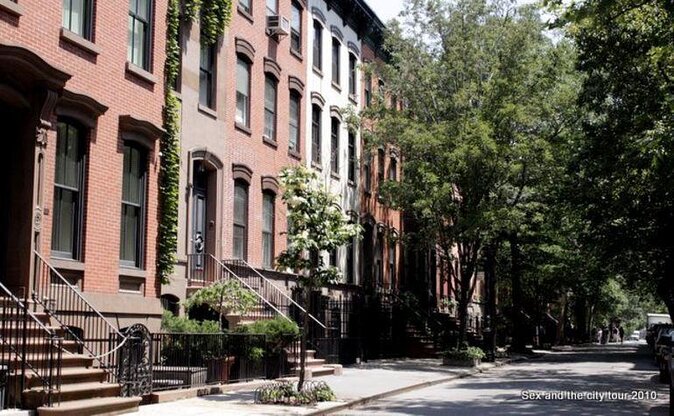
I like tours that give a neighborhood a clear theme instead of trying to explain everything at once. This one uses music as your guide. You are not simply strolling through Greenwich Village and hearing that it was artistic. You are following the clubs, apartments, parks, and street corners that helped shape American music.
The focus is Bob Dylan and Bruce Springsteen, but the route reaches well beyond those two names. You hear about performers such as Joni Mitchell, John Denver, and Jimi Hendrix, along with the many artists who passed through the Village before becoming famous.
That focus gives the walk a useful rhythm. One stop brings up folk music. Another shifts to rock. A park opens the story to politics and free speech. A final street corner connects the neighborhood to one of Dylan’s best-known album images.
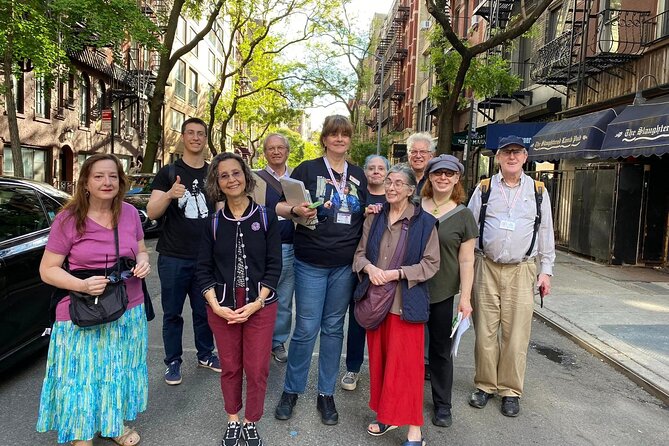
Ann McDermott is a native New Yorker, and the tour depends heavily on her personal delivery. She uses a binder filled with old photographs, newspaper clippings, and concert advertisements. That detail matters because many of the places no longer look exactly as they did during the 1960s and 1970s.
You may pass a modern storefront or a changed building and struggle to picture the old club inside. Ann’s visual material helps bridge that gap. It turns an ordinary-looking block into a place where you can imagine a young performer waiting for a set, playing for little money, or sharing a bill with someone not yet famous.
More New York City walking tours:
- SoHo, Little Italy, and Chinatown Walking Tour in New York
★ 5.0 · 3,153 reviews - Secrets of Grand Central Station Walking Tour New York City
★ 5.0 · 1,796 reviews - Greenwich Village Walking and Food Tasting Tour
★ 5.0 · 1,572 reviews
Starting at 1 West 4th Street
The walk begins at 11:00 a.m. at 1 W 4th Street. From there, you move into the Greenwich Village music story at an easy pace. The experience lasts about two hours, and the private setup means only your own group takes part.
That arrangement is useful for more than comfort. If you want to ask why one club mattered more than another, compare Dylan’s early work with Springsteen’s path, or stop for a closer look at a building, you do not have to fit your questions into a large group schedule.
The first section covers sites connected with Gerde’s Folk City, The Bottom Line, Washington Square Park, The Bitter End, Cafe AuGoGo, The Gaslight Cafe, The Hotel Earle, and Cafe Society. You also pass the former home of Bob Dylan and Suze Rotolo.
Some of these venues are no longer operating as music clubs. That is worth knowing before you book. The value is in understanding the location and its place in the Village story, not in touring preserved interiors.
The Bottom Line is an especially useful name for music fans because it links the Village route to a famous performance history. Cafe AuGoGo and The Gaslight Cafe help fill out the folk-club world around Dylan. Gerde’s Folk City gives the story another important anchor.
The former home of Dylan and Suze Rotolo adds a more personal note. It connects the public club scene with the private life behind the music. You are looking at the places where artists lived, met, worked, and built careers, not just at formal attractions designed for sightseeing.
Washington Square Park and the sound of hootenannies
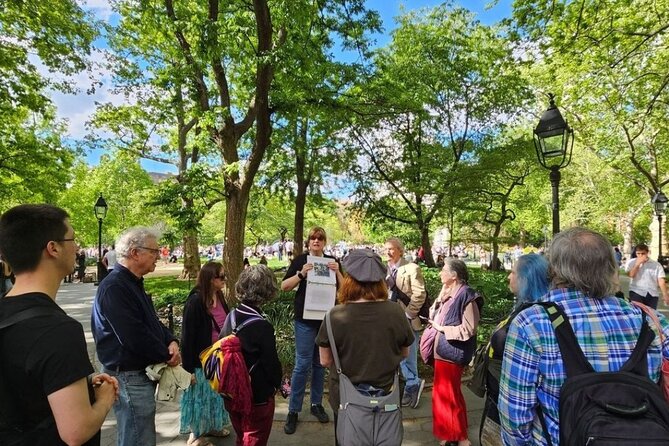
Washington Square Park is described as the spiritual heart of Greenwich Village, and it is easy to understand why the tour gives it a full section. The park is tied to spur-of-the-moment music and to the Sunday hootenannies of the 1960s.
For Dylan fans, this is an important part of the story. A hootenanny was not a polished concert in a theater. It was a gathering where musicians played, shared songs, and built an audience in a public place. The park helps you picture music as something social and open, not only something sold from a stage.
The park also connects music with free speech. That gives the stop more weight than a simple list of performers who once played there. Greenwich Village music culture was linked to arguments over who could perform, where people could gather, and how public spaces should be used.
This section includes an audio tour, so you should expect a mix of walking, listening, and discussion. The park is free to enter, and there is no admission fee for the tour stops. You will want comfortable shoes, since the appeal comes from moving through the area rather than remaining in one place.
The park can also be the point where you best sense the difference between a historic story and a preserved attraction. There is no promise that a particular 1960s scene will be recreated for you. Instead, Ann gives you the context needed to connect the present-day park with its musical and political past.
The Bitter End, still linked to new talent
The Bitter End is one of the strongest stops for anyone who wants to connect the Village’s past with its continuing music life. It remains one of the venues associated with launching performers who later became widely known, including Taylor Swift.
Its earlier story reaches back to Bob Dylan, Joni Mitchell, John Denver, and many other musicians. During the 1960s and 1970s, it was a busy meeting point for talent, audiences, and music business hopes.
I like this stop because it avoids treating Greenwich Village as a sealed-off museum district. The Bitter End is not only a memory of old folk and rock scenes. It is also presented as a working club with a role in finding new performers.
That makes the stop useful for two kinds of people. If you mainly care about Dylan or Springsteen, you get another piece of their early career story. If you simply want to know where New York musicians still try to make a name for themselves, you get a link between the past and the present.
The tour allows about 30 minutes here. That is enough time for explanation and questions, but it does not suggest a full concert or extended interior visit. Plan on seeing the place as part of a walking route, then ask Ann about current live music options for later that day.
A few more New York City picks to weigh up
- Private Central Park Pedicab Tour
★ 5.0 · 6,981 reviews - Private Transfer from Manhattan to NYC Airports (JFK/EWR/LGA)
★ 3.5 · 1,683 reviews - New York City: Private Central Park Pedicab Tour
★ 4.9 · 1,637 reviews - Carriage Ride in Central Park (VIP – PRIVATE) Since 1964™
★ 4.0 · 1,074 reviews
Cafe Wha? and the pre-fame years
Cafe Wha? brings the tour to one of its most recognizable music addresses. Bob Dylan, Jimi Hendrix, and Bruce Springsteen all played there before they were famous.
Dylan’s early work at the club is particularly striking. He reportedly played backup harmonica for one dollar a day. That small detail says a great deal about the distance between the young musician at the start of a career and the major figure he later became.
Springsteen’s connection gives the tour its second main thread. The experience is not only a Dylan walk with Springsteen added as an afterthought. Cafe Wha? helps show how both artists passed through the Village’s club network while still developing their sound and public identity.
The club stories are strongest when Ann explains the working conditions behind the legend. A famous name on a venue list can feel remote. A detail about a low-paid early job makes the period more human and easier to picture.
Again, do not expect a full museum display or a guaranteed performance. The stop works as a piece of street-level music history. You stand where the club story happened, then use Ann’s account and images to fill in what the current setting cannot show.
Ending at Dylan’s album-cover corner
The tour ends at Jones Street and West 4th Street. This is the corner where Bob Dylan and Suze Rotolo were photographed for the cover of The Freewheelin’ Bob Dylan.
The final photo opportunity is a smart way to finish. Instead of ending at a general subway stop or a random street, the walk closes with a precise image that many Dylan fans already know. You can take your own photo at the same corner.
This is also a good example of why the tour is more than a list of clubs. Music history often survives through photographs, album covers, and memories of a neighborhood. The last stop links all three. You have spent the morning hearing about venues and people, then finish at an ordinary street corner made famous by one photograph.
If you are not a serious Dylan fan, the stop still works as a visual ending to the walk. If you are, it may be the moment that justifies the booking by itself.
What the private format adds
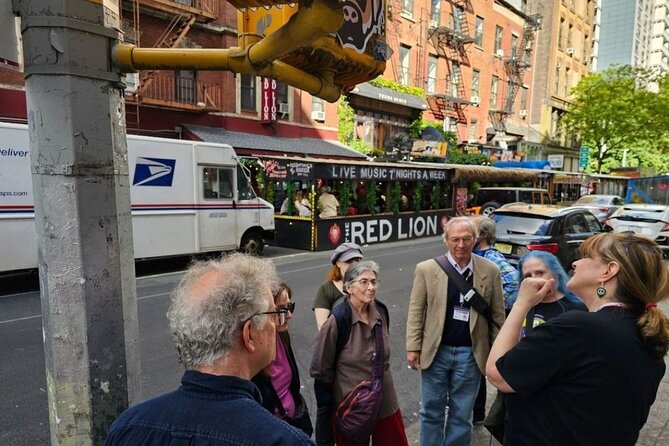
The tour costs $50 per person. For a two-hour public walk, that would already need a strong guide and clear subject. Here, the private arrangement adds value because the pace and conversation can fit your group.
You are paying for interpretation rather than admission tickets. The listed stops are free, and you should not expect included entry to a museum or concert. The cost makes the most sense if you care about the subject and want a focused introduction instead of a general Greenwich Village walk.
A private tour is especially helpful for a small group of friends or family members with mixed levels of music knowledge. One person can ask about Dylan, another about Springsteen, and another about the clubs or neighborhood. Ann can adjust the conversation rather than deliver one fixed speech to a large crowd.
The experience has received a five-star rating from 10 reviews, with 100 percent recommending it. Those numbers point to a consistent strength: Ann’s enthusiasm and ability to make the material personal. I would still judge the tour by your interests. If you want extensive indoor access, live performances, or a broad New York sightseeing tour, this is not the right format.
Weather, walking, and useful planning
The tour requires good weather. If poor conditions force a cancellation, you are offered another date or a full refund. That policy matters because the experience is built around outdoor walking, and there is no practical way to replace the route with indoor exhibits.
Wear shoes suited to two hours on city streets. The pace is relaxed, with time to stop for photos, but relaxed does not mean stationary. Public transportation is nearby, and most people can participate. Service animals are allowed.
The meeting time is 11:00 a.m., which leaves the rest of your day open. One useful bonus is Ann’s advice about lunch and places to hear live music later that day. If you want to turn the tour into a full music-themed afternoon, ask for those suggestions before you part at Jones Street.
Book ahead if your New York dates are fixed. The experience is often reserved about 54 days in advance, so last-minute availability may be limited. Confirmation is sent within 48 hours of booking, subject to availability.
You can cancel for a full refund up to 24 hours before the start time. Changes or cancellations inside that 24-hour window are not accepted for a refund.
Who will enjoy this Greenwich Village walk
I would choose this for:
- Bob Dylan fans who want to connect album images and club stories with real streets.
- Bruce Springsteen fans interested in his early New York performances.
- People who enjoy folk, rock, and singer-songwriter history.
- Visitors who prefer a small, private walk to a large group tour.
- Anyone who wants a focused Greenwich Village experience with suggestions for later music and lunch.
I would think twice if you dislike walking, need guaranteed indoor attractions, or want a broad survey of the whole city. The tour stays focused on Greenwich Village’s music scene, and its strongest material comes from Ann’s storytelling and historical images.
Should you book the Dylan and Springsteen tour?
Book it if you want the human story behind the names: Dylan playing harmonica for a dollar a day, Springsteen appearing at Cafe Wha? before fame, musicians gathering in Washington Square Park, and performers testing themselves at the Bitter End.
The best reason to go is Ann McDermott’s personal approach. Her binder of photos, clippings, and concert ads gives the walk substance, while her native New York perspective adds local context. The final Freewheelin’ photo stop is a fitting bonus.
Skip it if you want a ticketed attraction, a concert, or a fully preserved club interior. But if you want two relaxed hours tracing the streets where major music careers began, $50 is a fair price for a private, sharply focused introduction to Greenwich Village.
FAQ
How long is the Private Walking Tour: Footsteps of Dylan and Springsteen?
The tour lasts approximately two hours.
What time does the tour begin?
It starts at 11:00 a.m.
Where does the tour begin?
The meeting point is 1 W 4th Street, New York, New York 10012.
Where does the tour end?
The tour ends at Jones Street and West 4th Street, New York, New York 10014, at the corner associated with Bob Dylan and Suze Rotolo’s Freewheelin’ album cover photo.
Is this a private tour?
Yes. Only your group participates.
Is the tour available in English?
Yes. The experience is offered in English.
What is the cancellation policy?
You can cancel up to 24 hours before the start time for a full refund. If poor weather causes the tour to be canceled, you are offered another date or a full refund.
Just listed around New York City
- The Story of Grand Central Terminal: An Art And Engineering Marvel★ 5.0 · 10 reviews
- Manhattan Neighborhoods Bike Tour★ 5.0 · 10 reviews
- West Village History & Walking Food Tour★ 4.5 · 10 reviews
- Private Transfer: JFK Airport to Manhattan Up to 10pax★ 4.8 · 10 reviews
- New York City: Private Manhattan Limousine Tour★ 4.3 · 10 reviews
- Manhattan to Brooklyn NYC Walking Tour: Brooklyn Bridge and Dumbo in Spanish★ 4.5 · 10 reviews
- Captain Steve’s Sailing Experience on Long Island★ 5.0 · 10 reviews
- New York City Greenwich Village 3 Hour Private Walking Tour★ 5.0 · 10 reviews
Walking Tours, compared.
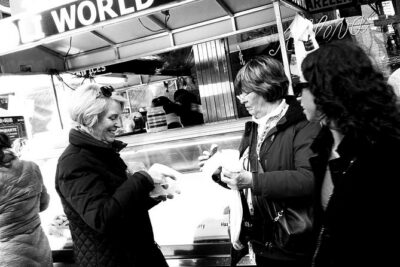
SoHo, Little Italy, and Chinatown Walking Tour in New York
Read our review →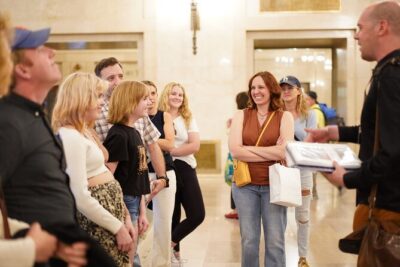
Secrets of Grand Central Station Walking Tour New York City
Read our review →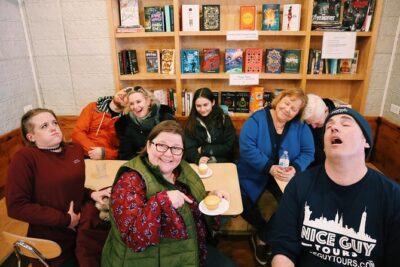
Greenwich Village Walking and Food Tasting Tour
Read our review →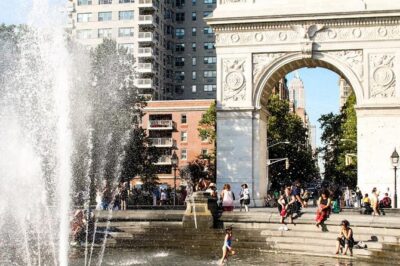
Artistic, Alternative Greenwich Village Walking Tour
Read our review →
True Crime NYC: Mafia Walk w/Ret. NYPD Detective and Local Food
Read our review →
Browse the lists this tour appears in