
Reviewed · BRONX & QUEENS TOURS
Queens Corona’s Culinary Essentials Tour
Corona’s best introduction may be a pastry tray in a family bakery, followed by a plate of pit-roasted goat in a neighborhood dining room. This small-group Queens food tour trades Manhattan crowds for local streets, family businesses, and a generous look at how immigrant communities eat.
I like the maximum of seven people, which gives the guide room to explain dishes and answer questions. I also like the mix of food: sweet Mexican breads, savory goat, Argentine pastries, Colombian shaved ice, and a shrimp cocktail. The main consideration is variety. One past participant found the tour leaned heavily toward bread and pastries and wanted more soup, cheese, main dishes, and drinks.
In This Review
- Key points to know before booking
- Why Corona makes a better food-tour setting than Manhattan
- Corona Plaza and the Mexican bakery ritual
- Pit-roasted goat with neighborhood families
- Roosevelt Avenue and the flavors of Latin America
- Argentine pastries and the Colombian snow cone
- The Veracruz bodega and shrimp cocktail finale
- What the four hours are really worth
- Guide quality and the pace of the walk
- Who should book this Queens food tour
- Booking details worth keeping in mind
- Should you book the Corona Culinary Essentials Tour?
- FAQ
- Where does the tour start?
- Where does the tour end?
- How long does the tour last?
- What time does the tour begin?
- How many people can join the tour?
- What food is included?
- Is transportation included?
- Is the tour offered in English?
- Can I cancel for a full refund?
- What happens if the weather is poor?
Key points to know before booking
- Start at Corona Plaza: The tour begins in a pedestrian-only public square that works as a natural meeting place for the neighborhood.
- Eat a Mexican weekend breakfast: You pick pastries from large bakery trays, then sit down to a hearty serving of pit-roasted goat.
- Follow Roosevelt Avenue: Weekend vendors bring food traditions from across Latin America to one of Queens’ most active commercial streets.
- Try uncommon sweets: Argentine bakery treats and Colombian cholado add variety beyond the usual New York food-tour menu.
- Finish with seafood: A shrimp cocktail at a Veracruz-style bodega gives the final stop a savory lift.
- Expect a personal guide-led walk: Guides such as Sierra focus on food, community, cultural differences, and the people behind the businesses.
Why Corona makes a better food-tour setting than Manhattan
At $95 per person, this is not a quick snack crawl. You are paying for about four hours of guided eating, neighborhood context, and a small group that can move through local shops without the feel of a large excursion.
The setting matters. Corona is a Queens neighborhood with a strong Latin American presence, and the tour begins at Corona Plaza, a pedestrian-only meeting point at 40-04 National Street. Starting here puts you in the middle of daily neighborhood life rather than beside a famous landmark built for sightseeing.
I like that the tour does not treat Queens as a side trip from Manhattan. The food is the reason to come, and the route uses bakeries, street vendors, and a small bodega to show how people actually buy and share meals. You get a sense of the neighborhood through ordinary businesses, not staged attractions.
The group limit of seven is another real advantage. A guide can explain the difference between cuisines, point out preparation details, and keep the group together more easily. Several comments about Sierra describe her as engaging, friendly, and deeply informed about the areas visited. Anna, who was in training on one tour, also helped explain cultural differences between communities.
The tour offers two morning start times. That is useful if you want to fit in another Queens activity later, or if you prefer to eat early and keep your afternoon open. The exact start time should be selected when booking.
More Bronx and Queens visits:
- NYC Bus Tour of Brooklyn, Bronx, Queens: Art, Food & Sports
★ 5.0 · 3,805 reviews - NYC Highlights Tour: Bronx, Brooklyn, Harlem, Queens & Coney
★ 4.5 · 2,846 reviews - NYC: Contrasts Tour of Harlem, The Bronx, Queens & Brooklyn
★ 4.5 · 2,167 reviews
Corona Plaza and the Mexican bakery ritual
The first stop begins in Corona Plaza, where the guide sets the scene before the eating starts. From there, you visit a family-run Mexican bakery and take part in a weekend habit that feels more personal than simply receiving a preselected tasting.
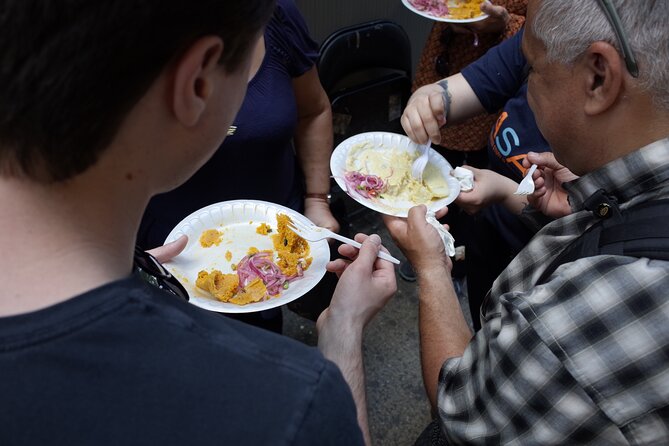
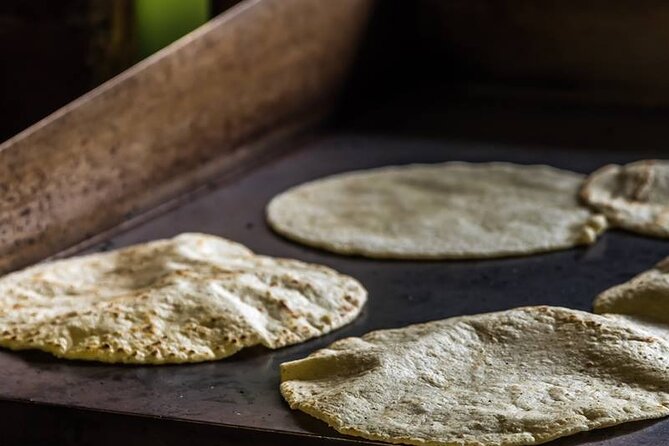
Large trays hold sweet breakfast pastries and rolls, and you choose what you want. That small act gives the stop some character. You are not just being handed a sample. You are seeing how customers approach the bakery and how a weekend breakfast purchase becomes part of neighborhood routine.
The bakery stop is especially useful for anyone unfamiliar with Mexican pan dulce. Your guide can connect the shapes, textures, and names of the breads to the wider food culture. The experience is still casual, but the explanation gives purpose to what might otherwise be just a quick pastry stop.
This is one of the tour’s sweeter openings, so pace yourself. Breakfast is followed by a much more substantial meal. If you tend to fill up quickly on bread, take modest portions at the bakery and save room for the goat.
Pit-roasted goat with neighborhood families
The second Corona stop shifts from bakery counter to sit-down meal. You visit an out-of-the-way place for Mexican-style brunch centered on pit-roasted goat, a hearty dish with more weight and substance than the opening pastries.
This is the point where the tour begins to feel like a meal rather than a series of nibbles. You sit down with neighborhood families, and the food gives the guide a chance to explain a preparation that is tied to Mexican cooking traditions. The contrast with the bakery is important: first you see a familiar morning purchase, then you encounter a dish that may be new to many people from outside the area.
I would rate this stop as one of the strongest reasons to book. A goat brunch is not the standard New York food-tour offering, and the meal gives the itinerary a savory anchor. It also helps answer the common question of what makes Queens different from a restaurant district in Manhattan. Here, the food comes with a sense of place and community.
The information does not specify every component served with the goat, so you should not expect a fixed list of sides beyond the stated meal. If you have dietary restrictions, ask before booking. The tour includes breakfast, lunch, snacks, and soda or pop, but it does not promise a custom menu.
Roosevelt Avenue and the flavors of Latin America
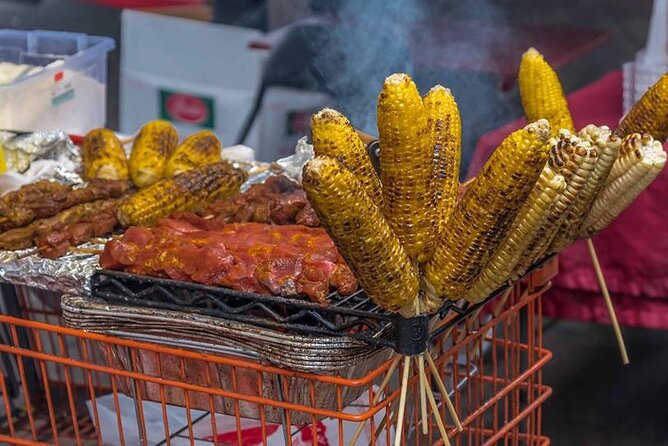
The tour then continues toward Jackson Heights along Roosevelt Avenue. On weekends, the avenue fills with street vendors representing different parts of Latin America, making this portion less about one restaurant and more about the range of food traditions gathered along one route.
You may see preparations that reflect several countries, and the guide’s role is important here. Past feedback highlights the value of learning which communities and cuisines you are encountering, rather than treating every dish as a generic Latin American sample.
One useful point for you: pay attention to the country labels and ask questions as the tour moves along. One participant wished the food had been identified more clearly by country, especially since the experience included several national traditions. That is a fair suggestion, and it also tells you how to get more from the walk. Ask where a dish comes from, how it is usually eaten, and why this particular neighborhood sells it.
The route’s street-food setting can also affect the rhythm. You are walking between stops and eating in places that serve local customers. That is part of the appeal, but it means this is not a polished restaurant tasting with a quiet table at every stop.
Another side of New York City for the same day:
- NYC: SUMMIT One Vanderbilt Tickets
★ 4.7 · 51,195 reviews - NYC: 9/11 Memorial & Museum Timed-Entry Ticket
★ 4.8 · 31,428 reviews - NYC: Empire State Building Tickets – Observatory & Museum
★ 4.7 · 25,757 reviews - New York City: Statue of Liberty & Ellis Island with Ferry
★ 4.6 · 18,683 reviews
Argentine pastries and the Colombian snow cone
The sweet course continues at an Argentine corner bakery. This adds a new national tradition to the route and keeps the food from becoming a single-country tour.
The bakery treats should appeal to anyone who likes pastries, but this is also where the tour’s balance becomes important. The experience includes several baked goods, and one critical assessment found the overall food selection too focused on bread and pastries. If you are booking mainly for savory dishes, keep that in mind.
The next sweet stop is a cholado, a Colombian dessert that combines shaved ice and fruit salad. It is also known as the Colombian Snow Cone. This is a fun change in texture and temperature, and it gives the tour something more refreshing after the earlier baked goods and goat brunch.
I like the way the cholado broadens the menu. It is not simply another pastry with a different name. You get fruit, ice, and a dessert format linked to Colombia. Still, the tour is designed around tasting several small portions, not eating a full meal at every stop. The amount is described by one participant as generous but manageable, with enough food to satisfy without making the walking difficult.
The Veracruz bodega and shrimp cocktail finale
The final food stop takes you to a small bodega opened by a man from Veracruz, Mexico. Here, you go inside for a celebratory shrimp cocktail.
That closing dish gives the tour a welcome savory finish after the pastries and cholado. It also returns you to Mexican food, but through a different regional connection. Veracruz is known for a strong seafood tradition, and the shrimp cocktail makes a fitting final taste for a tour that has moved through several countries and food styles.
The bodega stop is modest by design. You are not finishing in a grand dining room. Instead, you are visiting a small business connected to the owner’s background and the neighborhood’s immigrant character. Guides such as Sierra are praised for their personal connections with business owners, and that kind of relationship can make a short stop feel more meaningful.
The route description places the last stop at the edge of Jackson Heights and Elmhurst, two neighborhoods with much more food to explore. The meeting details state that the activity ends back at the meeting point, so check the day’s return arrangement with the operator if the endpoint matters to your plans.
What the four hours are really worth
The $95 price makes the most sense if you value explanation, access to small businesses, and a meal-sized series of tastings rather than a simple list of snacks.
The included food covers breakfast, lunch, snacks, and soda or pop. The listed tastings include Mexican bakery items, pit-roasted goat, Argentine sweets, Colombian cholado, and a shrimp cocktail. That is a solid amount of food for a half-day, especially when the guide adds stories about the neighborhoods and the people serving the food.
The price is less compelling if you judge a food tour strictly by the number of large entrees or beverages. One participant wanted more soups, cheese, main courses, and drinks, and felt the food value did not match the cost. That criticism is worth taking seriously. You are buying a guided cultural walk with food, not a four-hour succession of full restaurant meals.
The strongest value comes from the range of settings and the small group. You get a bakery, a sit-down goat meal, weekend street vendors, another bakery, a dessert stop, and a bodega. The guide helps connect these places, so the route has a clear purpose instead of feeling like random grazing.
With a 4.9 rating and a 98 percent recommendation rate from 48 reviews, the experience has a strong record. The praise centers on the guides, the food and culture connection, the variety of countries represented, and the comfortable pacing. The main weakness raised is the balance between pastries and more substantial savory food.
Guide quality and the pace of the walk
The guide can make or break a food tour, and Sierra receives especially strong praise for her preparation, local connections, and ability to explain both food and neighborhood culture.
Descriptions of her guiding point to a tour that goes beyond naming dishes. You can expect stories, historical context, explanations of cultural differences, and attention to the businesses visited. That matters in Queens, where the value is not just tasting food but understanding why so many traditions meet within a short walk.
The pacing also appears carefully judged. The tour lasts about four hours, but it is not described as an exhausting eating contest. You walk between stops, sit down for the goat meal, and make several shorter tasting visits. One particularly useful detail is that the portions were considered plentiful without leaving the person too full to continue walking.
Rain is a practical concern. The experience requires good weather, and poor conditions can lead to a different date or a full refund. Wear comfortable shoes and arrive ready to spend much of the morning moving through neighborhood streets.
Who should book this Queens food tour
I would recommend this experience to you if you want:
- A small group rather than a large Manhattan-style food walk
- A food-focused reason to visit Corona and Jackson Heights
- Mexican, Argentine, Colombian, and other Latin American tastes in one morning
- A guide who explains community connections along with the food
- A tour with both sweet and savory stops
- A local-feeling experience that uses family businesses and street vendors
It is also a good choice for repeat New York visitors. You do not need another pass by the usual Midtown sights, and the route offers a different view of the city through food.
Locals can also find value here. The tour provides a structured way to learn about neighborhoods that may be close by but unfamiliar. One Brooklyn resident found the experience worthwhile, which suggests the content is not limited to first-time New York visitors.
I would be more cautious if you want a seafood-heavy tour, a restaurant tasting with several full entrees, or a drink-centered food experience. The food includes soda or pop, but the focus is clearly on dishes, pastries, desserts, and neighborhood stories. You should also be comfortable with a four-hour outing and food from several cuisines.
Booking details worth keeping in mind
The experience is offered in English and uses a mobile ticket. It is near public transportation, and most people can participate.
The group maximum is seven people. That limit is unusually useful for a walking food tour because the group can stay together and the guide can speak with everyone. It also means dates may fill earlier than a large-group excursion. The experience is booked an average of 26 days ahead, so I would not leave it until the last morning of your New York trip.
Cancellation is free up to 24 hours before the start time for a full refund. Changes or cancellations made less than 24 hours before the start are not accepted or refunded. The operator may also offer another date or a full refund if bad weather or an insufficient minimum group causes cancellation.
Should you book the Corona Culinary Essentials Tour?
Yes, if your priority is an informed, small-group introduction to Queens through local food. The goat brunch, Colombian cholado, Argentine bakery, and Veracruz-style shrimp cocktail give the route real personality, while guides such as Sierra add the context that turns separate tastings into one coherent morning.
Book with realistic expectations. You will eat well, but part of the menu leans toward bread and pastries, and the tour does not promise a long list of full entrees or alcoholic drinks. At $95, the value is strongest when you count the guide’s time, the four-hour route, the number of stops, and the chance to meet Corona and Jackson Heights through businesses that feel connected to the communities they serve.
FAQ
Where does the tour start?
The tour starts at Corona Plaza, 40-04 National Street, Corona, New York 11368.
Where does the tour end?
The meeting details state that the activity ends back at the meeting point.
How long does the tour last?
The tour lasts approximately four hours.
What time does the tour begin?
There are two morning start times available. The specific options are provided when you book.
How many people can join the tour?
The tour has a maximum of seven travelers.
What food is included?
Included food consists of breakfast, lunch, snacks, and soda or pop. The route includes Mexican pastries, pit-roasted goat, Argentine treats, Colombian cholado, and a shrimp cocktail.
Is transportation included?
Private transportation is not included. The tour takes place on foot and is near public transportation.
Is the tour offered in English?
Yes. The experience is offered in English.
Can I cancel for a full refund?
Yes. You can cancel at least 24 hours before the start time for a full refund.
What happens if the weather is poor?
The experience requires good weather. If it is canceled because of poor weather, you will be offered a different date or a full refund.
Just listed around New York City
- NYC: Little Shop of Horrors Off-Broadway Ticket5 reviews
- Private NYC Airport Transfer: LGA to Manhattan – Up to 5★ 3.6 · 5 reviews
- New York City Tour in German★ 4.5 · 5 reviews
- New York: Hamilton and Washington Revolutionary Walking Tour★ 5.0 · 5 reviews
- NYC Freedom Tower Private Photo or Video Experience★ 4.0 · 6 reviews
- New York Afternoon Fall Foliage Cruise with Lunch★ 5.0 · 6 reviews
- Brooklyn Walking Tours by Locals: Private & 100% Personalized★ 4.0 · 6 reviews
- Southold Bay Oyster Farm Tour★ 5.0 · 6 reviews
Bronx & Queens Tours, compared.

NYC Bus Tour of Brooklyn, Bronx, Queens: Art, Food & Sports
Read our review →
NYC Highlights Tour: Bronx, Brooklyn, Harlem, Queens & Coney
Read our review →
Contrasts Tour of Harlem, The Bronx, Queens & Brooklyn
Read our review →
Contrasts of Bronx, Queens, Brooklyn, & Manhattan Tour
Read our review →

Browse the lists this tour appears in