
Reviewed · CENTRAL PARK TOURS
Secret Places of Central Park
Central Park’s northern end feels like a different city. On this 2.5-hour walk, you leave behind the famous lawns and busy paths for waterfalls, stone arches, old forts, wooded trails, and quiet water. Guide Bruce Rocand adds the park’s backstory, so the scenery never feels like a random walk in the woods.
I like the way this tour reaches The Ravine and the Loch, two parts of Central Park many first-time visitors miss. I also like the small-group format, capped at about 15 people, which gives Bruce room to answer questions and use maps and old pictures as he explains the park.
The main consideration is the walking. The route covers about 3.25 miles over rocks, mulch, unpaved paths, uneven steps, and short hills. Some spots may be slippery, and rain or snow does not automatically stop the tour, so shoes and weather gear matter.
In This Review
- Key points to know before you book
- Why northern Central Park feels so far from Manhattan
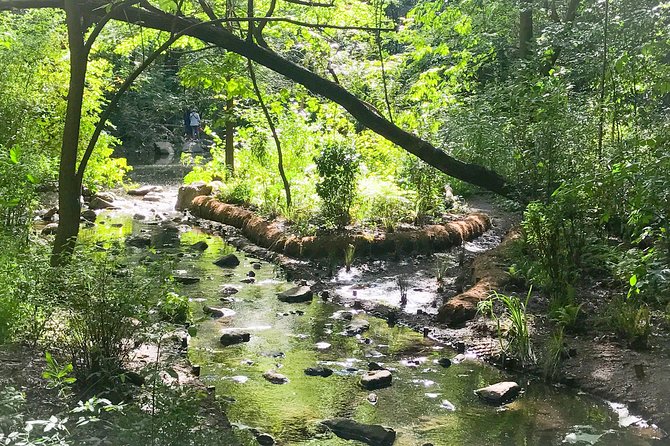
- The Pool and the quiet Grotto waterfall
- Glen Span Arch, a stone gateway from the 1860s
- The Ravine and the North Woods
- Harlem Meer and the old fortifications
- Walking beside the Loch
- Conservatory Garden’s French, English, and Italian styles
- Andrew Haswell Green and the final five minutes
- What Bruce adds to the experience
- Is $52.95 a fair price?
- Weather, clothing, and physical effort
- Who should choose this Central Park walk?
- Should you book Secret Places of Central Park?
- FAQ
- Where does the Secret Places of Central Park tour begin?
- Where does the tour end?
- How long is the tour?
- How far do you walk?
- What language is the tour offered in?
- How large is the group?
- What should I wear?
- Is the tour suitable for children?
- Can I cancel for a refund?
Key points to know before you book
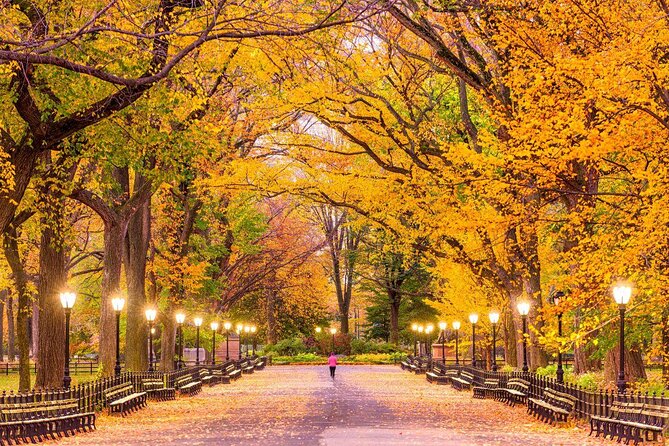
- The North Woods is the star: Waterfalls, rustic bridges, trees, birds, and the Loch create a calm break from Midtown’s noise.
- Bruce Rocand leads the walk: His talks cover park design, New York history, military sites, and people who shaped the city.
- The route is active: Expect 3.25 miles, uneven ground, short steep slopes, and potentially slippery sections.
- You see more than one kind of Central Park: The walk includes a waterfall, an 1860s arch, a War of 1812 fort, formal gardens, and a historic bench.
- The group stays small: The tour is limited to roughly 15 people, with some tour information listing a limit of 16.
- The price buys interpretation, not admission: At $52.95 per person, the value comes from access to lesser-seen areas and a guide who ties them together.
Why northern Central Park feels so far from Manhattan
Most people picture Central Park through Bethesda Terrace, the Mall, or the lake near Fifth Avenue. Those are worthwhile, but the northern end offers a quieter and more surprising experience.
The tour begins at 405 Central Park West, near public transportation, and heads toward The Pool. From there, the route moves into the park’s upper reaches, where the paths become less formal and the scenery feels more rugged. You still have New York around you, but the city noise fades behind trees and stonework.
That contrast is the point. The park was designed as an escape from the crowded city, and this route lets you feel that original idea. Bruce explains why the park was built, who designed it, when the work took place, and how engineers shaped what looks like natural countryside.
The setting is not untouched wilderness. Central Park is a carefully made public park, and its waterfalls, streams, bridges, rocky slopes, and woodlands were planned. That fact gives the tour extra interest. You are not simply walking through attractive scenery. You are seeing how people created the illusion of a rural retreat in the middle of Manhattan.
More Central Park tours:
- Central Park Pedicab Guided Tours
★ 5.0 · 7,108 reviews - Private Central Park Pedicab Tour
★ 5.0 · 6,981 reviews - NYC: Central Park Bike Rentals
★ 4.2 · 2,528 reviews
The Pool and the quiet Grotto waterfall
The first stop is The Pool, a body of water surrounded by rolling paths and trees. It is a gentle opening to the walk, with enough room for Bruce to explain the broad story of Central Park before the route becomes more rugged.
The nearby Grotto waterfall is one of the tour’s more unusual early stops. Bruce explains its purpose and how it fits into the park’s design. This is the kind of place that can be easy to pass without context. A guide helps you notice the relationship between water, rocks, paths, and planted areas.
Allow about 30 minutes here. That is useful because the stop is not just a quick photograph. You get the park’s basic story first, then see how that story appears in physical form.
The drawback is that water levels and access can vary with weather and park conditions. Some locations may be closed or hard to reach, so the exact experience can change on a wet, snowy, or otherwise difficult day.
Glen Span Arch, a stone gateway from the 1860s
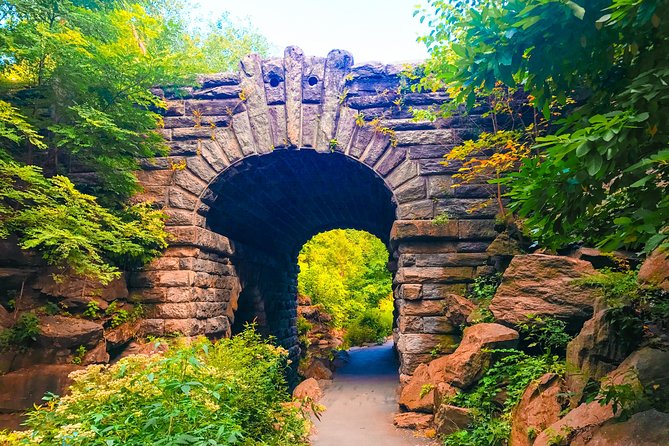
After The Pool, the route reaches Glen Span Arch. Built in the 1860s, this tall stone passage gives the walk a strong change of mood.
An arch can seem ordinary when you approach it from one side. Passing through it is different. The stone frames the trees and rising ground beyond, creating a sudden view that feels more dramatic than the city setting suggests.
The stop takes about 15 minutes, so it is brief but well placed. You are not spending half an hour on a single structure. Instead, the arch acts as a transition from the water and open paths into the North Woods.
Bring a camera if you enjoy architectural details, but do not expect a major monument with a long viewing platform or formal exhibit. Its appeal lies in the way it works with the path and scenery.
The Ravine and the North Woods
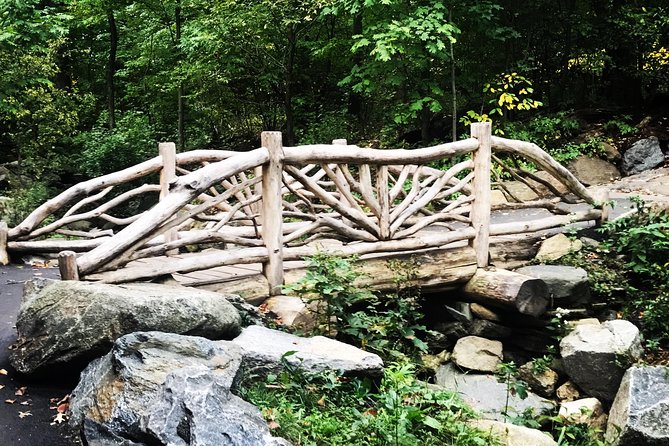
The Ravine is likely the most memorable part of the walk. This section uses Adirondack-style scenery, with trees, rocky ground, rustic bridges, and a waterfall. The setting was made by people, but it is designed to feel like a mountain retreat.
Bruce allows about 30 minutes here. That gives you time to notice the sounds as well as the sights. The route may feel hushed compared with the southern park, and the presence of birds adds to the sense of distance from city traffic.
This is also where the walking conditions become most important. The North Woods includes dirt and mulch, rocks, uneven stairs, and short hills. You should be in moderate physical shape and comfortable walking for several hours. Sneakers with a solid sole are a better choice than smooth city shoes.
The tour is not a nature hike in the wilderness. You are still in a public park, and the paths are part of a planned route. But the tree cover and rustic structures create one of the strongest changes of atmosphere in Central Park.
Another side of New York City for the same day:
- NYC: SUMMIT One Vanderbilt Tickets
★ 4.7 · 51,195 reviews - NYC: 9/11 Memorial & Museum Timed-Entry Ticket
★ 4.8 · 31,428 reviews - NYC: Empire State Building Tickets – Observatory & Museum
★ 4.7 · 25,757 reviews - New York City: Statue of Liberty & Ellis Island with Ferry
★ 4.6 · 18,683 reviews
Harlem Meer and the old fortifications
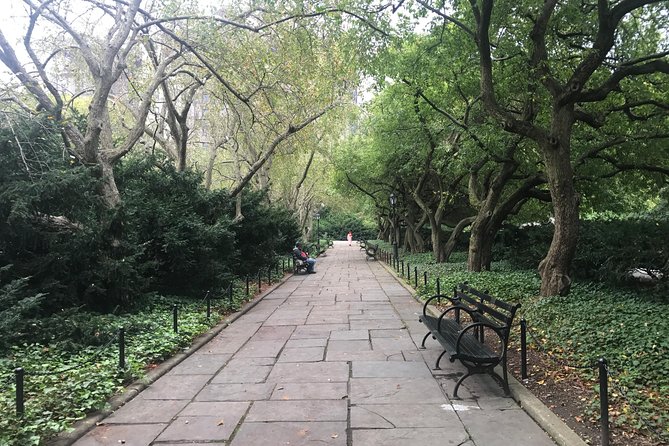
Harlem Meer gives you a different view of the upper park. The route stops for about 10 minutes, including a view of the water from one of the forts.
The word fort matters here. Central Park is usually associated with recreation, art, and scenery, but the northern section also contains military history. The next stop, The Blockhouse, is a War of 1812 fortification.
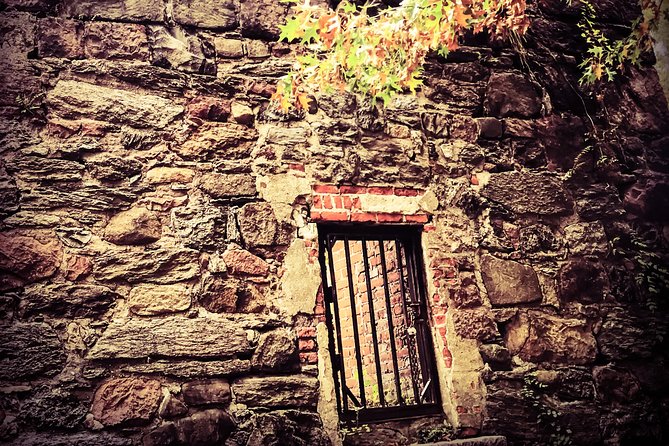
The Blockhouse visit takes about 10 minutes. It is a compact reminder that this part of Manhattan had strategic importance before Central Park was built. Bruce connects the structure to New York’s wider past, giving the walk more range than a standard park tour.
Do not expect to spend a long time inside a museum or a fully staged historical site. The value comes from seeing the fortification in place and hearing why it matters. If military history interests you, this part may be especially rewarding. If you mainly want gardens and waterfalls, it remains a short but useful change of pace.
Walking beside the Loch
The Loch is one of the tour’s longest stops, with about 30 minutes along the water. This is a good place to slow down after the more uneven sections of the North Woods.
The water, trees, bridges, and rocky edges give the area a rural feel. The route shows how Central Park’s designers used water to create distance and visual variety. You move from a waterfall and wooded paths to a longer stretch where the water itself becomes the focus.
This section should appeal to you if you want a quieter side of the park rather than a checklist of famous landmarks. It is also a strong reason to choose this tour over a general Central Park introduction. You get scenery that is easy to miss if you stay near the park’s central attractions.
The same practical warning applies here: damp ground, rocks, and uneven paths can make the walk harder than the distance alone suggests. Wear shoes that can handle wet or loose surfaces, and dress for conditions rather than for a formal sightseeing outing.
Conservatory Garden’s French, English, and Italian styles
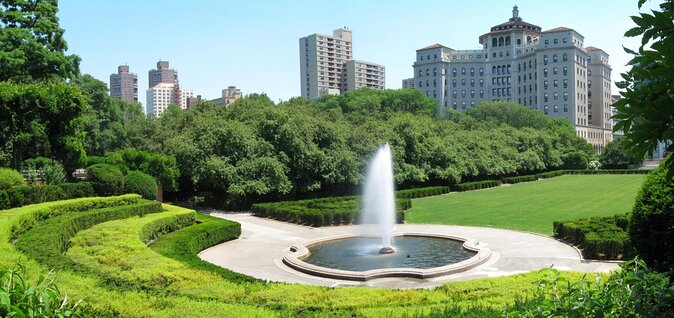
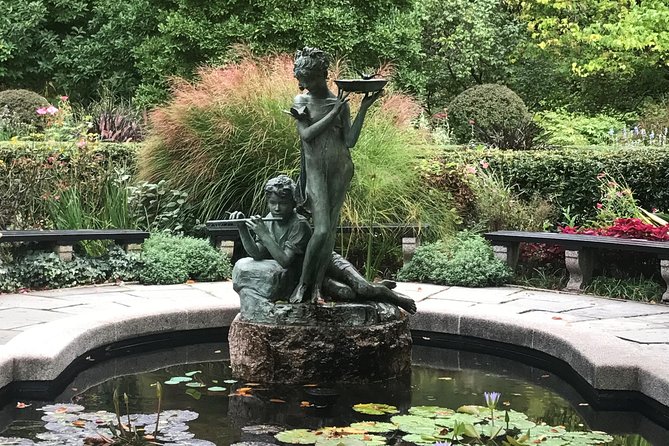
The tour then shifts from wooded scenery to formal design at Conservatory Garden. Over about 20 minutes, you see its French, English, and Italian gardens.
This stop gives the route a useful final act. The North Woods feels informal and rustic, while these gardens are ordered and decorative. Seeing both helps you understand the range of Central Park’s design rather than treating it as one uniform green space.
The three garden styles also make a good lesson in how public parks can serve different moods. You have water, rock, trees, and rough trails earlier. Here, the emphasis turns to formal planning and garden structure.
The timing is enough for an introduction and photographs, but not a long solo visit. If you want to study every planting or sit quietly in the gardens, return on your own later. The guided walk gives you the framework, then you can decide which area deserves more time.
Andrew Haswell Green and the final five minutes
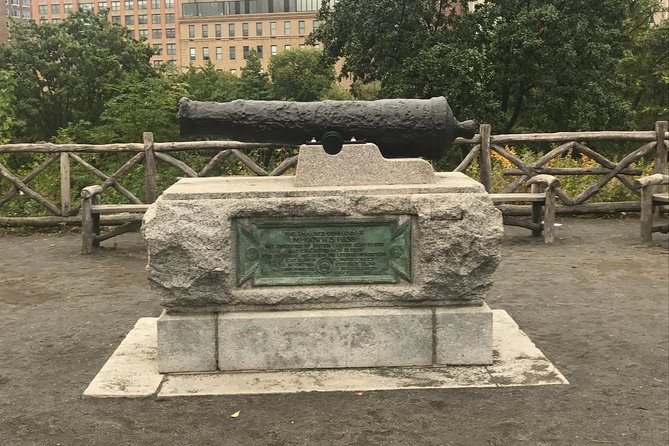
The last stop is the Andrew Haswell Green Bench, where Bruce talks about Green and his importance to New York. The stop lasts only about five minutes, but it adds a human story to the end of the route.
This is a fitting finish. Much of the walk asks you to look at stones, water, trees, arches, and gardens. The bench brings attention back to the people who planned and protected public spaces.
You may not know Andrew Haswell Green before the tour. That is part of the appeal. Bruce does not limit the discussion to the park’s best-known names. He also points toward people whose work affected New York in less obvious ways.
The tour ends back at the starting point. That makes the route easier to fit into a day of sightseeing, since you do not have to arrange a separate pickup or find your way from a distant final stop.
What Bruce adds to the experience
Bruce Rocand is the named guide associated with this experience, and his role is central. The walk depends on explanation because many of the places are subtle. A waterfall, arch, bench, or fortification can pass without much meaning if you do not know what you are seeing.
His approach includes park design, New York history, and visual aids. One account specifically notes that he used maps and historical pictures, which can help you compare the modern park with earlier plans and views.
The strongest praise focuses on his enthusiasm, clear explanations, friendly manner, and ability to keep adults and teenagers interested. That combination matters on a 2.5-hour walk. You need enough information to make the route meaningful, but not so much that every stop becomes a lecture.
The small group also helps. With a maximum of about 15 people, you should have a better chance to hear the guide and ask questions than on a large coach-style outing. The exact group can vary, but this is built as a personal walking experience rather than a mass tour.
Is $52.95 a fair price?
The cost is $52.95 per person. There are no separate admission charges for the park stops, so you are paying mainly for Bruce’s time, route planning, and interpretation.
I think the price is fair if you have already seen the central sights and want a more focused walk. The tour covers roughly 3.25 miles and includes several areas that are not on the usual first-visit route. You also get a connected story about how the park was built and how New York’s history appears in its northern section.
The value is less obvious if you want a short, easy stroll or prefer to explore alone. Central Park is free, and you can reach these areas without buying a ticket. The paid advantage is knowing where to go, understanding what you are seeing, and avoiding the time spent piecing together the route yourself.
The tour is booked an average of 32 days ahead, so popular dates may fill early. English is the only listed language, and mobile tickets make the booking process simple.
Weather, clothing, and physical effort
Tours operate in rain, snow, and sunshine. The policy is strict about cancellations or changes within 24 hours, so check the forecast before booking and do not assume light rain will cancel the outing.
If poor weather forces cancellation, you are offered another date or a full refund. A minimum number of participants is also required, and if that minimum is not met, you are offered another date, another experience, or a full refund.
Wear weather-ready clothing and sturdy shoes. You may encounter:
- Uneven and unpaved trails
- Rocks and mulch
- Short, steep hills
- Uneven stairs
- Slippery sections after wet weather
Children must be with an adult, and service animals are allowed. The tour is near public transportation, but the route itself requires steady walking. I would not choose it for a guest who needs smooth, level paths or frequent long breaks.
Free cancellation is available up to 24 hours before the start time for a full refund. Changes or cancellations inside that window are not accepted or refunded.
Who should choose this Central Park walk?
This tour suits you best if you have already seen some of Manhattan’s headline sights and want Central Park to feel less familiar. It is also a good pick for a first visit if you prefer trees, water, architecture, and stories over shopping or major museums.
Families can enjoy it, especially if older children or teenagers handle a few miles of walking. Couples and solo visitors may like the relaxed small-group setting, while New York residents can still find unfamiliar corners. One especially useful sign is that the route has surprised people who had spent years visiting or living near the park.
You may want a different option if you have limited mobility, want a very gentle pace, or only have one hour available. The route is not designed as a quick highlights loop. It spends time in the upper park, and getting there is part of the experience.
From December through February, the provider also offers a special Central Park Experience tour. Check the provider’s site for dates and departure times, since seasonal availability can differ.
Should you book Secret Places of Central Park?
Book it if you want to see the park’s northern woods, waterfalls, forts, arch, Loch, and formal gardens while learning how those places were planned. Bruce’s strong command of the subject and the small group make the $52.95 fee worthwhile for anyone who values context.
Skip it if uneven trails are a concern or if you mainly want famous Central Park landmarks such as Bethesda Terrace. For the right walker, though, this is a smart way to spend half a day in New York: active, thoughtful, and far removed from the city streets without ever leaving Manhattan.
FAQ
Where does the Secret Places of Central Park tour begin?
The tour begins at 405 Central Park West, New York, NY 10025, USA.
Where does the tour end?
The activity ends back at the meeting point.
How long is the tour?
The tour takes approximately 2 hours and 30 minutes.
How far do you walk?
The route is approximately 3.25 miles.
What language is the tour offered in?
The tour is offered in English.
How large is the group?
The tour has a maximum of about 15 travelers, while the tour details also describe the small group as limited to 16 people.
What should I wear?
Wear suitable shoes and clothing for uneven, unpaved, rocky, and potentially slippery paths. The tour operates in rain, snow, and sunshine.
Is the tour suitable for children?
Children must be accompanied by an adult. You should also consider the 3.25-mile route, short steep hills, uneven stairs, and other active walking conditions.
Can I cancel for a refund?
You can cancel up to 24 hours before the experience begins for a full refund. Cancellations or changes made less than 24 hours before the start time are not accepted or refunded.
Just listed around New York City
- NYC: Little Shop of Horrors Off-Broadway Ticket5 reviews
- Private NYC Airport Transfer: LGA to Manhattan – Up to 5★ 3.6 · 5 reviews
- New York City Tour in German★ 4.5 · 5 reviews
- New York: Hamilton and Washington Revolutionary Walking Tour★ 5.0 · 5 reviews
- NYC Freedom Tower Private Photo or Video Experience★ 4.0 · 6 reviews
- New York Afternoon Fall Foliage Cruise with Lunch★ 5.0 · 6 reviews
- Brooklyn Walking Tours by Locals: Private & 100% Personalized★ 4.0 · 6 reviews
- Southold Bay Oyster Farm Tour★ 5.0 · 6 reviews
Central Park Tours, compared.


Official NYC Horse Carriage Rides in Central Park since 1979 ™
Read our review →


Carriage Ride in Central Park (VIP – PRIVATE) Since 1964™
Read our review →
Browse the lists this tour appears in