
Reviewed · SOHO, LITTLE ITALY & CHINATOWN TOURS
SoHo, Little Italy, and Chinatown NYC Guided Walking Tour
New York’s downtown neighborhoods change block by block, and this walk gives you a useful lesson in how that happened. You’ll see the Woolworth Building, Brooklyn Bridge, Chinatown markets, Mulberry Street, and SoHo’s cast-iron façades in one compact route. Guides such as Gary, Liz, Garrett, Rose, Fred, and Jared bring different personalities to the walk, but the common thread is local history told at street level.
I like two things here: the route links three very different communities, and the small maximum of 15 people gives you a better chance to hear the guide and ask questions. I also like the optional food stops, especially Mosco Street dumplings and a cannoli in Little Italy. The main catch is pace: two hours covers a lot of ground, so this is a walking overview rather than a leisurely neighborhood wander.
In This Review
- Key points at a glance
- Why this downtown walk works
- Starting near City Hall and the Woolworth Building
- Newspaper Row and New York’s public life
- The Brooklyn Bridge from Manhattan
- Courthouses and the machinery of the city
- Chinatown, from markets to Mosco Street dumplings
- Canal Street’s noisy commercial energy
- Mulberry Street and the changing face of Little Italy
- A five-minute cannoli stop
- SoHo’s cast-iron streets and creative past
- The Haughwout Building and a surprising elevator fact
- Guides who shape the experience
- Walking distance, weather, and group size
- Who will get the most from this tour
- Should you book the SoHo, Little Italy, and Chinatown walk?
- FAQ
- How long does the walking tour last?
- Where does the tour start?
- Where does the tour end?
- Are food and drinks included?
- What neighborhoods does the tour visit?
- How large is the group?
- Can I cancel for a full refund?
Key points at a glance
- Three neighborhoods in one walk: See Chinatown, Little Italy, and SoHo without arranging separate visits.
- A useful downtown start: City Hall, Park Row, the courthouses, and the Brooklyn Bridge provide strong New York context before the food stops.
- Optional eating built into the route: Try dumplings and a cannoli, but bring money for food and drinks.
- Small group format: The tour accepts a maximum of 15 people, with some departures potentially feeling even more personal.
- Architecture with a story: The Woolworth Building and Haughwout Building make the walk more than a food-and-shopping stroll.
- About two miles of walking: Wear comfortable shoes and prepare for city sidewalks, weather, and a steady pace.
Why this downtown walk works
This is a good first look at lower Manhattan because it does not treat Chinatown, Little Italy, and SoHo as isolated attractions. You move through them in sequence and see how the city changes from civic buildings and old newspaper offices to immigrant businesses, restaurants, shops, galleries, and fashion stores.
The route also gives you more than famous street names. Your guide explains how immigrant communities shaped these blocks, how SoHo changed from an industrial district into a stylish shopping and art area, and why certain buildings matter. That context helps you read the city instead of simply photographing it.
At $36 per person, the value is strongest if you want orientation and local explanation in a short time. A two-hour private guide would cost much more, while this small-group walk gives you a structured route and a person who can point out details you could easily miss alone.
The price does not include food or drinks. That is both a benefit and a limitation. You control what you buy and how much you spend, but you should not confuse the tour price with a food tour package. Bring extra money if dumplings, pastries, or a drink are part of your plan.
More SoHo, Little Italy and Chinatown walks:
- SoHo, Little Italy, and Chinatown Walking Tour in New York
★ 5.0 · 3,153 reviews - NYC: Chinatown & Little Italy Food Tour with 7 Flavorful Tastings
★ 5.0 · 2,733 reviews - Original NYC Guided Food Tour of Chinatown and Little Italy
★ 5.0 · 2,194 reviews
Starting near City Hall and the Woolworth Building
The walk begins at City Hall in lower Manhattan. That location puts you near some of the city’s most important public buildings and gives the tour a strong sense of place from the first steps.
One early highlight is the view of the Woolworth Building. Once the tallest building in the world, it remains one of New York’s most recognizable towers. Your guide shares facts about its construction and place in the skyline, giving you a reason to look up before the route turns toward the older streets below.
This opening section is especially useful for first-time visitors. Instead of starting in a shopping district, you begin with civic New York and the architecture of ambition. The city’s skyline can feel random when you first arrive, but stories about buildings such as the Woolworth help put it in order.
Newspaper Row and New York’s public life
Park Row was once known as Newspaper Row, a fitting name for a street that played a major part in American journalism. The New York Times and New York Tribune once had offices here, making the area a center of reporting, printing, and public debate.
This is the kind of stop that can be easy to skip on your own. You may walk along Park Row focused on the next landmark, while the guide gives you a sense of how news shaped the city and how concentrated the newspaper business once was.
I like this part because it adds a working-city layer to the tour. New York is often presented through skyscrapers, restaurants, and famous neighborhoods. Newspaper Row reminds you that streets also gain importance from the people and institutions that use them every day.
The Brooklyn Bridge from Manhattan
The walk includes a view of the Brooklyn Bridge from the Manhattan side. Completed in 1883, the bridge connected Manhattan and Brooklyn and quickly became a major symbol of New York’s engineering skill and growth.
You are not taking a full Brooklyn Bridge crossing as part of this two-hour route. Instead, you pause for a strong photo opportunity and hear about the bridge’s construction and importance. That distinction matters if you hoped to spend time on the bridge walkway itself.
The view makes a natural transition in the route. You are looking at a structure that joins two boroughs, then continuing into neighborhoods shaped by migration, trade, and changing city life. Keep your camera ready, but listen for the details too. A guide can explain why the bridge mattered beyond its appearance.
More New York City walking tours:
- Secrets of Grand Central Station Walking Tour New York City
★ 5.0 · 1,796 reviews - Greenwich Village Walking and Food Tasting Tour
★ 5.0 · 1,572 reviews - Artistic, Alternative Greenwich Village Walking Tour
★ 5.0 · 971 reviews - True Crime NYC: Mafia Walk w/Ret. NYPD Detective and Local Food
★ 5.0 · 848 reviews
Courthouses and the machinery of the city
The next stretch passes several famous New York courthouses. These grand buildings have been connected with landmark legal cases and remain part of the city’s legal system.
You will not be attending a court proceeding or touring the interiors. The value is in seeing the buildings as part of downtown’s civic center and learning how law, journalism, government, and commerce once clustered in this part of Manhattan.
For me, this section helps balance the food and shopping stops later. You get a look at a more formal side of New York before entering the busy streets of Chinatown. It also gives the guide another way to explain how the city developed, block by block.
Chinatown, from markets to Mosco Street dumplings
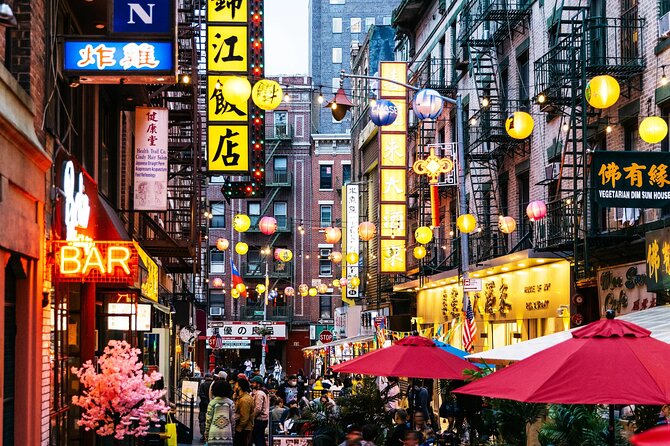
Chinatown is the first named neighborhood stop, with about 15 minutes set aside for the area. The route brings you into a district filled with markets, shops, signs, and layers of Chinese American history.
The guide explains how Chinatown became one of the largest Chinese communities in the world. That background matters because the neighborhood is not simply a collection of restaurants and souvenir stores. Its businesses, streets, and institutions reflect generations of community life.
Mosco Street is a food highlight. Your guide points out places known for dumplings, and you can stop to buy some at your own expense. This is one of the tour’s more useful features because a guide can direct you toward a local favorite instead of leaving you to choose at random.
Do not assume the food is included or that you will sit down for a full meal. The schedule keeps moving, and the food stops are optional. If you want to sample dumplings, cash may help, since one past participant specifically advised bringing it. You can also skip the purchase and stay with the group.
The Chinatown section is short, so you will not see every corner of the neighborhood. That is the tradeoff for covering three districts in two hours. Use the guide’s introduction to decide if you want to return later for a longer, independent visit.
Canal Street’s noisy commercial energy
From Chinatown, you walk along Canal Street. This is one of the city’s most active downtown corridors, known for crowded sidewalks, stands selling knock-off goods, and a constant mix of pedestrians and traffic.
Canal Street can feel loud and hectic, especially if you are still adjusting to New York. That is part of its character, but it is not a restful section of the walk. Stay close to the group and pay attention when crossing streets.
The stop also shows how quickly the neighborhood changes. A few blocks can take you from food markets and family businesses to Canal Street’s intense commercial activity. The guide helps make sense of that contrast and keeps the route from becoming a simple march between famous names.
Mulberry Street and the changing face of Little Italy
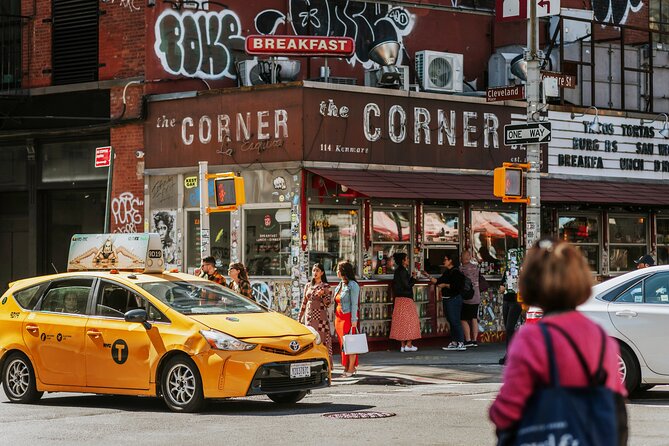
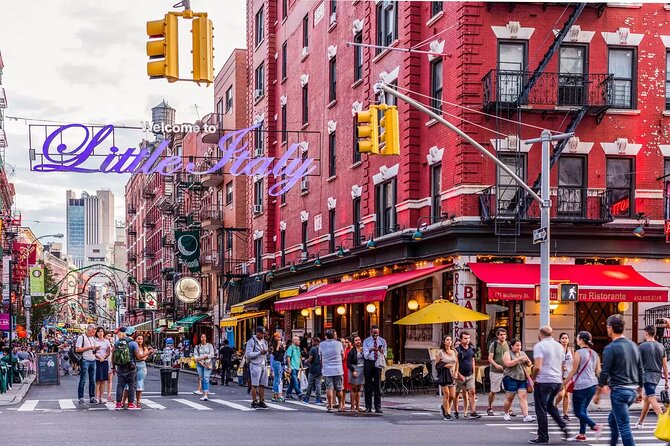
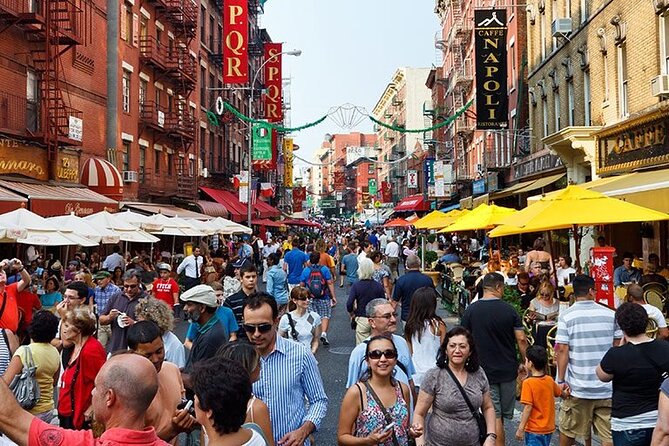
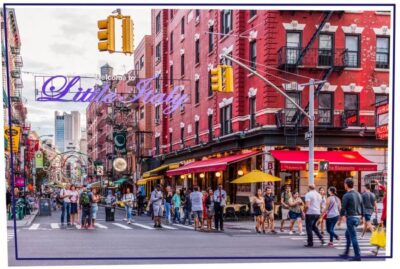
Little Italy centers on Mulberry Street, where Italian restaurants, shops, and decorations preserve the neighborhood’s identity. The guide talks about the Italian immigrants who made this area home and explains how Little Italy became a major cultural center.
The neighborhood is smaller than its historic reputation may suggest, and much of the original community has changed over time. That makes the guide’s explanation important. You get a clearer picture of Little Italy as a living neighborhood with an evolving identity, not just a restaurant strip designed for visitors.
A 15-minute stop does not leave much time for a long meal. It does give you a chance to look around, hear the story of the area, and decide if you want to return. One useful strategy is to save your appetite for a quick pastry here, then come back another day for lunch or dinner if the street catches your interest.
A five-minute cannoli stop
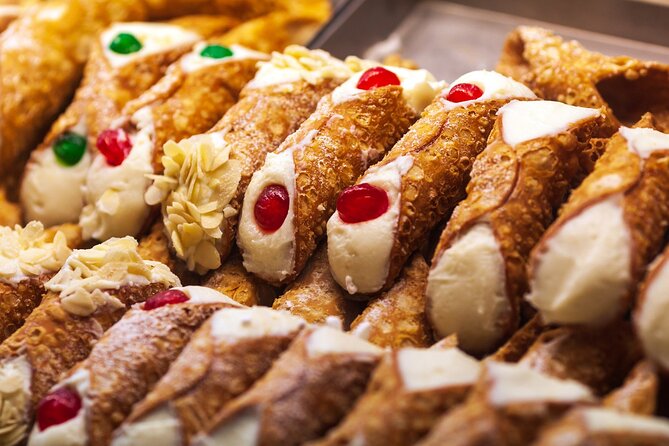
The route includes about five minutes at Cannoli King. You can buy a cannoli or another Italian pastry, but the cost is not covered by the tour.
Five minutes tells you exactly what to expect: this is a quick tasting opportunity, not a bakery visit with time to browse at leisure. If you have dietary restrictions, strong food preferences, or simply do not want dessert, you can treat the stop as a short pause while others order.
I like the way the optional purchase keeps the tour flexible. You are not forced to pay for food you may not want, and you can choose how much to spend. At the same time, anyone expecting several included tastings should adjust expectations. The guide points out food, but this is primarily a history and neighborhood walk.
SoHo’s cast-iron streets and creative past
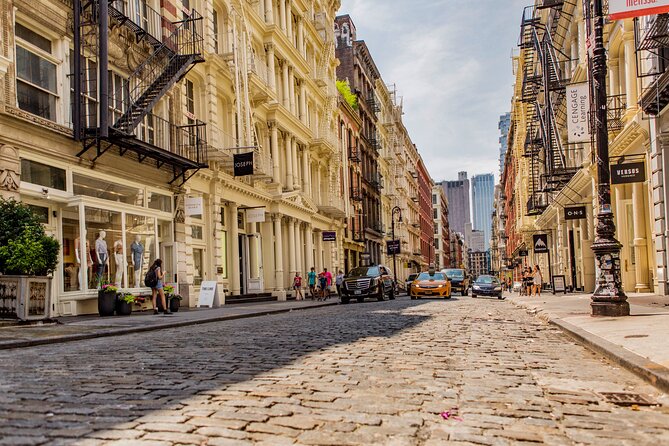
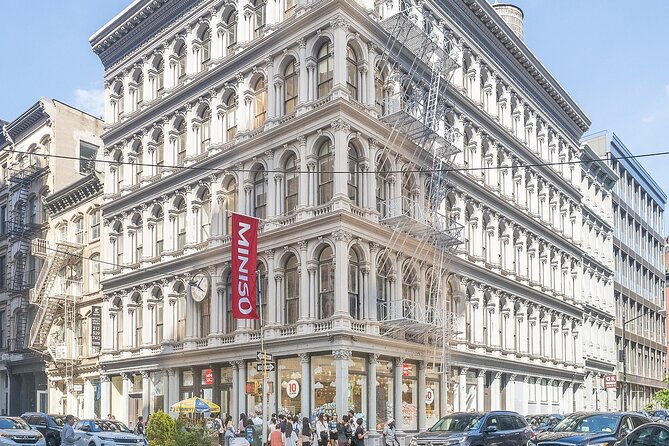
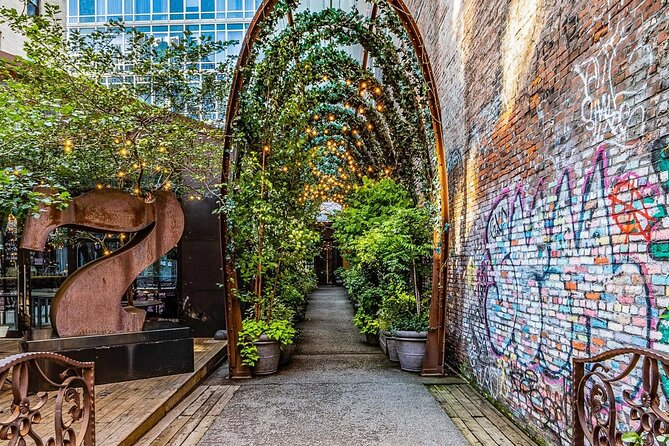
The final neighborhood is SoHo, known for cobblestone streets, cast-iron buildings, galleries, boutiques, and fashion stores. The guide explains how an industrial district changed into one of Manhattan’s most fashionable areas.
SoHo is easy to enjoy with your eyes alone, but the architectural story gives it more meaning. The old façades are not just attractive backdrops. They reflect an earlier commercial and manufacturing era, while the shops and galleries show how the district found a new role.
The SoHo stop lasts about 15 minutes, so you will get an introduction rather than a full shopping session. If you want to enter boutiques or galleries, plan to return after the tour. The walk is better for seeing the streets and learning the change in the neighborhood than for serious shopping.
The Haughwout Building and a surprising elevator fact
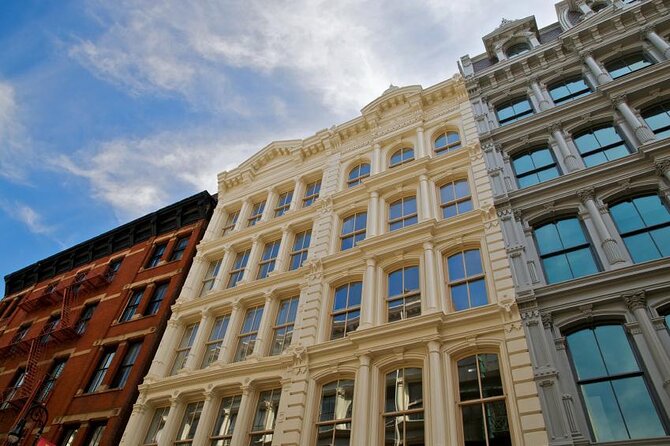
The Haughwout Building provides one of the tour’s best architectural details. This cast-iron landmark is associated with the world’s first passenger elevator.
That fact changes how you look at the building. A beautiful façade becomes part of the story of urban growth, commerce, and vertical living. Your guide can connect the building to SoHo’s wider transformation, giving the final stop a satisfying piece of engineering history.
The tour ends near the Museum of Ice Cream on Broadway. You are also near a subway station, so it is easy to continue exploring downtown or head elsewhere in New York. Your guide can offer directions or suggestions for what to do next.
Guides who shape the experience
The guide makes a noticeable difference on a walk like this. Gary is praised for keeping the group engaged, sharing personal experiences, and explaining the neighborhoods in a friendly way. Liz used photographs on an iPad to add visual context, and Garrett is especially strong on architecture, local characters, and amusing facts.
Rosemary and Rose are also noted for making the route informative and enjoyable, with Rose receiving particular credit for finding appealing snack stops. Fred is described as attentive to different ages and energy levels, including helping a group cope with extreme heat by using shade and encouraging hydration. Jared is known for humor and for making the walk work for both local residents and visitors.
Guide assignments can change, so you should not book on the assumption that one particular person will lead your departure. Still, these examples show the range of the guiding style you might encounter: historical explanation, personal stories, photos, humor, and practical care.
Most of the feedback is strongly positive, with a 4.9 rating from 443 ratings and 99 percent recommendation. One poor experience reported a rushed guide, a group that kept falling behind, and fewer food stops than expected. I would take that as a useful warning about pace and expectations, not a reason to ignore the tour. A small group and a guide who watches the whole party can make a big difference.
Walking distance, weather, and group size
The walk covers about two miles according to one participant, and the full two-hour duration includes walking time. That is manageable for most people who are comfortable walking in a city, but it is not a seated sightseeing experience.
Wear shoes suited to pavement and cobblestones. New York weather can change the feel of the tour quickly. Cold wind made one departure challenging, while another took place in intense heat. Bring layers in cold weather, water in hot weather, and rain protection when the forecast looks uncertain.
The maximum group size is 15. That is small enough for more direct contact with your guide than a large bus or crowded public tour. It does not guarantee a private experience, but the format should make questions easier and help you hear the stories at each stop.
The tour is offered in English and uses a mobile ticket. Service animals are allowed, and the meeting and ending points are near public transportation. Most people can participate, but you should judge the walking distance and city conditions for yourself.
Who will get the most from this tour
I would recommend this walk to first-time New York visitors who want a fast orientation to lower Manhattan. It also suits families, teenagers, couples, solo visitors, and even local residents who want historical details they have missed while passing through familiar streets.
It is a particularly good choice if your schedule is tight. The route gives you a useful introduction in two hours, leaving the rest of the day for museums, shopping, or a meal. The end point near Broadway and a subway station makes it easy to keep going.
You should choose something else if your main goal is a long food crawl, extensive shopping time, or a full Brooklyn Bridge crossing. You may also prefer a slower tour if you want to linger inside shops, order a complete meal, or explore each neighborhood in depth.
Book at least a day ahead if you want flexibility. The experience is booked an average of 22 days in advance, which suggests that popular dates can fill early. Free cancellation is available until 24 hours before the start time. Inside that window, you receive no refund and changes are not accepted.
Should you book the SoHo, Little Italy, and Chinatown walk?
Book it if you want history, architecture, and food pointers in one efficient downtown walk. The Woolworth Building, Newspaper Row, Brooklyn Bridge view, courthouses, Chinatown, Little Italy, SoHo, and Haughwout Building create a varied route that feels much broader than a single-neighborhood tour.
Go in with the right plan: bring comfortable shoes, carry some cash, and budget separately for dumplings, cannoli, and any drinks. Expect a steady walk with short neighborhood stops, not a relaxed afternoon of browsing.
At $36, the tour is a fair buy for orientation and local storytelling, especially with a group capped at 15. I would book it early in a New York visit, then use the guide’s suggestions to return to the neighborhood that interests you most.
FAQ
How long does the walking tour last?
The tour lasts approximately two hours, and that time includes walking between the stops.
Where does the tour start?
The tour starts at City Hall in New York, New York.
Where does the tour end?
The tour ends near the Museum of Ice Cream at 558 Broadway in Manhattan. The area is also near a subway station.
Are food and drinks included?
No. Food and drinks are not included. You can choose to buy dumplings in Chinatown and pastries or a cannoli at Cannoli King at your own expense.
What neighborhoods does the tour visit?
The route visits Chinatown, Little Italy, and SoHo. It also includes downtown sights such as the Woolworth Building, Park Row, the Brooklyn Bridge view, and New York courthouses.
How large is the group?
The tour has a maximum of 15 travelers.
Can I cancel for a full refund?
Yes. You can cancel at least 24 hours before the start time for a full refund. Cancellations or changes made less than 24 hours before the start time are not accepted, and the amount paid is not refunded.
Just listed around New York City
- NYC: Little Shop of Horrors Off-Broadway Ticket5 reviews
- Private NYC Airport Transfer: LGA to Manhattan – Up to 5★ 3.6 · 5 reviews
- New York City Tour in German★ 4.5 · 5 reviews
- New York: Hamilton and Washington Revolutionary Walking Tour★ 5.0 · 5 reviews
- NYC Freedom Tower Private Photo or Video Experience★ 4.0 · 6 reviews
- New York Afternoon Fall Foliage Cruise with Lunch★ 5.0 · 6 reviews
- Brooklyn Walking Tours by Locals: Private & 100% Personalized★ 4.0 · 6 reviews
- Southold Bay Oyster Farm Tour★ 5.0 · 6 reviews
SoHo, Little Italy & Chinatown Tours, compared.
SoHo, Little Italy, and Chinatown Walking Tour in New York
Read our review →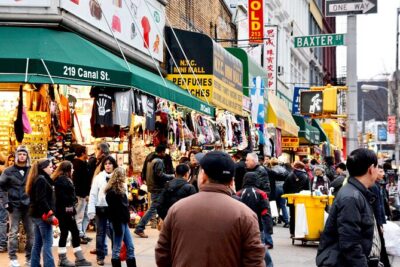
Chinatown & Little Italy Food Tour with 7 Flavorful Tastings
Read our review →
Original NYC Guided Food Tour of Chinatown and Little Italy
Read our review →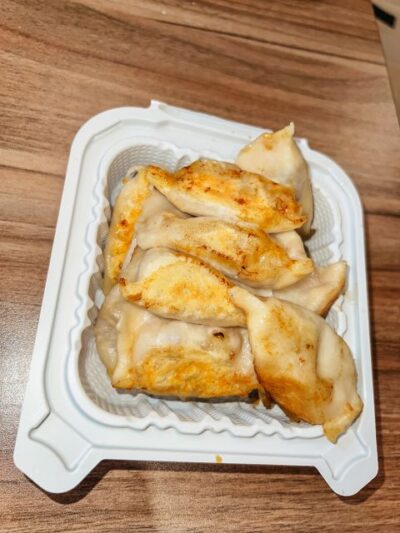
SoHo, Little Italy, and Chinatown 2-Hour Guided Walk
Read our review →
3 Neighborhoods Tour: Soho, Chinatown & Little Italy
Read our review →Browse the lists this tour appears in