
Reviewed · WORKSHOPS
Sushi Workshop for Home Chefs in NYC
New York has plenty of places to eat sushi, but this three-hour workshop lets you learn how the meal comes together. You will practice rolling and stuffing sushi, work on presentation, hear about Japanese food and culture, and then sit down to eat what you made.
I like two things right away: the class is useful beyond the afternoon, since you leave with cooking tips you can try at home, and it works well for a date night, birthday, or team event. The main consideration is that it is not fully hands-on at every stage, and the class does not appear to include a detailed sushi-rice demonstration.
In This Review
- Key points to know before booking
- What the three-hour sushi class is really about
- Arriving at 325 W 37th Street at noon
- Starting with Japanese food, culture, and technique
- Rolling, stuffing, and shaping the sushi
- Miso, tempura, and the meal beyond sushi
- The sushi-rice question
- Sitting down to eat what you made
- Is $120 a fair price in New York City?
- Who will enjoy this most?
- Practical details that can affect your choice
- Should you book the NYC sushi workshop?
- FAQ
- Where does the sushi workshop meet?
- What time does the class start?
- How long does the experience last?
- Where does the activity end?
- How much does the workshop cost?
- Is the workshop offered in English?
- How many people can join the class?
- Is public transportation available near the meeting point?
- Are service animals allowed?
- What happens if the experience is canceled because of poor weather?
- Can I cancel for a refund or change my booking?
Key points to know before booking
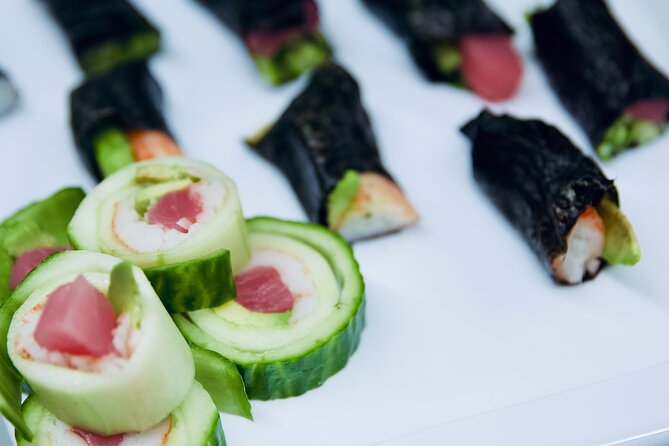
- You make and eat a multi-course Japanese meal: Sushi rolls are joined by dishes such as miso and tempura.
- The class is led by working chefs: Danny, Oliver, Chris, Armando, Paige, Edgar, Ashley, and others have been praised for clear instruction and a relaxed manner.
- You learn more than rolling technique: The session covers Japanese food culture, presentation, chopstick use, and practical kitchen tips.
- The class begins at noon: Meet at 325 W 37th St #12f in Midtown Manhattan, and return there at the end.
- The group can reach 20 people: That keeps the workshop social, though individual attention may vary.
- The price is $120 per person: The value depends on how much you want a meal plus instruction, rather than a standard restaurant lunch.
What the three-hour sushi class is really about
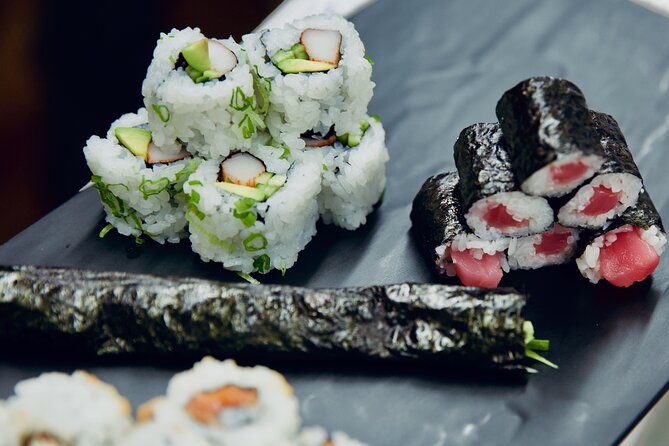
The heart of this experience is not simply eating raw fish. It is learning the small acts that make sushi look neat: handling ingredients with care, rolling with even pressure, filling without overloading, and arranging the finished food so it looks inviting.
That focus on patience matters. Sushi can look simple on a plate, but the technique is fussy. A roll that is too full will split. A loose roll will fall apart. Presentation also carries real weight in Japanese cooking, so you are taught to think about the finished plate, not only the food inside it.
The class is offered in English, which makes the instruction easy to follow for English-speaking participants. It is also designed for home cooks, so you do not need to arrive as a professional chef. The emphasis is on learning a new skill in a social setting.
This is best understood as a cooking class with a meal at the end, not as a formal sushi-making certification. You get practical guidance, kitchen stories, and a chance to practice. You should not expect every minute to involve your own knife, bowl, or rolling mat.
A few more New York City picks to weigh up
- NYC: Brooklyn Graffiti Workshop with Local Artist
★ 4.8 · 570 reviews - Ground Zero Museum Workshop Tour
★ 4.5 · 463 reviews - Brooklyn Graffiti Workshop
★ 5.0 · 287 reviews
Arriving at 325 W 37th Street at noon
The meeting point is 325 W 37th St #12f, in New York City. The experience begins at 12:00 pm and ends back at the same location after about three hours.
The address is near public transportation, which helps if you are coming from another part of Manhattan or from outside the neighborhood. Since the exact room is identified as number 12f, keep the full address handy on your phone and allow enough time to find the building and get upstairs.
A mobile ticket is accepted, and confirmation is sent when you book. That is useful for a midday appointment, especially if you are fitting the class between other New York plans.
The timing suits a relaxed lunch activity. You will not be rushing through a quick meal, and the class gives you a clear block of time for learning, preparing, and eating. Afterward, you can continue around Midtown without needing to cross the city to collect belongings.
Starting with Japanese food, culture, and technique
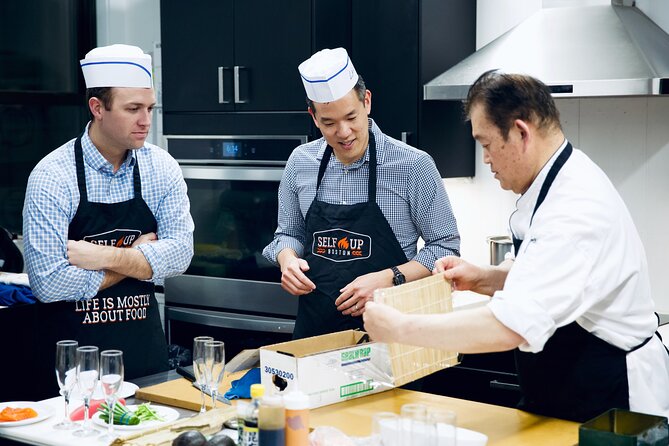
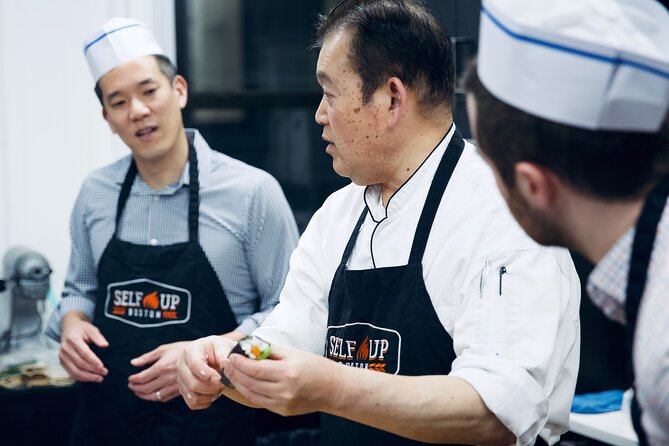
The class sets the food in context before asking you to copy a few motions. You learn about the origins of classic Japanese dishes and hear about Japanese cuisine and culture as the chefs guide the group.
That context adds value. Without it, sushi rolling can feel like a craft project. With it, you start to understand why restraint, clean lines, careful handling, and presentation matter so much in the meal.
The chefs also cover basic table manners and chopstick use. If chopsticks have always felt awkward, this is a low-pressure place to improve. The lesson is part of the experience rather than a separate lecture, so it should feel useful at the table later that day.
Several chefs have been singled out for being funny, welcoming, and clear. Names associated with the class include Danny, Oliver, Chris, Armando, Paige, Edgar, Ashley, and Chef T. The exact chef team can vary, but the teaching style appears to favor friendly instruction over a stern culinary-school approach.
Rolling, stuffing, and shaping the sushi
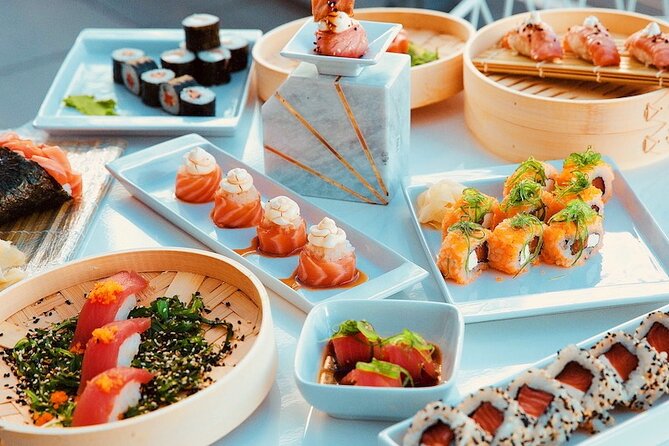
The most active part of the workshop centers on hand-rolling and stuffing sushi rolls. Here, patience is the key lesson. You need to place enough filling for flavor without making the roll too large to close.
This is the part where a chef’s correction can save you from frustration. A small adjustment in hand pressure or ingredient placement makes a major difference. You also get presentation advice, which helps you move from a messy first attempt toward something you can serve proudly at home.
The class is described as hands-on, but the amount of personal work may vary during different stages. One practical account of the experience found it less hands-on than a pasta-making class. That is worth keeping in mind if you want three straight hours of active cooking.
You will still make the main sushi components yourself, and that is enough to give the class a clear purpose. Just do not book it expecting an intensive chef’s course where you prepare every ingredient from the beginning.
Another side of New York City for the same day:
- NYC: SUMMIT One Vanderbilt Tickets
★ 4.7 · 51,195 reviews - NYC: 9/11 Memorial & Museum Timed-Entry Ticket
★ 4.8 · 31,428 reviews - NYC: Empire State Building Tickets – Observatory & Museum
★ 4.7 · 25,757 reviews - New York City: Statue of Liberty & Ellis Island with Ferry
★ 4.6 · 18,683 reviews
Miso, tempura, and the meal beyond sushi
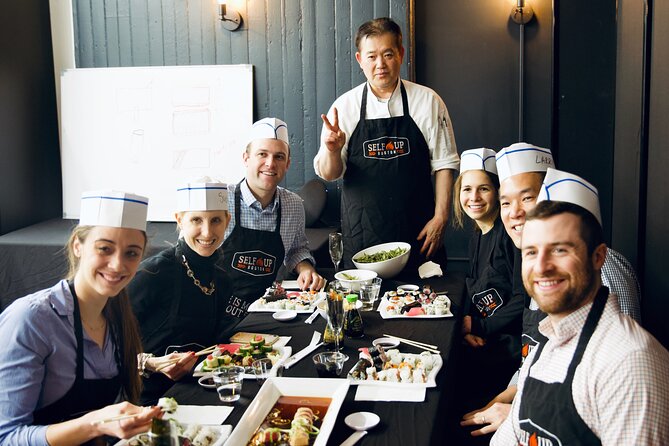
The workshop is multi-course rather than limited to rolls. Miso and tempura are included alongside the sushi work, giving you a wider look at a Japanese meal.
That variety is important for the price. You are not paying $120 simply to practice one roll and walk away. You get several dishes, instruction, cultural background, and time to eat the results.
Tempura also adds a useful contrast to sushi. Sushi calls for tidy handling and careful balance, while tempura introduces a different texture and cooking style. Miso brings another familiar part of Japanese dining to the table.
The available details do not provide a full menu or specify every type of fish, filling, or garnish. If you have strict dietary needs or want a particular kind of raw fish, ask before booking rather than assuming it will be included.
The sushi-rice question
Rice is the foundation of good sushi, so this is one place where expectations need care. A quick demonstration of making sushi rice would make the class more useful for home cooks, but that specific lesson is not clearly part of the experience.
You may still receive practical tips about the finished food, rolling, and kitchen technique. However, if your main goal is to learn seasoning, cooling, and shaping sushi rice from scratch, confirm that point before paying.
There is also a small practical note about the vinegar preparation. Boiling vinegar can produce a sharp smell that irritates the eyes. It is not a serious problem for most people, but anyone sensitive to strong kitchen fumes should be prepared for that moment.
These details do not ruin the workshop. They simply show that the class focuses more on making and enjoying a complete meal than on covering every technical stage in equal depth.
Sitting down to eat what you made
The reward comes at the end, when you sit down with the sushi and other dishes prepared during the class. This changes the mood from lesson to shared meal and gives the afternoon a satisfying finish.
Food made with your own hands often tastes better because you understand the work behind it. You notice the shape of the roll, the balance of the filling, and the difference between a neat piece and one that needs more practice.
The chefs also help keep the atmosphere social. The class has been praised for being funny, welcoming, and relaxed, which is valuable when people arrive with different cooking abilities.
A small cookie to take home adds a pleasant final touch. It is not a major part of the value, but it gives you a simple reminder of the afternoon after the sushi is gone.
Is $120 a fair price in New York City?
At $120 per person, this is not a bargain lunch. You can eat sushi in New York for less, especially if your only goal is a meal.
The price makes more sense if you want an activity as well as food. You are paying for roughly three hours, chef instruction, cultural information, several dishes, the chance to prepare sushi yourself, and a sit-down meal at the end.
For a date, the cost can compare well with dinner plus another paid activity. For a birthday gift, it offers more interaction than handing someone a restaurant voucher. For a work event, the class provides a shared task without requiring anyone to plan the menu or clean the kitchen.
The value is weaker if you already make sushi regularly or want highly technical instruction. It is also less compelling if one person in your group dislikes seafood or does not want to handle food.
The experience carries a 4.5 rating from 15 reviews, with repeated praise for the food, the chefs, and the relaxed teaching. That is a good sign, though the sample is small. I would treat it as a promising social cooking activity, not proof of a perfect class for every skill level.
Who will enjoy this most?
I would recommend the workshop to a beginner who likes Japanese food and wants a useful activity in Midtown. You do not need to know how to roll sushi before arriving, and the chefs aim to make the process simple.
It is also a good fit for couples. The format gives you something to do together, with the shared meal providing a natural finish. A birthday purchase for a partner or family member makes sense, especially if that person enjoys food more than sightseeing.
Work groups can benefit too. The class creates a common task and keeps the mood informal. Several chef teams have been praised for making the room feel comfortable, which matters when colleagues have different personalities and cooking confidence.
I would be more cautious about booking for a serious sushi hobbyist. If you already understand rice seasoning, knife work, rolling, and presentation, you may want a longer or more technical course.
People with seafood restrictions should also check the menu before booking. The experience is built around sushi, raw fish, nigiri, and sashimi, so it is not designed as a general Japanese cooking class with guaranteed alternatives.
Practical details that can affect your choice
The maximum group size is 20 people. That is small enough to feel like a class rather than a large tour, but it is still large enough that the chef may not be able to watch every hand movement at all times.
The class is offered in English. Service animals are allowed, and the location is near public transportation. Those details make the experience easier to plan, though the information provided does not describe the room layout or other accessibility features.
The activity requires good weather, and the minimum group size must be met. If poor weather causes cancellation, you are offered another date or a full refund. The same options apply if the minimum number is not reached.
Your own cancellation terms are strict: the experience is non-refundable and cannot be changed for any reason. Since it is commonly booked about 16 days ahead, reserve early if you need a particular date, but do not book until your schedule is firm.
Should you book the NYC sushi workshop?
Book it if you want a social food experience that ends with lunch, especially for a date, birthday, or work gathering. The strongest reasons are the friendly chef-led instruction, the chance to make your own rolls, and the useful lessons in presentation and Japanese dining.
Think twice if you want a fully technical course, a guaranteed sushi-rice lesson, or a detailed menu tailored to dietary needs. At $120, the experience earns its price through the activity and instruction, not through the food alone.
For a first step into homemade sushi, I think it is a sensible choice. You will leave with more confidence, a better sense of how sushi is assembled, and a meal you helped create.
FAQ
Where does the sushi workshop meet?
It meets at 325 W 37th St #12f, New York, NY 10018, USA.
What time does the class start?
The workshop starts at 12:00 pm.
How long does the experience last?
It lasts approximately three hours.
Where does the activity end?
The activity ends back at the meeting point.
How much does the workshop cost?
The price is $120 per person.
Is the workshop offered in English?
Yes, the experience is offered in English.
How many people can join the class?
The maximum group size is 20 people.
Is public transportation available near the meeting point?
Yes, the location is near public transportation.
Are service animals allowed?
Yes, service animals are allowed.
What happens if the experience is canceled because of poor weather?
You are offered a different date or a full refund.
Can I cancel for a refund or change my booking?
No. The experience is non-refundable and cannot be changed for any reason.
Just listed around New York City
- NYC: Little Shop of Horrors Off-Broadway Ticket5 reviews
- Private NYC Airport Transfer: LGA to Manhattan – Up to 5★ 3.6 · 5 reviews
- New York City Tour in German★ 4.5 · 5 reviews
- New York: Hamilton and Washington Revolutionary Walking Tour★ 5.0 · 5 reviews
- NYC Freedom Tower Private Photo or Video Experience★ 4.0 · 6 reviews
- New York Afternoon Fall Foliage Cruise with Lunch★ 5.0 · 6 reviews
- Brooklyn Walking Tours by Locals: Private & 100% Personalized★ 4.0 · 6 reviews
- Southold Bay Oyster Farm Tour★ 5.0 · 6 reviews
Workshops, compared.


Central Park: Highest Rated Yoga Class in New York City!
Read our review →
Bagel-Making Workshop with an Award-Winning Baker
Read our review →
First Class Central Park Tour – Iconic Views & VIP Photo Moments
Read our review →
New York Photography Masterclass – Private Photography Lesson
Read our review →Browse the lists this tour appears in