Reviewed · TOURS
AIANY Climate Change Tour in New York
New York’s waterfront becomes the classroom on this nearly three-hour cruise. An AIANY architect guide explains how rising water, stronger storms, flood walls, parks, buildings, and renewable energy projects are changing the city. I like the thoughtful route around Manhattan and the chance to see the harbor from a comfortable, smaller boat.
I also like the assigned table seating, one complimentary drink, and the chance to ask questions during the narration. The main drawback is just as clear: this is a heavily narrated, content-focused tour, not a quiet sightseeing cruise. At $113.23, it makes the most sense if you want ideas and context, not only skyline photos.
In This Review
- Key points to know before booking
- Why this cruise looks at New York from the water
- Leaving Chelsea Piers on a comfortable boat
- The Hudson waterfront, flood defenses, and renewable energy
- Statue of Liberty and Ellis Island from the harbor
- The United Nations and Roosevelt Island on the East River
- East River Park and the hard choices behind resiliency
- Inwood, Spuyten Duyvil, and the uncertain Manhattan loop
- Riverside Park and the return along the Hudson
- What $113.23 gets you
- Who should book this cruise
- Practical advice for a better outing
- Should you book the AIANY Climate Change Tour?
- FAQ
- Where does the AIANY Climate Change Tour begin and end?
- How long does the cruise last?
- What is included in the price?
- Can I bring food or buy food on board?
- Is the full circumnavigation of Manhattan guaranteed?
- Is the cruise suitable for children and pets?
Key points to know before booking
- Climate change shapes the whole tour: You’ll see post-Superstorm Sandy flood measures, green buildings, sustainable parks, recycling facilities, and renewable energy sites.
- The route circles Manhattan: The cruise passes the Statue of Liberty, Ellis Island, Roosevelt Island, the United Nations, Inwood, Riverside Park, and East River Park.
- Architecture guides lead the narration: The commentary comes from a member of the American Institute of Architects New York Chapter. Doug has led departures and is especially strong on architecture and climate issues.
- Your seat is assigned: Choose a private section or communal section at checkout, with elegant tables rather than open ferry-style seating.
- A drink is included: Food and extra drinks are available for purchase, but you should bring only a light snack if you bring your own food.
- The full loop is not guaranteed: An inoperable Spuyten Duyvil train bridge or a river closure can prevent the boat from completing the circumnavigation.
Why this cruise looks at New York from the water
Most New York sightseeing cruises point out famous buildings and let the skyline do the work. This one asks a different question: how can a coastal city protect itself while still growing?
That shift gives the cruise a clear purpose. You are not simply passing a waterfront park. You are hearing why the park may be rebuilt, how flood protection affects public space, and what storm damage taught the city. You are not simply looking at a new building. You are considering how design, energy use, and water levels shape its future.
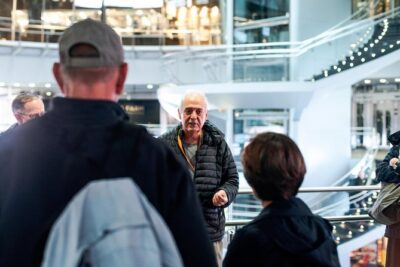
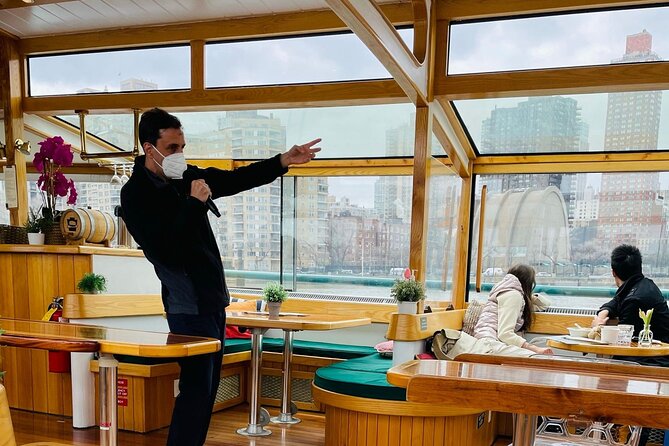
The guide comes from the American Institute of Architects New York Chapter, so the commentary has an architectural and planning focus. Doug, one of the named guides associated with the experience, has a background that lets him connect visible details to larger climate questions. You can ask questions during the trip, which is useful when a project looks ordinary from the water but has a complicated purpose.
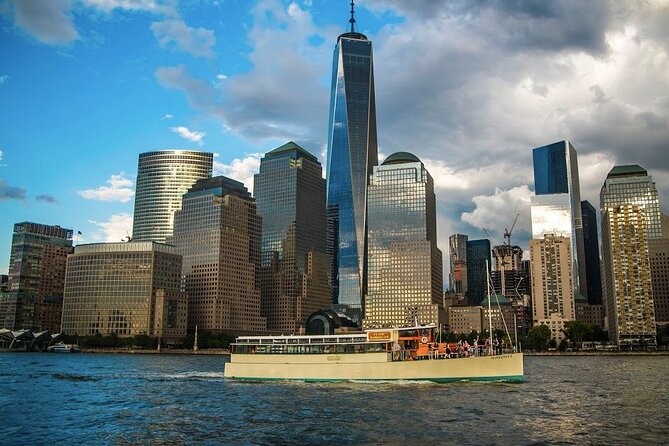
The boat carries a maximum of 80 people, though some departures may feel much smaller. One account describes an intimate group of about 30 passengers, with calm, friendly service from the staff and crew. That smaller-boat feel matters here. A lecture is easier to follow when the setting is comfortable and the narration does not have to compete with a huge crowd.
Big New York City bookings that pair well with this one:
- NYC: SUMMIT One Vanderbilt Tickets
★ 4.7 · 51,195 reviews - NYC: 9/11 Memorial & Museum Timed-Entry Ticket
★ 4.8 · 31,428 reviews - NYC: Empire State Building Tickets – Observatory & Museum
★ 4.7 · 25,757 reviews
Leaving Chelsea Piers on a comfortable boat
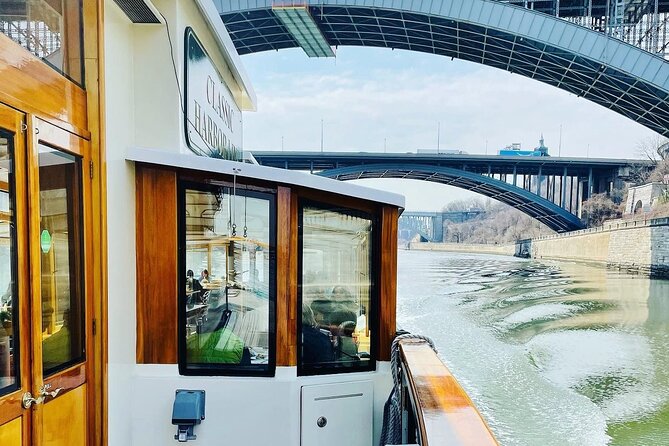
The cruise begins at Classic Harbor Line, Pier 62 at Chelsea Piers. The location is convenient for a day in Manhattan, and the activity ends at the same pier, so you do not need to plan a separate return trip.
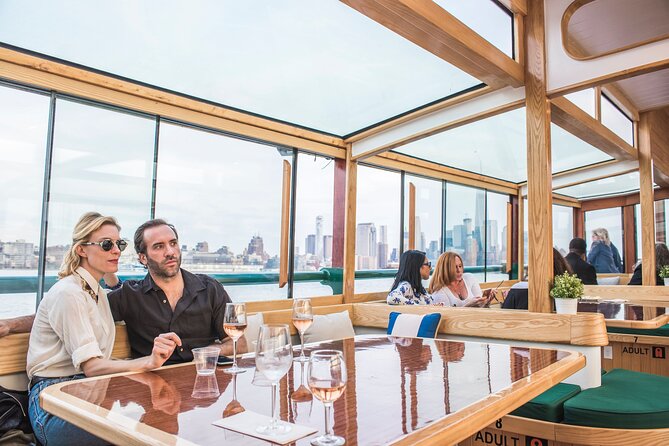
Assigned tables give the cruise a more polished feel than a standard harbor ferry. At checkout, you can choose private section seating or communal section seating. That choice is worth considering carefully. A private section suits couples or small groups who want their own table, while communal seating may work better if you enjoy a social setting and do not mind sharing space.
The vessel is described as clean, warm, comfortable, and attractive. Those details are more important than they sound because the outing lasts about 2 hours and 45 minutes. You will want a proper seat, a place to set down a drink, and enough comfort to keep listening after the first hour.
One complimentary beverage is included. Food selections are sold on board, and you may bring a light snack. This is not presented as a full meal cruise, so plan accordingly. If you want lunch or dinner, eat before boarding or treat the available food as a supplement rather than the main reason to book.
The Hudson waterfront, flood defenses, and renewable energy
Early in the route, the boat passes a string of projects that show how New York is responding to climate pressure. You may see green buildings, sustainable parks, renewable energy sites, recycling plants, and flood walls built or improved after Superstorm Sandy.
This is where the tour differs most from a standard architecture cruise. The guide does not only identify a building by name. The narration looks at how it uses energy, how its location relates to flood risk, or how its surroundings may change over time.
The post-Sandy flood measures are particularly useful to see from the water. After the 2012 storm, New York had to think more seriously about storm surge and the vulnerability of low-lying neighborhoods. From a boat, flood walls and resiliency features make more sense because you can see their relationship to the shoreline, streets, parks, and buildings behind them.
You will also pass the future home of an offshore wind turbine assembly pier. That site links New York’s waterfront past to its energy future. The working harbor has long handled cargo and industry. Now parts of it are being considered for the equipment needed to build a major renewable energy sector.
The limitation is that many of these projects may not look dramatic. If you want one spectacular sight after another, sections of the route may feel quiet. The value comes from the explanation, so you need to listen.
Statue of Liberty and Ellis Island from the harbor
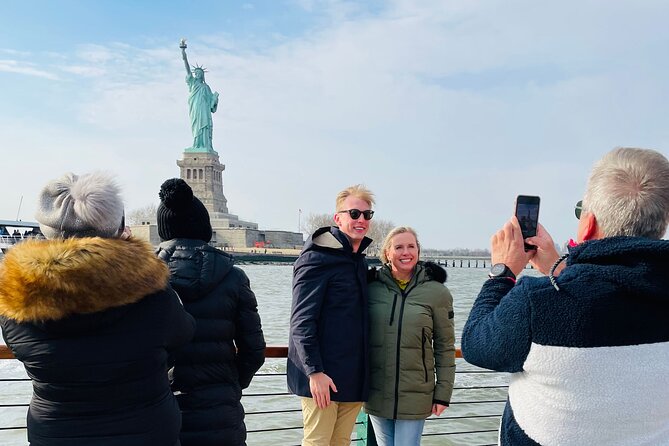
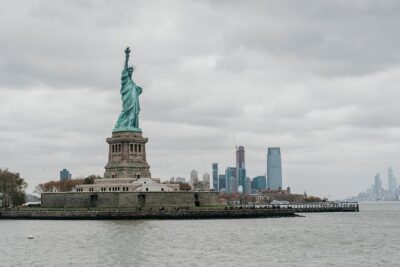
The boat passes the Statue of Liberty in New York Harbor before continuing around Manhattan. You get a water-level view that differs from both the island visit and the Staten Island Ferry.
The harbor setting also gives the guide room to connect landmarks with larger questions about the city’s shoreline. The Statue of Liberty and Ellis Island are cultural icons, but here they are also part of a low-lying harbor system exposed to storms and rising water.
You will have opportunities for photographs, but this is not a dedicated Statue of Liberty cruise. The focus remains climate, architecture, and waterfront planning. If your main goal is a long explanation of the statue, immigration history, or access to Liberty Island, choose a different outing.
Still, this is one of the strongest visual parts of the trip. The boat’s smaller scale can make the harbor feel more personal, and the view from the water shows how closely the city’s major landmarks sit within a working and vulnerable coastal zone.
Another side of New York City for the same day:
- New York City: Statue of Liberty & Ellis Island with Ferry
★ 4.6 · 18,683 reviews - New York City: American Museum of Natural History Ticket
★ 4.5 · 15,447 reviews - Statue of Liberty and Ellis Island Tour: All Options
★ 5.0 · 13,571 reviews - New York in One Day Guided Sightseeing Tour
★ 5.0 · 13,166 reviews
The United Nations and Roosevelt Island on the East River
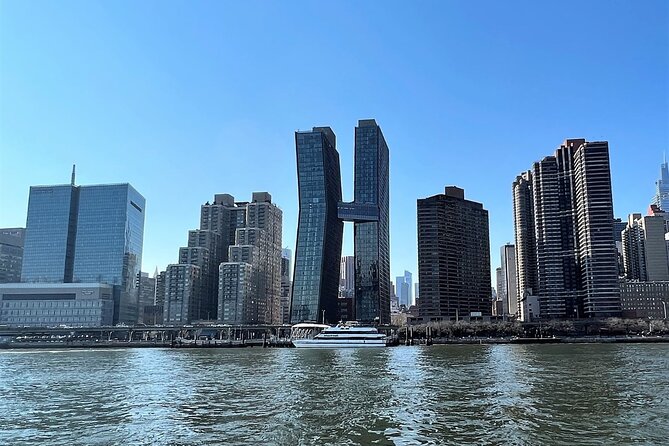
As the boat reaches the East River, it passes the United Nations building. This section brings the cruise back into the heart of Manhattan, where dense development meets a narrow tidal river.
The United Nations is a useful point of reference for understanding how much of New York’s built environment sits close to water. The guide may also point out architectural details and urban planning choices along the river. This is one of the places where an architect’s eye adds value, especially if you enjoy noticing how buildings meet the shoreline rather than simply photographing their façades.
The boat also passes Roosevelt Island. Its long, narrow shape gives you a clear view of both the island and the neighboring Manhattan and Queens waterfronts. From here, you can better understand the city as a group of connected shorelines rather than one solid island of buildings.
The tour’s broad route is a benefit, but it also means you will spend time moving between subjects. The guide has nearly three hours to cover a lot of ground. You should expect a steady stream of information rather than a long stop at any one location.
East River Park and the hard choices behind resiliency
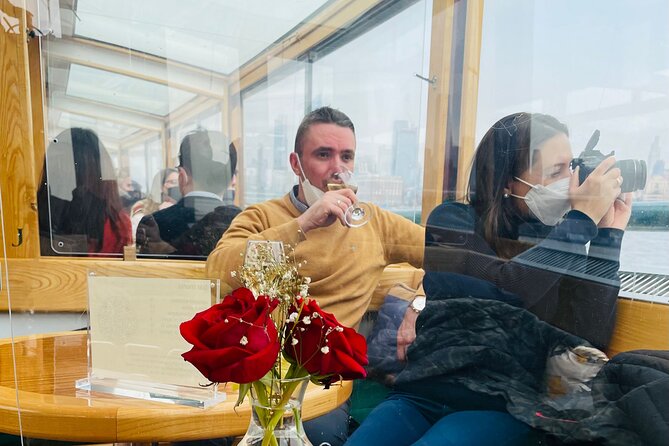
East River Park is one of the most important places on the route because it shows how climate protection can affect public space.
The guide points out features along the waterfront and explains the issues facing the park. Parks provide recreation and open space, but waterfront parks also sit directly in the path of storm surge. Protecting them may require walls, raised ground, drainage systems, or major rebuilding.
That creates a difficult public question: how do you protect a park without losing the qualities that make it useful? A climate project can improve safety while changing trees, paths, fields, views, and access during construction. Seeing the park from the river helps you grasp the scale of the shoreline, but the narration supplies the details you cannot see from a distance.
This section suits anyone interested in city planning and public policy. It may be less satisfying if you want only finished projects. Some of the most important climate work is slow, disruptive, or still being planned.
Inwood, Spuyten Duyvil, and the uncertain Manhattan loop
The route continues north past Inwood, the neighborhood at Manhattan’s upper end. This is a welcome change from the familiar downtown skyline and gives you a look at a less commonly seen part of the island.
The full circumnavigation usually depends on passing through the Spuyten Duyvil train bridge. The bridge must open for the boat to continue between the Hudson River and Harlem River. On rare occasions, it is inoperable, and the problem may not be known until the cruise is already underway.
River closures can also affect the route. If the boat cannot complete the loop, the crew provides a modified trip that doubles back and adds more detail about waterfront sites. There is no refund when the full circumnavigation is impossible, so this is an important point to accept before booking.
I would not treat this as a serious flaw, since bridge and river operations are outside the cruise operator’s control. But if circling Manhattan is the main reason you are paying $113.23, you should understand that it is not guaranteed.
Riverside Park and the return along the Hudson
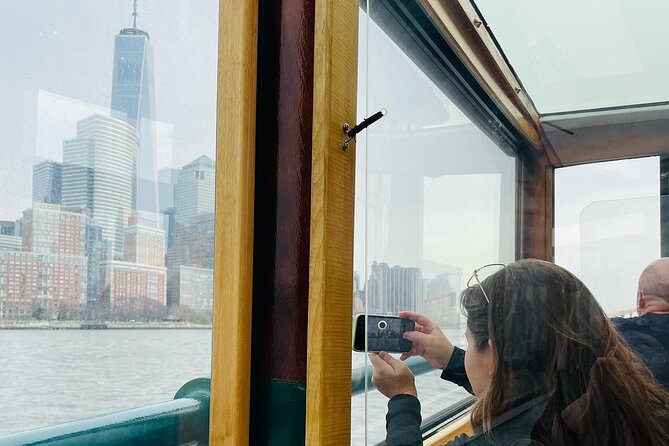
The boat eventually cruises past Riverside Park on the Hudson River. This stretch offers a calmer view of Manhattan, with the park forming a long band between the city and the water.
Riverside Park helps show how public green space can serve several purposes at once. It is a place for recreation and scenery, but it is also part of the city’s edge, where drainage, access, and flood concerns matter. The guide’s job is to point out those connections without losing sight of the ordinary pleasures of the waterfront.
The return toward Chelsea Piers completes a broad picture of New York’s shoreline. You will have seen famous landmarks, dense commercial districts, residential neighborhoods, parks, industrial sites, and planned energy facilities. Few city tours cover such a wide range of urban settings in one sitting.
The route can be long for anyone who is not interested in the subject. The narration runs for most of the cruise, and the operator asks passengers to keep conversations at a reasonable level so everyone can hear. This is not the boat for a quiet date, a casual drink, or a family outing with young children.
What $113.23 gets you
At $113.23 per person, this is not a budget harbor ride. The price reflects the boat, assigned table, beverage, crew, and nearly three hours of guided commentary. It also pays for a specialist-led route that links places many standard sightseeing cruises treat as separate subjects.
I see the value most clearly in three cases. First, you want a serious explanation of how New York is adapting to climate change. Second, you enjoy architecture and urban design but have already seen the obvious landmarks. Third, you want a full-water perspective of Manhattan in a more intimate setting than a large public ferry.
The value is weaker if you mainly want landmark narration. One account of the experience complained that too few famous sights were explained, but that concern fits a different kind of cruise better. This tour is built around climate projects and architectural interpretation. You should not book it expecting constant commentary on every tower, bridge, and monument.
The strong rating of 4.8 from 12 ratings and a 92 percent recommendation figure suggest that the intended audience is finding the format worthwhile. The number of ratings is small, so I would treat those figures as encouraging rather than final proof. The repeated strengths are clear: comfortable boat, excellent commentary, friendly staff, and a fresh view of the city.
Who should book this cruise
I would recommend it to adults and older teenagers who enjoy guided learning. It is especially good for people interested in climate policy, architecture, engineering, city parks, renewable energy, and the future of coastal cities.
It can also work well for a New Yorker who thinks they already know Manhattan. The route reveals familiar places from an unfamiliar angle, and the guide may point out architectural features you have passed many times without noticing.
The operator does not allow children under 12 because the cruise is heavily narrated. Families with younger children are directed toward less narrated options, such as Statue and Skyline tours or day sails.
Service animals are allowed, but emotional support animals and pets are not. Accessibility varies by boat, so contact the operator ahead of time if you need boarding assistance or have general access questions. The cruise is offered in English, and most people can participate.
Practical advice for a better outing
Book early if your schedule is fixed. The experience is booked an average of 74 days ahead, which indicates that popular dates can fill well before departure.
Choose your seating style based on your priorities. A private section gives you more control over your table space. Communal seating may feel more social, but you should be comfortable sharing the setting with other people.
Dress for a boat, not just a Manhattan street. The provided information does not specify a clothing policy, but you should be prepared for changing conditions on the water. The experience requires good weather, and a cancellation caused by poor weather leads to a different date or a full refund.
Finally, leave room in your day. The cruise lasts about 2 hours and 45 minutes, and the route returns to Chelsea Piers. It is long enough to be a major activity, not a quick add-on between museum visits.
Should you book the AIANY Climate Change Tour?
Book it if you want New York explained through its buildings, parks, shoreline, and response to climate change. The combination of a citywide water route, an AIANY architect guide, assigned tables, and a nearly three-hour running commentary gives you more substance than a basic harbor cruise.
Skip it if you want a quiet ride, a short outing, or nonstop attention to famous landmarks. The narration is the point, and the full Manhattan loop is subject to bridge and river conditions.
For the right audience, this is a thoughtful way to see the city. You return to Chelsea Piers with more than skyline pictures. You also have a clearer sense of why New York’s waterfront is being rebuilt, raised, protected, and reimagined.
FAQ
Where does the AIANY Climate Change Tour begin and end?
The cruise begins at Classic Harbor Line, Pier 62 at Chelsea Piers, New York, NY 10011. It ends back at the same meeting point.
How long does the cruise last?
The experience lasts approximately 2 hours and 45 minutes.
What is included in the price?
The price includes narration by a member of the American Institute of Architects New York Chapter, assigned table seating, your choice of a private or communal section at checkout, and one complimentary beverage.
Can I bring food or buy food on board?
Food selections are available for purchase. If you bring your own food, it should be limited to a light snack.
Is the full circumnavigation of Manhattan guaranteed?
No. The full loop may be affected if the Spuyten Duyvil train bridge cannot open or if river closures occur. In that case, the operator provides a modified route with double backing and additional waterfront commentary. No refund is provided solely because the full circumnavigation cannot be completed.
Is the cruise suitable for children and pets?
Children under 12 are not permitted because this is a heavily narrated experience. Service animals are allowed, but emotional support animals and pets are not.
Just listed around New York City
- NYC New York Airport Transfer JFK/LGA/EWR to Manhattan | Brooklyn★ 3.5 · 12 reviews
- 6 hour Bus tour and 1 hour Boat Ride by the Statue of Liberty★ 5.0 · 12 reviews
- Central Park and 5th Avenue Walking Tour★ 5.0 · 12 reviews
- New York City Chilling Nightmares & Necromancy Ghost Tour★ 4.5 · 12 reviews
- NYC Bar Tour: Gangsters, Heroes + Bright Lights of Broadway★ 4.6 · 12 reviews
- Statue of Liberty Sightseeing Cruise 60 Min★ 3.0 · 12 reviews
- Walking Tour of 1970’s Music Venues of the East Village★ 4.5 · 12 reviews
- New York City E Bike Rentals★ 4.0 · 12 reviews
Tours, compared.
Statue of Liberty and Ellis Island Tour: All Options
Read our review →


9/11 Memorial, Ground Zero Tour with Optional 9/11 Museum Ticket
Read our review →
Hop-on Hop-off Sightseeing Tour by Open-top Bus
Read our review →