
Reviewed · SOHO, LITTLE ITALY & CHINATOWN TOURS
Art-full Discovery Walk of Tribeca & SoHo (& Nolita)
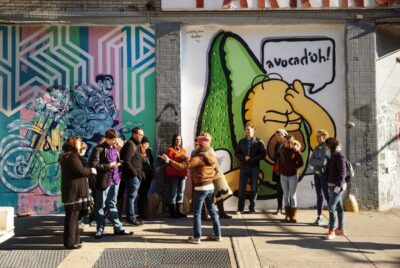
SoHo’s old artist lofts give this walk its best story. Alexandra, also called Alex, leads you through SoHo, Nolita, and Tribeca to connect the neighborhood’s street art, galleries, and small cultural corners with the artists who helped make these streets famous.
I like the small group size, capped at 15, and the route’s mix of four galleries, outdoor art, a bakery, and a tiny museum. I also like that this is not only for first-time visitors. It offers New Yorkers a reason to notice places they may pass every week.
The main drawback is that the timing is not perfectly clear: the tour is described as about two hours, while the route information lists 2 hours 30 minutes. Plan for roughly half a morning or afternoon, and wear shoes suited to city walking.
In This Review
- Key points for your SoHo art walk
- Why this walk works better than a standard neighborhood stroll
- Starting at PlantShed on Prince Street
- SoHo’s artist loft story
- Street art, galleries, and the pleasure of variety
- Nolita adds smaller, less expected stops
- Moving on to Tribeca and finishing at The Odeon
- What Alexandra brings to the walk
- Is $50 a fair price?
- Timing, group size, and weather considerations
- Who should book this art walk?
- My call: book it if you want context, not just sights
- FAQ
- Where does the Art-full Discovery Walk begin?
- Where does the walk end?
- Which neighborhoods does the walk cover?
- How long does the experience last?
- How much does the tour cost?
- What language is the walk offered in?
- Who leads the walk?
- How many people can join?
- Is the walk close to public transportation?
- What happens if the weather is poor?
- Can I cancel for a full refund?
Key points for your SoHo art walk
- Four galleries in one neighborhood walk: The route includes several gallery stops, giving you a broader look at current art than a single museum visit.
- A story about artist lofts: You learn how SoHo’s large loft spaces helped artists work and show art in New York during the 1960s and 1970s.
- Street art and small discoveries: The walk mixes formal galleries with public art, a bakery, and a tiny museum that is easy to miss on your own.
- Alexandra leads the experience: Alexandra, known as Alex, guides the walk for Women of Culture and answers questions along the way.
- A practical small-group format: With no more than 15 people, the outing should feel more personal than a large sightseeing stroll.
- Flexible weather and booking terms: You can cancel free of charge up to 24 hours ahead, while poor weather may lead to a new date or a refund.
Why this walk works better than a standard neighborhood stroll
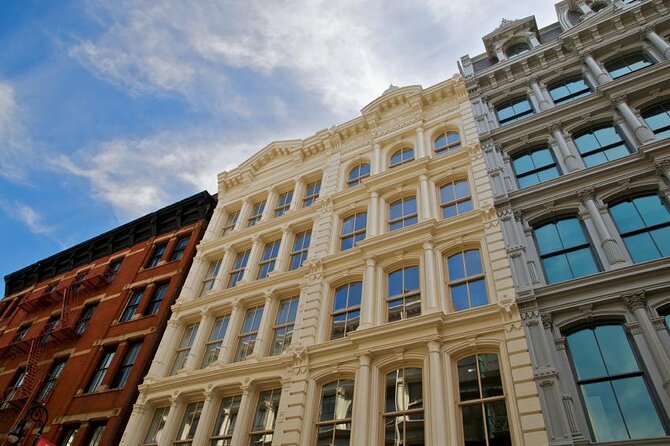
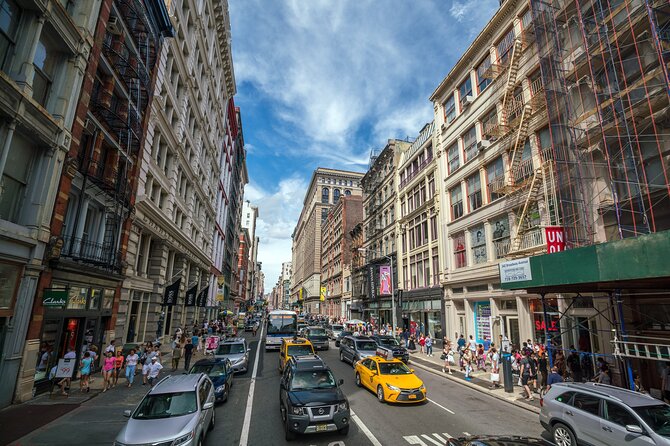
SoHo is often treated as a shopping district, but this walk asks you to look above the storefronts and beyond the familiar cast-iron facades. The focus is art, and that gives the neighborhood a stronger sense of purpose than a simple architecture walk.
The key idea is the role of the artist loft. During the 1960s and 1970s, SoHo’s large industrial spaces offered room for artists to work in a city where studio space was hard to find. Those lofts also made it possible to display art in unconventional settings.
That background matters because it explains why galleries, studios, and public art still feel at home in this part of Manhattan. You are not just moving from one attractive block to another. You are learning how the physical shape of SoHo helped support an art community.
I like that the experience connects past and present without making the whole outing a lecture. You get neighborhood context, then return to what is in front of you: a mural, a gallery window, a side street, or a small cultural space.
More SoHo, Little Italy and Chinatown walks:
- SoHo, Little Italy, and Chinatown Walking Tour in New York
★ 5.0 · 3,153 reviews - NYC: Chinatown & Little Italy Food Tour with 7 Flavorful Tastings
★ 5.0 · 2,733 reviews - Original NYC Guided Food Tour of Chinatown and Little Italy
★ 5.0 · 2,194 reviews
Starting at PlantShed on Prince Street
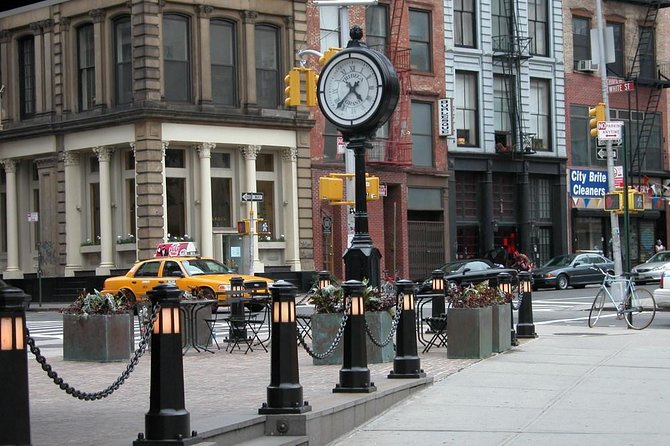
The walk begins at PlantShed, 1 Prince Street, in New York’s SoHo area. This is a useful starting point because Prince Street puts you close to the neighborhood’s familiar iron-fronted buildings, shops, galleries, and side streets.
The exact first stop may depend on the day’s route, but you should expect to begin by getting oriented in SoHo before moving toward Nolita and Tribeca. The walk is offered in English, and Alexandra’s role is to explain what you are seeing rather than simply lead you from one address to another.
Give yourself time to reach the meeting point. The area is near public transportation, but Manhattan travel can still involve delays, crowded sidewalks, or a missed subway connection. Arriving early is the sensible choice, especially because a walking tour cannot wait long for late arrivals.
This is a city walk, not a bus tour. You will spend the outing on foot and should have a moderate level of physical fitness. No special athletic ability is suggested, but comfortable shoes will make the difference between enjoying the galleries and thinking about your feet.
SoHo’s artist loft story
The SoHo section is the intellectual center of the experience. The most useful thing you can learn here is how artists changed the meaning of a neighborhood that was once better suited to manufacturing than to fashionable shopping.
Large lofts offered unusual freedom. Artists needed room for canvases, sculpture, tools, and gatherings. The same wide interiors that once served industrial work could support studios and informal exhibitions.
You will also see why the area’s buildings matter. SoHo’s architecture is not just a backdrop for photographs. Its broad windows and spacious upper floors help explain why the neighborhood appealed to artists in the first place.
This history adds value to the $50 price. You can walk through SoHo without paying for a guide, of course, but you may miss the connection between the buildings and the people who used them. Alexandra’s job is to point out that connection and make the streets easier to read.
The tradeoff is that the tour may not satisfy someone looking for a museum-style art lecture. The information is tied to the neighborhoods and the route. If you want a long, technical account of individual artists or movements, a dedicated museum tour may suit you better.
Street art, galleries, and the pleasure of variety
The walk does not stay inside galleries. A strong part of the route is the shift between public art and indoor spaces.
Street art gives the outing an open-air quality. You may encounter work that is easy to overlook when you are focused on shopping, traffic, or finding a restaurant. The value is not only in the artwork itself. Alexandra helps you notice how art appears in ordinary city space.
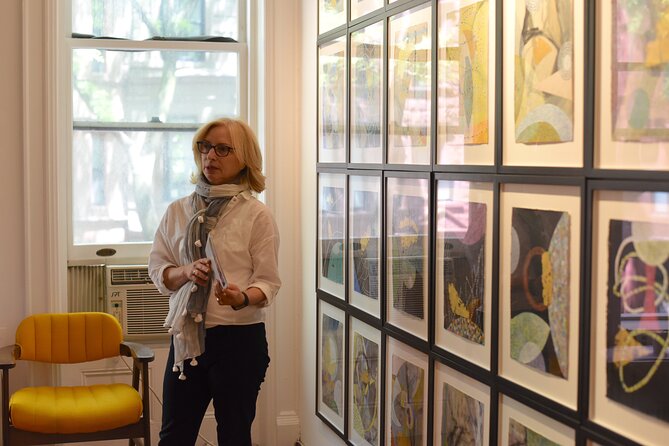
The gallery portion adds a different rhythm. The route has included four galleries with works by a range of artists. That is a useful number: enough variety to compare different spaces, but not so many that the experience becomes a blur of white walls and unfamiliar names.
Gallery visits also make the walk more current than a fixed museum collection. What you see may reflect the exhibitions and artists presented in the neighborhood at the time of your visit. This can be appealing if you want to see what the local art scene is showing now.
You should keep your expectations flexible. Gallery schedules and exhibitions can change, and the information provided does not promise a particular artist or exhibition. The experience is strongest if you enjoy discovery and discussion rather than arriving with a checklist.
More New York City walking tours:
- Secrets of Grand Central Station Walking Tour New York City
★ 5.0 · 1,796 reviews - Greenwich Village Walking and Food Tasting Tour
★ 5.0 · 1,572 reviews - Artistic, Alternative Greenwich Village Walking Tour
★ 5.0 · 971 reviews - True Crime NYC: Mafia Walk w/Ret. NYPD Detective and Local Food
★ 5.0 · 848 reviews
Nolita adds smaller, less expected stops
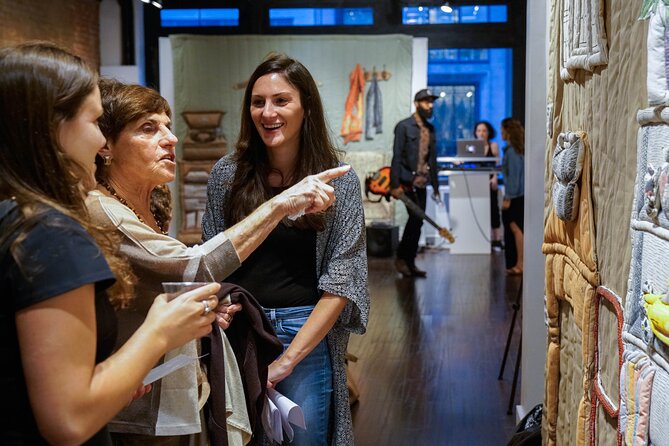
Nolita helps break up the better-known SoHo focus. The route includes more than major galleries and famous streets, with a bakery and a very small museum among the memorable discoveries.
The bakery stop gives the walk a welcome everyday pause. It also keeps the experience from feeling like a sequence of formal cultural appointments. You are seeing how art fits into a neighborhood that people live in, eat in, and pass through.
The tiny museum is especially appealing because it is the sort of place you might not find by wandering without a plan. The available information does not name the museum, so you should not book this expecting a specific institution. The point is the scale and surprise of the stop.
For me, this is where the walk earns its title. The best neighborhood tours help you notice what is small, local, and easy to miss. A compact museum or an unexpected gallery can stay with you longer than another famous facade.
The practical concern is that some stops may depend on opening hours, the day’s route, or the guide’s choices. Consider the bakery and tiny museum part of the type of discovery the walk offers, not a guaranteed list of fixed attractions.
Moving on to Tribeca and finishing at The Odeon
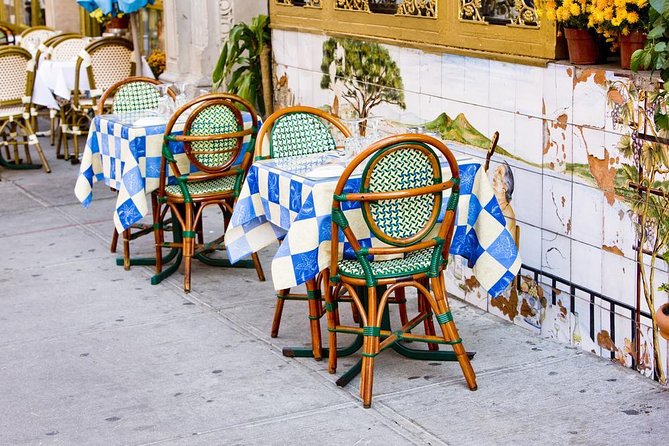
The route ends at The Odeon, 145 West Broadway, in Tribeca. That gives you a clear final point and places you in an area with plenty of options for continuing your day.
Tribeca provides a fitting contrast to SoHo and Nolita. The walk covers three adjacent downtown neighborhoods, but they do not all feel identical. Moving between them lets you compare how art, old buildings, shops, and local culture occupy different parts of Lower Manhattan.
The route information names SoHo as the formal stop, while the advertised experience covers SoHo, Nolita, and Tribeca. Because of that slight mismatch, I would treat the three-neighborhood coverage as the intended focus, but confirm the exact route if one particular area matters most to you.
The ending at The Odeon is convenient if you want to continue with lunch, coffee, or more independent exploring. The tour does not include a meal, and the bakery is described as a stop rather than a provided tasting, so budget separately for food.
What Alexandra brings to the walk
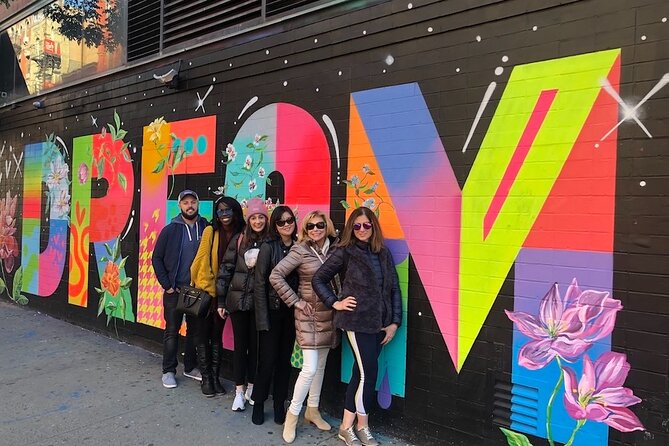
Alexandra is the guide and the founder of Women of Culture. Her approach, as described in the supplied material, is personal and question-friendly. That matters on an art walk, where a good explanation often begins with what catches your eye.
She leads a route that combines street art, galleries, and less obvious cultural spaces. That mix suggests a guide who is interested in more than famous names and postcard sights.
I also like the appeal to New Yorkers. One participant who already lived in the city discovered places they had not noticed before. That is a useful test for this kind of experience. If the route can change the way a local sees familiar blocks, it should also give a first-time visitor a more thoughtful introduction.
You should still remember that an art walk depends partly on personal taste. Alexandra can explain the context and answer questions, but you may connect more strongly with some artworks than others. That is normal and, in fact, part of the value of seeing several galleries in one outing.
Is $50 a fair price?
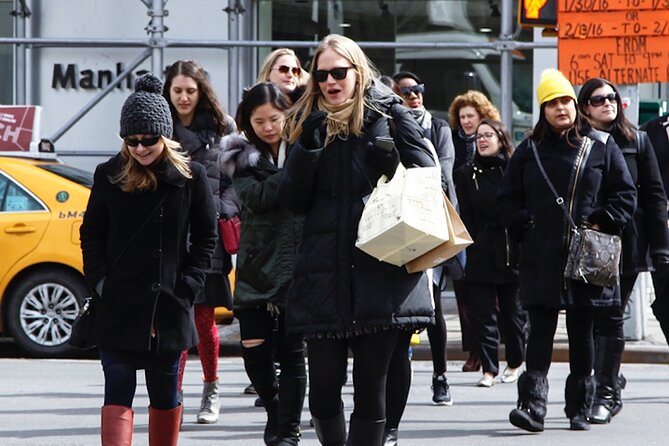
At $50 per person, this is not the cheapest way to spend two hours in Lower Manhattan. You can walk SoHo, Nolita, and Tribeca independently for free, and many galleries do not charge admission.
The value comes from the guide’s selection and interpretation. You are paying to have someone identify worthwhile stops, explain the artist-loft story, answer questions, and reduce the chance of walking past a tiny museum or gallery without noticing it.
The small group limit of 15 helps justify the price. A guide can respond to questions more easily in a group of this size than in a large crowd. It also makes gallery visits less awkward than joining a major sightseeing group.
The price makes the most sense for three kinds of people:
- You want a planned introduction to downtown New York art.
- You enjoy galleries but do not know which ones are worth entering.
- You live in New York and want fresh ideas for exploring familiar neighborhoods.
It is less compelling if you only want architecture photos, shopping time, or a fast list of famous sights. In those cases, a self-guided walk may give you more freedom for less money.
Timing, group size, and weather considerations
The experience is described as approximately two hours, but the route details list 2 hours 30 minutes. I would reserve at least two and a half hours, with a little extra time before the start and after the finish.
A maximum of 15 people is a good middle ground. You get the social energy of a group without the scale of a crowded sightseeing procession. The actual number on a given date can be smaller, but no smaller group is guaranteed.
The activity requires good weather. If poor weather causes cancellation, you will be offered another date or a full refund. That policy makes sense for an outing built around walking between galleries and public art.
You can cancel for a full refund if you do so at least 24 hours before the start time. Changes or cancellations made inside that window are not accepted for a refund, and the experience can also be canceled if its minimum number of participants is not met.
Confirmation is sent within 48 hours of booking, subject to availability. If your schedule is tight, the provider allows you to request alternate dates and times, but those requests depend on availability.
Who should book this art walk?
I would recommend it to art-curious visitors who want more than a standard neighborhood tour. It suits people who like hearing the story behind a place, stepping into galleries, and noticing public art that is easy to miss.
It is also a smart choice for New Yorkers who want a fresh afternoon activity. The small museum and changing gallery stops give the walk a sense of local discovery, even if you already know downtown Manhattan well.
The tour may work for couples, friends, and solo visitors who enjoy conversation. With English as the only listed language, you should be comfortable following an English-speaking guide.
Families may enjoy the variety, though the activity is not specifically described as child-focused. The moderate fitness requirement and amount of walking also make it less suitable for anyone who has trouble staying on foot for two to two and a half hours.
My call: book it if you want context, not just sights
Book this walk if you want Alexandra to connect SoHo’s former artist lofts with today’s galleries, street art, and smaller cultural stops. The combination of four galleries, a bakery, and a tiny museum gives the route more personality than a standard stroll past famous buildings.
Skip it if you prefer complete independence, shopping time, or a guaranteed list of specific museums and artists. Also allow for the possibility that the route and gallery stops may change.
For $50, the strongest reason to go is the guide’s eye. You are paying for help noticing what you might otherwise pass, plus a clear story about why these neighborhoods became linked with art. That is a fair exchange for a curious visitor, and a particularly good one for a New Yorker who thinks they already know SoHo.
FAQ
Where does the Art-full Discovery Walk begin?
The walk begins at PlantShed, 1 Prince Street, New York, NY 10012.
Where does the walk end?
The experience ends at The Odeon, 145 West Broadway, New York, NY 10013.
Which neighborhoods does the walk cover?
The experience covers SoHo, Nolita, and Tribeca.
How long does the experience last?
It is described as approximately two hours, while the route information lists 2 hours 30 minutes. Plan for roughly two to two and a half hours.
How much does the tour cost?
The listed price is $50 per person.
What language is the walk offered in?
The experience is offered in English.
Who leads the walk?
Alexandra of Women of Culture leads the experience. The supplied information also refers to her as Alex.
How many people can join?
The maximum group size is 15 people.
Is the walk close to public transportation?
Yes. The meeting point is listed as near public transportation.
What happens if the weather is poor?
The experience requires good weather. If it is canceled because of poor weather, you will be offered a different date or a full refund.
Can I cancel for a full refund?
Yes. You can cancel at least 24 hours before the experience start time for a full refund. Cancellations or changes made less than 24 hours before the start are not accepted for a refund.
Just listed around New York City
- Gangs and River Pirates of New York Walking Tour★ 5.0 · 3 reviews
- Statue of Liberty Ellis Island Cruise with One World Trade Ticket★ 4.0 · 3 reviews
- New York: Private 2-Hour City Tour by Jeep★ 5.0 · 3 reviews
- Central Park Bike Rentals★ 4.5 · 3 reviews
- Private Guided Tour Of The Upper West Side★ 3.5 · 3 reviews
- NYC : Big Apple City Lights & Broadway Express Tour 40 Mins★ 3.1 · 3 reviews
- Vegan Food tour in New York City´s East Village★ 5.0 · 3 reviews
- Guided Economy Pedicab Tour in Central Park★ 3.5 · 3 reviews
SoHo, Little Italy & Chinatown Tours, compared.
SoHo, Little Italy, and Chinatown Walking Tour in New York
Read our review →
Chinatown & Little Italy Food Tour with 7 Flavorful Tastings
Read our review →
Original NYC Guided Food Tour of Chinatown and Little Italy
Read our review →
SoHo, Little Italy, and Chinatown 2-Hour Guided Walk
Read our review →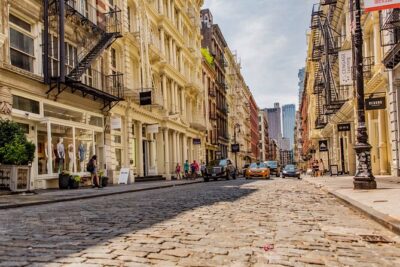
SoHo, Little Italy, and Chinatown NYC Guided Walking Tour
Read our review →Browse the lists this tour appears in